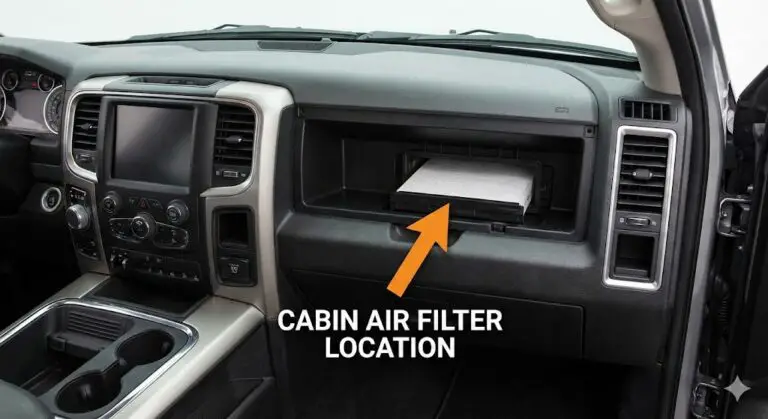
2015 Ram 1500 5.7 Oil Capacity: Exact Quarts & Specs Guide 2026

The 2015 Ram 1500 equipped with the 5.7-liter V8 HEMI engine remains a dominant force in the modern light-duty truck market. Maintaining this specific powertrain requires a precise understanding of fluid dynamics and manufacturer specifications.
Proper lubrication serves as the absolute lifeblood of the Generation III HEMI engine architecture. Chrysler engineers designed this power plant to operate under immense thermal and mechanical stress, demanding highly specific fluid characteristics.


Failure to adhere to the manufacturer’s exact oil specifications can lead to catastrophic internal valvetrain damage. This comprehensive report outlines the definitive technical parameters required to maintain the 2015 Ram 1500 5.7L engine for maximum longevity.
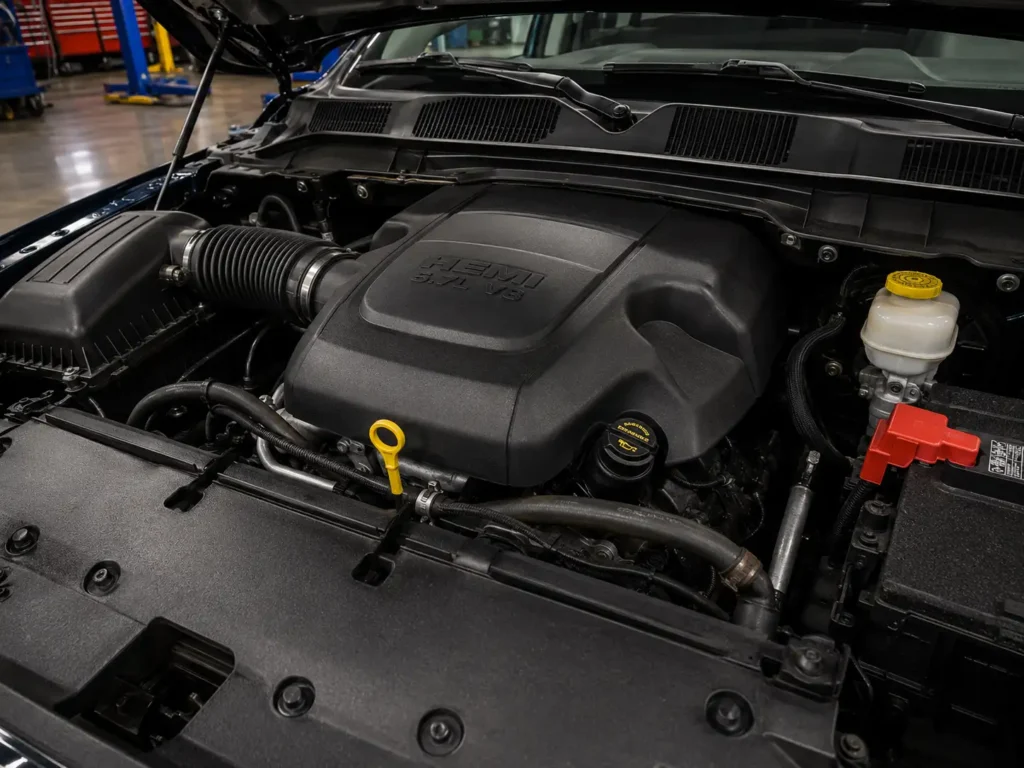
2015 Ram 1500 5.7L HEMI
The Definitive Lubrication & Maintenance Blueprint
Total Capacity
7.0
U.S. Quarts
Includes new oil filter volume
Viscosity Grade
5W-20
Full Synthetic
Mandatory for MDS functionality
Certification
MS-6395
Chrysler Standard
Required for warranty compliance
Ram Engine Lineup Capacity
The 5.7L HEMI occupies the middle ground in the 2015 Ram lineup. While the Pentastar V6 requires significantly less fluid, the heavy-duty EcoDiesel demands a massive 10.5-quart sump to handle its high-compression thermal loads.
Why 5W-20 is Non-Negotiable
The Multi-Displacement System (MDS) relies on precise hydraulic timing. Using thicker oil causes mechanical lag that damages the valvetrain.
Light Load
PCM triggers solenoid when cruising at steady speeds.
Hydraulic Flow
5W-20 oil flows rapidly into the special MDS lifters.
Lifter Collapse
Pin releases, allowing the lifter to collapse and close valves.
Fuel Savings
4-Cylinder mode active. Maximum efficiency achieved.
Top Certified Lubricants
Not all synthetic oils are created equal. To protect your engine warranty, ensure the MS-6395 stamp is present on the bottle. Full synthetics provide the thermal stability necessary to prevent the infamous “HEMI Tick.”
| Brand | MS-6395 | Synthetic |
|---|---|---|
| Pennzoil Platinum | ✓ | ✓ |
| AMSOIL Signature | ✓ | ✓ |
| Quaker State Ultimate | ✓ | ✓ |
| Mobil 1 (Standard) | ✗ | ✓ |
Service Interval Selector
Follow the path of your driving style
Do you tow, idle long, or drive < 10 miles?
Yes (Severe)
5,000 Miles
or 6 Months
No (Normal)
8,000 Miles
or 12 Months
Expert Recommendation: Stick to 5,000 miles to maximize lifter longevity.
The Professional “Ziploc Bag” Trick
The 2015 Ram 1500 has a notoriously messy filter placement above the electric steering rack. To prevent oil from saturating your suspension and driveway: Loosen the filter slightly, then slide a gallon Ziploc bag over it.
Unscrew the filter entirely inside the bag to catch every drop of residual fluid.🛠 Oil Filter Specs
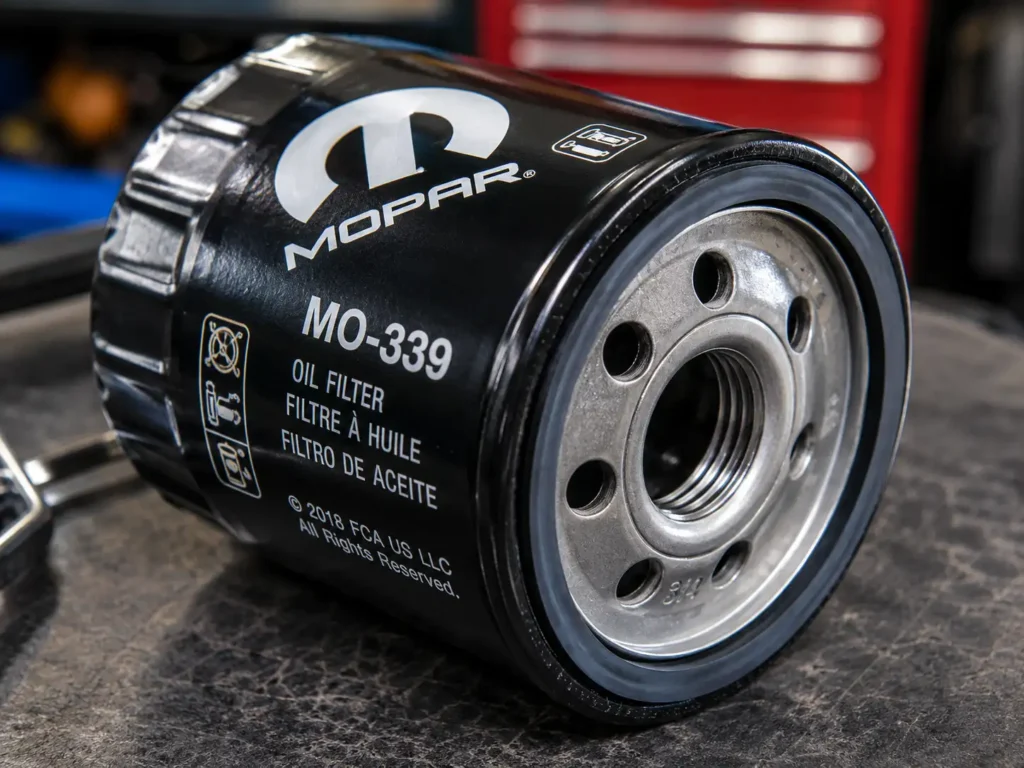
- Mopar OEM MO-339
- WIX Equivalent 57060
- Thread Pitch M22 x 1.5
⚙ Drain Plug Specs
- Socket Size 13mm (6-Point)
- Torque Value 25 ft-lbs
- Thread Pitch M14 x 1.50
Core Specification: 2015 Ram 1500 5.7 Oil Capacity
The standard oil capacity for the 2015 Ram 1500 5.7L HEMI V8 is exactly 7.0 U.S. quarts (6.6 liters). This factory-mandated volume includes the fluid required to fill a new standard-size oil filter.
This 7.0-quart requirement is non-negotiable and must be measured precisely during every scheduled service interval. Overfilling or underfilling the crankcase can severely impact engine performance and trigger dashboard warning lights.


Engineers designed the HEMI oil pan to hold a large volume of fluid to dissipate heat effectively during heavy towing and payload operations. The 7.0-quart capacity ensures a constant supply of cool, clean oil to the active valvetrain components.
The Dangers of Improper Fluid Levels
Adding more than the recommended 7.0 quarts presents a severe mechanical hazard to the rotating assembly. When overfilled, the rapidly spinning crankshaft throws standing oil into the air, aerating the fluid.
This aeration transforms the liquid oil into a frothy, foamy substance that the mechanical oil pump cannot properly pressurize. A lack of pressurized fluid leads to instantaneous metal-on-metal contact within the main bearings and camshaft journals.
Conversely, running the engine below the 7.0-quart threshold reduces the system’s thermal mass. Less oil means the fluid absorbs more heat, accelerating oxidation and leading to premature sludge formation throughout the block.
The Crucial Role of 5W-20 Motor Oil
For the 2015 model year, the only factory-approved motor oil viscosity for the 5.7L HEMI is 5W-20. This specific weight is strictly mandated for use in all ambient temperature ranges and driving conditions.
While older generations of the HEMI engine utilized 5W-30, the fourth-generation architecture mandates 5W-20 to support advanced internal hydraulic systems. Utilizing thicker oil grades can result in sluggish cold starts and inadequate valvetrain lubrication.
Modern synthetic 5W-20 oil maintains incredible shear stability, ensuring the fluid does not thin out dangerously when the engine reaches peak temperatures. This thermal resistance is critical for engines hauling heavy loads up steep grades.
The Multi-Displacement System (MDS) Connection
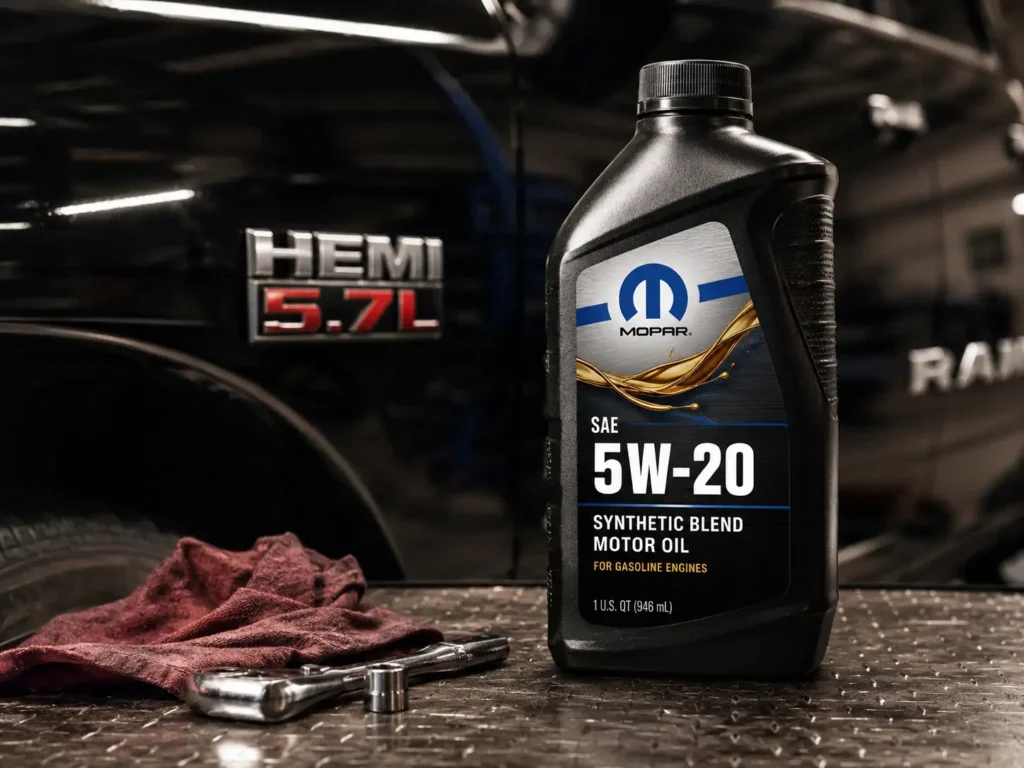
The primary mechanical reason the 5.7L HEMI demands 5W-20 oil is the Chrysler Multi-Displacement System (MDS). The MDS is a complex fuel-saving technology that actively deactivates four of the eight cylinders during light-load highway cruising.
The MDS operates using sensitive hydraulic solenoids that rely on precise oil pressure and flow rates to collapse the valve lifters. If the oil is too thick, the solenoids cannot actuate fast enough, leading to system failure or erratic engine operation.
Running an incorrect viscosity, such as 10W-30 or 5W-40, will frequently trigger a Check Engine Light and log MDS-related diagnostic trouble codes (DTCs). Strict adherence to the 5W-20 specification ensures the cylinder deactivation system functions seamlessly.
Decoding the Chrysler MS-6395 Certification
Selecting an oil brand goes far beyond simply matching the 5W-20 viscosity grade. The engine oil must also explicitly carry the Chrysler MS-6395 certification printed on the rear label of the bottle.
The MS-6395 Material Standard is a rigorous testing protocol developed by Fiat Chrysler Automobiles (FCA) to ensure lubricants meet their specific protection criteria. Oils undergo extensive fleet testing to prove they prevent sludge buildup and piston deposits.
This certification guarantees the oil formulation contains the correct additive packages to neutralize acids, resist oxidation, and protect the HEMI’s delicate valvetrain. Engine warranty claims can be denied if non-certified fluids are discovered in the crankcase.
MS-6395 Certified Oil Options
Both conventional and full synthetic motor oils can achieve the MS-6395 certification through proper chemical engineering. However, full synthetic oils are overwhelmingly recommended for the 5.7L HEMI due to their superior thermal breakdown resistance.
Many top-tier brands formulate oils specifically to meet this demanding standard. Industry-leading synthetics from Pennzoil, Quaker State, and Amsoil are highly regarded by professional technicians in the Ram truck community.
Interestingly, some well-known premium oils, such as certain formulations of Mobil 1, historically lacked the official MS-6395 certification. Owners must always verify the MS-6395 certification mark prior to pouring the fluid into the engine.
| Brand & Product Line | Viscosity | Oil Formulation | MS-6395 Certified |
| Pennzoil Platinum | 5W-20 | Full Synthetic | Yes |
| Quaker State Ultimate Durability | 5W-20 | Full Synthetic | Yes |
| Valvoline Advanced Full Synthetic | 5W-20 | Full Synthetic | Yes |
| AMSOIL Signature Series | 5W-20 | Full Synthetic | Yes |
| Castrol EDGE High Mileage | 5W-20 | Full Synthetic | Yes |
Synthetic vs. Conventional Base Stocks
While conventional 5W-20 oil may meet the basic requirements of the MS-6395 standard, its chemical structure is fundamentally inferior to full synthetic oil. Conventional oil is refined directly from crude, leaving behind naturally occurring impurities.
Full synthetic oil is chemically engineered in a laboratory, ensuring every single molecule is uniform in size and shape. This uniformity drastically reduces internal fluid friction, which translates to cooler operating temperatures and slightly improved fuel economy.
Furthermore, synthetic base stocks are highly resistant to volatilization, meaning they will not easily evaporate or turn into hard carbon deposits when exposed to extreme internal engine heat. This keeps the internal oil passages completely clear over the life of the vehicle.
Navigating Mopar Oil Filter Part Numbers
Selecting the correct oil filter for the 2015 Ram 1500 5.7L HEMI can be unusually complex due to historical part number supercessions. The manufacturer has utilized several different filter sizes and thread pitches over the lifespan of the HEMI architecture.
In 2013, Chrysler updated the engine block’s oil filter mounting stud to a metric M22x1.5 thread, abandoning the older 3/4-16 thread pitch. This mechanical change means older HEMI filters will physically not spin onto a 2015 engine block.
The modern standard Mopar replacement filter for the 2015 5.7L HEMI is the MO-339 (Part Number 04892339AA). This specific spin-on filter features the correct metric threads and an integrated anti-drainback valve.
MO-339 vs. MO-899 vs. MO-090
The Mopar MO-899 (04884899AC) is a larger capacity filter commonly used on earlier HEMI generations and heavy-duty SRT applications. While popular among enthusiasts, it requires careful verification of the thread pitch before attempting installation on a 2015 model.
The Mopar MO-090 (05281090AB) is another highly rated, legacy filter used across dozens of Chrysler platforms for over eighteen years. However, the MO-339 remains the explicitly cataloged original equipment part for the 2013-2022 Ram 1500 5.7L.
Regardless of the part number chosen, a high-quality silicone anti-drainback valve is absolutely essential. This valve prevents oil from emptying out of the filter when the engine is off, preventing dry starts that cause accelerated valvetrain wear.
| OEM Part Number | Common Designation | Application Notes | Compatibility |
| 04892339AA | MO-339 | Standard factory fitment for 2013-2022 5.7L V8. | 2015 Ram 1500 (Exact Fit) |
| 04884899AC | MO-899 | Larger volume filter, often used on earlier 5.7L/6.4L blocks. | Verify M22x1.5 Threads |
| 05281090AB | MO-090 | Legacy Chrysler filter used on multiple historic platforms. | Verify Fitment |
Premium Aftermarket Filter Equivalents
Many vehicle owners prefer premium aftermarket filters constructed with synthetic glass-enhanced media rather than standard paper cellulose. Synthetic media captures particles as small as 20 microns with up to 99% filtration efficiency.
WIX filters, specifically the WIX 57060, are heavily favored in the automotive community for their robust steel baseplates and high burst strength. These filters are perfectly matched to the HEMI’s M22x1.5 thread size and 7-quart flow demands.
Other top-tier options include the Purolator BOSS (PBL12222) and the MicroGard Select (MSL57060), both of which support extended 10,000-mile synthetic drain intervals. For users researching external options, purchasing through authorized vendors like Advance Auto Parts ensures genuine product delivery.
The Oil Filter “Mess” and Location Challenges
One of the most universally documented frustrations regarding the 2015 Ram 1500 5.7L is the physical location of the oil filter. The filter is mounted horizontally on the passenger side of the engine block, situated directly above the electric steering rack and front sway bar.
When the filter is unscrewed, residual oil immediately dumps onto the steering components, suspension linkages, and the underlying crossmember. This creates an unavoidable, widespread mess that is incredibly difficult to clean thoroughly.


If this spilled oil is not meticulously wiped away with chemical brake parts cleaner, it will drip onto the driveway for days afterward. This residual dripping often causes owners to mistakenly believe their engine has developed an active, severe oil leak.
Mitigation Strategies: The Ziploc Bag Trick
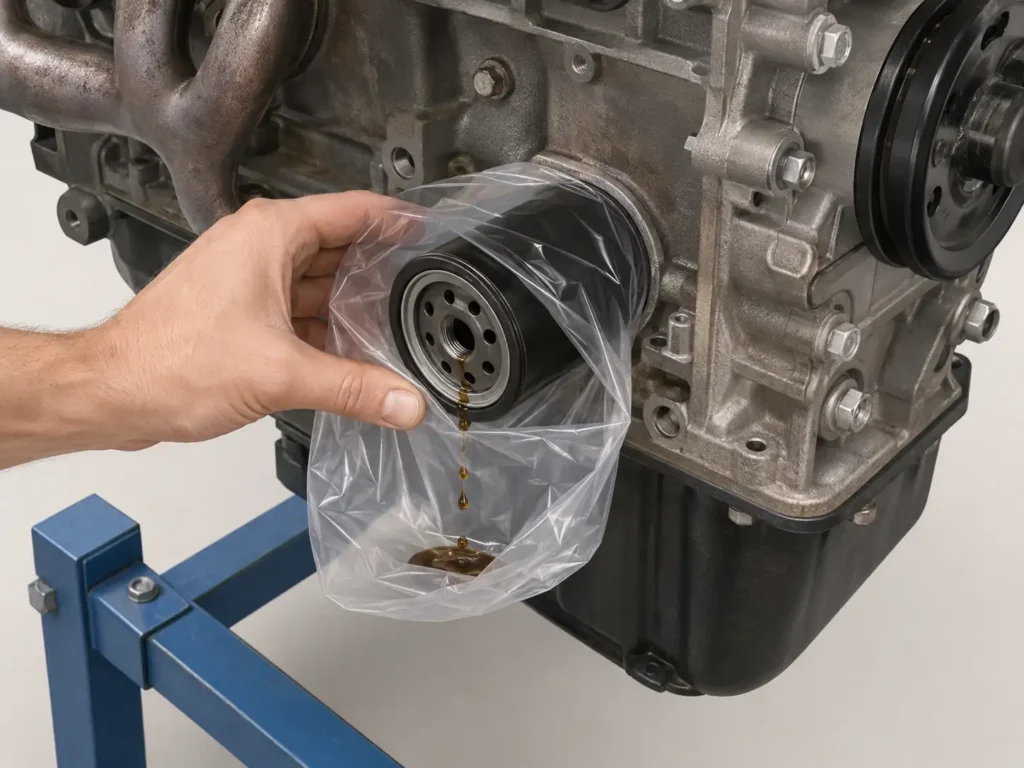
To combat this frustrating engineering oversight, experienced mechanics have developed several clever mitigation strategies. The most popular, reliable, and cost-effective method is widely known in the community as the “Ziploc Bag Trick”.
Technicians advise breaking the oil filter loose with a wrench just enough to spin it by hand. Then, a large one-gallon heavy-duty Ziploc bag is slipped entirely over the filter and pressed flush against the warm engine block.
As the filter is fully unscrewed, both the filter itself and the gushing volume of residual oil fall directly into the sealed plastic bag. This simple technique captures 99% of the fluid, keeping the truck’s complex undercarriage completely spotless.
Oil Filter Relocation Kits
For serious off-road enthusiasts or owners with lifted suspension systems, accessing the factory filter location can become nearly impossible. Installing an aftermarket oil filter relocation kit permanently solves this accessibility issue.
Kits manufactured by reputable companies like Derale (Part #15725) and Earl’s (Part #HEMI0003ERL) bolt a billet adapter plate directly to the factory M22x1.5 engine block mount. Heavy-duty braided AN-10 hoses then safely route the oil flow to a remote bracket.
These kits not only eliminate the mess but also allow for the installation of massive, oversized commercial oil filters. Larger filters increase the system’s total oil capacity and improve cooling efficiency, which is highly beneficial for extreme towing applications.
Drain Plug Specifications and Torquing
The factory oil pan drain plug on the 2015 Ram 1500 5.7L HEMI utilizes an M14x1.50 metric thread pitch and requires a 13mm socket for removal. Some owners mistakenly attempt to use standard SAE sockets, which quickly rounds off the soft metal hex head.
When reinstalling the drain plug, it must be tightened to precisely 25 ft-lbs (34 Nm) using a calibrated torque wrench. Over-tightening the plug can instantly strip the delicate threads inside the stamped steel oil pan, leading to an expensive repair.
Every drain plug features an integrated rubber sealing gasket or requires a replaceable copper crush washer. This specific seal should be inspected during every oil change and replaced immediately if cracked, flattened, or visibly deformed.
Upgrading the Drain Plug
Many professional mechanics recommend replacing the standard factory plug with a heavy-duty magnetic drain plug. Companies like BONOSS manufacture forged titanium magnetic plugs specifically engineered for the Ram M14x1.50 thread pattern.
A neodymium magnetic tip captures microscopic ferrous metal shavings that naturally bypass the primary oil filter media. Removing these suspended abrasive iron particles drastically reduces internal friction on the engine’s main bearings and cylinder walls.
Alternatively, fast-drain valve systems like the Fumoto Valve or Valvomax replace the traditional drain plug entirely. These spring-loaded ball valves allow the hot oil to be drained directly into a container via a plastic hose, completely eliminating messy splash and tools.
Step-by-Step DIY Oil Change Guide
Performing an oil change on the 2015 Ram 1500 5.7L is a straightforward process that requires basic hand tools and adherence to strict safety protocols. Gathering all necessary supplies beforehand ensures a smooth, clean, and efficient workflow.
Required supplies include 7.0 quarts of MS-6395 certified 5W-20 full synthetic oil, a new M22x1.5 thread oil filter, a 13mm six-point socket, a 3/8-inch drive ratchet, an oil filter wrench, and a large-capacity drain pan. Professional services like Costa Oils provide specialized synthetic changes if DIY is not preferred.
Safety remains paramount; the vehicle should be parked on level, solid concrete ground with the emergency parking brake firmly engaged. If ground clearance is an issue, drive the front wheels onto heavy-duty truck ramps, ensuring the rear wheels are securely chocked.
Phase 1: Draining the Old Oil
- Start the engine and allow it to run for roughly three minutes to warm the oil, which helps suspend microscopic contaminants and allows the fluid to drain much faster.
- Shut off the engine, open the hood, and remove the yellow oil filler cap located on the top of the engine to break the internal crankcase vacuum.
- Slide a high-capacity drain pan directly beneath the oil pan and locate the 13mm drain plug facing the rear of the truck.
- Using the 13mm socket, carefully loosen the plug counter-clockwise. Anticipate the trajectory of the hot oil stream, as it will shoot backward initially before tapering off.
- Allow the crankcase to drain for at least ten to fifteen minutes until the flow reduces to a very slow, intermittent drip.
- Inspect the drain plug seal, wipe the pan’s metal mating surface clean, and reinstall the drain plug, torquing it accurately to 25 ft-lbs.
Phase 2: Replacing the Oil Filter
- Reposition the drain pan beneath the horizontal oil filter location on the passenger side of the forward engine block.
- Use a specialized band-style oil filter wrench to crack the filter loose, turning it counter-clockwise about half a rotation until it spins freely.
- Implement the aforementioned “Ziploc Bag Trick” by sliding a thick plastic bag completely over the warm filter housing.
- Finish unscrewing the filter by hand, allowing it to drop gently into the bag along with the residual oil.
- Thoroughly inspect the engine block mounting surface to ensure the old rubber O-ring is not stuck to the metal; a double-gasket scenario will cause an immediate oil blowout.
- Apply a thin film of clean engine oil to the thick rubber gasket of the brand-new replacement oil filter.
- Thread the new filter onto the M22x1.5 stud by hand. Once the gasket contacts the metal base, tighten the filter an additional 3/4 to 1 full turn strictly by hand.
Phase 3: Refilling and Verification
- Place a clean, wide-mouth funnel directly into the oil filler neck at the top of the engine bay.
- Slowly pour in exactly 7.0 quarts of 5W-20 full synthetic motor oil, taking care not to spill onto the hot exhaust manifolds.
- Reinstall the oil filler cap securely and pull the yellow dipstick to verify the initial cold fluid level is reading correctly.
- Start the engine and let it idle smoothly for 15 to 30 seconds to circulate the new oil and pressurize the fresh filter housing.
- While the engine is running, look underneath the truck with a flashlight to confirm there are no active leaks around the drain plug or the new filter.
- Shut off the engine, wait two full minutes for the oil to drain back into the pan, and check the dipstick one final time. The oil level should rest precisely in the crosshatched “SAFE” zone.
Performing the Oil Life Reset Procedure
After completing the physical oil change, the truck’s internal computer must be manually reset to track the new fluid. The 2015 Ram 1500 utilizes an advanced Oil Change Indicator System that calculates fluid degradation based on engine hours, operating temperatures, and trip lengths.
Failing to reset this complex system will result in the annoying “Oil Change Required” message persistently chiming on the Electronic Vehicle Information Center (EVIC) upon every single startup. The reset procedure is performed entirely from the driver’s seat without the need for an expensive OBD2 scanner.
Reset Steps for Push-Button Start Models
- Enter the vehicle and ensure all doors are completely closed. Without pressing the brake pedal, push the ENGINE START/STOP button twice to place the ignition in the “RUN” position (the engine must remain OFF).
- Use the directional arrow pad located on the left side of the steering wheel to scroll down to the “Vehicle Info” screen on the dashboard display.
- Press the right arrow button repeatedly until the “Oil Life” screen is displayed, showing the current remaining percentage of the old fluid.
- Press and hold the right arrow button firmly for two seconds until a prompt asks the driver to confirm the reset command.
- Use the down arrow to highlight “OK,” then press the right arrow to officially confirm the selection. The oil life will immediately revert to 100%.
- Turn the ignition off. The software reset procedure is now complete.
The Accelerator Pedal Override Method
If the steering wheel button method fails to reset the system due to a software glitch, a secondary analog override exists for most modern Chrysler vehicles.
Place the ignition into the “RUN” position without starting the engine. Within ten seconds of turning the ignition on, slowly and fully depress the accelerator pedal to the floor exactly three times in succession. Turn the ignition completely off.
Upon the next engine startup, the oil life monitor will be fully reset. Note: If the vehicle is equipped with a traditional turnkey ignition rather than a push-button, simply turn the key two clicks forward to the “ON/RUN” position and execute the same gas pedal steps.
Analyzing Maintenance Intervals: Normal vs. Severe
The factory owner’s manual outlines two distinct maintenance schedules based on environmental factors and specific operating conditions. Understanding which specific category a truck falls into is vital for preventing premature mechanical wear.
Modern full synthetic 5W-20 oil is engineered to last up to 10,000 miles or 12 months under ideal, steady-state highway cruising conditions. However, very few pickup trucks are actually driven in perfectly ideal, light-load scenarios.
Mechanics universally agree that relying on maximum 10,000-mile intervals is highly risky for long-term HEMI health. Engine oil becomes saturated with microscopic carbon soot, unburned fuel, and condensation moisture long before the synthetic base stock breaks down.
Defining “Severe Duty” Driving
The vast majority of Ram 1500 trucks organically fall into the “Severe Duty” category without the driver even realizing it. The severe duty maintenance schedule mandates a strict oil change every 5,000 miles or 6 months, whichever comes first.
FCA defines severe operating conditions as frequent short trips under 10 miles, extensive engine idling, driving in stop-and-go heavy traffic, and operating in highly dusty or sandy environments. Short trips prevent the engine oil from getting hot enough to boil off accumulated water condensation.
Towing a trailer, hauling heavy bed payloads, or off-roading also immediately places the truck into the severe duty bracket. These rugged activities exponentially increase the mechanical load, generating extreme internal heat that rapidly accelerates oil oxidation.
| Operating Condition | Recommended Oil | Replacement Interval | Source |
| Ideal / Highway Cruising | Full Synthetic 5W-20 | 7,500 – 10,000 Miles / 12 Months | [cite: 4, 12] |
| Stop-and-Go / Short Trips | Full Synthetic 5W-20 | 5,000 Miles / 6 Months | [cite: 1, 4] |
| Towing / Heavy Payload | Full Synthetic 5W-20 | 5,000 Miles / 6 Months | [cite: 1, 4] |
| Dusty / Off-Road Duty | Full Synthetic 5W-20 | 3,000 – 5,000 Miles / 6 Months | [cite: 1, 4] |
Hemis and the Notorious “HEMI Tick”
The colloquial term “HEMI Tick” refers to a rhythmic, rapid tapping noise emanating from the upper valvetrain, a highly documented phenomenon in the 5.7L community. While sometimes harmless exhaust manifold leaks mimic this sound, true internal ticking is a critical lubrication issue.
The 5.7L engine utilizes delicate needle-bearing lifter rollers that ride continuously against the spinning camshaft lobes. Inadequate lubrication, extended oil change intervals, or excessive idle times can cause these tiny rollers to seize completely.
Once a roller seizes, it drags violently across the camshaft, deeply gouging the hardened metal lobe. This physical damage results in severe engine misfires, a drop in overall oil pressure, and ultimately requires a complete, expensive camshaft and lifter replacement.




Preventive Lubrication Strategies
The most effective mechanical defense against lifter failure is highly proactive fluid management. Frequent 5,000-mile oil changes ensure the fluid remains highly pressurized and free of abrasive carbon debris that can clog the microscopic lifter galleys.
Utilizing a premium MS-6395 certified full synthetic oil, verified by sources like Amsoil Specifications, provides a stronger fluid film barrier against the metal-on-metal friction experienced by the camshaft lobes. Conventional oils simply cannot provide the same level of vital boundary lubrication.
Furthermore, minimizing prolonged idle times is critical for HEMI longevity. At low RPMs, the mechanical oil pump produces significantly less volume and pressure, which can starve the uppermost valvetrain components of necessary lubrication during extended parked idling.
Fluid Dynamics in Extreme Cold
While 5W-20 oil is rated for year-round use, its performance in sub-zero winter temperatures highlights the importance of synthetic chemistry. The “5W” designation stands for “Winter,” indicating how the oil flows when physically cold.
Conventional 5W-20 oil thickens considerably when temperatures drop below freezing, turning into a sluggish, molasses-like fluid. This extreme thickening drastically delays the time it takes for the oil pump to push fluid to the top of the cylinder heads during a cold morning start.
Full synthetic 5W-20, however, maintains excellent cold-flow properties even in arctic conditions. This ensures that the delicate MDS lifter solenoids and camshaft journals receive instant lubrication the millisecond the engine turns over, eliminating dry-start wear.
Comprehensive People Also Ask (PAA)
Can I use 5W-30 instead of 5W-20 in my 2015 Ram 5.7?
No, substituting 5W-30 is strongly discouraged by the manufacturer for the 2015 5.7L V8 under any circumstances. The engine’s Multi-Displacement System (MDS) relies on the specific hydraulic flow characteristics of 5W-20 to quickly actuate the cylinder deactivation lifters. Using thicker oil can cause the MDS to mechanically malfunction, trigger check engine lights, and potentially void powertrain warranties.
What happens if I overfill the engine oil past 7 quarts?
Overfilling the HEMI crankcase past the 7.0-quart mark causes the rapidly spinning crankshaft to continuously strike the standing pool of oil in the pan. This high-speed impact forcefully whips the oil into an aerated, frothy foam. Because the mechanical oil pump cannot pressurize air bubbles, the engine will suffer from internal oil starvation, leading to catastrophic bearing and valvetrain damage.
Is it worth paying for full synthetic oil at the dealership?
While conventional oil is cheaper upfront, full synthetic oil provides unparalleled thermal stability and shear resistance, making it highly cost-effective in the long run. Dealerships use OEM-approved synthetic formulations that strictly meet the MS-6395 standard to maintain warranty compliance. For owners doing heavy towing or operating in extreme temperatures, the superior protection of full synthetic oil is absolutely essential.
Why does my engine oil smell strongly like gasoline?
A strong fuel odor on the oil dipstick indicates fuel dilution, a condition where unburned gasoline slips past the piston rings and mixes directly with the engine oil. This is very common in trucks subjected to frequent, very short trips where the engine never reaches the operating temperature necessary to evaporate the raw fuel. Fuel dilution severely degrades the oil’s viscosity, accelerating bearing wear.
What size socket is needed for the oil filter housing?
The 2015 Ram 1500 5.7L HEMI utilizes a traditional spin-on metal canister oil filter, not a modern cartridge-style filter with a plastic housing. Therefore, a standard socket wrench is not used for filter removal. A traditional band-style oil filter wrench, an end-cap wrench, or a large slip-joint filter plier is required to grip and loosen the metal canister.
What is the exact tightening torque for the oil drain plug?
The M14x1.50 oil pan drain plug must be tightened to exactly 25 ft-lbs (34 Nm) using a calibrated torque wrench. Over-torquing is the primary cause of stripped stamped-steel oil pan threads, while under-torquing can easily lead to a loose plug and catastrophic fluid loss while driving at highway speeds.
Do I need to replace the drain plug gasket every time I change the oil?
Yes, best automotive mechanical practices dictate replacing the copper crush washer or closely inspecting the integrated rubber gasket on the drain plug during every single service. Over time, extreme engine heat and physical compression flatten the sealing material, compromising its ability to hold back hot, pressurized fluid.
Where can I reliably buy genuine OEM Mopar oil filters?
Genuine Mopar MO-339 and MO-090 oil filters can be purchased directly from the dealership parts counter to guarantee authenticity. They are also widely available through major automotive retailers such as AutoZone, Advance Auto Parts, and certified online Mopar distributors. Always ensure the vendor is a certified distributor to avoid dangerous counterfeit filters.
Can I change the oil without jacking up the truck or using ramps?
Yes, the factory ride height of a stock 4×4 2015 Ram 1500 typically provides sufficient ground clearance for an average adult to safely slide underneath the front bumper to access the drain plug and oil filter. If the truck has been lowered, is a 2WD model, or features deep front air dams, low-profile heavy-duty ramps may be required to safely slide a large drain pan underneath.
How do I know if my engine has developed an active oil leak?
Visible signs of an active oil leak include fresh, slick puddles on the driveway, a distinct burning oil smell coming through the cabin air vents, or blue-gray smoke billowing from the exhaust pipe. The front crankshaft seal and the oil filter mating surface are common, critical inspection points if the fluid level consistently drops between scheduled oil changes.
Related Guides
- 2022 Ram 1500 5.7 Oil Capacity
- 6.4 HEMI Oil Type and Capacity
- Ram 1500 Transmission Fluid Type Chart
- Ram 1500 Battery Replacement Guide
- 2013 Ram 1500 Towing Capacity
- Dodge Ram Tire Size Chart by Year
- Dodge Ram Gear Ratio Chart

![Ram Trx Top Speed Without Limiter [2026]](https://truckguider.com/wp-content/uploads/2026/03/featured-cb0fbb5b-768x432.webp)