6.4 HEMI Oil Type and Capacity: 2026 The Ultimate Expert Maintenance Guide

The 6.4L HEMI V8 engine requires exactly 7 quarts (6.6 liters) of SAE 0W-40 full synthetic motor oil when performing an oil and filter change.
This 7-quart fluid capacity is strictly uniform across all 6.4L platforms produced by the manufacturer.
These platforms include the heavy-duty Ram 2500/3500 trucks, the Dodge Charger and Challenger Scat Pack, and various high-performance SUVs.
For factory warranty compliance and optimal valvetrain health, the chosen 0W-40 synthetic oil must meet specific manufacturer certifications.
You must utilize an oil meeting Chrysler Material Standard MS-12633 for vehicles manufactured up to 2021.
For 2022 and newer models, the oil must meet the updated, backward-compatible MS-A0921 standard.
6.4L HEMI V8 OIL GUIDE
Recommended Best Deal Products


Complete Data Analysis of Oil Type, Capacity & Maintenance
The 6.4L 392 Hemi V8 requires specific care to maintain peak performance and avoid valvetrain wear. Using the correct oil type and precise capacity is crucial for long-term engine reliability.
Whether you drive a Dodge Charger Scat Pack, Challenger, or Ram 2500, factory specifications dictate strict adherence to Chrysler’s oil standards. This guide visualizes those critical metrics.
Total Capacity
The standard oil capacity for the 6.4 Hemi is exactly 7 quarts (6.6 liters). This measurement includes the volume required when replacing the oil filter.
Required Type
FCA highly recommends 0W-40 full synthetic oil meeting the MS-12633 standard. This viscosity ensures optimal flow during cold starts and high-heat protection.
Temperature Operating Ranges
Why 0W-40? The chart below illustrates the ambient temperature operating ranges for different oil viscosities. The 0W rating allows the oil to flow in sub-zero temperatures, while the 40 weight protects at extreme engine temperatures.
Takeaway: The recommended 0W-40 formulation is uniquely engineered to handle extreme cold starts (-40°F) while resisting breakdown during aggressive driving.
Enthusiast Brand Preferences
While Pennzoil Ultra Platinum is the factory fill, many owners utilize other MS-12633 approved full synthetics. This distribution shows estimated enthusiast preferences based on forum data.
Maintenance Intervals
Adhering to the correct service schedule prevents Hemi tick and MDS failure. Follow these factory-recommended timelines based on your driving habits.
Every 10,000 Miles or 12 Months
Applies to standard highway driving and light city commuting. Never exceed 10,000 miles.
Every 6,000 Miles or 6 Months
Applies to heavy towing, extensive idling, off-roading, or track use. Recommended for Ram 2500/3500 work trucks.
Understanding the 6.4L HEMI Engine Architecture
The 6.4-liter HEMI V8 is an absolute powerhouse of modern automotive engineering.
Internally known as the “392” in performance car circles, it is simultaneously referred to as the “BGE” (Big Gas Engine) in truck applications.
While the fundamental cast-iron block architecture remains identical across the lineup, the manufacturer utilizes two distinct tuning strategies.
The SRT 392 version found in Dodge muscle cars and performance SUVs prioritizes high-RPM horsepower.
This aggressive street tuning delivers up to 485 horsepower and 475 lb-ft of torque directly to the rear wheels.
Conversely, the truck-focused 6.4L HEMI found in the Ram 2500 and 3500 is tuned specifically for low-end grunt.
This heavy-duty tuning prioritizes sustained payload duty and massive towing capacities over high-speed track times.
Despite these widely divergent operational goals, the internal clearances and valvetrain mechanics remain remarkably identical across all platforms.
Both variations of the 6.4L HEMI utilize a highly sophisticated Multi-Displacement System (MDS).
They also employ advanced Variable Valve Timing (VVT) mechanisms to optimize power delivery.
These complex systems rely heavily on precise hydraulic oil pressure to function smoothly and prevent internal scoring.
Because of these sensitive hydraulic systems, utilizing the exact specified oil type, viscosity, and capacity is an absolute engineering requirement.
The Critical Importance of Oil Capacity
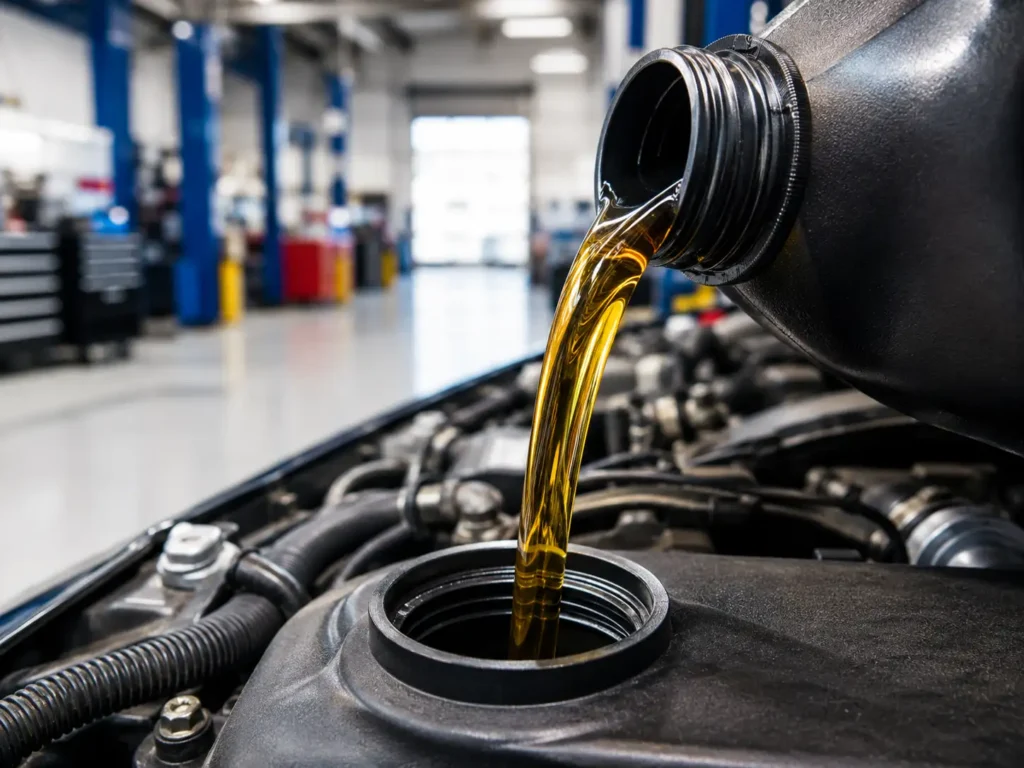
Maintaining the exact fluid level in the 6.4L HEMI is critical for long-term engine longevity.
The internal rotating assembly of this massive V8 moves an incredible amount of air and fluid within the crankcase.
Overfilling the engine can lead to a dangerous condition known as crankshaft aeration.
Aeration occurs when the spinning crankshaft whips the excess oil in the pan into a frothy, bubbly mixture.
These microscopic air bubbles are then sucked into the oil pump and pushed into the delicate hydraulic lifters.
Air does not compress like fluid, causing the lifters to collapse, resulting in massive valvetrain damage and loud ticking noises.
Conversely, underfilling the engine risks catastrophic oil starvation under heavy load.
This starvation is especially dangerous during high-G cornering in SRT models, where the oil sloshes to one side of the pan.
It is equally destructive during extreme towing inclines in Ram HD trucks, where gravity pulls oil away from the pickup tube.
Detailed 6.4 HEMI Oil Capacity Matrix
To ensure absolute clarity, we have compiled the standardized oil capacities across all major 6.4L HEMI applications.
The following data outlines the requirements for every platform that has ever utilized this specific powerplant.
| Vehicle Model | Engine Application | Model Years | Oil Capacity (with filter) | Oil Viscosity |
| Ram 2500 / 3500 HD | 6.4L HEMI V8 (BGE) | 2014–2026 | 7.0 Quarts (6.6 L) | 0W-40 Full Synthetic |
| Dodge Charger Scat Pack / SRT | 6.4L 392 HEMI V8 | 2011–2023 | 7.0 Quarts (6.6 L) | 0W-40 Full Synthetic |
| Dodge Challenger Scat Pack / SRT | 6.4L 392 HEMI V8 | 2011–2023 | 7.0 Quarts (6.6 L) | 0W-40 Full Synthetic |
| Jeep Grand Cherokee SRT | 6.4L 392 HEMI V8 | 2012–2021 | 7.0 Quarts (6.6 L) | 0W-40 Full Synthetic |
| Jeep Wrangler Rubicon 392 | 6.4L HEMI V8 | 2021–2026 | 7.0 Quarts (6.6 L) | 0W-40 Full Synthetic |
| Dodge Durango SRT | 6.4L 392 HEMI V8 | 2018–2024 | 7.0 Quarts (6.6 L) | 0W-40 Full Synthetic |
All capacities listed in the table above include the volume required to fill the engine oil filter.
Technicians and owners must always verify the final fluid level using the engine oil dipstick.
You should only check the dipstick after running the engine briefly to circulate the fresh fluid through the new filter.
The engine must then be allowed to sit for several minutes after shutdown.
This waiting period ensures all upper cylinder oil drains back into the pan before taking a final, accurate reading.
Gas vs. Diesel: Avoiding the Cummins Mix-up
One of the most common and disastrous mistakes made by Ram 2500 and 3500 owners involves fluid confusion.
Because the heavy-duty Rams are famous for their 6.7L Cummins turbo diesel engines, maintenance information often gets crossed.
The 6.7L Cummins requires an enormous 12 quarts of heavy-duty diesel oil, typically 15W-40 or 5W-40 depending on the year.
If a 6.4L HEMI owner accidentally follows the Cummins specification, they will overfill their gasoline engine by a staggering 5 quarts.
This massive overfill will immediately blow out the rear main seal and hydrolock the lower rotating assembly.
Always verify that you are reading the gasoline 6.4L BGE manual specifications when servicing a heavy-duty Ram truck.
The Rheology and Engineering of 0W-40 Viscosity
The manufacturer explicitly and exclusively mandates SAE 0W-40 full synthetic motor oil for the 6.4L HEMI.
This requirement remains strict regardless of the ambient operating temperatures you live in.
This wide-range multigrade viscosity is specifically engineered to handle the unique thermal stresses generated by the massive 392 cubic-inch displacement.
The science of fluid flow, known as rheology, plays a massive part in this specific engineering choice.
Cold Flow Dynamics (The “0W” Factor)
The “0W” (Winter) rating ensures that the oil remains highly fluid and pumpable even in sub-zero freezing temperatures.
This extreme cold flow capability allows the mechanical oil pump to rapidly pressurize the valvetrain upon the very first crank.
Rapid pressurization is vital for the 6.4L engine’s architecture.
The hydraulic lifters require immediate, high-volume lubrication to prevent the dreaded “HEMI tick” during cold starts.
If a thicker winter weight, such as a 15W-40, were used, the thick sludge would delay oil delivery to the top of the engine block.
This dry startup period would cause immediate metal-on-metal scoring of the camshaft lobes.
High-Temperature High-Shear Stability (The “40” Factor)
The “40” rating indicates the oil’s resistance to thinning at extremely high operating temperatures.
This provides an exceptionally strong High-Temperature High-Shear (HTHS) film barrier.
This robust film thickness is absolutely necessary to protect the camshaft lobes and lifter rollers from extreme mechanical friction.
Such friction is prevalent when towing heavy fifth-wheel trailers or operating under aggressive track conditions.
Conventional, petroleum-based oils and cheaper synthetic-blend oils degrade rapidly under these immense thermal loads.
For this reason, non-synthetic formulations are strictly prohibited by the manufacturer and will instantly void your warranty.
Core Data for Chart:
- 5W-20 HTHS Viscosity (Standard 5.7L Oil): ~2.6 mPa·s
- 5W-30 HTHS Viscosity (Standard V6 Oil): ~3.1 mPa·s
- 0W-40 HTHS Viscosity (6.4L HEMI Oil): ~3.6 mPa·s (Demonstrating a massive 38% thicker protective barrier under extreme heat).
Deep Dive: Chrysler Material Standards
Merely selecting a generic 0W-40 synthetic oil off the shelf of a local auto parts store is highly insufficient for the 6.4L HEMI.
The chemical oil formulation must pass rigorous manufacturer-specific testing protocols.
These tests guarantee compatibility with the engine’s sensitive emissions equipment and complex hydraulic systems.
These testing protocols are codified into official Chrysler Material Standards.
These specific callouts are explicitly listed in the owner’s manuals of all 6.4L vehicles to ensure consumer compliance.
The Legacy MS-12633 Specification
For 6.4L model years ranging from 2011 through 2021, the strictly required standard is Chrysler MS-12633.
This proprietary specification mandates exceptional chemical resistance to high-heat oxidation.
It also requires rigorous internal deposit control and features robust anti-wear additive packages.
These additive packages are designed specifically for the flat tappet and roller lifter designs used extensively in the HEMI engine family.
Oils meeting the MS-12633 standard are engineered to maintain their viscosity index over heavily extended drain intervals.
This prevents the premium oil from shearing down into a thinner grade, like a 0W-30, over time.
Shear stability is critical because a 0W-40 oil that degrades into a thinner fluid will utterly fail to protect the heavy rotating assembly.
The Modern MS-A0921 Specification
Beginning globally with the 2022 model year, Stellantis introduced the updated MS-A0921 material standard.
This new standard was developed in strict tandem with the latest API SP and ILSAC GF-6 industry classifications.
The primary engineering focus of this update was preventing Low-Speed Pre-Ignition (LSPI) and improving timing chain wear protection.
LSPI is a catastrophic event where fuel ignites prematurely in the cylinder, often destroying pistons instantly.
While LSPI is mostly a threat to turbocharged engines, the advanced additive package still highly benefits the naturally aspirated 6.4L HEMI.
The new MS-A0921 standard is fully, 100% backward-compatible with all earlier MS-12633 applications.
Therefore, owners of older 6.4L vehicles can seamlessly and safely transition to the newer MS-A0921 certified oils.
Manufacturer Approved 0W-40 Oil Formulations
The exact chemical composition of your motor oil is just as critical as its physical SAE viscosity.
Because the 6.4L HEMI produces immense cylinder pressures, the oil’s base stock must be highly refined.
It must resist thermal breakdown, volatilization, and the rapid accumulation of combustion blow-by gases.
Below are the most prominent and trusted engine oils that meet or exceed the rigorous Chrysler material standards.
Pennzoil Ultra Platinum 0W-40
(https://www.ebay.com/itm/176716050634) is the undisputed, factory-fill oil for all Chrysler SRT and Ram 6.4L engines rolling off the assembly line.
This premium lubricant is chemically unique because it is formulated using proprietary PurePlus Technology.
PurePlus is a patented gas-to-liquid process that synthesizes the base oil directly from pure natural gas.
Because it originates from natural gas rather than pumped crude oil, the resulting base stock is crystal clear.
It is completely devoid of the crude-based impurities that contribute to engine sludge and performance-robbing varnish.
Pennzoil Ultra Platinum offers superior piston cleanliness, keeping engines up to 65% cleaner than industry standards require.
It explicitly carries both the MS-12633 and MS-A0921 certifications right on the bottle.
This makes it the absolute safest and most reliable choice for maintaining factory warranty coverage across all 6.4L platforms.
AMSOIL Signature Series 0W-40
For extreme, severe-duty applications, many automotive enthusiasts and fleet operators turn to AMSOIL Signature Series 0W-40.
This boutique, top-tier synthetic oil is heavily favored by owners of heavily modified 6.4L engines.
It is also incredibly popular among Ram 2500 trucks subjected to constant, maximum-capacity towing through mountainous terrain.
AMSOIL delivers exceptional oxidation resistance and massive acid-neutralizing power.
This chemical power prevents the corrosive internal wear that accumulates during extended heavy-load operations.
While independent testing shows it massively exceeds the performance parameters of the Chrysler standards, buyers should verify warranty details.
Owners must confirm specific warranty compliance if their vehicle is still under the strict factory powertrain guarantee.
Valvoline European Vehicle Full Synthetic
Valvoline offers an advanced full synthetic 0W-40 that explicitly lists the MS-12633 and MS-A0921 specifications on its technical data sheet.
This specialized oil features a highly robust detergent package designed to prevent the formation of varnish.
It keeps the intricate, microscopic oil passages of the engine block flowing smoothly at all times.
Heavy-duty truck owners who tow daily frequently utilize this Valvoline formulation for its excellent thermal stability.
It provides remarkable resistance to thermal thinning under extreme, sustained heat.
The Mobil 1 Compatibility Debate
A frequent point of massive confusion among 6.4L HEMI owners involves the use of Mobil 1 0W-40.
While Mobil 1 is universally recognized as a premier, race-proven synthetic oil, the standard retail formulation is problematic.
The standard Mobil 1 0W-40 widely available at big-box retail stores often lacks the specific Chrysler MS-12633 or MS-A0921 certifications.
However, the specific “Mobil 1 FS European Car Formula 0W-40” has historically been cited as MS-12633 compliant.
In fact, it served as the actual factory fill for certain early SRT models before the manufacturer transitioned to Pennzoil.
Owners must meticulously inspect the back label of any Mobil 1 bottle before purchasing.
Ensure the Chrysler material standard is explicitly printed in the specifications list.
If the specific Chrysler MS code is missing, that particular batch of oil should absolutely not be used in the 6.4L HEMI.
Understanding the “HEMI Tick” and MDS Lifter Failure
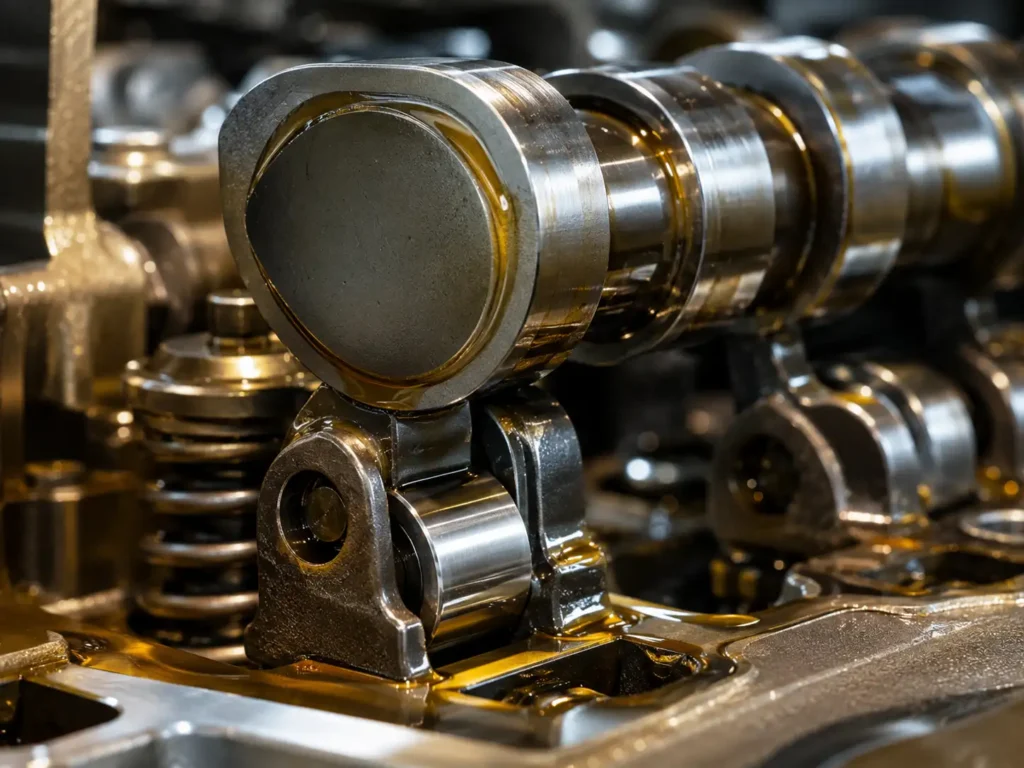
No deeply researched discussion of 6.4L HEMI oil is complete without addressing the infamous “HEMI tick.”
This ticking phenomenon is directly associated with catastrophic valvetrain failures across the entire engine platform.
This issue is intimately tied to the engine’s Multi-Displacement System (MDS) and the quality of lubrication reaching the lifters.
Understanding the precise mechanical etiology of this failure highlights exactly why proper oil maintenance is your only defense.
The Mechanics of the MDS System
The Multi-Displacement System was engineered to improve fuel economy during light-load highway cruising.
It achieves this by electronically deactivating four of the eight cylinders, effectively turning the massive V8 into a 4-cylinder engine.
This mechanical deactivation is achieved entirely through specialized, hydraulically controlled MDS lifters.
Inside these complex lifters are highly delicate, oil-controlled locking pins.
When the engine computer commands cylinder deactivation, oil pressure is precisely routed to the lifter body.
This pressure disengages the internal pin, allowing the lifter body to collapse upon itself.
This collapse prevents the camshaft from opening the engine valves, sealing the cylinder.
How Lubrication Failure Causes the Tick
The lifters in the Gen 3 HEMI block rely heavily on both precise oil pressure and splash lubrication from the rotating assembly below.
Unfortunately, the engine features a notoriously high camshaft centerline, located 7.464 inches above the crank.
This immense height means that at low engine RPMs, the lifters receive very minimal splash lubrication.
If the engine oil is degraded, heavily oxidized, or the wrong viscosity entirely, disaster strikes.
The delicate locking pins inside the MDS lifters can easily stick or completely fail to operate.
When a pin malfunctions, or the tiny needle bearings inside the lifter roller dry out, the roller wheel seizes instantly.
The Catastrophic Result of Neglect
Once the lifter roller seizes, it stops spinning smoothly against the hardened steel of the camshaft.
Instead, the locked wheel begins to skid violently across the cam lobe.
This violent metal-on-metal skidding grinds the hardened steel into thousands of microscopic metal shavings.
This rapid wear creates massive excess play in the valvetrain.
This loose clearance results in a loud, rhythmic ticking noise that perfectly matches the engine’s RPM.
Eventually, this wear leads to a total cylinder misfire code (P0300) as the cam lobe is entirely wiped out.
Repairing this damage necessitates a complete engine teardown, head removal, and a highly expensive camshaft replacement.
Mechanical Prevention Through Oil Strategy
Preventing MDS lifter failure requires a highly proactive, oil-centric maintenance approach.
First, strictly using the mandated 0W-40 synthetic oil ensures that the fluid is thin enough upon freezing cold startups.
This extreme fluidity guarantees it can immediately reach the high camshaft centerline before friction takes its toll.
Second, owners must maintain a strict 5,000-mile oil change interval.
Do not blindly follow the extended 8,000-mile computer monitor if you drive in stop-and-go traffic.
Changing the oil frequently flushes out microscopic contaminants before they can accumulate and clog the tiny MDS solenoid screens.
Finally, utilizing a premium oil filter with an elite anti-drainback valve ensures that oil remains trapped in the upper engine block overnight.
This trapped oil is the ultimate safeguard, effectively eliminating the dry, metal-on-metal starts that kill HEMI engines.
6.4 HEMI Oil Filter Deep Dive: OEM vs Aftermarket
Selecting the absolutely correct oil filter is equally as important as choosing the right 0W-40 synthetic oil.
The filter must withstand massive internal oil pump pressures without rupturing.
It must continuously capture microscopic metal particulates while maintaining a steady flow rate.
This unrestricted flow rate is vital to feed the hydraulically demanding VVT and MDS systems.
The manufacturer specifies different original equipment (OEM) part numbers depending on whether the engine is in a car or a truck.
However, many of these filters actually share identical thread pitches and external gasket diameters.
| Filter Brand & Type | Mopar Part Number | Primary Application | Technical Notes |
| Mopar OEM (Standard Car) | 4884899AC / MO-899 | Charger, Challenger, Grand Cherokee | 22mm thread, internally lubricated gasket, standard bypass valve. |
| Mopar OEM (HD Truck) | 4892339BE / MO-339 | Ram 2500 / 3500 HD | Designed specifically for heavy truck oil pan clearances and sustained flow. |
| Mopar SRT Performance | 05038041AA / MO-041 | Viper, Hellcat, SRT 392 | Premium synthetic media, higher bypass pressure rating, superior filtration. |
| WIX XP Premium | 57899XP (Aftermarket) | All 6.4L Applications | Fully synthetic media, wire-backed construction, built for extended intervals. |
The Mopar MO-899 and 4884899AC
The standard, factory replacement filter for most 6.4L passenger vehicles is the Mopar MO-899, which corresponds directly to part number 4884899AC.
This dependable filter features a standard 22mm mounting thread.
It is engineered with an adhesive-filled, double-lock seam capable of withstanding up to 300 p.s.i. of internal burst pressure.
It utilizes a high heat-resistant nitrile anti-drainback valve.
This valve is critical for trapping oil in the filter housing when the engine is turned off.
This trapped oil guarantees immediate hydraulic pressure to the lifters the moment the ignition is engaged the next morning.
The SRT Premium Upgrade: 05038041AA
For performance enthusiasts looking for the ultimate factory protection, the Mopar 05038041AA filter is highly coveted.
This robust filter was originally engineered for the massive V10 Dodge Viper engine.
It was later adopted exclusively for the supercharged Hellcat platforms due to its incredible flow rates.
However, this filter is fully compatible with the naturally aspirated 6.4L HEMI and threads right on.
When physically dissected, the 041 filter reveals significantly different internals compared to the standard MO-899.
It features a much higher-quality synthetic blending media designed to trap smaller micron particles.
It also utilizes a modified bypass valve pressure rating designed to accommodate the extreme oil volume moved by high-performance oil pumps.
Aftermarket Excellence: WIX 57899XP
Drivers who prefer premium aftermarket solutions frequently rely on the(https://www.rockauto.com/en/catalog/ram,2024,2500,6.4l+v8,3455157,engine,oil+filter,5340).
The “XP” designation indicates that the filter utilizes wire-backed, fully synthetic filtration media.
This is vastly superior to the traditional cellulose paper media found in cheap economy filters.
This synthetic media is highly resistant to chemical breakdown when submerged in modern synthetic oils for months at a time.
It provides exceptional long-life durability, preventing the media from tearing and bypassing dirty oil into the engine.
This makes it the perfect companion for owners who subject their 6.4L engines to severe duty cycles, off-roading, or intense track days.
Service Intervals: Normal vs Severe Duty Operation
Modern vehicle computer systems feature an automated, dashboard-mounted Oil Life Monitor (OLM).
This complex algorithm tracks driving habits, ambient temperatures, and engine hours to calculate remaining oil life.
Under perfectly ideal, standard highway driving conditions, Chrysler officially states that the oil and filter can be changed every 6,000 to 8,000 miles.
However, relying solely on this maximum allowable interval is heavily discouraged by independent automotive experts and professional engine builders.
The Case for the 5,000-Mile Severe Duty Interval
The vast majority of 6.4L HEMI vehicles actually operate under what the manufacturer defines as “Severe Duty” conditions.
Severe duty encompasses frequent short trips where the engine fails to reach full operating temperature.
It also includes stop-and-go urban traffic, heavy towing, off-roading, or aggressive track use.
Because the 6.4L engine’s valvetrain is notoriously sensitive to oil degradation, playing it safe is mandatory.
Staying on a conservative 5,000-mile or 6-month interval is the single best strategy to prevent premature component failure.
Frequent oil changes effectively flush out the microscopic metallic wear particles and acidic combustion byproducts.
Removing these contaminants early prevents them from accumulating and clogging the delicate MDS solenoid screens.
Track Day and Drag Racing Maintenance
For Dodge Charger and Challenger Scat Pack owners who frequently participate in drag racing or autocross events, the maintenance schedule must be significantly accelerated.
The extreme heat generated during sustained high-RPM track driving rapidly depletes the oil’s critical anti-wear additives.
This extreme abuse also mechanically shears the viscosity modifiers, turning the 0W-40 into a much thinner, less protective fluid.
Stellantis owner’s manuals explicitly state that vehicles subjected to track events require immediate service.
Owners should have their oil changed immediately before and after the track event to ensure peak lubricity and prevent bearing spin.
DIY Oil Change Guide: Ram 2500 6.4 HEMI
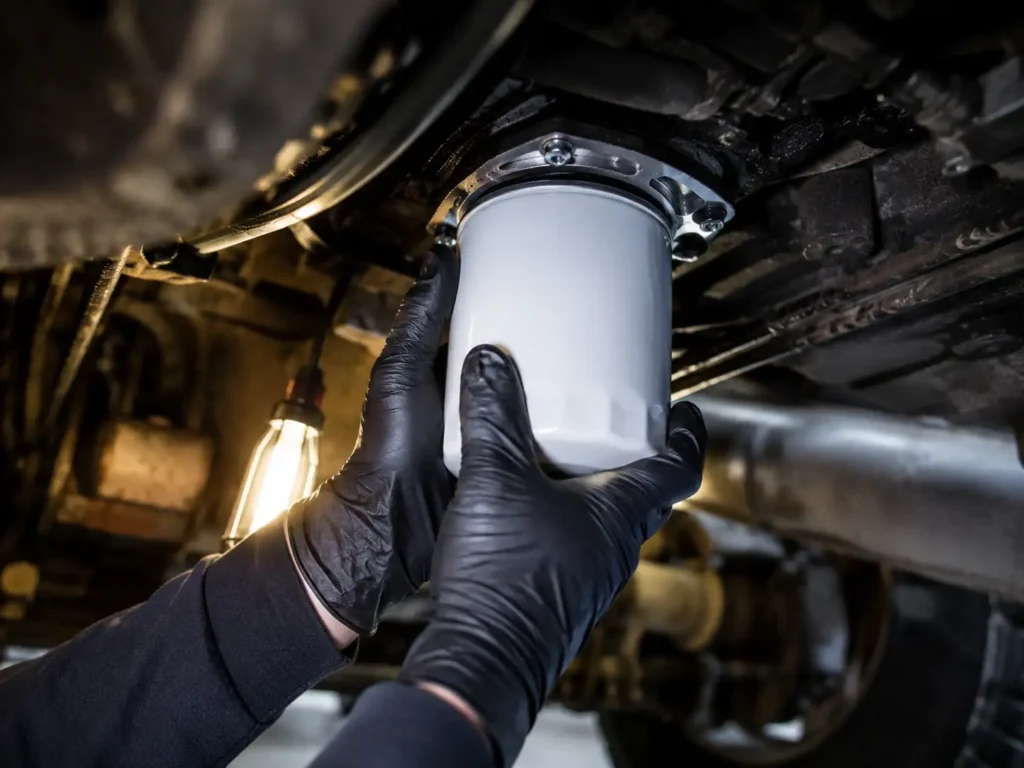
Performing an oil change on a heavy-duty Ram truck is a straightforward, highly rewarding process.
It allows owners to save money and ensure the job is done perfectly to their exact standards.
Because the HD truck sits exceptionally high off the ground, lifting the vehicle with a jack is rarely necessary.
This clearance makes it an incredibly accessible driveway project for most truck owners.
Required Tools and Supplies
- 7 Quarts of MS-A0921 approved 0W-40 Full Synthetic Oil.
- Premium Oil Filter (Mopar 4892339BE or WIX 57899XP).
- 13mm socket and standard ratchet wrench.
- Specialized oil filter wrench or adjustable filter pliers.
- Large capacity oil drain pan (minimum 10-quart capacity is recommended).
- Calibrated torque wrench.
Step-by-Step Procedure
- Warm the Engine: Run the truck for approximately 5 minutes to heat the internal oil. This decreases viscosity, allowing suspended contaminants to flow out of the pan much more easily.
- Position the Drain Pan: Slide under the truck, locate the oil pan drain plug at the bottom of the engine, and place the catch pan directly beneath it.
- Remove the Drain Plug: Using the 13mm socket, carefully loosen and remove the drain plug. Allow the full 7 quarts of hot oil to drain completely into the pan.
- Inspect and Reinstall the Plug: Inspect the rubber seal on the drain plug carefully. If it appears cracked or damaged, replace the entire plug. Thread the plug back in by hand, then tighten it with the torque wrench. The factory specification is 20 ft-lbs (or up to 25 ft-lbs depending on the specific model year).
- Remove the Oil Filter: Relocate the drain pan directly under the oil filter housing. Use the filter wrench to gently loosen the filter, allowing excess oil to drain down the sides before spinning it off completely. Ensure the old rubber gasket comes off with the filter and is not melted or stuck to the engine block.
- Install the New Filter: Dip a clean finger in fresh 0W-40 oil and heavily lubricate the rubber gasket of the new filter. Spin the new filter onto the engine by hand until the gasket makes firm contact with the base. Then, tighten it an additional 3/4 to 1 full turn by hand. Never use a wrench to tighten the new filter, as it will seize.
- Fill the Engine: Remove the yellow oil fill cap in the engine bay. Place a clean funnel in the hole and pour in exactly 7 quarts of the 0W-40 synthetic oil.
- Verify the Level: Start the engine and let it idle for 30 seconds to pressurize and fill the new filter. Shut the engine off, wait five full minutes, and check the dipstick to confirm the level is perfectly at the “FULL” mark.
DIY Oil Change Guide: SRT Cars & SUVs
The oil change process for the performance cars and SUVs utilizes the exact same 7-quart capacity and 0W-40 oil as the HD trucks.
However, because these vehicles feature significantly lower ground clearance and extensive aerodynamic belly pans, the physical procedure differs slightly.
Safety is paramount when lifting these heavy performance vehicles.
Step-by-Step Procedure
- Elevate the Vehicle: Safely raise the front of the vehicle using heavy-duty, low-profile ramps. Alternatively, use a high-lift floor jack and secure the vehicle on heavy-duty jack stands placed at the factory lift points.
- Remove the Aerodynamic Belly Pan: Most SRT and Scat Pack models feature a protective plastic or composite belly pan. This shield restricts direct access to the oil pan and filter. Use a socket set to remove the retaining bolts and a trim tool to remove the plastic push-clips to lower the shield.
- Drain the Oil: Locate the drain plug on the side or rear of the cast aluminum oil pan. Using a 13mm socket, remove the plug and drain the oil into an appropriate catch pan.
- Torque the Drain Plug: Once fully drained, carefully reinstall the drain plug by hand. The factory torque specification for the passenger car cast aluminum oil pans is strictly 20 ft-lbs. Over-torquing will easily and permanently strip the soft aluminum threads, requiring a highly expensive oil pan replacement.
- Replace the Filter: Remove the old MO-899 or SRT 041 filter. Wipe the engine mounting surface entirely clean with a rag. Pre-fill the new filter slightly with fresh oil (if the vertical mounting orientation allows without spilling). Lubricate the gasket, and install it firmly hand-tight.
- Refill and Reset: Pour the required 7 quarts of 0W-40 oil into the engine block. Reinstall the aerodynamic belly pan securely, carefully lower the vehicle to the ground, and start the engine. Finally, navigate through the steering wheel and dashboard menu to reset the electronic Oil Life Monitor back to 100%.
Advanced Fastener Torque Specifications
For professional technicians and hardcore DIY engine builders, knowing the exact torque specifications for oil-related components is vital.
When conducting deep engine maintenance, such as replacing an oil pump or dropping the oil pan, guesswork leads to catastrophic leaks.
The following torque values are explicitly documented for the 6.4L HEMI Gen III architecture.
| Engine Component | Fastener Specification | Torque Value |
| Oil Pan Drain Plug | 13mm Hex | 20 ft-lbs to 25 ft-lbs |
| Oil Pump Pickup Tube Bolt | Standard Hex | 21 ft-lbs |
| Oil Pump Pickup Tube Nut | Standard Hex | 16 ft-lbs |
| Oil Pump Attaching Bolts | Standard Hex | 21 ft-lbs |
| Oil Pump Cover Bolts | Standard Hex | 95 in-lbs |
Adhering strictly to these specifications ensures that the oil pickup tube remains securely fastened to the pump.
A loose pickup tube will draw in air alongside the oil, leading to aeration, oil pressure loss, and rapid bearing destruction.
Always use a properly calibrated torque wrench when working on the internal lubrication system.
FAQs
Can I use 5W-20 or 5W-30 in my 6.4L HEMI to improve fuel economy?
Absolutely not under any circumstances.
While the smaller 5.7L HEMI commonly utilizes 5W-20, the 6.4L engine generates significantly higher internal cylinder pressures and immense thermal loads.
Using a drastically thinner oil like 5W-20 in the massive 392 engine will severely compromise the High-Temperature High-Shear (HTHS) protective film.
This will result in rapid valvetrain wear, potential main bearing failure, and the immediate voiding of the factory powertrain warranty.
Furthermore, the hydraulic MDS system in the 6.4L is specifically calibrated for the distinct hydraulic resistance and flow rate of 0W-40.
Does the Jeep Wrangler Rubicon 392 take a different oil capacity?
No, the Jeep Wrangler Rubicon 392 is powered by the exact same 6.4L HEMI V8 architecture as its siblings.
It strictly requires the standard 7.0 quarts (6.6 liters) of 0W-40 synthetic oil during a change.
While a few isolated, third-party automotive lookup tools may occasionally list 6.7 quarts, this is generally considered a misprint.
The official manufacturer specifications, owner’s manual supplements, and major dealership service departments consistently verify the 7.0-quart capacity with a filter change.
Always verify the final fluid level on the dipstick to account for minor variations in oil pan drain-back.
What is the precise difference between Chrysler MS-12633 and MS-A0921?
MS-12633 is the legacy Chrysler material standard designed specifically for the 6.4L HEMI spanning from 2011 through 2021.
As global automotive lubrication technology advanced to combat Low-Speed Pre-Ignition (LSPI) and improve emissions compatibility, a new standard was needed.
Stellantis released the highly advanced MS-A0921 standard for 2022 and newer vehicles to align with modern API SP requirements.
The critical takeaway for consumers is that MS-A0921 is entirely, 100% backward-compatible.
If an oil is certified for MS-A0921, it is perfectly safe, highly recommended, and fully approved for use in older MS-12633 applications.
Will heavier oil like 15W-40 fix the “HEMI Tick”?
No, it will not fix it, and it will likely make the problem significantly worse.
Attempting to mask the audible “HEMI tick” by pouring in a thicker, heavy-duty diesel oil like 15W-40 is a catastrophic maintenance mistake.
The ticking sound is a physical, mechanical clearance issue—most often a failed lifter roller or a stuck MDS locking pin.
Pumping a highly viscous, thick oil into the engine will severely impede cold-start flow to the upper valvetrain.
This sluggish flow will dramatically accelerate the friction damage to the camshaft lobes.
If the tick is present, tear-down and mechanical diagnosis is required; fluid viscosity changes will absolutely not repair scored metal.
Is it completely normal for the 6.4L HEMI to tick loudly at startup?
According to the official Jeep and Mopar service manuals, a brief ticking noise is within normal operating parameters.
It is considered normal for the 6.4L HEMI to emit a ticking sound immediately after a cold start.
However, this is only acceptable provided the noise completely dissipates within approximately 30 seconds of run time.
This temporary noise occurs as the mechanical oil pump rapidly fills the hydraulic lifters to achieve zero valve lash.
If the ticking persists beyond 30 seconds, or occurs loudly when the engine is fully warmed up, it is not normal.
Persistent ticking strongly indicates a mechanical failure within the valvetrain that requires immediate professional attention.
Why do some expert sources recommend 5W-40 for the Ram 2500 6.4L?
While 0W-40 is the official, universal factory specification for all temperatures, the trucking community sometimes deviates.
Some heavy-duty fleet operators running Ram 2500 and 3500 trucks heavily opt for 5W-40 full synthetic.
In extremely hot, desert climates or applications involving severe, sustained towing at maximum Gross Combined Weight Ratings (GCWR), 5W-40 has its benefits.
A premium 5W-40 can provide slightly better thermal stability and slightly less volatility under extreme load.
Both viscosities provide a 40-weight operating film at running temperatures.
However, the 0W-40 remains the vastly superior choice for mitigating cold-start wear across a much broader range of winter climates.
Do I absolutely need to buy my oil and filter directly from the dealership?
No, you do not need to visit the dealer parts counter.
The Magnuson-Moss Warranty Act federally protects consumers’ rights to use aftermarket parts without voiding their warranty.
However, the aftermarket oil must explicitly display the required Chrysler material standard (MS-12633 or MS-A0921) on the rear label.
Furthermore, the replacement filter must meet or exceed all OEM specifications.
Using premium off-the-shelf products like Pennzoil Ultra Platinum and WIX XP filters is perfectly acceptable.
It will maintain all factory warranty protections, provided the owner keeps detailed receipts and strict records of the maintenance intervals.
What happens if I use conventional oil in my 6.4L HEMI?
Using conventional, petroleum-based motor oil in the 6.4L HEMI is strictly prohibited by the manufacturer.
Conventional oils cannot withstand the extreme thermal loads generated by the 392 engine architecture.
The oil will rapidly oxidize, break down, and form thick sludge within the tiny MDS solenoids and oil galleys.
This sludge will choke off oil supply to the valvetrain, leading to immediate lifter failure and catastrophic engine damage.
Furthermore, the use of conventional oil will instantly and permanently void the manufacturer’s powertrain warranty.
Future Outlook: The 6.4L HEMI and Lubrication Availability
As the automotive industry pivots toward forced induction and electrification, the era of the massive, naturally aspirated V8 is closing.
Stellantis is currently transitioning its lineup to the 3.0L Hurricane Twin-Turbo inline-six engines.
However, the sheer volume of 6.4L HEMI engines on the road guarantees massive aftermarket support for decades to come.
Millions of Ram heavy-duty trucks, Scat Packs, and SRT vehicles will require specific 0W-40 oil formulations.
Oil manufacturers like Pennzoil, Amsoil, and Valvoline will continue to produce MS-A0921 certified oils well into the future.
The demand for high-quality, high-HTHS synthetic oils will not diminish as these engines age into the classic and collector markets.
In fact, as these engines accumulate high mileage, strict adherence to these lubrication standards becomes even more critical to their survival.
Conclusion
The 6.4L HEMI V8 is an incredibly robust, high-performance engine that offers unmatched torque, towing capability, and horsepower.
However, its highly sophisticated hydraulic valvetrain and aggressive cam profiles make it entirely unforgiving of poor, lazy maintenance practices.
To ensure absolute maximum longevity and prevent the notorious lifter failures, owners must strictly adhere to the rules.
You must consistently utilize the exact 7-quart capacity using exclusively SAE 0W-40 full synthetic oil.
Verifying that the chosen oil carries the Chrysler MS-12633 or MS-A0921 certification is the only way to guarantee safety.
This certification ensures the fluid can mathematically withstand the engine’s extreme thermal and shear loads.
Coupling this exact fluid specification with a high-flow, premium filter is equally mandatory.
Filters such as the Mopar MO-899, the SRT 041 upgrade, or the WIX 57899XP ensure the MDS system remains clean and highly pressurized.
Finally, abandoning the extended 8,000-mile computer intervals in favor of a highly proactive 5,000-mile severe duty schedule is highly recommended.
This aggressive maintenance strategy will keep the legendary 392 engine running cleanly and powerfully for hundreds of thousands of miles.
Related Guides
- 6.7 Cummins Oil Type and Capacity
- Cummins ISB 6.7 Oil Capacity
- Common 6.7 Cummins Problems
- 2015 Ram 1500 5.7 Oil Capacity
- 2022 Ram 1500 5.7 Oil Capacity
- Ram 1500 Transmission Fluid Type Chart
- Dodge Ram 2500 Payload Capacity Chart