Cummins ISB 6.7 Oil Capacity and Maintenance Guide 2026

If you own a Ram 2500, Ram 3500, or a commercial medium-duty truck powered by the legendary 6.7L Cummins Turbo Diesel, you are driving a powerhouse. This inline-six engine is renowned for its million-mile durability and staggering torque output.
However, that legendary reliability is entirely dependent on one critical factor: proper lubrication. Getting your Cummins ISB 6.7 oil capacity right is not just a suggestion. It is a strict mechanical requirement for engine longevity.

Prime for Young Adults — 6 Months Free
Students and 18–24s get six months of Prime free, then half price.
Start 6 Months FreeThis comprehensive, data-driven guide covers everything you need to know about the 6.7L Cummins engine oil system. We will explore exact oil capacities, generational viscosity shifts, and the best aftermarket upgrades to keep temperatures down.
We also dive deep into specific Fleetguard filter part numbers, severe-duty maintenance schedules, and commercial vs. consumer applications. Whether you are a DIY mechanic in your driveway or a fleet manager overseeing a dozen heavy-duty trucks, this guide provides the expert-level insights you need.
The 6.7L Cummins Oil Authority
Recommended Best Deal Products


Comprehensive data and technical specifications for the world’s most durable medium-duty engine.
The Lifeblood of the Workhorse
The Cummins ISB 6.7 is a mechanical marvel, but its reliability hinges on 12 quarts of precision-engineered oil. This lubricant doesn’t just reduce friction; it acts as a coolant for VGT turbochargers and a suspension medium for soot generated by modern EGR systems.
Getting the capacity and viscosity right is the difference between a million-mile engine and a catastrophic valvetrain failure.
Oil Pan Capacity Comparison
Recommended Best Deal Products


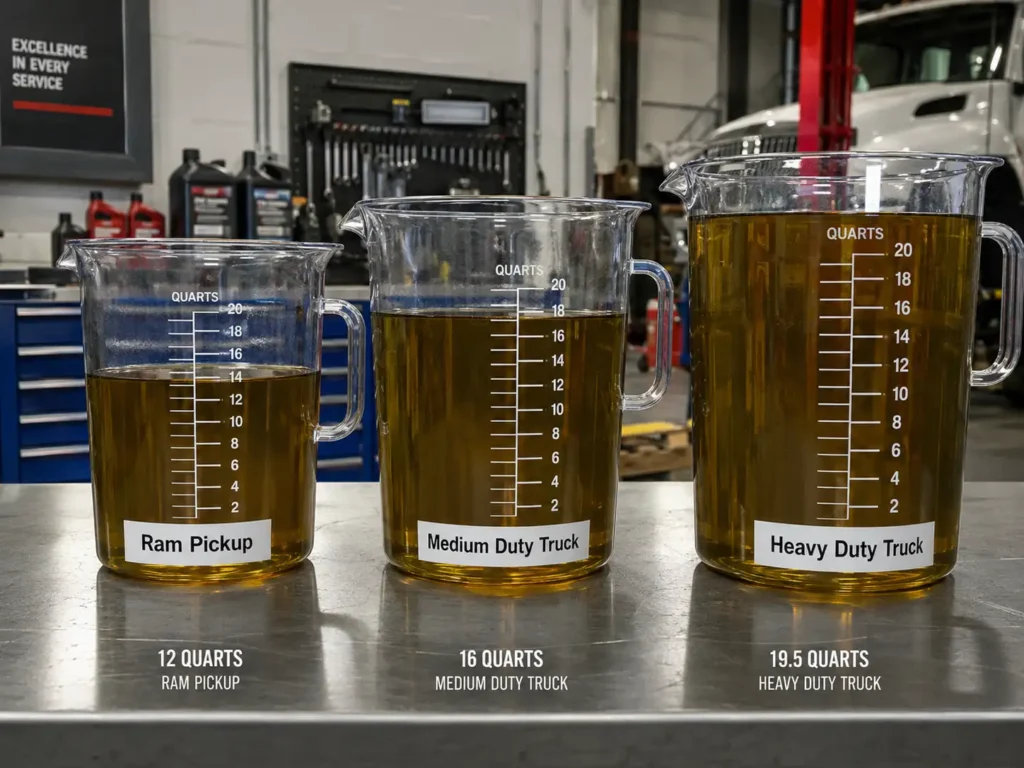
Comparing the standard consumer Ram pickup sump against heavy-duty commercial configurations found in Freightliner and International chassis.
Generational Viscosity Evolution
The 2019 redesign shifted the 6.7L Cummins from solid lifters to hydraulic lash adjusters. This engineering change fundamentally altered the oil requirements, making older 15W-40 oils dangerous for newer blocks.
2007.5 – 2018 (Legacy)
- 1 Standard: 15W-40 (Above 0°F)
- 2 Cold Start: 5W-40 Synthetic
- 3 Valvetrain: Solid Lifters
2019 – 2026 (Modern)
- 1 Standard: 10W-30 (Above 0°F)
- 2 Cold Start: 5W-40 Synthetic
- 3 Valvetrain: Hydraulic Lifters
Filtration Efficiency Analysis
Recommended Best Deal Products

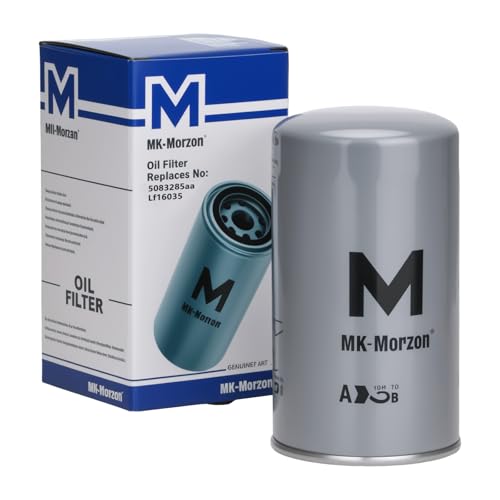
Comparing the standard cellulose Fleetguard LF3972 against the multi-layer synthetic StrataPore LF16035 upgrade.
Standard Cellulose (LF3972)
95% Efficiency @ 30 Microns

Audible — Listen Free for 30 Days
One free credit a month and thousands of titles included.
Listen Free for 30 DaysStrataPore Synthetic (LF16035)
100% Efficiency @ 30 Microns
The “Smart Fill” Methodology
Warm Up Engine
Run for 10 mins to mobilize soot and suspended contaminants.
Complete Drain
Remove plug (3/8″ drive) and drain for minimum 15 minutes.
Filter Pre-Fill
Fill the new LF16035 with 1 quart of oil before installing to prevent dry start.
Incremental Fill
Add 10 quarts, start engine, then top off to the dipstick mid-point.
The Complete Fluid Ecosystem
68RFE Total System Volume
Mopar 10-Year OAT Mix
Avg. Payload Capacity
Audible Premium Plus — Annual Membership
12 audiobook credits up front, plus the full Audible catalogue.
See Annual PlansDRW 12.0 AAM Differential
The Baseline: How Much Oil Does a 6.7L Cummins Take?
When preparing for an oil change, the very first question is simple but vital. How many quarts of oil do you actually need?
For the vast majority of Dodge Ram and Ram Heavy Duty trucks equipped with the 6.7L Cummins (2007.5 through 2026), the standard engine oil capacity is exactly 12 quarts, or 11.4 liters.
This 12-quart capacity includes the volume required to fill the oil filter.
If you were to somehow perform an oil change without changing the filter, the engine would only require about 11 to 11.5 quarts.
However, changing the oil without replacing the filter is highly discouraged. Leaving a dirty filter in place forces fresh oil through contaminated media.
For commercial applications like Freightliner or International trucks, the oil pan sizes are completely different from passenger trucks.
Medium-duty commercial B6.7 engines utilize either a standard 15-quart pan (16 quarts total system capacity) or a high-capacity 18.5-quart pan (19.5 quarts total system capacity).
Why Does the 6.7 Cummins Need So Much Oil?
You might wonder why a 6.7-liter displacement engine requires a massive three gallons of oil in passenger trucks, or nearly five gallons in commercial chassis.
The answer lies in thermal mass, cooling dynamics, and soot dispersion.
Diesel engines, particularly those utilizing Variable Geometry Turbochargers (VGT) and high-pressure common-rail fuel injection, generate immense internal heat.
The engine oil serves as a primary cooling medium, circulating through oil cooler passages and spraying under the pistons.
Three gallons of engine oil provide enough thermal mass to absorb this extreme heat. It protects the pistons, bearings, and turbocharger without experiencing thermal breakdown.
Furthermore, modern emissions systems like Exhaust Gas Recirculation (EGR) introduce high amounts of exhaust soot back into the crankcase.
A larger oil capacity allows the oil’s detergent and dispersant additives to suspend this soot safely. It prevents the soot from clumping together and turning into abrasive sludge.
Generational Breakdown: 6.7 Cummins Oil Specs by Year
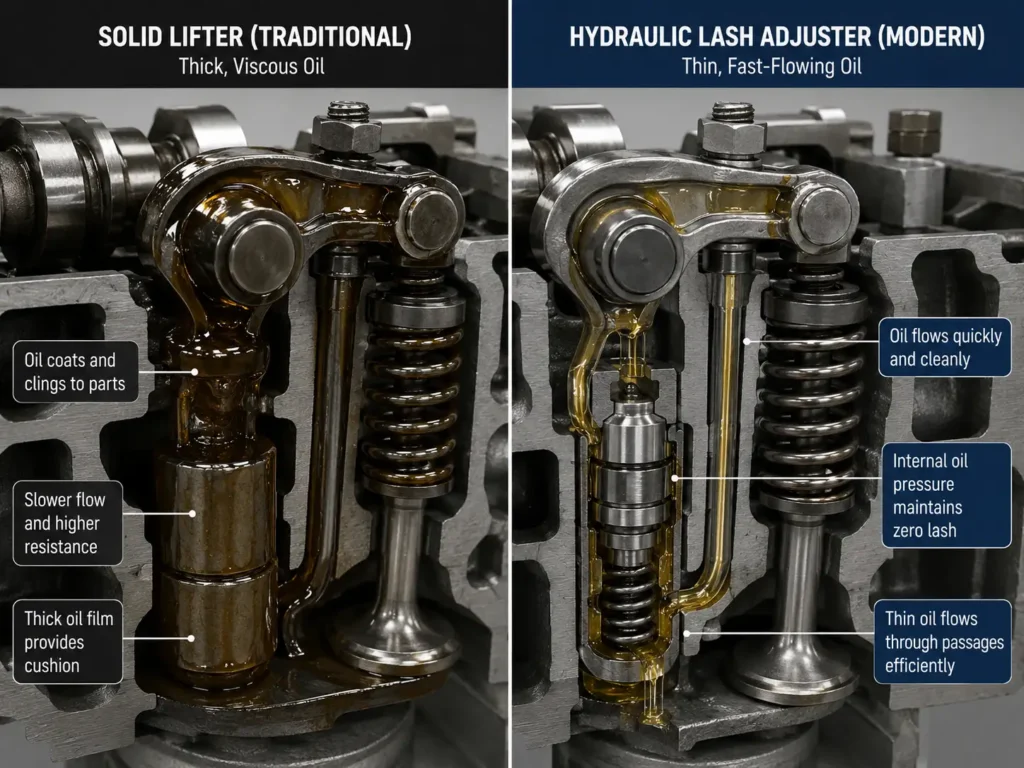
While the 12-quart capacity has remained remarkably consistent across the 6.7L Cummins’ lifespan in Ram trucks, the chemistry of the oil has not.
The specific type of oil you put in that 12-quart sump has changed dramatically over the last fifteen years.
Understanding the difference between a 2012 Cummins and a 2021 Cummins is absolutely critical.
Putting the wrong oil viscosity in a newer truck can cause catastrophic valvetrain damage.
Let’s break down the engine oil specifications by generation to ensure your engine remains fully protected.
2007.5 – 2018 Model Years (Solid Lifters)
The 6.7L Cummins debuted midway through the 2007 model year, replacing the highly revered 5.9L Cummins.
These early and mid-generation 6.7L engines featured traditional, solid valve lifters.
Because of this traditional valvetrain architecture, the engines were highly tolerant of thicker, heavier oils.
For 2007.5 through 2018 models, the factory recommendation is 15W-40 engine oil for ambient temperatures above 0°F (-18°C).
If you regularly operate the truck in temperatures below 0°F, Cummins recommends stepping down to a 5W-40 full synthetic.
This ensures proper cold-flow characteristics so the oil pump does not starve the engine on freezing mornings.
The oil you choose must meet API CJ-4 or API CK-4 standards, as well as the Cummins CES 20081 engineering specification.
2019 – 2026 Model Years (Hydraulic Lifters)
When Ram redesigned their Heavy Duty truck lineup for 2019, the 6.7L Cummins received a massive internal overhaul.
The most significant mechanical change was the transition from solid lifters to hydraulic valve lash adjusters.
This redesign completely eliminated the need for routine 150,000-mile valve lash adjustments, saving fleet owners significant maintenance costs.
However, hydraulic lifters require thinner, faster-flowing oil to pump up properly when the engine is cold.
Because of this, Cummins strictly revised the oil specification. You can no longer use 15W-40 in a 2019 or newer 6.7L Cummins.
According to an official Technical Service Bulletin, using 15W-40 in these newer engines will cause deposits in the hydraulic lifters.
This leads to excessive valvetrain noise, improper valve seating, and eventual engine damage.
For 2019 to 2026 models, you must use 10W-30 heavy-duty diesel oil for temperatures above 0°F.
For sub-zero climates, or for an excellent all-season oil, a full-synthetic 5W-40 is highly recommended by Ram and Cummins.
The newer engines require oil meeting the FCA Material Standard MS-10902, API CK-4, and Cummins CES 20086 specifications.
Oil Specification Comparison Matrix
| Engine Generation | Standard Viscosity (>0°F) | Cold Weather Viscosity (<0°F) | Key Specifications Required | Valvetrain Type |
| 2007.5 – 2018 | 15W-40 | 5W-40 Synthetic | API CJ-4/CK-4, CES 20081 | Solid Lifters |
| 2019 – 2026 | 10W-30 | 5W-40 Synthetic | API CK-4, MS-10902, CES 20086 | Hydraulic Lifters |
Demystifying the Specs: CK-4, CES 20086, and MS-10902
When you walk into an auto parts store, staring at a wall of heavy-duty diesel oil can be highly intimidating.
The labels are covered in complex alphanumeric codes and industry certifications.
To ensure you are using the correct fluids as outlined by Mopar Vehicle Info, you must understand what these codes actually mean for your engine.
API CK-4: This is the American Petroleum Institute’s current standard for heavy-duty diesel engine oils.
Introduced in 2017, the CK-4 standard replaced the older CJ-4 standard to meet stricter modern emissions requirements.
CK-4 oils are specifically formulated to withstand higher oxidation rates, combat shear loss under heavy loads, and prevent aeration.
They are also strictly formulated as low-ash oils. Low-ash content is mandatory to protect your Diesel Particulate Filter (DPF) from permanent clogging.
Cummins CES 20086: This is Cummins’ proprietary in-house engineering standard for engine oil.
It builds upon the API CK-4 baseline but includes far more rigorous testing specific to Cummins’ unique engine architecture.
If an oil bottle lists CES 20086 approval, you can be absolutely confident it has been tested to prevent scuffing and wear inside a Cummins block.
Chrysler MS-10902: This is the specific FCA (Fiat Chrysler Automobiles) material standard cited in late-model Ram 2500 and 3500 owner’s manuals.
When shopping for oil for a 5th Generation (2019+) Ram HD, always look for the MS-10902 approval on the back of the 10W-30 or 5W-40 bottle.
Using an oil without this certification gives the dealership grounds to deny warranty claims if a valvetrain failure occurs.
The Filter Factor: Fleetguard Filtration Explained
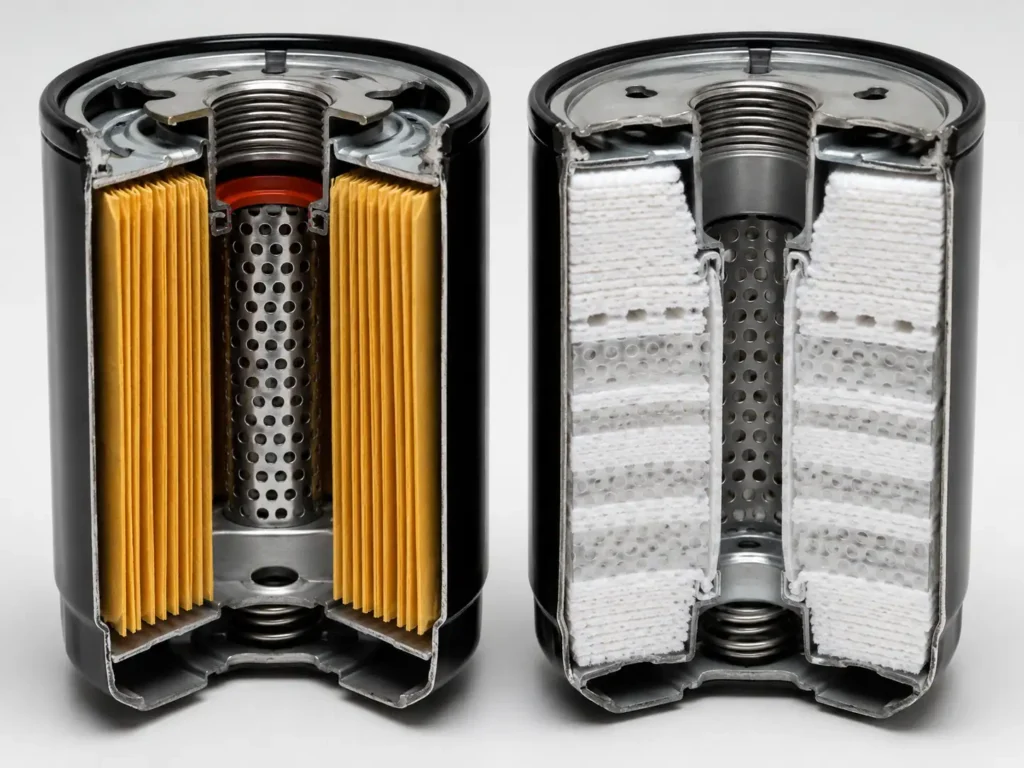
Your premium synthetic oil is only as good as the filter cleaning it.
For the 6.7L Cummins, the undisputed king of factory filtration is Fleetguard.
Fleetguard is an aftermarket filtration brand wholly owned by Cummins, meaning their filters are engineered alongside the engines themselves.
While you can buy cheap aftermarket filters at any big-box store, running OEM Fleetguard filters is the best way to ensure proper flow and particle capture.
There are two primary oil filters discussed in the Ram Cummins community: the standard cellulose filter and the premium synthetic media filter.
For commercial chassis operators, there is a third, highly specialized filter you must know about.
Fleetguard LF3972 (The Standard Choice)
The LF3972 is the standard, OEM-replacement spin-on lube filter for the Dodge/Ram 2500 and 3500 from 1994 to 2018.
It remains a perfectly acceptable fit for newer 2019+ models as well.
This filter utilizes traditional cellulose filter media. It offers a tested filtration efficiency of 95% at 30 microns.
For stock trucks driven under normal conditions and following standard oil change intervals, the LF3972 is a highly reliable, cost-effective option.
Fleetguard LF16035 (The StrataPore Upgrade)
If you tow heavy fifth-wheel trailers, idle frequently, or simply want the best protection money can buy, you should upgrade to the Fleetguard LF16035.
This filter is a direct physical replacement for the LF3972, threading perfectly onto the same mount.
However, it abandons standard paper media in favor of Fleetguard’s patented multi-layer synthetic “StrataPore” media.
The synthetic StrataPore media achieves an incredible 100% efficiency rating at 30 microns.
Furthermore, the synthetic material causes nearly 50% less fluid flow restriction during cold starts compared to cellulose.
This means your bearings get critical lubrication much faster on a freezing morning.
Another major benefit of the LF16035 is its unique fluted shell design.
The fluted bottom allows for a much easier grip when using an end-cap style filter wrench, greatly simplifying removal from the tight Ram engine bay.
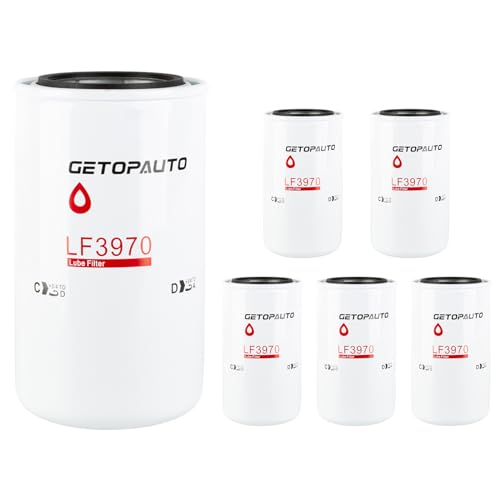
Fleetguard LF3970 (For Commercial B6.7 Use Only)
It is highly important to note the existence of the Fleetguard LF3970 filter.
This filter is strictly designed for Cummins ISB and QSB 6.7L industrial and commercial medium-duty engines.
You will find it on Freightliner, International chassis, and heavy agricultural equipment.
The crucial mechanical difference is that the LF3970 does not have an internal bypass valve.
Dodge/Ram pickup truck applications require a filter with an internal bypass valve to ensure oil reaches the engine even if the filter media becomes fully clogged.
Therefore, you should never install an LF3970 on a Ram 2500 or 3500 pickup truck.
Filter Cross-Reference Table
| Brand | Standard Cellulose Equivalent | Premium Synthetic Equivalent |
| Fleetguard (OEM) | LF3972 | LF16035 (StrataPore) |
| Mopar (OEM) | 5083285AA | 68066481AA |
| WIX | 57620 | 57620XE / 57620XP |
| Baldwin | BT7349 | BD7317 |
| Donaldson | P558615 | DBL7349 |
Smart Fill: How to Change the Oil in a 6.7 Cummins
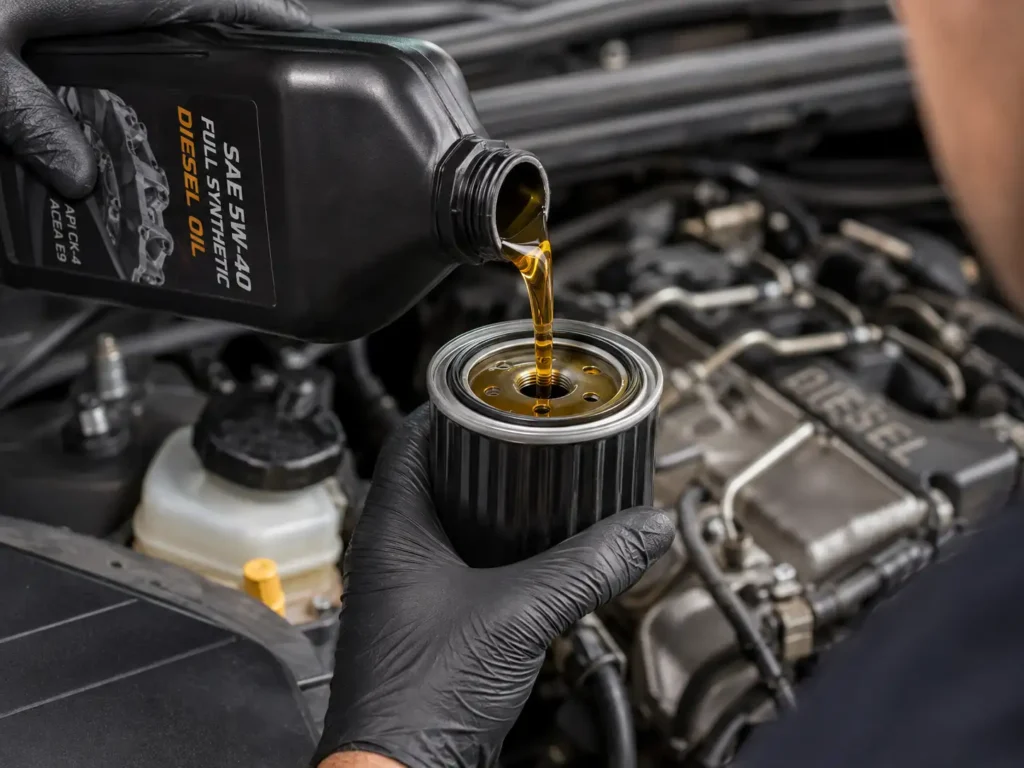
Performing an oil change on a 6.7L Cummins is straightforward, but it requires massive drain pans and careful measuring.
If you prepare poorly, three gallons of jet-black diesel oil will quickly overwhelm a standard automotive drain pan and ruin your driveway.
Tools and Supplies Needed:
- 12 Quarts of API CK-4 approved diesel engine oil.
- Fleetguard LF16035 or LF3972 oil filter.
- A high-capacity oil drain pan (minimum 15-quart capacity, a 4.5-gallon pan is ideal).
- 3/8″ drive socket wrench with a 3/8″ square drive for the factory drain plug.
- Fluted oil filter wrench.
- Heavy-duty shop towels and latex gloves.
The Step-by-Step “Smart Fill” Method
While the engine takes exactly 12 quarts, blindly dumping three gallons of oil into the crankcase all at once is a rookie mistake.
Residual oil is often left behind in the galleys, oil cooler, and high-pressure pump lines.
Follow this intelligent, step-by-step procedure to ensure the perfect fill level:
- Warm Up the Engine: Run the truck for 5 to 10 minutes to bring the oil up to a warm operating temperature. Warm oil flows much faster and carries suspended soot and contaminants out of the pan more effectively.
- Drain the Oil: Remove the oil fill cap up top to allow the crankcase to breathe. Then, remove the drain plug located at the bottom of the oil pan. Let it drain completely for at least 15 minutes.
- Swap the Filter: While the main pan drains, slide under the passenger side wheel well and remove the oil filter. Ensure the old rubber O-ring comes off with the old filter.
- Prep the New Filter: Pre-fill the new Fleetguard filter with about a quart of fresh oil. Lubricate the new rubber O-ring with a dab of fresh oil. Spin it on and hand-tighten it snugly.
- Reinstall Drain Plug: Reinstall the oil pan drain plug. Torque it to precisely 37 ft-lbs. Do not overtighten, or you risk permanently stripping the oil pan threads.
- The Smart Fill: Pour exactly 10.5 to 11 quarts of oil into the engine block.
- Prime and Check: Start the engine and let it idle for 30 to 60 seconds. This fills the oil filter media and pressurizes the engine galleys. Check underneath the truck for any immediate leaks.
- Top Off: Shut the engine down and wait 10 to 15 minutes for the oil to drain completely back into the pan. Pull the dipstick, wipe it clean, and check the true level. Gradually add the remaining oil until the level sits perfectly between the “MIN” and “MAX” hash marks.
The Dangers of Overfilling
The dipstick reading range on a 6.7L Cummins represents roughly 1 quart of oil from the bottom hash to the top hash.
It is completely acceptable for the oil level to sit slightly below the MAX line.
However, overfilling your Cummins crankcase is highly dangerous and can lead to immediate mechanical failure.
When you overfill the crankcase, the rotating crankshaft will physically strike the excess pool of oil sitting in the pan.
This violent splashing whips the oil into a frothy foam, introducing thousands of tiny air bubbles into the fluid. This is known as aeration.
Foam and air cannot be pumped effectively by the mechanical oil pump.
Because air compresses, the hydrodynamic film between your high-friction engine bearings instantly breaks down, causing the bearings to starve and score.
Overfilling also drastically increases internal crankcase pressure.
This extreme pressure seeks the path of least resistance, which usually means blowing out your front and rear main seals, leading to highly expensive oil leaks.
Understanding Maintenance Schedules and Oil Change Intervals
How long can you safely run your oil? The answer depends entirely on your model year, your driving habits, and whether your truck is completely stock or heavily modified.
Historically, the general rule of thumb for diesel trucks was a strict 5,000 to 7,500 miles.
However, massive advancements in synthetic oil chemistry and engine tolerances have changed the game for modern owners.
Normal Duty Operating Conditions (Ram Pickups)
If you primarily drive your truck on the highway unloaded, or use it for light daily commuting, you fall under Ram’s “Normal Duty” classification.
For early generation 6.7L Cummins (2007.5 to 2012), the normal duty oil change interval was set at 7,500 miles or 6 months.
For later generations (2013 through 2026), Ram significantly extended this interval due to cleaner emissions mapping and better factory oils.
Under normal conditions in a late-model Ram, you can safely go 15,000 miles, 12 months, or 500 engine hours, whichever comes first.
Severe Duty Operating Conditions (Ram Pickups)
Most diesel truck owners do not fall under normal duty. If you use your heavy-duty truck as a true work vehicle, you are likely in the “Severe Duty” category.
Severe duty includes frequent heavy towing, long periods of job site idling, driving on dusty off-road terrain, or primarily doing short stop-and-go city trips.
Under severe duty conditions, the engine oil breaks down much faster.
Excessive idling and short trips prevent the engine from reaching temperatures high enough to burn off soot and moisture, leading to severe fuel dilution in the oil.
For severe duty applications, you must reduce your oil change interval to 4,000 to 7,500 miles, or a maximum of 350 engine hours.
Fleet operators pay close attention to engine hours. 350 hours of run time is the absolute limit for severe-duty applications, regardless of how few miles are on the odometer.
Commercial B6.7 Interval Schedules
If you operate a commercial vehicle (like a Freightliner M2) powered by the Cummins B6.7, your maintenance schedule looks drastically different from a Ram pickup.
Cummins dictates oil drain intervals for commercial chassis based directly on fuel economy (MPG), as fuel burn is the most accurate indicator of engine load.
- Severe Duty (< 6 mpg): 12,000 miles or 19,000 km.
- Normal Duty (6 – 10 mpg): 25,000 miles or 40,000 km.
- Light Duty (> 10 mpg): 30,000 miles or 48,000 km.
These staggering 30,000-mile intervals are possible because commercial trucks utilize massive 19.5-quart high-capacity oil pans, giving the oil much more volume to absorb soot and heat.
The Impact of Tuning and Deletes
If you are running an aftermarket engine tune, or if your truck is fully “deleted” (EGR, DPF, and SCR systems physically removed for off-road use), your oil change math completely changes.
Without an EGR system pumping raw exhaust soot back into the intake manifold, your oil will physically stay cleaner and look amber for a much longer period.
However, tuned engines produce significantly higher combustion pressures and generate vastly more internal heat.
This extreme heat shears down the oil viscosity much faster than a stock calibration.
Therefore, even if the oil looks perfectly clean on the dipstick, tuning experts recommend sticking to a strict 5,000 to 7,500-mile interval.
This ensures the oil maintains its chemical protective film strength to handle the extra horsepower.
Ram 2500 & 3500 Complete Fluid Capacities
While engine oil is the most frequent maintenance item, your heavy-duty truck has several other vital fluids that demand equal attention.
Neglecting differentials or the transfer case will leave you stranded just as quickly as a seized engine.
Below is an exhaustive breakdown of the fluid capacities for a modern (2019+) Ram 2500 and 3500.
Transmissions (68RFE vs. AS69RC)
Ram trucks with the 6.7L Cummins are equipped with one of two automatic transmissions.
Standard output engines pair with the Chrysler 68RFE, while High Output engines pair with the Aisin AS69RC.
68RFE Automatic Transmission (Standard Output):
- Total System Capacity: 17.5 Quarts.
- Initial Service Fill (RWD): 5.5 Quarts.
- Initial Service Fill (4WD): 6.6 Quarts.
- Fluid Type: Mopar ATF+4.
- Service Interval: 120,000 miles (Normal) / 60,000 miles (Severe).
Aisin AS69RC Automatic Transmission (High Output):
- Initial Service Fill: 7.2 Quarts.
- Fluid Type: Mopar ASRC Automatic Transmission Fluid.
- Service Interval: 30,000 miles (Fluid), 60,000 miles (Filter).
Transfer Cases and Differentials
Four-wheel-drive trucks require regular, expensive fluid swaps in the transfer case and both the front and rear axles.
Borg Warner Transfer Cases (44-46, 44-47, 44-48, 44-49):
- Capacity: 3.8 Pints (fill exactly to the bottom edge of the fill plug opening).
- Fluid Type: Mopar BW44-44 Transfer Case Fluid.
- Service Interval: 60,000 miles (Normal) / 30,000 miles (Severe).
Front Axle (e.g., 9.25 AA / 235 AA / 267 AA):
- Capacity: 4.2 to 4.8 Pints (depending on exact axle generation and LSD setup).
- Fluid Type: 75W-85 Synthetic GL-5 Gear Oil.
Rear Axle (e.g., 11.5 AA, 12.0 AA, 292 AA, 305 AAM):
- Capacity: 6.8 to 8.9 Pints (depending on SRW vs DRW and axle size).
- Fluid Type: 75W-85 Synthetic GL-5 Gear Oil.
Cooling and Emissions Systems
Cooling System (6.7L Cummins):
- Capacity: 22 Quarts (5.5 Gallons).
- Fluid Type: Mopar 10-Year/150,000-Mile OAT Antifreeze (Organic Additive Technology).
Diesel Exhaust Fluid (DEF) Tank:
- Capacity: 5.0 to 6.5 Gallons (depending on the cab and bed configuration).
- Fluid Type: API Certified ISO 22241 DEF.
Aftermarket Upgrades: Deep Pans for Heat Dissipation
Heat is the ultimate enemy of heavy-duty truck components.
Towing massive fifth-wheel trailers up steep grades creates exponential heat buildup in both the transmission and the engine block.
To combat this, the aftermarket industry has developed high-capacity, cast-aluminum fluid pans.
These deep pans replace the factory stamped steel units, adding significant fluid volume and heavy thermal cooling fins to manage temperatures.
Transmission Pan Upgrades (68RFE & AS69RC)
Upgrading the transmission pan is one of the most common modifications for Ram heavy-duty trucks.
This is particularly true for the 68RFE transmission, which is notoriously sensitive to heat damage.
PPE (Pacific Performance Engineering) Heavy-Duty Pans:
PPE produces highly regarded cast-aluminum pans for both the 68RFE and the Aisin AS69RC transmissions.
For the 68RFE, the PPE deep pan adds exactly 3 extra quarts of fluid capacity.
For the massive Aisin AS69RC, the PPE pan adds an impressive 4 extra quarts of capacity.
These pans are manufactured from premium A356.0-T6 heat-treated cast aluminum.
They feature massive 3/4-inch external cooling fins and deep internal baffles. These baffles act as heat sinks while preventing fluid slosh on steep grades.
They also feature a magnetic drain plug, allowing for easy, mess-free fluid drops without having to unbolt the entire pan.
Mag-Hytec Transmission Pans:
Mag-Hytec is another premium brand offering cast aluminum transmission pans.
Their 68RFE transmission pan adds 3 quarts of fluid capacity over stock.
Like the PPE pan, it features external cooling fins, a magnetic drain plug, and is conveniently pre-tapped with a 1/8-inch NPT port for installing an aftermarket temperature gauge sensor.
Engine Oil Pan Upgrades
While deep transmission pans are universally beloved, deep engine oil pans are slightly less common on the Cummins, though they offer distinct advantages.
(A point of caution: While Mag-Hytec is famous for their deep engine oil pans, their F6.7L oil pan is specifically designed for the Ford 6.7L Powerstroke, adding 2 extra quarts to the Ford block. Be extremely careful not to cross-shop Ford parts for your Ram Cummins.)
However, PPE does offer a Heavy-Duty Cast Aluminum Engine Oil Pan specifically tailored for the Dodge Ram 6.7L Cummins.
The PPE Cummins engine oil pan adds 1 extra quart of oil capacity, bringing total capacity to roughly 13 quarts.
Its primary benefit isn’t just the extra quart of capacity; it is the flat-bottom architectural design.
The factory stamped steel Cummins oil pan features a slight internal valley that traps almost a full quart of dirty oil during a standard oil change.
The completely flat-bottom PPE pan allows for 100% complete oil drainage. This ensures your fresh, expensive synthetic oil isn’t immediately contaminated by old fluid.
It also includes rigid side gussets for increased engine block support and prominent cooling fins to radiate crankcase heat away from the block.
FAQs
Can I use 15W-40 oil in a 2019+ 6.7 Cummins?
Absolutely not. Using 15W-40 in a 2019 or newer 6.7L Cummins will void your powertrain warranty and cause severe internal engine damage.
The 2019 redesign introduced hydraulic valve lash adjusters inside the valvetrain.
These adjusters require thinner, highly viscous oil to pump up quickly upon cold starts. You must use 10W-30 or 5W-40 oil meeting the specific MS-10902 standard.
Why is my Cummins oil completely black immediately after an oil change?
Do not panic; this is perfectly normal diesel behavior.
Modern diesel engines utilize Exhaust Gas Recirculation (EGR) systems to reduce tailpipe emissions. EGR routes unburned exhaust soot directly back into the engine intake.
The engine oil is packed with chemical dispersant additives designed to grab this soot and hold it safely in suspension.
As soon as you start the engine, the fresh oil immediately absorbs residual soot, turning jet black. It simply means the oil is doing its job.
When should I change the Crankcase Ventilation (CCV) Filter?
The CCV filter sits directly on top of the engine valve cover and prevents oil mist from entering the intake system.
It is a critical, yet frequently ignored, maintenance item.
Cummins recommends replacing the CCV filter every 75,000 miles or 60 months.
A clogged CCV filter will cause massive crankcase pressure spikes, which ultimately leads to blown engine seals and catastrophic turbo failure.
Does the Fleetguard LF16035 filter really make a difference over the LF3972?
Yes. While the standard LF3972 is a good filter, the upgraded LF16035 uses multi-layer synthetic StrataPore media.
It filters at a perfect 100% efficiency at 30 microns, whereas the cellulose LF3972 sits slightly lower at 95%.
More importantly, the synthetic media allows for up to 50% better oil flow during cold weather startups. This ensures your critical bearings receive lubrication faster in freezing temperatures.
What is a “Low-Ash” diesel oil, and why do I need it?
Low-ash oils (indicated by the modern API CJ-4 or CK-4 label) are chemically formulated to produce minimal metallic ash when they inevitably burn in the combustion chamber.
If you use older, high-ash oil in a modern emissions-equipped Cummins, the metallic ash will permanently clog the honeycomb structure of your Diesel Particulate Filter (DPF).
A clogged DPF cannot be regenerated and can cost thousands of dollars to completely replace.
Can I overfill my engine oil to increase cooling?
No. Overfilling the oil capacity past 12 quarts pushes the static oil level up into the rotational path of the spinning crankshaft.
The crankshaft will violently whip the oil into a frothy foam, introducing air bubbles into the fluid (aeration).
Air cannot be compressed and provides zero lubrication. This means your engine bearings will rapidly starve for oil, score, and seize, destroying the engine block.
What is the oil drain plug torque spec for a 6.7 Cummins?
The oil pan drain plug should be tightened to exactly 37 ft-lbs with a calibrated torque wrench.
Overtightening can easily strip the threads in the steel pan, leading to an incredibly frustrating and messy repair.
Always inspect the plug’s sealing washer and replace it if it looks crushed or warped.
How often should I change my fuel filters?
Fuel filtration is just as critical as oil filtration in a Cummins engine, largely due to the incredibly tight tolerances of the high-pressure fuel pump (CP3 or CP4).
Ram explicitly requires you to change BOTH the engine-mounted fuel filter and the chassis-mounted water separator every 15,000 miles.
Do not skip this service, as water passing through to the injectors will destroy the fuel system.
Conclusion:
The Cummins ISB 6.7 is an absolute engineering workhorse, designed to tow heavy loads across the country for hundreds of thousands of miles.
However, its legendary reliability is entirely dependent on your unwavering commitment to proper fluid maintenance.
Remember the golden rule: The capacity is exactly 12 Quarts of oil, which includes filling the filter.
Always verify your specific model year’s viscosity requirements. Pay special attention if you own a 2019 or newer model requiring 10W-30 or 5W-40.
To ensure maximum uptime, stick to premium Cummins Filtration components, and never stretch your drain intervals if your truck lives a severe-duty lifestyle.
By respecting the factory fluid capacities, investing in synthetic oils, and upgrading your pans to monitor temperatures, your 6.7L Cummins will continue to roar for generations to come.
Related Guides
- 6.7 Cummins Oil Type and Capacity
- 6.4 HEMI Oil Type and Capacity
- Common 6.7 Cummins Problems
- 6.7 Cummins Valve Cover Torque Specs
- Ram 1500 Transmission Fluid Type Chart
- Dodge Ram Transfer Case Reset
- 2014 Ram 3500 Towing Capacity