2020 Ram 1500 5.7 Oil Capacity & Type: Complete Specs Chart (2026)

Quick Answer: The 2020 Ram 1500 5.7L HEMI takes 7.0 quarts (6.6 liters) of SAE 5W-20 Full Synthetic motor oil (FCA MS-6395 certified) with a filter change. The OEM filter is the Mopar MO-339. Drain plug torque is 20–25 ft-lbs.
5.7L HEMI Lubrication Dynamics
The 2020 Ram 1500 5.7 oil capacity is one of the most critical specifications any owner or technician must know before performing an oil change. The 5.7-liter HEMI V8 engine represents a pinnacle of modern pushrod powerplant engineering, utilized extensively across the Stellantis (formerly Fiat Chrysler Automobiles) lineup.


For the 2020 model year, the Ram 1500 was offered in two distinct architectural configurations: the legacy “Classic” (DS platform) and the completely redesigned “New Body” (DT platform). Irrespective of the chassis surrounding the powertrain, the lubrication requirements for the 5.7L HEMI remain highly specific and mathematically stringent.
Modern iterations of the 5.7L HEMI are equipped with advanced hydraulic and electro-mechanical systems, most notably Variable Valve Timing (VVT) and the Multi-Displacement System (MDS). These systems completely depend on precise fluid dynamics to operate.
The engine oil in a 2020 Ram 1500 does not merely reduce friction between moving metal components — it acts as a critical hydraulic fluid that commands solenoid actuation, valve lifter collapse, and camshaft phasing. Consequently, utilizing the incorrect oil capacity, an improper viscosity grade, or a substandard oil filter can lead to catastrophic internal engine failure, often manifesting as the infamous “HEMI tick” or resulting in wiped camshaft lobes. For a visual overview of the HEMI’s internal architecture, see our Ram 1500 5.7 HEMI engine diagram.
This comprehensive diagnostic and maintenance report synthesizes all factory specifications, aftermarket cross-references, and diagnostic troubleshooting protocols required to maintain the 2020 Ram 1500 5.7L HEMI engine at peak operational efficiency.
2020 Ram 1500 5.7L HEMI oil specifications at a glance: 7.0 quarts SAE 5W-20 full synthetic, Mopar MO-339 filter, 25 ft-lb drain plug torque.
2020 Ram 1500 5.7L HEMI — oil specs at a glance
Oil capacity
7.0 qts
6.6 L with filter
Viscosity
5W-20
Full synthetic only
OEM filter
MO-339
04892339AB
Drain plug torque
20–25 ft-lb
M14 × 1.50 / 13 mm
Oil level gauge — 7-quart fill
Correct fill = 7.0 qts. Never fill to qt 8 — crankshaft aeration risk.
Viscosity comparison — MDS hydraulic impact
SAE 5W-20 OEM spec
Fast MDS solenoid actuation
Instant lifter engagement
P1521
code: no risk


SAE 5W-30 not recommended
Slower MDS actuation
Risk of lifter starvation
P1521 code:
possible
Maintenance interval guide
Normal driving
7,500–10K miles
or every 12 months
Severe duty (towing / off-road)
5,000 miles
or every 6 months
Core Fluid Specifications and Capacity Matrix
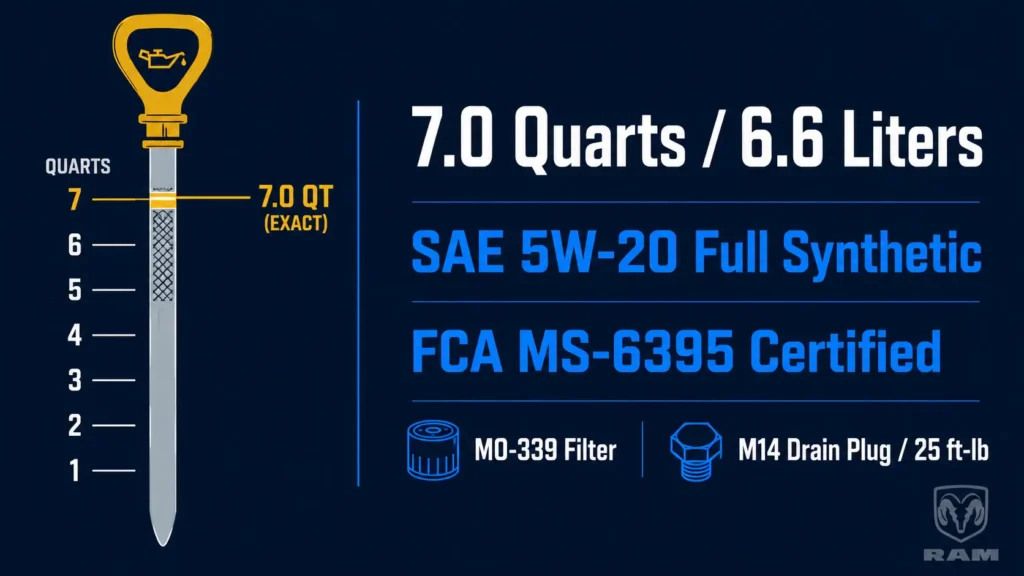
Establishing the exact fluid capacities and torque specifications is the foundational step in proper vehicle maintenance. The 2020 Ram 1500 5.7L HEMI engine operates with a strict oil capacity tolerance. Overfilling the crankcase introduces aeration, while underfilling leads to thermal breakdown and oil starvation.
The following table details the definitive original equipment manufacturer (OEM) specifications for the 2020 Ram 1500 equipped with the 5.7L V8 engine.
| Technical Specification | Factory Mopar Requirement |
|---|---|
| Engine Oil Capacity (with filter change) | 7.0 Quarts (6.6 Liters) |
| Recommended Oil Viscosity (All Temperatures) | SAE 5W-20 Full Synthetic |
| Mandatory Manufacturer Certification | FCA Material Standard MS-6395 |
| OEM Oil Filter Part Number | Mopar MO-339 (04892339AB / 4892339BH) |
| Oil Pan Drain Plug Thread Size | M14 x 1.50 mm |
| Oil Pan Drain Plug Head Size | 13 mm Socket |
| Drain Plug Installation Torque | 20 to 25 ft-lbs (27 to 34 Nm) |
| Standard Maintenance Interval | 7,500–10,000 Miles or 12 Months |
The Impact of eTorque on Lubrication
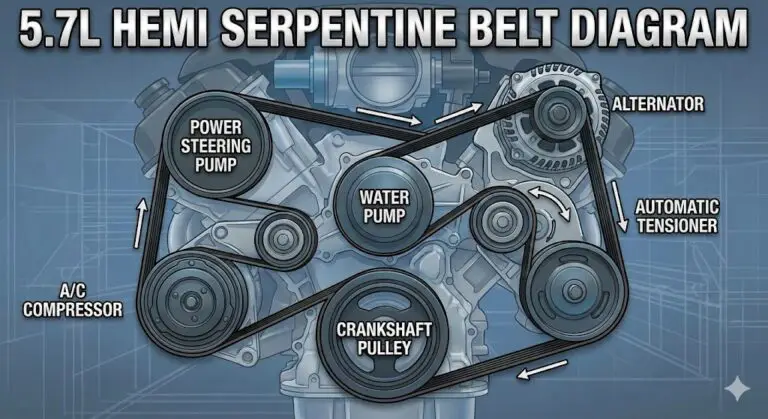
For the 2020 model year, Ram introduced the eTorque mild-hybrid system as an available option on the 5.7L HEMI. The eTorque system replaces the traditional alternating current (AC) alternator with a 48-volt belt-driven motor generator unit. This unit connects directly to the crankshaft via a heavy-duty serpentine belt, providing an additional 130 lb-ft of supplemental launch torque while enabling a highly refined automatic engine start/stop feature.
Despite the addition of the 48-volt hybrid architecture, the internal mechanical structure of the 5.7L engine block, the oil pan geometry, and the fluid galleys remain completely unchanged. Therefore, both the standard 5.7L HEMI and the 5.7L HEMI with eTorque require exactly 7.0 quarts of SAE 5W-20 synthetic motor oil and utilize the exact same Mopar MO-339 oil filter.
The presence of the eTorque system does not alter the fundamental thermal or hydraulic requirements of the base V8 engine. However, because the eTorque system aggressively utilizes the start/stop functionality during urban driving, the engine experiences a significantly higher frequency of startup events. This heightened startup frequency places an extreme emphasis on the quality of the oil filter's anti-drainback valve, which will be analyzed in depth later in this report.
Historical Evolution of 5.7L HEMI Lubrication (2003–2026)
To fully comprehend the engineering logic behind the 2020 model year specifications, one must examine the historical evolution of the 5.7L HEMI engine. Since its introduction in 2003, the engine has undergone continuous refinement to meet increasingly stringent corporate average fuel economy (CAFE) standards and emission regulations. For a complete breakdown of platform changes across all generations, see our Dodge Ram 1500 generations chart.
The following table illustrates the historical progression of oil capacity and viscosity mandates across all generations of the Ram 1500 5.7L HEMI.
| Model Year Range | Platform | Engine Designation | System Capacity | Viscosity Mandate | OEM Certification |
|---|---|---|---|---|---|
| 2003–2008 | Ram 1500 (DR) | 5.7L HEMI V8 | 7.0 Quarts | SAE 5W-20 | MS-6395 |
| 2009–2012 | Ram 1500 (DS) | 5.7L HEMI V8 (MDS) | 7.0 Quarts | SAE 5W-20 | MS-6395 |
| 2013–2018 | Ram 1500 (DS) | 5.7L HEMI V8 (Eagle) | 7.0 Quarts | SAE 5W-20 | MS-6395 |
| 2019–2021 | Ram 1500 (DS/DT) | 5.7L V8 (eTorque opt.) | 7.0 Quarts | SAE 5W-20 | MS-6395 |
| 2022–2024 | Ram 1500 (DT) | 5.7L V8 (eTorque std.) | 7.0 Quarts | SAE 0W-20 | MS-6395 |
| 2025 | Ram 1500 (DT) | HEMI Discontinued (Hurricane I6) | N/A | N/A | N/A |
| 2026 | Ram 1500 (DT) | 5.7L V8 (Reintroduced) | 7.0 Quarts | SAE 0W-20 | MS-6395 |
The most notable shift in recent years is the transition from 5W-20 to 0W-20 for the 2022 and newer model years. This shift was engineered to maximize cold-start flow efficiency and further reduce hydrodynamic friction. However, for the 2020 model year, the factory specification definitively remains 5W-20. Utilizing 0W-20 in a 2020 model is generally acceptable in extreme sub-zero climates, but 5W-20 remains the optimal viscosity for standard thermal operating ranges.
The Mechanical Necessity of the FCA MS-6395 Standard
When sourcing engine oil for the 2020 Ram 1500, technicians and owners will encounter a vast array of API (American Petroleum Institute) and ILSAC (International Lubricant Standardization and Approval Committee) certifications. While these broad industry standards ensure a baseline level of quality, the Ram owner's manual explicitly dictates that the engine oil must carry the Chrysler/FCA Material Standard MS-6395 certification.
The MS-6395 certification is not merely a marketing label; it represents a grueling, multi-year validation process required by Stellantis engineering. To attain this certification, an oil manufacturer must subject their specific formulation to a two-year fleet testing protocol. During this period, the oil is evaluated for its ability to resist thermal breakdown, prevent sludge accumulation in the valley of the engine block, protect the delicate phasers within the variable valve timing system, and actively condition the elastomer seals to prevent leaks over the lifespan of the vehicle.
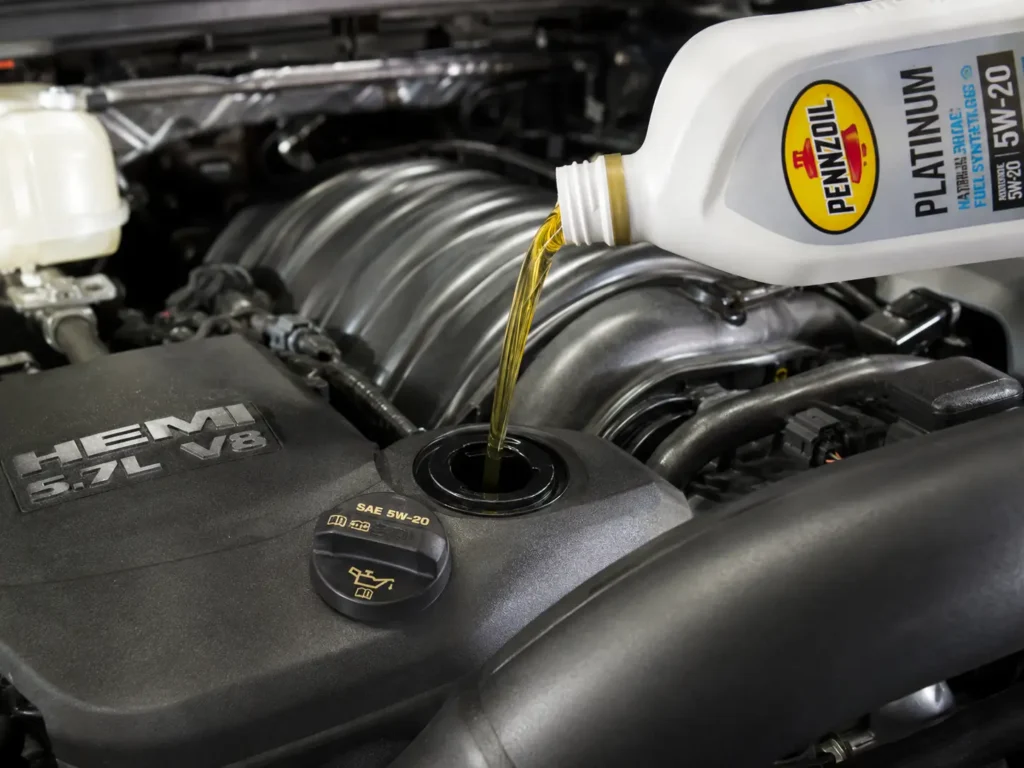
Ram dealerships universally utilize high-tier full synthetic oils, such as Pennzoil Platinum or factory-branded Mopar full synthetic, to fulfill the MS-6395 requirement. Substituting a non-certified oil, even one of high quality, introduces the risk of accelerated valvetrain wear and may complicate warranty claims should catastrophic engine failure occur.
The Multi-Displacement System (MDS) and Hydraulic Viscosity Dependency
The most heavily debated topic surrounding the maintenance of the 5.7L HEMI engine is the selection of engine oil viscosity — specifically, the debate between utilizing the factory-mandated 5W-20 versus transitioning to a thicker 5W-30. To approach this debate with engineering accuracy, one must comprehensively understand the mechanical operation of the Multi-Displacement System (MDS).


The MDS is a fuel-saving cylinder deactivation technology. Under light engine load conditions — such as steady-state highway cruising or gentle deceleration — the Powertrain Control Module (PCM) commands the engine to shut down four of the eight cylinders (specifically cylinders 1, 4, 6, and 7). This seamless deactivation effectively turns the 5.7L V8 into a highly efficient four-cylinder engine, reducing fuel consumption and minimizing exhaust emissions.
The Mechanism of Cylinder Deactivation
The execution of the MDS is entirely reliant on engine oil pressure acting as a hydraulic fluid. Positioned beneath the intake manifold are four MDS control solenoids. When the PCM commands cylinder deactivation, these solenoids open rapidly, directing highly pressurized engine oil through specific oil galleys cast into the engine block. This pressurized oil is routed directly into specialized hydraulic valve lifters whose locking pins are displaced by the sudden surge of oil pressure, allowing the inner body of the lifter to collapse inside its outer shell.
The Physics of 5W-20 vs. 5W-30 in the MDS
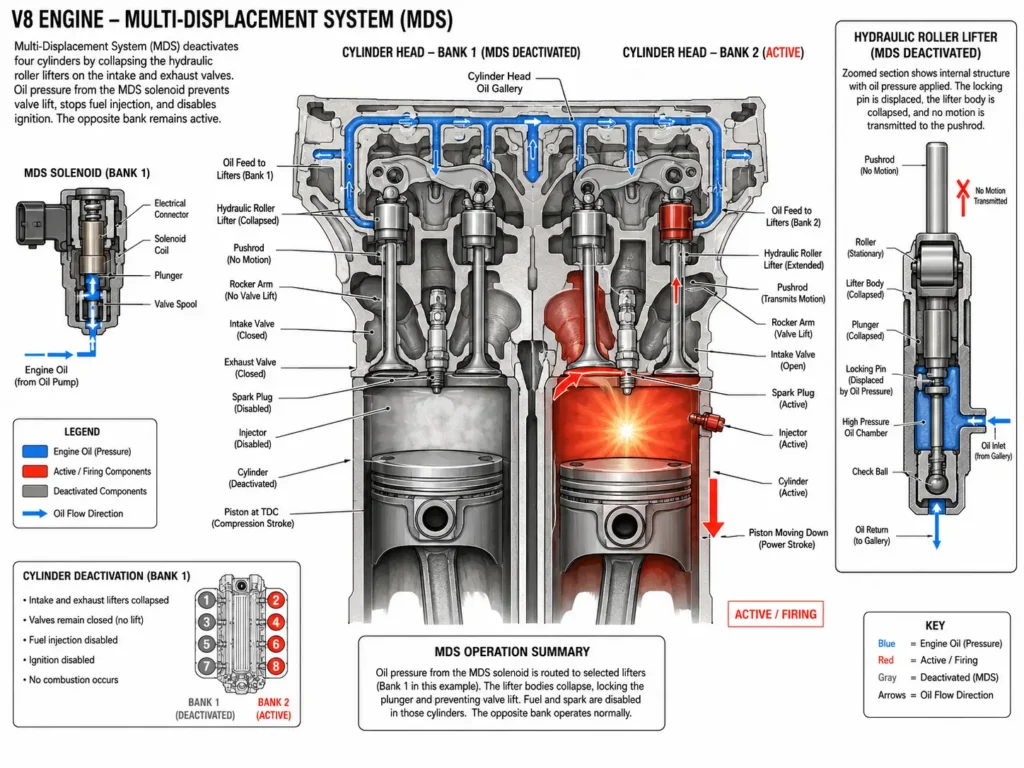
Because the MDS solenoids, oil galleys, and lifter locking pins feature incredibly tight mechanical tolerances, they require an oil that flows with exceptionally low hydraulic resistance. At normal engine operating temperatures (approximately 212°F / 100°C), SAE 5W-20 motor oil provides the exact kinematic viscosity required to actuate the MDS locking pins instantaneously.
Conversely, SAE 5W-30 motor oil is physically thicker at operating temperature. If the oil is too thick — or has degraded due to extended maintenance intervals — the MDS lifters can suffer from acute oil starvation. This lack of proper lubrication causes the tiny needle bearings inside the lifter roller to fail. When the roller seizes and ceases to spin, it begins to drag and skid directly across the hardened steel of the camshaft lobe, producing the prominent, rhythmic tapping noise widely recognized as the "HEMI Tick."
If the root cause is left unaddressed, the seized lifter roller will completely grind down the camshaft lobe, sending abrasive metallic debris throughout the engine block. Repairing a wiped camshaft and a failed lifter bank requires extensive engine teardown, often costing between $2,500 and $3,500 in parts and labor. Note that a cracked or failed exhaust manifold — a documented systemic issue on the HEMI platform — can perfectly mimic this sound; see our full Dodge Ram exhaust manifold recall guide for diagnosis steps.
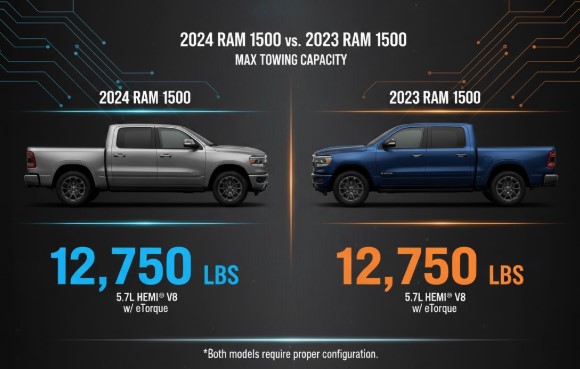
For standard daily driving operations, adhering strictly to the 5W-20 MS-6395 specification is paramount. Vehicle operators who subject their Ram 1500 to extreme severe-duty cycles — such as continuously towing heavy loads near the maximum Gross Combined Weight Rating (GCWR) — may consult specialized powertrain technicians regarding the potential merits of a 5W-30 transition. However, utilizing a thicker oil introduces the significant risk of triggering specific diagnostic trouble codes analyzed in the next section. For towing capacity specifications that define severe duty thresholds, refer to our Ram 1500 towing capacity chart.
Diagnostic Troubleshooting: OBD-II Code P1521 (Incorrect Engine Oil Type)
One of the direct, electronic consequences of utilizing the incorrect oil viscosity in a 2020 Ram 1500 5.7L HEMI is the triggering of OBD-II Diagnostic Trouble Code (DTC) P1521. This is a manufacturer-specific code defined by Stellantis engineering as "Incorrect Engine Oil Type." Because the MDS system requires precise hydraulic conditions to operate safely, the Powertrain Control Module (PCM) actively monitors fluid characteristics through an inferential algorithm that cross-references real-time data from the Engine Oil Pressure Sensor and the Engine Oil Temperature Sensor.
On many Ram 1500 models, P1521 acts as a "soft" or informational code — often stored quietly in the computer's memory without illuminating the Check Engine Light (MIL). If you are seeing a related illuminated warning, review our guide on Dodge Ram check engine light with no visible code for a broader diagnostic framework.
Comprehensive Diagnostic Flowchart for P1521
Step 1 — Assess Recent Maintenance History: Determine if the code appeared immediately following an oil change. It is highly common for rapid-lube facilities to mistakenly install bulk 5W-30 or 10W-30 oil instead of the mandated 5W-20. Corrective Action: Perform a complete oil and filter change using correct MS-6395 5W-20 synthetic oil and an OEM filter before proceeding to any electronic diagnostics.
Step 2 — Scan for Companion Electrical Codes: Check for the presence of code P0520 (Engine Oil Pressure Sensor/Switch Circuit Malfunction). If P0520 is present alongside P1521, the issue is definitively electrical, not mechanical.
Step 3 — Analyze Live Data Streams: Connect a bi-directional OBD-II scan tool and turn the ignition to RUN with the engine completely OFF. A nominal reading should be 0 PSI. A static reading of 30, 50, or 51.6 PSI with the engine off indicates the oil pressure sensor has suffered internal catastrophic failure and is sending a false maximum voltage signal to the PCM.
Step 4 — Physical Harness Inspection: A frequent failure point on the 5.7L HEMI involves pressurized engine oil breaching the internal rubber seal of the oil pressure sensor and saturating the wiring harness. This conductive oil shorts the 5-volt reference pins, disrupting the signal and setting the code. The official Mopar replacement oil pressure sensor is part number 5149062AB. For more advanced PCM diagnosis, see our Dodge Ram 1500 limp mode reset guide which covers related PCM fault recovery procedures.
Advanced Oil Filtration Engineering: The Mopar MO-339 Paradigm
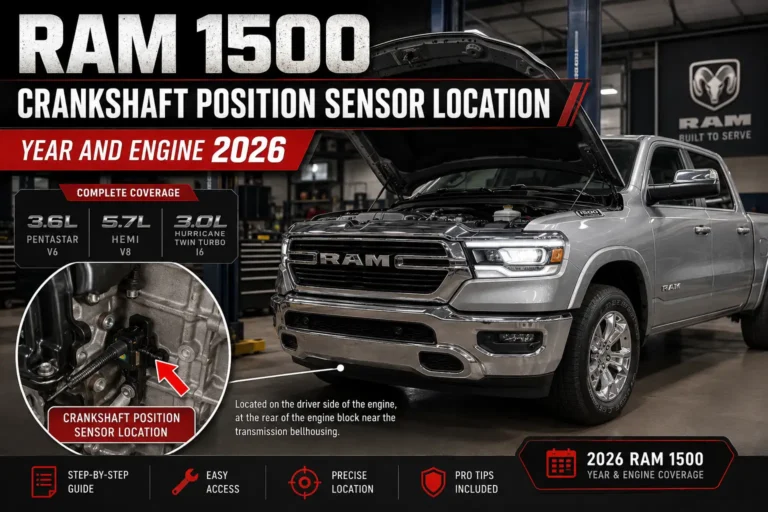
An engine oil change is only as effective as the filtration media utilized. For the 2020 Ram 1500 5.7L HEMI, the filtration architecture is highly specific and mechanically constrained by the vehicle's chassis. When Stellantis debuted the fifth-generation (DT) Ram body style, extremely tight physical clearances necessitated a much smaller, highly efficient canister filter: the Mopar MO-339. You can find its exact mounting location documented in our dedicated 5.7 HEMI oil filter location guide.
Technical Specifications of the MO-339 Filter
| Filter Attribute | OEM Specification Data |
|---|---|
| Filter Thread Pitch and Size | M22 x 1.5 mm |
| Overall Height | 3.46 inches (88.9 mm) |
| Outer Diameter (OD) | 3.0 inches (76.0 mm) |
| Bypass Valve Opening Pressure | 1.2 Bar (Approximately 17.4 PSI) |
| Anti-Drainback Valve (ADBV) | Yes (Silicone elastomeric construction) |
The Critical Role of the Bypass and Anti-Drainback Valves
The Bypass Valve (engineered to open at exactly 1.2 bar) acts as an absolute emergency failsafe. If the filtration media becomes entirely obstructed, or during a sub-zero cold start when oil is too viscous to push through the filter paper, the spring-loaded bypass valve forces open, allowing unfiltered oil to circulate directly into the engine block — infinitely preferable to total oil starvation.
The Anti-Drainback Valve (ADBV) is a flexible, umbrella-shaped silicone flap that traps oil inside the filter when the engine is shut off. Because the 2020 Ram 1500 eTorque system utilizes aggressive engine start/stop functionality at every traffic light, the engine undergoes thousands of additional startup cycles. A failed ADBV leads to "dry starts" that dramatically accelerate valvetrain wear and contribute to premature lifter failure — making a high-quality silicone ADBV absolutely mandatory on this platform. For oil filter location reference on adjacent model years, see our guides for the 2021 Ram 1500 oil filter location and the 2019 Ram 1500 oil filter location.
Filter Interchange and Aftermarket Cross-Reference Database
| Filter Brand & Model | Part Number | Performance Notes |
|---|---|---|
| Mopar (OEM) | MO-339 (04892339AB) | Factory engineered, fluted case design, exact 1.2 bar OEM bypass specs. |
| Wix | 57060 / 57060XP | XP variant uses fully synthetic, wire-backed media for maximum durability. |
| Fram Ultra Synthetic | XG10060 | Dual-layered synthetic media, silicone ADBV, 20,000-mile rating. |
| Mobil 1 | M1-113A | Premium high-capacity filter ideal for extended synthetic oil drain intervals. |
| AC Delco | PF48 / PF48E | Shares exact M22x1.5 thread and physical footprint as OEM. |
| PPE Power MicroPure | 114000760 | Oversized racing filter with 222 sq. in. of 10-micron media and integrated neodymium magnetic base plate. |
Oil Pan Drain Plug Specifications & Torquing Dynamics
A frequently overlooked but highly critical component of the 2020 Ram 1500 oil change procedure is the manipulation of the oil pan drain plug. Ram utilizes a stamped steel oil pan on the 5.7L HEMI. Stripping the threads on the pan or rounding off the head of the drain plug can quickly escalate a routine $60 maintenance task into a major repair requiring complete oil pan replacement.
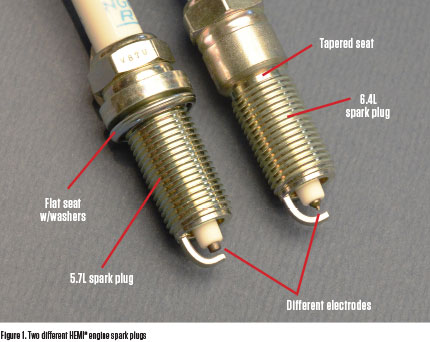
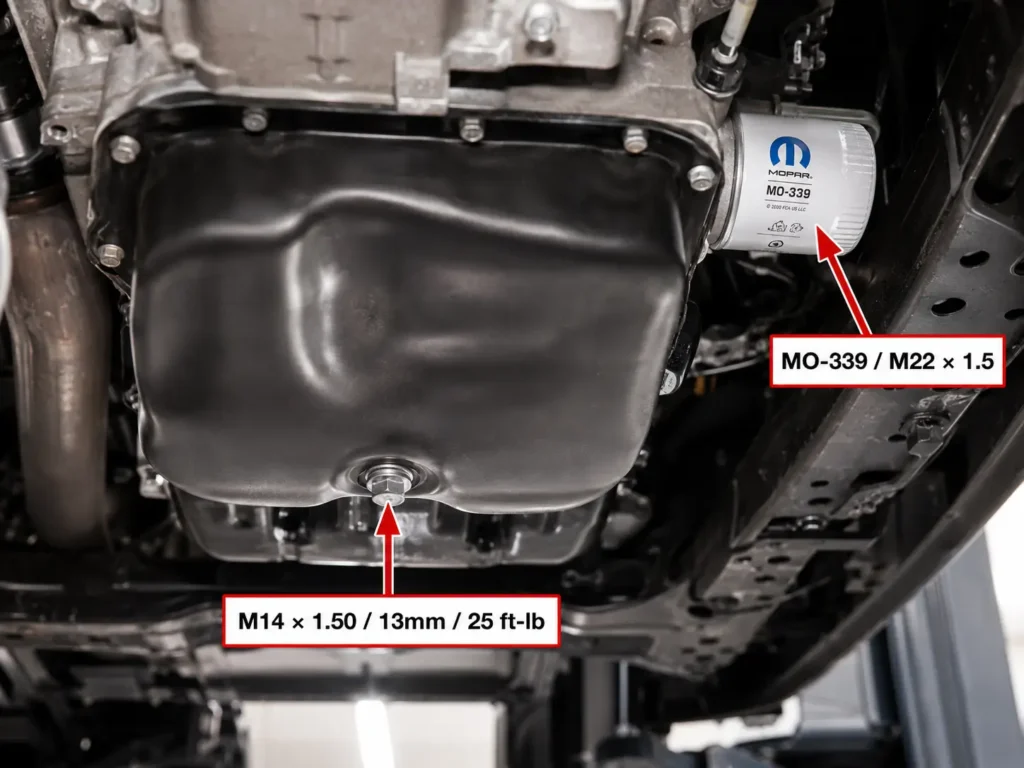
Drain Plug Specifications: Thread Pitch: M14 x 1.50 mm | Head/Wrench Size: 13 mm metric hex socket | Design Type: Pilot point with integrated rubber/elastomer sealing gasket | Torque: 20 to 25 ft-lbs (27 to 34 Nm).
Under absolutely no circumstances should a pneumatic impact wrench be used to tighten the drain plug. Over-torquing physically crushes the integrated elastomer gasket, leading to persistent fluid drips. More severely, it will strip the female threads welded into the steel oil pan. Conversely, under-torquing allows normal engine vibration to gradually back the fastener out, eventually causing catastrophic loss of oil pressure and immediate engine seizure.
Many proactive vehicle owners upgrade to magnetic drain plugs (forged titanium variants with neodymium magnets on the tip) that actively capture microscopic ferrous metal particles too small to be trapped by the paper oil filter. For oil pump system integrity, also review our comprehensive guide on Dodge Ram 1500 oil pump replacement.
Comprehensive Maintenance Procedure: Performing the Oil Change
Executing an oil change on the 2020 Ram 1500 5.7L HEMI is a straightforward procedure that can be accomplished by DIY mechanics with basic hand tools.
- Preparation and Safety: Park the vehicle on a level surface. Place wheel chocks behind the rear tires. Ensure the engine is warm (but not at maximum operating temperature) to allow the oil to flow freely.
- Draining the Crankcase: Position a fluid catch pan holding at least 8 quarts beneath the oil pan. Using a 13mm socket, loosen the M14x1.50 drain plug. Allow the oil to drain completely for at least 5 to 10 minutes.
- Inspect the Plug: While oil is draining, thoroughly inspect the rubber gasket on the drain plug. If it is torn or flattened, the plug must be replaced to prevent leaks.
- Removing the Filter: Locate the Ram 1500 oil filter, which is situated on the passenger side of the engine block, slightly obscured by the electric steering rack and front subframe. Position the catch pan beneath the filter housing. Use an appropriately sized filter wrench to turn the MO-339 filter counter-clockwise.
- Installing the New Filter: Apply a thin film of fresh 5W-20 oil around the perimeter of the rubber sealing gasket of the new filter. Thread the filter onto the engine block by hand, then give it an additional 3/4 of a turn by hand only. Do not use a wrench to tighten the oil filter.
- Reinstalling the Drain Plug: Wipe the mating surface of the oil pan clean. Thread the drain plug back in by hand to ensure it is not cross-threaded. Tighten precisely to 25 ft-lbs using a calibrated torque wrench.
- Refilling the Engine: Remove the oil filler cap on top of the engine. Pour in exactly 7.0 quarts of MS-6395 approved SAE 5W-20 full synthetic motor oil.
- Verification: Reinstall the filler cap. Start the engine and idle for 30 to 60 seconds. Inspect the underside for active leaks. Turn the engine off, wait 5 minutes, and verify the fluid level is at the "FULL" crosshatch mark on the dipstick.
The Oil Life Indicator System and Reset Protocols
The traditional paradigm of changing engine oil strictly every 3,000 miles is entirely obsolete for the 2020 Ram 1500. Modern full synthetic oil formulations, combined with the vehicle's sophisticated onboard computer, allow for significantly extended, dynamic drain intervals.
For standard driving profiles, the engine oil must be changed every 7,500 to 10,000 miles, or every 12 months, whichever threshold is reached first. Under severe duty conditions (heavy payload towing, off-road driving, constant short trips), the interval is drastically shortened to 5,000 miles or 6 months.


Step-by-Step: How to Reset the Oil Life Monitor
- Enter Accessory Mode: Sit in the driver's seat with all doors closed. Without pressing the brake pedal, push the ENGINE START/STOP button twice to enter the ON/RUN mode without cranking the engine.
- Navigate the Digital Display: Press the UP or DOWN arrows on the steering wheel D-pad to scroll through the instrument cluster menus until Vehicle Info is highlighted.
- Locate the Oil Life Screen: Press LEFT or RIGHT directional arrows to scroll until the Oil Life percentage screen is displayed.
- Execute the System Reset: Press and hold the OK button in the center of the D-pad for approximately 3 to 5 seconds. The gauge will flash and reset to 100%.
- Cycle the Ignition: Press the ENGINE START/STOP button once to turn the electronics completely off. The reset procedure is now complete.
Alternative Powertrains: 3.6L Pentastar and 3.0L EcoDiesel
While this report focuses heavily on the flagship 5.7L HEMI V8, the 2020 Ram 1500 was also available with two highly distinct alternative powertrains. Utilizing the 5.7L specifications on these alternative engines will result in immediate and catastrophic mechanical failure.
The 3.6L Pentastar V6 (with eTorque)
The 3.6L Pentastar V6 serves as the base engine for the Ram 1500. For the 2020 model year, it was exclusively paired with the eTorque mild-hybrid system.
- Engine Oil Capacity: 5.9 to 6.0 Quarts (5.6 Liters) including the filter change.
- Viscosity Requirement: SAE 0W-20 Full Synthetic.
- OEM Standard: FCA MS-6395.
- Drain Plug Torque: 20 ft-lbs.
For oil filter location on the 3.6L engine, see our 2019 Ram 1500 3.6 oil filter location guide.
The 3.0L EcoDiesel V6 (Generation 3)
The 2020 model year marked a significant milestone with the introduction of the completely redesigned third-generation EcoDiesel engine.
- Engine Oil Capacity: 8.5 Quarts (8.0 Liters) with the filter.
- Critical Warning: Older Generation 2 (2014–2019) EcoDiesels required a massive 10.5 Quarts. Applying the older specification to a 2020 model will severely overfill the crankcase, leading to extreme aeration and potentially a runaway engine scenario.
- Viscosity Requirement: SAE 5W-40 Full Synthetic Diesel Oil.
- OEM Standard: FCA MS-12991 (API SN compliant).
- Drain Plug Torque: 30 ft-lbs.
For diesel-specific oil specifications, see our in-depth 2020 6.7 Cummins oil type guide. For a complete diagnosis guide on the 2020 Ram platform, review our 2020 Ram 1500 transmission problems diagnosis guide.
Expert Market Analysis: Top SAE 5W-20 Synthetic Oils for the 5.7L HEMI
Based on rigorous chemical testing, strict MS-6395 compliance, and documented real-world performance in preserving the 5.7L HEMI valvetrain, the following full synthetic motor oils stand out as definitive top choices for the 2020 Ram 1500 5.7 oil capacity fill.
- Pennzoil Platinum Full Synthetic 5W-20 — The OEM Standard: Uniquely engineered utilizing PurePlus Technology (a patented gas-to-liquid GTL process), this oil yields a crystal-clear base stock remarkably devoid of microscopic impurities. It carries the official MS-6395 certification and is widely acknowledged as the mandatory factory fill favored by Stellantis dealerships nationwide.
- Mobil 1 Advanced Full Synthetic 5W-20 — The Thermal Benchmark: Provides exceptional shear stability, meaning the oil's polymer chains will not break apart and thin out during extended, high-RPM highway towing. Exceptional low-temperature pumpability ensures the fluid rushes through block galleys to the MDS solenoids instantly upon cold startup.
- Valvoline Advanced Full Synthetic 5W-20 — The Detergent Leader: Heavily fortified with proprietary detergent packages engineered to combat extreme heat, friction, mechanical wear, and sludge deposits. An exceptional choice for Ram trucks utilized in dusty, dirty environments or commercial fleets with significant idle time.
- Castrol EDGE Advanced Full Synthetic 5W-20 — The Pressure Absorber: Engineered with patented Fluid Titanium Technology. Under extreme pressure loads — such as the intense friction point between the hardened camshaft lobe and needle-bearing lifter roller — the oil physically alters its structural behavior to become stiffer, absorbing mechanical impact and preventing the onset of the HEMI tick.
Frequently Asked Questions About 2020 Ram 1500 5.7 Oil Capacity
Can I mix 5W-20 and 5W-30 in my 5.7L HEMI?
While blending different viscosities of the same API-certified synthetic oil will not cause instantaneous engine failure, it is strictly advised against. Mixing a 20-weight and a 30-weight oil alters the final kinematic viscosity to an unpredictable, non-standardized middle ground, routinely triggering OBD-II Code P1521 and leading to sluggish, erratic lifter response. Always perform a complete fluid drain and refill with a uniform, MS-6395 certified viscosity.
What causes the "HEMI Tick" immediately after a fresh oil change?
A rapid, metallic ticking noise that occurs only on cold startup and quiets within 3 to 5 seconds is generally normal — it takes a few seconds for the oil pump to pressurize the galleys. However, if a persistent loud ticking occurs continuously under load, it is likely due to a cheap aftermarket oil filter with a failed anti-drainback valve (causing continuous dry starts) or a cracked exhaust manifold or sheared manifold bolts — a highly documented, systemic issue on the 5.7L platform that perfectly mimics internal valvetrain failure.
Does the eTorque mild-hybrid system require specialized engine oil?
No. Despite the complex integration of a 48-volt motor generator unit, the internal combustion components of the 5.7L HEMI eTorque remain identical to the standard V8. The eTorque engine requires the exact same 7.0 quarts of 5W-20 MS-6395 synthetic oil, utilizes the exact same Mopar MO-339 oil filter, and features identical drain plug torque specs.
What is the cost of an oil change for a 2020 Ram 1500?
At an authorized Stellantis dealership or a specialized rapid-lube facility, a full synthetic oil change typically costs between $57 and $90. DIY owners can purchase 7 quarts of premium synthetic oil and a Mopar filter for a combined total of approximately $40 to $50, making home maintenance highly economical.
What are the mechanical consequences of overfilling the engine oil?
The 5.7L HEMI oil pan is designed to hold exactly 7.0 quarts with a filter change. Adding an 8th quart will raise the static fluid level too high. The rapidly spinning crankshaft will submerge into the oil bath, physically whipping the heavy oil into a frothy, aerated foam. Because hydraulic oil pumps cannot pump air bubbles effectively, this foam causes hydraulic pressure to plummet and can cause MDS lifters to collapse erratically. Always verify the fluid level on the physical dipstick before starting the engine.