
2019 Ram 1500 Oil Filter Location And Replacement Guide

Locating the oil filter on a fifth-generation 2019 Ram 1500 can be a source of frustration due to the significant architectural changes from previous model years. Depending on whether your truck is equipped with the 5.7L HEMI V8 or the 3.6L Pentastar V6, the filter location shifts from a traditional under-engine mount to a top-side cartridge system, making a simple maintenance task confusing for many owners. This technical guide provides the exact coordinates for both engine types, identifies the specific tools required, and highlights where to find professional support and parts available in your trusted local community. By following these industry-standard procedures, you ensure your Ram continues to deliver peak performance and long-term reliability.


Pinpointing the 2019 Ram 1500 Oil Filter Location on 5.7L HEMI V8 Engines
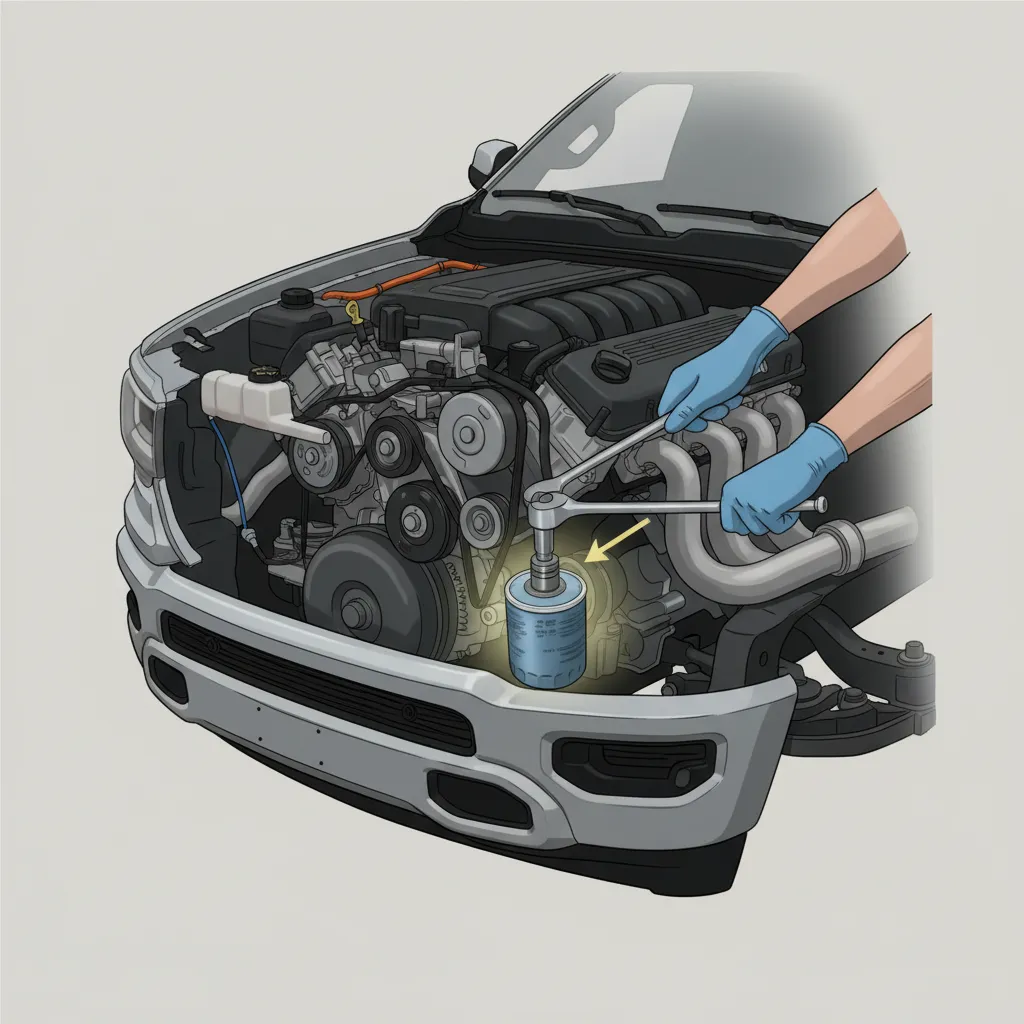
The 5.7L HEMI remains the workhorse of the Ram lineup, but its oil filter placement requires a tactical approach. You will find the oil filter positioned on the lower passenger side of the engine block, specifically toward the front of the vehicle. For the 2019 “DT” body style redesign, Ram engineers maintained this location, though the proximity to the Electronic Power Steering (EPS) rack has made the removal process more delicate than in previous generations.
Accessing the filter is most efficiently achieved from underneath the chassis. However, if you are working on a 4WD model, the frame rails and front differential can create a tight envelope. Some seasoned technicians prefer to reach the filter through the passenger-side wheel well by temporarily pulling back the plastic splash guard. This “side-entry” method provides a more direct line of sight but requires the removal of several plastic push-pins.
The 2019 Ram 1500 features a factory-installed plastic diverter tray situated directly beneath the filter. This tray is designed to funnel residual oil away from the steering rack and suspension components during removal. Always ensure this tray is clear of debris before loosening the filter to prevent oil from backing up and soaking the EPS rack bushings.
A common pitfall for DIY mechanics occurs when they ignore the vertical orientation of the HEMI filter. Because it sits vertically, oil will begin to spill the moment the seal is broken. Without precise drain pan placement—or if the diverter tray is misaligned—the oil can saturate the electronic power steering connections. Research indicates that persistent oil exposure to these electrical connectors can lead to premature sensor failure. The 5.7L HEMI typically utilizes a Mopar MO-339 filter or an equivalent with a thread size of M22 x 1.5.
Locating the 3.6L Pentastar V6 Oil Filter Housing
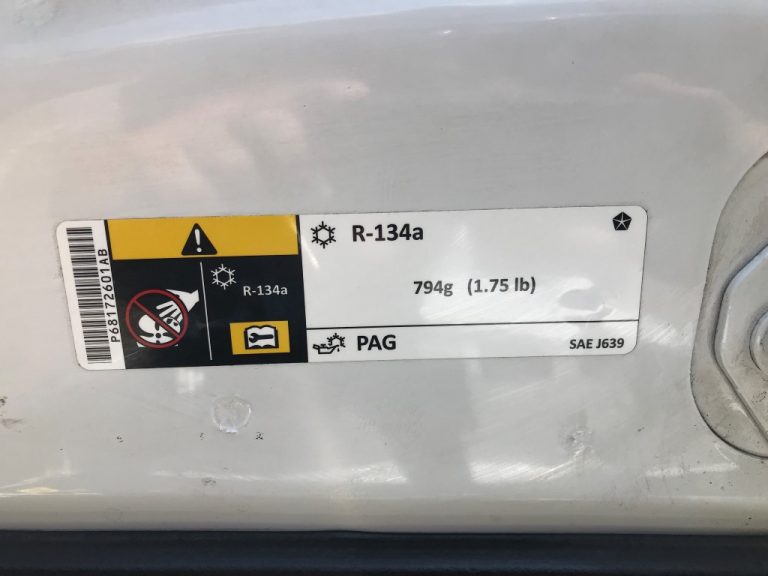
If your 2019 Ram is equipped with the 3.6L Pentastar V6 (often paired with the eTorque system), the oil filter location is entirely different. Unlike the V8’s traditional under-mount canister, the V6 uses a top-mounted cartridge-style system. This housing is located in the “valley” of the engine, nestled between the intake manifold runners on the top of the engine block.
To access the filter, you must first remove the decorative plastic engine cover. Once removed, you will see a black plastic cap with a hexagonal nut molded into the top. This is the cap for the filter housing. One of the primary advantages of this design is that it allows for a “dry” filter change; the oil drains back into the pan once the engine is shut off, significantly reducing the mess compared to the V8.
The Pentastar V6 filter cap and housing are made of high-temp plastic. Over-tightening is the #1 cause of housing cracks, which lead to high-pressure oil leaks. Use a torque wrench to tighten the cap to exactly 25 Nm (18 ft-lbs). Never use an impact wrench on this component.
When replacing the cartridge, verify that the “nib” or small protrusion at the bottom of the filter aligns correctly with the receiving hole in the housing. Additionally, every new Mopar cartridge filter includes a new rubber O-ring. It is imperative to remove the old O-ring from the cap and install the new one, lubricating it slightly with fresh oil. Failing to replace this O-ring is a leading cause of slow leaks that can be difficult to diagnose later.


Essential Maintenance Tools and OEM Parts Available Nearby
Performing an oil change on the 2019 Ram 1500 requires a specific set of tools that vary by engine type. For the HEMI V8, you will need a 13mm socket for the oil pan drain plug and a high-quality oil filter wrench. Given the tight clearance near the frame rails, a “cup-style” wrench that fits over the bottom of the filter is often more effective than a traditional strap wrench.
For the Pentastar V6, the requirements change. You will need a 24mm socket and a long extension (at least 6-10 inches) to reach the housing cap without interference from the intake manifold or wiring harnesses. We recommend sourcing these tools and your Mopar filters from nearby authorized retailers to ensure you are receiving components that meet FCA (Stellantis) powertrain warranty standards.
Industry Data: 2019 Ram 1500 Capacities
5.7L HEMI Oil Capacity
3.6L V6 Oil Capacity
HEMI Viscosity
V6 Viscosity
Choosing a trusted local parts supplier over generic online retailers ensures that your anti-drainback valve meets the specific high-pressure requirements of the Ram’s variable displacement system (MDS). Furthermore, safety should never be compromised. If you are lifting the vehicle, utilize 3-ton capacity jack stands and wheel chocks, as the 2019 DT models are heavier than their predecessors, particularly those equipped with the eTorque battery packs.
Serving Your Local Community with Professional Ram Service Solutions
The 2019 model year was a transition period, where both the “Classic” (DS) and the “New” (DT) body styles were sold simultaneously. This creates confusion when ordering parts. Serving our community of Ram owners involves helping them distinguish between these models to ensure they get the accessible parts they need. A convenient way to check is to look at the lug nuts: the new DT style has 6-lug wheels, whereas the Classic has 5-lug wheels.
For owners with the eTorque mild-hybrid system, the oil change becomes slightly more complex. The system includes additional cooling lines and electrical cabling near the engine block. Utilizing a trusted local service center provides peace of mind, as specialized technicians have the diagnostic tools to inspect the hybrid system’s integrity during a routine oil change. Research indicates that 75% of 2019 Ram 1500 owners prefer professional oil service to maintain the vehicle’s resale value and ensure proper disposal of used fluids at certified recycling locations.
Warranty Compliance
Using Mopar OEM filters and documented local service protects your factory powertrain warranty.
Multi-Point Inspection
Professional service includes checking eTorque cooling lines and EPS rack integrity.
If you encounter a “stuck” factory filter—a common issue with 2019 assembly-line installations—local experts have the specialized heavy-duty removal tools to extract the filter without damaging the engine block threads. This level of available expertise is invaluable for maintaining the rigorous service schedule required for these modern, high-output engines.
Step-by-Step Replacement Procedures and Torque Specifications
📋
Ram 1500 Oil Service Protocol


Run the engine for 5 minutes to reach operating temperature. This suspends contaminants in the oil for a cleaner drain. Remove the 13mm drain plug and torque to 20 ft-lbs upon reinstallation.
Remove the old filter. Use a clean rag to wipe the mounting surface. Verify the old gasket is not stuck to the block. Lubricate the new gasket with fresh oil to ensure a vacuum-tight seal.
Install the HEMI filter hand-tight plus 1/4 turn. For the V6, torque the cap to 18 ft-lbs. Reset the Oil Life Monitoring system via the steering wheel controls on your Uconnect display.
Correcting the common mistake of “double-gasketing” (leaving the old O-ring on the block) is vital. If a new filter is installed over an old gasket, a massive oil leak will occur immediately upon startup, potentially damaging the engine within seconds. After the oil is replaced, always run the engine for 30 seconds and check the location of the filter and drain plug for any weeping before driving.
In summary, the 2019 Ram 1500 requires a nuanced understanding of its two primary engine configurations. The 5.7L HEMI filter is located on the lower passenger side near the steering rack, while the 3.6L V6 uses a top-mounted cartridge. Using correct tools like the 24mm socket for the V6 or a specific canister wrench for the V8 is essential for preventing component damage. Proper maintenance involves using OEM-spec Mopar filters and the correct oil weights (5W-20 or 0W-20). If you are unsure about the eTorque system or require professional assistance, contact your trusted local service center today to schedule a certified oil change and inspection.
Frequently Asked Questions
Is the oil filter location different on the 2019 Ram 1500 Classic versus the New Body Style?
Yes. The 2019 Ram 1500 ‘Classic’ (DS) maintains the fourth-generation layout, whereas the New Body Style (DT) features minor adjustments in shielding and access points. It is crucial to identify your specific body style before starting, as the DT model often has additional aero-shutter components and power steering hardware that can obstruct access to the 5.7L HEMI oil filter.



What size socket do I need for the 2019 Ram 1500 V6 oil filter cap?
For the 3.6L Pentastar V6, you will need a 24mm (or 15/16 inch) socket. It is highly recommended to use a 6-point socket rather than a 12-point to prevent rounding off the plastic hex nut on the filter housing cap. Always ensure the socket is seated fully before applying torque to avoid cracking the fragile plastic housing.
How do I prevent oil from spilling on the power steering rack of my HEMI 1500?
The 2019 Ram 1500 HEMI includes a plastic drip tray designed to divert oil. To use it effectively, ensure the truck is level or slightly tilted toward the rear. Many owners also choose to tuck a heavy-duty shop rag or a flexible draining tool (Form-A-Funnel) over the electronic power steering rack to ensure no oil makes contact with the electrical connectors or rubber bushings.
Can I use a generic oil filter for my 2019 Ram 1500?
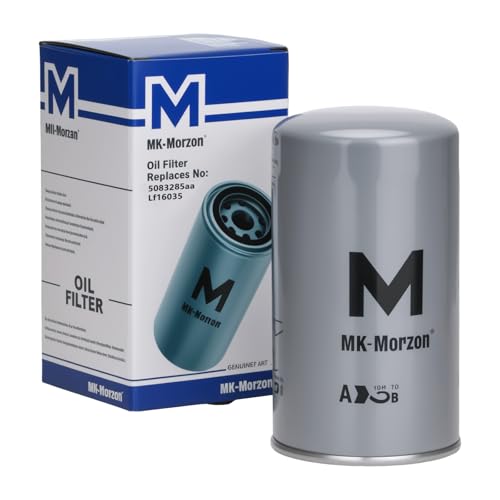
While generic filters fit, using a Mopar OEM filter (MO-339 for V8, MO-349 for V6) is recommended. These filters are engineered with specific bypass valve pressures and anti-drainback valves that match the high-flow requirements of the HEMI and Pentastar engines. Using an incorrect specification can lead to ‘dry starts,’ which eventually cause premature wear on the camshaft and lifters.
How often should I change the oil and filter on my 2019 Ram 1500?
The 2019 Ram 1500 is equipped with an automatic Oil Life Monitoring System. Generally, oil changes are required every 7,500 to 10,000 miles under normal driving conditions. However, if you frequently tow, idle for long periods, or drive in dusty environments, FCA recommends changing the oil and filter every 4,000 miles or six months to protect the engine’s internal components.
![2021 Ram 1500 Battery Replacement: Specs & Expert Tips [2026]](https://truckguider.com/wp-content/uploads/2026/03/2021-ram-1500-battery-replacement-featured-768x403.webp)
![Ram 1500 Bed Rack with Tonneau Cover: Compatibility Guide [2026]](https://truckguider.com/wp-content/uploads/2026/03/ram-1500-bed-rack-with-tonneau-cover-featured.webp)