2002 Dodge Ram 1500 4.7 Engine: Specs, Problems & Reliability 2026

The 2002 model year heralded the arrival of the third-generation Dodge Ram 1500, bringing a completely redesigned chassis featuring highly rigid hydroformed frame rails, improved independent front suspension for four-wheel-drive models, and a modernized powertrain lineup. The cornerstone of this engineering transition was the introduction of the 4.7-liter PowerTech SOHC V8 engine, which officially retired the aging 5.2-liter Magnum pushrod V8.
Designed to deliver a harmonious balance of payload capability, smoother power delivery, and improved emissions compliance, the 4.7-liter engine served as the highly capable mid-tier option for consumers who required reliable hauling power without the excessive fuel consumption associated with larger displacement V8 engines.

Prime for Young Adults — 6 Months Free
Students and 18–24s get six months of Prime free, then half price.
Start 6 Months FreeThis research report provides an exhaustive technical breakdown of the 2002 Dodge Ram 1500 4.7-liter engine, examining its mechanical specifications, comparative performance metrics, documented points of failure, and verified modification pathways.
2002 Dodge Ram 1500 4.7L V8
Recommended Best Deal Products


The Complete Visual Owner’s Guide: Specs, Reliability, and “The Drop”
The “Middle Child” Engine
Before the Hemi dominated the lineup, the **4.7L PowerTech V8** was Dodge’s modern answer to the aging 5.2L Magnum. It featured Single Overhead Cams (SOHC) and an aluminum head design. While smoother than its predecessors, it sits in a controversial spot: lacking the raw torque of the 5.9L and the reliability of the GM 5.3L Vortec.
Power Wars: Class of 2002
How the 4.7L stacked up against the domestic competition and its own big brother, the 5.9L Magnum.
Efficiency vs. Reality
Recommended Best Deal Products


The 4.7L was marketed as efficient, but real-world physics had other plans.
Fuel Economy Breakdown
Real-world MPG reports sourced from user data. Note the drastic drop when towing.
City Driving (11-13 MPG)
In stop-and-go traffic, the heavy Quad Cab chassis forces the smaller 4.7L to work hard, negating the benefits of the SOHC design.
Highway Cruising (15-17 MPG)
This is the engine’s sweet spot. Once the torque converter locks up in overdrive, it cruises relatively efficiently.
Towing Heavy (8-10 MPG)
Towing anything over 5,000 lbs pushes the 4.7L out of its efficiency band, often requiring high RPMs to maintain speed on grades.

Audible — Listen Free for 30 Days
One free credit a month and thousands of titles included.
Listen Free for 30 DaysThe “Death Drop”: A Fatal Flaw
The most notorious issue with the 2002 4.7L is the “Dropped Valve Seat.” This usually results in total engine destruction. Here is the mechanical chain of events that leads to failure.
Overheating Event
Water pump failure, stuck thermostat, or clogged radiator causes engine temp to spike above 220°F.
Dissimilar Expansion
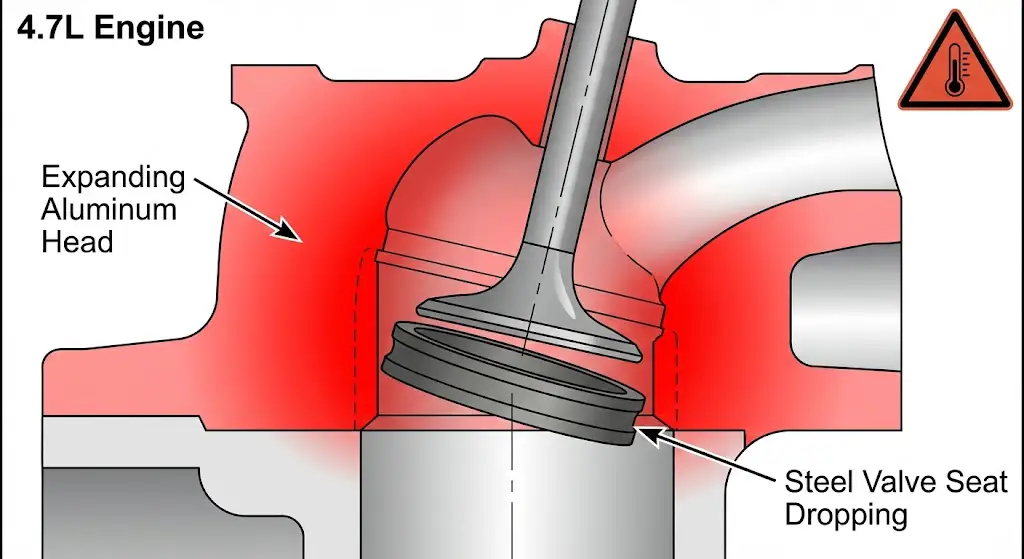
The Aluminum Head expands faster than the Steel Valve Seat insert pressed into it.
The Drop & Impact
Upon cooling, the loose seat falls into the cylinder. On restart, the piston smashes it, destroying the engine.
🛡️ Prevention Strategy:
Never ignore coolant temps. Refresh the entire cooling system (pump, stat, hoses) every 50,000 miles. If it overheats, shut it off immediately.
Survival Maintenance Schedule
Recommended Best Deal Products


To reach 200k miles, you must ignore the “standard” schedule and follow this “severe” service roadmap.
Secondary Headaches
- Oil Sludge PCV valve clogs easily. Use high-quality synthetic oil to prevent narrow oil passages from blocking.
- “Mayo” in Oil Cap Yellow foam under the cap is usually just condensation from the long plastic filler neck, not a head gasket leak.
- The “Death Flash” Dealer PCM updates retarded timing to stop pinging, killing HP. A tuner is the only fix.
Mechanical Specifications and Engine Architecture
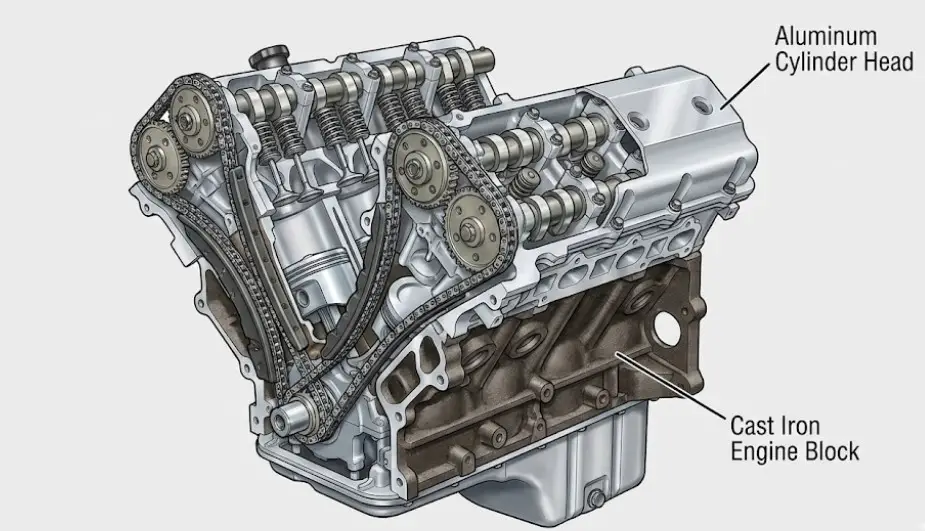
The 4.7-liter (287 cubic inches) PowerTech V8 is built upon a durable cast-iron engine block mated to aluminum alloy cylinder heads. Moving away from the traditional pushrod setup that defined Dodge trucks for decades, this modern engine employs a Single Overhead Camshaft (SOHC) configuration featuring two valves per cylinder, driven by a complex multi-piece timing chain system. The fuel delivery relies on a sequential multi-port electronic, returnless fuel injection system designed to optimize the stoichiometric balance across the RPM band. To mitigate engine vibration and improve overall operational smoothness, Chrysler engineers integrated a balance shaft directly into the engine bedplate.
Audible Premium Plus — Annual Membership
12 audiobook credits up front, plus the full Audible catalogue.
See Annual Plans| Specification | Measurement / Technical Detail |
| Displacement | 4.7 Liters (287 cu in) |
| Engine Block Material | Cast Iron |
| Cylinder Head Material | Aluminum Alloy |
| Bore x Stroke | 3.66 in (93 mm) x 3.405 in (86.5 mm) |
| Compression Ratio | 9.0:1 (or 9.1:1 depending on ECU mapping) |
| Horsepower | 235 hp @ 4650 RPM |
| Torque | 295 lb-ft @ 3250 RPM |
| Oil Capacity | 5.0 Quarts (SAE 5W-30) |
| Valvetrain | SOHC, 16-Valve, Hydraulic Lash Adjusters |
Powertrain Comparison: 3.7L V6 vs. 4.7L V8 vs. 5.9L V8
The 2002 Dodge Ram 1500 offered three distinct engine configurations to meet diverse consumer demands. The entry-level option was the newly developed 3.7-liter PowerTech V6, which was essentially a truncated version of the 4.7-liter V8, sharing identical bore and stroke dimensions. At the top of the hierarchy sat the carryover 5.9-liter Magnum V8, an older pushrod design revered for its low-end torque but heavily criticized for poor volumetric efficiency and dismal fuel consumption.
The 4.7-liter V8 occupied the optimal middle ground. It significantly outperformed the base V6 in payload and towing management while delivering superior refinement, a flatter torque curve, and slightly better fuel economy than the heavy 5.9-liter Magnum.
| Engine Option | Horsepower | Torque | EPA Fuel Economy (City/Hwy) |
| 3.7L SOHC V6 | 215 hp @ 5200 RPM | 235 lb-ft @ 4000 RPM | ~15 / 21 MPG |
| 4.7L SOHC V8 | 235 hp @ 4650 RPM | 295 lb-ft @ 3250 RPM | ~13 / 17 MPG |
| 5.9L Pushrod V8 | 245 hp @ 4000 RPM | 335 lb-ft @ 3200 RPM | 11 / 15 MPG |
Towing Capacity and Payload Dynamics
The towing limits of the 2002 Dodge Ram 1500 4.7-liter engine are intrinsically linked to the cab configuration, bed length, and drivetrain selection. The third-generation Ram's chassis redesign yielded a highly rigid structure that managed torsional flex far better than its predecessors, providing a highly stable platform for trailering.
The 4.7-liter engine proves exceptionally well-suited for medium-duty hauling. While the larger 5.9-liter V8 offers a slight towing advantage due to its raw torque output, the 4.7-liter models still achieve a formidable maximum towing capacity of 8,650 pounds when equipped in the lightest, most rigid configuration, specifically the Regular Cab, Short Bed with a two-wheel-drive layout. Achieving these maximum ratings requires proper axle ratios, typically the 3.92:1 gearing, and the implementation of a weight-distributing hitch for any trailer loads exceeding 5,000 pounds.
| Cab & Bed Configuration | Drivetrain | Max Payload | Max Towing Capacity | Gross Vehicle Weight (GVWR) |
| Regular Cab, Short Bed (120" WB) | 4x2 | 1,850 lbs | 8,650 lbs | 6,550 lbs |
| Regular Cab, Long Bed (140" WB) | 4x2 | 1,850 lbs | 8,650 lbs | 6,550 lbs |
| Quad Cab, Short Bed (140.5" WB) | 4x2 / 4x4 | 1,517 lbs | 8,350 lbs | 6,650 lbs |
| Quad Cab, Long Bed (160.5" WB) | 4x4 | 1,450 lbs | 8,150 lbs | 6,650 lbs |
Transmission Architecture: The 45RFE and the 545RFE Upgrade
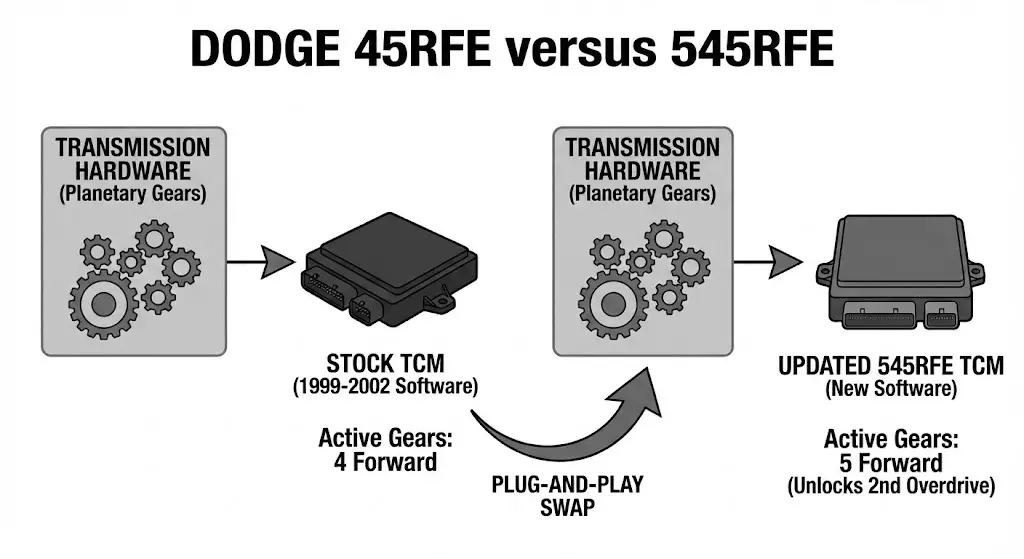
The 2002 Dodge Ram 4.7-liter V8 was factory-mated to the 45RFE four-speed automatic transmission. However, an analysis of Chrysler's transmission hardware reveals a fascinating engineering quirk: the 45RFE and the subsequent 545RFE five-speed automatic are mechanically identical internally. The exclusive difference between the four-speed and five-speed operation is governed entirely by the software mapping within the Transmission Control Module (TCM). Chrysler engineered the transmission with three planetary gearsets capable of six theoretical forward ratios but artificially limited the 1999–2002 4.7-liter models to four forward gears.
A highly documented and popular modification among 2002 Ram owners involves replacing the factory TCM with a 545RFE TCM, frequently utilizing Chrysler Part number 56044574AC. This straightforward plug-and-play swap instantly unlocks a second overdrive gear with a 0.67:1 ratio. The activation of this fifth gear significantly reduces highway cruising RPM, lowers transmission fluid temperatures, and yields a verifiable real-world fuel economy increase of 1.5 to 2.0 miles per gallon at highway speeds.
Critical Reliability Vulnerabilities and Diagnostics
The 4.7-liter PowerTech engine possesses the capability to reach 200,000 to 300,000 miles with meticulous maintenance. However, it suffers from specific engineering vulnerabilities that require proactive management. Neglecting the cooling system or extending oil change intervals invariably leads to catastrophic engine failure.
The most severe failure associated with the early 4.7-liter V8 is the tendency to drop intake valve seats. The cylinder heads are cast from aluminum, while the valve seat inserts are manufactured from compressed, sintered powdered metal. These materials possess drastically different thermal expansion coefficients. When the engine experiences an overheating event, the aluminum cylinder head expands at a faster rate than the steel insert, causing a loss of the critical interference fit. Once this fit is compromised, the valve seat drops out of the head and prevents the intake valve from closing. The piston subsequently collides with the open valve and the hardened steel seat, resulting in shattered pistons, destroyed cylinder heads, and metallic debris scattered throughout the intake manifold. To prevent this, the cooling system must be maintained flawlessly. During rebuilds, machine shops must utilize oversized seats and employ a swaging technique, which involves peening the surrounding aluminum to physically lock the seat in place.
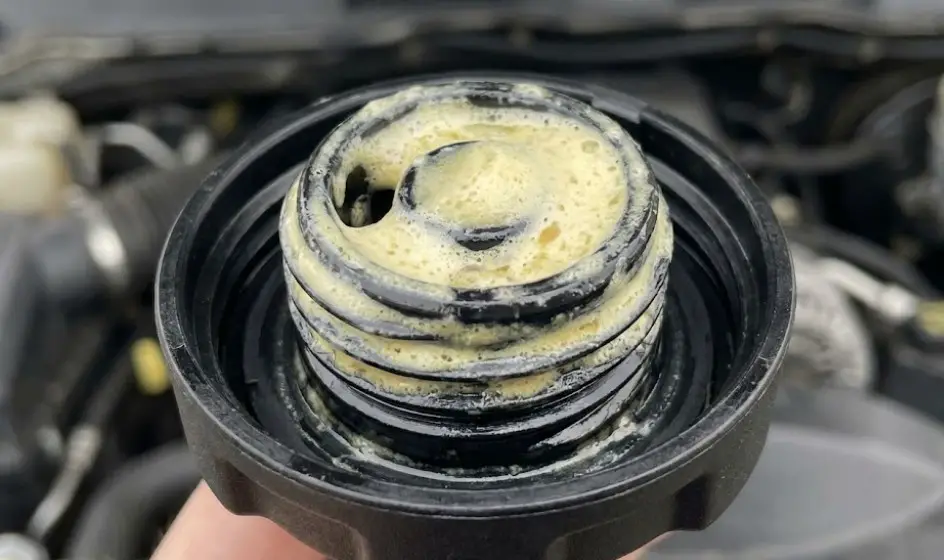
Another prevalent issue is the accumulation of oil sludge and PCV system condensation. Owners frequently observe a thick, milky-white foam accumulating under the oil filler cap. While this symptom traditionally indicates a blown head gasket in other vehicles, within the 4.7-liter engine, it is often a benign but problematic design flaw related to the Positive Crankcase Ventilation (PCV) system. The long oil filler neck acts as a condensation trap. During short-trip driving or in colder climates, the engine oil fails to reach the necessary temperature to evaporate atmospheric moisture. This moisture emulsifies with oil vapors, creating a viscous sludge. If ingested by the PCV valve, this sludge causes the valve to freeze or clog, leading to crankcase over-pressurization. Chrysler addressed this by issuing(http://dodgeram.info/tsb/2006/25-001-06.htm), providing a relocation kit that moves the PCV valve from the oil fill tube directly to the rear left cylinder head, ensuring it remains at operating temperature.
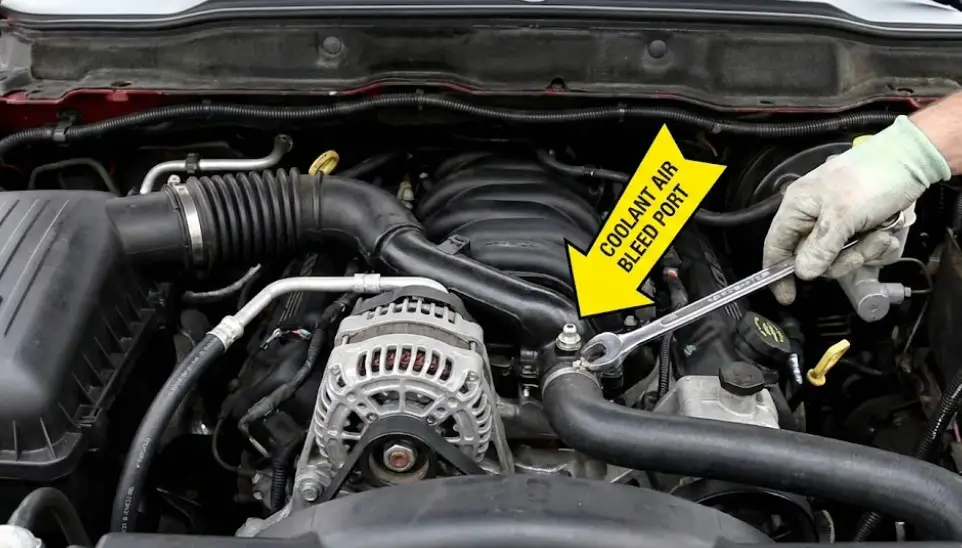
Furthermore, the 4.7-liter cooling system is notoriously difficult to bleed. If the coolant is drained and refilled without precise air-bleeding procedures, trapped air pockets will form around the upper cylinder block. These pockets create localized hot spots, with steam reaching temperatures up to 400 degrees Fahrenheit, which fail to register accurately on the dashboard temperature gauge. These undetected hot spots rapidly warp the aluminum cylinder heads, inevitably leading to blown head gaskets. Mechanics must utilize a specialized funnel threaded into the 3/8 NPT purge hole located at the top of the engine to ensure all trapped air is completely evacuated during the refilling process.
Standard Maintenance Schedule and Preventative Care
Routine maintenance is the absolute defining factor in the longevity of the 4.7-liter PowerTech engine. Strict adherence to specified intervals is required to mitigate the engine's inherent vulnerabilities.
| Maintenance Interval | Required Service Action |
| Every 3,000 Miles | Replace engine oil and filter. Full synthetic 5W-30 is highly recommended to prevent lower-engine sludge on the oil pump pickup tube. |
| Every 15,000 Miles | Inspect differential fluids and transfer case oil (if equipped with 4x4). |
| Every 30,000 Miles | Replace spark plugs (standard copper core recommended), inspect ignition coils, and replace the engine air filter. |
| Every 60,000 Miles | Replace the PCV Valve. This is critical to prevent internal sludge buildup and crankcase over-pressurization. |
| Every 72,000 Miles | Complete cooling system drain, flush, and refill using precise bleeding techniques. |
| Every 100,000 Miles | Perform an automatic transmission fluid and filter change to ensure planetary gearset longevity. |
Performance Modifications and Engine Optimization
Because the 4.7-liter V8 shares a market with the highly supported 5.7-liter HEMI and 5.9-liter Magnum engines, aftermarket bolt-on support is somewhat constrained. Nevertheless, targeted upgrades can yield substantial improvements in both volumetric efficiency and thermal management.
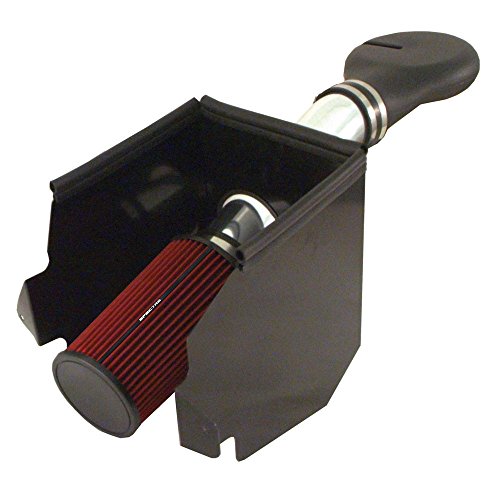
Upgrading to a 180-degree thermostat lowers the baseline operating temperature of the engine. This modification delays heat soak and directly reduces the risk of the thermal expansion mismatches that lead to dropped valve seats. For performance enhancements, owners frequently look to the later 2008 Next Generation 4.7-liter engine, which produces 310 horsepower. By retrofitting the 2008 intake manifold using aftermarket adapters and installing higher-lift camshafts from the High Output Jeep variants, drivers can dramatically increase mid-range torque and throttle response. Additionally, the installation of cold air intakes and shorty unequal-length headers relieves exhaust backpressure, allowing the SOHC heads to breathe more efficiently at higher RPMs.
People Also Ask
Is the 2002 Dodge Ram 4.7 a reliable engine?
The 4.7-liter V8 is a structurally robust engine that demands meticulous, unforgiving maintenance. Unlike older cast-iron pushrod engines that tolerate neglect, the 4.7-liter engine requires a perfectly sealed cooling system and rigorous 3,000-mile oil change intervals. When properly maintained, the bottom end of the engine routinely exceeds 250,000 miles. However, purchasing a used model with a history of overheating or deferred maintenance carries a high risk of catastrophic valve seat failure.
Why is my Dodge 4.7 getting poor gas mileage?
The standard EPA fuel economy for a 4x4 Quad Cab 4.7-liter model is approximately 11 to 13 miles per gallon in the city and 15 to 16 miles per gallon on the highway. If fuel economy drops significantly into the single digits, it is typically indicative of worn copper spark plugs, sluggish oxygen sensors, or a clogged PCV valve creating excess crankcase pressure. Performing the 545RFE transmission control module swap and ensuring optimal tire pressure are the most effective strategies for recovering lost fuel efficiency.
What is the difference between the 4.7L Standard and 4.7L High Output (H.O.)?
Introduced in 2002 primarily for the Jeep Grand Cherokee but parts-compatible with the Ram, the 4.7-liter H.O. engine produces up to 265 horsepower and 330 lb-ft of torque, a notable increase over the standard 235 horsepower and 295 lb-ft of torque. The High Output variant achieves this performance delta through the implementation of an aggressive camshaft profile, a specialized high-flow intake manifold, a reprogrammed engine control unit for faster throttle response, and a higher 9.3:1 compression ratio.
How do I know if my 4.7 dropped a valve seat?
A dropped valve seat presents instantly with a severe mechanical knocking sound, a total loss of engine power, and an immediately flashing Check Engine Light accompanied by misfire codes such as P0300 or P0301 through P0308. A mechanical compression test on the affected cylinder will register zero PSI because the intake valve is wedged open by the displaced metal ring. It is critical not to attempt to start or drive the vehicle under these conditions, as the piston will continuously impact the valve, destroying the entire short block.
Concluding Synthesis
The 2002 Dodge Ram 1500 equipped with the 4.7-liter PowerTech engine represents a pivotal shift in light-duty truck engineering, moving away from brute-force displacement toward overhead-cam efficiency. While its towing capacities and refined power delivery make it an excellent choice for daily hauling, its reputation is intrinsically tied to the owner's maintenance habits. By understanding its specific thermal vulnerabilities, executing precise cooling system maintenance, and leveraging straightforward software upgrades like the 545RFE TCM swap, owners can ensure this engine delivers reliable, long-term performance.
![2018 Ram 1500 5.7 Oil Capacity [2026]](https://truckguider.com/wp-content/uploads/2026/03/featured-cc58a684.webp)
![P062A Ram 1500: Diagnosing Fuel Pump Control Module Issues [2026]](https://truckguider.com/wp-content/uploads/2026/03/p062a-ram-1500-featured.webp)