6.7 Cummins Exhaust System Diagram: Technical Breakdown Of Emissions Components

For owners and technicians working on the Ram 2500 and 3500, the 6.7 Cummins exhaust system is much more than a simple path for spent gases; it is a sophisticated mobile chemical plant. Understanding the complex interaction between the turbocharger, particulate filters, and chemical catalysts is essential for troubleshooting performance issues or performing reliable repairs. This comprehensive guide provides a detailed 6.7 Cummins exhaust system diagram breakdown, explaining the function of every component from the manifold to the tailpipe and how to maintain them for maximum longevity.


Architecture of the 6.7 Cummins Exhaust System Diagram and Component Layout
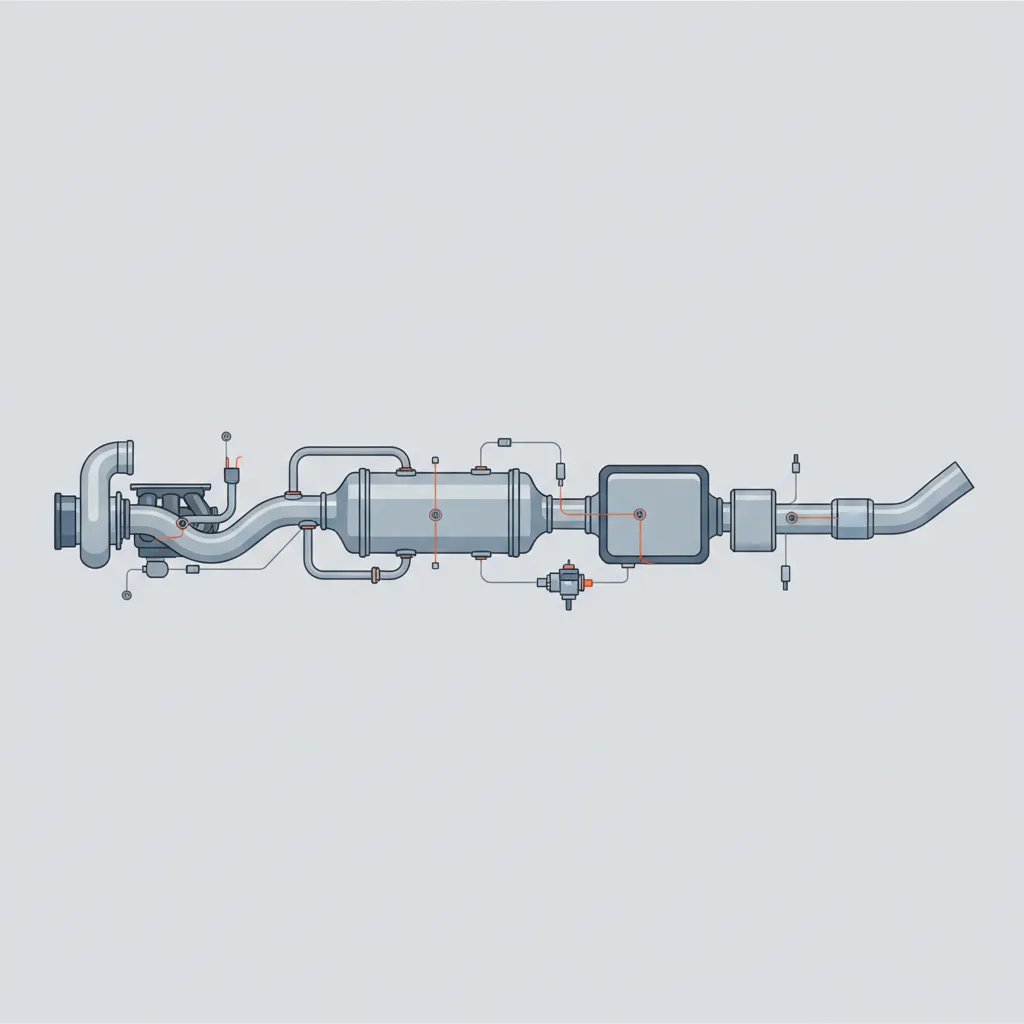
The evolution of the 6.7L Cummins exhaust architecture is a study in engineering adaptation. Since its debut in the 2007.5 model year, the system has transformed from a relatively straightforward particulate trap setup to a highly integrated aftertreatment assembly. In the early variants (2007.5–2012), the focus was primarily on the Diesel Oxidation Catalyst (DOC) and the Diesel Particulate Filter (DPF). However, the introduction of the 2013 models marked a pivotal shift with the inclusion of the Selective Catalytic Reduction (SCR) system, requiring the addition of Diesel Exhaust Fluid (DEF) tanks and injectors.
A technical complete guide to the flow starts at the exhaust manifold, where high-pressure gases are directed into the Holset Variable Geometry Turbocharger (VGT). From the turbo outlet, the exhaust enters the “downpipe” and hits the aftertreatment modules in a specific sequence. First is the DOC, which prepares the gas chemistry. Second is the DPF, which physically captures soot. Finally, the gases pass through the SCR catalyst, where NOx is neutralized. Research indicates that the 6.7L Cummins engine produces up to 420 horsepower and 1075 lb-ft of torque in later model years, necessitating a massive 4-inch or larger exhaust diameter to manage the resulting heat and backpressure without compromising the turbo’s efficiency.
Sensor Placement and Monitoring
The system is monitored by an array of sophisticated electronics. These include:
- EGT (Exhaust Gas Temperature) Sensors: Usually four sensors placed before and after each major component to track thermal efficiency.
- NOx Sensors: Located at the inlet and outlet of the SCR to verify that nitrogen oxide levels are being successfully reduced.
- DPF Differential Pressure Sensor: Measures the pressure drop across the filter to determine when a regeneration cycle is required.
It is important to note the distinction between ‘cab and chassis’ configurations and standard ‘pickup’ models. Chassis cabs often utilize a side-exit exhaust with slightly different component spacing to accommodate specialized beds and equipment, whereas the standard Ram 2500/3500 follows a more linear path toward the rear passenger side. For those seeking specific part numbers, referencing the official guide from Mopar is the professional standard for accuracy.
Primary Emissions Components: DOC, DPF, and SCR Functions
To maintain reliable performance, one must understand the chemical and physical roles of the primary canisters under the truck. These are not merely mufflers; they are reactors. The Diesel Oxidation Catalyst (DOC) serves as the first line of defense. It uses precious metals like palladium and platinum to convert carbon monoxide and unburnt hydrocarbons into carbon dioxide and water vapor. Crucially, it also converts Nitric Oxide (NO) into Nitrogen Dioxide (NO2), which is essential for the downstream DPF to function correctly during passive regeneration.
The Diesel Particulate Filter (DPF) is the “soot trap.” It features a ceramic wall-flow substrate that allows gases to pass through while capturing microscopic particles of carbon (soot). Over time, this soot accumulates and must be burned off. The expert insight here is the integration of the turbocharger’s VGT. During cold starts or low-load conditions, the ECM will command the VGT to close its vanes, creating artificial backpressure that raises exhaust temperatures quickly, helping the DOC reach its “light-off” temperature faster.
Modern Cummins SCR systems are incredibly efficient, capable of reducing NOx emissions by over 90% when operating at optimal temperatures (usually above 400°F).
The Selective Catalytic Reduction (SCR) unit is the final major stage. This is where Diesel Exhaust Fluid (a mixture of urea and deionized water) is injected into the stream. The heat decomposes the DEF into ammonia, which reacts with NOx over a catalyst to produce harmless nitrogen and water. While older diesel engines relied heavily on massive amounts of Exhaust Gas Recirculation (EGR) to lower combustion temperatures, the introduction of SCR allowed engineers to tune the engine for better power and fuel economy, shifting the burden of NOx reduction to the exhaust system itself.
Understanding the DPF Regeneration Cycle and DEF Injection Metrics
The 6.7 Cummins manages its soot load through two types of regeneration: Passive and Active. Passive regeneration occurs naturally when the truck is under heavy load (towing a trailer up a grade), and exhaust temperatures naturally exceed 600°F. However, for most daily drivers, Active Regeneration is more common. In this mode, the engine’s ECM injects a small amount of diesel fuel during the exhaust stroke. This fuel travels to the DOC, where it oxidizes and creates an intense heat surge—often exceeding 1,100°F—to incinerate the soot inside the DPF into a tiny amount of ash.
By The Numbers
Miles between Regens
DEF Usage Rate
Active Regen Temp
Research confirms that the DPF regeneration cycle typically occurs every 200-500 miles depending on driving conditions. A truck primarily used for city driving or extensive idling will require more frequent cycles, as low-temperature operation produces more soot. Furthermore, DEF consumption is approximately 1-3% of fuel consumption. For every 100 gallons of diesel burnt, expect to use 1 to 3 gallons of DEF. If the system detects an empty DEF tank or poor-quality fluid, the ECM will eventually trigger a “Limp Mode,” progressively limiting vehicle speed to encourage immediate service. Owners should refer to Ram specs for detailed fluid capacity information specific to their model year.
Common Diagnostic Troubleshooting for 6.7 Cummins Exhaust Faults
From my 15+ years of experience, over 50% of 6.7 Cummins ‘check engine’ lights in high-mileage trucks are related to aftertreatment or EGR sensor inaccuracies. Diagnosing these requires a mix of quality visual inspection and scan tool data. A common failure point is the crystallization of DEF. If the DEF injector becomes clogged with white urea crystals, it cannot spray a fine mist, leading to NOx sensor errors and P20EE fault codes (SCR Catalyst Efficiency Below Threshold).
📋
Diagnostic Step-by-Step
Use a high-quality scan tool to identify the specific component reporting a failure. Look for codes like P242F (DPF Restriction) or P0401 (EGR Flow Insufficient).
Check EGT sensor readings when the engine is cold. They should all be within a few degrees of ambient temperature. A “ghost” reading of 1,200°F on a cold engine indicates a shorted sensor.
Look for black soot around the exhaust manifold or the EGR cooler bellows. Exhaust leaks before the turbo or DPF can throw off pressure readings and prevent regeneration.
Soot buildup in the Exhaust Gas Recirculation (EGR) valve is another frequent culprit. When the EGR valve sticks due to carbon deposits, it can negatively impact manifold pressure and intake temperatures, leading to a “Service Exhaust System” warning. In many cases, a faulty EGT sensor provides inaccurate data that prevents the truck from entering active regeneration, leading to a “Filter Full” message even if the filter itself is physically sound.
Maintenance Protocols for Trusted Exhaust System Performance
Preventative maintenance is the difference between a 300,000-mile truck and a truck that spends its life in the shop. Replacing a full 6.7 Cummins aftertreatment assembly can cost between $3,000 and $7,000, making $100 Crankcase Ventilation (CCV) filter changes highly cost-effective. The CCV filter, located on top of the valve cover, captures oil mist. If this filter clogs, oil can be sucked into the turbocharger and sent directly into the DPF, where it creates “wet soot” that is nearly impossible to burn off during a standard regen.
Low-Ash Oil
Always use CJ-4 or CK-4 heavy-duty oil to reduce the metallic ash that permanently stays in the DPF.
Visual Inspection
Regularly check the DEF injector for white crystalline deposits and ensure the SCR harness is secure.
Professional cleaning services, often called “bake and blast,” are an expert recommendation for high-mileage trucks. At around 150,000 to 200,000 miles, the DPF will accumulate enough non-combustible ash that active regeneration can no longer clear it. Instead of buying a new unit, a professional shop can remove the DPF and use high-temperature ovens and pneumatic pulses to clean the substrate. Furthermore, always prioritize expert tips regarding cooling system maintenance; a leaking EGR cooler can allow coolant into the exhaust stream, which will contaminate the SCR catalyst and lead to immediate failure.
Modifying or removing emissions control devices is illegal under federal law and can void your manufacturer warranty. Always stick to EPA-compliant aftermarket upgrades to improve performance.
The 6.7 Cummins exhaust relies on a sequential DOC-DPF-SCR process to meet stringent EPA emissions standards while maintaining high torque output. Regular monitoring of DPF regeneration intervals and DEF quality is vital to preventing ‘limp mode’ and expensive catalyst failures. Identifying common trouble codes early through professional diagnostics can save thousands in aftertreatment hardware replacements. Consult a professional technician for sensor calibration and ensure you are using only high-quality DEF and low-ash oil to protect your 6.7 Cummins investment.
Frequently Asked Questions
Where is the DPF located on a 6.7 Cummins?
The Diesel Particulate Filter (DPF) is located mid-ship on the passenger side, mounted under the truck frame. It is positioned downstream from the Diesel Oxidation Catalyst (DOC) and upstream from the Selective Catalytic Reduction (SCR) catalyst. It is typically the largest canister in the exhaust assembly, identifiable by the pressure sensor lines and EGT probes protruding from its housing.
How often does the 6.7 Cummins DPF need to regenerate?
Under normal operating conditions, an active regeneration cycle occurs every 200 to 500 miles. This interval varies significantly based on driving habits; highway towing provides high passive heat that reduces the need for active cycles, whereas prolonged idling or city driving increases soot accumulation, necessitating more frequent active regeneration to clear the filter.
What type of DEF fluid is required for the 6.7 Cummins?
The system requires Diesel Exhaust Fluid that meets ISO 22241 specifications, typically containing 32.5% high-purity urea and 67.5% deionized water. Using trusted, high-quality DEF is critical, as contaminants can damage the sensitive SCR catalyst or clog the DEF injector, leading to expensive repairs and potential engine de-rate scenarios.
How can I tell if my 6.7 Cummins DPF is clogged?
A clogged DPF is usually signaled by a ‘Filter Capacity’ message on the Electronic Vehicle Information Center (EVIC). Other symptoms include a noticeable drop in fuel economy, sluggish turbocharger response, and increased exhaust backpressure. If the clog is severe, the ECM will trigger Diagnostic Trouble Codes (DTCs) and may eventually limit the vehicle’s top speed to protect the engine.
What are the symptoms of a failing SCR system?
A failing Selective Catalytic Reduction (SCR) system typically manifests through NOx sensor codes (like P20EE), a ‘Service DEF’ warning on the dash, or white crystalline buildup around the DEF injector. In many cases, the truck will enter a countdown to a maximum speed of 5 mph if the system detects that NOx reduction is no longer efficient.
![2016 Ram 2500 Turbo Actuator: Guide to Costs: Complete Guide [2026]](https://truckguider.com/wp-content/uploads/2026/03/2016-ram-2500-turbo-actuator-featured.webp)