Non Mds Lifters 5.7 Hemi Conversion [2026]

The legendary 5.7 Hemi is a powerhouse of American engineering, yet its Multi-Displacement System (MDS) remains a polarizing point of debate among automotive professionals. While designed to enhance fuel efficiency by deactivating four cylinders under light-load conditions, the system introduces mechanical complexities that often compromise long-term durability. Owners frequently encounter the infamous “Hemi Tick,” a rhythmic precursor to catastrophic MDS lifter failure that can lead to irreparable camshaft damage and exorbitant engine rebuild costs. This comprehensive guide provides a technical deep-dive into non-MDS lifters 5.7 Hemi solutions, detailing the precision components, mechanical advantages, and professional installation steps required to restore reliable valvetrain performance and peace of mind.


Mechanical Distinctions Between MDS and Non-MDS Lifters 5.7 Hemi Components
📤 Share Image
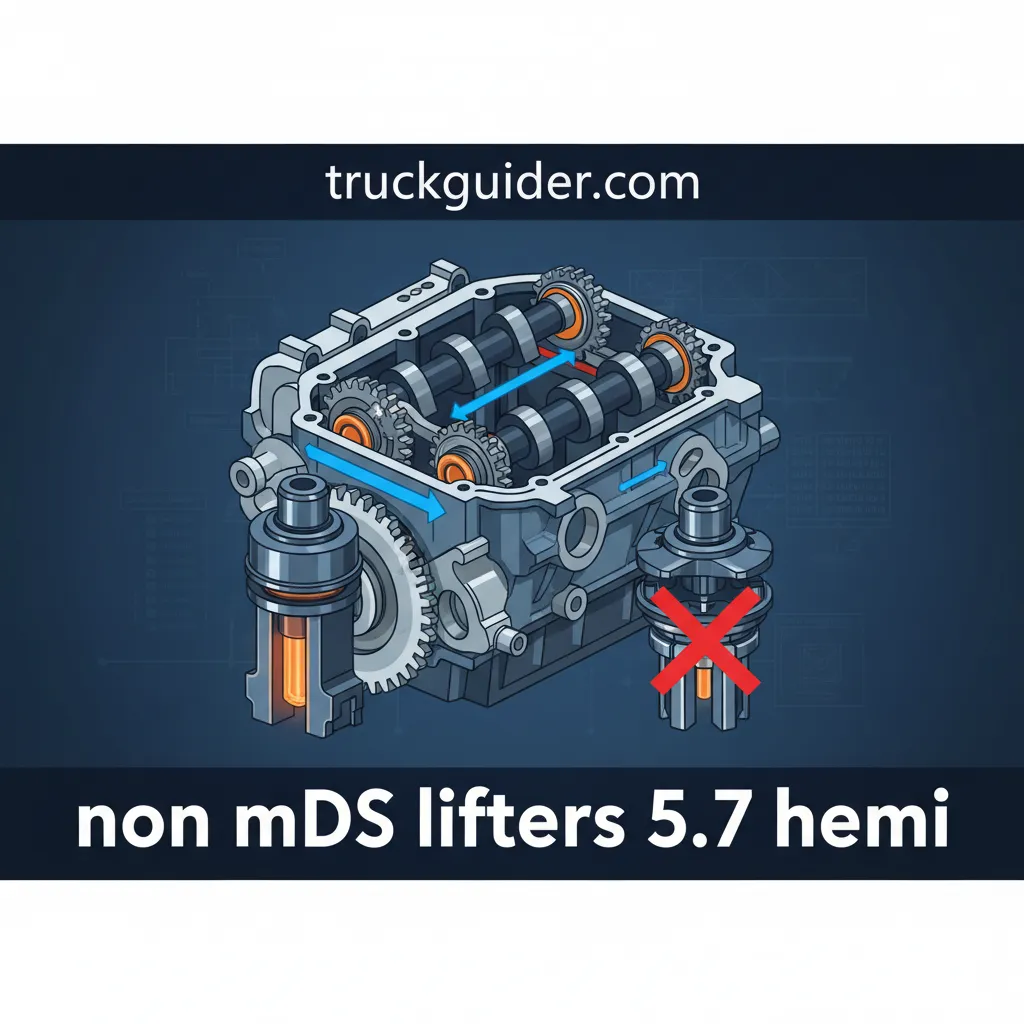
Understanding the fundamental engineering differences between MDS and non-MDS lifters is crucial for any expert engine builder. The MDS lifter (typically Mopar Part #53021720AB) utilizes an intricate internal locking pin mechanism. When the PCM commands cylinder deactivation, high-pressure oil is routed through the MDS solenoids into a specific gallery, forcing these pins to retract. This allows the lifter body to telescope without transferring motion to the pushrod, effectively “turning off” the cylinder. While clever, this design introduces multiple failure points where the pin can partially engage, leading to internal collapse or “skipping” on the camshaft lobe.
In contrast, non-MDS lifters, such as the Mopar Part #5038784AD (originally designed for the high-output 6.2L Hellcat and 6.4L SRT engines), feature a solid-body architecture. Without the need for telescoping internals, these lifters offer a much more rigid connection between the camshaft and the valvetrain. The solid design eliminates the dependency on solenoid-actuated oil pressure for mechanical integrity. Furthermore, professional-grade non-MDS lifters utilize superior needle bearings and hardened roller wheels, which are essential for enduring the high-stress environment of a modern OHV engine.
By The Numbers
Open Spring Pressure Capacity
Internal Locking Pins in Non-MDS
Identical Lifters Required
One nuance often overlooked by novice installers is the interaction with the oil galleries. In an MDS-equipped block, the oil flow pathways are specifically machined to feed the solenoids. When switching to non-MDS lifters, these galleries must be addressed correctly to ensure that the solid lifters receive constant, reliable lubrication. Additionally, a non-MDS lifter requires a corresponding non-MDS camshaft. The lobe profiles and base circles differ significantly between the two systems; attempting to run solid lifters on an MDS cam will result in incorrect lifter preload and potential valvetrain noise, as the “deactivation” lobes on an MDS cam are shaped specifically to facilitate pin engagement.

Identifying Reliable Indicators for a Non-MDS Lifter Upgrade
Diagnosing the need for a conversion requires a complete understanding of Hemi-specific failure modes. The most common symptom is the “Hemi Tick.” It is imperative to differentiate this from normal fuel injector noise, which is a high-frequency clicking. A lifter-related tick is a deeper, rhythmic metallic thud that often correlates with engine speed. This noise typically signifies that a lifter roller has seized or the needle bearings have disintegrated, causing the roller to skid across the camshaft lobe rather than rolling over it.
Use a mechanic’s stethoscope on the valve covers near the intake manifold. If the “tick” sounds like a hammer hitting an anvil rather than a sewing machine, the lifter’s roller has likely failed. Check your oil filter for fine metallic “glitter,” which confirms camshaft galling.
Consider a common expert scenario: a 2014 RAM 1500 with 120,000 miles arrives with a persistent P0303 (Cylinder 3 Misfire) code and audible valvetrain chatter. Despite replacing spark plugs and ignition coils, the misfire remains. In these cases, the MDS lifter in cylinder 3 has often partially collapsed or seized. Because cylinders 1, 4, 6, and 7 are the MDS-active cylinders, they are the primary candidates for failure, but the associated oil pressure drops can affect the entire valvetrain. Trusted diagnostic protocols dictate monitoring oil pressure at hot idle; while 20-30 PSI is standard, a needle that flickers rhythmically often points to an internal bleed-off at the lifter or a failing oil pump bypass.
Extended idle times are the silent killer of MDS components. In the 5.7 Hemi, the oil splash from the crankshaft is the primary source of lubrication for the camshaft and lifter rollers. At low RPM (idle), the oil volume is insufficient to adequately lubricate the overhead assembly, especially in MDS lifters where the complex internal oil paths already restrict flow. This is why “police idle hours” are a major factor in determining the necessity of a quality non-MDS conversion.

Essential Components for a Professional MDS Delete and Lifter Installation
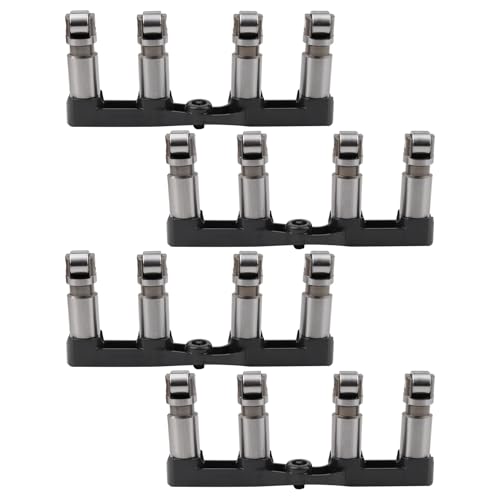
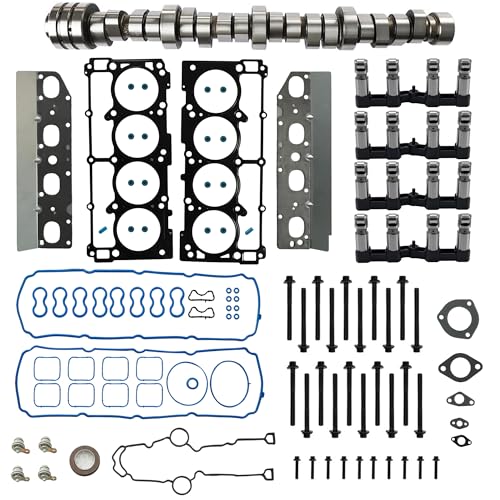
Performing a professional MDS delete on a 5.7 Hemi is not merely a parts swap; it is an engineering recalibration of the engine’s valvetrain. To ensure a reliable and complete conversion, specific hardware must be utilized. The most critical component is the set of 16 non-MDS lifters. While aftermarket options exist, many expert builders insist on OEM Mopar “Hellcat” lifters due to their proven track record under extreme cylinder pressures.


Furthermore, you must replace the lifter trays (yokes). The MDS lifter trays have a specific shape to clear the bulkier deactivation solenoids and lifter bodies. When moving to a non-MDS architecture, using the correct non-MDS yokes ensures the lifters remain perfectly aligned with the camshaft lobes, preventing premature wear. Trusted builds also require a non-MDS camshaft. A popular and cost-effective upgrade for 5.7L “Eagle” engines (2009+) is the factory 6.4L 392 Apache camshaft. This cam provides a significant boost in mid-to-high RPM torque while maintaining factory-like drivability.
📋
Installation Checklist
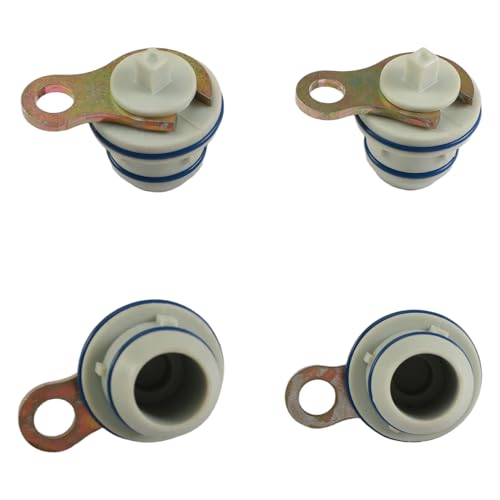
Remove the four MDS solenoids located under the intake manifold and replace them with Mopar expansion plugs (Part #53032221AA) to seal the oil galleries permanently.
The Hemi uses Torque-to-Yield (TTY) bolts. Always use new head gaskets and bolts. Follow the sequence: 35 ft-lbs initial, then two separate 90-degree passes.
Precision is key when measuring pushrod length. When you deviate from the stock MDS camshaft and lifters, the base circle of the new cam may differ. An expert will use a pushrod length checker to verify that the lifter preload falls within the manufacturer’s spec (typically 0.030″ to 0.060″ for street applications). Incorrect preload is the leading cause of “mysterious” valvetrain noise after an otherwise successful installation. Finally, don’t forget the front-end components: a new timing chain, tensioner, and a quality high-volume oil pump (like the Melling M365) are highly recommended while the engine is disassembled.
Never leave the MDS solenoids electrically connected if you have swapped to non-MDS lifters. If the PCM attempts to fire a solenoid that is no longer venting into a collapsible lifter, it can cause localized oil pressure spikes and internal seal failure.
The Critical Role of Expert Tuning After Non-MDS Lifter Installation
The physical installation is only half the battle. The Powertrain Control Module (PCM) in a 5.7 Hemi is hard-coded to manage the MDS logic. It monitors oil pressure, throttle position, and load to determine when to deactivate cylinders. Once you install non-MDS lifters, the mechanical ability to deactivate is gone, but the computer doesn’t know that. Without a professional tune, the PCM will continue to attempt MDS activation, resulting in immediate Diagnostic Trouble Codes (DTCs), a “Check Engine” light, and potentially forcing the vehicle into a “limp home” mode.


✅ Why You MUST Tune
- Disables MDS “hunting” logic
- Prevents P0521 and P0300 codes
- Adjusts fuel maps for 4-cylinder mode
- Optimizes timing for new cam profile
❌ Risks of No Tune
- Persistent Limp Mode
- Erratic idle and stalling
- Incorrect ignition timing
- Failed emissions testing
Using platforms like HP Tuners or Diablosport, a tuner will permanently disable the MDS flags within the software. This ensures the engine stays in V8 mode 100% of the time. This is also the ideal time to calibrate the PCM for the new camshaft’s breathing characteristics. For instance, if you’ve installed the 6.4L cam, the VVT (Variable Valve Timing) tables must be adjusted to maximize the performance gains of the larger lobes. Fail to do this, and you may experience a “lazy” throttle response or poor low-end torque.
A classic case study involves a DIY installer who completed a flawless mechanical swap but neglected the tune. Within 20 miles, the vehicle threw a P0521 (Oil Pressure Sensor Correlation) code. Because the PCM expected a specific pressure drop during MDS engagement—which no longer occurred because the solenoids were plugged—it assumed the sensor was faulty. A comprehensive tune resolves these logic conflicts by informing the PCM that the MDS hardware is no longer present, allowing the engine to run with the trusted stability of a traditional V8.
Superior Durability
Solid lifter architecture eliminates the fragile locking pins that cause the majority of Hemi valvetrain failures.
Increased Performance
Non-MDS conversions allow for more aggressive camshaft profiles and higher RPM ranges than stock MDS components.
In conclusion, the transition to non-MDS lifters 5.7 Hemi components is the definitive engineering solution for owners seeking to eliminate the valvetrain’s weakest link. By replacing the complex, failure-prone MDS hardware with trusted, solid-body alternatives and securing a professional PCM tune, you effectively future-proof the engine. Whether you are repairing a failed unit or proactively building for power, this conversion ensures the 5.7L Hemi remains the reliable workhorse it was always meant to be. Consult with a certified technician to begin your non-MDS lifter conversion and restore the expert-grade performance of your Hemi engine today.
Frequently Asked Questions
Can I install non-MDS lifters and keep my factory MDS camshaft?
No, this is not a recommended practice for professional builds. The MDS camshaft features specific lobe profiles designed for the collapsible lifters. Installing solid non-MDS lifters on an MDS-profile cam will result in incorrect valve timing and potential engine damage. A trusted conversion must include a non-MDS camshaft to ensure proper geometry and valvetrain harmony.
What are the most reliable brands for non-MDS lifters?
For most 5.7 Hemi owners, the Mopar ‘Hellcat’ lifters (non-MDS) are considered the gold standard for quality and reliability. They are factory-engineered to handle high RPM and increased spring pressures. For extreme racing applications, professional builders often turn to trusted aftermarket brands like Johnson or Morel, which offer precision-machined tolerances and improved oiling features.
Will deleting MDS and installing non-MDS lifters void my warranty?
Modifying the internal valvetrain and flashing the PCM will typically void the powertrain warranty on the affected components. However, for vehicles out of the factory warranty period, this conversion is a professional solution to prevent future failures. Always consult with your dealer if you have an extended or third-party warranty before performing these modifications.


Does fuel economy drop significantly after a non-MDS lifter conversion?
While the MDS system is designed to save fuel by deactivating cylinders, the real-world impact is often minimal. Most owners report a loss of only 1-2 MPG on the highway. For many, the trade-off for improved reliability and the elimination of the ‘Hemi Tick’ is well worth the slight decrease in fuel efficiency, making it a professional choice for longevity.
What is the expected labor time for a professional non-MDS lifter install?
Replacing lifters on a 5.7 Hemi is a labor-intensive process that requires removing the cylinder heads. An expert technician can typically complete the job in 12 to 16 hours. This time includes stripping the top end, cleaning the surfaces, installing the new camshaft and lifters, and performing the necessary PCM tuning to ensure a reliable finish.

![Ram Tradesman Vs Big Horn [2026]](https://truckguider.com/wp-content/uploads/2026/03/featured-a1247c2c-768x256.webp)