2019 Ram 1500 Coolant Type: Specs & Fitment Guide [2026]

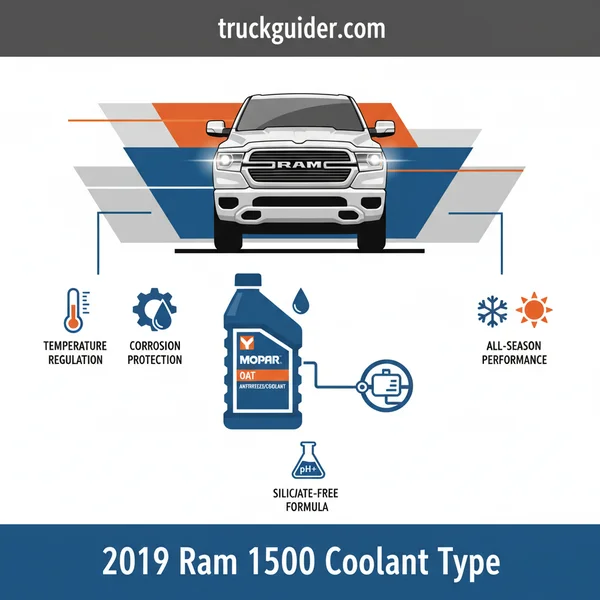
The 2019 Ram 1500 requires OAT (Organic Additive Technology) coolant that meets the MS-12106 specification, which is typically purple in color. It is critical to never mix OAT with older HOAT coolants, as doing so creates a gel-like substance that can cause severe engine damage and radiator failure.
🎯 Key Takeaways
- Use only OAT coolant meeting Chrysler Material Standard MS-12106.
- The correct fluid is Purple Mopar 10 Year/150,000 Mile formula.
- Never mix Purple OAT with Orange/Yellow HOAT to avoid gelling.
- Check the Mopar part number 68163848AB (concentrate) or 68163849AB (pre-diluted).
- Verify the coolant level at every oil change to prevent overheating.
For your 2019 Ram 1500, the only coolant you should ever put in the reservoir is an OAT (Organic Additive Technology) formula that meets the FCA Material Standard MS-12106. This specific chemistry is designed to protect your engine for 10 years or 150,000 miles. Using the wrong fluid isn’t just a minor mistake; it is a recipe for internal corrosion and cooling system failure that can cost thousands in repairs.


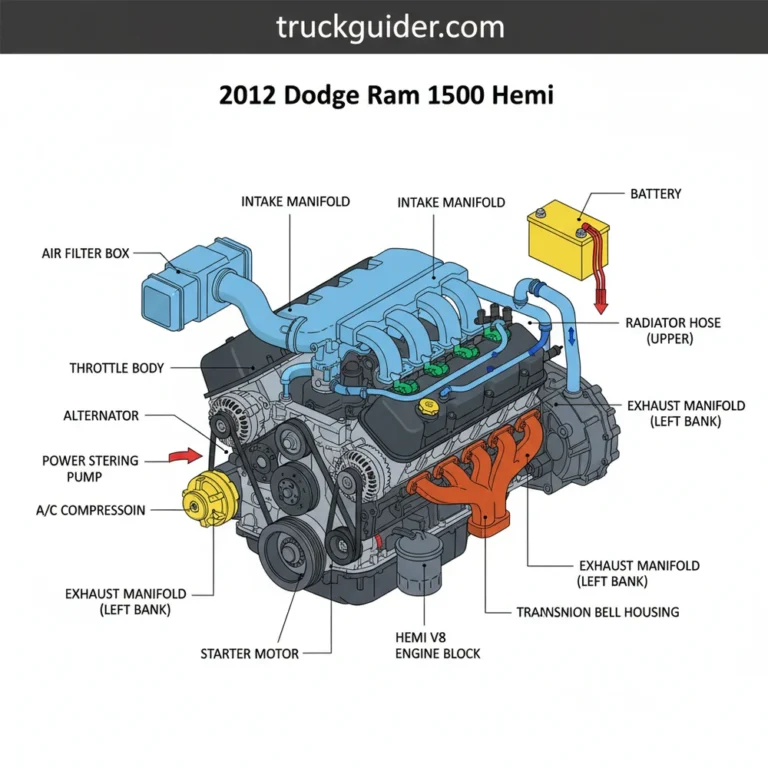
Getting the coolant type right matters because modern Ram engines, whether you have the 3.6L Pentastar or the 5.7L Hemi, rely on specific gaskets and aluminum alloys. The MS-12106 specification ensures the chemicals in the fluid won’t eat away at your seals or create a “sludge” that blocks the tiny passages in your heater core. Because the 2019 model year falls squarely into the era of specialized OAT fluids, you must verify the bottle matches this exact Chrysler/FCA standard before pouring a single drop.
Understanding the OAT MS-12106 Specification for 2019 Ram Models
The transition to OAT coolant represents a significant shift in how Ram trucks manage heat and corrosion. Unlike older formulas that used silicates to scrub the engine clean, OAT technology uses organic acids to create a protective layer on the metal surfaces. For the 2019 Ram 1500, the MS-12106 specification is the mandatory requirement for both the “Classic” and the “New Body Style” models. This fluid is designed to be silicate-free and phosphate-free, which prevents mineral buildup in your radiator.
Why Organic Additive Technology (OAT) is Required
Your 2019 Ram 1500 utilizes a mix of aluminum, plastic, and rubber components that are highly sensitive to chemical changes. The OAT MS-12106 formula is specifically engineered to protect these materials without breaking down over long service intervals. This “long-life” coolant works by forming a microscopic protective film on the internal surfaces of the engine block and cooling jackets. Because it doesn’t contain the abrasive silicates found in older “green” or “yellow” coolants, it reduces wear on the water pump’s internal seals, extending the life of your cooling system significantly.
The Danger of Mixing Coolant Chemistries
One of the most critical reasons to stick strictly to the MS-12106 spec is the danger of cross-contamination. If you mix the 2019 Ram’s OAT coolant with the older HOAT (Hybrid Organic Additive Technology) used in pre-2013 Rams, a chemical reaction occurs. This reaction creates a thick, gel-like substance that can quickly clog your radiator, thermostat, and heater core. Once this “gel” forms, it is incredibly difficult to flush out and usually requires the replacement of multiple cooling components. Always confirm “OAT MS-12106” on the label, even if the bottle says “Universal” or “All Makes/Models.”
- Standard: Mopar MS-12106
- Technology: Organic Additive Technology (OAT)
- Service Life: 10 Years / 150,000 Miles
- Compatibility: Not compatible with HOAT or IAT formulas
2019 Ram 1500 Coolant Maintenance Made Easy: Your Essential Action Plan
Maintaining the cooling system in your 2019 Ram 1500 is one of the most critical preventative maintenance tasks you can perform. This 5th Generation Ram uses a very specific chemical formula for its engine coolant, and using the wrong type can lead to radiator clogging, water pump failure, or internal engine corrosion. This guide is designed to walk you through identifying the correct fluid, checking your levels safely, and topping off the system correctly. Following these steps ensures your 5.7L Hemi or 3.6L Pentastar engine remains at its optimal operating temperature even under heavy towing loads or extreme summer heat.
Step 1: Identify the Correct Coolant Specification
What you need: Your owner’s manual or the specification code MS.90032.
Instructions: The 2019 Ram 1500 requires a specific type of antifreeze known as OAT (Organic Additive Technology). For this specific model year, you must use coolant that meets the FCA (Fiat Chrysler Automobiles) Material Standard MS.90032. This is typically a 10-year/150,000-mile formula. In the past, older Ram models used HOAT (Hybrid Organic Additive Technology), but these two are NOT compatible. If you mix HOAT with the 2019’s OAT, the fluids can react and form a gel-like substance that will plug your heater core and radiator. Ensure the bottle specifically mentions “OAT” and the MS.90032 specification. The fluid color is typically purple, though it may appear pink or orange once it has been in the system for some time.
Pro Tip: Do not rely solely on color. Some aftermarket brands sell “Universal” coolant that claims to work for all makes, but for the 2019 Ram, it is highly recommended to stick with the Mopar Brand OAT or a reputable brand that explicitly lists the MS.90032 compliance on the back label.
Step 2: Ensure the Engine is Completely Cold
What you need: A thermometer or simply time (at least 1–2 hours after driving).
Instructions: Working on a cooling system while it is hot is extremely dangerous. The system is under high pressure, and the coolant temperature can exceed 200 degrees Fahrenheit. If you open the reservoir cap while the engine is hot, the sudden drop in pressure can cause the coolant to boil instantly and spray out, leading to severe burns. Park your truck on a level surface, turn off the ignition, and let it sit. Touch the upper radiator hose (the thick black hose leading to the radiator) cautiously; if it feels hot or is hard to squeeze, the system is still under pressure. Wait until the engine block feels cool to the touch before proceeding to any further steps.
Pro Tip: Use this waiting time to inspect the ground under the truck for any puddles of purple or pink fluid, which could indicate a leak in the water pump or radiator before you even open the hood.
Step 3: Locate the Coolant Recovery Reservoir
What you need: A clean rag and a flashlight.
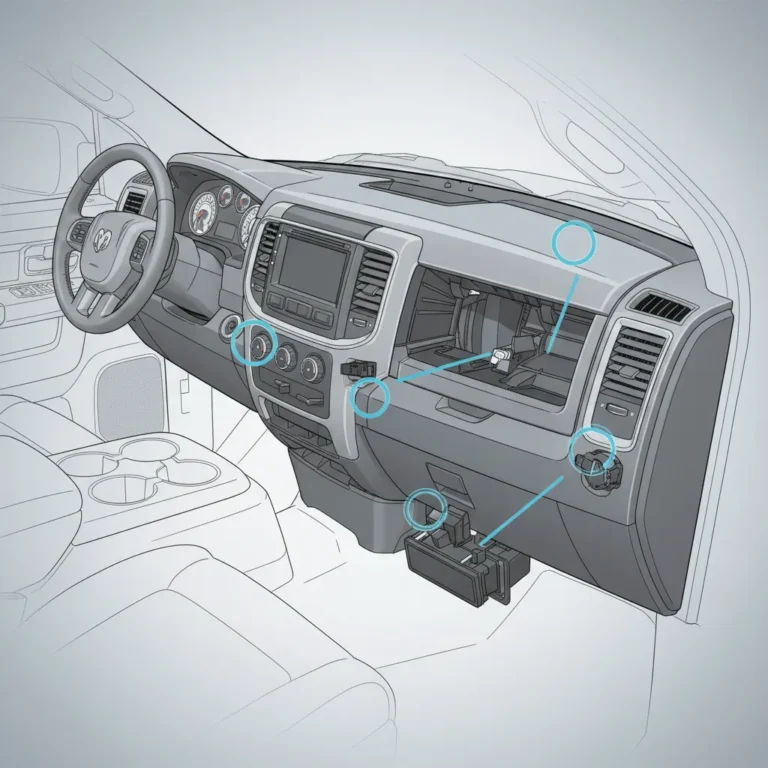
Instructions: Open the hood of your Ram 1500 using the release latch under the dashboard and the safety catch under the center of the hood. The coolant reservoir is a translucent plastic tank located on the passenger side of the engine bay, near the firewall. Unlike older trucks that had a radiator cap directly on the radiator, the 2019 Ram 1500 utilizes a pressurized overflow system. You will see a yellow warning icon on the cap. Use your flashlight to shine through the side of the plastic tank. You will see two embossed lines on the side of the tank: “MIN” (or Cold) and “MAX” (or Hot). The fluid should be at or slightly above the “MIN/Cold” line when the engine is cold.
Pro Tip: If the reservoir is completely empty, do not just top it off. An empty reservoir usually indicates a leak or an air pocket in the system that needs to be addressed by a professional technician.
Step 4: Prepare the Coolant Mixture
What you need: Concentrated OAT Coolant and Distilled Water (OR Premixed 50/50 OAT Coolant).


Instructions: If you purchased “Concentrate” coolant, you must mix it with water before adding it to your truck. The ideal ratio for the 2019 Ram 1500 is 50% coolant and 50% distilled water. Never use tap water, as the minerals in tap water (like calcium and magnesium) will create scale buildup inside your engine’s cooling passages. Use a clean container to mix the two liquids. If you purchased a bottle labeled “50/50 Pre-Diluted,” you do not need to add water; it is ready to pour directly into the vehicle. Pre-diluted is often the safer choice for DIYers as it ensures the chemical balance is perfect and eliminates the risk of using contaminated water.
Pro Tip: If you live in an extremely cold climate (Alaska or Northern Canada), you can increase the ratio to 60% coolant and 40% water for better freeze protection, but never exceed 70% coolant, as pure antifreeze does not dissipate heat as effectively as a water-mix.
Step 5: Safely Remove the Reservoir Cap
What you need: A thick shop towel or rag.
Instructions: Even if the engine feels cool, there may be a small amount of residual pressure in the system. Place a thick rag over the reservoir cap. This acts as a shield in case any steam escapes. Slowly rotate the cap counter-clockwise only about a quarter-turn. Stop and listen for a “hissing” sound. If you hear air escaping, wait until the sound stops completely. Once the pressure is fully vented, continue unscrewing the cap until it can be lifted away. Set the cap on a clean surface like the battery cover to ensure no dirt or debris gets onto the seal of the cap, which could prevent it from sealing correctly later.
Pro Tip: Inspect the rubber seal on the underside of the cap. If it looks cracked, swollen, or brittle, you should purchase a replacement cap from a dealership to ensure the system maintains the proper pressure during operation.
Step 6: Fill to the Correct Level
What you need: A clean plastic funnel and your 50/50 coolant mixture.
Instructions: Insert the funnel into the neck of the recovery reservoir. Slowly pour the purple OAT coolant into the tank. While pouring, keep an eye on the side of the tank where the fill lines are located. Stop pouring once the fluid level reaches the “Cold” or “MIN” mark. It is a common mistake to fill the tank to the “MAX” line while the engine is cold. The “MAX” line is reserved for when the fluid expands as it reaches operating temperature. If you overfill it while cold, the excess pressure may cause the system to vent fluid out of the overflow tube once you start driving, creating a mess in your engine bay and potentially making you think you have a leak.
Pro Tip: Pour slowly to avoid creating air bubbles in the tank. If you spill any coolant on the engine belts or hoses, wipe it off immediately with a wet rag, as antifreeze can degrade rubber components over time.
Step 7: Reinstall the Cap and Test Run
What you need: No tools required.
Instructions: Place the reservoir cap back onto the tank and turn it clockwise until it clicks or is firmly seated. It must be tight to maintain system pressure. Remove the funnel and any rags from the engine bay. Close the hood securely. Start the engine and let it idle for about 5 to 10 minutes, or take a short drive around the block. Turn on the heater to the highest setting and ensure you feel warm air coming from the vents; this confirms that coolant is flowing through the heater core and that there are no large air pockets trapped in the system. Observe the temperature gauge on your dashboard to ensure it stays in the normal range (usually right in the middle).
Pro Tip: After your drive, let the truck cool down again and re-check the level. It is normal for the level to drop slightly after the first cycle as air is purged from the system.
✅ Final Checklist
- Verified the coolant meets FCA Material Standard MS.90032.
- Confirmed the engine was completely cool before opening the reservoir.
- Used distilled water (if mixing concentrate) to avoid mineral buildup.
- Filled the reservoir only to the “Cold/MIN” line.
- Tightened the reservoir cap securely and verified the heater is blowing hot air.
Important Notes:
- Safety Warning: Coolant is toxic to humans and lethal to pets. Its sweet smell often attracts animals. Clean up any spills immediately and dispose of old coolant at a hazardous waste recycling center.
- When to Seek Professional Help: If you notice your coolant is milky (indicates oil mixing), has a strong burnt smell, or if you are constantly having to top it off every week, you may have a head gasket issue or a significant leak that requires a professional pressure test.
- Estimated Time: 15–20 minutes (plus 1–2 hours for engine cooling).
- Cost Range: $25 – $50 depending on whether you buy Mopar OEM fluid or a compatible aftermarket OAT brand.
Identifying Correct Coolant: Visual Markers and Mopar Part Numbers
While the chemical specification is the most important factor, you can use visual cues and official part numbers to ensure you are buying the right product. For the 2019 Ram 1500, the factory-fill coolant is Purple. However, identifying the color can be tricky when the fluid is inside the vehicle. When viewed through the translucent plastic of the coolant overflow bottle, it may appear pink, orange, or even deep red depending on the lighting and the age of the fluid. To be certain, you should always check the color by drawing a small sample into a clear container or looking at the liquid as you pour it from a new bottle.
Official Mopar Part Numbers
The safest way to guarantee you are using the correct fluid is to purchase genuine Mopar coolant. Mopar offers two versions of the MS-12106 OAT coolant: a concentrated version and a pre-mixed version. If you buy the concentrate, you must mix it with 50% distilled water. If you buy the pre-mixed version, you can pour it directly into your 2019 Ram 1500 without adding anything else. Use these part numbers to verify your purchase:


- Mopar 50/50 Prediluted (Ready to Use): 68163849AB (also seen as 68163849AA)
- Mopar Concentrate (Must be Diluted): 68163848AB (also seen as 68163848AA)
Visual Identification and Reservoir Check
When you open the hood of your 2019 Ram, the coolant reservoir is located on the driver’s side near the firewall (for the 5.7L Hemi) or the front passenger side (for the 3.6L Pentastar). The cap will usually have a warning symbol and may mention the OAT requirement. If you see a fluid that is distinctly green or yellow, someone has likely used the wrong coolant in the past, and a full system flush is required immediately. A healthy system in a 2019 Ram should show a clear, purple-tinged liquid. If the fluid looks muddy or has white flakes floating in it, the organic additives have been compromised, and the protection is no longer effective.
Always remember that while several aftermarket brands like Zerex or Prestone offer OAT formulas, they must explicitly state on the back of the bottle that they meet MS-12106. If the bottle only says “MS-9769,” put it back on the shelf; that is the older HOAT formula for 2012 and older trucks and will damage your 2019 engine.
The Gelling Risk: Why Mixing OAT and HOAT Is Dangerous
If you remember one thing from this guide, let it be this: never mix different types of coolant in your 2019 Ram 1500. While it might seem like “coolant is coolant,” the chemistry under the hood is highly specific. Your 2019 Ram uses OAT (Organic Additive Technology). Many older Chrysler vehicles or generic “all-makes” brands use HOAT (Hybrid Organic Additive Technology). When these two formulations meet, they don’t just blend; they react chemically.
The “Goo” Phenomenon
When OAT and HOAT are mixed, the additives can precipitate out of the liquid. This creates a thick, gel-like substance—often described by mechanics as “mud” or “sludge”—that settles in the narrowest passages of your cooling system. This isn’t just a minor inconvenience; it is a recipe for a mechanical nightmare.
- Clogged Heater Cores: The gel often settles here first, leaving you with no heat in the cabin during winter.
- Radiator Blockage: Reduced flow leads to rapid overheating and potential engine warping.
- Water Pump Failure: The thickened liquid puts immense strain on the pump seals, leading to premature leaks.
How to Spot a Dangerous Mix
Because the 2019 Ram’s OAT coolant can look purple, pink, or even slightly orange depending on the light and age, color isn’t always a foolproof indicator of a mix-up. However, if you notice the fluid in your reservoir looks cloudy, opaque, or has visible “strings” or clumps floating in it, you likely have a contamination issue. If this happens, a professional system flush is the only way to save your engine components.
Comparing Factory Mopar Coolant vs. Aftermarket Alternatives
When it’s time for a top-off or a refresh, you will face a choice: the Mopar bottle from the dealership or a cheaper jug from the local auto parts store. While the Mopar 10-Year/150,000 Mile formula is the gold standard for your 1500, there are a few aftermarket options that won’t void your warranty or ruin your radiator.
The Mopar Advantage
Sticking with the Mopar 50/50 Premixed OAT Coolant (Part #68163849AB) removes all the guesswork. You don’t have to worry about the mineral content of your local tap water or whether the chemical inhibitors are compatible. It is designed specifically for the aluminum and rubber components inside the Hemi or Pentastar engines. For many Ram owners, the extra $10 to $15 per gallon is “cheap insurance” compared to the cost of a new water pump.
Identifying Safe Aftermarket Options
If you can’t get to a dealership, you can use aftermarket brands, but you must be a label-reader. Do not look for “Universal” or “Global” formulas. Instead, look specifically for the MS-12106 specification on the back of the bottle.
- Zerex G40: This is a popular alternative that meets many modern Chrysler/Dodge/Ram specifications and provides excellent corrosion protection.
- Peak Antifreeze + Coolant (Violet): Specifically formulated for vehicles requiring OAT technology, matching the 2019 Ram’s requirements.
- Prestone Platinum: Ensure you select the version that explicitly mentions compatibility with the MS-12106 standard.
Practical Tip: If you buy “Concentrate” instead of “Premixed,” always use distilled water. Using tap water introduces minerals that can cause scale buildup inside your engine block over time.
Conclusion
The cooling system in your 2019 Ram 1500 is a high-performance component that requires specific care. By sticking to the Purple OAT coolant and ensuring any fluid you add meets the MS-12106 specification, you are protecting your truck for the long haul. Remember that the “10-year” lifespan is a maximum; regular checks are still vital to ensure your levels are topped off and the fluid remains clear of contaminants.
To keep your Ram running cool, your next steps should be to check your coolant reservoir level during your next oil change and keep a quart of premixed OAT in your garage for emergencies. Have you noticed a color change in your coolant or had a hard time finding the Mopar spec locally? Share your experience in the comments below!
💬 Quick Questions & Answers
What is the official coolant spec for a 2019 Ram 1500?
The 2019 Ram 1500 requires OAT (Organic Additive Technology) coolant meeting Chrysler MS-12106.
What color is the factory coolant in a 2019 Ram 1500?
The factory coolant is purple, though it may appear pinkish when viewed through the reservoir.
Can I use universal green coolant in my 2019 Ram?
No, universal coolants do not meet MS-12106 and can lead to internal corrosion or compatibility issues.
What is the Mopar part number for the 50/50 pre-mixed coolant?
Use Mopar part number 68163849AB for the pre-diluted 50/50 OAT mixture.


Is 2019 Ram 1500 coolant the same as older models?
No, 2013 and newer Rams use OAT, whereas 2012 and older models typically used HOAT.
❓ Frequently Asked Questions
Why is the MS-12106 specification so important for the 2019 Ram 1500?
This specific OAT chemistry is designed to protect the unique alloys and seals used in newer Ram engines for up to 150,000 miles. Using the wrong spec can lead to premature water pump failure or cooling system corrosion.
What happens if I accidentally mix OAT and HOAT coolant?
Mixing these two chemically different types causes a chemical reaction that creates a thick sludge or gel in the cooling system. This blocks the radiator and heater core, eventually leading to catastrophic engine overheating.
My coolant looks pink, but the manual says purple. Is this normal?
Yes, the purple dye used in Mopar OAT coolant can often look pink or orange-tinted when diluted or viewed through the translucent plastic of the coolant reservoir. Always trust the MS-12106 specification over a visual check alone.
Can I use an aftermarket coolant like Zerex or Peak?
You can use aftermarket brands as long as they explicitly state they meet the Chrysler MS-12106 specification on the label. Ensure it is OAT-based and not a ‘universal’ formula that claims to fit all makes and models.
What is the service interval for the 2019 Ram 1500 coolant?
Under normal driving conditions, the factory OAT coolant is rated for 10 years or 150,000 miles, whichever comes first. However, it is wise to inspect the level and condition annually to catch leaks or contamination early.
Should I buy concentrated or pre-diluted coolant for my Ram?
Pre-diluted (50/50) is best for quick top-offs, while concentrate is more cost-effective for a full system flush. If using concentrate, you must mix it with distilled water to avoid mineral buildup from tap water.
![6.7 Cummins Life Expectancy [2026]](https://truckguider.com/wp-content/uploads/2026/03/featured-17f2d286-768x768.webp)
![2008 Dodge Ram 1500 Towing Capacity: Complete Specs Guide [2026]](https://truckguider.com/wp-content/uploads/2026/03/featured-4b2248df-768x768.webp)