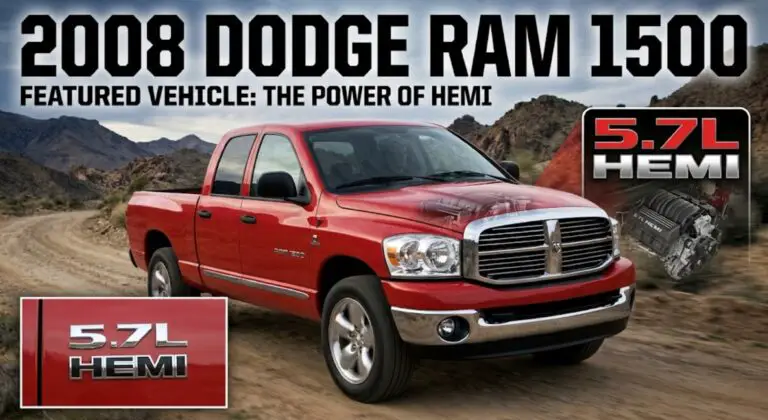
2003 Dodge Ram 1500 5.7L Hemi: Engineering Analysis, Towing Specs, & Repair Guide 2026

The automotive landscape of the early 21st century was defined by a fiercely competitive “arms race” within the American pickup truck segment, a period often referred to by industry analysts as the peak of the modern truck wars. In this context, the 2003 Dodge Ram 1500 represents not merely a model year update, but a pivotal moment in the history of the Chrysler Corporation—and arguably, the American pickup truck itself.
It marked the resurrection of a nameplate that carried arguably more cultural and engineering cachet than any other in the domestic lexicon: the Hemi.



This report serves as an exhaustive technical dossier on the 2003 Dodge Ram 1500 equipped with the 5.7L Hemi V8. Unlike contemporary reviews that focus on surface-level impressions, this document delves into the metallurgical, mechanical, and market-driven engineering decisions that shaped this vehicle. It analyzes the transition from the aging Magnum engine family to the modern Hemi architecture,
dissects the complex relationship between the engine and the 545RFE transmission, and provides a forensic examination of the platform’s reliability profile after two decades of service.
The Market Landscape in 2003
To understand the significance of the 2003 Ram 1500, one must first contextualize the market forces at play. By 2002, the “New Dodge Ram” (the 3rd Generation DR platform) had debuted with striking “big rig” styling that polarized and captivated consumers. However, upon its launch, the powertrain options were carryovers from the previous generation: the 3.7L V6 and the 4.7L V8 PowerTech were modern, but the range-topping 5.9L (360 cubic inch) Magnum V8 was a relic of the LA-series engines from the 1960s. While reliable, the 5.9L was inefficient, heavy, and produced only 245 horsepower—woefully inadequate to challenge General Motors’ GMT800 platform (Silverado/Sierra) and Ford’s F-150.
Ford’s 5.4L Triton V8 and Chevy’s 5.3L Vortec were setting benchmarks for overhead-cam efficiency and pushrod power density, respectively. Dodge needed a response that was not just competitive, but dominant. The answer was the 5.7L Hemi, introduced in 2003. Producing 345 horsepower and 375 lb-ft of torque, it did not just edge out the competition; it eclipsed them by a margin of nearly 60 to 80 horsepower. This power advantage fundamentally altered the consumer expectation for “half-ton” truck performance, shifting the baseline from “adequate utility” to “muscle car acceleration.”
The “Hemi” Nomenclature: Myth vs. Engineering
The decision to brand the new 5.7L engine as a “Hemi” was a calculated marketing masterstroke, leveraging the legendary status of the 426 Hemi “Elephant” engine of the muscle car era. However, from an engineering standpoint, the 2003 5.7L engine was a radical departure from its spiritual predecessor.
The original Hemi engines featured true hemispherical combustion chambers, a design that allowed for massive valves and straight intake ports but suffered from heavy pistons, complex valvetrains, and poor emissions performance due to incomplete combustion in the “dead spots” of the chamber. The 2003 Gen III Hemi, by contrast, utilized a polyspherical combustion chamber. This design flattened the dome slightly to improve thermal efficiency and squish (turbulence) while retaining the splayed valve arrangement that allowed for excellent cross-flow breathing.
Furthermore, the 2003 Hemi introduced a dual spark plug ignition system. This was not for redundancy, but for flame front propagation. By firing two plugs simultaneously (or slightly staggered in later software updates), engineers could initiate combustion at two points within the large chamber, ensuring a rapid, complete burn. This allowed the engine to run higher compression ratios (9.6:1) on mid-grade fuel while meeting strict emissions standards—a feat the original Hemi could never achieve.
Scope of Analysis
This report is structured to provide owners, technicians, and prospective buyers with granular detail. We will explore:
- Powertrain Mechanics: The specific metallurgy of the block, the flow characteristics of the aluminum heads, and the operational logic of the 545RFE transmission.
- Capabilities: A realistic, data-driven assessment of towing capacities that separates marketing brochure claims from physics-based safety limits.
- Pathology of Failure: Detailed investigations into the 2003-specific valve spring failures, the “Hemi Tick,” and the structural weaknesses of the 3rd Gen interior.
- Maintenance & Longevity: An evidence-based guide to fluid selection (5W-20 vs. 5W-30) and preventative maintenance that can extend the service life of the truck beyond 300,000 miles.
TruckGuider: 2003 Ram Hemi
The Return of the HEMI.
The 2003 model year wasn’t just a refresh; it was a revolution for Dodge. Replacing the aging 5.9L Magnum, the **5.7L Hemi V8** brought race-bred technology to the job site. With hemispherical combustion chambers optimizing airflow, this engine didn’t just walk—it ran.
Horsepower
345 HP
Torque
375 lb-ft
Debut Year
2003
Game Changer
The 2003 Ram 1500 was the first mass-market truck to offer over 300 horsepower as a standard option in its class, forcing Ford and Chevy to scramble for years to catch up.
0-60 mph
~6.8 Seconds (Reg Cab)
Magnum vs. Hemi: The Quantum Leap
To understand why the 2003 model is so sought after, you have to look at what it replaced. The previous 5.9L Magnum V8 was reliable but anemic. The 5.7L Hemi didn’t just beat it; it obliterated it. This chart compares the raw output differences.
Horsepower Gain
+100 HP (+41%) increase over the 5.9L Magnum.
Efficiency
Despite the massive power bump, the Hemi actually achieved slightly better highway MPG due to a more efficient dual-spark plug design.


Capability Metrics
Max Towing Capacity (lbs)
Towing capacity varies significantly by cab configuration and drivetrain. The Regular Cab 2WD offers the highest ceiling.
Real World MPG
While efficient for 2003, 5.7L ownership requires a fuel budget. Here is what owners typically report vs. EPA estimates.
The “Hemi Tick” & Other Gremlins
No vehicle is perfect. The 2003 Ram 1500 is generally robust, but it suffers from specific, documented issues. Understanding these can save you thousands in inspections and repairs.
Reported Issue Frequency
Dashboard Cracking
The plastics used in the 2002-2005 Ram interiors become extremely brittle with UV exposure. Large chunks of the dashboard often crumble near the defrost vents.
HVAC Blend Doors
Plastic blend doors inside the heater box break, causing loss of heat or A/C control. Fixing this properly often requires removing the entire dashboard.
The “Hemi Tick”
Often caused by broken exhaust manifold bolts (common) or, in worse cases, lifter/camshaft failure. A rhythmic ticking on cold starts that may go away when warm.
Valve Springs (Early 2003)
Very early 2003 builds had a known issue with weak valve springs that could fail, potentially dropping a valve into the cylinder. Most have been fixed by now, but check service records.
Why Buy A 2003 Hemi?
- Incredible power per dollar value.
- Distinctive “Big Rig” styling.
- Simple electronics compared to modern trucks.
- Massive aftermarket support.
Deal Breakers
- Fuel economy is painful (10-13 mpg city).
- Interior plastics are very low quality.
- Wheel well rust (Dodge “Cancer”).
- Large blind spots.
© 2026 TruckGuider Infographics
Powertrain Architecture: The 5.7L Hemi V8
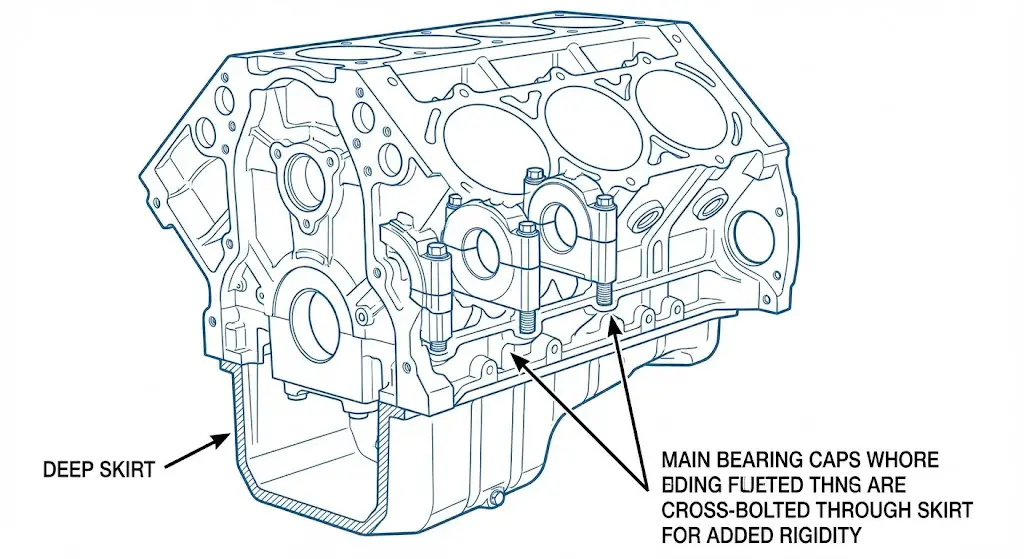
The heart of the 2003 Ram 1500 is the 5.7L Hemi. As the inaugural year for this engine (code named "Eagle" in some early internal discussions, though that name is formally applied to the 2009+ update), the 2003 iteration possesses unique characteristics that differentiate it from the millions of Hemis produced subsequently.
Engine Block and Rotating Assembly
The foundation of the 5.7L Hemi is a deep-skirt cast iron block. The "deep skirt" design means the block casting extends well below the centerline of the crankshaft, providing immense structural rigidity. This creates a stable platform for the rotating assembly and minimizes block flex under high load—a critical attribute for a truck engine designed to tow.
- Displacement: 345 cubic inches (5.7 Liters).
- Bore x Stroke: 3.92 in x 3.58 in (99.5 mm x 90.9 mm).
- Engineering Insight: The engine is slightly "oversquare" (bore larger than stroke), which typically favors high-RPM horsepower over low-end torque. However, Dodge engineers mitigated this by optimizing intake runner length and combustion efficiency to maintain a flat torque curve.
- Crankshaft: Nodular cast iron. While not forged, the nodular iron is extremely durable and capable of handling applications well beyond stock power levels.
- Connecting Rods: Powdered metal, cracked-cap design. This manufacturing technique ensures a perfect, unique mating surface for the rod cap, preventing "cap walk" under load.
- Pistons: Hypereutectic aluminum alloy. These pistons have a high silicon content, reducing thermal expansion and allowing for tighter piston-to-wall clearances. This contributes to reduced oil consumption and quieter operation compared to forged pistons, though they are more brittle under detonation.
Cylinder Heads and Valvetrain
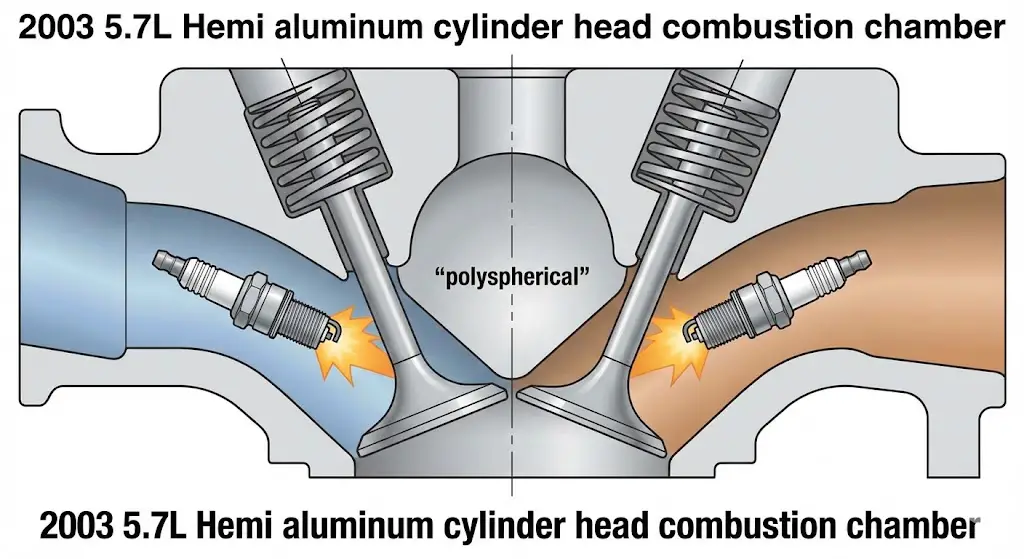
The transition to aluminum cylinder heads was a major advancement over the iron heads of the Magnum engines. Aluminum dissipates heat significantly faster, allowing for higher compression ratios without inducing pre-ignition (knock).
- Flow Dynamics: The Hemi heads feature massive intake and exhaust ports. The "cross-flow" design (intake on one side, exhaust on the other) is far superior to the wedge designs of the competition, allowing for nearly unimpeded airflow. This is the primary reason the 5.7L Hemi could produce 345 hp naturally aspirated, a figure that Ford required a supercharger to beat in the F-150 Lightning (380 hp) or a V10 (310 hp) to approach.
- Valvetrain Geometry: The engine uses a pushrod (OHV) configuration. A single camshaft located in the block actuates the valves via pushrods and rocker arms.
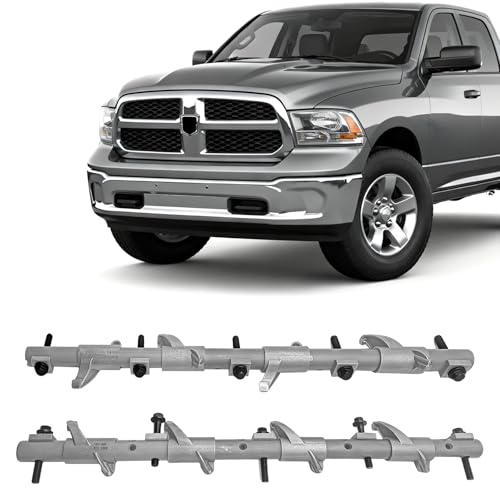
- Rocker Arms: The Hemi uses a shaft-mount rocker system. This is inherently more stable than stud-mount rockers found in some Chevy small blocks, as it prevents the rocker from twisting at high RPM.
- Valve Springs: Critical Component. The 2003 model year utilized a specific valve spring design that proved to be a weak link. These springs were prone to fatigue failure, a topic covered extensively in the "Reliability" section of this report.
The "Non-MDS" Advantage
One of the most significant distinctions of the 2003 (and 2004) 5.7L Hemi is the absence of the Multi-Displacement System (MDS). MDS, introduced in 2006 for the Ram 1500, uses collapsible hydraulic lifters to deactivate four cylinders during highway cruising to save fuel.
- Reliability Implication: The 2003 engine uses standard hydraulic roller lifters on all eight cylinders. It lacks the complex oil control solenoids and the fragile locking pins found in MDS lifters. Consequently, the 2003 engine is immune to the specific "MDS lifter failure" mode where the roller seizes or the locking pin fails, which is a common plague on 2009+ (4th Gen) Rams.
- Camshaft Durability: While no engine is immune to wear, the non-MDS camshafts in the 2003 models generally exhibit better longevity than the MDS camshafts, provided proper oil with sufficient ZDDP (zinc) and film strength is used.
- Oil Viscosity Flexibility: Because the 2003 engine does not rely on specific oil pressures to actuate MDS solenoids, it is less sensitive to oil viscosity changes. This allows owners to run 5W-30 oil (often preferred for high-heat protection) without triggering check engine lights or mechanical issues, a flexibility denied to owners of 2006+ Hemi trucks.
Fuel Injection and Engine Management
The 2003 Hemi utilizes a returnless fuel system with a speed-density engine management system (JTEC or NGC controller depending on build date).
- Throttle Body: It was one of the early adopters of "Drive-by-Wire" (electronic throttle control) in trucks. Instead of a mechanical cable linking the pedal to the engine, a sensor on the pedal sends a signal to the ECU, which commands the throttle blade motor.
- Performance Note: Early drive-by-wire systems were often criticized for "lag." The 2003 Ram ECU programming incorporates significant "torque management," which deliberately slows throttle opening during aggressive acceleration to protect the transmission from shock loads. This is often mistaken for a lack of low-end torque.
Transmission Engineering: The 545RFE
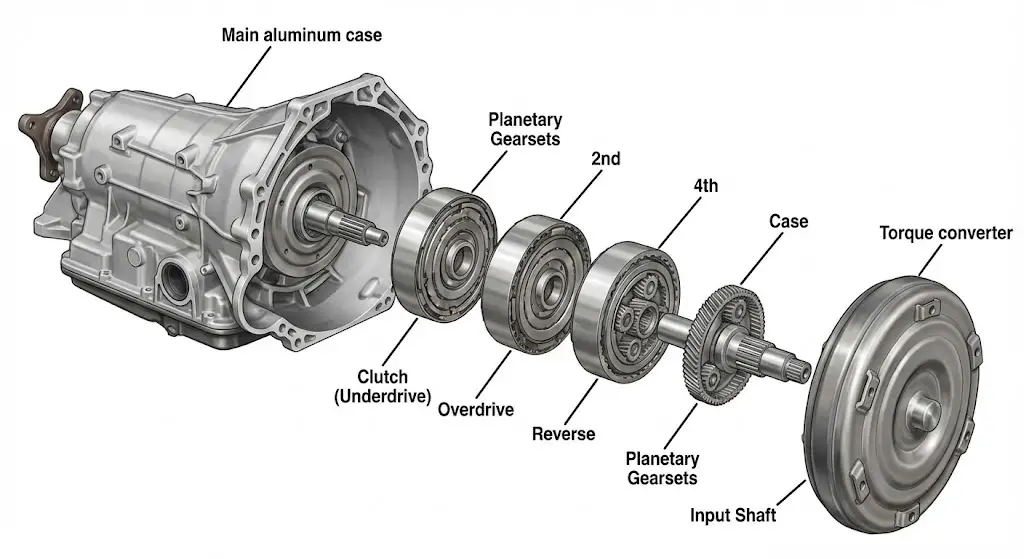
Mated to the high-output Hemi was the 545RFE automatic transmission. Understanding this transmission is critical for any owner, as its behavior often dictates the driving experience more than the engine itself.
Architecture and Design
The designation 545RFE breaks down as follows:
- 5: 5 forward speeds (though structurally it has fewer gearsets than a traditional 5-speed).
- 45: Torque capacity rating (relative scale used by Chrysler).
- R: Rear-wheel drive.
- FE: Fully Electronic control.
The 545RFE is unique because it is technically a three-planetary gearset unit that creates its ratios through clever clutch application. It evolved from the 45RFE (a 4-speed used in the Jeep Grand Cherokee). By simply changing the software strategy to engage a different combination of clutches, Chrysler engineers "unlocked" a second overdrive gear, turning the 4-speed 45RFE into the 5-speed 545RFE.
Gear Ratios and The "2nd Prime" Gear
The gear ratios for the 545RFE are:
- 1st: 3.00:1 – A strong launching gear that helps move the heavy truck.
- 2nd: 1.67:1 – Used during normal upshifts.
- 2nd Prime: 1.50:1 – A special "kickdown" ratio.
- 3rd: 1.00:1 – Direct drive.
- 4th: 0.75:1 – First Overdrive.
- 5th: 0.67:1 – Second Overdrive.
The "2nd Prime" Phenomenon:
Many drivers are confused by the transmission's behavior during passing. When cruising in 4th or 5th gear, if the driver demands moderate acceleration, the transmission may downshift into "2nd Prime" (1.50:1) rather than the standard 2nd gear (1.67:1). This provides a smoother transition and keeps the engine in the optimal part of the powerband without the harshness of a deeper downshift. It effectively acts as a 6-speed transmission in terms of available ratios, but the software only utilizes 5 distinct steps in any single upshift sequence.
Limitations and Cooling
While innovative, the 545RFE has a reputation for being the "glass jaw" of the powertrain when paired with the Hemi.


- Line Pressure: The stock transmission programming prioritizes "smooth" shifts, achieved by slipping the clutches slightly during engagement. Over time, and especially under the torque of the Hemi or heavy towing loads, this slippage generates excessive heat and wears out the clutch material.
- Torque Management: To preserve the transmission, the ECU significantly reduces engine timing during shifts. This results in the sensation that the truck "falls on its face" briefly between gears.
- Cooling: The stock transmission cooler on 1500 models is adequate for daily driving but marginal for towing near the limit. Heat is the primary killer of the 545RFE. Fluid temperatures above 220°F begin to degrade the ATF+4 fluid rapidly, leading to seal hardening and clutch failure.
Chassis, Suspension, and Handling
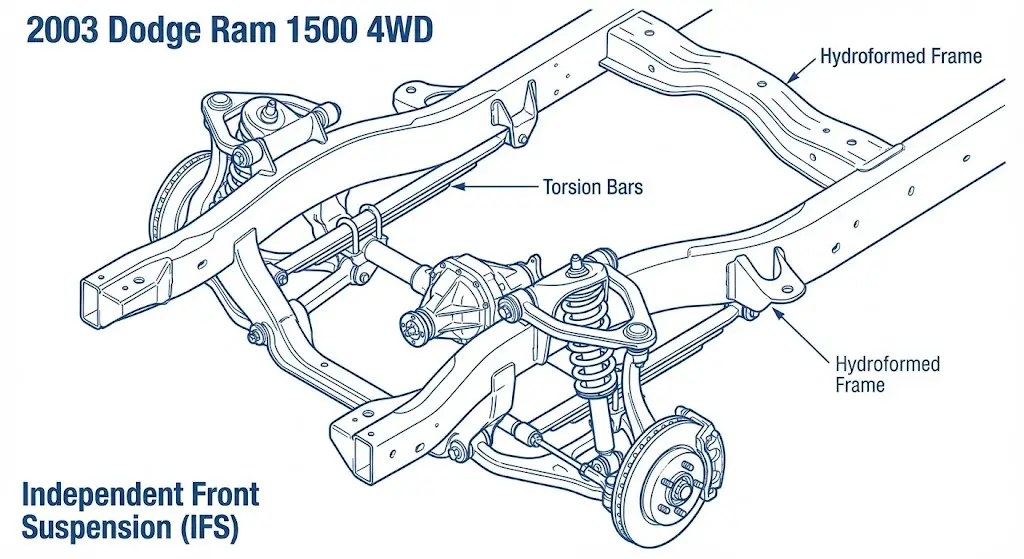
The 2003 Ram 1500 sits on the "DR" platform, which introduced significant improvements in rigidity and handling over the previous "BR/BE" (2nd Gen) trucks.
4.1 Frame Technology
The frame utilizes hydroforming technology for the front section. Hydroforming involves using high-pressure hydraulic fluid to expand a steel tube into a die, rather than stamping and welding separate pieces together.
- Benefit: This increases torsional rigidity and dimensional accuracy while reducing weight and weld points. A stiffer frame allows the suspension to work more effectively, isolating road imperfections rather than transmitting them through chassis flex.
Suspension Configuration: IFS vs. Solid Axle
A major differentiator for the 1500 series (half-ton) compared to the 2500/3500 (HD) trucks is the front suspension.
- 4WD Models: The 2003 Ram 1500 4WD utilizes an Independent Front Suspension (IFS) with torsion bars. This replaced the solid front axle (Dana 44) of the 2nd Gen 1500s.
- Implication: The move to IFS significantly improved ride quality and steering precision on pavement, reducing the "death wobble" susceptibility of solid axles. However, torsion bars limits suspension travel for off-roading compared to coil springs, and leveling the truck requires cranking the torsion keys, which stiffens the ride.
- 2WD Models: These utilize a coil-spring independent front suspension with control arms. This setup offers the best ride quality and is easily lowered or lifted.
Steering
The 2003 Ram 1500 adopted rack-and-pinion steering, replacing the recirculating ball steering box of the previous generation. This was a quantum leap in steering feel, eliminating the vague on-center "play" that characterized older trucks. It made the Ram feel smaller and more agile than its Ford and Chevy counterparts, which in 2003 were still using recirculating ball setups on many configurations.
Braking System
The truck features 4-wheel disc brakes standard on all 1500 models—a significant safety feature that was still an option or unavailable on some competitors. The rotors are massive (13.2 inches front, 13.8 inches rear), designed to dissipate the heat generated by the increased towing capacities. However, owners often report warping rotors if lug nuts are over-torqued or if the calipers (which have phenolic pistons) seize due to moisture absorption in the brake fluid.
Trim Levels and Interior Analysis
The 2003 Ram 1500 was available in three primary trim levels, each catering to a distinct demographic. Understanding these trims is vital for assessing value in the used market.
ST (Special Tradesman)
The base model, focused purely on utility.
- Features: Vinyl flooring, vinyl bench seats, manual windows, manual locks, black grille, and steel wheels.
- Engine: Often came standard with the 3.7L V6 or 4.7L V8, but the 5.7L Hemi was an available option. An ST with a Hemi is a "sleeper" work truck—lightweight and powerful.
- Market ID: Look for the lack of chrome and the black plastic upper front bumper fascia.
SLT (Standard Luxury Trim)
The volume seller, balancing comfort and utility.
- Features: Cloth 40/20/40 split-bench seat, carpeted floors, power windows/locks/mirrors, overhead console with trip computer, cruise control, and chrome bumpers.
- Wheels: Standard 17-inch aluminum wheels, with 20-inch chrome-clad wheels available as an option (a massive stylistic differentiator in 2003).
Laramie
The luxury flagship. In 2003, "luxury" in a truck was a burgeoning concept, and the Laramie spearheaded it.
- Features: Leather seating surfaces, dual-zone climate control (a notorious failure point), steering wheel audio controls, heated seats, power-adjustable pedals, and an upgraded Infinity sound system with 7 speakers.
- Visuals: Often distinguished by a unique chrome grille insert, silver lower body cladding (two-tone paint), and Laramie badging.
The "Off-Road" Package
Available on 4WD models, this package added:
- Skid plates for the transfer case and front suspension.
- Tow hooks.
- 3.92 axle ratio with anti-spin differential.
- Heavy-duty cooling.
- Unique 17-inch alloy wheels with aggressive all-terrain tires.
- Note: This is highly desirable for towing due to the included cooling and gearing upgrades.
Interior Durability: The Dashboard Crisis
No analysis of the 2003 Ram is complete without addressing the dashboard. The plastic formulation used for the dashboard top pad (the large piece closest to the windshield) is extremely susceptible to UV degradation and heat cycling.
- Failure Mode: The plastic becomes brittle and cracks, often shattering into sharp shards. This is nearly universal on trucks stored outdoors.
- Mitigation: Owners typically install a molded plastic "cap" (glued over the original) or a carpet mat. Complete replacement dashboards are available but labor-intensive to install.
Towing and Hauling: Technical Breakdown
There is arguably no topic more confused in online discussions than the towing capacity of the 2003 Ram 1500. Modern search algorithms often pull data from 2019+ Ram trucks (12,750 lbs) and erroneously apply it to the 2003 model. This section rectifies those errors with data derived from 2003-era Body Builder Guides.
The Physics of Towing: GCWR
The 5.7L Hemi has the horsepower to pull massive loads, but the chassis is the limiting factor. Towing capacity is calculated as:
$$\text{Max Trailer Weight} = \text{GCWR} - \text{Curb Weight}$$
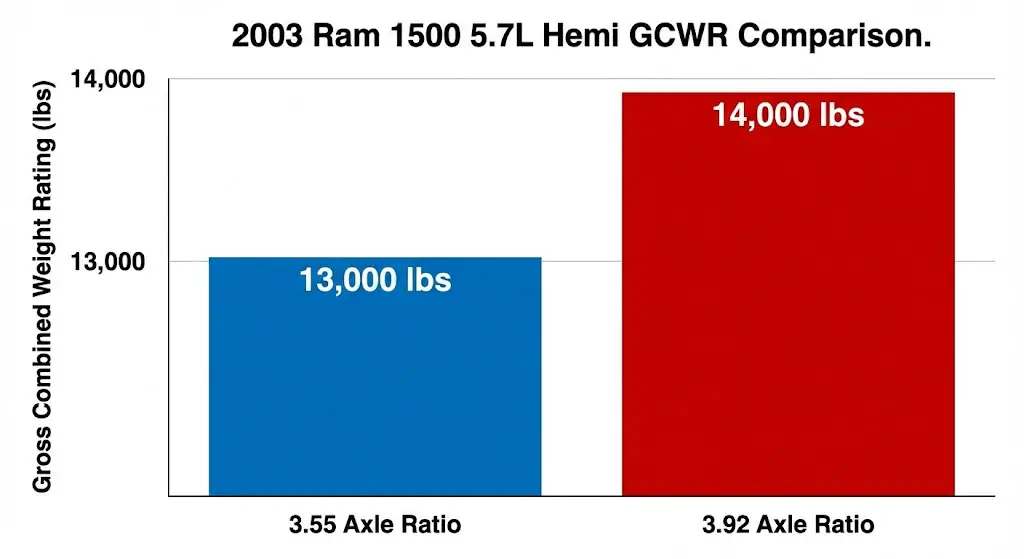
The GCWR (Gross Combined Weight Rating) for the 2003 Ram 1500 5.7L depends entirely on the rear axle ratio:
- 3.55 Axle Ratio: 13,000 lbs GCWR.
- 3.92 Axle Ratio: 14,000 lbs GCWR.
Towing Capacity Charts (Real-World)
The following tables present the maximum trailer weight ratings. Note that these assume a base truck with a 150 lb driver. Options, passengers, and cargo in the truck bed reduce these numbers pound-for-pound.
Regular Cab Towing Capacities
| Drive | Axle Ratio | Max Trailer Weight (lbs) | Notes |
| 2WD | 3.55 | 7,950 | Geared for highway economy |
| 2WD | 3.92 | 8,950 | Maximum possible rating for 2003 |
| 4WD | 3.55 | 7,650 | Weight of 4WD system reduces capacity |
| 4WD | 3.92 | 8,650 | Best all-around configuration |
Quad Cab Towing Capacities
| Drive | Axle Ratio | Max Trailer Weight (lbs) | Notes |
| 2WD | 3.55 | 7,750 | |
| 2WD | 3.92 | 8,550 | Most common configuration for towing |
| 4WD | 3.55 | 7,450 | |
| 4WD | 3.92 | 8,250 |
The 20-Inch Wheel Penalty
An often-overlooked factor is the wheel size. The 20-inch wheels, popular on the SLT and Laramie trims, are heavy and have a larger rolling diameter/moment of inertia than the 17-inch wheels.
- Impact: Dodge official literature often listed a reduced towing capacity (approx. 500-1000 lbs less) for trucks equipped with 20-inch wheels due to the increased strain on the drivetrain and braking system, as well as the effective change in final drive ratio (making gears "taller").
Payload vs. Towing
While the Hemi can pull 8,000+ lbs, the payload often limits the truck first. Payload (GVWR - Curb Weight) for a Quad Cab 4WD is typically around 1,300 - 1,500 lbs.
- Scenario: If you tow an 8,000 lb trailer, the tongue weight (10-15%) is roughly 800-1,200 lbs. This weight pushes down on the truck's rear axle.
- The Crunch: If tongue weight is 1,000 lbs and the payload limit is 1,300 lbs, you only have 300 lbs remaining for the driver, passengers, and gear in the cab. Exceeding this overloads the rear axle and suspension, leading to dangerous handling.
Competitive Towing Context
How did the 2003 Ram stack up?
- Ford F-150 (2003): Max Towing ~8,800 lbs (5.4L V8). The Ford chassis was generally considered stiffer, handling heavy loads with less "tail wag," but the engine struggled on steep grades compared to the Hemi.
- Chevy Silverado 1500 (2003): Max Towing ~8,400-8,600 lbs (5.3L V8). The Chevy had superior suspension dampening (Ride Control) but lacked the raw torque of the Dodge.
Reliability and Common Failures: A Forensic Analysis
The 2003 Ram 1500 is a robust machine, but it has specific pathologies that owners must recognize. This section details the mechanisms of failure and the solutions.
The 2003 Valve Spring Failure
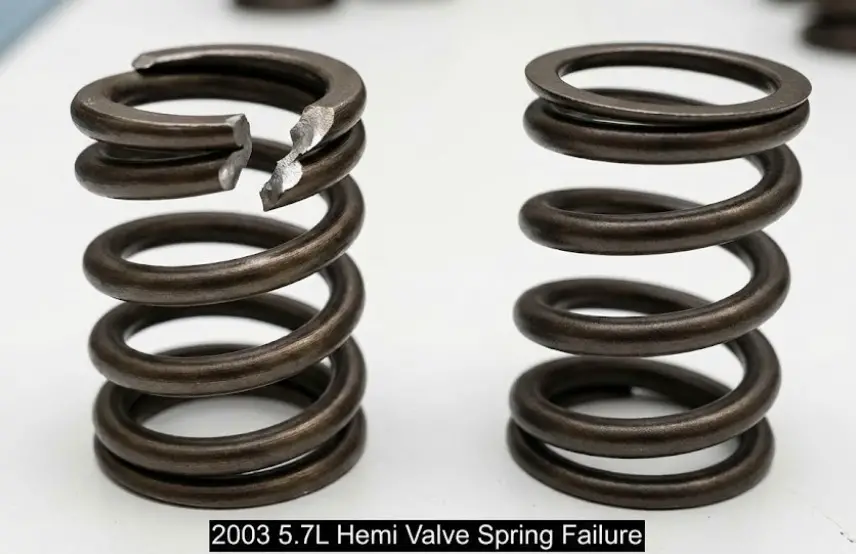
This is the single most critical mechanical issue specific to the 2003 and early 2004 model years.


- Mechanism: The initial batch of valve springs supplied for the 5.7L engine had a metallurgy flaw that made them susceptible to fatigue cracking. Additionally, the design lacked an internal damper.
- The Failure: A spring snaps, usually while the engine is running.
- Best Case: The valve stays held up by the keepers or hits the piston gently, bending the valve but not destroying the engine. The cylinder goes dead (misfire).
- Worst Case: The valve drops into the cylinder bore. The piston collides with the valve, shattering it and sending shrapnel through the intake manifold into other cylinders, requiring a complete engine replacement.
- Symptoms: A sudden onset of rough running, a flashing check engine light (P0300, P030x), and often a loud metallic clicking or knocking.
- The Fix: Proactive replacement. Owners should upgrade to the "Beehive" springs used in 2006+ models or the 6.1L SRT8 exhaust springs (Mopar Part #05037477AD or equivalent). This completely eliminates the risk.
The "Hemi Tick" Deconstructed
"Hemi Tick" is a catch-all term for two different problems.
- Exhaust Manifold Bolts (Most Common): The 5.7L engine uses an iron block, aluminum heads, and cast iron exhaust manifolds. These metals expand and contract at different rates during heat cycles. This thermal shear stress eventually snaps the bolts, usually the rear ones (Cylinders 7 & 8).
- Symptom: A ticking sound on cold start that disappears after 2-3 minutes as the manifold heats up and expands to seal the gap.
- Solution: Replace the bolts and gasket. Upgrading to aftermarket shorty headers or long-tube headers permanently solves this by using thicker flanges and better bolt materials.
- Lifter/Cam Failure (Less Common on 2003): While 2009+ Hemis are infamous for eating camshafts, the 2003 non-MDS engines are more robust. However, poor lubrication (idling for hours) can cause the roller bearing on the lifter to seize. The seized roller then drags across the cam lobe, grinding it flat.
- Symptom: A tick that does not go away when warm and increases frequency with RPM.
HVAC Blend Doors: The Plastic Failure
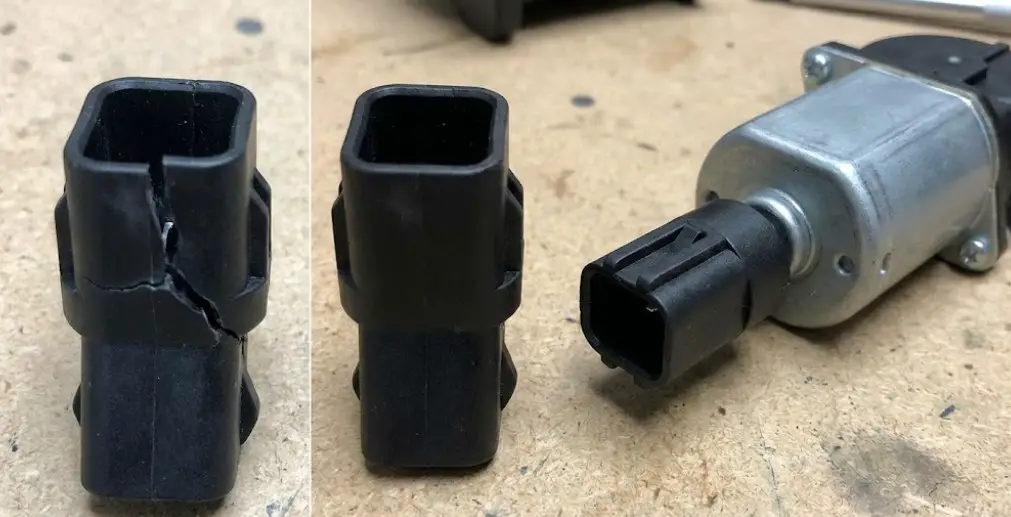
The heating and cooling system in the 3rd Gen Ram uses plastic doors to direct airflow (Defrost, Vents, Floor) and control temperature (Blend).
- Mechanism: The plastic couplers that connect the electronic actuator motor to the door are too weak. They crack, allowing the motor to spin without moving the door.
- Symptoms:
- "Heater Treater" codes (requires advanced scanner).
- One side of the truck is hot, the other cold.
- Air blows only out of the defrost vents (default safety mode).
- Solution: The "Heater Treater" fix involves cutting into the HVAC box (behind the glovebox) and installing metal replacement doors. The official Dodge fix requires removing the entire dashboard and discharging the AC, a 10+ hour labor job.
Rust and Body Corrosion
The 2003 Ram did not have the advanced galvanization of modern trucks. Key rot points:
- Rear Wheel Arches: The foam insulation between the inner and outer bed skins traps moisture and salt, rotting the wheel wells from the inside out.
- Rocker Panels: The lower cab corners and rockers rust away, compromising the structural integrity of the cab steps.
- Oil Pan: The stamped steel oil pan is prone to rusting through in salt-belt states, leading to sudden oil loss.
Maintenance & Fluids: The Lifeblood
Proper maintenance is the difference between a 100,000-mile truck and a 300,000-mile truck.
The Oil Debate: 5W-20 vs. 5W-30
The oil filler cap on a 2003 Hemi might say 5W-30 or 5W-20 depending on the build date and updated dealer stickers, but the technical consensus has shifted.
- Manufacturer Spec: Initially 5W-30, then back-specced to 5W-20 across all years to standardize with MDS engines and improve fleet fuel economy (CAFE standards).
- Technical Reality: The 2003 engine has no MDS. It uses standard lifters. Therefore, it does not require the thin 5W-20 oil to actuate hydraulic pins.
- Recommendation: 5W-30 Full Synthetic. The slightly thicker viscosity provides a better film strength for the main bearings and cam lobes, especially under high temperatures (towing). It offers superior protection against the "lifter tick" without any downside in a non-MDS engine. High-quality synthetic oils (Pennzoil Ultra Platinum is a forum favorite) resist thermal breakdown, reducing sludge that can block oil passages.
Coolant: The HOAT Requirement
The 2003 Ram uses HOAT (Hybrid Organic Acid Technology) coolant.
- Color: Usually orange or pinkish-red (Mopar/Zerex G-05).
- Warning: Do NOT mix with the old green ethylene glycol or the newer OAT (purple) coolant used in 2013+ Rams. Mixing incompatible coolants creates a gel that clogs the heater core and radiator.
- Interval: 5 years or 100,000 miles.
Transmission Fluid: ATF+4
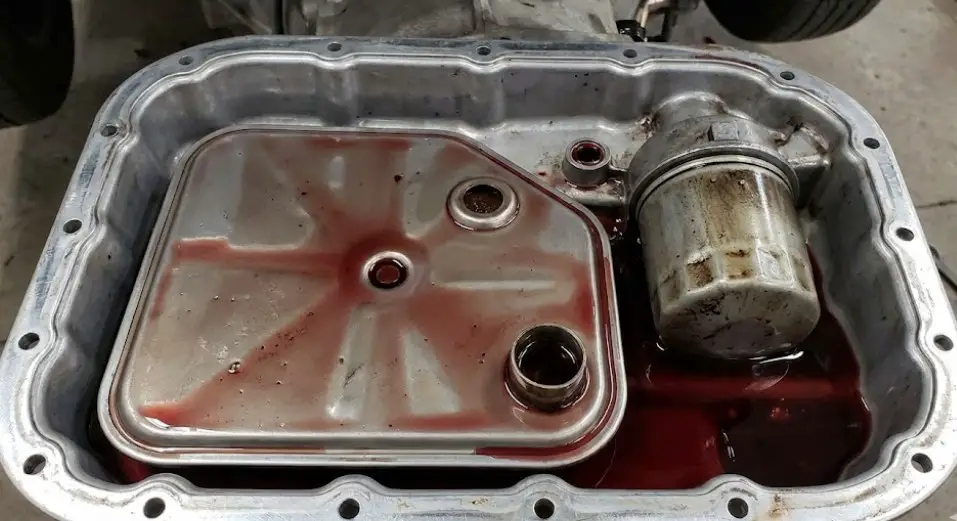
The 545RFE is extremely sensitive to fluid friction characteristics.
- Fluid: You must use ATF+4. Do not use Dexron or "Universal" fluids unless they explicitly state ATF+4 licensing.
- Filters: There are two filters inside the pan:
- Sump Filter: Flat filter drawing from the bottom.
- Spin-on Filter: A canister filter (looks like an oil filter) inside the transmission that filters fluid returning from the cooler. This is often neglected but is critical for preventing debris from entering the valve body.
- Interval: Every 30,000 miles if towing. The "Lifetime Fill" claims found in some manuals should be ignored for longevity.
Spark Plugs
- Configuration: 16 Spark Plugs (2 per cylinder).
- Part: Champion Copper Plus (RE14MCC4).
- The Copper vs. Platinum Debate: The 2003 ignition system (waste spark coils) was designed for the resistance profiles of copper plugs. While platinum/iridium plugs last longer, many owners report occasional misfires or slightly rougher idles with them.
- Interval: Copper plugs wear out fast. Change every 30,000 miles. It is a tedious job (16 plugs, some hard to reach under the brake booster), but vital for performance and MPG.
Performance Modifications: Waking the Beast
The 5.7L Hemi responds exceptionally well to airflow modifications.
Exhaust Headers
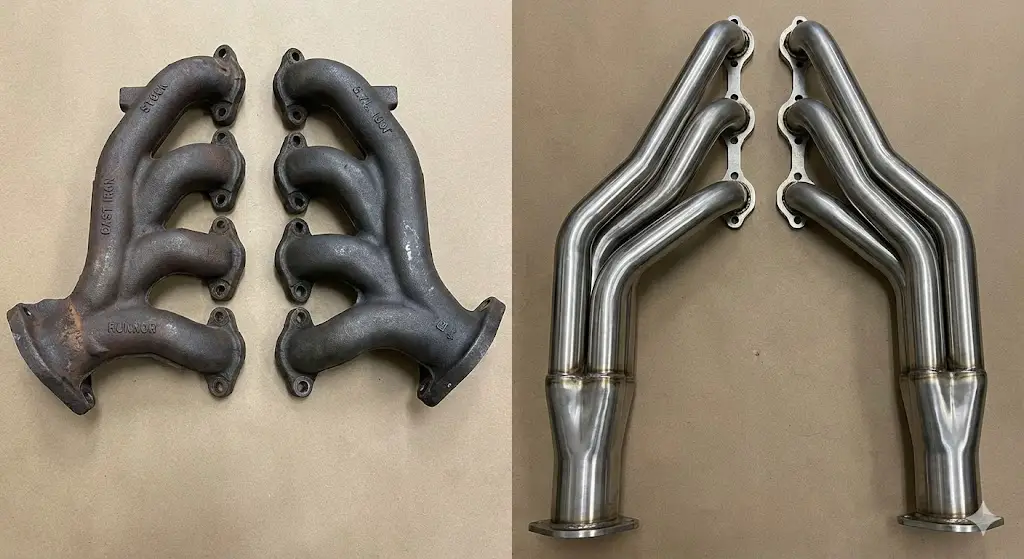
- Shorty Headers: Bolt-in replacements for stock manifolds. They solve the broken bolt issue and offer small gains (5-10 hp).
- Long-Tube Headers: Require exhaust fabrication but offer massive gains (20-30 hp/tq) by scavenging exhaust gases more efficiently. They move the torque curve up slightly but vastly improve mid-range pulling power.
Tuners (ECU Programming)
The 2003 ECU is unique and harder to tune than 2005+ models, but handheld tuners (Superchips Flashpaq, DiabloSport) are available.
- Transmission Tuning: The biggest gain isn't horsepower, but shift logic. A tuner can reduce the "torque management" (the pause between shifts), firm up the shift pressure (saving the clutches), and adjust the shift points to hold gears longer on hills.
Cold Air Intakes (CAI)
- Reality Check: On a stock truck, a CAI adds mostly noise. However, combined with headers and a tuner, it removes a restriction. The "Vararam" intake, which pulls air from the bumper/grille area (Ram Air effect), is widely considered the most effective for this generation.
Conclusion: The Legacy of the 2003 Ram
The 2003 Dodge Ram 1500 5.7L Hemi stands as a monument to a specific era of American automotive optimism. It brought the "Hemi" back from the history books and democratized high-horsepower performance for the working class.
For the modern owner or buyer, the 2003 Ram presents a compelling value proposition. It offers the raw power and sound of a Hemi without the complexity and failure modes of the Multi-Displacement System found in later trucks. While it requires vigilance regarding valve springs and rust, a well-maintained 2003 Hemi is capable of 300,000+ miles of service. It is a truck from the era before over-complexity—a simple, brute-force machine that, when treated with respect and the right fluids, remains a formidable workhorse today.
Key Takeaway: If you own a 2003, check your valve springs and change your transmission fluid. If you do those two things, the Hemi will likely outlast the chassis it pulls.
![Ram Trx Top Speed Without Limiter [2026]](https://truckguider.com/wp-content/uploads/2026/03/featured-cb0fbb5b-768x432.webp)
![2006 Dodge Ram 1500 Transmission: Complete Specs Guide [2026]](https://truckguider.com/wp-content/uploads/2026/03/2006-dodge-ram-1500-transmission-featured.webp)