
Dodge Dtc P0128: Diagnosis & Repair [2026]

When your Dodge’s check engine light illuminates alongside a sluggish temperature gauge, the powertrain control module (PCM) is likely flagging a P0128 code. This diagnostic trouble code (DTC) is one of the most common issues across the Dodge lineup, from the rugged RAM 1500 to the performance-oriented Charger. The P0128 code indicates that your engine is running too cold, which compromises fuel efficiency, increases emissions, and can lead to significant internal wear if left unaddressed. This comprehensive guide provides an expert breakdown of the P0128 code specifically for Dodge vehicles, covering diagnostic steps, trusted repair solutions, and technical insights to get your vehicle back to peak operating temperature.

Understanding the Technical Logic Behind Dodge DTC P0128
Recommended Best Deal Products


📤 Share Image
In the professional automotive world, we define P0128 as “Coolant Temperature Below Thermostat Regulating Temperature.” This means the engine is not getting hot enough, fast enough. Modern Dodge Powertrain Control Modules (PCMs) are remarkably sophisticated; they don’t just wait for a sensor to fail. Instead, they use a “Timer” logic to monitor the thermal efficiency of the engine. From the moment you turn the key, the PCM begins a calculation based on the Engine Coolant Temperature (ECT) sensor, the Intake Air Temperature (IAT) sensor, engine load, and RPM.
The PCM expects the engine to reach a specific “closed-loop” readiness temperature—usually between 160°F and 180°F—within a calibrated window. For example, most Dodge PCMs expect the coolant to reach at least 167°F (75°C) within 15 minutes of operation when the ambient temperature is 50°F. If the vehicle is driven at highway speeds and the temperature plateaus at 155°F, the PCM recognizes that the thermostat is likely stuck partially open, allowing too much coolant to flow through the radiator too early.
Dodge-Specific Monitor Criteria
On newer Dodge models like the RAM 1500 or the Durango, the system distinguishes between a “pending” and a “hard” failure. A pending code might occur if you are driving in extreme sub-zero temperatures with the cabin heater on full blast, which can occasionally mimic a cooling system failure. However, a hard P0128 and an active Malfunction Indicator Lamp (MIL) signify that the engine’s “heat soak” curve is consistently falling below the mathematical model stored in the PCM.
Consider a 2018 Dodge Durango with a 3.6L Pentastar engine. During a 20-minute highway commute, the ECT stays stubbornly at 155°F. Because the PCM knows the engine has been under load and the air temperature is moderate, it realizes the thermostat is bypassing coolant prematurely. It will then suppress “closed-loop” fuel control, leading to decreased efficiency.
Identifying Primary Symptoms and Secondary Effects in Dodge Models
Recognizing the signs of a P0128 fault requires paying close attention to both the dashboard and the vehicle’s physical behavior. While the check engine light is the most obvious indicator, the secondary effects are often more disruptive to the daily driving experience. A reliable indicator in many RAM trucks and Dodge cars is the needle on the temperature gauge. If it rests significantly below the halfway mark or fluctuates wildly when you transition from city traffic to highway speeds, you are likely dealing with a thermostat that has lost its ability to regulate flow.
Physical Signs of Over-Cooling
- Reduced Cabin Heat: You may notice the air coming from the vents is merely tepid or lukewarm, even after 20 minutes of driving. This is a classic symptom in cold climates.
- Fuel Economy Drop: This is the “silent” symptom. When an engine runs below optimal temperature, the PCM stays in “open-loop” or a “rich-enrichment” mode longer than necessary. Engines running below optimal temperature can consume up to 15% more fuel.
- Sluggish Performance: Because the PCM is adjusting fuel trims for a cold-start state, you may experience less-than-crisp throttle response or a slightly rough idle.
By The Numbers: Fuel & Efficiency Impact
Max Fuel Consumption Increase
MPG Loss in RAM Trucks
Minimum Target for Closed-Loop
It is also common to see secondary codes alongside P0128. For instance, P0113 (IAT sensor high) or P0300 (Random Misfire) can appear if the engine is running excessively rich for an extended period. A RAM truck owner might notice their average fuel economy dropping from 18 MPG to 15 MPG without any change in driving habits—this is a complete red flag for a cooling system malfunction.

Common Root Causes for P0128 in Dodge RAM and Passenger Cars
Recommended Best Deal Products

In my 15+ years of professional experience, I’ve found that while P0128 points to a temperature issue, the source can range from a $20 mechanical part to a complex electrical sensor drift. Identifying the root cause requires understanding the specific weaknesses in Dodge engineering.
The Pentastar 3.6L Vulnerability
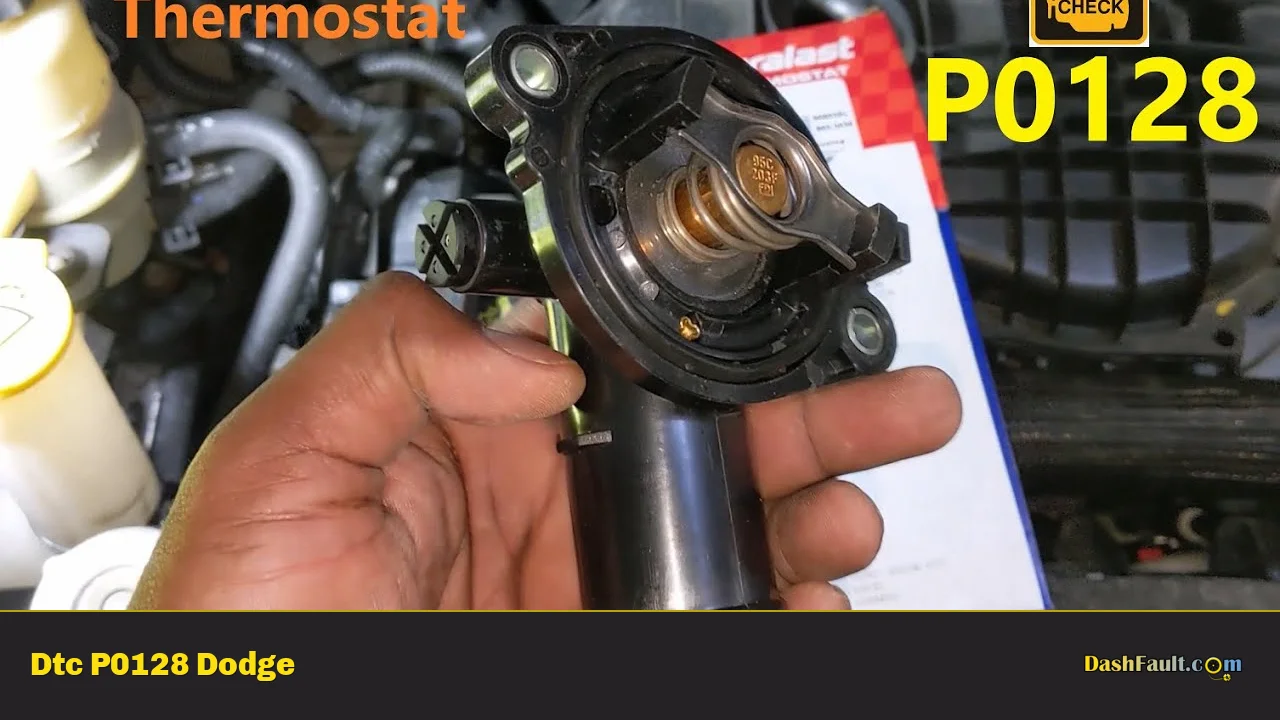
The 3.6L Pentastar engine accounts for a high volume of P0128 cases specifically due to its thermostat design. This engine uses a plastic thermostat housing with an integrated bypass seal. Over time, the plastic can warp or the internal spring can weaken, causing the thermostat to sit slightly “cocked” in its seat. This allows a constant stream of coolant to reach the radiator, preventing the block from ever reaching 195°F.
Other Frequent Culprits
Faulty ECT Sensor
The sensor might report a temperature that is 20 degrees lower than reality. The PCM sees 160°F while the engine is actually at 180°F, triggering the code.

Audible — Listen Free for 30 Days
One free credit a month and thousands of titles included.
Listen Free for 30 DaysAir Pockets
Trapped air in the cooling system can cause localized cold spots or prevent the ECT sensor from being fully submerged, leading to inaccurate readings.
Additionally, cooling fan malfunctions can contribute. If an electric fan relay shorts out and keeps the fans running at high speed constantly, it can over-cool the engine, particularly in highway conditions. Finally, check for Technical Service Bulletins (TSBs); some Dodge models require a professional PCM software flash to correct overly sensitive monitoring logic that triggers P0128 prematurely during extreme winter conditions.
Professional Diagnostic Protocol for Verifying P0128
Don’t just “parts-cannon” a thermostat into the vehicle. A comprehensive diagnostic approach saves time and money. Use the following protocol to verify the failure before cracking open the cooling system.
📋
Step-by-Step Diagnostic Guide
Hook up an OBD-II scanner. Before starting the engine, ensure the ECT and IAT readings are within 2-3 degrees of each other. If the ECT shows 40°F while the air is 70°F, the sensor is likely “skewed” and requires replacement.
Start the engine and hold the upper radiator hose. It should stay relatively cool until the engine reaches roughly 190°F, then suddenly get very hot as the thermostat opens. If it gets warm gradually as the engine warms up, the thermostat is leaking.
Use an IR thermometer on the thermostat housing. Compare the physical temperature to the ECT PID on your scanner. A healthy Dodge system should show a steady rise of roughly 15-20 degrees per minute under light load.
If you suspect the sensor, perform a resistance test with a multimeter. At 212°F (boiling), most Dodge ECT sensors should show approximately 185 to 220 Ohms. If you remove the thermostat, you can perform the “Drop Test” by placing it in a pot of boiling water with a thermometer. If it begins to open before reaching its rated temperature (usually 195°F), it’s junk.
Repair Procedures and Component Replacement Best Practices
Once you’ve confirmed the failure, the repair must be complete and follow factory specifications. One of the biggest mistakes DIYers and general shops make with Dodge vehicles is using the wrong coolant or failing to bleed the system of air correctly.
Audible Premium Plus — Annual Membership
12 audiobook credits up front, plus the full Audible catalogue.
See Annual PlansQuality Parts and Materials
I strongly recommend Mopar OEM thermostats. Aftermarket units often have slightly different spring tensions or bypass valve sizes, which can cause the P0128 to return within weeks. Furthermore, ensure you are using the correct coolant. Dodge transitioned from HOAT (Hybrid Organic Additive Technology) to OAT (Organic Additive Technology) around the 2013 model year. Mixing OAT and HOAT coolants can lead to gel formation, which clogs radiator passages and can cause catastrophic engine damage.
These engines are notorious for air locks. Always use the specific bleeder screw located on the thermostat housing (Pentastar) or the top of the water pump (Hemi). Failure to “burp” the system can cause an immediate overheat or a recurring P0128 as the ECT sensor gets hit with air pockets instead of coolant.
When installing the new thermostat, clean the mating surfaces meticulously. Use a non-marring scraper to remove any oxidation or old gasket material from the engine block. A clean surface ensures the O-ring seats perfectly, preventing the tiny leaks that can lead to pressure loss and further cooling issues. After the repair, clear the DTC and perform a full drive cycle. Note that some newer Dodge models use “Permanent DTCs,” which require a specific number of “warm-up cycles” without a fault before the light will turn off on its own.
Long-Term Risks of Ignoring a P0128 Fault Code
It is a common misconception that running “too cool” is better for an engine than running “too hot.” In reality, a P0128 code that is ignored can lead to thousands of dollars in repairs over time. Engines are designed with specific clearances that only “mesh” perfectly once the components have expanded under heat.
✅ Why Fix It?
- Restores lost 15% fuel efficiency
- Ensures cabin heat works perfectly
- Passes state emissions testing
- Prevents carbon buildup
❌ Consequences of Delay
- Catalytic converter meltdown
- Sludge buildup in engine oil
- Increased cylinder wall wear
- Failed emissions inspection
One of the most expensive risks is Catalytic Converter damage. Because the engine runs rich while cold, unburnt fuel enters the exhaust system. This fuel eventually ignites inside the catalytic converter, causing the substrate to overheat and melt. A $50 thermostat replacement can quickly turn into a $1,200 catalytic converter job within six months of ignoring a P0128 light.
Furthermore, an engine that doesn’t get hot enough cannot evaporate water vapor from the crankcase. This moisture mixes with the oil to form a milky sludge, which reduces lubrication efficiency by up to 30%. This significantly increases friction on camshaft lobes and bearings, shortening the overall lifespan of your Dodge’s powertrain. Treating the P0128 code as a priority is an essential part of expert vehicle maintenance.
In summary, DTC P0128 is primarily caused by a stuck-open thermostat or a faulty ECT sensor in Dodge vehicles. Professional diagnostics using live data is essential to distinguish between mechanical failure and electrical sensor drift. Timely repair is critical to prevent secondary damage to the catalytic converter and maintain optimal fuel economy. If you are experiencing a P0128 code, inspect your coolant levels immediately and consult a trusted professional technician to perform a cooling system pressure test and thermostat verification.
Frequently Asked Questions
Is it safe to drive my Dodge with a P0128 code?
While the vehicle is usually drivable, it is not recommended for the long term. Running the engine below its designed operating temperature causes the PCM to stay in ‘open-loop’ mode, which increases fuel consumption and can eventually clog your catalytic converter with unburnt fuel. It is best to address the issue within a few days to avoid more expensive secondary repairs.
How much does it typically cost to fix a P0128 on a Dodge?
The cost varies depending on the specific cause. A high-quality thermostat replacement usually ranges between $150 and $300, including labor. If the Engine Coolant Temperature (ECT) sensor is the culprit, costs are generally similar. However, ignoring the code can lead to catalytic converter failure, which can exceed $1,200 in replacement costs, making early intervention the most professional choice.
Can a low coolant level cause a P0128 code?
Yes, low coolant or air pockets in the system can prevent the ECT sensor from being fully submerged in hot coolant, leading to inaccurate, low-temperature readings. This causes the PCM to trigger P0128 because it believes the engine isn’t warming up. Always ensure your coolant reservoir is at the appropriate level before replacing any mechanical components like the thermostat.
Why did my P0128 code appear right after a cold snap?
Extreme cold weather puts additional stress on the cooling system. If a thermostat is slightly weak or starting to hang open, the high cooling demand of freezing ambient air will prevent the engine from reaching its target temperature. In professional terms, the cold weather exposes a marginal mechanical failure that might have gone unnoticed during warmer summer months.
Does a P0128 code mean I need a new PCM?
It is highly unlikely. While the PCM monitors the temperature, the fault is almost always mechanical (thermostat) or related to a sensor (ECT). Only after verifying that the thermostat and sensor are functioning perfectly should a technician consider a PCM software update or replacement, as per specific Dodge Technical Service Bulletins regarding monitoring logic.
![2011 Ram 2500 Headlights [2026]](https://truckguider.com/wp-content/uploads/2026/03/2011-ram-2500-headlights-featured.webp)

![2019 Ram 1500 Reliability [2026]](https://truckguider.com/wp-content/uploads/2026/03/featured-4dc19a40.webp)