2019 Ram 1500 Starter Location And Component Access Guide

When you turn the key or press the start button on your 2019 Ram 1500 and hear nothing but a single, metallic click, your day comes to a sudden halt. In the high-stakes world of automotive repair, the fifth-generation Ram (DT) presents a unique set of challenges compared to its predecessors. Finding the starter motor in the redesigned 2019 Ram 1500 can be frustrating due to its compact mounting position and the variations between the Hemi, Pentastar, and EcoDiesel engine platforms. This guide provides the exact location of the starter, the tools you need to reach it, and professional insights into diagnosing failure symptoms before you begin the teardown.


Identifying the 2019 Ram 1500 Starter Location on the Engine Block
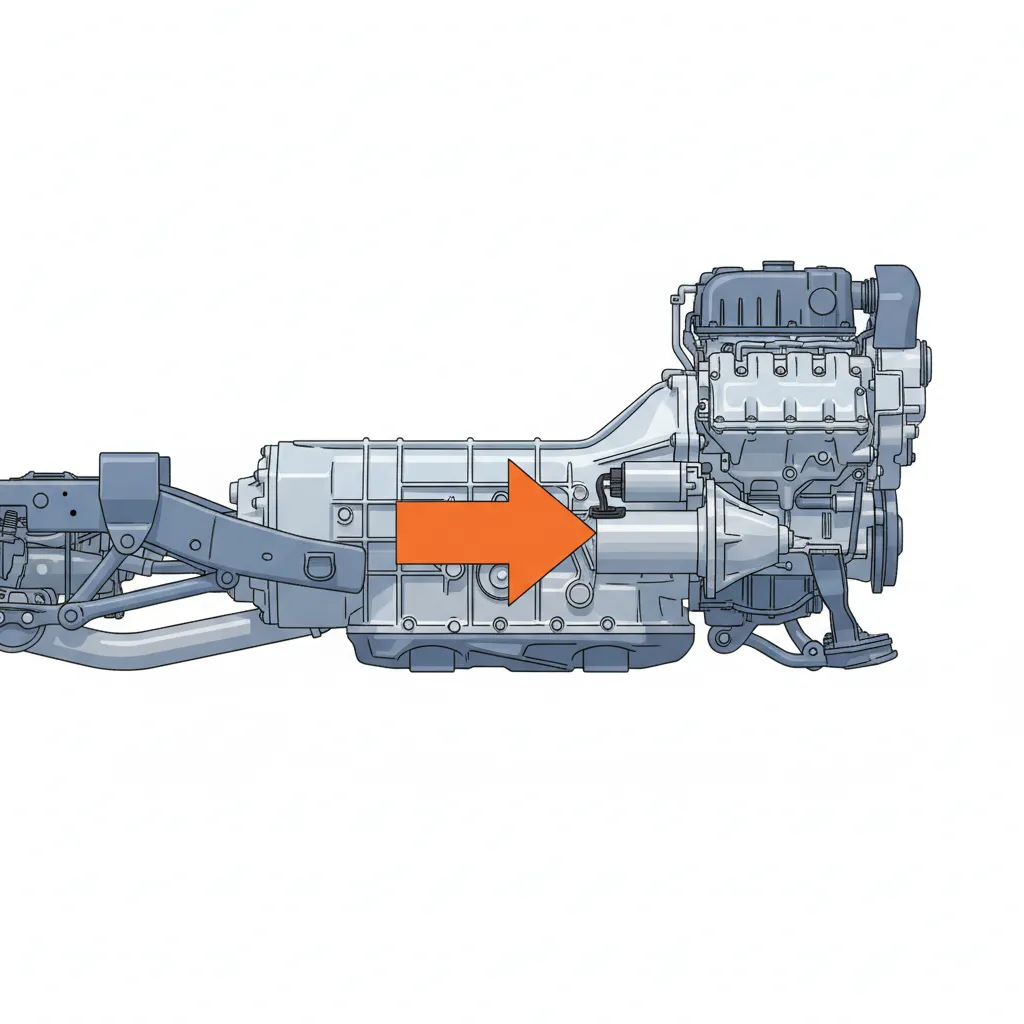
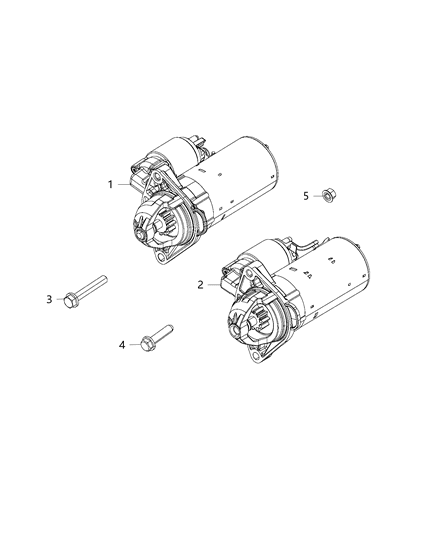
Locating the starter on the 2019 Ram 1500 is the first hurdle for any DIY enthusiast or technician. The starter motor is situated on the driver’s side of the engine assembly. Unlike some longitudinal engines where the starter might be easily visible from the top of the engine bay, the 2019 Ram’s starter is tucked away toward the rear of the block. Specifically, it is bolted into the area where the engine block meets the transmission bellhousing, allowing the starter drive gear to engage with the flywheel or flexplate ring gear.
Visual identification is best achieved from the underside of the truck. You will need to look past the steering column and the driver-side exhaust manifold. The unit is characterized by its distinct cylindrical shape—the larger cylinder being the motor itself, with a smaller cylinder (the solenoid) mounted directly on top. For owners of the 4WD models, the front differential and CV axles may partially obscure the direct line of sight to the mounting bolts, making the accessible workspace significantly tighter than on 2WD versions.
Body Style Distinctions: DS vs. DT
It is critical to distinguish between the 2019 “Classic” (DS body style) and the “New” (DT body style). While the general location remains on the driver’s side for both, the DT chassis features a more boxed-in frame design that limits lateral arm movement. This makes the removal of the two primary mounting bolts—which typically require a 15mm deep socket—more of a surgical procedure than a simple bolt-off operation. Ensuring you have a Mopar official guide or a high-quality service manual can help clarify these subtle chassis-specific nuances.
Always use a six-point 15mm deep socket for the mounting bolts. These bolts are often subjected to extreme thermal cycles from the nearby exhaust and can round off easily if using a twelve-point socket or an ill-fitting wrench.
Engine Specific Variations: 5.7L Hemi vs. 3.6L Pentastar Starter Placement
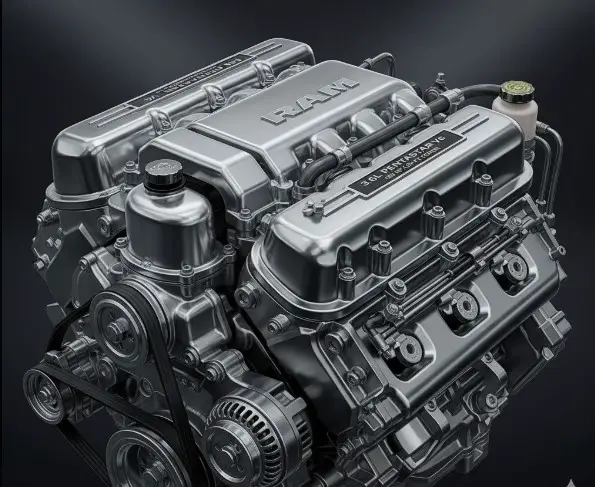
While the driver-side mounting is a universal trait for the 2019 lineup, the specific powertrain configuration dictates how much “fighting room” you have. The 5.7L Hemi V8, a staple of the Ram 1500 community, presents the most challenging environment. In the Hemi configuration, the starter is tucked tightly between the engine block and the heavy-duty frame rail. This proximity necessitated the inclusion of a specialized heat shield to protect the solenoid from the radiant heat of the Hemi’s massive exhaust manifolds.
In contrast, the 3.6L Pentastar V6 configuration offers a bit more lateral room. However, what you gain in physical space, you often lose in cable management. The V6 models feature several available wiring harnesses that are clipped directly to the bellhousing near the starter. These must be carefully unclipped to prevent tension on the wires during the starter’s removal. The 3.0L EcoDiesel models follow the driver-side trend but utilize heavier-duty mounting brackets to handle the significantly higher compression torque requirements of a diesel ignition cycle.
The eTorque Variable
A common point of confusion for 2019 owners is the eTorque mild-hybrid system. Many DIYers mistakenly look at the large motor-generator unit on the front of the engine and assume it is the only “starter.” In reality, the eTorque system uses that belt-driven motor for smooth start-stop transitions, but the truck still features a traditional 12V starter in the standard location for cold starts and heavy-duty cranking. Do not attempt to service the high-voltage eTorque components if you are looking for the traditional starter motor.


Navigating Obstacles and Available Tools for Proper Access
To make the starter accessible, you must first clear the “fortifications” Ram built around it. The primary obstacles are the exhaust Y-pipe and the driver-side catalytic converter. These components stay hot long after the engine is shut off, so ensuring the vehicle is completely cool is the first step of a convenient repair. On off-road trims like the Rebel, or trucks equipped with the Protection Group, you will also need to remove the heavy-duty metal skid plates and plastic splash guards to gain a clear path to the unit.
Accessing the top mounting bolt is the “make or break” moment for most mechanics. This bolt is often hidden behind the curve of the transmission housing. A professional expert tips approach involves using a 12-inch to 18-inch extension paired with a swivel or “wobble” socket. This allows you to stand back toward the transmission crossmember and angle the socket onto the bolt head from a more convenient position.
📋
Step-by-Step Removal Guide
Always disconnect the negative battery cable before touching the starter. The thick B+ cable at the starter is “live” and directly connected to the battery; touching it with a wrench while grounded to the frame will cause a massive electrical arc.
Remove the front skid plate (if equipped) and the plastic inner fender splash guard on the driver’s side for maximum visibility.
Remove the 13mm nut holding the positive battery cable and unclip the smaller ‘S’ terminal wire connector.
Remove the two 15mm mounting bolts. Support the starter as the last bolt comes out, as the unit is heavy and can fall.
Diagnosing Common Starter Failures in the 2019 Ram Community
Before you commit to a replacement, it is vital to ensure the starter is the actual culprit. In the 2019 Ram 1500 community, several “ghost” issues can mimic a dead starter. The most prominent is the “Heat Soak” phenomenon. This occurs when the internal windings of the starter motor or the solenoid expand due to the extreme heat from the nearby exhaust. The truck may start perfectly when cold but refuse to crank after a short stop at a gas station. If this happens, it is a clear sign that the starter’s internal resistance has increased beyond the battery’s ability to overcome it.


Another common issue reported by trusted local shops involves the TIPM (Totally Integrated Power Module) or the battery terminals themselves. Corroded terminals can pass enough voltage to light up the dashboard but fail to deliver the 300+ amps required for the starter to turn the Hemi’s crankshaft. Research indicates that approximately 15% of starter-related complaints on late-model Rams are actually caused by a weak battery or failing TIPM rather than the motor itself. Always perform a voltage drop test at the starter location—if you have 12 volts at the B+ terminal but the solenoid doesn’t click, the starter is likely dead.
When the starter is removed, always use a flashlight to inspect the starter ring gear on the flywheel. If the teeth are chipped or worn, a new starter will likely fail prematurely or produce a loud grinding noise.
Service Costs and Lifecycle of the Ram 1500 Starting System
The average lifespan of a starter motor in a modern pickup is between 100,000 and 150,000 miles, which translates to roughly 5 to 7 years of service for the average driver. However, the 2019 model year was the first full year of the DT chassis, meaning many of these trucks are now entering that critical failure window. If your truck is frequently used for deliveries or short trips with frequent engine cycles, your starter may reach its end-of-life sooner. According to RepairPal estimator data, the 2019 Ram 1500 remains a reliable platform, but the starter is a high-wear item that demands attention.
When it comes to replacement, you have two main avenues: OEM and aftermarket. A genuine Mopar unit will typically run between $250 and $400, while a reputable aftermarket alternative from a trusted local parts store might cost between $150 and $250. Labor time is generally billed at 1.5 to 2.5 hours. If you are having the work done by a professional serving your area, expect the total invoice to range from $300 to $700 depending on your local labor rates and the choice of parts.
By The Numbers
Average Mile Lifespan
Typical Replacement Cost
Max Labor Time
Misdiagnosis Rate
Final Professional Recommendations
Replacing the starter on a 2019 Ram 1500 is a manageable task for those with the right tools and a bit of patience. However, the cramped driver-side location and the proximity to high-heat exhaust components mean that there is no room for error. Failure to properly reinstall the heat shield can reduce the lifespan of your new motor by up to 40% due to thermal soak. If you are not comfortable navigating the tight space between the frame and the engine block, or if you lack the extensions needed for that top bolt, reaching out to a nearby professional is the safest bet.
The starter is located on the driver’s side near the transmission bellhousing across all 2019 Ram 1500 engine types. Access requires navigating heat shields and potentially removing skid plates on 4WD models. Proper diagnosis—including voltage tests—is essential before investing $300 to $700 in a replacement unit. If you are uncomfortable working near the exhaust and transmission, contact a trusted mechanic nearby to ensure a safe and professional installation.
Frequently Asked Questions
Where exactly is the starter located on a 2019 Ram 1500 5.7 Hemi?
On the 5.7L Hemi engine, the starter is located on the driver’s side, tucked between the engine block and the frame rail, right where the engine connects to the transmission. You will need to get under the vehicle and look past the steering shaft and exhaust manifold to see it. It is often protected by a small heat shield that must be unbolted for full access.


Do I need to remove the exhaust to get to the starter?
In most cases, you do not need to fully remove the exhaust, but you will need to work around the Y-pipe and manifold. On some 4WD models, the space is extremely tight, and loosening certain heat shields or brackets becomes necessary to create an available path for the starter to be pulled out from the engine bay.
Why does my 2019 Ram 1500 struggle to start when the engine is hot?
This is often caused by ‘heat soak.’ Because the starter is located so close to the exhaust manifold, the internal solenoid components can expand with heat, increasing electrical resistance. If the starter is aging, it may not be able to overcome this resistance until it cools down. This is a common sign that the starter motor is nearing the end of its 100,000-mile lifecycle.
Can I jump-start a truck with a bad starter?
No. Jump-starting provides extra battery power, but if the starter motor or solenoid has failed mechanically or internally, no amount of electrical current will make it turn the engine. If you hear a click but the engine doesn’t crank even with a jump, the problem is almost certainly the starter location or the unit itself.
What tools are required for a 2019 Ram 1500 starter replacement?
You will typically need a 15mm socket for the main mounting bolts, a 13mm socket for the battery cable (B+ terminal), and an 8mm or 10mm socket for the heat shield. A long extension (at least 12 inches) and a universal joint/swivel socket are highly recommended to reach the top mounting bolt which is obscured by the transmission housing.
![2011 Ram 1500 5.7 Hemi: Specs, Reliability & Towing Guide [2026]](https://truckguider.com/wp-content/uploads/2026/03/2011-dodge-ram-1500-5-7-hemi-featured.webp)