2018 Ram 1500 Transmission: Specs & Fitment Guide [2026]

The 2018 Ram 1500 primarily features the ZF-sourced 8-speed automatic transmission, which is highly regarded for performance but can suffer from shuddering and electronic shifting glitches. While RAM designates this unit as ‘sealed for life,’ proactive maintenance with correct synthetic fluid is essential for reaching high mileage.
🎯 Key Takeaways
Recommended Best Deal Products


- Takeaway 1:Identify your unit by the rotary dial (8-speed) or column shifter (6-speed).
- Takeaway 2:Use only Mopar 8&9 Speed or ZF Lifeguard 8 fluid for 8-speed units.
- Takeaway 3:Software updates (TCM flashes) often fix ‘gear hunting’ and harsh shifting issues.
- Takeaway 4:Replace the entire transmission pan during service as the filter is integrated.
- Takeaway 5:Change ‘lifetime’ fluid every 60,000 to 100,000 miles to prevent premature wear.
The 2018 Ram 1500 relies on the ZF-designed eight-speed automatic transmission, a unit praised for its quick shifts but often criticized for its “lifetime” maintenance claims. Whether you are driving the 3.6L V6 or the 5.7L Hemi V8, your truck uses a variation of the ZF 8HP series, which is electronically controlled via a rotary dial on the dashboard. While these transmissions are significantly more advanced than the older six-speed units, they are prone to specific software glitches, low-speed shudders, and high repair costs if the fluid is neglected.
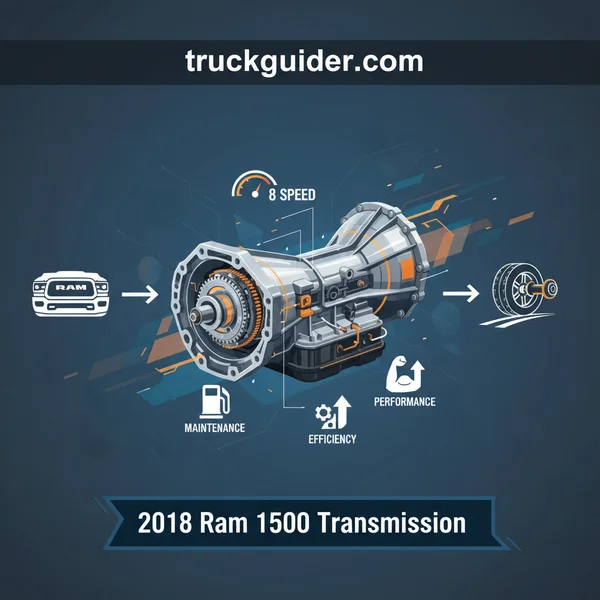
Understanding the nuances of your transmission is vital for long-term reliability. A replacement unit for a 2018 Ram 1500 can cost between $4,000 and $6,000 depending on labor and sourcing. By identifying early warning signs like gear hunting or delayed engagement, you can often resolve issues with a simple software flash or a fluid service rather than a total rebuild. This guide breaks down the technical specifications and the common “real-world” problems owners face today.
Identifying 2018 Ram 1500 Transmission Models (845RE vs. 8HP70)
Before diagnosing a problem, you must know which transmission is installed in your truck. In 2018, Ram used two distinct versions of the ZF eight-speed. While they share the same basic architecture and shifting logic, their internal torque capacities and components differ. You can typically identify your model by looking at your engine size or checking the equipment list via your VIN.
The V6 Companion: Chrysler 845RE
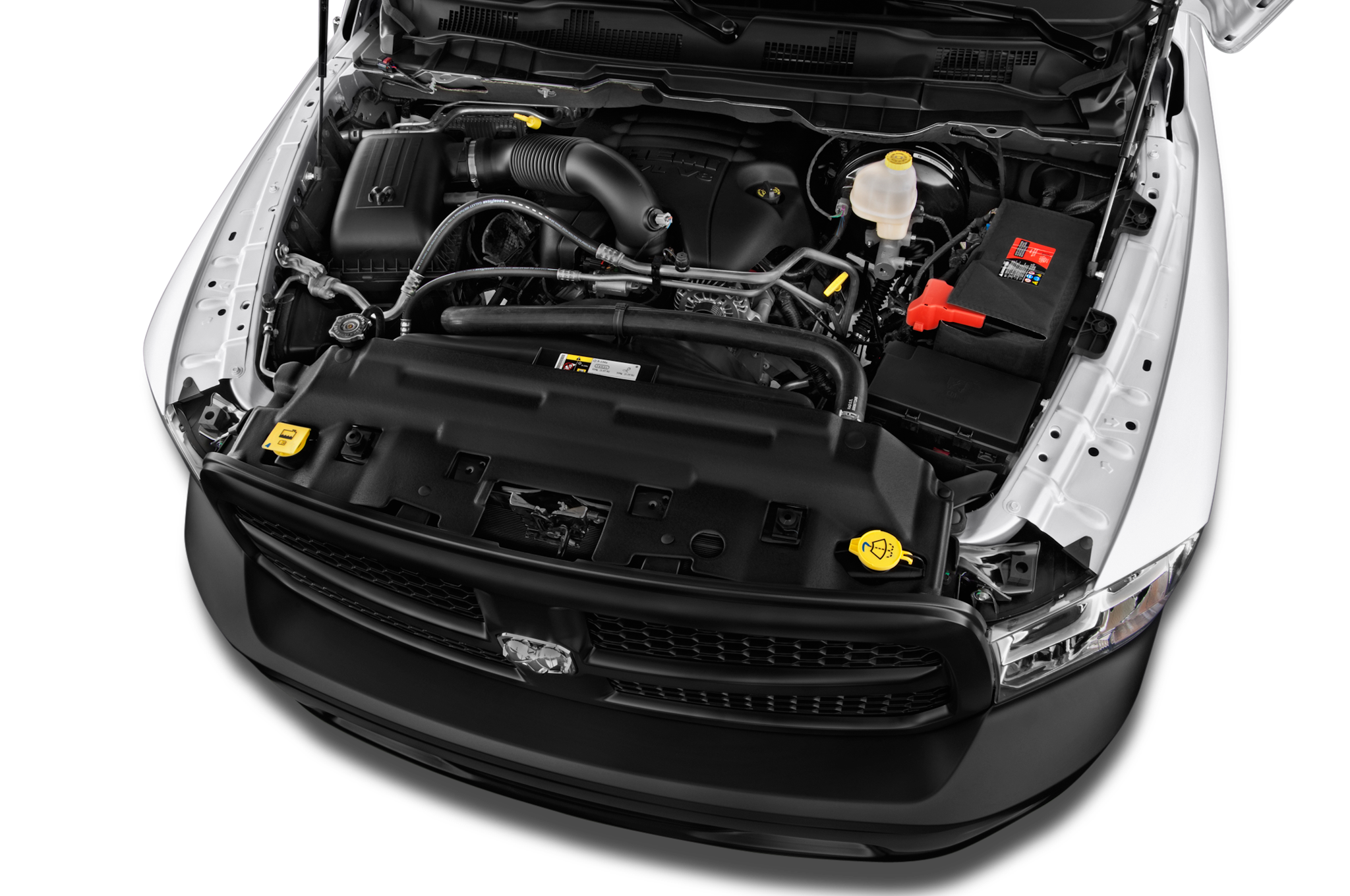
If your 2018 Ram 1500 has the 3.6L Pentastar V6, it is equipped with the 845RE transmission. This unit is a Chrysler-built version of the ZF 8HP45. It is designed to handle up to 450 Newton-meters (roughly 332 lb-ft) of torque. While it is robust for daily driving, it is more sensitive to heavy payloads than its larger sibling. Common traits of the 845RE include:
- Aluminum Construction: Lightweight design to maximize fuel efficiency.
- Specific Fluid Needs: Uses Mopar 8&9 Speed ATF or ZF Lifeguard 8.
- Internal Clutches: Features five clutches and four planetary gearsets.
The Hemi Workhorse: ZF 8HP70
Trucks equipped with the 5.7L Hemi V8 or the 3.0L EcoDiesel use the ZF 8HP70. This transmission is imported directly from ZF and is built to handle significantly more stress. It is rated for 700 Newton-meters (516 lb-ft) of torque. If you use your truck for frequent towing, this is the unit you likely have. Key specs include:
- Higher Torque Capacity: Reinforced internals to handle Hemi power.
- Heat Management: Includes a dedicated thermal management system to reach operating temperature quickly.
- Widespread Use: This same unit is found in BMWs and Rolls-Royces, reflecting its high-performance pedigree.
The Ultimate 2018 Ram 1500 Transmission Service Walkthrough
Recommended Best Deal Products


The 8-speed ZF transmission found in the 2018 Ram 1500 is a marvel of engineering, but the manufacturer’s “filled for life” claim is often debated by mechanics. To ensure your truck reaches the 200,000-mile mark without the dreaded transmission shudder or gear hunting, a fluid and filter service every 60,000 to 80,000 miles is essential. This guide covers the complete process of replacing the integrated pan and filter assembly and performing a precision fluid level check. Following these steps carefully is critical because this transmission lacks a traditional dipstick and is extremely sensitive to fluid temperature and volume.
Step 1: Gather Specialized Tools and Materials
What you need: A new integrated transmission pan/filter assembly, 6-7 quarts of Mopar 8&9 Speed Fluid (or ZF Lifeguard 8), a T40 Torx bit, an 8mm and 10mm socket, a fluid transfer pump, a torque wrench (inch-pounds), and an OBD-II scanner capable of reading transmission temperature.
Instructions: Before you even crawl under the truck, ensure you have the correct supplies. The 2018 Ram 1500 utilizes the ZF 8HP70 or 8HP75 transmission, which uses a plastic pan with a built-in filter. You cannot simply change the filter; the entire pan must be replaced. Only use the specific ZF-approved fluid; using generic ATF+4 or multi-vehicle fluids can cause internal clutches to slip and eventually fail. Layout your tools and ensure your transfer pump fits the quart bottles of fluid, as the fill plug is located in a tight space above the exhaust on the passenger side.
Pro Tip: Buy a pan kit that includes new mounting bolts. The original bolts are often prone to corrosion or stretching, and using fresh hardware ensures an even seal against the transmission housing.
Step 2: Vehicle Leveling and Lift
What you need: A heavy-duty floor jack, four jack stands, and a bubble level.
Instructions: For the transmission fluid level to be accurate, the vehicle must be perfectly level. Raise the truck high enough to work comfortably underneath. Place jack stands under the frame or axles, ensuring the vehicle is stable. Use a bubble level on the transmission pan’s flat surface to verify that the truck is not tilting forward, backward, or to either side. If the truck is angled, the fluid level will be incorrect—either overfilled or underfilled—both of which lead to shifting issues and potential pump cavitation.
Pro Tip: If you are working on a driveway with a slight incline, use the jack stands to compensate for the slope until the transmission pan itself reads perfectly level on your tool.
Step 3: Draining the Old Fluid
What you need: Large drain pan (8-quart capacity), 10mm hex or Allen key, and shop rags.
Instructions: Locate the drain plug at the rear of the transmission pan. Ensure the engine is cool enough that you won’t burn yourself, but slightly warm fluid drains more completely. Position your drain pan and slowly remove the plug. Expect approximately 5 to 6 quarts of dark fluid to drain out. While the fluid drains, inspect its color and smell. It should be dark but not smell “burnt.” If you see large metal flakes in the drain pan, this indicates internal damage that a simple fluid change may not fix.
Pro Tip: Loosen the fill plug (located higher up on the side of the transmission) before you remove the drain plug. This vents the system for a smoother drain and ensures you aren’t stuck with an empty transmission if the fill plug is seized.
Step 4: Removing the Integrated Pan
What you need: T40 Torx bit, socket extension, and a gasket scraper or microfiber cloth.
Instructions: There are 13 bolts securing the pan to the transmission. Start by loosening all of them slightly, then remove them in a crisscross pattern, leaving two bolts on opposite sides loosely threaded to keep the pan from falling. Carefully pull the pan down—be prepared, as there will still be about half a quart of fluid trapped inside the filter element. Once the pan is removed, use a clean, lint-free cloth to wipe the mating surface of the transmission block. Ensure the old O-ring from the filter neck came out with the old pan; if it’s stuck inside the transmission, the new pan will not seat correctly.
Pro Tip: Inspect the two magnets located inside the old pan. A fine “sludge” of grey metallic dust is normal, but chunks or shards of metal indicate a failing planetary gear or bearing.
Step 5: Installing the New Pan and Filter
What you need: New pan assembly, new bolts, and a torque wrench calibrated in inch-pounds.
Instructions: Lubricate the O-ring on the new pan’s filter neck with a dab of fresh transmission fluid. Carefully lift the pan into place, ensuring the neck slides into the transmission port without pinching the seal. Hand-thread all 13 bolts to ensure they aren’t cross-threaded. Using a torque wrench, tighten the bolts in a “star” or “crisscross” pattern to 10 Newton-meters (approximately 89 inch-pounds). Do not over-tighten, as the pan is plastic and the transmission housing is aluminum; stripping these threads is an expensive mistake.
Pro Tip: Double-check your torque settings. 89 inch-pounds is very light (about 7.4 foot-pounds). If you use a large foot-pound wrench, you will likely snap the bolts or crack the plastic flange.
Step 6: The Initial Fluid Fill
What you need: Fluid transfer pump and 4-5 quarts of ZF-compatible fluid.
Instructions: With the engine off, insert the transfer pump hose into the fill hole on the side of the transmission. Pump fluid in until it begins to stream back out of the fill hole. This usually takes about 3.5 to 4 quarts. Once it starts dripping out, temporarily reinstall the fill plug by hand. You cannot finish the fill with the engine off because the torque converter and pump are not holding any fluid yet. This is only the “pre-fill” stage to ensure there is enough lubrication to safely start the engine.
Pro Tip: Keep a catch pan under the fill hole during this process, as the pump hose often leaks slightly, and the “overflow” happens suddenly.
Step 7: The “ZF Dance” (Leveling Procedure)
What you need: OBD-II scanner and an assistant.
Instructions: Start the engine. With your foot on the brake, shift through every gear (P, R, N, D) and hold each for 5-10 seconds. Use your scanner to monitor the transmission fluid temperature. You must perform the final fill when the fluid is between 30°C and 50°C (86°F – 122°F). If it gets hotter than 50°C, you must shut it down and let it cool, as the fluid expands too much for an accurate reading. While the engine is idling in Park, remove the fill plug again and pump more fluid in until it once again starts to drip out. Once a steady, thin stream occurs at the correct temperature, the level is perfect.
Pro Tip: This step is messy because the engine is running and the exhaust is hot. Wear long sleeves and gloves to protect your arms from the nearby catalytic converter.
Step 8: Final Sealing and Cleanup
What you need: Torque wrench and brake cleaner.
Instructions: Reinstall the fill plug and torque it to 35 Newton-meters (26 foot-pounds). Once sealed, shut off the engine. Use brake cleaner to thoroughly spray down the side of the transmission and the new pan. Removing all residual oil is vital so that you can accurately check for leaks over the next few days. Lower the vehicle from the jack stands and take it for a gentle 10-minute test drive, ensuring the transmission reaches operating temperature and shifts through all eight gears smoothly.
Pro Tip: Re-scan for any “low pressure” codes after your test drive to ensure the pump is primed and the filter is seated perfectly.
✅ Final Checklist
- Verify that exactly 5.5 to 6.5 quarts were replaced (typical for a pan drop).
- Confirm the transmission fluid temperature was between 30°C and 50°C during the final fill.
- Check that all 13 pan bolts were torqued to 89 in-lbs in a star pattern.
- Ensure the fill plug is tightened to 26 ft-lbs and no fluid is weeping from the plug.
- Verify that the vehicle shifted smoothly through all gears during the test drive without “flaring” between shifts.
Important Notes:
- Safety: Always wear eye protection and mechanics’ gloves. Transmission fluid is a skin irritant, and the exhaust components near the fill plug can reach 400°F.
- Professional Help: Seek a professional if your fluid is black and smells like burnt toast, or if the transmission is already slipping badly; a fluid change may worsen a failing unit.
- Estimated Time: 2 to 3 hours.
- Estimated Cost: $300 – $500 (mostly for the high-quality synthetic fluid and the integrated pan).
Common Reliability Issues: Shudders, Delayed Engagement, and Software Bugs
While the ZF 8-speed is generally considered one of the best transmissions on the market, the 2018 model year is not without its quirks. Most problems reported by owners aren’t mechanical “hard part” failures but are instead related to the complex electronic solenoids and the computer software that manages shift points.
The Low-Speed Shudder and Gear Hunting
One of the most frequent complaints from 2018 Ram owners is a “shudder” or “vibration” occurring between 20 and 40 mph. This is often caused by the torque converter clutch engaging too early or struggling to decide between 6th, 7th, and 8th gears during light acceleration. You might feel like you are driving over rumble strips for a split second. This “gear hunting” is usually a result of the transmission’s fuel-saving programming, which tries to keep the RPMs as low as possible. In many cases, a Transmission Control Module (TCM) flash from a dealership can recalibrate these shift points to eliminate the vibration.
The “Bump from Behind” and Delayed Engagement
Another common issue is a harsh downshift when coming to a complete stop, often described as feeling like you were just tapped by another car. This “bump” occurs when the transmission downshifts from 2nd to 1st gear awkwardly. Similarly, some owners experience a two-to-three-second delay when shifting from Park to Drive or Reverse. Specific issues to watch for include:
- Solenoid Blockage: Tiny debris in the transmission fluid can clog the valve body solenoids.
- Adaptive Learning Errors: The transmission “learns” your driving style; if that data becomes corrupted, shifts become erratic.
- Low Fluid Levels: These units are sealed and do not have a dipstick, making it easy for small leaks to go unnoticed until shifting becomes harsh.
Electronic Gremlins and the Rotary Shifter
Because the 2018 Ram uses a “shift-by-wire” system, there is no physical cable connecting the cabin dial to the transmission. Electrical interference or a failing battery can cause the transmission to kick itself into Neutral or display a “Service Trans” message. If you experience random shifting issues, always check your battery voltage and ground straps first. A weak battery in a 2018 Ram often manifests as transmission gear-selection errors before the truck even fails to start.
Technical Specifications and Fluid Requirements for ZF 8-Speed Units
Recommended Best Deal Products


The 2018 Ram 1500 relies on the legendary ZF-designed 8-speed automatic transmission, which is widely considered one of the best in the industry. Depending on your engine, you have either the 8HP45 (paired with the 3.6L Pentastar V6) or the beefier 8HP70 (mated to the 5.7L HEMI or 3.0L EcoDiesel). These units aren’t just gears in a box; they are highly sophisticated computers that manage torque delivery with incredible precision.
Torque Capacity and Gear Ratios
The 8HP70 is the heavy hitter of the duo, rated to handle up to 516 lb-ft of torque. This is why it is the go-to choice for HEMI owners who plan on towing trailers or hauling heavy payloads. With a wide 7.03 gear ratio spread, the transmission allows for a very low first gear for impressive off-the-line acceleration and a tall eighth gear that keeps RPMs low at highway speeds to maximize fuel economy. This electronic “shifter-on-the-fly” logic adapts to your driving style, meaning it learns whether you are a lead-foot driver or a fuel-sipping commuter.
Strict Fluid Requirements
Precision engineering requires specific lubrication. You cannot simply grab a generic bottle of ATF off the shelf for these units. The ZF 8-speed requires a highly specialized, fully synthetic fluid to operate correctly. Here are the key facts regarding fluid:
- Specific Grade: You must use Mopar 8&9 Speed ATF or the equivalent ZF Lifeguard 8 fluid.
- The Cost Factor: This fluid is significantly more expensive than standard ATF+4, but using the wrong substitute can cause clutch chatter and permanent internal damage.
- Synthetic Stability: The fluid is designed to maintain its viscosity even under the high-heat conditions common during heavy-duty towing.
The Lifetime Fluid Debate and Expert Maintenance Recommendations
If you crack open your 2018 Ram 1500 owner’s manual, you might see the phrase “filled for life” regarding the transmission fluid. In the world of automotive maintenance, this is a highly controversial topic. While the manufacturer claims the fluid is permanent under “normal” conditions, real-world experience tells a different story for truck owners who actually use their vehicles for work.
Why “Lifetime” is a Misnomer
The term “lifetime” usually refers to the expected life of the factory warranty, not the 200,000-mile life of a well-maintained truck. Over time, heat causes the additives in the fluid to break down. If you live in a hot climate, drive in heavy stop-and-go traffic, or frequently tow a boat or camper, your “lifetime” fluid is working overtime. Once the fluid oxidizes, it loses its ability to protect the delicate valves and solenoids inside the transmission, leading to the rough shifts mentioned earlier.
Recommended Service Intervals
To ensure your Ram 1500 reaches high mileage without a transmission swap, most independent experts recommend a proactive maintenance schedule rather than waiting for a failure. Consider these tips for long-term health:
- The 60k/80k Rule: Aim to change your fluid and filter every 60,000 to 80,000 miles. This is the “sweet spot” for preventing sludge buildup.
- Replace the Entire Pan: In these ZF units, the filter is actually built into the plastic oil pan. You cannot just swap a filter; you must replace the whole pan assembly to get a fresh filtration system.
- Monitor Temps: Use your truck’s digital EVIC display to keep an eye on transmission temperatures. If you consistently see temperatures over 220°F while towing, it is time for an early fluid exchange.
Conclusion
The 2018 Ram 1500 transmission is a remarkable piece of technology that balances power and efficiency better than almost any other half-ton truck of its era. While it is generally robust, it is not a “set it and forget it” component. By understanding the difference between the 8HP45 and 8HP70, keeping an eye out for early warning signs like gear hunting, and ignoring the “lifetime fluid” myth, you can keep your truck shifting smoothly for years to come.
Next Steps: Check your current mileage today. If you are approaching the 60,000-mile mark and have never serviced your transmission, consult with a qualified technician about a fluid and pan replacement. Investing in a little preventative maintenance now is much cheaper than a full transmission rebuild down the road. Keep that HEMI hauling!
💬 Quick Questions & Answers
What transmission is in a 2018 Ram 1500?
Most models feature the ZF-designed 8-speed (845RE for V6, 8HP70 for V8), though some base trims use the 6-speed 65RFE.
What fluid does the 2018 Ram 8-speed take?
It specifically requires Mopar 8&9 Speed ATF or the equivalent ZF Lifeguard 8 synthetic fluid.
Is the 2018 Ram 1500 transmission sealed?
Yes, it is a sealed unit without a traditional dipstick, requiring a fill-to-spill check procedure at specific temperatures.
Why is my 2018 Ram 1500 shifting hard?
Hard shifting is often caused by outdated Transmission Control Module (TCM) software or degraded fluid viscosity.
How often should I change the transmission fluid?
Despite ‘lifetime’ claims, experts recommend changes every 60,000 to 100,000 miles depending on towing frequency.
❓ Frequently Asked Questions
What are the symptoms of a failing 2018 Ram 1500 transmission?
Common warning signs include a noticeable shudder or vibration during acceleration, delayed engagement when shifting into Drive, and harsh ‘clunking’ downshifts when slowing to a stop.
Can I use generic ATF+4 in the 8-speed transmission?
No, using ATF+4 or generic multi-vehicle fluids in the ZF 8-speed can cause significant internal damage and clutch chatter; only use the specified ZF or Mopar 8-speed fluid.
What is the difference between the 845RE and the 8HP70?
The 845RE is a lighter-duty version built for the 3.6L Pentastar V6, while the 8HP70 is a heavy-duty unit designed to handle the higher torque of the 5.7L HEMI V8.
How much does a 2018 Ram 1500 transmission service cost?
A proper service typically costs between $400 and $700 because it requires a specialized replacement pan with a built-in filter and expensive synthetic fluid.
Are there recalls for the 2018 Ram 1500 transmission?
There have been several Technical Service Bulletins (TSBs) for software updates and some recalls related to the electronic shifter not properly engaging ‘Park,’ but fewer for internal mechanical failures.
Does towing significantly impact transmission life in this model?
Yes, frequent heavy towing increases internal heat, which breaks down fluid faster. If you tow regularly, it is highly recommended to service the transmission every 50,000 miles.