5.7 HEMI Horsepower by Year: Complete Specs Chart 2026

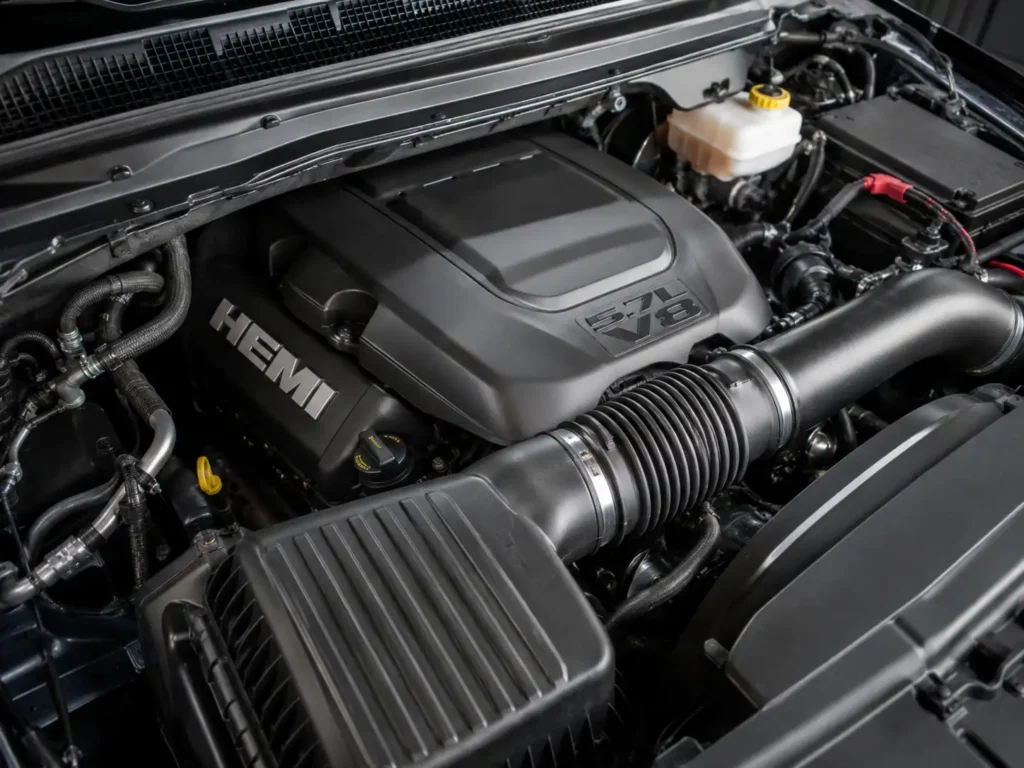
The 5.7 Hemi horsepower by year ranges from 345 hp in the original 2003 Gen III truck engine to 395 hp in the current eTorque configuration returning for the 2026 Ram 1500. That number does not tell the full story.
The same displacement, the same engine family, the same “5.7L Hemi V8” badge. The factory rating shifts depending on the model year, the vehicle application, and which generation of technology sits under the hood.
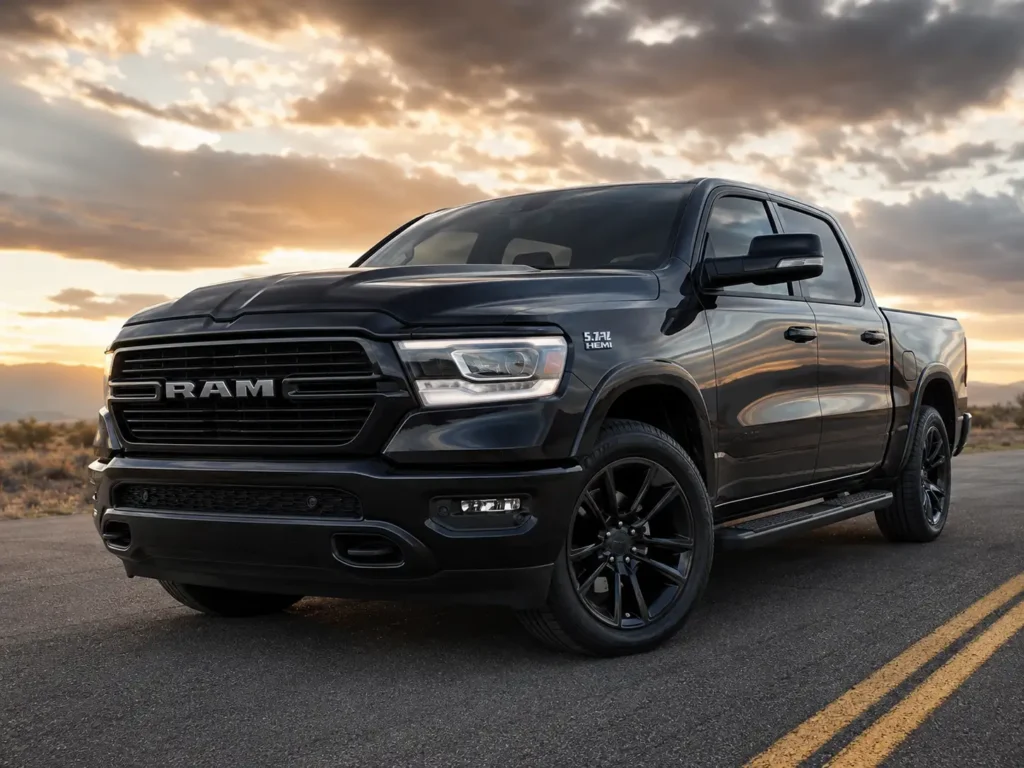
Ram trucks, Dodge Chargers, Challengers, and SUVs all use different calibrations of this engine. The year of manufacture and the platform it goes into both affect the final output number.
The chart and breakdown below cover every official factory rating from 2003 through the 2026 comeback, with application-specific notes so you can find the exact figure for your truck or car.
5.7 Hemi V8 horsepower by year infographic showing all generation ratings from 2003 to 2026
Recommended Best Deal Products


TruckGuider.com
5.7 Hemi horsepower by year
Factory SAE net ratings across every generation, 2003–2026
2003 Gen III
since 2015
torque (2019+)
9.6:1 compression · no VVT · MDS added mid-cycle on Ram 1500
10.5:1 compression · VVT added · redesigned heads · refined MDS
48V mild-hybrid BSG · peak HP unchanged · +130 lb-ft launch torque optional (2019–22), standard (2023–24)
eTorque standard · 10,000 orders in 24 hours · confirmed by Stellantis June 2025
What Changed the 5.7 Hemi Horsepower Across 3 Generations
Recommended Best Deal Products


Three engineering updates separate the first 5.7L Hemi from the one returning in 2026 Ram 1500s. Each update changed the output number and the technology delivering it. Understanding the generation split is the fastest way to make sense of the chart below.
Gen III Original: 2003 to 2008
The third-generation Hemi debuted in the 2003 Dodge Ram 1500, replacing the aging Magnum V8 family. In Ram truck applications, it produced 345 hp at 5,600 rpm and 375 lb-ft of torque at 4,400 rpm, with a 9.6:1 compression ratio. It Still Runs documented these original truck ratings directly from Dodge specifications.
The Gen III used a pushrod overhead-valve design with two spark plugs per cylinder, a cast-iron block, and aluminum heads. It had no Variable Valve Timing (VVT) and no Multi-Displacement System (MDS) in its earliest form. MDS was added during the Gen III run, but the compression ratio and head design remained the limiting factors on output.
SUV applications including the Jeep Grand Cherokee, Dodge Durango, and Chrysler Aspen ran a detuned version rated at 335 hp. The 2005 LX car platform (Chrysler 300C, Dodge Magnum R/T, Charger R/T) produced 340 to 350 hp depending on the package.
Eagle Revision: 2009 to 2018
The 2009 model year brought the most significant update in the engine’s history, commonly called the “Eagle” revision. DodgeGarage’s Gen III reference guide confirms the key changes: Variable Valve Timing (VVT) was added, cylinder heads were redesigned for better airflow, compression rose to 10.5:1, and the MDS system was refined for smoother operation.
In Ram 1500 applications, output jumped to 390 hp and 407 lb-ft for 2009 through 2014. By 2015, Ram extracted a final 5 hp by switching to electronic power steering, freeing up parasitic load from the old hydraulic pump. That brought the Ram 1500 rating to 395 hp and 410 lb-ft, where it stayed through 2024.
VVT (Variable Valve Timing) advances or retards the camshaft to optimize both power delivery and fuel economy across the RPM range. The Eagle heads also used improved intake and exhaust port geometry that directly enabled the higher compression ratio without requiring premium fuel.
eTorque Era: 2019 to 2024
The 2019 Ram 1500 introduced the eTorque mild-hybrid system as an option on the 5.7L Hemi V8. Peak horsepower stayed at 395. What eTorque added was supplemental launch torque: up to 130 lb-ft delivered by a 48-volt belt-integrated starter-generator at low RPM, not at peak power.
Starting with 2023 model year Ram 1500s, eTorque became standard on every 5.7L Hemi configuration. The 2024 Ram 1500 was the final model year before Ram dropped the engine entirely for the Hurricane I-6 lineup in 2025.
The 2026 Return
Ram reinstated the 5.7L Hemi V8 for the 2026 Ram 1500 after intense customer backlash against the 2025-only Hurricane-exclusive lineup. Stellantis announced the return on June 5, 2025, confirming 395 hp and 410 lb-ft of torque with eTorque standard. The engine received 10,000 orders in the first 24 hours after the announcement. Ram CEO Tim Kuniskis stated directly: “Ram screwed up when we dropped the HEMI. We own it and we fixed it.”
The table below shows exactly how those changes translated into horsepower and torque numbers, year by year.
5.7 Hemi Horsepower and Torque Chart by Year from 2003 to 2026
All figures below are SAE net ratings measured at the flywheel. Application matters: the same 5.7L displacement produces different output depending on the vehicle’s tune, exhaust routing, accessory load, and MDS availability. Find your year and application in the table.
| Year Range | Application | Horsepower | Torque (lb-ft) | Key Technology Notes |
|---|---|---|---|---|
| 2003–2008 | Gen III Ram 1500 / 2500 / 3500 | 345 hp | 375 lb-ft | 9.6:1 compression. No VVT. MDS added mid-cycle on 1500. Cast-iron block, aluminum heads. |
| 2003–2008 | Gen III Jeep Grand Cherokee / Dodge Durango / Chrysler Aspen | 335 hp | 370 lb-ft | Detuned SUV application. Different exhaust and intake calibration vs. truck. |
| 2005–2008 | Gen III Chrysler 300C / Dodge Magnum R/T / Charger R/T | 340–350 hp | 390 lb-ft | LX car platform. Rating varies by package and transmission. |
| 2009–2014 | Eagle Ram 1500 | 390 hp | 407 lb-ft | Eagle update: VVT added, compression raised to 10.5:1, revised heads, refined MDS, active intake manifold. |
| 2009+ | Eagle Ram 2500 / 3500 | 355 hp | 395 lb-ft | No MDS. Torque-biased tune for heavy hauling. VVT and active intake retained. |
| 2009–2014 | Eagle Dodge Challenger R/T (automatic) | 370 hp | 398 lb-ft | LX/LC platform. 5-speed automatic. Eagle VVT tune. |
| 2009–2014 | Eagle Dodge Challenger R/T (6-speed manual) | 375 hp | 401 lb-ft | 6-speed Tremec manual. 5 additional hp vs. automatic. Confirmed by Edmunds road test. |
| 2015–2018 | Eagle Ram 1500 | 395 hp | 410 lb-ft | Electronic power steering freed 5 hp from hydraulic parasitic load. Peak Eagle output. |
| 2019–2022 | eTorque Ram 1500 (standard HEMI) | 395 hp | 410 lb-ft | eTorque optional. Non-eTorque version tows up to 11,610 lbs when properly equipped. |
| 2019–2022 | eTorque Ram 1500 (with eTorque) | 395 hp | 410 lb-ft + 130 lb-ft launch | 48V mild-hybrid system adds supplemental torque at low RPM. Max tow 12,750 lbs when equipped. |
| 2023–2024 | eTorque Ram 1500 | 395 hp | 410 lb-ft + 130 lb-ft launch | eTorque standard on all Ram 1500 5.7L Hemi configurations. Final production years before 2025 discontinuation. |
| 2025 | Discontinued Ram 1500 | N/A | N/A | 5.7L Hemi dropped from Ram 1500. Hurricane I-6 only (305 hp standard, 420 hp S/O, 540 hp H/O). |
| 2026 | 2026 Return Ram 1500 | 395 hp | 410 lb-ft + 130 lb-ft launch | eTorque standard. Max tow 11,320 lbs. Available across Tradesman, Big Horn, Warlock, Laramie, Rebel, Limited, Longhorn trims. $1,200 upcharge on most trims; standard on Limited and Longhorn. |
Sources: Stellantis media.stellantisnorthamerica.com (2026 specs), DodgeGarage Gen III Engine Guide (2003–2008), Edmunds 2009 Challenger R/T road test, RamForumZ HD specs thread.
The most important takeaway from the chart is that peak horsepower has been fixed at 395 hp since the 2015 Ram 1500. Ram did not chase higher numbers after that point. Instead, every subsequent development, including eTorque, refined MDS calibration, and the 48V system, targeted drivability, fuel economy, and towing capability without changing the peak output figure.
How Ram 1500 and Ram 2500 Hemi Horsepower Ratings Differ by Truck
Recommended Best Deal Products

The 5.7L Hemi is not a single tune across all Ram trucks. The Ram 1500 and Ram 2500/3500 carry the same engine block and displacement, but the calibrations are different enough that the official output numbers diverge significantly. For anyone comparing Ram 1500 vs Ram 2500 specs, this distinction is one of the first things to confirm.
The Ram 1500 version runs the Multi-Displacement System (MDS), which deactivates cylinders 1, 4, 6, and 7 under light loads. The MDS-equipped tune allows Ram to optimize the engine’s peak power delivery at higher RPM, producing 390 to 395 hp in the post-2009 Eagle configuration.
The Ram 2500 and 3500 5.7L Hemi does not have MDS. The HD tune prioritizes a broader, flatter torque curve at lower RPM ranges. That is exactly what a truck pulling heavy trailers or loaded beds needs. The result is a lower peak HP number: 355 hp and 395 lb-ft for 2009-and-later HD applications. The RamForumZ community confirmed this directly from Dodge.com specifications for the 2500.
The practical takeaway: if you are buying a used Ram 2500 with the 5.7L Hemi V8, do not compare its rating against a Ram 1500 spec sheet. The HD engine is tuned for work, not peak numbers. Most serious Ram 2500 buyers opt for the 6.7L Cummins Turbo Diesel or the 6.4L Hemi V8 for heavy towing duty. The 5.7L in the 2500 and 3500 is the entry-level gasser option.
Beyond the truck application, vehicle platform also changes the rating. The Charger, Challenger, and Durango tell a different story.
5.7 Hemi Horsepower Ratings for Charger, Challenger, and Durango
The 5.7L Hemi in a Dodge Charger R/T and the same engine in a Ram 1500 share a block, not a tune. Platform calibration, exhaust design, intake routing, and accessory load all produce different official ratings across the Chrysler lineup. For the full 5.7 Hemi engine specs covering all applications in depth, that article is the authoritative reference. This section gives the quick breakdown by vehicle.
Charger and Challenger R/T Ratings
The 2005 to 2008 LX platform cars, including the Chrysler 300C, Dodge Charger R/T, and Dodge Magnum R/T, used the Gen III 5.7L producing 340 to 350 hp depending on package. These were strong numbers for the era but still below the truck application’s 345 hp in some configurations, due to different exhaust and intake routing.
The 2009 Eagle revision lifted the Challenger R/T to 370 hp with the 5-speed automatic and 375 hp with the 6-speed Tremec manual. Edmunds confirmed these figures in their 2009 Challenger R/T road test. The 5-hp difference comes from the manual gearbox’s lower parasitic drivetrain loss. The same pattern held through 2014 on the Challenger R/T.
Durango and Grand Cherokee Ratings
Jeep Grand Cherokee and Dodge Durango models running the 5.7L Hemi from 2004 through 2008 were rated at 335 hp. The SUV application used a different exhaust manifold configuration and a calibration optimized for the heavier, higher center-of-gravity platforms. Durango returned for 2011 with the Eagle-revision 5.7L, bringing output up to the 370 hp range in line with other post-2009 applications.
For Ram 1500 owners specifically, the eTorque system introduced in 2019 added a new layer to the horsepower story.
What the 5.7 Hemi eTorque System Actually Adds to Ram 1500 Power
The 2019 Ram 1500 introduced eTorque to the 5.7L Hemi V8, and the horsepower number stayed exactly the same. That confuses a lot of Ram owners looking at spec sheets. The explanation is straightforward once you understand what the system actually does.
eTorque replaces the conventional alternator with a 48-volt belt-integrated starter-generator (BSG). This motor captures energy during deceleration and stores it in a small lithium-ion battery pack behind the rear seat. During acceleration, especially from a dead stop, the BSG injects up to 130 lb-ft of supplemental torque directly to the crankshaft. That torque appears at 0 to 1,000 rpm, not at peak power. The SAE-rated 395 hp at 5,600 rpm does not change.
The practical effects show up in real-world use, not on a dyno sheet. MDS cylinder deactivation transitions become smoother. Start-stop operation at traffic lights is less intrusive. Fuel economy improves modestly. EPA ratings reach 18 city / 23 highway for the 2WD eTorque 1500, compared to 15 city / 22 highway for the non-eTorque version. Towing capacity also benefits: the eTorque-equipped Ram 1500 reaches a maximum of 12,750 lbs when properly configured, versus 11,610 lbs without it.
For the decision between configurations, the HEMI eTorque vs standard HEMI comparison breaks down the real-world differences in detail. The short version: if towing capacity near the 12,000-lb ceiling matters, eTorque is worth it. For lighter duty use, the standard 5.7L Hemi at 395 hp gets the job done without the mild-hybrid complexity.
Understanding eTorque also matters when comparing used Ram 1500 model years. The system’s availability changed the towing ceiling and should be confirmed on the window sticker before purchase.
5.7 Hemi Horsepower by Year for Used Ram Truck Buyers
If you are shopping for a used Ram 1500, the horsepower number on the sticker tells only part of the story. The generation behind the number matters just as much as the number itself.
- 2003–2008 (Gen III, 345 hp): The cheapest entry point. These trucks are functional but carry known issues. Exhaust manifold bolt breakage and early lifter and camshaft wear are well documented on the 2003–2008 engines. If you buy one, budget for a 5.7 Hemi performance upgrade path including cam, lifters, and exhaust manifold studs. The 9.6:1 compression also responds well to aftermarket work.
- 2009–2014 (Eagle, 390 hp): A significant jump in output and technology. VVT and revised heads make these a strong used buy on a budget. The Eagle engines are not immune to lifter problems, but the revised MDS and better head flow make them more capable than the Gen III at stock output. Confirm the engine does not have a persistent tick before purchasing. The 5.7 Hemi tick at idle is a known early indicator of lifter issues.
- 2015–2018 (Eagle mature, 395 hp): The sweet spot for buyers who want peak Eagle output without eTorque system complexity. Electronic power steering is standard, the 8-speed TorqueFlite automatic arrived with the 2013 Ram 1500 refresh and reached full refinement by 2015, and the 395 hp/410 lb-ft rating is stable across all trims. We consider this the best pre-eTorque used buy for most Ram 1500 buyers.
- 2019–2022 (eTorque optional, 395 hp): Confirm whether eTorque is installed before purchasing. The window sticker lists it. eTorque trucks tow more and get better fuel economy, but the 48V system adds a component that is not yet well documented for long-term failure rates. Both configurations produce the same peak 395 hp.
- 2023–2024 (eTorque standard, 395 hp): The most capable stock 5.7L Hemi Ram 1500 available on the used market. eTorque is standard, the 8-speed automatic is fully sorted, and these trucks represent the final refinement of a 20-year engine program before the 2025 hiatus.
Match your year bracket to your budget and intended use, then confirm the exact configuration before committing.
Which 5.7 Hemi Year Delivers the Best Horsepower for Ram Owners
The 5.7 Hemi horsepower by year has held steady at 395 hp since 2015, and that is the same number confirmed for the 2026 Ram 1500 return. The engine did not get more powerful after 2015. It got smarter. VVT, refined MDS, and eTorque all made the 395 hp more accessible at low RPM and more efficient on the highway without changing the peak output.
For the best overall package, the 2023–2024 Ram 1500 delivers 395 hp with eTorque standard, the most refined MDS calibration, and a 12,750-lb towing ceiling. For buyers on a tighter used budget who want proven Eagle-era power without eTorque complexity, the 2015–2018 Ram 1500 at 395 hp is the strongest value.
Whether you are buying used or ordering a 2026 Ram 1500, knowing the exact horsepower rating for your year and application is the first step toward matching the right truck to the job.
Frequently Asked Questions About 5.7 Hemi Horsepower by Year
How much horsepower does a 5.7 Hemi have?
The 5.7 Hemi V8 produces between 345 hp and 395 hp depending on the model year and vehicle application. Original 2003–2008 Ram truck engines made 345 hp. The 2009 Eagle revision raised that to 390–395 hp in Ram 1500 applications, and 395 hp has been the peak rating since 2015 through the 2026 return.
Did the 5.7 Hemi horsepower change in 2009?
Yes. The 2009 Eagle revision was the biggest single update in the engine’s history. Ram 1500 output jumped from 345 hp to 390 hp thanks to added Variable Valve Timing, redesigned cylinder heads, a raised compression ratio of 10.5:1, and an active intake manifold. The 2009 update also improved fuel economy alongside the power gain.
Does the 5.7 Hemi in a Ram 2500 make the same horsepower as the Ram 1500?
No. The Ram 2500 and 3500 5.7L Hemi is rated at 355 hp and 395 lb-ft, not the 390–395 hp of the Ram 1500. The HD version omits MDS and uses a torque-biased calibration that prioritizes pulling power at low RPM over peak horsepower numbers. Both trucks use the same block and displacement but different engine tunes.
What does eTorque add to the 5.7 Hemi horsepower rating?
eTorque does not change the 395 hp rating. It adds up to 130 lb-ft of supplemental torque at launch via a 48-volt belt-integrated starter-generator. That extra torque appears at low RPM, where it matters most for towing and acceleration from a stop, but the SAE peak horsepower figure at 5,600 rpm stays at 395 hp.
Is the 5.7 Hemi coming back in 2026?
Yes. Stellantis officially announced the return of the 5.7L Hemi V8 for the 2026 Ram 1500 on June 5, 2025. The engine returns at 395 hp and 410 lb-ft of torque with eTorque standard, available across most Ram 1500 trim levels. The 2025 Ram 1500 was the only model year without the Hemi option since 2002.