2003 Dodge Ram Dashboard Replacement: Causes & Fixes [2026]

Addressing a cracked 2003 Dodge Ram dashboard typically involves choosing between a full structural replacement or a molded plastic dash cap. While a full replacement restores the vehicle to factory condition, high-quality overlays offer a more durable and cost-effective solution for common UV-related damage.
🎯 Key Takeaways
- Evaluate dash caps versus full replacements based on budget and goals.
- Disconnect the battery to safely handle the passenger side airbag.
- Molded ABS plastic caps are more UV-resistant than the original factory material.
- Always use specialized plastic trim tools to avoid damaging brittle vents.
- Check all HVAC blend doors while the dashboard is disassembled.
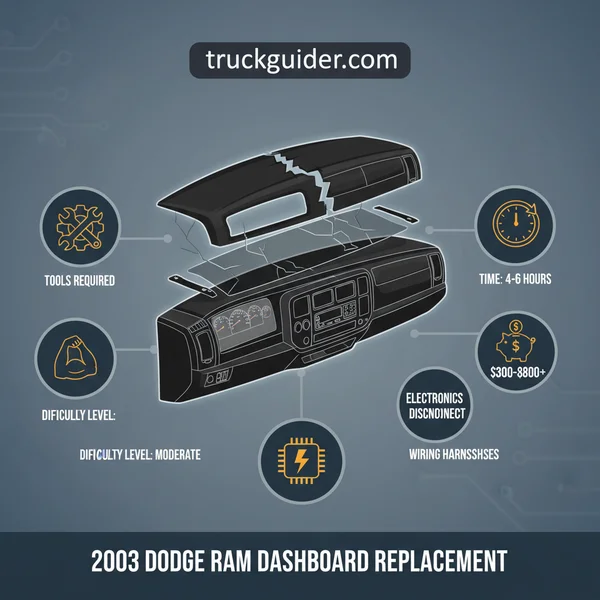
Replacing a cracked 2003 Dodge Ram dashboard requires choosing between three main paths: a full structural replacement, a hard plastic overlay cap, or a temporary carpet cover. For a permanent fix that restores your truck to factory condition, a full replacement dashboard is the only way to eliminate the rattling and structural failure common in 3rd Gen Rams. While more labor-intensive, this method provides a long-term solution that handles heat and vibration far better than cheaper alternatives.


Getting this repair right the first time is critical for your safety and your truck’s resale value. A loose dashboard can interfere with airbag deployment or cause electrical shorts if the plastic shards damage the wiring harness underneath. By following a structured removal process and choosing high-quality materials, you can transform your interior from a crumbling mess back into a clean, professional-looking cabin in a single weekend.
Comparing Replacement Methods: Full Dash vs. Overlays vs. Covers
Before you turn a single wrench, you must decide which repair fits your budget and patience level. The 2003 Ram dash is notorious for “shattering” rather than just cracking, which often dictates which method will actually work for your specific vehicle.

Full Replacement Dashboard (The Gold Standard)
A full replacement involves removing the entire plastic top skin of the dashboard. This is the most expensive option, usually costing between $400 and $600 for the part. Brands like LMC Truck or various aftermarket manufacturers offer reinforced plastic versions that are thicker than the original OEM part. This method solves the problem permanently and looks identical to a factory finish. It requires the most work, as you must strip the interior down to the metal frame.
Plastic Overlay Caps and Carpet Covers
If your dash is cracked but still mostly in one piece, a plastic overlay (like a DashSkin) is a viable middle ground. These cost about $150 to $200 and glue directly over your existing dash. They are fast to install but won’t fix a dash that has completely disintegrated into the HVAC ducts. Carpet covers are the cheapest option at $50, but they only hide the visual damage and do nothing to stop the underlying plastic from further crumbling into your vents.
- Full Replacement: Best for restoration; eliminates all rattles; 4-6 hours of labor.
- Overlay Cap: Best for minor cracks; looks good from a distance; 1 hour of labor.
- Carpet Cover: Best for tight budgets; prevents glare; 5 minutes of labor.
The Ultimate 2003 Dodge Ram Dashboard Walkthrough
The third-generation Dodge Ram is notorious for its “glass-like” dashboard that tends to crack and crumble over time due to UV exposure and heat. This guide provides a comprehensive, technical walkthrough for removing the entire dashboard assembly to either replace the plastic top skin or the entire structural unit. Following these steps carefully is essential to ensure you do not accidentally deploy the airbags, snap delicate plastic clips, or create permanent electrical gremlins in your truck’s wiring harness.
Step 1: Safety First and Battery Disconnection
What you need: 10mm wrench, safety glasses, and approximately 30 minutes of patience.
Instructions: Before touching any interior components, you must disable the Supplemental Restraint System (SRS). Use your 10mm wrench to disconnect the negative battery terminal. Once disconnected, wait at least 15 to 30 minutes. This allows the capacitors in the airbag control module to fully discharge, ensuring the airbags won’t accidentally deploy while you are working near the steering column or passenger-side dash. While waiting, move both front seats as far back as possible to give yourself maximum working room. Place your windows down slightly to allow for airflow and better reach from the outside if needed.
Pro Tip: After disconnecting the battery, pump the brake pedal a few times or turn on the headlight switch; this helps drain any residual power left in the system even faster.
Step 2: Removing the Center Bezel and Console
What you need: Phillips head screwdriver, plastic trim removal tools, and a small container for screws.
Instructions: Start by removing the single Phillips head screw located behind the “trash bag” hook on the passenger side of the center stack. Use your plastic trim tool to gently pry around the edges of the center instrument panel bezel (the piece surrounding the radio and AC controls). Once the clips pop loose, pull the bezel forward and disconnect the electrical connectors for the 12V outlets, 4WD switch (if applicable), and HVAC controls. If your truck has a full center console, you must remove the bolts inside the storage bin and the screws near the gear shifter to slide the console back, as it overlaps the bottom of the dashboard frame.
Pro Tip: Label every connector you unplug with masking tape. Many of the black rectangular connectors look similar, and labeling them now will save hours of frustration during reassembly.
Step 3: Lowering the Steering Column
What you need: 13mm socket, ratchet, and an extension.
Instructions: You do not need to remove the steering wheel, but you must lower the column to allow the dashboard to clear. Remove the plastic knee bolster panel under the steering wheel by removing the two screws at the bottom and pulling it toward you. Locate the four 13mm nuts holding the steering column to the support beam. Support the column with your hand as you remove the last nut. Gently lower the steering column so it rests on the driver’s seat. Be extremely careful not to put excessive tension on the wiring harnesses or the shift indicator cable (if automatic). If the cable is tight, unhook the small white plastic loop from the column’s shift lever.
Pro Tip: Place a folded towel on the driver’s seat before lowering the column to prevent the heavy metal brackets from tearing your upholstery or scratching the steering wheel leather.
Step 4: Detaching A-Pillars and Speaker Grilles
What you need: 10mm socket, flathead screwdriver, or trim tool.
Instructions: The dashboard is tucked behind the A-pillar trim pieces (the vertical plastic covers on either side of the windshield). If your truck has “grab handles,” pop the small plastic covers on the handle to reveal 10mm bolts. Remove these bolts and pull the pillars away. Next, address the long defroster vent/cowl panel located right against the windshield. Use a flathead screwdriver to gently pry this long plastic strip up. It is held in by several metal clips. Once removed, you will see a row of 10mm or 8mm screws (usually five or six) that secure the top of the dashboard to the firewall. Remove these screws and set them aside.


Pro Tip: The plastic at the base of the windshield is often very brittle. Apply steady, even upward pressure rather than quick jerks to avoid snapping the long panel into multiple pieces.
Step 5: Disconnecting Main Electrical Bulkheads
What you need: Small flathead screwdriver and needle-nose pliers.
Instructions: On both the driver and passenger kick panel areas, you will find large electrical junction blocks. On the driver’s side, look for the green and white bulkhead connectors near the parking brake pedal. You must depress the locking tabs and pull these apart. On the passenger side, remove the glove box by squeezing the sides inward and dropping it down. Behind the glove box, disconnect the vacuum lines (if manual HVAC) and the radio antenna cable. Ensure the passenger side airbag connector (usually yellow) is unplugged. Make sure no wires are still “tethering” the dashboard to the floor or side walls of the cab.
Pro Tip: Take high-resolution photos of the wiring routing on both sides before disconnecting. It’s easy to forget if a wire was routed over or under a specific metal bracket.
Step 6: Removing Side Mounting Bolts and Pivoting
What you need: 10mm and 13mm sockets and a helper.
Instructions: Locate the main “pivot” bolts on the far left and right sides of the dashboard, near the door hinges. There is typically one large bolt on each side behind the kick panels and one on each side accessible when the doors are open. With all top screws and side bolts removed, the dashboard should feel loose. This is a two-person job. Have one person on each side grab the dash frame. Pull the dashboard slightly toward the rear of the truck to clear the mounting studs, then tilt it downward. Check for any “snagged” wires. If clear, lift the entire assembly out of the truck through the passenger door, as there is usually more clearance on that side.
Pro Tip: If the dash won’t budge, double-check the bolt located near the gas pedal area; there is often a “hidden” support bracket bolted to the floor hump that is easy to miss.
Step 7: Transferring the Dashboard Shell
What you need: T-15 and T-20 Torx drivers, Phillips screwdriver.
Instructions: If you are replacing only the cracked plastic top, you must now flip the entire dashboard assembly over on a soft surface (like a lawn or carpet). On the underside, you will see dozens of small screws securing the plastic skin to the HVAC ducting and the metal subframe. Carefully remove all these screws. You will also need to transfer the VIN plate from the old dash to the new one—be sure to check local regulations regarding VIN plate transfer. Swap over the air vents, the passenger airbag module (using extreme caution), and the wiring harness clips. Once the new shell is secured to the frame, you are ready for reinstallation.
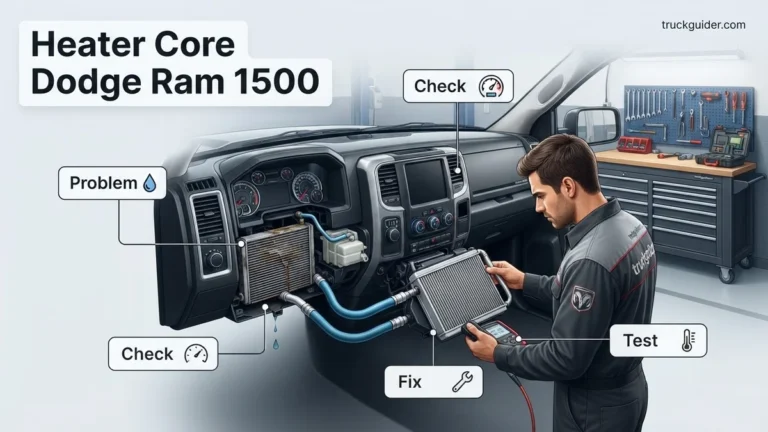
Pro Tip: While the dash is out, this is the perfect time to replace your Heater Core and AC Evaporator core. These parts are notorious for failing, and you’ve already done 90% of the labor required to reach them.
Step 8: Reinstallation and Testing
What you need: All previously used tools and a torque wrench (optional).
Instructions: Reverse the removal process. With your helper, carry the assembly back into the cab and set it onto the pivot brackets. Start by loosely installing the side bolts to hold it in place, then align the top holes near the windshield. Reconnect the main electrical bulkheads before tightening everything down. Re-install the steering column, ensuring the 13mm nuts are tight (approx. 20-25 ft-lbs). Once the dash is secure and all trim pieces are back in place, reconnect the battery. Turn the ignition to the “ON” position while standing outside the vehicle (in case of airbag issues), then start the truck and check all functions.
Pro Tip: Before putting the center bezel back on, test your turn signals, hazards, and HVAC blower motor. It’s much easier to fix a loose plug now than after the final trim is snapped in.
✅ Final Checklist
- Verify the Airbag (SRS) warning light turns off after the initial bulb check.
- Confirm all HVAC vents blow air in the correct directions (Defrost, Floor, Vent).
- Check that the instrument cluster gauges move and the illumination dimming works.
- Ensure the steering column is tight and the gear shifter moves smoothly through all positions.
- Check that the VIN plate is clearly visible through the windshield.
Important Notes:
- Safety: Always handle the passenger airbag module like a loaded gun; never point the front face toward your body and always store it face-up on a flat surface.
- Professional Help: Seek a professional if you find evidence of melted wiring harnesses or if you are uncomfortable working around the SRS system.
- Estimated Time: 4 to 8 hours depending on experience level.
- Cost Range: $200 – $450 for a replacement plastic top; $600+ for a full OEM-style assembly.
Essential Tools and Safety Precautions for Airbag Components
You cannot perform a full dashboard replacement on a 2003 Ram without the correct tools and safety steps. This job involves working directly around the passenger-side airbag module and the steering column, making safety your first priority.
Safety First: Disconnecting the Power
Before touching the dash, disconnect the negative battery cable and wait at least 15 minutes. This allows the capacitors in the airbag system to fully discharge. You will be unplugging the yellow airbag connectors during this process; failing to discharge the system could result in an accidental deployment, which is both dangerous and expensive.


Required Tool List
Gather these specific tools before you begin to avoid getting stuck halfway through the teardown:
- 7mm, 8mm, and 10mm Sockets: Used for almost every fastener in the dash assembly.
- Phillips Head Screwdriver: For the center bezel and various trim screws.
- Plastic Trim Removal Tools: Essential for prying the A-pillar covers without scratching them.
- Torx T-20 and T-25 Bits: Needed for the steering column shroud and specific interior braces.
- Magnetic Pick-up Tool: Crucial for retrieving screws that fall into the defrost vents.
Step-by-Step Dashboard Removal: Access and Trim
To replace the dash, you must clear everything blocking the main top panel. Start by removing the center instrument cluster bezel. This piece is held in by one Phillips screw located behind the “trash bag hook” or power outlet area, depending on your trim level. Once that screw is out, pull the bezel straight back toward the seats to release the spring clips.
Clearing the Steering Column and A-Pillars
Lower the steering column to its lowest position. Remove the three screws on the underside of the column shroud to separate the plastic halves. Next, pull the rubber door seals away from the A-pillars and use your trim tool to pop the A-pillar covers off. Be careful with the integrated grab handle bolts on the passenger side; these are 10mm bolts hidden behind small plastic caps. You must remove these to get the pillars out of the way of the dashboard’s side edges.
Locating Hidden Screws and Clips
The 2003 Ram dashboard is secured by a series of fasteners that are often hidden from plain sight. You must remove the glove box by squeezing the sides inward to let it drop past its stops. This reveals several 7mm screws that secure the lower dash frame. Look for the “hidden” 10mm bolt located behind the central radio area which anchors the dash frame to the sub-structure. Without removing this, the top panel will feel stuck even if all other screws are gone.
- Windshield Screws: There are five screws located right against the glass in the defrost vents. Use a stubby screwdriver or a small ratchet.
- Side Bolts: Open the driver and passenger doors to find the plastic end caps; pop these off to reveal the main structural side bolts.
- Kick Panels: Remove the floor-level plastic panels to reach the lower pivot bolts.
Cost Analysis: Replacement Parts and Professional Labor Rates
Deciding between a DIY fix and a professional installation usually comes down to your budget and how much time you can spare. Because the 2003 Dodge Ram dashboard is a large, bulky component, shipping costs alone can sometimes influence which repair path you take. Understanding the price gap between “just the parts” and “the full service” is essential for planning your project.
Part Pricing: What You’ll Pay for the Plastic
The cost of materials varies significantly depending on the extent of the damage. If your structure is sound but the surface is an eyesore, a molded plastic cover is the most economical route. However, if your dash has completely disintegrated, you will need a full replacement unit.
- Molded Dash Covers: Expect to pay between $150 and $250. These are lightweight and cheaper to ship.
- Full Dashboard Replacements: High-quality aftermarket replacements typically range from $450 to $750. Prices vary based on whether the kit includes the instrument panel bezel and the necessary hardware.
- OEM Parts: Finding a “New Old Stock” (NOS) factory dashboard is increasingly rare and can cost upwards of $1,000, though most enthusiasts prefer modern aftermarket versions that use improved plastic blends.
Professional Labor Costs and Time Commitments
If you aren’t comfortable disconnecting airbags and steering columns, you will need to factor in professional labor. This is a time-consuming job that most shops bill at a “heavy” rate due to the complexity of the wiring harnesses involved.
- Independent Repair Shops: Most mechanics quote between 6 and 10 hours of labor. At an average rate of $120 per hour, you are looking at $720 to $1,200 in labor alone.
- Interior Specialty Shops: These pros often work faster and may offer a flat-rate “menu price” for 3rd Gen Ram dash swaps because they perform them so frequently.
- Hidden Costs: Always budget an extra $50 for replacement plastic clips and retainers, as the original factory clips almost always snap during the removal process.
Material Science: Why 3rd Gen Ram Dashes Fail and Prevention Tips
It isn’t a coincidence that so many 2002–2005 Dodge Rams have “spider-web” cracks in their dashboards. The failure is rooted in the chemistry of the materials used during that era. By understanding why the original part failed, you can take specific steps to ensure your replacement lasts the lifetime of the truck.
The “Eggshell” Effect: UV and Outgassing
The original dashboards were manufactured using a high-impact polystyrene blend that was particularly susceptible to outgassing. Over years of exposure to the sun, the chemicals that keep the plastic flexible (plasticizers) evaporate. This process is accelerated by the extreme heat that builds up behind the windshield. Once these oils are gone, the plastic becomes as brittle as an eggshell. Even a small vibration from a pothole can cause a brittle dash to shatter into dozens of pieces.
Long-Term Prevention Strategies
Once you have invested in a new dashboard, you must change the environment inside the cabin to prevent a repeat performance. Modern aftermarket dashes often use superior ABS plastics, but they still require maintenance.
- Use a Custom-Fit Sunshade: This is the single most important tool in your arsenal. A thick, reflective shade blocks 99% of UV rays and significantly lowers the surface temperature of the plastic.
- Apply UV Protectants: Avoid “high-shine” or silicone-based cleaners, which can actually magnify sun damage. Instead, use a specialized protectant like 303 Aerospace, which acts like a sunscreen for your interior.
- Crack the Windows: On days where temperatures exceed 90°F, leaving your windows cracked half an inch allows hot air to escape, reducing the thermal expansion stress on the dashboard mounting points.
- Garaging: Whenever possible, park in the shade or in a garage to minimize the total hours of direct solar exposure.
Conclusion
Dealing with a cracked 2003 Dodge Ram dashboard is a rite of passage for many owners, but it doesn’t have to be a permanent headache. Whether you opt for a budget-friendly molded cover to hide the damage or invest in a full structural replacement, restoring your interior adds massive value and pride of ownership to your truck. By choosing high-quality materials and committing to UV protection, you can ensure your “new” dash looks great for another two decades.
Next Steps: Start by inspecting the structural integrity of your current dash to see if a cover is an option. Then, regardless of your repair choice, purchase a high-quality sunshade today to stop any further degradation. It’s time to get that 3rd Gen Ram looking like it just rolled off the showroom floor!
💬 Quick Questions & Answers
Can I install a dash cap over a cracked dashboard?
Yes, a molded plastic dash cap is designed to glue directly over your existing cracked dashboard for an easy fix.
Do I need to remove the steering column?
For a full dashboard frame replacement, you may need to drop the column, but not for a top pad replacement.
What is the best material for a replacement dash?
High-quality ABS plastic with UV inhibitors is the industry standard for preventing future cracking.
How much does a replacement dashboard part cost?
Expect to pay between $150 for a cap and $500 for a full high-quality replacement pad.



Will a dash cap rattle while driving?
If properly installed with the recommended silicone adhesive, a dash cap will remain silent and secure.
❓ Frequently Asked Questions
What is the difference between a dashboard cap and a full replacement?
A dashboard cap is a thin, molded plastic shell that glues over the original cracked surface, while a full replacement involves removing the entire top pad and installing a new structural piece. Caps are faster and cheaper, but full replacements look more original and address structural integrity.
Is it safe to replace the dashboard around the passenger airbag?
It is safe as long as the battery is disconnected for at least 30 minutes prior to work to discharge the capacitors. You must follow specific torque specs and alignment guides when re-securing the airbag module to the new dash frame.
Where can I find a color-matched dashboard for a 2003 Dodge Ram?
Companies like LMC Truck and DashSkin offer color-matched options in Taupe, Slate Gray, and Agate. If an exact match isn’t available, you can use SEM interior plastic paint to spray a neutral-colored dash to match your specific VIN code.
How long does a professional dashboard replacement usually take?
A professional technician typically takes 3 to 5 hours for a complete dashboard removal and installation. If you are only installing a dash cap, the process takes about an hour, plus cure time for the adhesive.
Why did the 2003 Dodge Ram dashboards crack so easily?
The factory plastic used in 3rd Generation Rams lacked sufficient UV stabilizers, causing the material to become brittle and shrink over time under sun exposure. This led to the widespread ‘shattered’ look common in these models.
What should I inspect while the dashboard is removed?
While the dash is out, it is highly recommended to inspect the heater core, evaporator coil, and the HVAC blend doors. These components are difficult to access otherwise and are common failure points on high-mileage 2003 Rams.
![5.7 Hemi Exhaust Manifold Upgrade [2026]](https://truckguider.com/wp-content/uploads/2026/03/featured-5f91c218-768x768.webp)
![2Nd Gen Ram Rear Bumper Options [2026]](https://truckguider.com/wp-content/uploads/2026/03/featured-5d639459-768x768.webp)