2021 Ram 1500 5.7 Oil Capacity: Complete HEMI Maintenance Guide [2026]

The 2021 Ram 1500 5.7 oil capacity is 7.0 quarts (6.6 liters) — including the filter. That number applies to every variant: standard HEMI, eTorque HEMI, Classic (DS platform), and the newer DT platform.
But getting the capacity right is just the starting point. The right viscosity, a certified filter, and proper drain plug torque all directly protect the HEMI’s Multi-Displacement System — the cylinder deactivation technology that fails quietly and expensively when the lubrication system is wrong.


This guide covers everything: exact specs, recommended oils, filter cross-references, the DIY procedure, oil life reset steps, DTC codes, and the 5W-20 vs. 5W-30 debate every HEMI owner eventually faces.
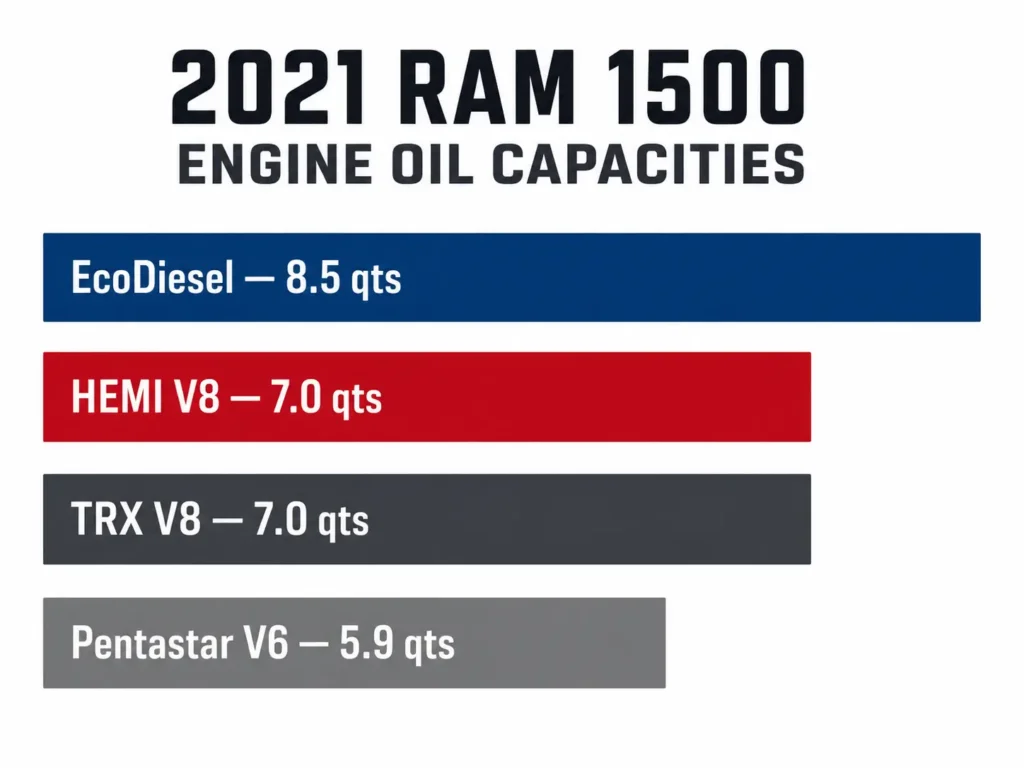
2021 Ram 1500 oil capacity by engine and DIY versus dealer cost comparison
Engine oil capacity (quarts) — 2021 Ram 1500 full lineup
Cost per oil change — Dealer vs. DIY
Dealership / Pro Shop
$172–$196
includes labor + fees
DIY (premium synthetic)
$45–$60
fluids + filter only
Oil capacity
7.0 qt
all 5.7L HEMI variants
Drain plug torque
25 ft-lbs
M14 × 1.50 plug
Savings over 150k mi
$1,800+
DIY vs. dealer
2021 Ram 1500 5.7 HEMI: Quick-Reference Specs
| Specification | Value |
|---|---|
| Oil Capacity (with filter) | 7.0 quarts / 6.6 liters |
| Factory Viscosity | SAE 5W-20 Full Synthetic |
| OEM Certification | Chrysler MS-6395 / API SP / ILSAC GF-6A |
| OEM Oil Filter | Mopar MO-339 (04892339AA) |
| Filter Thread | M22 x 1.5 |
| Drain Plug Size | M14 x 1.50, 13mm hex head |
| Drain Plug Torque | 25 ft-lbs (34 Nm) |
| Change Interval | 10,000 miles or 12 months |
| eTorque Variant Capacity | Identical — 7.0 quarts |
Full 2021 Ram 1500 Engine Oil Capacity Chart (All Engines)
If you’re servicing multiple Ram 1500 variants or need to verify specs across the lineup, here’s the complete capacity and viscosity table for all 2021 engines.
| Engine | Capacity (w/ filter) | Viscosity | Certification |
|---|---|---|---|
| 3.6L Pentastar V6 (eTorque) | 5.9 qts / 5.6 L | SAE 0W-20 | MS-6395 |
| 5.7L HEMI V8 (Classic/DS) | 7.0 qts / 6.6 L | SAE 5W-20 | MS-6395 |
| 5.7L HEMI V8 (DT / eTorque) | 7.0 qts / 6.6 L | SAE 5W-20 | MS-6395 |
| 3.0L EcoDiesel V6 | 8.5 qts / 8.0 L | SAE 5W-40 Diesel | MS-12991 |
| 6.2L Supercharged V8 (TRX) | 7.0 qts / 6.6 L | SAE 0W-40 | MS-12633 |
Does the eTorque System Change the Oil Capacity?
No. This is one of the most common questions about the 2021 Ram 1500, and the answer is simple.


The eTorque mild-hybrid system replaces the traditional alternator with a belt-driven motor generator unit (MGU). It sits on the exterior of the engine and connects to a 48-volt battery pack in the cabin. It has zero interaction with the internal engine lubrication circuit.
The engine block, oil pan geometry, oil pump, and internal gallery design are identical between the standard and eTorque variants. Both require exactly 7.0 quarts of the same SAE 5W-20 full synthetic oil and the same Mopar MO-339 filter.
Why the Right Oil Viscosity Is Non-Negotiable on the HEMI
The 2021 5.7L HEMI uses engine oil as a hydraulic fluid, not just a lubricant. The Multi-Displacement System (MDS) uses high-pressure oil to lock and unlock lifter pins, physically deactivating four cylinders under light loads.
If the oil is too thick, the MDS solenoids cannot actuate within milliseconds — causing rough transitions between 4-cylinder and 8-cylinder modes and potentially triggering timing codes. If it’s too thin, the hydraulic film protecting the camshaft lobes and roller lifters breaks down under heat.
SAE 5W-20 is the factory-mandated spec for 2021. Note: Ram moved to SAE 0W-20 starting with 2022 models. Do not use the newer spec on your 2021 — it was calibrated for 5W-20 hydraulic pressures.
Required OEM Certification: Chrysler MS-6395
The viscosity grade alone is not enough. Every oil used in the 2021 Ram 1500 5.7 HEMI must carry the Chrysler MS-6395 certification.
MS-6395 is a proprietary Stellantis (formerly Chrysler/FCA) testing standard — not a generic industry label. To earn it, an oil manufacturer must complete a two-year real-world fleet evaluation proving their product resists sludge formation, prevents high-temperature carbon deposits on piston rings, and maintains its protective film over extended drain intervals.
Modern MS-6395 oils also meet API SP and ILSAC GF-6A standards, which add protection against timing chain wear and valvetrain deposits — both critical for the HEMI’s roller lifter system.
Top Recommended Oils for the 2021 Ram 1500 5.7 HEMI
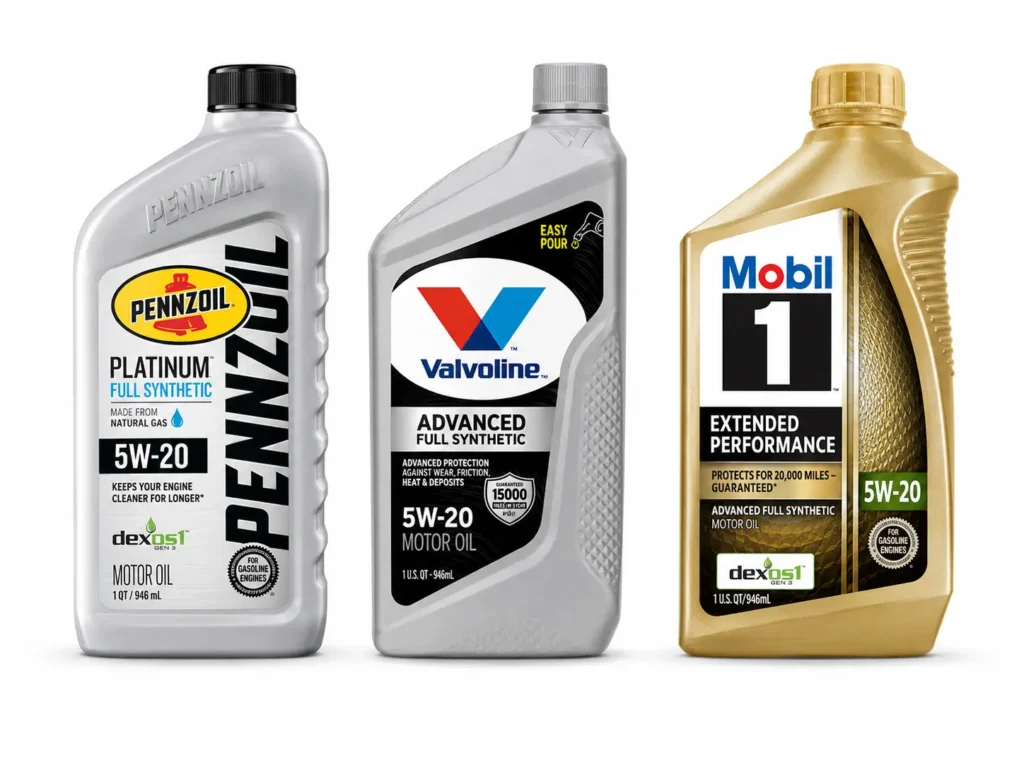
All three of these synthetics hold MS-6395 certification and are verified for use in the 2021 5.7L HEMI. For a deeper comparison with user reviews and pricing, see our guide to the best oil for the Ram 1500 5.7 HEMI.
| Oil Brand | Base Stock | OEM Approvals | Key Benefit |
|---|---|---|---|
| Pennzoil Platinum 5W-20 | Natural gas derived (PurePlus) | MS-6395, API SP, GF-6A | Piston cleanliness, factory-fill partner |
| Valvoline Advanced Full Synthetic 5W-20 | Premium synthetic base | MS-6395, API SP, GF-6A | Robust anti-wear additive package |
| Mobil 1 Extended Performance 5W-20 | PAO / advanced synthetic | MS-6395, API SP, GF-6A | 20,000-mile thermal stability rating |
Oil Filter Specifications: Mopar MO-339 and Aftermarket Alternatives
The OEM filter is the Mopar MO-339 (part numbers: 04892339AA / 04884900AB). It uses an M22 x 1.5 thread, measures approximately 3.0 in. (76mm) in diameter by 3.5 in. (89mm) tall, and has a bypass valve set at 9–15 PSI.
The MO-339’s main limitation is its nitrile rubber anti-drain back valve (ADBV). Nitrile can harden and crack over hundreds of heat cycles, causing oil to drain back into the pan overnight — leading to dry starts and added valvetrain wear. Premium aftermarket filters use silicone or Viton ADBVs that last significantly longer.
For a fully researched comparison of all the top options, see our dedicated guide to the best oil filter for the Ram 1500 5.7 HEMI.
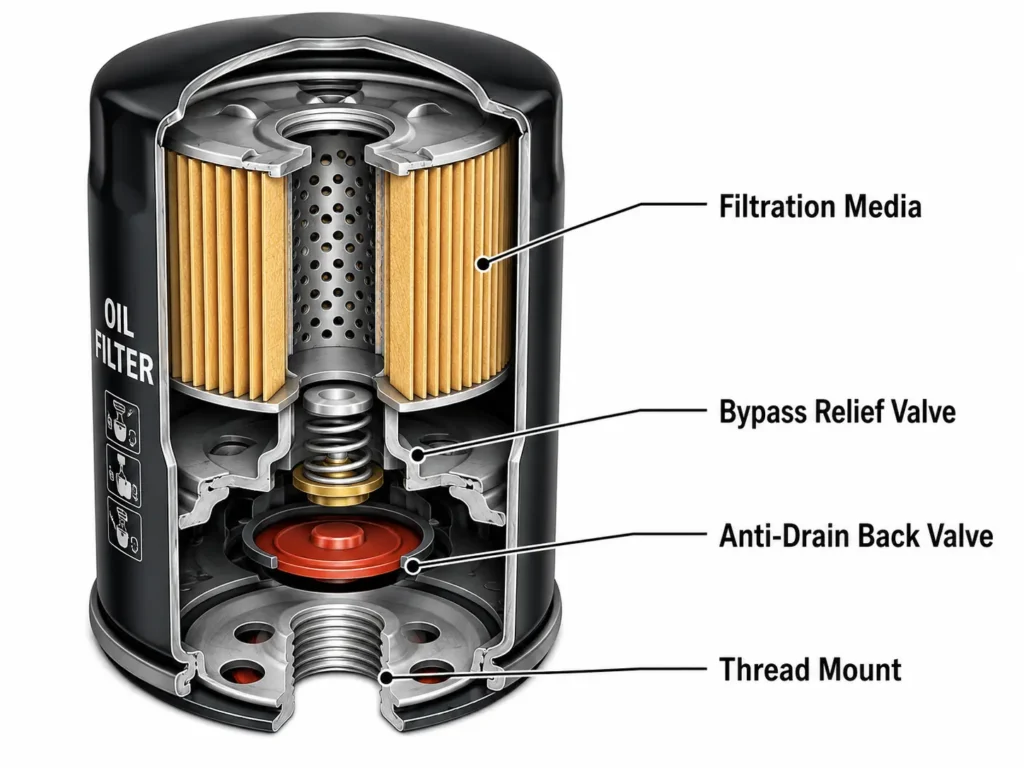
| Brand | Part No. | Filter Media | ADBV Material | Bypass PSI |
|---|---|---|---|---|
| Mopar (OEM) | MO-339 | Cellulose/Synthetic Blend | Nitrile | 9–15 PSI |
| Wix | 57060 | Enhanced Cellulose | Nitrile | 12 PSI |
| Wix XP | 57060XP | Fully Synthetic | Silicone | 12 PSI |
| Mobil 1 | M1-113A | Synthetic Blend | Silicone | 12–15 PSI |
| K&N | HP-1017 | Synthetic Blend | Viton | 11–17 PSI |
| Fram Ultra | XG10060 | Dual-Layer Synthetic | Silicone | 9–15 PSI |
| Baldwin | B7443 | Cellulose/Microglass | Nitrile | 8 PSI |
All filters use M22 x 1.5 thread pitch. Verify thread before installation.
Step-by-Step DIY Oil Change: 2021 Ram 1500 5.7 HEMI
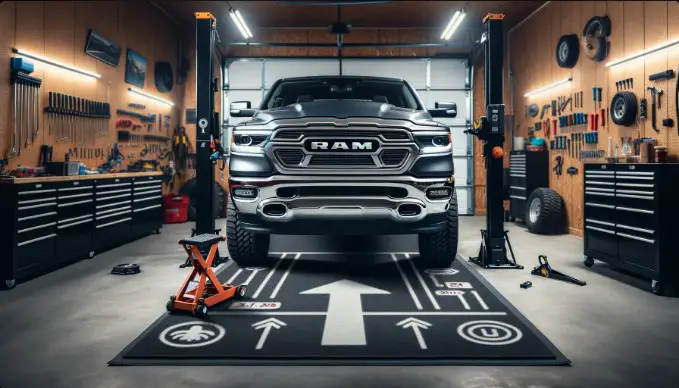
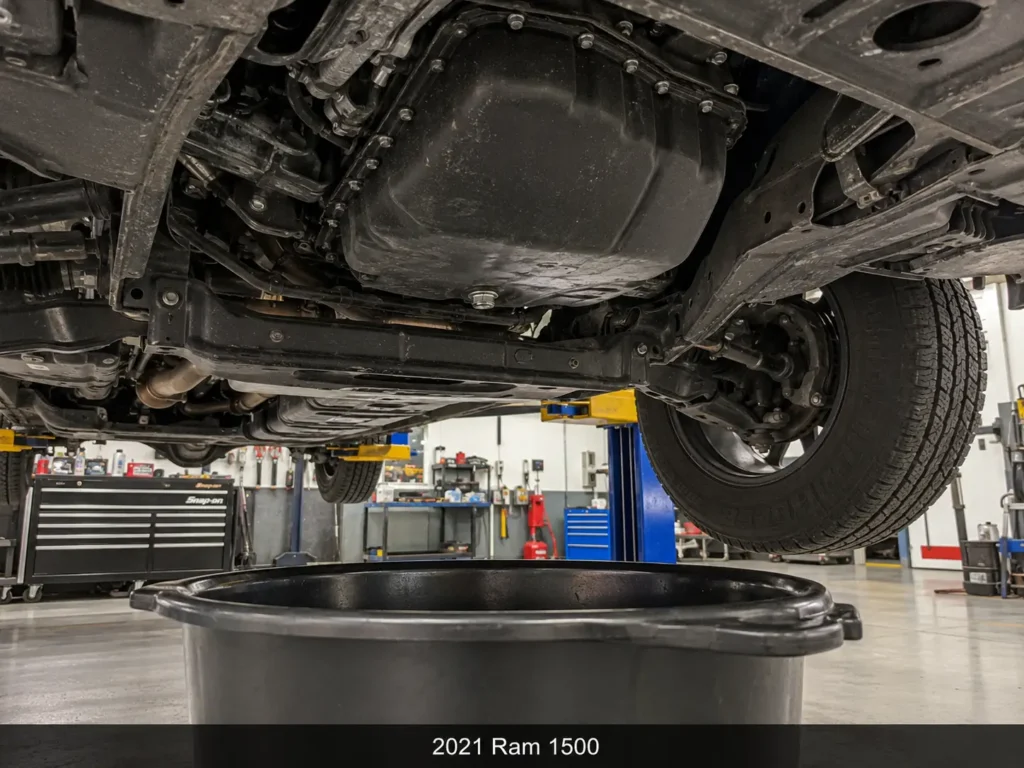
The Ram 1500 has enough ground clearance that a floor jack is rarely needed. You’ll need a 13mm socket, a torque wrench, an oil filter wrench, a drain pan, and 7.0 quarts of SAE 5W-20 MS-6395 synthetic oil.
Step 1: Warm the Engine
Run the engine for five minutes until it reaches normal operating temperature. Warm oil is significantly less viscous — it drains faster and carries suspended contaminants out with it. Shut the engine off completely before going under the truck.
Step 2: Drain the Oil
Locate the drain plug on the rear-facing side of the oil pan. Position your drain pan beneath it. Break the torque with a 13mm socket and ratchet, then unthread by hand — pull the plug away quickly as the last thread clears to keep oil off your hands.
Let the oil drain fully for 10–15 minutes. Inspect the rubber gasket on the plug. If it’s flattened, torn, or brittle, replace the plug entirely. Reinstall by hand first to avoid cross-threading, then torque to exactly 25 ft-lbs (34 Nm).
Step 3: Remove the Oil Filter (The Ziploc Bag Method)
The 5.7L HEMI’s filter is on the passenger side of the block, mounted horizontally above the power steering rack. Removing it always spills residual oil onto sensitive electrical connectors below.
Loosen the filter with a strap wrench until it breaks free. Once hand-loose, slip a gallon Ziploc bag over the entire filter body. Unthread it from inside the bag — the oil and filter both fall cleanly into the bag, keeping your engine bay dry.
Step 4: Install the New Filter
Dip your finger in fresh oil and coat the new filter’s rubber gasket. This prevents the gasket from binding or fusing to the block during heat cycling. Thread the filter on by hand until the gasket contacts the block, then tighten an additional 3/4 to 1 full turn by hand only. Never use a wrench to tighten.


Step 5: Fill and Verify
Pour exactly 7.0 quarts of SAE 5W-20 MS-6395 synthetic oil through the filler cap. Start the engine and idle for 30–45 seconds while watching for leaks at the drain plug and filter. Shut off, wait 3–5 minutes, then pull and re-read the dipstick — the level should sit in the crosshatched safe zone, not above MAX.
How to Reset the Oil Life Monitor
The 2021 Ram 1500 uses an algorithmic oil life monitor that tracks engine hours, temperature cycles, and towing load — not just mileage. After an oil change, you must reset it manually or it will keep chiming incorrectly.
Method 1: Steering Wheel Controls (Primary Method)
- Press Engine Start/Stop twice without pressing the brake — enters RUN mode, engine stays off.
- Use the left steering wheel directional pad to navigate to Vehicle Info.
- Press right arrow to scroll to Oil Life.
- Hold the center OK button for 3–5 seconds until the display resets to 100%.
- Press Start/Stop once to turn off.
Method 2: Accelerator Pedal Override (Backup Method)
Use this if the steering wheel method fails or the Uconnect cluster has a software glitch (a documented issue on some 2021 builds).
- Press Start/Stop twice (engine off, RUN mode only).
- Depress the accelerator pedal fully to the floor and release completely. Do this three times within 10 seconds.
- Press Start/Stop once to turn off.
- On the next real start, the warning chime will be gone and the oil life will show 100%.
The 5W-20 vs. 5W-30 Debate and the Hemi Tick
This is the most controversial maintenance topic in the Ram 1500 community — and it’s worth understanding in full before making a decision.
What Causes the Hemi Tick?
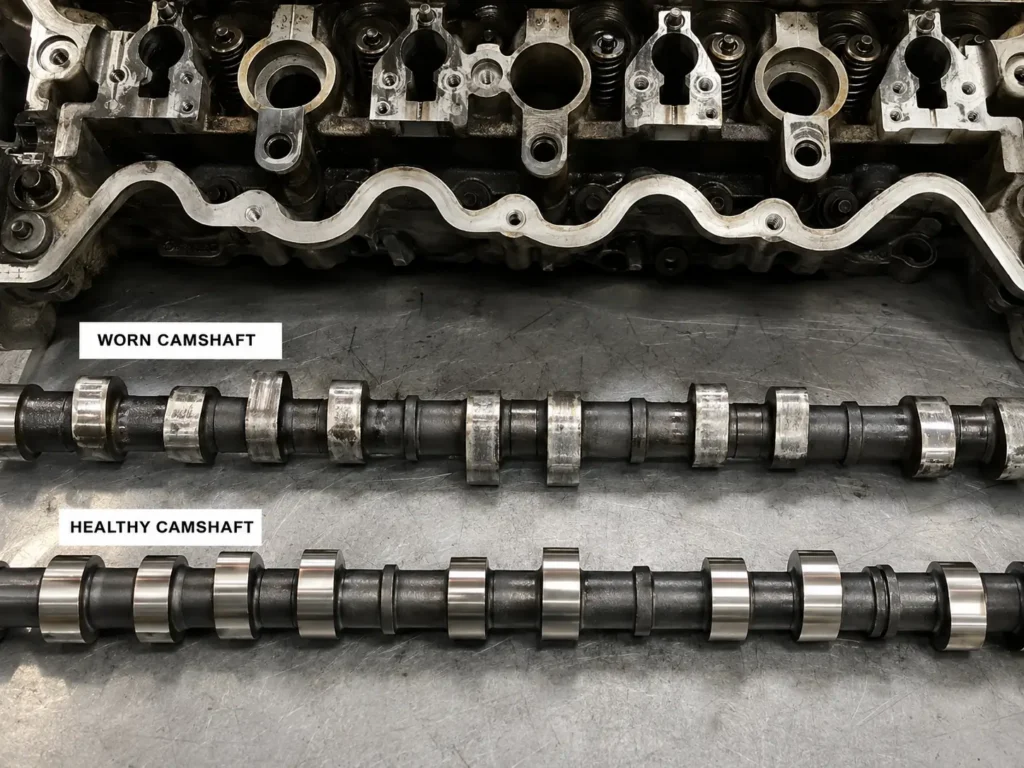
The 5.7L HEMI runs an aggressive camshaft profile paired with hydraulic roller lifters. At prolonged low-RPM idle, the factory oil pump does not generate enough splash lubrication to fully coat the tiny needle bearings inside the lifter rollers and the camshaft lobes above them.
Over tens of thousands of miles, those needle bearings starve and seize. The hardened roller stops spinning and begins dragging directly across the spinning cam lobe, grinding it down rapidly. Metal debris spreads through the entire engine. This is the failure mode behind the infamous Hemi tick — and it can destroy an otherwise healthy engine.
Why Ram Specifies 5W-20
The 5W-20 recommendation is partially driven by federal CAFE fuel economy mandates. Thinner oil produces fractionally less hydrodynamic drag across millions of fleet vehicles, improving EPA test numbers. It is not primarily an engineering choice for maximum durability.
Here’s the key data point: the identical 5.7L HEMI in the Ram 2500 and Ram 3500 — trucks exempt from light-duty CAFE requirements — officially calls for SAE 5W-30 in the factory service manual. Same block, same bearings, same lifters. The only difference is the regulatory pressure. See our Ram 2500 oil capacity guide for a full comparison.
The MDS Constraint
The counterargument to running 5W-30 in the 1500 involves the Multi-Displacement System. The MDS solenoids were calibrated for 5W-20 hydraulic pressure profiles. Heavier oil could theoretically cause sluggish cylinder deactivation transitions or trip timing codes.
In practice, tens of thousands of fleet owners report entirely normal MDS operation with 5W-30, along with noticeably smoother idle and reduced early-stage ticking. The empirical evidence leans toward minimal real-world MDS impact.
The practical consensus: If you’re under factory warranty, stick to 5W-20 to protect your coverage. If you’re out of warranty and concerned about camshaft wear, 5W-30 with a shortened 5,000-mile drain interval is a defensible choice many experienced HEMI mechanics recommend.
Diagnosing Oil Pressure DTCs: P0524 and P1524
These two trouble codes appear frequently in HEMI engines and are almost always related to the lubrication system. Both require different urgency levels.
P0524: Engine Oil Pressure Too Low
This is a critical, stop-immediately code. It means oil pump output has dropped below the minimum threshold for safe engine operation. Keep driving and you risk catastrophic main bearing failure and complete engine seizure.
Causes include: severely low oil level, viscosity breakdown from neglected maintenance, a failing mechanical oil pump, or a defective oil pressure sensor. The proper diagnosis requires a mechanical analog gauge tapped directly into the block gallery — not just reading sensor data. See related oil pressure diagnostics in our oil pressure DTC guide.
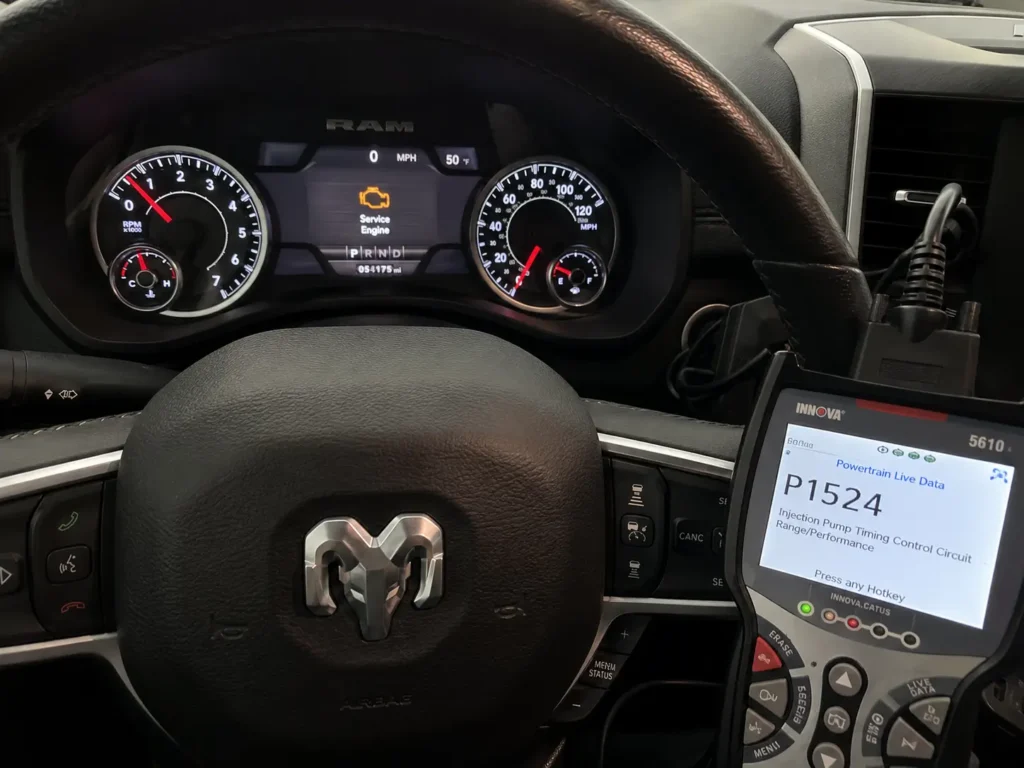
P1524: Oil Pressure Out of Range — VVT/MDS Disabled
This is more nuanced. The engine has enough base pressure to avoid seizure, but insufficient high-end pressure to operate the camshaft phasers and MDS solenoids. The PCM disables MDS entirely, locking the engine in 8-cylinder mode as a protective measure.
The most common trigger after an otherwise normal oil change is an incorrect aftermarket filter. A filter with a wrong bypass valve setting, restrictive media, or erratic internal bypass will starve the VVT circuit. If you recently used an off-brand filter, swap it immediately for an OEM Mopar MO-339 or Wix 57060XP, clear the codes, and run a drive cycle.
Using the wrong viscosity — such as accidentally pouring a 15W-40 diesel oil into the crankcase — will also trigger P1524 immediately. Other HEMI-related codes often appear alongside this one; our Ram 1500 DTC diagnostic guide covers the full troubleshooting workflow. If the VVT system is involved, a failing camshaft position sensor can compound the issue.
DIY vs. Dealer Cost Breakdown
The financial case for DIY oil changes on the 2021 Ram 1500 is significant, especially when factoring in the truck’s 10,000-mile interval and typical 15-year lifespan.
| Service Method | Fluids + Filter | Labor + Fees | Total per Service |
|---|---|---|---|
| Dealership / Pro Shop | $90–$120 | $52–$77 | $172–$196+ |
| DIY (Premium Synthetic) | $45–$60 | $0 | $45–$60 |
| Savings per service | — | — | ~$120–$140 |
Estimates based on national industry aggregate repair data for the Ram 1500 platform.
At 10,000-mile intervals, the average Ram 1500 owner needs roughly 15 oil changes per 150,000 miles. The DIY savings over that period can exceed $1,800 — while also guaranteeing premium-grade fluid rather than the generic bulk-drum oil common in high-volume quick-lube environments.


Critical Torque Specifications for the 5.7L HEMI
For technicians performing deep engine maintenance — or diagnosing systemic oil pressure loss caused by loose internal hardware — these are the factory-certified torque values for the full 5.7L HEMI architecture.
| Component | Torque Spec | Notes |
|---|---|---|
| Oil Pan Drain Plug | 25 ft-lbs (34 Nm) | Inspect rubber gasket each change |
| Oil Filter | Hand + 3/4 turn | Never use a mechanical wrench to tighten |
| Oil Pan Bolts | 9 ft-lbs (105 in-lbs) | Alternating crisscross sequence |
| Oil Pump Pickup Tube Bolt | 21 ft-lbs | Critical seal for pump suction |
| Oil Pump Cover | 95 in-lbs | Secures the gerotor assembly |
| Timing Chain Cover Bolts | 21 ft-lbs | Front oil seal integrity |
| Rocker Arm Bolts | 195 in-lbs (16 ft-lbs) | Snug to 6 ft-lbs first, then full torque |
| Exhaust Manifold Bolts | 18 ft-lbs | Prone to thermal failure — don’t over-torque |
| Main Cap Bolts (M12) | 20 ft-lbs + 90° | TTY — use new bolts only |
| Main Cap Cross Bolts (M8) | 23 ft-lbs | After M12 vertical bolts are set |
| Connecting Rod Bolts | 15 ft-lbs + 90° | TTY — use new bolts only |
| Cylinder Head Bolts (M12) | 25 → 40 ft-lbs + 90° | TTY — sequential center-out pattern |
| Harmonic Balancer | 130 ft-lbs | Critical for rotational vibration dampening |
TTY (Torque to Yield) fasteners stretch permanently on installation and cannot be reused under any circumstances. Source: Gen III HEMI factory service manual torque specs.
Supplemental Driveline Fluid Capacities (4×4 Models)
A complete Ram 1500 4×4 service extends beyond the engine. These are the fluid specs for the remaining driveline components.
| Component | Capacity | Notes |
|---|---|---|
| BorgWarner Transfer Case (44-44/44-45) | 3.0 pints (1.4 L) | Fill to bottom edge of fill plug; drain/fill plugs: 15–18 ft-lbs |
| ZF 8-Speed Auto (8HP75) | 9.0 qts dry / varies on drain-fill | Proprietary 8-speed fluid only |
| Rear Differential (C235 with LSD) | ~4.6 pints | Synthetic gear lube; add friction modifier with LSD option |
Frequently Asked Questions
Why is there a tick for 2–3 seconds after an oil change?
Normal. A new, empty filter holds roughly half a quart of air. The oil pump must purge that air before pressure builds to reach the top-end lifters. Pre-filling the filter with fresh oil before threading it on eliminates this entirely. If the tick persists for days after an oil change, verify the correct filter was used — an incorrect bypass valve calibration can permanently starve the valvetrain.
Can I mix 5W-20 and 0W-20 in an emergency?
A single top-off of 0W-20 won’t cause immediate chemical damage — modern API SP synthetics are miscible. But running a blended viscosity long-term alters the hydraulic pressure profile the MDS solenoids rely on, which can trigger codes and affect cylinder deactivation behavior. Return to a uniform 5W-20 fill at the next service.
How does the 2021 model compare to 2017 and 2019 oil specs?
The capacity and viscosity are identical across all three years — 7.0 quarts of SAE 5W-20. The HEMI architecture didn’t change between those model years. For year-specific context, see our guides on 2017 Ram 1500 5.7 oil capacity and 2019 Ram 1500 5.7 oil capacity.
How often should the air filter be replaced alongside oil changes?
Inspect at every oil change; replace every 30,000 miles under normal conditions. Trucks operating in dusty agricultural or construction environments need significantly more frequent air filter replacements. Silica particles that bypass a saturated filter act as an abrasive compound in the combustion chamber, accelerating ring, bore, and bearing wear faster than any lubrication issue. A quality cold air intake system can also improve filtration while reducing intake temperatures.
What other maintenance does a 2021 Ram 1500 need beyond oil changes?
Spark plugs at 30,000 miles, transmission fluid at 60,000 miles if used for towing, and differential fluid at 30,000 miles for severe duty. The exhaust manifold is also a known wear item on the 5.7L HEMI and worth inspecting during any major service. For the full capability profile of this truck, see our 2021 Ram 1500 towing capacity guide.
Conclusion
The 2021 Ram 1500 5.7 HEMI oil capacity is 7.0 quarts of SAE 5W-20 full synthetic oil — the same across every variant including eTorque, Classic, and DT platform builds.
The MS-6395 certification is mandatory, not optional. The MDS system uses engine oil as a hydraulic fluid, and an incorrect viscosity or a cheap filter with a miscalibrated bypass valve will trigger P1524, disable cylinder deactivation, and begin degrading the valvetrain silently.
Torque the drain plug to 25 ft-lbs, use a premium silicone-ADBV filter, reset the oil life monitor after every service, and consider a 5,000-mile interval if you use the truck for heavy towing. Follow those steps consistently, and the 5.7L HEMI will deliver its full 395 hp and 410 lb-ft of torque for well over 200,000 miles.

![2018 Ram 1500 Transmission: Specs & Fitment Guide [2026]](https://truckguider.com/wp-content/uploads/2026/03/2018-ram-1500-transmission-featured.webp)