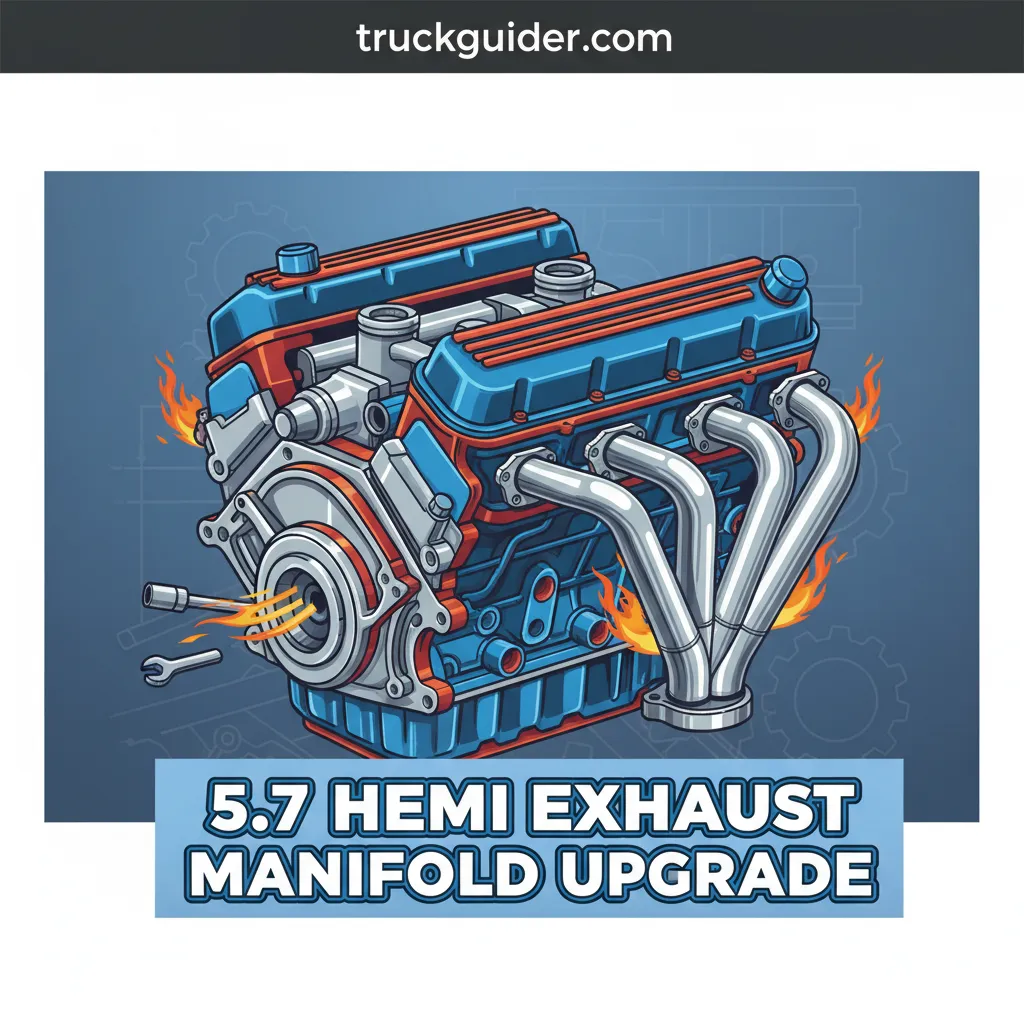
5.7 Hemi Exhaust Manifold Upgrade [2026]

The 5.7L Hemi V8 is an icon of American engineering, powering everything from heavy-duty RAM trucks to high-performance Dodge Challengers with a signature muscular grunt. However, even this legendary powerplant possesses a significant “Achilles’ heel”: the factory exhaust manifolds. These cast-iron components are notorious for structural failures that compromise engine performance and overall vehicle health. The recurring ‘Hemi tick’—frequently caused by warped manifolds and snapped mounting bolts—is more than a minor annoyance; it is a definitive sign of a failing exhaust system that leads to measurable power loss, decreased fuel economy, and potential internal engine damage. This comprehensive guide provides a professional roadmap for selecting a quality 5.7 Hemi exhaust manifold upgrade, ensuring you achieve a reliable, permanent fix while unlocking the performance potential your V8 was designed to deliver.


Section 1: Identifying the Need for a 5.7 Hemi Exhaust Manifold Upgrade
📤 Share Image
In the expert community, the “Hemi Tick” is a well-documented symptom of a deeper mechanical failure. The primary culprit is an engineering mismatch in thermal expansion rates. The 5.7L Hemi utilizes aluminum cylinder heads paired with heavy cast-iron exhaust manifolds. During standard operation, exhaust gas temperatures (EGTs) can reach a staggering 1,200 degrees Fahrenheit. As these components heat and cool, the aluminum head expands at a rate nearly double that of the cast iron. This creates immense shear stress on the steel mounting bolts.
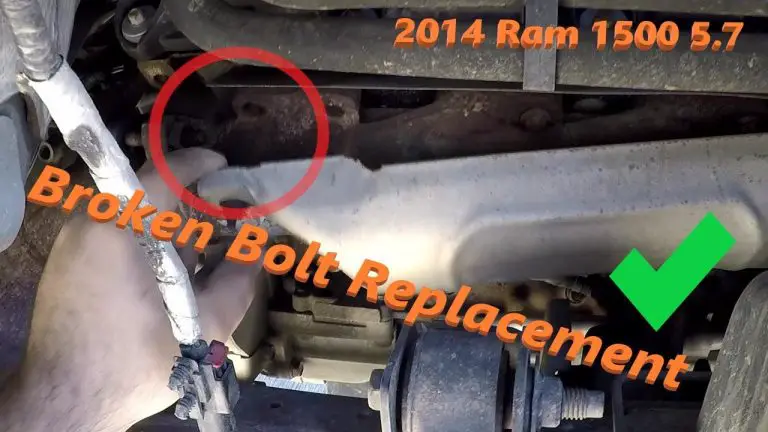
The factory manifold typically fails between 60,000 and 100,000 miles. Over thousands of thermal cycles, the cast iron warps, physically pulling away from the head and snapping the Grade 8 factory bolts—usually at the rear cylinders (numbers 7 and 8). Once a bolt snaps, the seal is lost, leading to an exhaust leak. These leaks are more than just noisy; they allow “false air” to enter the exhaust stream, confusing the oxygen (O2) sensors. The PCM (Powertrain Control Module) detects an artificial lean condition and dumps excess fuel into the cylinders to compensate.
Failure Assessment
Fuel Efficiency Loss
Peak Operating Temp
A recent case study of a RAM 1500 with broken manifold bolts revealed a 15% loss in fuel efficiency and significant carbon buildup on the spark plugs due to incorrect fuel trims. Professional-grade diagnosis involves visual soot tracking (black carbon streaks on the silver heat shield) and cold-start acoustic testing. If the ticking sound diminishes as the engine reaches operating temperature, the metal has expanded enough to temporarily close the gap—a definitive sign that your manifolds require an immediate comprehensive upgrade.

Section 2: Comparing Shorty Headers and Long Tube Upgrade Options
When selecting an upgrade, the decision rests between two primary configurations: Shorty Headers and Long Tube Headers. Trusted performance brands like JBA and American Racing Headers (ARH) offer distinct advantages depending on your specific vehicle use case and regional emissions laws.
Shorty Headers: The Direct-Fit Solution
Shorty headers are designed as a direct replacement for the stock manifolds. They bolt into the factory location and reconnect to the stock mid-pipe and catalytic converters. For the daily driver or the truck owner focused on towing, shorties provide a reliable fix that improves exhaust scavenging through better mandrel-bent flow without the need for custom fabrication. They typically yield 10-15 horsepower gains and are generally 50-state emissions legal.
Long Tube Headers: Maximum Volumetric Efficiency
For performance applications like the Dodge Challenger or Charger, long tube headers are the gold standard. By extending the primary tubes, these headers create a superior Venturi effect within the collector, pulling exhaust gases out of the cylinder more effectively. This creates a massive increase in the engine’s volumetric efficiency. When paired with a professional PCM tune, long tubes can provide 25-35 horsepower gains. However, they require mid-pipe modifications and often relocate the catalytic converters.
Material selection is non-negotiable for longevity. You must choose 304 Stainless Steel. While 409 stainless or mild steel options exist, they will eventually succumb to surface rust and pitting in high-heat cycles. 304 stainless steel remains the trusted choice for professional builds because it maintains structural integrity and corrosion resistance even under extreme stress.
Section 3: Selecting Reliable Hardware and Gaskets for a Trusted Seal
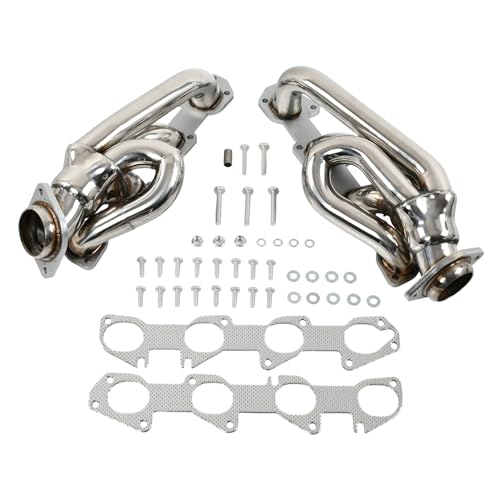
The most common mistake during a Hemi manifold upgrade is reusing old hardware or relying on the cheap gaskets included in budget kits. To ensure a complete and permanent seal, you must focus on the auxiliary components. Multi-Layer Steel (MLS) gaskets are the industry standard for a professional-grade seal. Unlike graphite gaskets that can blow out under pressure, MLS gaskets consist of multiple layers of spring steel that provide a “crush zone,” allowing them to conform to minor surface irregularities on the cylinder head.

MLS Gaskets
Superior durability over OEM graphite; handles high pressure without blowout.
Stainless Studs
20% higher tensile strength than factory bolts; accommodates thermal expansion.
Furthermore, ditch the factory bolts entirely in favor of 300-series stainless steel studs. Studs provide more consistent torque loading across the head surface and offer a 20% higher tensile strength compared to the Grade 5 bolts found in earlier Hemi models. For the ultimate in reliability, implement Stage 8 locking fasteners. These utilize a patented locking tab and e-clip system that physically prevents the bolt from backing out, even under the intense vibration of a V8 engine.
Always use high-temperature nickel-based anti-seize on the threads. However, be extremely careful not to get any on the gasket surface or near the O2 sensor tips, as chemical contamination can cause sensor failure.
Section 4: Professional Installation Strategies and Thermal Management
The physical installation on a 5.7 Hemi is a test of patience and technical skill. The primary hurdle is almost always the extraction of broken factory bolts. If a bolt is broken flush with the head, the expert methodology involves the TIG-welded nut extraction method. By building up a small “nub” of weld on the broken stud and then welding a nut to that nub, the intense heat helps break the bond of the oxidation while providing a hex head for easy removal. This is far safer than drilling, which risks damaging the aluminum threads.
📋
Installation Checklist
Apply ceramic coating to headers. This can reduce radiant engine bay temperatures by up to 50%, protecting rubber components and wiring.
Use an incremental tightening pattern starting from the center and moving outward. Torque to 23 ft-lbs in three stages (10, 18, then 23) to prevent warping the flange.
Once the headers are in place, managing clearances is critical. 5.7 Hemi engine bays are notoriously tight, especially in the RAM and Challenger platforms. Check the clearance between the primary tubes and the steering shaft. If there is less than 1/4″ of space, engine torque could cause the header to strike the shaft, creating a vibration in the steering wheel. Additionally, use high-temp protective sleeves for spark plug wires and the starter motor to prevent heat soak, which can cause intermittent starting issues.
Never use RTV silicone on exhaust manifold gaskets. The silicone off-gases as it cures, which can coat the internal elements of your oxygen sensors, leading to a permanent Check Engine Light (CEL) and poor fuel mapping.
Section 5: Post-Upgrade Performance Gains and PCM Calibration
Completing the physical installation is only part of a comprehensive upgrade. Because headers significantly alter the air-fuel ratio (AFR) by increasing the volume of air moving through the engine, a professional PCM recalibration is highly recommended. Without a tune, the engine may run slightly lean, and you may experience a ‘Check Engine Light’ related to Catalyst Efficiency if you have moved to high-flow catalytic converters.
Dyno results for a 2019 RAM 1500 5.7L Hemi typically show a distinct torque curve shift. Shorty headers tend to broaden the mid-range torque, making them ideal for towing. Long tubes, conversely, move the power band higher in the RPM range, favoring top-end speed and acceleration. Beyond the raw numbers, the synergistic effect of combining this upgrade with a cold air intake and a larger throttle body allows the Hemi to breathe with maximum efficiency, often resulting in a 1-2 MPG increase post-tune by correcting the previous exhaust leaks.
✅ Pros
- Eliminates broken bolt risk
- Increases 10-35 HP
- Better exhaust note
- Improved fuel economy
❌ Cons
- Higher upfront cost
- Labor-intensive install
- Requires PCM tuning
- Heat management needs
Ultimately, the long-term reliability benefits of this upgrade cannot be overstated. By reducing backpressure and lower exhaust gas temperatures (EGTs), you are extending the life of your cylinder head valves and reducing the thermal stress on your engine oil. This is a complete solution for any Hemi owner looking to move past the factory design flaws into a world of reliable, high-output performance.
Upgrading to stainless steel headers or reinforced manifolds eliminates the recurring engineering flaws of the stock cast iron units once and for all. Pairing quality hardware like Stage 8 locking bolts with MLS gaskets is essential for a professional, leak-free installation that stands the test of time. The choice between shorty and long-tube headers depends on your specific goals for emissions compliance versus peak horsepower. Consult with a trusted performance specialist to select the hardware that best fits your vehicle’s application and schedule a professional installation to ensure a lifetime of reliable performance and that iconic Hemi growl.
Frequently Asked Questions
Will a 5.7 Hemi exhaust manifold upgrade void my vehicle warranty?
Generally, the Magnuson-Moss Warranty Act protects consumers. An aftermarket exhaust manifold should only void the warranty on that specific part of the system. However, if an improperly installed header causes damage to the engine, that specific repair may not be covered. Always consult with a professional installer and consider using emissions-compliant shorty headers to maintain the widest margin of warranty protection.
How can I tell if my Hemi tick is a manifold leak or a lifter issue?
An expert diagnostic involves listening to the sound during a cold start. An exhaust leak typically fades as the metal expands and seals the gap when the engine reaches operating temperature. In contrast, a lifter or ‘valvetrain’ tick is usually consistent regardless of engine temperature and is often higher in pitch. Using a mechanic’s stethoscope near the exhaust ports can provide a reliable confirmation.
Do I need a custom tune after installing shorty headers?
For most 5.7 Hemi applications, a custom tune is not strictly required for shorty headers as they maintain the factory catalytic converter positions and do not radically change air-fuel ratios. However, to maximize the performance gains and ensure the engine’s computer fully optimizes the improved flow, a professional calibration is highly recommended. It also allows for the adjustment of shift points to match the new power curve.
Why do the factory 5.7 Hemi manifold bolts break so often?
The failure is primarily due to thermal stress. The aluminum cylinder head and the cast iron manifold expand and contract at significantly different rates. As the cast iron manifold warps over time, it puts immense shear stress on the Grade 8 steel bolts, eventually snapping the rear-most studs. Upgrading to a quality manifold with more expansion relief or using stainless steel studs provides the necessary flexibility to prevent this.
What is the average labor time for a professional manifold upgrade?
A professional installation typically requires 4 to 8 hours of labor, depending on the vehicle’s make and model. Trucks like the RAM 1500 often have more engine bay room than cars like the Charger or 300. The timeframe can increase significantly if the technician encounters broken bolts that require extraction from the cylinder head, which is a common scenario for 5.7 Hemi engines.


![Dodge Ram Rear Window Replacement Cost [2026]](https://truckguider.com/wp-content/uploads/2026/03/featured-173365c3-768x768.webp)
![Flowmaster vs. Magnaflow: Sound & Performance Comparison [2026]](https://truckguider.com/wp-content/uploads/2026/03/flowmaster-vs-magnaflow-featured.webp)