5.7 HEMI Cam and Lifter Kit: Upgrades & Costs Guide in 2026

The Gen III 5.7-liter HEMI engine, a foundational powerplant across the Ram, Dodge, Chrysler, and Jeep platforms, is globally recognized for its robust torque delivery and towing capability. However, an inherent mechanical vulnerability regarding its valvetrain—specifically the camshaft and hydraulic roller lifters—has led to widespread catastrophic engine failures.
These failures are universally heralded by a distinct metallic tapping noise colloquially known as the “HEMI tick”. As these vehicles accumulate idle hours and high mileage, the demand for replacement solutions, preventative maintenance protocols, and high-performance valvetrain upgrades has surged across the automotive aftermarket.


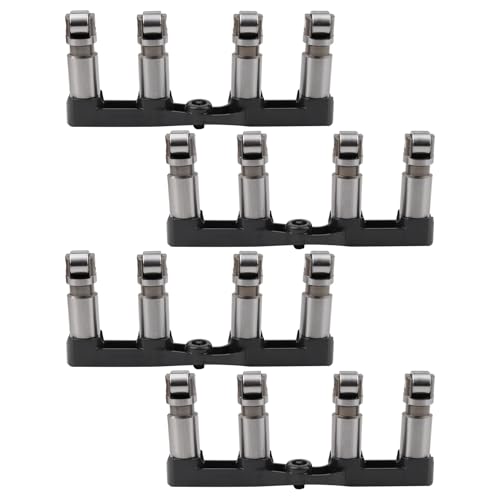
This comprehensive research report details the technical catalysts behind 5.7 HEMI lifter failure, provides granular diagnostic criteria to isolate critical valvetrain issues from benign ancillary noises, and exhaustively evaluates the aftermarket ecosystem of 5.7 HEMI cam and lifter kits.
Furthermore, it outlines the exact procedures, hardware checklists, and labor metrics required to execute a permanent repair, including a complete Multi-Displacement System (MDS) delete and variable valve timing (VVT) tuning protocol.
The Ultimate 5.7 Hemi Cam and Lifter Kit Upgrade Guide
Whether you are fixing the infamous “Hemi Tick” or building a 500+ horsepower street truck, choosing the right camshaft and lifter package is the most critical decision for your Gen III 5.7L V8 engine.
The Infamous “Hemi Tick” Explained
The modern Chrysler 5.7L HEMI is a legendary powerplant found in the Ram 1500, Dodge Charger, Challenger, and Jeep Grand Cherokee. However, it harbors a well-documented Achilles’ heel: premature lifter roller failure, universally known in the automotive community as the Hemi Tick.
This isn’t merely an annoying sound. It is the sound of a needle bearing inside the hydraulic lifter’s roller seizing. When the roller stops spinning, it grinds directly against the camshaft lobe. Within thousands of miles, the cam lobe is completely wiped flat, sending hardened metal shavings throughout the entire engine block. According to reports cited by Engine Builder Magazine, this failure is highly prevalent in 2009-2021 models equipped with MDS.
⚠ Warning Signs of Impending Failure
- ✔ A distinct ticking or tapping noise matching engine RPM.
- ✔ Engine misfire codes (commonly P0300, P0301, P0303, P0305, P0307).
- ✔ Noticeable hesitation or loss of power during acceleration.
Primary Causes of 5.7 Hemi Lifter Failure
Data aggregated from independent mechanic diagnostics and teardown analyses.
The Solution: The MDS Delete Protocol
To permanently solve the lifter issue, the industry standard is to remove the Multi-Displacement System (MDS) entirely.
What is MDS?
The Multi-Displacement System was designed to improve fuel economy by deactivating four of the eight cylinders during highway cruising. It does this using specialized, highly complex lifters on cylinders 1, 4, 6, and 7. These MDS lifters rely on oil pressure solenoids to collapse the lifter body, preventing the valves from opening.
Unfortunately, this complexity makes them inherently weaker than standard solid-body hydraulic lifters. Due to oil starvation at low idle (characteristic of police vehicles and work trucks) or extended oil change intervals, the microscopic needle bearings inside these specific MDS lifters dry out and fail.
The Non-MDS Upgrade Path
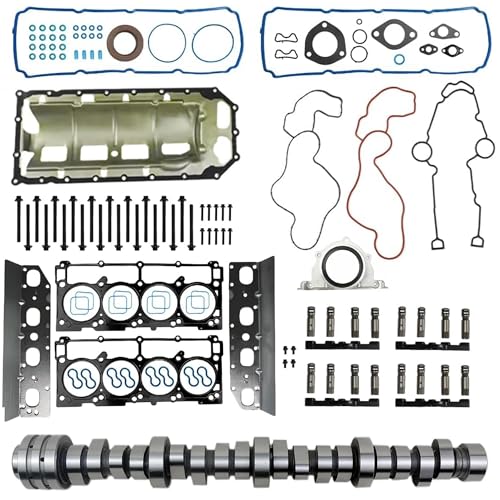
A proper 5.7 hemi cam and lifter kit replaces all 16 lifters with heavy-duty, non-MDS units (often sourced from the Hellcat engine). Because the MDS lifters operate on different camshaft lobe profiles, you cannot replace MDS lifters with non-MDS lifters without also changing the camshaft.
Estimated Power Curve: Stock vs. Stage 2 Cam
Estimates based on 5.7L V8 with long-tube headers, intake, and custom tune.
Beyond Repair: Performance Upgrades
If you have to tear the engine down to the block to replace a wiped camshaft, replacing it with an OEM stock cam is a missed opportunity. Aftermarket 5.7 hemi cam and lifter kits from companies like Texas Speed & Performance unlock massive hidden potential in the Gen III Hemi architecture.
Stage 1 (Truck/Tow Cam)
Focuses on low-end torque. Perfect for Ram 1500s that tow heavy loads. Idles smoothly like stock, uses stock torque converter, and gains roughly 30-40 rear-wheel horsepower (RWHP).
Stage 2 (Street Performance)
The “Goldilocks” zone. Noticeable choppy idle (the classic V8 muscle car sound). Shifts the powerband slightly higher. Gains of 50-70 RWHP. May require upgraded valve springs and pushrods (included in most comprehensive kits).
Stage 3 & 4 (Max Effort)
Aggressive lobe separation angles. Requires high-stall torque converters, ported heads, and significant tuning. Strictly for racing or high-performance street applications. Can yield 80+ RWHP over stock.
Financial Breakdown: What Does It Cost?
Repairing a wiped cam and failed lifters is a major engine-out or top-end-off job. The financial shock usually comes from the labor, not the parts. Here is a realistic breakdown of what you can expect to pay for a comprehensive 5.7 Hemi cam and lifter kit installation.
Parts Cost
A full kit (Cam, Hellcat Lifters, Trays, Gaskets, Head Bolts, MDS Plugs) ranges from $1,200 to $1,800 depending on the aggressiveness of the cam and brand.
Labor Hours
Book time for cylinder head removal, cam extraction, and reassembly is typically 14 to 18 hours. At $150/hr, labor easily exceeds $2,000.
ECU Tuning
Disabling MDS and mapping fueling for a new cam requires a custom tune via HPTuners or DiabloSport. Expect to spend $500 to $800 for credits and the tuner’s time.
Top 5.7 Hemi Cam and Lifter Kits Compared
| Brand / Manufacturer | Best Use Case | Lifter Quality | Included Components | Price Tier |
|---|---|---|---|---|
| Texas Speed & Performance (TSP) | Max Power / Custom Builds | Premium (Hellcat / Johnson) | Cam, Lifters, Springs, Pushrods, Phaser Limiter, Gaskets | $$$ |
| COMP Cams (HRT Series) | Street Performance / Sound | Premium (Non-MDS) | Cam, Lifters, Trays, Springs | $$$ |
| Mopar OEM Replacement | Restoring Stock Reliability | Standard (MDS) | OEM Cam, OEM MDS Lifters, Trays | $$ |
| Brian Tooley Racing (BTR) | Truck / Towing Upgrades | Premium (Non-MDS) | Truck Cam, Lifters, Springs, Gaskets | $$$ |
| Melling / Enginetech | Budget Repair | Standard / Aftermarket | Cam, Lifters only | $ |
The Anatomy of 5.7 HEMI Cam and Lifter Failure
The phenomenon of camshaft and lifter destruction in the 5.7 HEMI is predominantly a symptom of compromised internal lubrication culminating in needle bearing failure. While the engine’s Multi-Displacement System (MDS) is frequently blamed by consumers, the root cause is a complex convergence of dimensional block design choices, restrictive oiling pathways, and factory powertrain control module (PCM) calibration parameters.
Oiling Architecture and Splash Starvation
The Gen III HEMI hydraulic lifter feed routes oil in a manner that is reversed compared to traditional pushrod V8 engines. Oil travels up from the pump through a passage at the deck of the engine block, passes through a restrictor engineered into the head gasket, and moves up around the head bolts into the cylinder head.



From there, it enters the rocker shaft, flows through the rocker body to the pushrod, and finally travels down the hollow pushrod to reach the lifter.
Crucially, the lifter bores themselves receive absolutely no pressurized oil flow from the engine block when the MDS system is inactive. During standard eight-cylinder operation, the lifter bodies rely almost entirely on splash lubrication generated by the rotating assembly.
However, the HEMI engine utilizes a notably high camshaft-to-crankshaft centerline distance of 7.464 inches—significantly taller than the 4.521-inch centerline found in traditional small-block architectures.
At low engine speeds, the crankshaft cannot agitate enough oil to bridge this vertical gap, leaving the lifter bodies and their roller wheels starved of crucial splash lubrication.
The Needle Bearing Defect
Early iterations of the HEMI valvetrain utilized large roller bearings on the lifters. Subsequent redesigns for the modern Gen III engine reduced the physical size of these internal needle bearings while simultaneously increasing the axle diameter. These smaller needle bearings struggle to manage the immense valvetrain loads imposed by the engine, particularly under the poor lubrication conditions present at low RPMs.
When oil starvation occurs during prolonged periods of idling, these microscopic needle bearings dry out and seize. Consequently, the lifter roller stops spinning and begins to drag or skid across the hardened steel of the camshaft lobe. Over time, this severe metal-on-metal friction grinds the cam lobe completely flat, dispersing fine metal shavings throughout the engine block and oiling system.
As the lobe degrades, the corresponding engine valve fails to open fully, inevitably triggering a P0300 (Random/Multiple Cylinder Misfire) or a cylinder-specific misfire diagnostic trouble code.
Idle Hours, Calibration, and the Fleet Phenomenon
Factory PCM calibrations heavily exacerbate this oiling deficit. To meet stringent federal emission standards, 5.7 HEMI engines equipped with MDS are tuned to target an exceptionally low hot idle speed of 500 to 550 RPM, requiring ultra-thin 5W-20 synthetic engine oil.
At 500 RPM, the mechanical oil pump’s volume output is drastically reduced, and the low-viscosity 5W-20 oil rapidly drains back to the oil pan rather than clinging to valvetrain components.
By contrast, non-MDS Heavy Duty and SRT configurations (such as the 6.4L manual Challenger) are factory-calibrated for a 700 to 725 RPM idle and mandate a thicker 0W-40 or 15W-50 synthetic oil. This elevated idle speed exponentially increases splash lubrication and oil pump volume.
This discrepancy perfectly explains the fleet phenomenon: police vehicles, municipal Dodge Chargers, and Ram work trucks that idle extensively on 5W-20 oil experience the highest per-capita rates of camshaft and lifter failure.
Diagnostics: Isolating the True HEMI Tick
Because the 5.7 HEMI produces several distinct mechanical noises during normal, healthy operation, accurate diagnosis is paramount to avoid premature engine teardowns and unnecessary financial expenditure. The audible “tick” can originate from fuel injectors, normal hydraulic bleed-down, thermal exhaust leaks, or actual valvetrain degradation.
Diagnostic Sound Matrix
| Diagnostic Symptom | Audible Characteristics | Condition & Timing | Operational Status |
| Fuel Injector Tick | Rhythmic, high-pitched “click-click” | Constant at idle and present across all RPMs. | Normal Operation. Caused by injector solenoids rapidly opening and closing. |
| Hydraulic Lifter Rattle | Rapid “rattle-rattle” noise | Cold start only; lasts precisely 2 to 3 seconds. | Normal Operation. Oil drains from lifters while parked; noise ceases instantly once hydraulic pressure builds. |
| Exhaust Manifold Leak | Loud, aggressive ticking, snapping, or puttering | Cold start; fades completely as the engine reaches operating temperature. | Requires Repair. Caused by broken rear exhaust manifold bolts and warped flanges; thermal expansion seals the gap temporarily. |
| Roller Lifter Failure (True HEMI Tick) | Soft, random, irregular “ping-ping” or heavy metallic tapping | Hot idle only; often accompanied by engine shuddering or misfire. | Catastrophic. Indicates a seized lifter bearing actively destroying a cam lobe. Metal fragments are circulating. |
If diagnostic tests point toward a true roller lifter failure, technicians must proceed with caution. According to(https://www.nhtsa.gov/) documentation in the official Stellantis/FCA STAR On-Line Case Bulletin (S1709000010), technicians should remove the Oil Control Valve (OCV) for the Variable Valve Timing (VVT) system to inspect the internal screens for metallic debris.
The Multi-Displacement System (MDS) Delete Protocol
- Non-MDS Solid Lifters: All 16 hydraulic lifters must be removed and replaced with solid-body, non-collapsible variants. The industry standard upgrade utilizes the OEM Mopar “Hellcat” lifter (often referenced by part numbers ending in 8784AD or similar 6.2L variants), which features a vastly superior, heavier-duty roller bearing capable of withstanding higher mechanical loads without seizing.
- MDS Block-Off Plugs: The four electronic MDS solenoids located deep in the engine block valley under the intake manifold must be removed. They are replaced with billet aluminum or OEM plastic block-off expansion plugs. Plugging these specific oil galleys redirects maximum pressurized engine oil directly to the lifter bodies, thoroughly lubricating the roller wheels and eradicating the splash-lubrication deficit.
- Non-MDS Camshaft Profile: MDS-specific camshafts possess unique lobe profiles on the four deactivated cylinders. These lobes feature an additional 4 to 7 degrees of duration and 0.25 mm of extra valve lift to compensate for the slight physical collapse inherent to MDS lifters. Combining a factory MDS camshaft with solid non-MDS lifters will result in severe engine imbalance, rough idling, and persistent misfires. A non-MDS OEM cam (such as the 6.4L SRT cam) or an aftermarket performance grind is absolutely mandatory.
- Electronic Deactivation and PCM Tuning: Once the hardware is installed, a sophisticated handheld tuner (such as a Diablosport inTune i3 or an HP Tuners MPVI interface) must be used to permanently disable the MDS software routines within the PCM. Failing to flash the PCM will cause the computer to search for the removed solenoids, resulting in immediate limp mode and a Check Engine Light.
Evaluating Top 5.7 HEMI Cam and Lifter Kits (2025–2026)


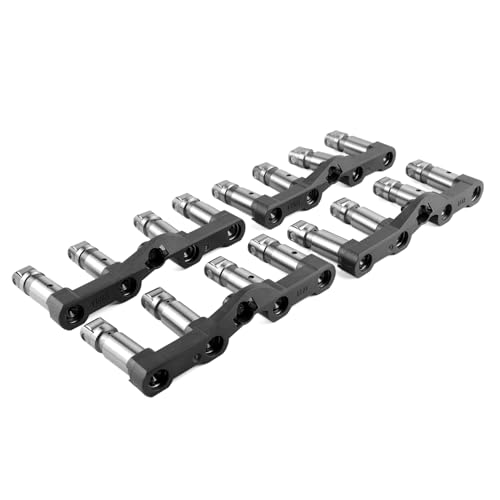
The automotive aftermarket offers curated “Master Camshaft Kits” that bundle the non-MDS lifters, block-off plugs, tuning hardware, and custom camshafts into a single cohesive package.
1. Brian Tooley Racing (BTR)
- The “Truck Norris” Camshaft: Engineered specifically for heavy Dodge Ram 1500 and 2500 applications, this camshaft limits valve overlap to retain critical low-end towing torque while pushing crank output to nearly 490 horsepower (+71 HP peak gain over stock). Operating on a 109.5 LSA, it delivers a noticeable idle chop but maintains factory drivability, eliminates low-speed surging, and requires no aftermarket stall converter.
- BTR Stage 1 & 2: Designed primarily for lighter chassis vehicles like the Dodge Charger, Challenger, and Chrysler 300, these kits offer impressive +63 HP to +73 HP gains. They operate seamlessly with factory torque converters, making them ideal for daily-driven street cars.
2. Texas Speed & Performance (TSP)
- TSP Stage 1 & 2 Low-Lift Cams: These specific profiles (yielding 32 to 42 crank horsepower) are unique because their sub-.530″ lift allows them to operate safely with factory OEM valve springs, provided the engine has fewer than 75,000 miles. This dramatically reduces the overall cost of the rebuild by omitting the need for expensive high-pressure PAC or PSI dual valve springs.
- The “Chopacabra”: A specialized, ultra-aggressive grind featuring a tight 108 Lobe Separation Angle (LSA). It is designed specifically to deliver a mean, snarling, old-school muscle car idle while still playing nice with factory torque converters. It yields a proven +43 HP and +11 lb-ft of torque on an otherwise stock 5.7L block.
3. Modern Muscle Xtreme (MMX)
4. Flyin’ Ryan Performance (FRP)
Performance Specification and Requirement Matrix
| Manufacturer & Profile | Specs (Duration @.050″ / Lift) | LSA | Est. Peak HP Gain | Torque Converter | Valve Spring Requirement |
| BTR Truck Norris | 212/23X.587″/.586″ | 109.5 | +71 HP | Factory Stock | BTR.650″ Lift Upgrade |
| BTR Stage 2 | 216/23X.587″/.586″ | 112.0 | +73 HP | Factory Stock | BTR.650″ Lift Upgrade |
| TSP Stage 2 Low-Lift | 218/226.527″/.522″ | 112+2 | +42 HP | Factory Stock | Factory (if < 75k miles) |
| TSP Chopacabra | 214/228.527″/.522″ | 108+0 | +43 HP | Factory Stock | Factory (if < 75k miles) |
| MMX NSR No-Tune | Proprietary Profile | N/A | +30 RWHP | Factory Stock | Factory Stock |
| FRP Mark 82 | 220/228 Proprietary Lift | 113+2 | +45 HP | Factory Stock | PAC 1275X / PSI Upgrade |
Valvetrain Hardware and Peripheral Upgrades
VVT Phaser Limiters and Lockouts
Valve Spring Tolerances
Oil Pump Upgrades: Eradicating Idle Starvation
The OEM Hellcat Oil Pump (Part # 68195993AD)
The Melling 10342HV High-Volume Pump
5.7 HEMI Cam and Lifter Replacement Cost and Labor Breakdown
Labor Hour Breakdown



This inflation accounts for necessary diagnostic time, cleaning of the engine deck, and the extraction of broken exhaust manifold bolts—an issue that afflicts nearly 80% of aging HEMI engines and must be addressed while the heads are removed.
Expense Estimates (2025–2026 National Averages)
- Parts Cost: Ranging from $600 to $1,800. A basic OEM-style remanufactured replacement kit sits at the lower end ($609). Premium aftermarket master kits featuring custom camshafts, upgraded chromoly pushrods, Hellcat lifters, and Melling oil pumps range from $1,200 to $1,800 depending on the hardware selected.
- Labor Cost: Independent repair facilities generally charge between $1,500 and $3,500 in labor, depending on regional shop rates and 4×4 complexity.
- Total Out-the-Door Cost: Independent speed shops average $3,000 to $4,500 for a complete performance cam and lifter rebuild, inclusive of custom tuning. Dealership quotes for OEM replacements frequently reach astronomical heights of $6,800 to $9,000 due to inflated OEM parts margins and premium corporate hourly rates.
Repair Cost Estimator Matrix
| Repair Strategy | Estimated Parts Cost | Estimated Labor Cost | Estimated Total OTD |
| DIY Installation (Aftermarket Kit) | $1,200 – $1,800 | $0 (Self-Labor) | $1,200 – $1,800 |
| Independent Speed Shop (Performance) | $1,500 – $1,800 | $1,500 – $2,500 | $3,000 – $4,300 |
| Corporate Dealership (OEM Specs) | $2,000 – $3,500 | $4,500 – $5,500 | $6,500 – $9,000 |
Comprehensive Parts Checklist for a HEMI Top-End Rebuild
To ensure a seamless installation without bay-time delays, technicians and DIY mechanics must source a comprehensive list of “one-time-use” torque-to-yield fasteners and vital sealing gaskets prior to teardown.
- Valvetrain Core: Camshaft, 16 Non-MDS Hellcat Lifters, 4 Plastic Lifter Trays, Chromoly Pushrods, PAC/PSI Valve Springs (if required by cam lift profile).
- Timing & VVT: VVT Phaser Lockout or Limiter, Camshaft Bolt, Crankshaft Balancer Bolt, Timing Chain/Sprocket set.
- Seals & Gaskets: Multi-Layer Steel (MLS) Head Gaskets (Left/Right), Intake Manifold Gasket, Valve Cover Gaskets with spark plug tube seals, Exhaust Manifold Gaskets, Front Timing Cover Gasket, Front Main Seal, Water Pump Gasket.
- Hardware & Fluids: New Torque-to-Yield Cylinder Head Bolts (FelPro or ARP Studs), 4 Billet MDS Block-off Plugs, Upgraded High-Volume Oil Pump (Hellcat/Melling), Mopar Antifreeze Coolant, and premium Synthetic Oil.
Class Action Litigation and FCA/Stellantis Response
The widespread prevalence of 5.7L and 6.4L HEMI lifter failure has culminated in significant legal action against the manufacturer. A major class-action lawsuit, formally entitled Petro, et al. v. FCA US LLC (Case No. 1:22-cv-00621-VAC), is currently pending in the United States District Court for the District of Delaware.
The litigation alleges that FCA (now Stellantis) knowingly manufactured and distributed Gen III HEMI engines containing severe design defects that cause the vehicles to buck, misfire, idle roughly, emit abnormal ticking noises, and ultimately result in catastrophic internal engine failure. The plaintiffs argue that these mechanical defects create a tangible safety risk by severely affecting the driver’s ability to safely accelerate or maintain highway speeds.
While FCA filed a motion to dismiss the lawsuit, the presiding judge issued a ruling that partially granted and partially denied the motion. Claims regarding unjust enrichment and express warranty violations were dismissed, but the judge allowed implied warranty and state-specific consumer protection claims to proceed, ensuring the litigation remains active.
To date, FCA has maintained that standard ticking noises are part of normal operation and has not issued a formal safety recall regarding the lifter needle bearings, leaving consumers to shoulder the financial burden of the repairs.
In-Depth FAQ
Can you just turn off the MDS system with a tuner to prevent lifter failure?
No. While disabling MDS electronically via a tuner or Tow/Haul mode stops the physical actuation of the cylinder deactivation process, the fragile needle bearing architecture of the MDS lifter remains bolted inside the engine block. Furthermore, the lifter bores will still suffer from the exact same splash lubrication starvation at low idle. Only a mechanical MDS delete using solid, non-MDS lifters and block-off plugs solves the root cause.
Will a high-volume oil pump fix an existing HEMI tick?
No. A high-volume pump, combined with shorter 3,000-mile oil change intervals, drastically reduces the likelihood of future needle bearing starvation. However, if the tick is already present and is caused by a scarred cam lobe and seized roller, an oil pump cannot repair the damaged, missing metal. The pump serves purely as a preventative measure for healthy engines or those undergoing a fresh rebuild.
Is it safe to reuse factory valve springs with an aftermarket cam?
It is only safe if two strict conditions are met: the chosen camshaft must be explicitly cut on a “Low-Lift” profile (such as the TSP Stage 1 or Stage 2 Low-Lift), and the engine must have fewer than 75,000 miles. For high-mileage engines or aggressive cam grinds with lifts exceeding.530″, upgraded PAC or PSI valve springs are absolutely mandatory to prevent valve float, spring bind, and catastrophic piston-to-valve contact.
Can I drive my truck with a bad lifter?
Driving with a confirmed roller lifter failure is highly dangerous to the engine’s survival. As the seized lifter grinds away the camshaft lobe, it generates thousands of microscopic metal shavings. These shavings bypass the oil filter and circulate through the block, aggressively scoring the crankshaft journals, rod bearings, and cylinder walls. Continuing to drive with a misfiring, ticking engine will inevitably upgrade a $3,000 camshaft repair into an $8,000 complete engine block replacement.
Does an MDS delete negatively impact fuel economy?
Deleting the Multi-Displacement System will result in a marginal decrease in highway fuel economy, typically estimated at 1 to 2 MPG depending on driving habits and axle gearing. Because the engine will constantly operate on all eight cylinders, it consumes slightly more fuel under light cruising loads. However, most automotive enthusiasts and technicians agree that the nominal increase in annual fuel expenses is drastically outweighed by the reliability benefits and the avoidance of a $4,000 catastrophic engine failure.
![Non Mds Lifters 5.7 Hemi Conversion [2026]](https://truckguider.com/wp-content/uploads/2026/03/featured-77288e71-768x768.webp)
![2012 Ram 1500 5.7 Oil Capacity & Type: Specs & Fitment Guide [2026]](https://truckguider.com/wp-content/uploads/2026/03/2012-ram-1500-5-7-oil-capacity-featured.webp)