2022 Ram 1500 5.7 Oil Capacity: The Complete Guide 2026

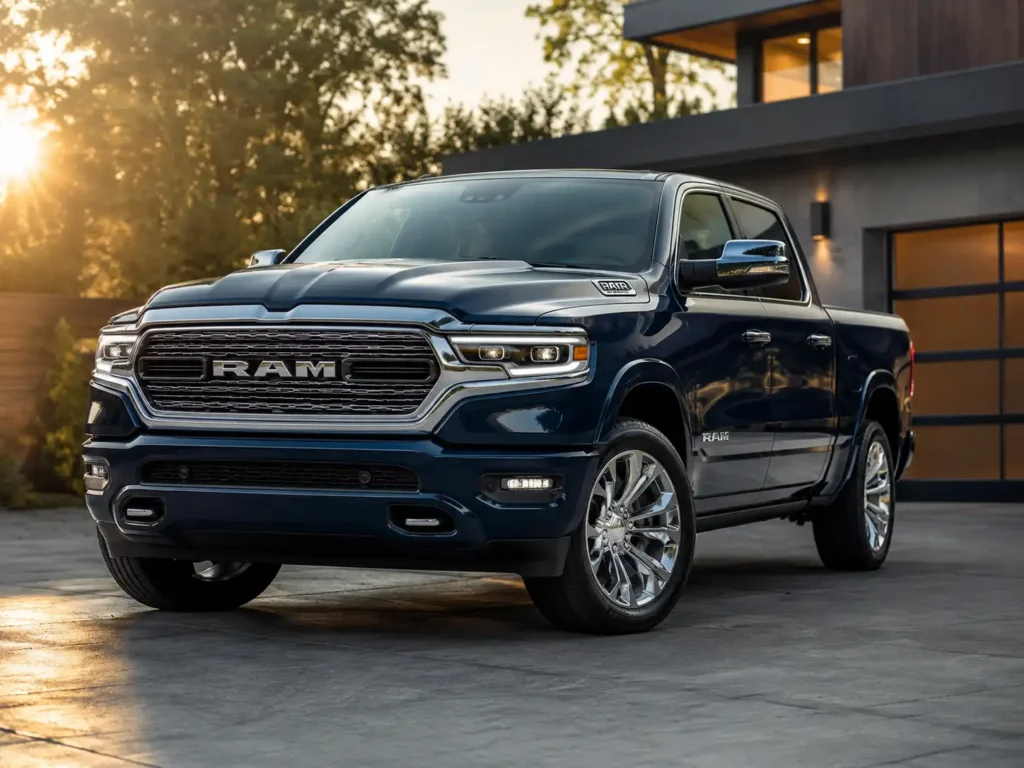
Precision lubrication serves as the absolute lifeblood of modern high-performance truck engines. The 2022 Ram 1500 equipped with the 5.7L HEMI V8 engine represents a unique transitional period in automotive powertrain engineering.
Depending on the specific body style and hybridization level of the vehicle, the fluid requirements vary significantly. This report provides an exhaustive, data-driven analysis of the engine oil, drivetrain fluid, and maintenance specifications for this model year.


The data synthesized herein covers exact capacities, chemical specifications, aftermarket cross-references, and the mechanical implications of proper maintenance. Technical accuracy is paramount for maintaining warranty compliance and engine longevity.
The Core Metric: 2022 Ram 1500 5.7 Oil Capacity
The engine oil capacity for the 2022 Ram 1500 5.7L HEMI V8 is exactly 7.0 quarts.
This measurement translates to 6.6 liters and explicitly includes the volume required to fill a fresh oil filter.
This 7.0-quart metric applies universally to the 5.7L HEMI engine for the 2022 model year. It remains identical regardless of whether the truck is a fifth-generation (DT) eTorque model or a fourth-generation (DS) Classic model.
Overfilling or underfilling this specific engine architecture can lead to catastrophic mechanical failures. Underfilling starves the top end and the intricate hydraulic lifters of vital oil pressure.
Conversely, exceeding the 7.0-quart capacity leads to severe oil foaming within the crankcase. The rotating crankshaft whips the excess oil into an aerated froth, which drastically reduces the fluid’s lubricity and causes localized overheating.
Technicians are advised to add oil slowly as they approach the 7.0-quart mark. Checking the dipstick on a level surface after a brief engine run is the only way to confirm a perfect fill level.
The Viscosity Divide: DT eTorque vs. DS Classic
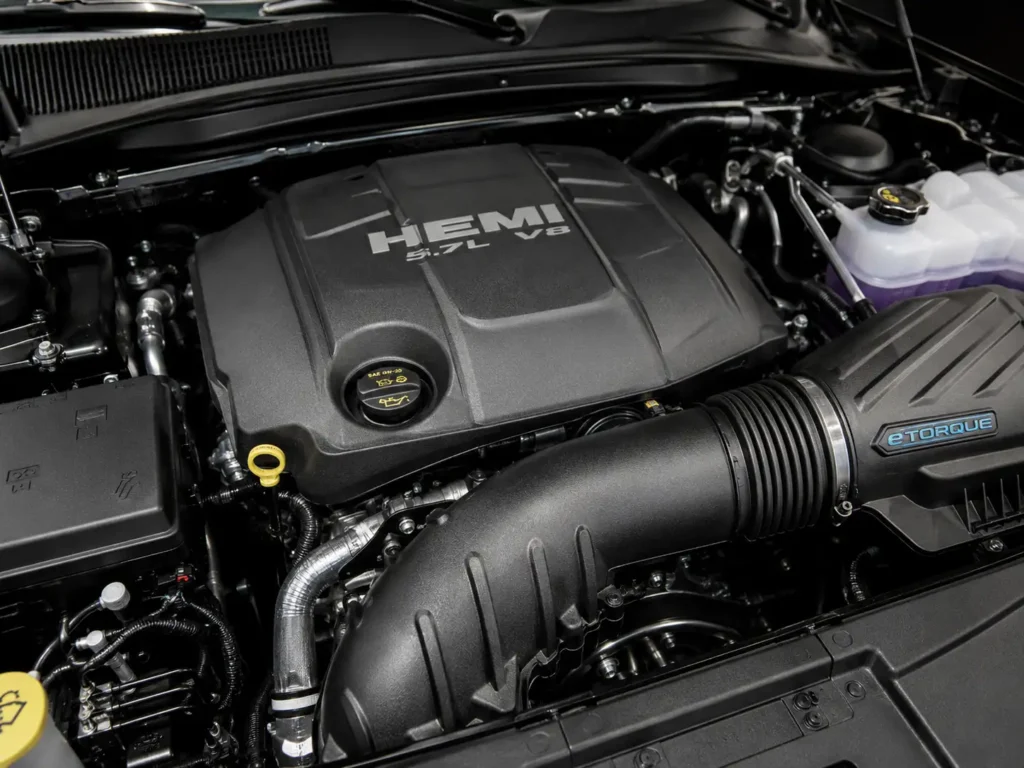
While the fluid volume remains identical across the 5.7L HEMI lineup, the required viscosity experiences a sharp divergence. This divergence is based entirely on the truck’s body style and internal electrical technology.
This is the most critical distinction for 2022 Ram 1500 owners and service technicians to understand. Failing to recognize this difference can lead to improper lubrication and potential warranty invalidation.
The Fifth-Generation (DT) with eTorque
For the 2022 Ram 1500 (DT body style) featuring the 5.7L HEMI V8 with the eTorque mild-hybrid system, the manufacturer explicitly mandates SAE 0W-20 Full Synthetic engine oil.
This represents a significant shift from the previous decade of traditional HEMI engineering. The transition to the thinner 0W-20 oil was engineered specifically to support the rapid start/stop functionality of the eTorque system.
The eTorque system utilizes a belt-driven motor-generator unit powered by a 48-volt battery pack. This allows the engine to shut down completely at stoplights and instantly restart upon acceleration.
The lower winter viscosity (0W) ensures immediate fluid flow to the valvetrain and variable valve timing (VVT) solenoids during these instantaneous engine restarts. Furthermore, this lower-friction oil helps the manufacturer achieve increasingly strict Corporate Average Fuel Economy (CAFE) compliance standards.
The Fourth-Generation (DS) Ram 1500 Classic
Conversely, the 2022 Ram 1500 Classic (DS body style) relies on the traditional, non-hybridized 5.7L HEMI architecture. For this legacy application, the requirement remains SAE 5W-20 Full Synthetic engine oil.
The bearing clearances and hydraulic solenoids in the Classic’s powertrain are calibrated specifically for the 5W-20 fluid flow rate. The internal components lack the extreme low-friction coatings found in the newer eTorque variants.
Utilizing 0W-20 in the Classic, or 5W-20 in the eTorque, actively alters the hydraulic pressure dynamics essential for proper internal operation. Operating outside of these designated viscosities can trigger diagnostic trouble codes and compromise engine efficiency.
The Chrysler MS-6395 Standard Certification
Viscosity alone does not dictate an oil’s suitability for the demanding 5.7L HEMI platform. The chosen lubricant must also meet the stringent Chrysler MS-6395 material standard.
This proprietary specification ensures the oil formulation can withstand the unique thermal stresses and shearing forces generated by the V8 architecture. Oils carrying the MS-6395 certification have undergone extensive real-world fleet testing, encompassing extreme temperature variations and heavy towing cycles.
The certification demands a highly robust additive package to maintain fluid stability. This includes specific concentrations of detergents to prevent sludge, dispersants to suspend soot, and anti-wear agents like Zinc Dialkyldithiophosphate (ZDDP).
To meet modern emissions and mechanical protection standards, the MS-6395 oil must simultaneously achieve API SP and ILSAC GF-6A certifications.
The API SP standard is specifically formulated to prevent Low-Speed Pre-Ignition (LSPI). LSPI is a destructive phenomenon that can cause catastrophic piston ring and cylinder wall damage in modern, high-compression engines.
Market-Leading Motor Oils for the 2022 5.7L HEMI
When selecting a lubricant that fulfills the strict 0W-20 or 5W-20 MS-6395 requirements, several premium synthetic brands dominate the automotive aftermarket.
Pennzoil Ultra Platinum: Often considered the exact factory fill equivalent, Pennzoil Ultra Platinum utilizes a unique gas-to-liquid (GTL) base stock derived directly from natural gas. This ultra-pure, crystal-clear base oil offers exceptional resistance to high-temperature thermal breakdown. It far exceeds the stringent ILSAC GF-6 cleanliness standards required by modern fuel injectors and emission systems.
AMSOIL Signature Series: For severe-duty applications, AMSOIL Signature Series offers a 100% synthetic formulation that boasts an impressive 75% more engine protection against horsepower loss than standard industry requirements. It provides a guaranteed extended protection interval of up to 25,000 miles or one year of service.
Mobil 1 Truck & SUV: Engineered specifically for high-load hauling environments, this formulation includes a boosted package of anti-wear additives. It is officially licensed for GM dexos1:GEN3 and fully meets the FCA MS-6395 standard, making it an ideal choice for trucks subjected to frequent heavy towing.
Royal Purple: Widely recognized for its proprietary Synerlec additive technology, Royal Purple creates a highly tenacious microscopic oil film. This specialized film adheres to the cylinder walls and camshaft lobes even after the engine is completely shut down. This dramatically reduces dry-start friction on the HEMI’s intricate upper valvetrain components.


The Multi-Displacement System (MDS) Connection
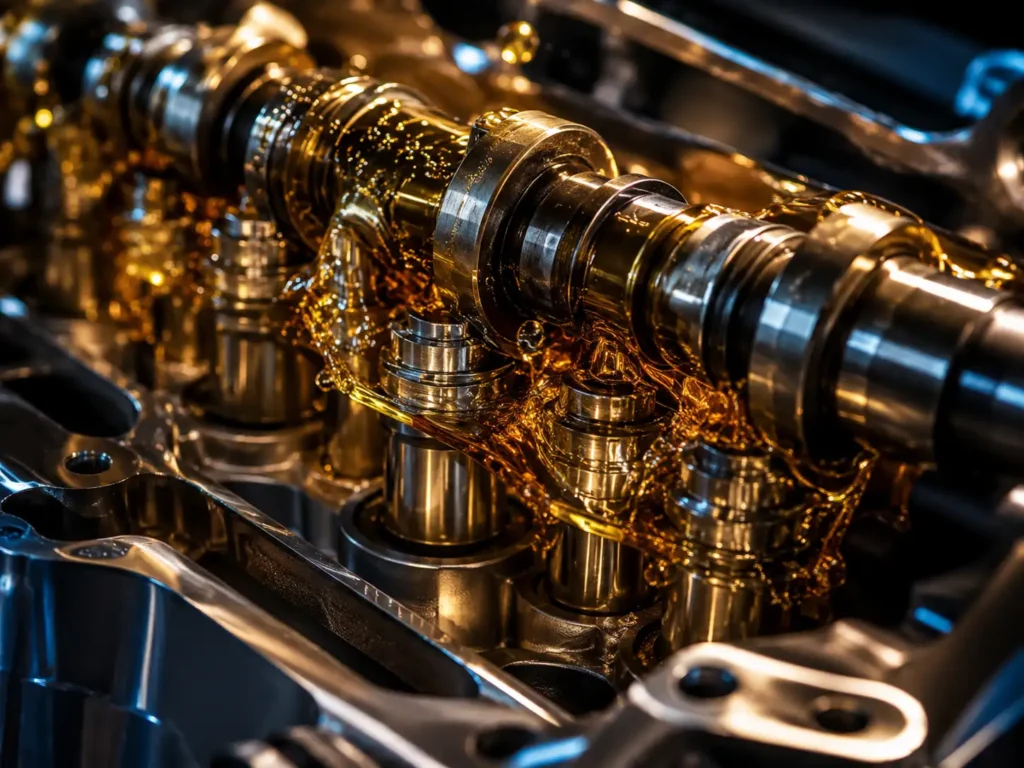
The absolute requirement for full synthetic, exact-viscosity oil is intrinsically linked to the 5.7L HEMI’s Multi-Displacement System (MDS).
The MDS is designed to seamlessly deactivate four of the eight cylinders under light load cruising conditions to conserve fuel. It accomplishes this complex task via four specialized hydraulic lifter solenoids located deep within the engine block.
When the engine control module commands cylinder deactivation, oil pressure is precisely routed to collapse specific lifters. This action keeps the intake and exhaust valves completely closed on cylinders 1, 4, 6, and 7.
This entire hydraulic process relies on exact, instantaneous fluid pressure. If the oil is too thick, the solenoids cannot engage or disengage rapidly enough to match the engine speed.
This sluggish hydraulic response leads to noticeable engine shudder, cylinder misfires, and delayed power delivery when passing on the highway. Furthermore, if the oil is degraded or laden with sludge, the microscopic mesh screens protecting the MDS solenoids will become irreversibly clogged.
A clogged MDS solenoid screen restricts oil flow and triggers a cascade of Check Engine Light codes related to camshaft and crankshaft positioning. Rectifying this issue requires an extensive and expensive engine teardown to replace the buried solenoids.
Analyzing the “HEMI Tick” Phenomenon
No technical analysis of the 5.7L HEMI lubrication system is complete without addressing the infamous “HEMI tick.”
This well-documented auditory phenomenon generally stems from one of two distinct mechanical issues: cracked exhaust manifold bolts or internal lifter failure.
The severe lifter failure is directly and inextricably related to the engine’s lubrication strategy. The HEMI architecture utilizes a camshaft design where the roller lifters rely heavily on passive splash lubrication generated by the rotating assembly.
Extensive engine idling at low RPMs drastically reduces the volume and velocity of oil splashing upward onto the camshaft lobes. Over tens of thousands of miles, this repeated lack of boundary lubrication causes the tiny needle bearings inside the roller lifter to seize entirely.
Once the roller mechanism seizes, the hardened steel component grinds directly against the spinning camshaft lobe. This metal-on-metal friction sends metallic debris throughout the engine block and inevitably necessitates a complete top-end rebuild to replace the chewed-up camshaft.
Using high-quality MS-6395 synthetic oil, strictly limiting prolonged idle times, and adhering to the exact 7.0-quart capacity are the primary defensive measures against this catastrophic failure.
Some automotive enthusiasts and engine builders even upgrade to high-volume aftermarket oil pumps, such as the Melling 10452, to ensure adequate fluid flow at a hot idle.
Oil Filter Selection and Specifications
The engine oil filter is arguably just as critical to engine health as the liquid lubricant itself. A substandard or generic filter will prematurely enter bypass mode, sending unfiltered, dirty oil back into the engine bearings under heavy acceleration or cold starts.
For the 2022 Ram 1500 5.7L HEMI, the primary OEM specified filter is the Mopar 4892339BE (also referenced historically by parts MO-339 or 4884899AC).
The Mopar MO-339 utilizes a specifically engineered fluted steel case that allows for easy installation and high-torque removal in tight spaces. Crucially, the OEM filter incorporates a lubricated silicone anti-drain back valve.
This internal valve securely seals the filter housing to prevent the oil from draining out of the upper engine galleries back into the oil pan when the truck is turned off. A highly functional anti-drain back valve is absolutely essential to prevent dry starts, which are a major contributor to premature lifter and camshaft wear.
For owners and fleet managers preferring high-quality aftermarket options, several reputable direct cross-references exist:
| Filter Brand | Part Number | Anti-Drain Valve Material | Target Application |
| Mopar (OEM) | 4892339BE / MO-339 | Silicone | Factory Replacement |
| WIX | 57060 / WL10010XP | Silicone | Premium Aftermarket |
| Fram Tough Guard | TG16 / PH10060 | Silicone | Extended Interval (15k Miles) |
| Mobil 1 | M1-113A / M1-102A | Synthetic Blend | High-Performance Synthetic |
| K&N | HP-1017 / SO-1017 | Silicone | High Flow Rate |
Complete 2022 Ram 1500 Engine Oil Capacity Chart
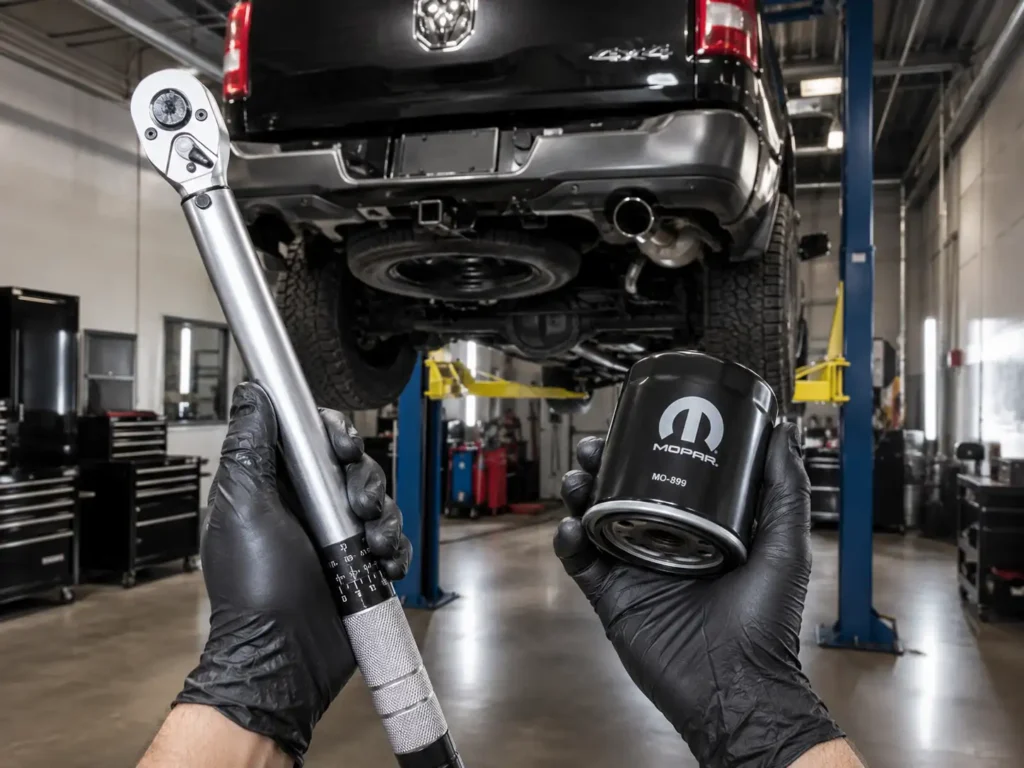
While the 5.7L HEMI is the focal point of this analysis, contextualizing its capacity against the broader 2022 Ram 1500 lineup provides a comprehensive reference for multi-vehicle fleet managers and master service technicians.
The 2022 model year offered an exceptionally diverse array of powertrains, ranging from mild-hybrid V6 engines to supercharged V8 monsters. Each architecture demands highly specific fluid treatments.
| Engine Configuration | Model Year | Total Capacity (w/ Filter) | Required Viscosity | OEM Specification |
| 3.6L Pentastar V6 eTorque | 2022 | 6.0 Quarts (5.7L) | SAE 0W-20 Full Synthetic | MS-6395 |
| 5.7L HEMI V8 eTorque (DT) | 2022 | 7.0 Quarts (6.6L) | SAE 0W-20 Full Synthetic | MS-6395 |
| 5.7L HEMI V8 (Classic DS) | 2022 | 7.0 Quarts (6.6L) | SAE 5W-20 Full Synthetic | MS-6395 |
| 3.0L EcoDiesel V6 (Gen 3) | 2022 | 8.5 Quarts (8.0L) | SAE 5W-40 Synthetic Diesel | MS-12991 |
| 6.2L Supercharged V8 (TRX) | 2022 | 7.9 Quarts (7.5L) | SAE 0W-40 Full Synthetic | MS-12633 |
It is vital to note that the 3.0L EcoDiesel engine underwent a massive architectural redesign for its third generation spanning 2020 to 2023. This redesign drastically reduced the oil sump capacity from the previous 10.5 quarts down to 8.5 quarts.
Furthermore, it completely changed the required fluid certification from the older MS-10902 standard to the new MS-12991 specification. Utilizing legacy generation two diesel oil specs in a 2022 Gen 3 EcoDiesel can rapidly cause fatal turbocharger coking and deposits.
Step-by-Step Oil Change Parameters
Executing a flawless oil change on the 2022 Ram 1500 5.7L HEMI requires specific metric tools and exact torque values to ensure a safe, leak-free service. Precision during this routine maintenance prevents catastrophic thread damage to the aluminum components.
The primary oil pan drain plug is located at the rear, bottom passenger side of the oil pan. The plug requires a 13mm socket or box wrench for removal. The vehicle’s factory skid plate features a strategic cutout allowing the dark fluid to drain completely without requiring the removal of the protective armor.
For absolute thoroughness, master technicians may also locate the secondary 15mm bolt on the engine oil cooler. Draining the external cooler yields a relatively minimal volume of fluid but effectively purges the system of microscopic particulate matter that settles in the lower cooling fins.
Applying the correct torque upon reassembly is strictly non-negotiable. The 13mm primary oil pan drain plug must be torqued to exactly 25 ft/lbs (or 34 N·m).
Overtightening the steel plug strips the delicate internal aluminum threads of the oil pan, resulting in an expensive pan replacement procedure. Undertightening leads to vibrational backing out and catastrophic fluid loss on the highway.



The fresh Mopar MO-339 oil filter should have its rubber perimeter gasket lightly lubricated with clean oil prior to installation to prevent tearing. The filter must be installed hand-tight only; utilizing a strap wrench for installation crushes the thin metal casing and severely compromises the pressure seal.
Maintenance Intervals and the Oil Life Monitor
The 2022 Ram 1500 utilizes a highly advanced, duty-cycle-based Oil Change Indicator System to alert the driver. This complex software algorithm calculates the remaining oil life based on engine temperatures, RPM history, idle hours, and average trip lengths, rather than relying on a static mileage countdown.
Under optimal, low-stress highway cruising conditions, the system may allow intervals stretching up to 10,000 miles or 12 calendar months. However, severe service applications dictate a significantly condensed and aggressive schedule.
Vehicles subjected to frequent heavy towing, extensive commercial idling, dusty off-road environments, or short grocery trips that prevent the oil from reaching full operating temperature (212°F) should undergo fluid replacement every 5,000 miles.
By 6,000 miles of severe use, fuel dilution and moisture accumulation can occur within the crankcase. This heavily compromises the viscosity and flash point of the 0W-20 or 5W-20 fluid, leaving the bearings unprotected.
Resetting the Oil Life Monitor
Once the fluid is completely exchanged, the electronic dash monitor must be manually reset to 100% to accurately track the subsequent degradation cycle. The vehicle offers two distinct methods for achieving this reset.
Method 1: Steering Wheel Controls The primary reset method utilizes the digital instrument cluster interface. The operator must enter the vehicle and close all doors without pressing the brake pedal.
Next, press the Engine Start/Stop button exactly twice to enter the “ON/RUN” accessory mode, ensuring the engine does not actually crank. Use the directional arrows located on the left side of the steering wheel to navigate the main cluster display.
Scroll downward to the “Vehicle Info” submenu and push the right arrow repeatedly until the “Oil Life” screen appears. Finally, press and hold the “OK” button firmly until the percentage gauge visually resets from its current degraded value to a fresh 100%.
Method 2: The Pedal Dance If the digital cluster interface fails to register the reset due to a software glitch, a secondary mechanical override procedure exists. Place the ignition into the “ON/RUN” mode by double-tapping the start button without touching the brake.
Smoothly and deliberately depress the accelerator pedal fully to the floor three distinct times within a ten-second window. Turn the ignition back to the “OFF” position. Upon properly restarting the engine, the annoying oil life reminder chime will be permanently extinguished until the next service cycle.
Peripheral Drivetrain Fluid Capacities
Complete vehicle lubrication extends far beyond the confines of the engine crankcase. The 2022 Ram 1500 features a massive, highly complex 4WD drivetrain requiring precise, specialized fluids to transfer the HEMI’s 410 lb-ft of torque to the pavement.
TorqueFlite 8-Speed Automatic Transmissions
Mated directly to the 5.7L HEMI in the DT body style is the highly advanced TorqueFlite 8HP75 eight-speed automatic transmission.
This heavy-duty unit requires approximately 9.0 quarts of highly specific, ZF-approved 8-speed full synthetic automatic transmission fluid. The fluid provides the exact chemical frictional characteristics needed for the internal five-clutch-pack design to engage seamlessly without slipping.
The older Ram 1500 Classic utilizes the slightly lighter-duty 8HP70 variant, which holds a slightly lower capacity of 8.8 quarts. While these transmissions are optimistically marketed by the manufacturer as a “fill-for-life” sealed unit, heavy towing applications dictate complete fluid and pan/filter replacement at 60,000-mile intervals to prevent valve body failure.
BorgWarner Transfer Cases
Four-wheel-drive Ram 1500 models utilize sophisticated BorgWarner (BW) electronic transfer cases, which strictly require specialized synthetic transfer case lubricant. Using standard ATF in these units leads to rapid chain and bearing failure.
| Transfer Case Model | Fluid Capacity | Fill Plug Torque | Drain Plug Torque |
| BW 48-11 | 3.6 Pints | 18 ft/lbs | 18 ft/lbs |
| BW 48-12 | 2.7 Pints | 15 ft/lbs | 15 ft/lbs |
| BW 48-13 | 3.8 Pints | 18 ft/lbs | 18 ft/lbs |
| BW 44-44 | 3.0 Pints | 18 ft/lbs | 18 ft/lbs |
The specialized fluid is carefully pumped into the aluminum case until it sits perfectly flush with the bottom edge of the fill plug opening. The vehicle must be perfectly level during this procedure to ensure an accurate capacity reading.
Front and Rear Differentials
The robust solid axles on the 2022 Ram 1500 require API GL-5 rated, severe-duty synthetic gear lubricants to survive the massive torque loads.
The front differential unit (typically the 215FD) holds 2.3 pints of lighter 75W-85 synthetic gear lube.
The massive rear differential capacity varies based entirely on the factory installed gear ratio and limited-slip clutch availability. A standard 3.21 or 3.55 rear axle requires exactly 5.7 pints of GL-5 fluid.
Models specially equipped with the aggressive 3.92 gear ratio or the Max Tow Package require a heavier, heat-resistant 75W-140 synthetic gear oil to combat intense thermal breakdown, holding up to 6.1 pints.
Crucially, if the rear axle features a mechanical Limited Slip Differential (LSD), technicians must manually inject 5 ounces (148 ml) of Mopar limited-slip friction modifier additive (MS-10111) alongside the gear oil. Failing to add this specific chemical modifier will cause the clutch packs to bind and violently chatter during tight-radius turns in parking lots.
Engine Coolant Capacity and Specifications
Thermal fluid management works directly in tandem with engine oil to preserve the aluminum components of the 5.7L HEMI.
The cooling system for the 2022 Ram 1500 5.7L HEMI requires an expansive 14.0 quarts (13.3 liters) of specialized engine coolant.
The system mandates the exclusive use of Organic Additive Technology (OAT) antifreeze formulations. This specific modern formulation is completely free from abrasive phosphates, nitrates, nitrites, silicates, and borates.
Introducing older Inorganic Additive Technology (IAT) or Hybrid Organic Additive Technology (HOAT) coolants into a modern OAT system creates a severe chemical cross-reaction. This reaction results in a thick, gelatinous sludge that rapidly destroys the internal heater core and seizes the water pump impeller.


The pristine OAT formulation ensures optimal, long-lasting corrosion protection for the mixed-metal aluminum alloy heads and cast-iron block for an impressive 150,000 miles or 10 years.
Community Insights and Real-World Modifications
Analyzing vast swaths of data from automotive enthusiast forums and master technician networks reveals a fascinating subculture. Many Ram 1500 owners actively modify their lubrication strategies contrary to factory directives.
Despite strict manufacturer requirements printed on the oil fill cap, a highly vocal segment of owners operating 5.7L engines outright reject the thinner 0W-20 and 5W-20 oils.
Many users residing in extreme heat environments or operating heavy towing applications proactively upgrade to 5W-30 full synthetic oil. The core engineering reasoning centers on the High-Temperature High-Shear (HTHS) viscosity rating.
A thicker 5W-30 oil theoretically provides a more robust hydrodynamic film cushion between the crankshaft journals and bearings at extreme operating temperatures (above 212°F). Dozens of anecdotal user reports claim that switching to 5W-30 noticeably quiets valvetrain chatter and significantly reduces the incidence of the dreaded HEMI tick.
However, altering this baseline viscosity fundamentally conflicts with the CAFE-driven engineering tolerances of the new eTorque system. While the older, non-MDS heavy-duty 2500 trucks featuring the 5.7L explicitly called for 5W-30 from the factory, utilizing it in a modern 2022 1500 eTorque model introduces risk. It may slightly compromise fuel economy and potentially invite intense warranty scrutiny if an MDS solenoid failure ever occurs.
Another incredibly common community modification involves the aftermarket installation of a billet oil catch can. The 5.7L HEMI’s Positive Crankcase Ventilation (PCV) system tends to aggressively aspirate vaporized oil mist back into the dry intake manifold.
This vaporized oil ultimately coats the backside of the hot intake valves, burning into incredibly hard, power-robbing carbon deposits. A high-quality billet catch can intercepts these harmful vapors mid-stream, allowing them to safely condense in a removable reservoir rather than baking onto the intake tract.
In-Depth FAQ: Crucial Ram 1500 Lubrication Questions
What mechanically happens if I put 5W-20 in my 2022 Ram 1500 eTorque instead of the mandated 0W-20?
Using 5W-20 in an eTorque engine slightly reduces the fluid’s cold-flow velocity during extreme winter start-ups. While it will generally not cause an immediate, catastrophic internal failure, it may slightly decrease overall fuel economy and increase localized wear during sub-zero freezing-temperature cold starts. Extended, long-term use of the heavier oil may subtly affect the hydraulic rapid start/stop functionality of the delicate eTorque mild-hybrid system.
How much specialized oil does the 2022 Ram 1500 TRX take?
The ultra-high-performance 6.2L Supercharged HEMI V8 installed in the Ram TRX requires exactly 7.9 quarts (7.4 liters) of lubricant. It mandates an incredibly robust 0W-40 full synthetic oil meeting the strict MS-12633 specification to survive the massive supercharger loads. The exclusive factory fill for this engine is Pennzoil Ultra Platinum 0W-40.
Do I absolutely need a premium special oil filter for synthetic oil?
While standard cheap cellulose paper filters will technically thread on and work, premium synthetic-blend or wire-backed micro-glass filters are highly recommended by professionals. Filters like the WIX XP line or Mobil 1 Extended Performance are built to structurally match the extended 10,000-mile drain intervals of synthetic oil without internally collapsing or degrading.
Why does my 2022 Ram 1500 Classic use a completely different oil weight than the 2022 DT body?
The 1500 Classic physically utilizes the older fourth-generation powertrain architecture, which entirely lacks the complex eTorque mild-hybrid system. The internal hydrodynamic bearing clearances and mechanical VVT tuning of this older, proven design remain optimized perfectly for 5W-20 flow dynamics.
What is the exact torque spec for the Ram 1500 5.7L oil drain plug?
The 13mm steel oil pan drain plug must be precisely tightened to exactly 25 ft/lbs (34 N·m). This must be done using a calibrated, low-range torque wrench to prevent permanently stripping the soft aluminum oil pan threads.
Can I use heavy-duty commercial diesel oil in my 5.7L HEMI to prevent wear?
Absolutely not. While heavy-duty commercial diesel oils like 15W-40 offer excellent anti-wear protection for commercial rigs, they contain exceptionally high levels of sulfated ash and phosphorus. These chemical additives will rapidly poison and permanently destroy the delicate emissions catalytic converters on a gasoline engine. Furthermore, the incredibly thick ambient viscosity will immediately paralyze the sensitive MDS solenoids, causing the truck to misfire.
Related Guides
- 2015 Ram 1500 5.7 Oil Capacity
- 6.4 HEMI Oil Type and Capacity
- Ram 1500 Transmission Fluid Type Chart
- Ram 1500 Battery Replacement Guide
- 2013 Ram 1500 Towing Capacity
- Dodge Ram Transfer Case Reset
- Dodge Ram Tire Size Chart by Year
![2018 Ram 1500 5.7 Oil Capacity [2026]](https://truckguider.com/wp-content/uploads/2026/03/featured-cc58a684.webp)
![P0463 Dodge Ram 1500: Fix & Reset Guide [2026]](https://truckguider.com/wp-content/uploads/2026/03/p0463-dodge-ram-1500-featured.webp)