
Dodge Ram 2500 Payload Capacity Chart by Year: 1500, 2500 & 3500 2026

The commercial and recreational utility of a heavy-duty pickup truck is defined fundamentally by its payload capacity. In the context of the Dodge Ram 2500, payload capacity represents the absolute maximum allowable weight that can be safely loaded into the vehicle’s cabin and cargo bed.
This metric is not an arbitrary figure assigned by the manufacturer for marketing purposes; it is a precisely calculated mathematical limitation based on the vehicle’s structural metallurgy, suspension architecture, braking capability, and federal regulatory classifications.

Prime for Young Adults — 6 Months Free
Students and 18–24s get six months of Prime free, then half price.
Start 6 Months FreeTo comprehend payload, one must understand the strict formula utilized by automotive engineers: Maximum Payload Capacity is equal to the Gross Vehicle Weight Rating (GVWR) minus the vehicle’s Curb Weight. The Gross Vehicle Weight Rating is the absolute maximum the vehicle can weigh when fully loaded,
including the truck itself, all operating fluids, passengers, aftermarket accessories, cargo, and the downward pressure exerted by a trailer via tongue or pin weight. For decades, the three-quarter-ton pickup truck segment, which includes the Ram 2500, has been constrained by a traditional regulatory GVWR cap of 10,000 pounds.
This threshold is critical because it designates the vehicle as a Class 2b light-heavy-duty truck, allowing operators to bypass strict commercial vehicle regulations, Department of Transportation (DOT) numbering, and commercial weigh station requirements in many jurisdictions across North America.
However, curb weight—the actual physical weight of the truck as it sits empty on a scale with a full tank of fuel and all standard operating fluids—fluctuates wildly depending on the engine block, cab configuration, drivetrain, and luxury features selected at the factory. As the Ram 2500 has evolved to feature heavier,
more robust high-strength steel frames, dense luxury interiors, and massive diesel powertrains, the baseline curb weight has steadily increased. Because the GVWR has historically remained capped around the 10,000-pound regulatory threshold, any increase in curb weight directly and mathematically cannibalizes the available payload capacity.
To combat this engineering bottleneck and preserve usable payload ratings for heavily equipped models, Stellantis engineers have introduced specialized configurations of the Ram 2500 with elevated GVWRs up to 11,040 pounds, effectively pushing the vehicle into Class 3 regulatory territory.
Understanding the complex interplay between these mechanical forces and regulatory classifications is absolutely essential for operators managing commercial fleet logistics, recreational haulers towing large fifth-wheel RVs, or outfitters modifying the chassis for specialized applications.
Exceeding the stated payload capacity not only voids powertrain warranties but fundamentally degrades the electronic stability control systems, dramatically increases emergency braking distances, and places dangerous thermal stress on the transmission and differential gearing.
Dodge Ram 2500 Payload Capacity Chart
Recommended Best Deal Products


Navigating the exact payload capacity of a heavy-duty truck is critical for safety and legality. The 2024 Ram 2500 offers exceptional capabilities, but your specific configuration—engine, cab size, and trim level—drastically alters how much weight you can carry in the bed. This data-driven guide breaks down the numbers.

Audible — Listen Free for 30 Days
One free credit a month and thousands of titles included.
Listen Free for 30 DaysMaximum Payload
Achieved with the 6.4L HEMI V8, Regular Cab, 8-foot bed, 4×2 configuration.
Understanding the “Payload Penalty”
Recommended Best Deal Products
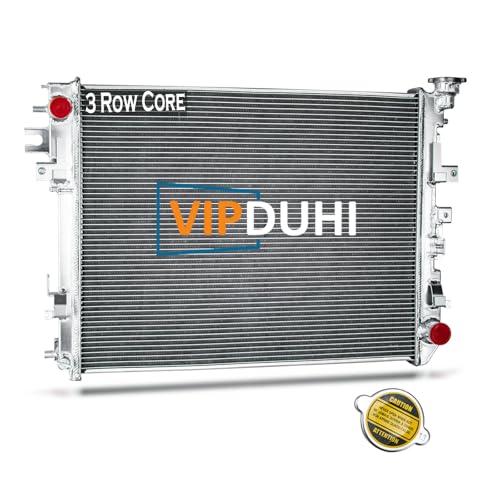


A common misconception among truck buyers is that upgrading to the powerful 6.7L Cummins Turbo Diesel increases both towing and payload. While towing capacity skyrockets, payload capacity actually decreases.
This occurs because Gross Vehicle Weight Rating (GVWR) is a fixed cap (often 10,000 lbs for a 2500). The Cummins engine block weighs hundreds of pounds more than the HEMI V8. That extra curb weight eats directly into your available payload margin.
Gas vs. Diesel Payload Comparison
Comparing average payload capacities of Crew Cab 4×4 models based on engine selection.
The Engine Dilemma
-
🔥6.4L HEMI V8 (Gas) Best for hauling heavy materials in the bed. Lighter engine block yields the highest payload configurations (up to 4,010 lbs).
-
🛢️6.7L Cummins (Diesel) Best for towing massive trailers. The heavy iron block reduces in-bed payload capacity significantly (maxing out around 3,150 lbs).
Data Insight: Opting for the diesel engine effectively removes roughly 800-900 lbs of payload capacity from your Ram 2500 due to engine weight.
Payload Degradation by Trim Level
As you move up the trim hierarchy (from Tradesman to Limited), you add luxury features like premium leather, massive touchscreens, sunroofs, and heavier sound deadening. All these features add curb weight, which symmetrically reduces your payload capacity. The Off-Road focused Power Wagon takes an additional hit due to its softer, highly articulated suspension.
Comprehensive Dodge Ram 2500 Payload Matrix
Recommended Best Deal Products

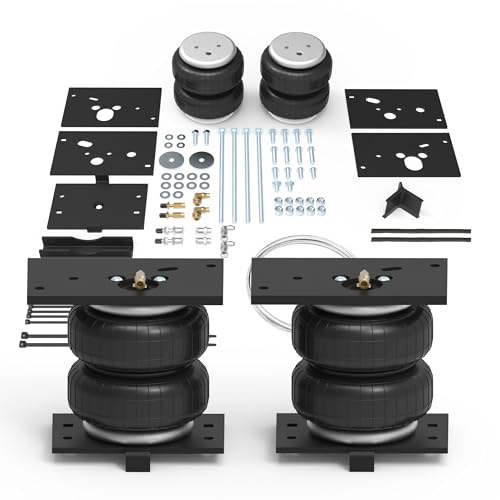

Estimated maximum payload configurations based on standard equipment. Always verify the specific door jamb sticker of a vehicle.
| Cab Configuration | Drivetrain | Engine | Max Payload (lbs) |
|---|---|---|---|
| Regular Cab 8′ Box | 4×2 | 6.4L HEMI V8 | 4,010 |
| Regular Cab 8′ Box | 4×4 | 6.7L Cummins | 3,140 |
| Crew Cab 6’4″ Box | 4×4 | 6.4L HEMI V8 | 3,380 |
| Crew Cab 6’4″ Box | 4×4 | 6.7L Cummins | 2,490 |
| Mega Cab 6’4″ Box | 4×4 | 6.4L HEMI V8 | 3,080 |
| Mega Cab 6’4″ Box | 4×4 | 6.7L Cummins | 2,040 |
| Power Wagon (Crew) | 4×4 | 6.4L HEMI V8 | 1,560 |
Society of Automotive Engineers (SAE) J2807 Standards
When reviewing modern Ram 2500 payload and towing charts, operators will consistently note compliance with the SAE J2807 trailering standard. Before the widespread adoption of the SAE J2807 standard across the automotive industry, truck manufacturers utilized proprietary,
Audible Premium Plus — Annual Membership
12 audiobook credits up front, plus the full Audible catalogue.
See Annual Plansinternal testing methodologies to determine Gross Combined Weight Ratings (GCWR) and maximum tow ratings. This lack of standardization frequently led to highly inflated, non-comparable marketing claims that did not accurately reflect real-world safety parameters.
The Society of Automotive Engineers (SAE) J2807 protocol mandates strict, standardized real-world testing criteria that ensure payload and towing capacities reflect safe, sustained, and dynamic operation. When calculating the allowable Tow Vehicle Trailering Weight and base payload under the SAE J2807 guidelines, the mathematics are highly regimented.
The baseline curb weight utilized in the calculations must account for a 300-pound passenger weight allocation, which simulates a standard driver and front passenger. Furthermore, the calculation must allocate an additional 100 pounds for optional equipment to ensure base models are not overly stripped down for testing purposes.
Crucially, the protocol automatically deducts 75 pounds of payload capacity to account for conventional hitch equipment, 70 pounds for gooseneck trailering equipment, or a full 250 pounds for heavy fifth-wheel hitch brackets.
Beyond the static mathematics, certifying these payload and towing limits requires the truck to successfully pass brutal dynamic testing. The vehicle must ascend the Davis Dam Grade in Arizona—an eleven-point-four-mile stretch of highway featuring a continuous five percent grade in ambient temperatures exceeding 100 degrees Fahrenheit—without exceeding specific engine coolant and transmission fluid thermal limits, all while maintaining a minimum mandated speed of 40 miles per hour.
The vehicle’s heavy-duty braking systems must also prove capable of halting the maximum combined load within precise stopping distances, and the suspension geometry must resist severe understeer during aggressive dynamic maneuvering tests. Therefore, when Ram officially publishes a 4,000-pound payload rating for the 2500 Tradesman, it signifies a federally recognized standard that the vehicle can actively perform emergency avoidance maneuvers and heavy braking while bearing that exact physical mass.
2025 and 2026 Ram 2500 Payload Capacity Charts
The 2025 and 2026 model years represent the absolute pinnacle of the fifth-generation Ram Heavy Duty architectural platform. For these model years, the payload capacities vary drastically across the trim spectrum—ranging from a robust 4,580 pounds in stripped-down commercial configurations to as low as 1,570 pounds in specialized off-road variants.
The data matrices presented below detail the maximum payload capacities across various cab styles, bed lengths, drivetrains, and powertrains. These figures are fully compliant with SAE J2807 standards and reflect the official manufacturer engineering ratings provided by Stellantis.
Payload Matrix: 6.4L HEMI V8 (Standard Output)
The 6.4L HEMI V8 serves as the standard, naturally aspirated gasoline powerplant for the Ram 2500, delivering a refined 405 to 410 horsepower and 429 pound-feet of torque. Because the gasoline powertrain is significantly lighter than its cast-iron diesel counterpart, HEMI-equipped Ram 2500 configurations utterly dominate the upper echelons of the payload charts. For operators seeking(https://www.ramtrucks.com/towing/towing-capacity-guide.html), the gasoline engine consistently provides the highest vertical weight allowance.
| Trim Level Architecture | Cab & Cargo Box Configuration | Drivetrain | Axle Ratio | GVWR (lbs) | Curb Weight (lbs) | Maximum Payload (lbs) | Maximum Towing (lbs) |
| Tradesman | Regular Cab 8′ Box | 4×2 | 4.10 | 10,000 | 6,001 | 4,420 – 4,580* | 17,670 |
| Tradesman | Regular Cab 8′ Box | 4×4 | 4.10 | 10,000 | 6,390 | 4,070 | 17,330 |
| Tradesman | Crew Cab 6’4″ Box | 4×2 | 4.10 | 10,000 | 6,353 | 3,940 | 17,290 |
| Tradesman | Crew Cab 6’4″ Box | 4×4 | 4.10 | 10,000 | 6,680 | 3,700 | 17,050 |
| Tradesman | Crew Cab 8′ Box | 4×2 | 4.10 | 10,000 | 6,530 | 3,470 | 17,380 |
| Tradesman | Crew Cab 8′ Box | 4×4 | 4.10 | 10,000 | 6,890 | 3,110 | 17,020 |
| Big Horn / Lone Star | Regular Cab 8′ Box | 4×2 | 4.10 | 10,000 | 6,140 | 4,370 | 17,620 |
| Big Horn / Lone Star | Regular Cab 8′ Box | 4×4 | 4.10 | 10,000 | 6,390 | 3,990 | 17,240 |
| Big Horn / Lone Star | Crew Cab 6’4″ Box | 4×2 | 4.10 | 10,000 | 6,100 | 3,900 | 17,240 |
| Big Horn / Lone Star | Crew Cab 6’4″ Box | 4×4 | 4.10 | 10,000 | 6,300 | 3,700 | 17,050 |
| Power Wagon | Crew Cab 6’4″ Box | 4×4 | 4.10 | 8,565 | 6,995 | 1,570 | 10,630 |
The data indicates that absolute maximum payload limits vary incrementally based on body-in-white structural options, the deletion of cargo boxes for chassis cab conversions, and fleet-specific downgrades. Certain Tradesman configurations can reach the absolute peak of 4,580 pounds strictly when configured as a regular cab with a box delete mechanism.
Payload Matrix: 6.7L Cummins High-Output Turbo Diesel
For the 2026 model year, Ram streamlined its heavy-duty diesel offerings, leaning entirely into the High-Output version of the legendary 6.7L Cummins Turbo Diesel inline-six engine. Generating 430 horsepower and an immense 1,075 pound-feet of torque, this engine is optimized exclusively for high-capacity horizontal towing up to 20,000 pounds rather than vertical payload hauling.
The sheer physical mass of the compacted graphite iron engine block, combined with the heavy-duty auxiliary cooling packages, the Diesel Exhaust Fluid (DEF) system, and the reinforced TorqueFlite HD eight-speed automatic transmission, adds extreme weight to the front axle Gross Axle Weight Rating (GAWR). This physical mass systematically erodes the allowable payload capacity, creating a vehicle that can pull mountains but carry significantly less in its bed.
| Trim Level Architecture | Cab & Cargo Box Configuration | Drivetrain | Axle Ratio | GVWR (lbs) | Curb Weight (lbs) | Maximum Payload (lbs) | Maximum Towing (lbs) |
| Tradesman | Regular Cab 8′ Box | 4×4 | 3.42 | 11,040 | 7,450 | 3,590 | 20,000 |
| Tradesman | Regular Cab 8′ Box | 4×4 | 3.42 | 9,900 | 7,450 | 2,450 | 20,000 |
| Tradesman | Crew Cab 6’4″ Box | 4×4 | 3.42 | 11,040 | 7,740 | 3,300 | 19,990 |
| Tradesman | Crew Cab 8′ Box | 4×4 | 3.42 | 11,040 | 7,880 | 3,160 | 18,360 |
| Laramie | Crew Cab 6’4″ Box | 4×4 | 3.42 | 11,040 | 7,950 | 2,750 | 19,900 |
| Laramie | Crew Cab 8′ Box | 4×4 | 3.42 | 11,040 | 8,390 | 2,650 | 19,770 |
| Limited | Mega Cab 6’4″ Box | 4×4 | 3.42 | 11,040 | 8,990 | 2,050 | 19,710 |
The data confirms that the diesel powertrain is entirely unavailable on the Power Wagon trim. Furthermore, payload ratings for diesel configurations fluctuate heavily based on the mathematically assigned GVWR. Buyers must pay close attention to whether the specific truck is rated at the regulatory 10,000-pound GVWR limit or the elevated 11,040-pound GVWR limit, as this single metric can dictate over a thousand pounds of usable payload capacity difference.
Powertrain Mass Architecture: The HEMI vs. Cummins Paradox
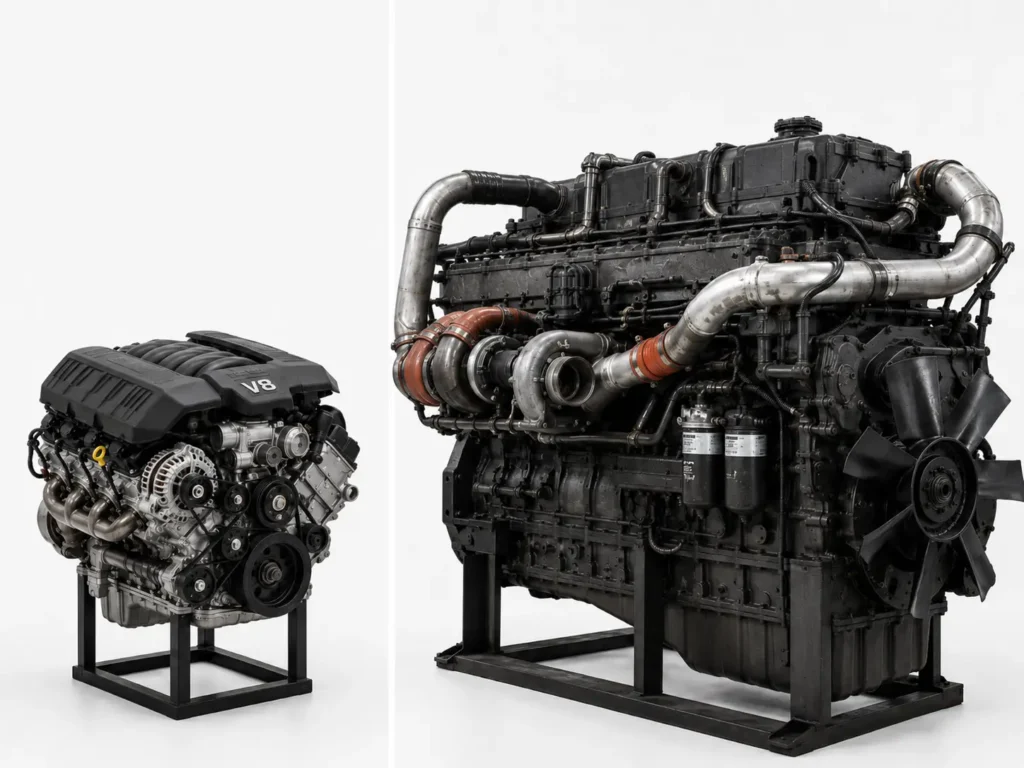
A fundamental paradox exists within the realm of heavy-duty truck engineering: the powertrain required to pull the heaviest trailers is simultaneously the exact powertrain that degrades the vehicle’s structural carrying capacity. The Ram 2500 perfectly epitomizes this mechanical dilemma, forcing buyers to make a stark choice between horizontal pulling dominance and vertical hauling supremacy.
The gasoline-powered 6.4L HEMI V8, mated to an eight-speed 8HP75-LCV automatic transmission, represents a highly refined, relatively lightweight powertrain solution. The HEMI’s aluminum cylinder heads, naturally aspirated intake architecture, and simplified exhaust systems keep the front Gross Axle Weight Rating (GAWR) largely unburdened.
As a direct result, the curb weight of a base Tradesman 4×2 Regular Cab sits at an incredibly lean 6,001 pounds. Subtracted from a regulatory 10,000-pound GVWR, the mathematical remainder provides over 4,000 pounds of available, usable payload. This dynamic makes the HEMI-equipped Ram 2500 the ultimate mechanical choice for operators focused on carrying heavy loads directly in the truck bed,
such as utilizing heavy slide-in truck campers, transporting bulk gravel, mounting heavy commercial welding skids, or installing specialized mechanic utility boxes. In daily driving scenarios, the HEMI V8 is notably quieter, produces vastly less chassis vibration, requires no cold-start warmup times in harsh winter environments, and feels much more responsive in everyday local traffic.
Conversely, integrating the 6.7L Cummins Turbo Diesel inline-six transforms the Ram 2500 into a towing leviathan entirely at the expense of payload capacity. The Cummins engine block is forged from compacted graphite iron (CGI) rather than traditional cast iron or aluminum, an engineering necessity designed to withstand the immense internal cylinder pressures required to generate 1,075 pound-feet of torque.
When factoring in the immense mass of the engine block itself, the heavy-duty TorqueFlite transmission required to harness that torque without shearing gears, the forced induction intercooling hardware, and the highly complex exhaust aftertreatment systems—which includes a heavy Diesel Exhaust Fluid tank and Selective Catalytic Reduction hardware—the Cummins powertrain adds substantial, inescapable curb weight to the vehicle.
The total vehicle weight of a Cummins-equipped Ram 2500 can outweigh a similarly equipped HEMI version by an astonishing 2,200 to 2,300 pounds. Because the truck remains physically beholden to maximum GVWR constraints of either 10,000 or 11,040 pounds, this additional curb weight must be subtracted directly from the payload rating.
Therefore, while the Cummins engine pushes the bumper-pull and fifth-wheel towing capacity to a maximum certified limit of 20,000 pounds , its payload often drops to a functional 2,500 pounds or less in higher luxury trim levels. Furthermore, acquiring this towing capability requires a steep financial commitment; the High-Output Cummins engine demands a $12,995 upfront upgrade premium over the standard HEMI V8.
Operators must make a highly calculated strategic choice based on their exact logistical needs, balancing the Cummins’ superior highway fuel economy of 20 to 23 miles per gallon against the HEMI’s superior bed-loading capabilities and lower initial cost.
Trim Level Architecture and Luxury Weight Penalties
Payload capacity is not solely dictated by powertrain choice; the vehicle’s trim tier acts as a secondary, highly impactful variable. In modern automotive manufacturing, every acoustic deadening panel, premium leather-wrapped surface, digital interactive screen, and power-deployable mechanical step added to the cabin represents static physical mass that subtracts directly from the vehicle’s working capability.
Tradesman and Big Horn (Commercial Optimization)
The Ram 2500 Tradesman and the step-up Big Horn (marketed as the Lone Star in Texas) trims are structurally optimized for maximum commercial utility. The Tradesman intentionally features heavy-duty vinyl seating, rubberized easy-to-clean flooring, manually adjusting seats, and a standard, lightweight 8.4-inch Uconnect interface.
By aggressively rejecting heavy luxury materials, complex wiring harnesses, and power-actuated convenience features, the Tradesman maintains the lowest curb weight in the entire Heavy Duty lineup. This rigorous weight management translates to maximum payloads ranging from 3,110 to 4,580 pounds depending on exact cab and engine configurations.
For fleet managers, agricultural operators, and job site contractors, the Tradesman represents the highest possible return on investment for physical cargo management. Newly available for the 2026 model year is the Black Express package for the Tradesman, which adds blacked-out appearance upgrades without significant weight penalties.
Laramie, Limited Longhorn, and Limited (Luxury Degradation)
As consumers move upward through the trim hierarchy to the Laramie, the Southwestern-themed Limited Longhorn, and the flagship Limited, curb weight escalates at a rapid pace. The inclusion of heavy dual-pane panoramic sunroofs, 24-way power-adjustable massaging front seats,
active noise cancellation systems, massive 14.4-inch vertical touchscreen displays, class-exclusive 10.25-inch passenger interactive screens, 17-speaker Harman Kardon premium audio systems with dense subwoofers, and power-deployable running boards add many hundreds of pounds to the vehicle’s baseline mass.
When an operator combines the heaviest trim level (Limited) with the heaviest, most spacious cab configuration (Mega Cab) and the heaviest powertrain (Cummins HO Diesel), the curb weight can rapidly approach 8,500 pounds completely empty. Measured against a standard 10,000-pound GVWR, this configuration leaves a remarkably meager 1,500 to 2,050 pounds of legal, usable payload capacity.
This is a critical metric because it means a fully loaded luxury Ram 2500 often has a functional payload capacity similar to, or even less than, a well-equipped midsize or half-ton pickup truck.
The Off-Road Anomalies: Power Wagon and Warlock
The Ram 2500 Power Wagon and the recently reintroduced Warlock trims represent unique anomalies within the payload charts. The Power Wagon is engineered from the ground up as a dedicated, low-speed off-road machine, intentionally sacrificing commercial hauling metrics to achieve extreme axle articulation and trail survival.
Available exclusively with the lighter 6.4L HEMI V8—the heavy Cummins diesel is fundamentally incompatible with the specialized front suspension design—the Power Wagon boasts a payload capacity that is artificially capped at a maximum of 1,570 pounds.
This severe reduction is a direct result of the vehicle’s lowered Gross Vehicle Weight Rating of just 8,565 pounds. Stellantis engineers intentionally downgraded the GVWR because the Power Wagon utilizes a hyper-flexible Articulink front suspension, an electronic disconnecting front sway bar, much softer coil spring rates, and heavy electronic locking front and rear Tru-Lok differentials.
While these highly specialized components allow the heavy-duty truck to traverse brutal rock gardens effortlessly, they lack the vertical rigidity required to safely support heavy structural payloads or sustain high trailer tongue weights, thereby limiting its maximum tow rating to just over 10,600 pounds.
Similarly, the 2026 Ram 2500 Warlock trim is designed for serious off-road toughness straight from the factory. Restricted exclusively to Crew Cab 4×4 short-bed configurations, the Warlock features Bilstein-tuned heavy-duty dampers, a transfer-case skid plate, anti-spin rear differentials, and aggressive 34-inch Goodyear Duratrac all-terrain tires. While more capable of towing than the Power Wagon, the Warlock’s off-road modifications still introduce specific payload penalties that buyers must account for when managing cargo.
Advanced Suspension Dynamics: Five-Link Coil vs. Traditional Leaf Springs
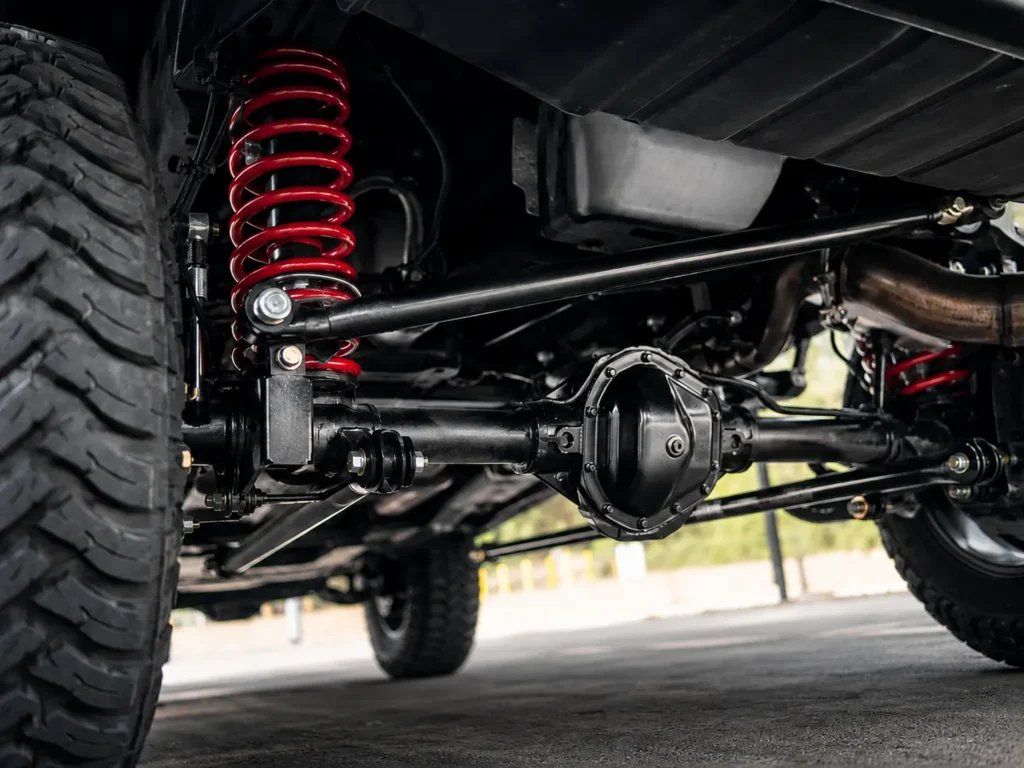
One of the most consequential and controversial engineering shifts in the long history of the Ram 2500 occurred with the introduction of the 2014 model year, when Stellantis decisively abandoned the traditional rear leaf spring suspension in favor of a segment-exclusive five-link rear coil spring system.
More than a decade later, Ram remains an outlier in the heavy-duty segment, as neither Ford nor General Motors utilize rear coil springs on their three-quarter-ton trucks. This distinct suspension geometry has profound implications for how the vehicle handles its rated payload capacity.
The Dynamic Behavior of Five-Link Coil Springs
Traditional leaf springs, which are still utilized on the heavier Ram 3500 and competing heavy-duty trucks, excel mathematically at vertical load stabilization. Leaf spring packs are mounted securely on the exterior sides of the vehicle’s frame rails, granting the suspension a wide, stable stance that naturally resists lateral body roll and cargo shifting.
In sharp contrast, the Ram 2500’s coil springs are positioned inboard, tucked tightly between the frame rails and the rear axle housing. While this narrower mounting position allows for vastly superior ride compliance, unmatched unladen comfort, and excellent axle articulation, it inherently introduces a much narrower roll center.
When a Ram 2500 is loaded near its maximum payload capacity—particularly with top-heavy cargo loads like a slide-in truck camper or a high-profile fifth-wheel trailer—the coil springs can exhibit increased lateral deflection, causing the vehicle to feel slightly less stable than a leaf-sprung equivalent.
Mitigating Lateral Instability: Track Bars and Air Suspension
Because coil springs only control vertical compression motion, the rear axle’s side-to-side (lateral) movement must be controlled by a heavy-duty transverse steel link known as a track bar (or Panhard rod). The track bar is bolted to the driver’s side frame rail and the passenger side of the solid axle housing.
When the truck bed is loaded with heavy payload, the coil springs compress deeply, changing the suspension geometry and causing the fixed-length track bar to swing in a forced arc.
This arc shifts the rear axle slightly to one side, which can result in a sensation commonly described by operators as “rear-end wiggle” or tracking instability when traversing uneven highway pavement or expansion joints.
When front steering components and track bars begin to wear under the massive weight of the Cummins diesel engine, this instability can escalate into severe oscillation, commonly known in the solid-axle truck community as “death wobble”.
To combat this geometric shift, fleet operators and recreational haulers frequently turn to specialized aftermarket engineering firms—such as Thuren Fabrication or Carli Suspension. These companies manufacture extended, mathematically corrected track bars forged from hardened 4140 chromoly steel, utilizing 17-4 stainless center pivots to restore precise axle alignment.
Furthermore, suspension engineers universally recommend running heavy-duty E-rated (10-ply) tires, such as the Toyo Open Country, inflated to 80 PSI in the rear to eliminate sidewall flex and enhance payload stability.
As a factory solution, Ram offers a highly advanced, class-exclusive Auto-Level Rear Air Suspension system. This intelligent system utilizes heavy-duty airbags alongside the standard coil springs. As physical payload is added to the truck bed, sensors detect the resulting suspension sag and trigger an onboard compressor to rapidly inflate the airbags, restoring the truck to a perfectly level factory ride height.
While the air suspension does not technically increase the legal DOT payload rating printed on the door sticker, it drastically improves dynamic stability, optimizes braking geometry, ensures headlights remain safely aimed at the road, and provides a crucial bed-lowering mode to assist with heavy trailer hookups.
Step-by-Step Guide: Calculating Actual Door-Sticker Payload
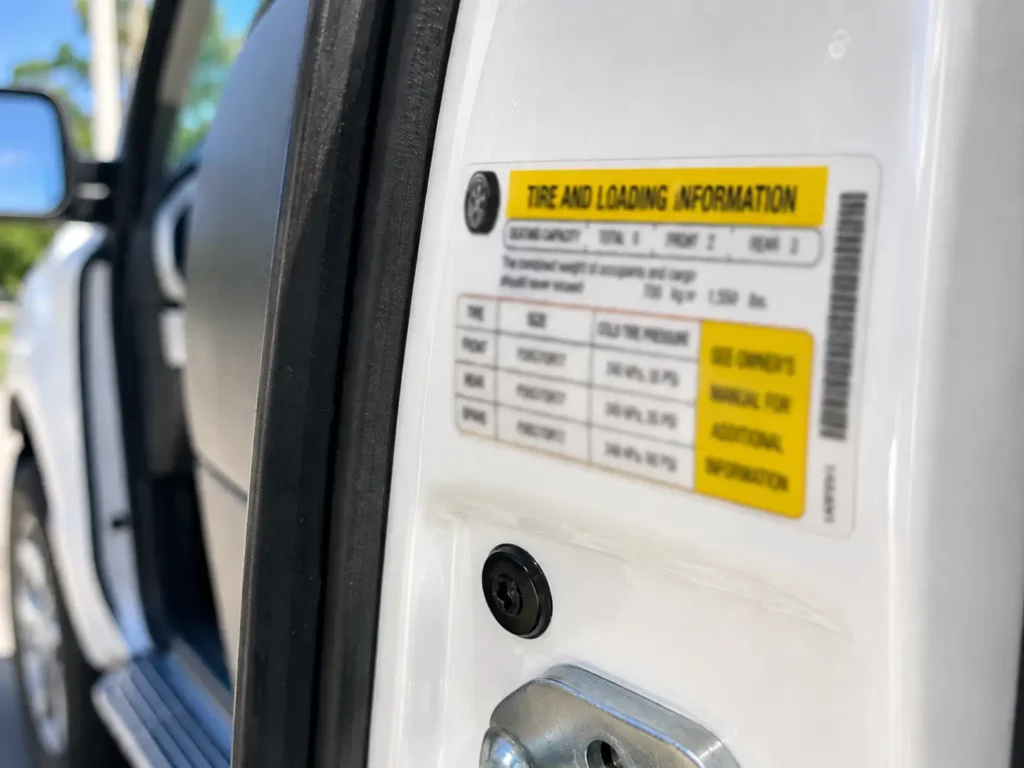
While manufacturer brochures and marketing charts consistently tout theoretical maximum payload figures, the true legal and mechanical payload of any specific Ram 2500 is highly individualized. As required by the National Highway Traffic Safety Administration (NHTSA) under Federal Motor Vehicle Safety Standard (FMVSS) 110, every modern truck features a yellow “Tire and Loading Information” sticker securely affixed to the driver’s side door jamb or B-pillar.
This exact figure represents the working payload capacity of that specific Vehicle Identification Number (VIN) as it rolled off the assembly line, accounting precisely for the exact weight of the transmission, engine block, interior luxury options, and wheel/tire combinations installed at the factory. However, calculating true real-world usable payload requires operators to subtract several dynamic variables from that specific sticker number before loading the vehicle:
- Dealer and Aftermarket Add-ons: Any hardware bolted to the truck after it leaves the Stellantis factory reduces payload capacity on a pound-for-pound basis. This includes spray-in bed liners (approximately 50 lbs), heavy-duty off-road bumpers (150+ lbs), front-mounted winches (100+ lbs), fifth-wheel hitch rail brackets (200 lbs), and heavy steel toolbox setups.
- Occupant Weight: The payload rating printed on the sticker assumes a completely empty truck. If a construction work crew of four adults weighing 220 pounds each enters the cabin, 880 pounds of payload capacity is instantly consumed before a single tool is placed in the bed.
- Tongue and Pin Weight: When towing, the trailer exerts extreme downward force on the rear of the truck. This downward force is counted strictly as payload against the truck’s GVWR.
The Fifth-Wheel Dilemma: Why the 2500 Diesel is Frequently Overloaded
A critical mathematical error frequently made in the heavy-duty recreational market involves attempting to match a Ram 2500 Cummins Diesel with a massive luxury fifth-wheel RV. Consider a well-equipped Ram 2500 Laramie Crew Cab 4×4 featuring the Cummins engine. According to official OEM charts, this configuration boasts a horizontal towing capacity approaching 19,900 pounds, but its heavy luxury curb weight restricts its vertical payload capacity to roughly 2,200 pounds.
If the operator attempts to tow a 14,000-pound fifth-wheel camper, the physical math immediately fails. Fifth-wheel trailers place an industry-standard 15 percent to 20 percent of their total structural weight directly onto the pin located over the truck bed.
- The Calculation: $14,000\ lbs\ (Total\ Trailer\ Weight) \times 0.20\ (Pin\ Weight\ Ratio) = 2,800\ lbs\ of\ Pin\ Weight.$
Dropping a 2,800-pound pin weight directly into a truck with only 2,200 pounds of legal payload instantly overloads the vehicle’s GVWR by 600 pounds, and this occurs before accounting for the driver, passengers, cargo, or the physical 200-pound fifth-wheel hitch mechanism.
Therefore, while the Cummins engine undeniably possesses the raw pulling power (GCWR) to drag the 14,000-pound trailer effortlessly across a mountain pass, the Ram 2500’s chassis lacks the carrying power (GVWR/Payload) to support the trailer’s immense vertical mass safely.
This specific, unavoidable mathematical reality is precisely why many dedicated RV haulers bypass the 2500 entirely, opting instead to purchase the Ram 3500. The Ram 3500 shares the exact same Cummins powertrain and luxury cabin appointments, but utilizes far more robust rear leaf springs and is granted a significantly higher GVWR (up to 12,300 lbs for Single Rear Wheel models).
This regulatory and structural boost pushes the Ram 3500’s payload capacities well beyond 4,000 pounds even with the heavy diesel engine equipped, safely accommodating heavy fifth-wheel pin weights. To view more details on cross-model configurations, operators can access the comprehensive(https://www.ram.com/om/en/towing-guide.html).
Historical Evolution of the Ram 2500 Payload (2003–2024)
To fully grasp the advanced capabilities of the modern 2026 Ram 2500, it is instructive to trace its metallurgical, regulatory, and engineering evolution over the past two decades. Payload capacities have not remained static; they have climbed aggressively alongside rapid advances in high-strength steel frame manufacturing and sophisticated thermal management systems.
Third Generation Architecture (2003–2009)
The third-generation Dodge Ram 2500 marked a pivotal transition period for heavy-duty trucks, specifically the shift from the old 12-valve and 24-valve 5.9L Cummins eras to the modern, electronically controlled common-rail injection systems. Introduced in 2003, these trucks utilized a highly rigid hydroformed steel frame and traditional leaf-spring rear suspensions.
The 2003 Cummins 5.9L generated what was then considered an impressive 555 pound-feet of torque. However, owing to less sophisticated braking systems, early-generation transmission cooling, and legacy axle designs, the payload ratings were relatively conservative by modern industry standards.
- 2006-2008 Payload Capabilities: For gasoline models utilizing the older, less efficient 5.7L HEMI V8, maximum payload capacities hovered around the 3,145-pound mark based on an 8,650-pound GVWR. Diesel models equipped with the 5.9L engine, or the early 6.7L Cummins which was introduced mid-2007 to meet stricter emissions standards, saw payloads drop significantly closer to 2,200 to 2,600 pounds.
Fourth Generation Architecture (2010–2018)
The fourth generation brought an aggressive, aerodynamic redesign to the truck’s cab and exterior sheet metal, but more importantly, it introduced critical updates to the powertrain and chassis dynamics. In 2014, the all-new 6.4L HEMI V8 engine was introduced specifically for the Heavy Duty lineup, effectively replacing the aging 5.7L HEMI as the standard gasoline option, perfectly coinciding with the revolutionary shift to the five-link rear coil suspension.
- 2010-2013 Payload Maturation: Prior to the major frame update, a 2011 Ram 2500 Regular Cab 4×4 equipped with the 5.7L HEMI managed a maximum payload of approximately 3,050 to 3,101 pounds based on a still-conservative 8,650-pound GVWR.
- 2014-2018 Expansion: As the chassis was further refined and the 6.4L HEMI established its dominance as a lightweight powerhouse, maximum payload ratings climbed significantly to 3,990 pounds by the 2017 and 2018 model years. This was supported by upgraded regulatory classifications that finally pushed the GVWR to the 10,000-pound Class 2b ceiling.
Fifth Generation Architecture (2019–Present)
The 2019 model year introduced the current, highly advanced fifth-generation architecture that underpins the vehicle today. Stellantis engineers utilized an all-new frame composed of 98.5 percent high-strength steel, dropping overall chassis weight while radically increasing torsional rigidity to resist frame twisting under heavy loads.
Upgraded axles and heavy-duty braking components were integrated to handle immense towing figures, forcing the strict implementation of the SAE J2807 trailering standards across all metric reporting to ensure safety.
- 2019-2024 Payload Milestones: The lighter high-strength steel frame allowed the base curb weight of the trucks to drop slightly, bumping the absolute maximum payload capacity over the 4,000-pound threshold for the first time. The 2019 model recorded a high water mark of 4,050 pounds. Throughout the 2020 to 2024 production run, the payload capacity stabilized at a maximum of 4,000 to 4,010 pounds on stripped Tradesman gasoline models.
Bumper-Pull vs. Gooseneck and Fifth-Wheel Towing Dynamics
The relationship between towing method and payload capacity is critical to safe operation. While the standard Class III and Class IV receivers mounted beneath the bumper max out at around 12,500 to 17,740 pounds for conventional bumper-pull trailers, fifth-wheel and gooseneck hitches operate on a completely different physical principle.
Gooseneck and fifth-wheel hitches place the trailer’s load slightly forward of the truck’s rear axle, rather than hanging off the rear bumper. This centralizes the mass, distributing the weight more evenly across both the front and rear axles and vastly improving steering stability, effectively unlocking the Ram 2500’s full 20,000-pound towing capability.
However, utilizing these heavy-duty hitches requires buyers to specify the optional Towing Prep Group, which adds factory-installed mounting provisions directly into the frame, a seven-pin wiring harness in the bed, and an integrated trailer brake controller.
Bumper-pull limits using a standard Class V receiver (with a heavy-duty ball hitch) are strictly limited to a maximum tongue weight of 2,000 pounds on the Ram 2500. Because a standard bumper-pull trailer requires roughly 10 percent of its weight on the tongue to prevent dangerous trailer sway, a 2,000-pound tongue weight limit dictates a maximum conventional trailer weight of roughly 20,000 pounds.
It is imperative to remember that this 2,000-pound tongue weight must be subtracted directly from the truck’s payload capacity, underscoring why the lightweight 6.4L HEMI V8 often performs better than the heavy Cummins diesel in mixed cargo-and-towing scenarios. To read deeper into the technical specifications, users can review the(https://www.ramtrucks.com/ram-2500/capability.html).
In-Depth FAQs
What is the payload capacity of a Ram 2500 with a Cummins diesel versus a HEMI gas engine?
The 6.4L HEMI V8 gasoline engine offers the highest payload capacity across the lineup, peaking at approximately 4,010 to 4,580 pounds on a stripped Tradesman 4×2 Regular Cab. In stark contrast,
the 6.7L Cummins High-Output Turbo Diesel adds well over 2,000 pounds to the vehicle’s curb weight when properly accounting for the compacted graphite iron engine block, forced induction plumbing, heavier transmission, and DEF systems.
Because this immense mass eats directly into the fixed GVWR, the Cummins diesel lowers the maximum payload capacity to roughly 3,600 pounds in ideal commercial setups, and to a shockingly low 2,050 pounds in fully loaded Limited Mega Cab 4×4 configurations.
Why exactly does the Ram 2500 diesel have a lower payload capacity than the gas model?
Payload capacity is determined strictly by subtracting the empty weight of the truck (curb weight) from its maximum allowed legal weight limit (Gross Vehicle Weight Rating, or GVWR).
Because the GVWR for heavy-duty 2500 trucks is largely standardized between 10,000 and 11,040 pounds across all engine options, any heavy physical components added to the truck inherently reduce its cargo capacity.
The Cummins diesel engine and its required heavy-duty TorqueFlite HD transmission represent a massive weight penalty compared to the lighter aluminum-headed HEMI V8, dropping the available payload capacity significantly.
How do you calculate the actual, legally binding payload capacity of a Ram 2500 using the door sticker?
To determine the exact, legally binding payload capacity of a specific Ram 2500, operators must locate the yellow “Tire and Loading Information” sticker on the driver’s side B-pillar.
Locate the text stating, “The combined weight of occupants and cargo should never exceed XXX lbs”. To calculate real-world usable payload, the operator must subtract the physical weight of all human passengers, aftermarket structural accessories (like heavy toolboxes or steel bumpers), and the tongue weight of any attached trailer from that specific sticker number. The remaining figure is the safe operating payload.
How does the Ram 2500’s rear coil spring suspension affect payload stability compared to leaf springs?
The Ram 2500 uniquely utilizes a five-link rear coil spring suspension rather than the traditional leaf springs found on the Ram 3500. Because coil springs are mounted inboard between the vehicle’s frame rails, they possess a narrower geometric track stance.
While this design provides an incredibly smooth, car-like ride when the truck is empty, it inherently limits lateral roll resistance when hauling top-heavy payload loads, such as large truck campers. This can result in lateral shifting or “rear-end wiggle” over uneven terrain. Traditional leaf springs, which are mounted outboard of the frame rails, offer a much wider stance and significantly greater stability for heavy vertical loads.
Does equipping the Auto-Level Rear Air Suspension legally increase the Ram 2500 payload limit?
No, the factory integration of the Auto-Level Rear Air Suspension does not alter the mathematical payload capacity or federal GVWR of the vehicle. However, it drastically improves the mechanical management of that payload by actively inflating airbags to perfectly level the vehicle’s stance.
This leveling action prevents rear-end sag, keeps the front steering geometry planted for optimal control, ensures headlights remain safely aimed at the road surface, and significantly improves dynamic braking stability when operating at or near maximum payload limits.
Related Guides
- Ram 3500 Payload Capacity Chart by Year
- Ram 2500 Towing Capacity Chart
- Ram 2500 Wheel Bolt Pattern Chart
- Dodge Ram Tire Size Chart by Year
- Dodge Ram Gear Ratio Chart
- Dodge Ram 3500 Dually Specs Chart
- 6.4 HEMI Oil Type and Capacity

![2016 Ram 2500 Turbo Actuator: Guide to Costs: Complete Guide [2026]](https://truckguider.com/wp-content/uploads/2026/03/2016-ram-2500-turbo-actuator-featured.webp)
![2019 Ram 2500 Tailgate: Expert Review [2026]](https://truckguider.com/wp-content/uploads/2026/03/2019-ram-2500-tailgate-featured.webp)