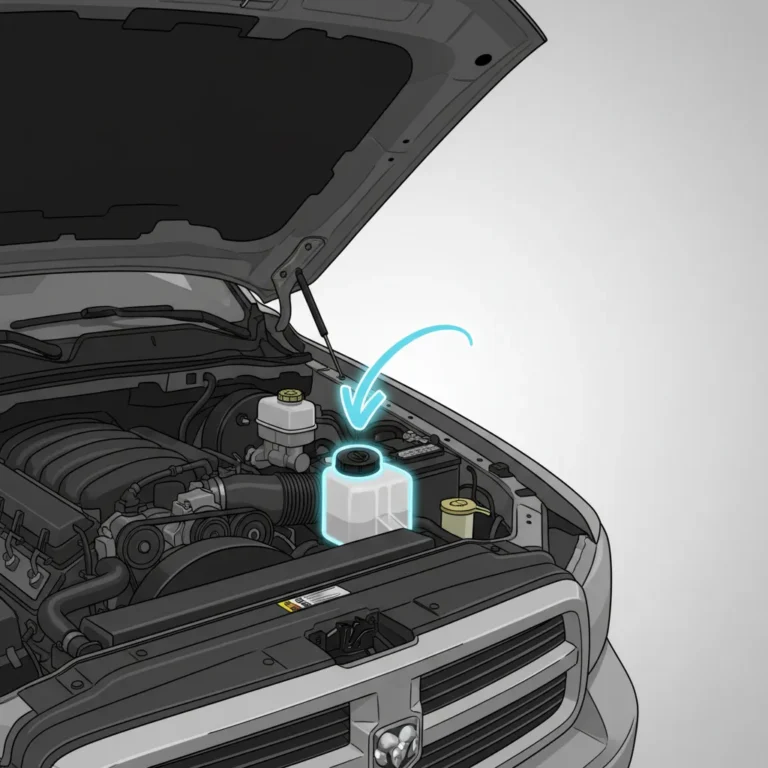
Dodge Ram 1500 Towing Capacity Chart by Year (2024-2026): All Engines

Quick answer: The Ram 1500 maxes out at 14,000 lbs towing in 2025–2026 (REV and Ramcharger models). The best combustion-engine peak was 12,750 lbs with the 2019–2024 5.7L HEMI eTorque + Max Tow Package. Earlier years sit between 8,100 and 10,650 lbs depending on engine, axle ratio, and cab style.
Buying, selling, or towing with a Ram 1500? The headline number in the brochure is usually not your number.

Prime for Young Adults — 6 Months Free
Students and 18–24s get six months of Prime free, then half price.
Start 6 Months FreeThe actual tow rating changes by engine, axle ratio, cab size, and whether the Max Tow Package is installed. A Crew Cab 4×4 with a 3.21 axle can tow roughly half what a Quad Cab 4×2 with a 3.92 axle can — same model year, same lot, two very different numbers.
This guide gives you the full Dodge Ram 1500 towing capacity chart by year from 1998 through 2026, plus the engineering explanation behind every major jump and drop in those numbers.
Ram 1500 towing capacity dashboard: historical evolution, engine comparison, axle ratio impact, and configuration guide from 1998 to 2026.
Recommended Best Deal Products


Key metrics — 2019–2026
Combustion-engine peak
12,750 lbs
5.7L HEMI eTorque, 3.92 axle, Quad Cab 4×2 (2019–2024)
New electric peak
14,000 lbs
REV BEV / Ramcharger PHEV (2025–2026)

Audible — Listen Free for 30 Days
One free credit a month and thousands of titles included.
Listen Free for 30 DaysHurricane I6 SO peak
11,570 lbs
3.0L twin-turbo inline-6, 420 hp (2025+)
Historical maximum towing capacity (1998–2026)
Peak possible figure each era — optimal config only (lightest cab, 3.92 axle, Max Tow Package)
2025 engine towing comparison
Max tow by powertrain — optimal config
Axle ratio impact on towing
Audible Premium Plus — Annual Membership
12 audiobook credits up front, plus the full Audible catalogue.
See Annual PlansHEMI eTorque Quad Cab 4×2 — same truck, different axle
4 configuration variables that set your real tow limit
Cab & bed size
Quad Cab 4×2 outclasses Crew Cab 4×4 by ~1,500 lbs. Every pound the truck weighs is a pound subtracted from trailer allowance.
Axle ratio
3.92 is mandatory for peak ratings. Switching from 3.21 to 3.92 on a 2024 HEMI adds over 4,000 lbs of trailer capacity.
Drivetrain
4×4 adds 200–250 lbs (transfer case + front axle), reducing towing headroom vs. 4×2 by that same margin.
Max Tow Package
Mandates 3.92 axle, 10-inch ring gear, LT tires. Without it, peak ratings are unreachable regardless of engine choice.
The master towing capacity chart (1998–2026)
These figures represent the absolute maximum for each model year — meaning the lightest cab style, highest axle ratio, best engine, and applicable tow package. Your specific truck will likely be lower. Use this as a ceiling, not a default.
| Year | Max Towing (lbs) | Max Payload (lbs) | Top Powertrain | Key Notes |
|---|---|---|---|---|
| 1998 | 8,100 | 1,936 | 5.9L Magnum V8 | Quad Cab debuts with reverse-opening rear doors |
| 1999–2001 | 8,150 | 2,000 | 5.9L Magnum V8 | Final years of 2nd Gen “big-rig” body style |
| 2002 | 8,650 | 1,570 | 5.9L Magnum V8 | 3rd Gen launch; IFS replaces solid front axle on 4×4 |
| 2003–2004 | 8,650 | 1,570 | 5.7L HEMI V8 (new) | HEMI arrives with 345 hp / 375 lb-ft |
| 2005 | 9,050* | 1,780 | 5.7L HEMI V8 | GCWR raised to 14,000 lbs in Regular Cab 4×2 config |
| 2006–2008 | 8,550 | 1,500 | 5.7L HEMI V8 | Final years of 3rd Gen; 4-speed auto is thermal weak point |
| 2009 | 9,100 | 1,850 | 5.7L HEMI V8 | 4th Gen debut; coil-spring rear suspension replaces leaf springs |
| 2010–2012 | 10,450 | 1,900 | 5.7L HEMI V8 | Frame structural update raises GCWR to 15,500 lbs |
| 2013 | 10,450 | 1,900 | 5.7L HEMI V8 | ZF 8-speed TorqueFlite introduced; 3.6L Pentastar replaces 3.7L V6 |
| 2014 | 10,450 | 1,900 | 5.7L HEMI V8 | 3.0L EcoDiesel (Gen 2) arrives with class-leading fuel economy |
| 2015 | 10,650* | 1,900 | 5.7L HEMI V8 | SAE J2807 standard adopted across all trims |
| 2016–2018 | 10,640* | 1,880 | 5.7L HEMI V8 | Asterisk = strict SAE calc vs. rounded marketing figure of “11,000” |
| 2019 | 12,750 | 2,300 | 5.7L HEMI + eTorque | 5th Gen (DT body); eTorque mild-hybrid adds 130 lb-ft launch torque |
| 2020 | 12,750 | 2,300 | 5.7L HEMI + eTorque | 3rd Gen EcoDiesel returns at 12,560 lbs max tow |
| 2021–2022 | 12,750 | 2,300 | 5.7L HEMI + eTorque | TRX introduced with 6.2L Supercharged V8 (but capped at 8,100 lbs) |
| 2023–2024 | 12,750 | 2,300 | 5.7L HEMI + eTorque | EcoDiesel discontinued late 2023; HEMI era sunset begins |
| 2025 | 11,570 | 1,980 | 3.0L Hurricane Twin-Turbo I6 (SO) | HEMI retired from mainstream production; Hurricane SO peaks at 11,610 lbs in some Quad Cab configs |
| 2026 | 14,000 | 2,625 | Dual Electric (229-kWh REV) / Ramcharger PHEV | HEMI returns as “Symbol of Protest” option at 11,320 lbs; REV/Ramcharger hit 14,000 lbs |
Why the number on the sticker is rarely your number
Recommended Best Deal Products


The towing capacity printed in a brochure assumes a very specific combination: lightest cab (Quad Cab), two-wheel drive, most powerful engine, highest rear axle ratio, and the Max Tow Package installed. Change any one of these and the number drops.
Here is what moves the needle most.
Axle ratio is the single biggest variable
The rear differential axle ratio determines how many times the driveshaft rotates per one full wheel revolution. A numerically higher ratio (3.92) gives more mechanical leverage at low speeds — exactly what you need when hauling a 10,000-lb trailer from a dead stop.
| Axle Ratio | Best For | Towing Impact |
|---|---|---|
| 3.21 | Highway commuting, unloaded driving | Lowest tow rating; a 2025 V6 Crew Cab with 3.21 maxes around 6,600 lbs |
| 3.55 | Mixed use — moderate towing + fuel economy | Middle ground; typically 7,000–8,350 lbs on current engines |
| 3.92 | Max towing; required for peak rating | Mandatory with Max Tow Package; unlocks 12,750 lbs (2019–2024 HEMI eTorque) |
Moving from a 3.21 to a 3.92 axle on a 2024 HEMI Quad Cab pushes the GCWR from 13,900 lbs to 18,350 lbs — that’s over 4,000 lbs more trailer weight from a single option change.
If you are not sure what axle ratio your current truck has, read our guide on how to determine axle ratio on a Dodge Ram — it takes under two minutes using the door jamb sticker or the VIN decoder.
For a broader look at how gear ratios affect your Ram across all configurations, the Dodge Ram gear ratio chart breaks it down by model year.
Cab and bed size add weight — and cost you capacity
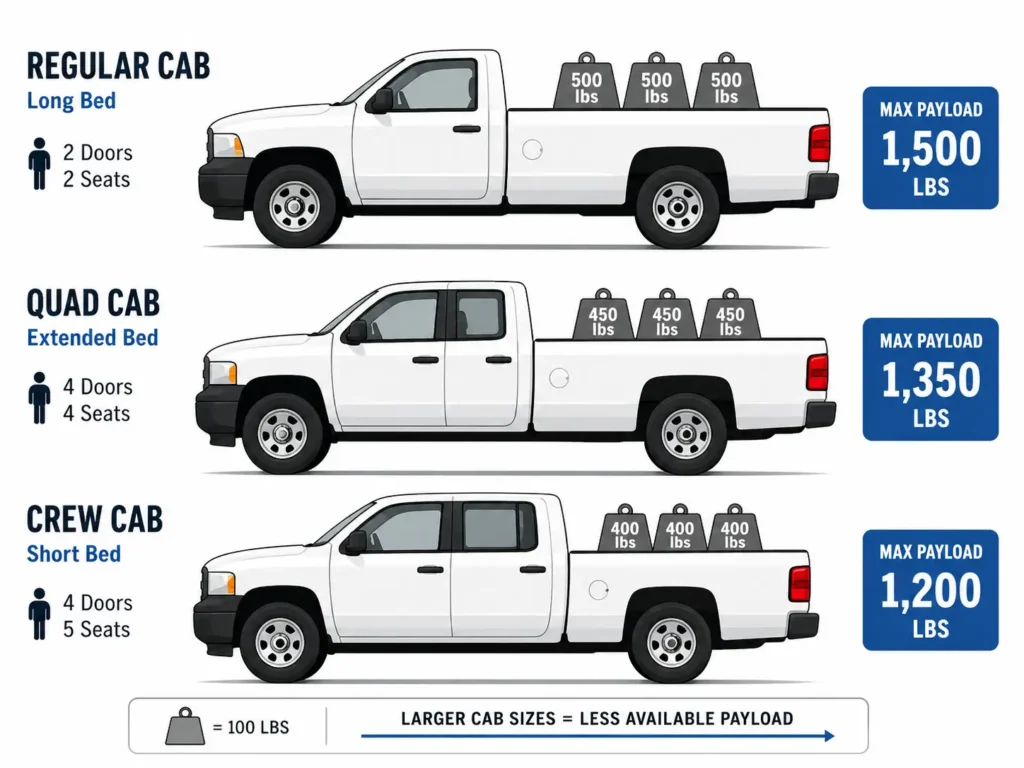
Since the GCWR (Gross Combined Weight Rating) is fixed by the manufacturer, every pound added to the truck itself is a pound subtracted from what the trailer can weigh.
A Crew Cab adds roughly 200–300 lbs over a Quad Cab. A 4×4 drivetrain adds another 200–250 lbs over 4×2 thanks to the transfer case, front differential, and driveshafts.
The highest tow ratings — like 12,750 lbs in the 2019–2024 generation — are only achievable in a Quad Cab 4×2 configuration. The same truck as a Crew Cab 4×4 maxes out closer to 11,190 lbs.
4×2 vs 4×4: the paper gap is real, but context matters
Yes, the 4×2 tows more on paper. But if you are launching a 10,000-lb boat trailer up a wet, algae-covered ramp, or towing through a winter snowstorm, 4×4 is not optional — it is just a different tool for a different job.
The Max Tow Package changes the hardware, not just the numbers
The Trailer-Tow Group adds a Class IV hitch, extended mirrors, and a trailer brake controller — all essential for safe trailering.
The Max Tow Package goes further. It mandates the 3.92 axle, upgrades the rear differential to a 10-inch ring gear (from the standard 9.25-inch), and installs 18×8 aluminum wheels with LT-rated tires that have stiffer sidewalls to resist trailer sway.
Without the Max Tow Package, you will not hit the peak number. Period.
Before you tow: The factory brake controller that comes with Tow Packages is a legal requirement in most states for any trailer over 3,000 lbs. See our brake controller wiring diagram for Dodge Ram if yours is not yet installed or needs troubleshooting.
Generational breakdown: what changed and why
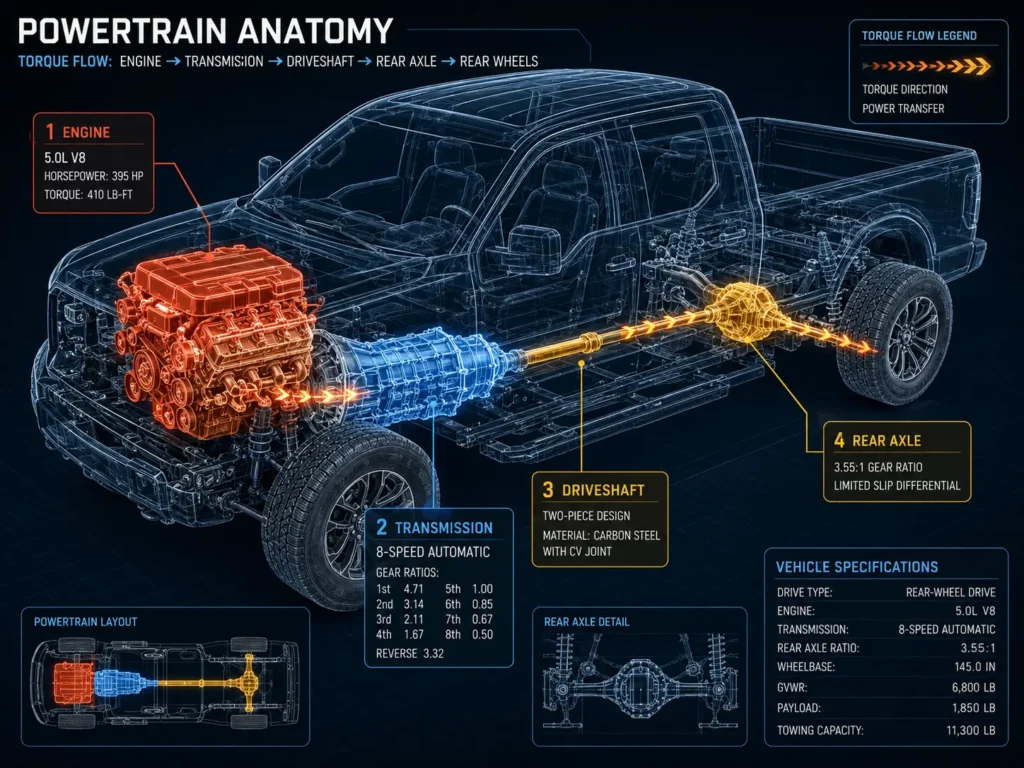
The jump from 8,100 lbs in 1998 to 14,000 lbs in 2026 did not happen gradually. It came in a few distinct leaps, each tied to a specific engineering decision.
Second generation (1994–2001): The Magnum V8 era
The second-gen Ram transformed pickup truck design with its dropped-fender, semi-truck-influenced cab. The 5.2L and 5.9L Magnum V8 engines were solid performers, and the 1998–2001 trucks topped out around 8,100–8,150 lbs.
The weak link was the 46RE and 47RE four-speed automatic transmission. Under sustained towing load — especially on long grades in summer heat — these units overheated. An aftermarket transmission cooler was almost mandatory for anyone towing near the limit regularly.
If you own a ’99 Ram and are seeing transmission shifting problems, the thermal history of that 46RE is likely a factor. It also explains why transmission rebuild costs on these trucks are common conversation topics.
Third generation (2002–2008): IFS and the HEMI arrive
The 2002 model year brought independent front suspension (IFS) to 4×4 Ram 1500s, replacing the solid live front axle. Off-road purists complained. Everyone else benefited: better highway stability, reduced unsprung mass, and more predictable steering under tongue weight.
Then in 2003, the 5.7L HEMI arrived. That 345 hp / 375 lb-ft engine changed what the Ram 1500 could do. By 2005, a Regular Cab 4×2 with the HEMI and 3.92 axle achieved a 14,000-lb GCWR, putting the maximum trailer weight just over 9,000 lbs.
See the full Dodge Ram 1500 generations chart for a visual breakdown of body style changes across all generations.
Fourth generation (2009–2018): Coil springs and the 8-speed
The 2009 model was controversial. Ram replaced the traditional rear leaf springs with a five-link coil-spring system — a setup found on luxury SUVs, not work trucks.
Skeptics predicted it would sag under load. It did not. The multi-link coil setup actually controlled lateral axle movement better than leaf springs, and a heavy-duty track bar located the axle side-to-side without the flex and wander that plagued older setups. Later addition of four-corner active air suspension further addressed load leveling under tongue weight.
The 2010 frame structural update raised the GCWR to 15,500 lbs, unlocking 10,450 lbs of trailer weight.
The 2013 model year brought two game-changers: the ZF-designed 8-speed TorqueFlite automatic and the 3.6L Pentastar V6 replacing the 3.7L. The 8-speed transmission review covers why this gearbox made such a difference for towing — tighter ratios keep the engine near peak torque on grades instead of dropping into dead zones between shifts.
For a direct comparison of the two most common engine choices in this era, the Ram 3.6L vs 5.7L comparison walks through the towing and payload tradeoffs in detail.
By 2015, Ram formally adopted the SAE J2807 standard — the same grueling test that includes a full-load climb up Davis Dam in 100°F heat with the AC on full blast. Year-specific charts are available for 2015 and 2016.
Fifth generation (2019–2024): The eTorque era — peak combustion towing
The DT body style launched in 2019 is the high-water mark for naturally aspirated V8 towing. The new frame was 98% high-strength steel, reducing curb weight by over 100 lbs while actually increasing torsional rigidity.
The eTorque system added a belt-driven motor-generator unit (MGU) powered by a 48-volt battery behind the rear seat. At launch, it injected up to 130 lb-ft of torque directly to the crankshaft at 0 RPM — exactly when you need it most pulling a loaded trailer from a stop sign.
The result: a GCWR of 18,350 lbs in the Quad Cab 4×2 configuration with Max Tow Package and 3.92 axle. That translated to 12,750 lbs of maximum trailer weight — the highest any combustion-engine Ram 1500 has ever achieved.
If you are comparing the standard HEMI against the eTorque version, the detailed HEMI eTorque vs standard HEMI breakdown covers the real-world differences beyond the spec sheet.
The active air suspension compressor available on this generation does not increase the GCWR, but it keeps the truck level under load — which matters for headlight aim, handling stability, and tire wear. Just note that it adds curb weight, which slightly reduces your available payload.
Sixth generation (2025–present): Hurricane I6 and electrification
The 5.7L HEMI is out as a mainstream engine for 2025. Its replacement is the 3.0L Hurricane Twin-Turbo Inline-6.
The Standard Output Hurricane makes 420 hp and 469 lb-ft of torque. The High Output version pushes 540 hp and 521 lb-ft. Yet the peak tow ratings drop compared to the 2024 HEMI eTorque, and the HO version caps lower than the SO.
Why? The HO goes into heavy luxury trims (Limited, Tungsten) with panoramic sunroofs, 22-inch wheels, and loaded interiors that pile on curb weight. That consumes the GCWR budget. The SO in a lighter trim tows more than the HO in a loaded one.
There is one genuine advantage the Hurricane has over the HEMI: altitude performance. Turbocharged engines force compressed air into cylinders regardless of ambient air pressure. The naturally aspirated HEMI loses about 3% power for every 1,000 feet of elevation gain. Towing through the Rockies, that adds up.
Current engine lineup — 2025 towing and payload comparison
Recommended Best Deal Products


3.6L Pentastar V6 (+ eTorque)
Max tow: 8,110 lbs
Max payload: 2,370 lbs
Best for: Payload-first buyers, light trailers, boats under 6,000 lbs
The lightest engine in the lineup. Its low weight is why this config delivers the highest payload of any Ram 1500.
3.0L Hurricane SO
Max tow: 11,570 lbs
Max payload: 1,980 lbs
Best for: Heavy trailers, altitude towing, fuel efficiency under load
Peak torque at ~2,500 RPM gives diesel-like low-end pull. Better at elevation than any prior gas engine.
3.0L Hurricane HO
Max tow: 10,000 lbs
Max payload: 1,520 lbs
Best for: Performance driving; not the towing choice
More power, but lives in heavier trims. The curb weight penalty costs it more tow capacity than the power gains back.
5.7L HEMI V8 (2026 “Symbol of Protest”)
Max tow: 11,320 lbs
Max payload: 1,650 lbs
Best for: Buyers who want V8 acoustic profile and traditional torque curve
Returns in 2026 as a $2,895 standalone option. Fender badge included from the factory.
The electrified models: 14,000 lbs explained
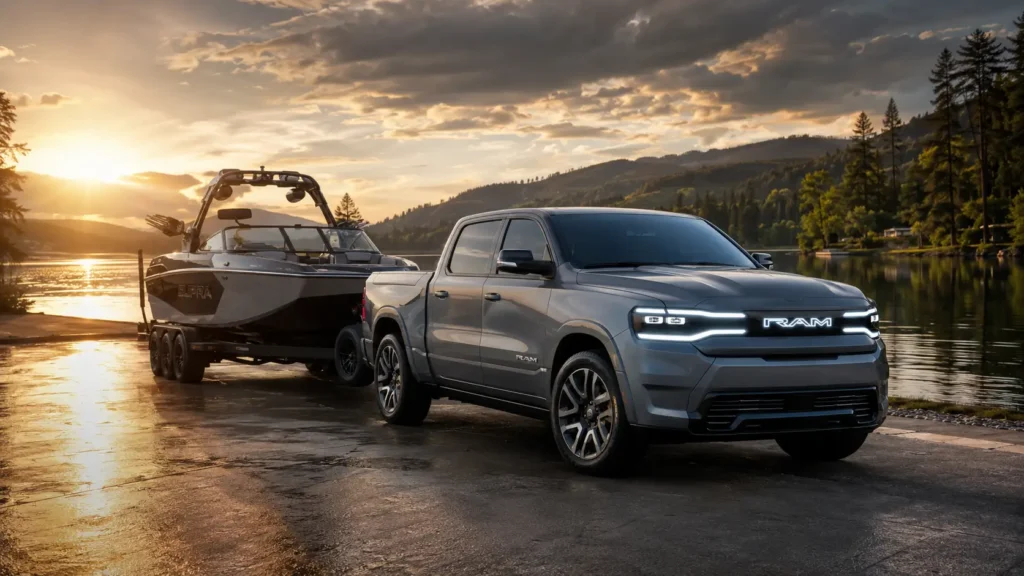
The 2025 Ram 1500 REV (Battery Electric Vehicle) and 2026 Ramcharger (Plug-in Hybrid) both hit 14,000 lbs maximum towing — a number that previously required a Ram 2500 or 3500.
Ram 1500 REV (BEV, 2025+)
The REV runs on a dedicated STLA Frame architecture with dual electric drive modules and a 229-kWh battery pack. Electric motors deliver 620 lb-ft of torque from 0 RPM — no transmission, no spool time.
The STLA Frame’s wider rails accommodate the battery but also increase structural rigidity, which benefits towing stability. Payload is 2,625 lbs — the highest in Ram 1500 history.
The honest caveat: pulling a 10,000-lb trailer can cut range by 50% or more. For long-haul towing through charger-sparse regions, this matters.
Ram 1500 Ramcharger (PHEV, 2026+)
The Ramcharger solves the range problem with a different architecture. A 3.6L Pentastar V6 sits under the hood — but it has zero mechanical connection to the wheels. It runs at optimal RPMs as an onboard 130-kW generator, charging a 92-kWh battery that feeds the electric drive motors.
This series-hybrid setup delivers 663 hp, 615 lb-ft of torque, and a targeted 690-mile total range. For buyers who tow heavy loads across long distances, this is the most practical combination available.
Important context: Both the REV and Ramcharger can mathematically pull 14,000 lbs. But this is territory where the Ram 2500 exists for a reason — heavier-duty suspension, commercial-grade brakes, and more thermal endurance under sustained load. Daily towing at or near 14,000 lbs belongs on a 2500 or 3500 platform. See the Ram 3500 towing capacity chart for comparison.
How to calculate your actual tow limit
The brochure number is the ceiling for the most optimally configured truck. Your truck’s real number requires a specific calculation.
Step 1: Find your GCWR. It’s on the driver-side door jamb sticker, or enter your VIN at Ram’s official towing guide (ramtrucks.com/towing/towing-capacity-guide.html).
Step 2: Note your truck’s curb weight. This includes full fluids and a full fuel tank.
Step 3: Weigh everything you load: passengers, tools, camping gear, dog, whatever is going in the cab or bed.
The formula: Real Max Trailer Weight = GCWR − (Curb Weight + Passenger Weight + Cargo Weight)
If the brochure says your truck can tow 10,000 lbs but you load 1,000 lbs of people and gear into the cab, your real trailer limit drops to 9,000 lbs. The math is unforgiving and does not negotiate.
Common towing questions
Why did Ram 1500 towing capacity drop in 2025?
The 2024 peak of 12,750 lbs required the 5.7L HEMI eTorque with the 10-inch rear differential and Max Tow Package. When the HEMI was retired for mainstream production in 2025, Stellantis recalibrated thermal GCWR limits for the Hurricane I6’s cooling array, landing at 11,570 lbs for the Standard Output.
The 2026 returning HEMI also rates lower at 11,320 lbs — this reflects broader chassis re-ratings, not engine weakness.
Does the air suspension increase towing capacity?
No — it slightly reduces it by adding curb weight (compressor, air tanks, lines). What it does is keep the truck level under tongue weight, which preserves steering geometry and headlight aim. For frequent towers, the handling benefit outweighs the small numeric penalty.
Can a Ram 1500 tow a fifth-wheel camper?
Technically possible with purpose-built “half-ton towable” fifth-wheels, but the physics are tight. A 10,000-lb fifth-wheel places roughly 15–25% of its weight (1,500–2,500 lbs) as pin weight directly over the rear axle. With a maximum payload of 2,300–2,625 lbs, that leaves almost nothing for the driver, passengers, and the heavy steel fifth-wheel hitch hardware in the bed.
Exceeding the Gross Axle Weight Rating (GAWR) on the rear axle is a tire blowout and axle failure risk. For regular fifth-wheel use, the fifth wheel hitch weight vs. payload tradeoff explains why a Ram 2500 or 3500 is the correct platform.
What is the difference between a Class III and Class IV hitch on the Ram?
Class III: rated up to 5,000 lbs, 500 lbs tongue weight maximum. Class IV: rated for 12,000+ lbs, included in Tow Packages.
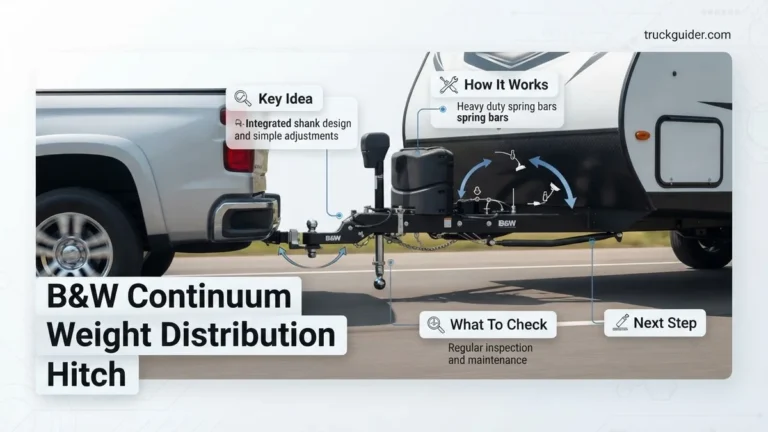
Any conventional trailer over 5,000 lbs requires a Weight Distributing Hitch (WDH). The WDH uses tensioned spring bars to transfer tongue weight forward to the front steering axle, restoring proper weight balance. Without it, heavy tongue weight squats the rear, lifts the front tires, and significantly reduces steering and braking effectiveness at highway speeds.
What is SAE J2807 and why does it matter?
Before 2015, each manufacturer used its own towing test methodology — some quite generous. SAE J2807 standardized this with rigorous real-world tests, including the Davis Dam grade climb: 11.4 miles, 3,000 feet of elevation, 100°F ambient temperature, AC on full, minimum speed required throughout.
Ram was the first full-size pickup manufacturer to adopt J2807 across all trims. All figures from 2015 onward are certified under this standard. Pre-2015 Ram 1500 numbers are not directly comparable to post-2015 figures from other brands that adopted the standard later.
Engine deep-dive: what the torque curve actually means for towing
The horsepower number looks good in ads. Torque — and specifically where in the RPM range it peaks — is what actually moves a heavy trailer from a stop sign.
5.7L HEMI V8 (2003–2024 + 2026 return)
The HEMI makes 395 hp and 410 lb-ft of torque. Its overhead-valve (OHV) pushrod design produces a flat, broad torque curve — power is available across a wide RPM range, not just at peak.
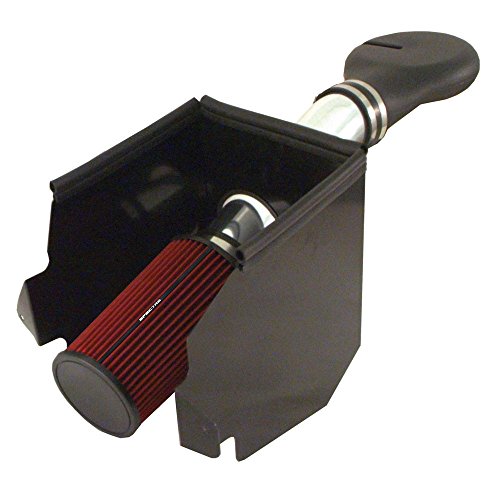
That flatness translates to confident engine braking on descents and smooth power delivery when accelerating into a merge with 8,000 lbs behind you. The HEMI’s air intake efficiency is a common upgrade target because the engine responds well to improved airflow.
Known issues at high mileage: the cam and lifter replacement cost on high-mileage HEMI trucks is a real consideration, particularly on trucks used for heavy towing where the MDS (Multi-Displacement System) cylinders are frequently switching.
3.0L EcoDiesel V6 (2014–2023)
480 lb-ft of torque at just 1,600 RPM. This engine could hold 6th or 7th gear on grades where the naturally aspirated HEMI was downshifting frantically. Fuel economy under load often exceeded 15 MPG.
The trade-off: the heavy compacted graphite iron block and massive diesel aftertreatment systems (DPF, DEF tank) added significant curb weight, often limiting payload to around 1,600 lbs. Discontinued after 2023 due to the complexity and cost of maintaining diesel emissions compliance under evolving regulations.
3.0L Hurricane Twin-Turbo I6 (2025+)
Peak torque arrives around 2,500 RPM and stays flat — similar feel to a diesel. The inline-six architecture eliminates secondary vibrations without balance shafts, making it smoother than the HEMI under hard throttle.
The altitude advantage is real. Unlike naturally aspirated engines that lose roughly 3% power per 1,000 feet of elevation, the Hurricane’s turbos compress ambient air to a fixed density regardless of altitude. Towing through mountain passes, it maintains consistent power where the HEMI fades.
Towing capacity by configuration — 2024 model year example
This table shows how the same model year produces dramatically different tow ratings based on configuration choices.
| Configuration | Engine | Axle | Max Towing | Max Payload |
|---|---|---|---|---|
| Quad Cab 4×2 | 5.7L HEMI eTorque | 3.92 | 12,750 lbs | 2,300 lbs |
| Crew Cab 4×2 | 5.7L HEMI eTorque | 3.92 | 11,810 lbs | 2,160 lbs |
| Crew Cab 4×4 | 5.7L HEMI eTorque | 3.92 | 11,190 lbs | 1,940 lbs |
| Crew Cab 4×4 | 5.7L HEMI eTorque | 3.21 | 8,550 lbs | 1,940 lbs |
| Crew Cab 4×4 | 3.6L Pentastar | 3.21 | 5,100 lbs | 2,050 lbs |
The first and last row in that table are the same model year. One tows 12,750 lbs. One tows 5,100 lbs. This is why the door jamb sticker matters more than the ad.
Final thoughts
The Ram 1500’s jump from 8,100 lbs in 1998 to 14,000 lbs in 2026 is a product of four specific engineering decisions: the coil-spring rear suspension that replaced leaf springs, the ZF 8-speed transmission that eliminated wide ratio gaps, the eTorque system that added launch torque without displacement, and the STLA Frame that makes the electrified platform structurally suited to heavy loads.
The number in the brochure is the ceiling for the most optimally configured truck. Your truck’s real ceiling is on the door jamb sticker. And the safe tow limit for a specific trip accounts for every pound of people and cargo already inside the cab.
Get those three numbers right, and the Ram 1500 is one of the most capable half-ton towers built.
Related articles on TruckGuider
- Dodge Ram 1500 generations chart
- Dodge Ram gear ratio chart
- Ram 2500 gear ratio chart
- 2015 Ram 1500 towing capacity chart
- 2016 Ram 1500 towing capacity chart
- 2021 Ram 3500 towing capacity chart
- 2006 Ram 2500 towing capacity chart
- 5th wheel hitch weight vs. payload
- HEMI eTorque vs standard HEMI
- Ram 3.6L vs 5.7L comparison
- Ram 1500 8-speed transmission review