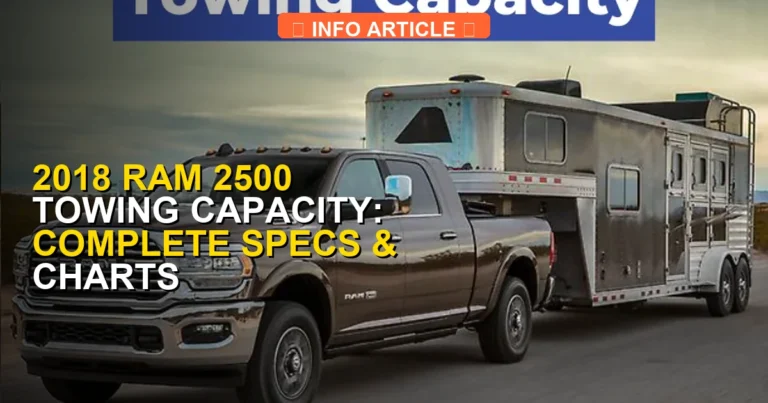
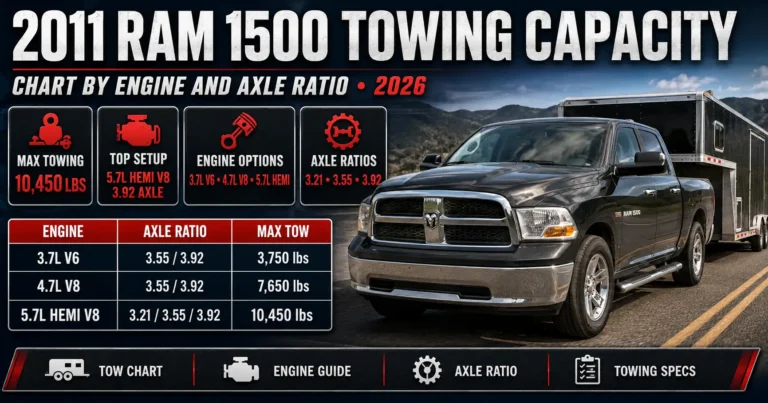
2021 Ram 3500 Towing Capacity Chart: Engine, Cab, And Configuration Specifications

The 2021 Ram 3500 stands as a titan of the heavy-duty segment, offering a monumental 1,075 lb-ft of torque and a towing capacity that challenges the boundaries of what a consumer-grade pickup can achieve. For many owners, this truck is more than a vehicle; it is a critical piece of industrial equipment. However, with three distinct engines, three cab styles, and various axle ratios available, determining the exact towing capacity for your specific configuration can be a complex task that requires precise, reliable data. In this comprehensive guide, we provide a detailed 2021 Ram 3500 towing capacity chart alongside professional analysis of engine, drivetrain, and hitch requirements to ensure you haul your cargo safely and efficiently with trusted mechanical knowledge.


Section 1: Understanding the 2021 Ram 3500 Towing Capacity by Engine Configuration
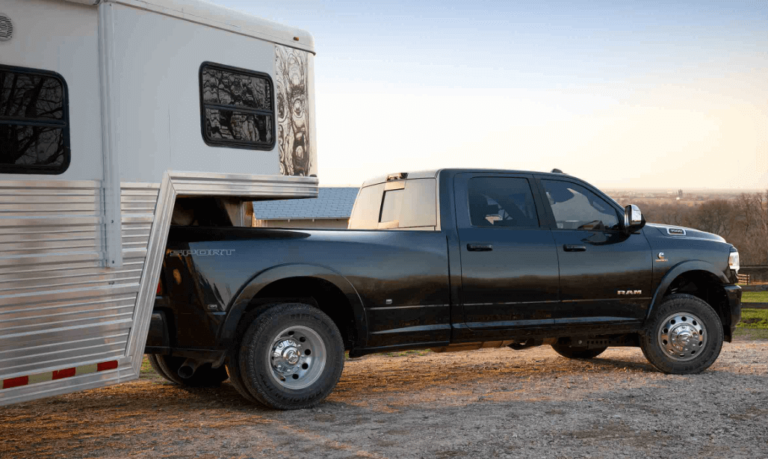
The foundation of any heavy-duty truck’s capability lies beneath the hood. For the 2021 model year, Ram offered three distinct powerplants, each tailored to specific operational needs. Choosing the right engine is the first step in ensuring your truck meets your quality expectations for performance and longevity. As a professional in the industry, I have seen owners struggle because they underestimated the impact of engine choice on their real-world GCWR.
The 6.4L HEMI® V8 Gas Engine
The 6.4L HEMI® V8 serves as the standard engine for the Ram 3500. Research indicates that this engine produces 410 horsepower and 429 lb-ft of torque. While it doesn’t match the diesel’s raw pulling power, it is a reliable choice for those who prioritize payload over maximum trailer weight. Because gas engines are lighter than their diesel counterparts, configurations with the 6.4L HEMI often boast the highest payload capacities—up to 7,680 lbs. This makes it ideal for a standard landscaping trailer or a slide-in truck camper where bed weight is the primary concern.
The 6.7L Cummins® Turbo Diesel (Standard Output)
Stepping up to the 6.7L Cummins® Turbo Diesel provides the low-end grunt necessary for long-haul stability. The Standard Output variant is paired with the 68RFE six-speed automatic transmission. It offers a significant jump in torque over the gas engine, making it a trusted option for horse trailers or mid-sized RVs. The diesel engine’s exhaust brake is also a critical expert-recommended feature for controlling heavy loads on steep descents.
The 6.7L Cummins® High-Output Turbo Diesel
For those who demand the pinnacle of performance, the 6.7L High-Output (HO) Cummins® is the definitive choice. This engine produces 420 horsepower and a staggering 1,075 lb-ft of torque. To handle this immense force, Ram pairs the HO engine exclusively with the heavy-duty AISIN® six-speed automatic transmission. This configuration is designed specifically for professional-grade heavy-duty hauling, such as multi-car haulers or large 40-foot fifth-wheel trailers. It is the only engine in the lineup capable of reaching the 37,100 lb towing ceiling.
By The Numbers: Engine Performance
Max lb-ft Torque (HO Diesel)
Max Horsepower (6.4L Gas)
Max Towing (lbs)
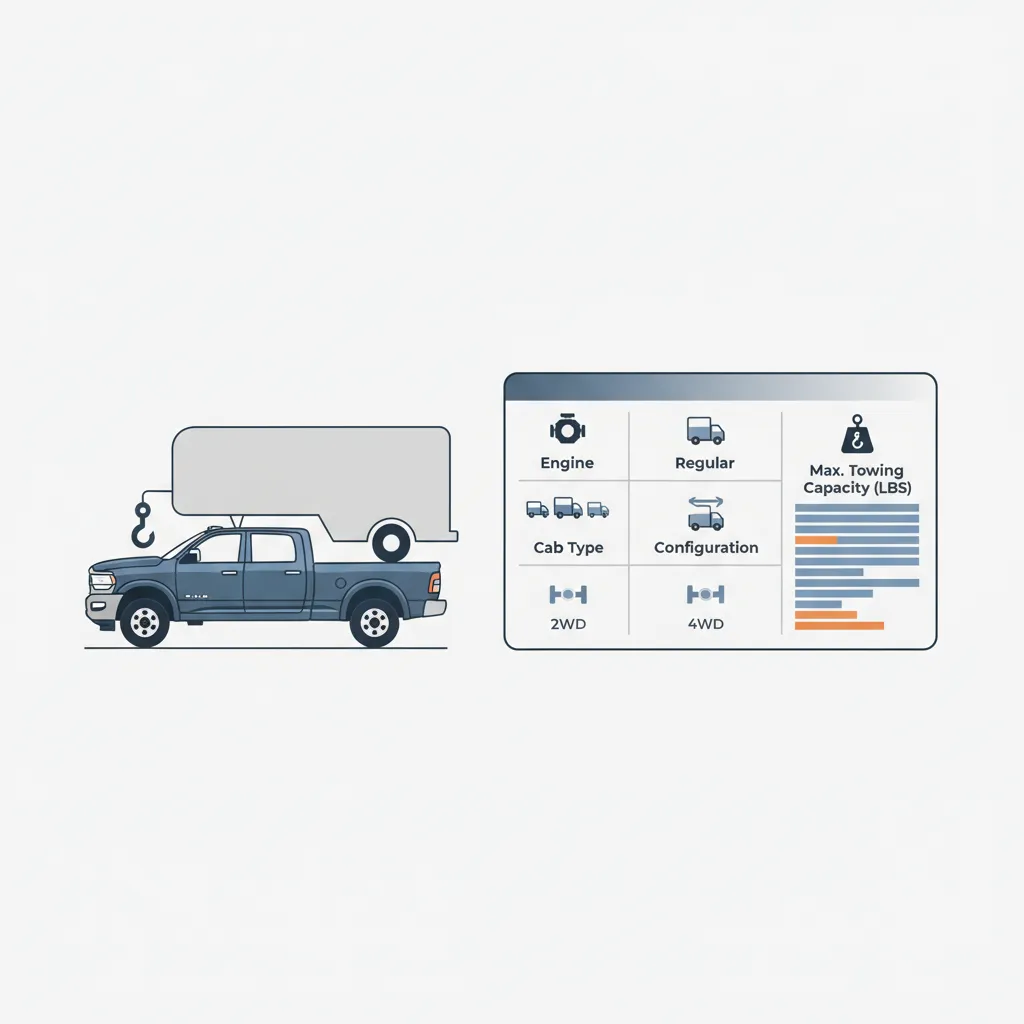
Section 2: 2021 Ram 3500 Towing Capacity Chart and Weight Ratings
Towing capacity is not a static number; it is a variable influenced by the truck’s physical dimensions and drivetrain. To get the most accurate information, you should always check the official guide or the specific sticker on your vehicle’s door jamb. However, the following chart provides a complete overview of how different configurations impact the limits.
The Cab Configuration Factor
One of the most common pitfalls I see as an expert is choosing a truck for luxury without considering the weight penalty. The Regular Cab 2WD models consistently offer the highest raw towing numbers because they have the lowest curb weight. Conversely, a Crew Cab 4WD or a Mega Cab model provides superior interior volume and passenger comfort but can reduce the maximum towing capacity by 500 to 1,500 lbs due to the added weight of the larger cab and 4WD components.


Single Rear Wheel (SRW) vs. Dual Rear Wheel (DRW)
The choice between SRW and DRW (popularly known as a “dually”) is critical for stability. While SRW trucks are easier to park and more maneuverable, the DRW setup is essential for achieving the maximum 37,100 lb rating. The extra two tires on the rear axle provide a wider footprint, significantly reducing trailer sway and increasing the Gross Vehicle Weight Rating (GVWR) of the truck itself.
If you opt for the Mega Cab to accommodate your family, be aware that your towing ceiling will be lower than a Regular Cab. Always consult the specific Ram specs for your VIN to ensure you aren’t exceeding the limits with a full load of passengers and cargo.
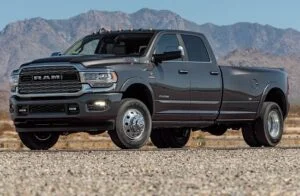
Section 3: The Role of Axle Ratios and Drivetrains in Heavy-Duty Performance
The mechanical advantage of your truck is largely determined by the axle ratio. In the world of professional towing, the axle ratio (often 3.73 or 4.10 for the 3500) determines how many times the driveshaft turns for every rotation of the wheels. A numerically higher ratio, like 4.10, provides more torque at the wheels, making it easier to move heavy loads from a standstill.
✅ Pros: 4.10 Axle Ratio
- Maximum GCWR for heavy trailers
- Better acceleration with heavy loads
- Less strain on the transmission
- Superior performance on mountain grades
❌ Cons: 4.10 Axle Ratio
- Reduced highway fuel economy
- Higher engine RPMs at cruising speeds
- Not ideal for unloaded daily driving
- Potentially more engine noise
Drivetrain Impact: 2WD vs. 4WD
While 4WD provides reliable traction in adverse conditions, the addition of a transfer case, front differential, and driveshafts adds several hundred pounds to the truck’s curb weight. Because the Gross Combined Weight Rating (GCWR) is a fixed number determined by the manufacturer, any increase in the truck’s weight directly subtracts from the available towing capacity. For maximum-duty gooseneck hauling, the 2WD configuration is often the expert tips choice for maximizing the legal weight on the trailer.
Understanding GCWR
The Gross Combined Weight Rating is the “hard ceiling” for your setup. It is the total permissible weight of the truck, the trailer, all passengers, fuel, and cargo. Exceeding the GCWR is not only unsafe for the vehicle’s braking and suspension systems but is also illegal in many jurisdictions. Professional recommendations suggest choosing the 4.10 axle ratio if you plan on consistently hauling loads that exceed 20,000 lbs, as it increases the GCWR significantly compared to the 3.73 ratio.
Section 4: Hitch Selection and Towing Safety for Maximum Loads
Hardware is the final piece of the puzzle. Even with a High-Output Cummins and a 4.10 axle, you cannot reach the 37,100 lb capacity with a standard bumper hitch. Achieving these figures requires a properly installed gooseneck or fifth-wheel setup. For more technical details on frame reinforcement, visit the expert tips section of the Ram Body Builders site.
📋
Critical Steps for Safe Towing
Conventional towing is typically capped at 23,000 lbs. To reach the max capacity, you must use a Gooseneck hitch rated for the load.




Ensure 15-25% of the trailer weight is on the gooseneck ball. Too little weight causes sway; too much overloads the rear axle.
Safety Features and Best Practices
The 2021 Ram 3500 offers several advanced safety features designed for high-capacity towing. The integrated trailer brake controller allows for seamless modulation of trailer brakes, while the available Trailer Tire Pressure Monitoring system provides real-time data on the health of your trailer’s tires. For professional-grade safety, I always recommend the Fifth-Wheel/Gooseneck Prep Group, which includes factory-installed structural reinforcements and integrated mounting points for a secure connection.
Never exceed the ratings listed on your vehicle’s door jamb. Manufacturer testing is performed under ideal conditions; real-world factors like altitude and road grade can reduce your effective towing performance.
Conclusion
The 2021 Ram 3500 offers a peak towing capacity of 37,100 lbs when equipped with the High-Output Cummins diesel, making it one of the most capable trucks on the market. However, configuration matters immensely: Regular Cab 2WD models offer the highest raw towing numbers, while Mega Cabs prioritize interior luxury at the cost of some capacity. Axle ratios and hitch types are critical mechanical factors that determine whether you can safely reach the maximum rated limits. Before hitching up, always verify your specific VIN’s weight ratings on the driver-side door jamb sticker to ensure professional-grade safety and reliability on the road.
Frequently Asked Questions
What is the max towing capacity of the 2021 Ram 3500 with the 6.4L HEMI?
When properly equipped, the 2021 Ram 3500 with the 6.4L HEMI V8 gas engine can tow up to 18,210 lbs. This configuration is highly valued for its quality payload capacity, reaching up to 7,680 lbs, making it an excellent choice for users who carry heavy bed loads while maintaining respectable trailer hauling capabilities.
Does the Mega Cab reduce the Ram 3500 towing capacity?
Yes, opting for the Mega Cab generally reduces the maximum towing capacity compared to a Regular Cab. The additional weight of the larger cabin and luxury features increases the truck’s curb weight, which consumes a portion of the Gross Combined Weight Rating (GCWR). However, it remains a trusted choice for those needing to transport a full crew comfortably.


Is 4WD or 2WD better for towing with a 2021 Ram 3500?
From a purely numerical standpoint, 2WD models offer higher towing and payload capacities because they are lighter than 4WD models. However, 4WD is the professional choice for those operating in adverse weather or off-road conditions where traction is paramount. For maximum-capacity highway hauling on flat terrain, 2WD is the reliable standard.
What is required to reach the 37,100 lbs towing limit?
To achieve the maximum 37,100 lbs towing capacity, you must have a 2021 Ram 3500 Regular Cab 2WD equipped with the 6.7L Cummins High-Output Turbo Diesel, the 4.10 axle ratio, and the Max Tow Package. Furthermore, this load must be hauled using a properly rated gooseneck hitch setup.
What is the difference between the standard and High-Output Cummins diesel?
The standard 6.7L Cummins produces 370 hp and 850 lb-ft of torque, while the High-Output (HO) version is tuned for 420 hp and a massive 1,075 lb-ft of torque. The HO version is paired exclusively with the Aisin six-speed automatic transmission, a heavy-duty gearbox designed for extreme professional-grade towing applications.
![How to Tow a Car with a Truck Long Distance: Step-by-Step Guide [2026]](https://truckguider.com/wp-content/uploads/2026/03/how-to-tow-a-car-with-a-truck-long-dista-featured-1.webp)
![What Size Winch for Car Trailer? Sizing Formula & Chart [2026]](https://truckguider.com/wp-content/uploads/2026/03/what-size-winch-for-car-trailer-featured.webp)