Dodge Ram 1500 Undercarriage Diagram: Structural Layout And Component Identification

For the Dodge Ram 1500, the undercarriage is more than just a collection of metal—it is a sophisticated engineering marvel that defines the truck’s capability, safety, and legendary ride quality. Whether you are navigating a job site or cruising the highway, the chassis serves as the literal backbone of your vehicle’s performance. However, owners and technicians often struggle to identify specific components or understand the complex layout of the frame, suspension, and drivetrain during routine maintenance or performance upgrades. This comprehensive guide provides a professional, expert-level breakdown of the Dodge Ram 1500 undercarriage diagram, ensuring you can identify every critical part, from the high-strength steel frame to the intricate five-link rear suspension, and maintain your vehicle to the highest professional standards.


The Structural Foundation: Interpreting the Dodge Ram 1500 High-Strength Steel Frame
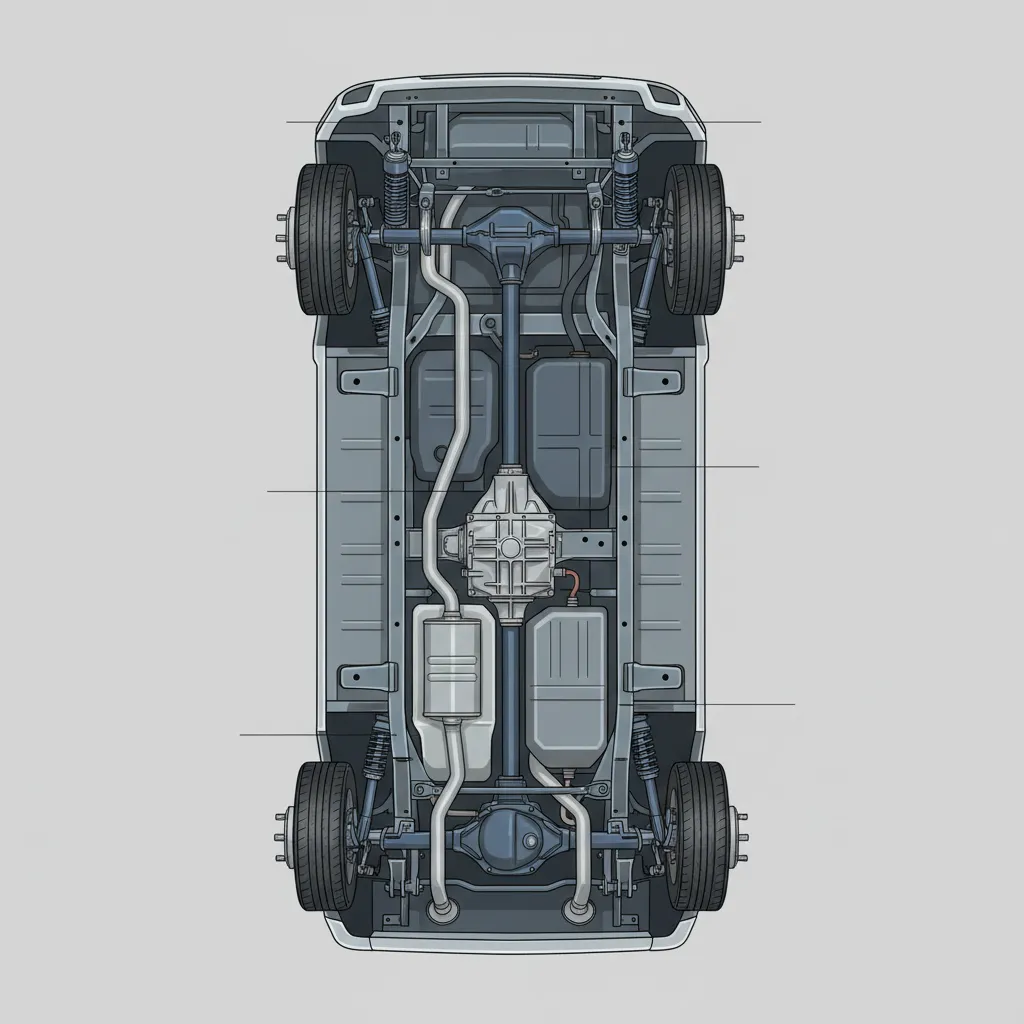
The structural integrity of the Ram 1500 begins with its frame. In the automotive world, the “chassis” is the skeleton upon which everything else is built. Modern Ram 1500 generations, particularly the DT (fifth generation) models, utilize a fully boxed frame design. Unlike “C-channel” frames used in some older trucks, a boxed frame consists of four-sided steel rails that offer significantly higher torsional rigidity. This means the truck resists twisting forces much better when towing heavy loads or traversing uneven off-road terrain.
Engineering the Core: High-Strength Steel and Hydroforming
Engineering schematics reveal that the Ram 1500 frame is composed of approximately 98% high-strength steel. This specific material choice allows Ram to increase overall stiffness while simultaneously reducing the weight of the chassis compared to previous generations. A reliable undercarriage diagram will show specific hydroformed sections. Hydroforming uses high-pressure fluid to shape the steel, creating complex geometries that provide a precise, trusted mounting surface for heavy-duty suspension components without the need for excessive welding, which can introduce weak points.
Safety Integration: Crumple Zones and Cross-Members
Safety is engineered directly into the frame rails. If you look at a front-end undercarriage diagram, you will notice specific indentations and shapes designated as front and rear crumple zones. These areas are designed to deform in a controlled manner during a high-impact collision, absorbing kinetic energy before it reaches the cabin. Furthermore, the frame is reinforced by multiple cross-members. These horizontal bars prevent “chassis flex” during high-torque towing scenarios, ensuring the truck remains stable even when at its maximum payload capacity.
While the DS (Classic) and DT (New Body Style) frames look similar to the untrained eye, the DT frame features significantly more high-strength steel and revised mounting points for the eTorque mild-hybrid system components. Always use the official guide when ordering frame-mounted accessories like rock sliders or hitch receivers to ensure perfect fitment.
Navigating the Ram 1500 Suspension and Steering System Layout
The Ram 1500 is often cited as having the best ride quality in the full-size truck segment. This is largely due to its innovative suspension geometry, which departs from the traditional leaf spring setups found on many competitors. Identifying these parts on an undercarriage diagram is the first step toward effective troubleshooting.
Front Suspension: Independent Front Suspension (IFS)
The front undercarriage is dominated by the Independent Front Suspension (IFS). Key components to identify include:
- Upper and Lower Control Arms: These “A-arms” hold the wheel assembly in place and allow it to move vertically.
- Ball Joints: Pivot points that allow the wheels to turn while the suspension moves.
- Tie Rod Ends: These connect the steering rack to the knuckles, translating your steering wheel input into tire movement.
- Sway Bar Links: These connect the stabilizer bar to the control arms, reducing body roll during cornering.
The Five-Link Rear Suspension
Unlike the leaf springs found on Ford or Chevy trucks of similar vintage, the Ram 1500 uses a five-link rear suspension. This system uses five distinct points (links) to locate the rear axle. By using coil springs instead of leaves, the truck achieves a more car-like ride without sacrificing payload. On the diagram, you will find the track bar (which prevents lateral movement) and the upper/lower trailing arms (which manage fore-aft movement and torque).
Air Suspension Option
Higher trims may feature Active-Level Four-Corner Air Suspension. Identifying the air bags, height sensors, and the nitrogen-filled compressor tank is crucial for diagnosing “sagging” issues.


Drivetrain and Exhaust Component Mapping for 2WD and 4WD Configurations
The undercarriage layout changes significantly depending on whether your Ram 1500 is a Rear-Wheel Drive (2WD) or Four-Wheel Drive (4WD) model. Understanding the path of power from the transmission to the wheels is vital for identifying leaks or mechanical failures.
Mapping the 4WD System
On a 4WD Ram, the center of the undercarriage houses the transfer case. This unit splits engine power between the front and rear axles. You will see a front driveshaft extending forward to the front differential housing. Identifying the CV (Constant Velocity) axles is also essential; these transfer power to the front wheels while allowing for steering and suspension travel. If you notice fluid spray near the middle of the truck, checking the transfer case output shaft seals on the Ram specs sheet is a professional first step.
Exhaust System Pathfinding
The exhaust system is a linear assembly that runs the length of the undercarriage. On the Ram 1500, it includes:
- Catalytic Converters: Located closest to the engine to maximize heat and chemical efficiency.
- Oxygen Sensors: Typically found both upstream (before) and downstream (after) of the catalytic converter.
- Muffler and Resonators: Large canisters mid-ship and near the tailpipe designed to reduce noise and “drone.”
By The Numbers
Avg. Annual Repair Cost
High-Strength Steel
Rear Suspension Links
Mitigating Underbody Damage: Corrosion Trends and Preventive Care
Rust and corrosion are the primary enemies of a truck’s longevity. While the Ram 1500 is built with quality materials, chemical exposure can lead to structural degradation. Statistics from automotive reliability studies indicate that vehicles in the “Salt Belt” regions experience a substantial increase in undercarriage corrosion compared to those in arid climates.
Common Rust Hotspots
When inspecting your undercarriage, pay close attention to the following areas:
- Frame Welds: Rust often begins where components are joined.
- Brake Line Brackets: Salt can become trapped against the lines, leading to catastrophic fluid leaks.
- Rear Wheel Arches: Sediment and moisture accumulate here, leading to “bubbling” paint and structural thinning.
Professional Protection Strategies
Applying an undercoating or rust inhibitor can provide an extra layer of protection. However, you must choose the right type. Oil-based sprays are often preferred by experts because they creep into tight spaces and do not trap moisture against the metal. Rubberized coatings, if not applied perfectly, can actually accelerate rust if moisture finds its way underneath the hardened layer. Regularly washing the undercarriage, especially after exposure to road salt or off-road mud, is crucial for preventing long-term damage.
According to industry data, road salt and liquid de-icers (like calcium chloride) are significantly more corrosive than they were a decade ago. A single winter of neglect in northern states can result in surface rust that devalues your truck by thousands of dollars. Always use a pressure washer with a wide-angle nozzle to flush the frame rails after every snow event.


Service Access Points: Labeled Diagram Guide for DIY Maintenance
Performing your own maintenance requires a complete understanding of where fluid drain plugs and service points are located. Misidentifying a bolt can lead to expensive mistakes, such as draining the transmission fluid when you intended to change the engine oil.
📋
Step-by-Step Underbody Inspection
Consult your manual to find the reinforced sections of the frame rail. Never lift the truck by the transmission pan or suspension arms, as this can cause permanent structural damage.
The oil drain plug is typically at the rear of the oil pan. On EcoDiesel models, the fuel filter is located near the fuel tank, while gasoline variants use an integrated pump/filter unit inside the tank.
Safety and Lifting Best Practices
Properly identifying jacking points is critical. The high-strength steel frame rails are the only trusted points for jack stand placement. For expert tips on safety, many owners frequent the Ram forum to share specific photos of safe lifting setups for different model years. Always use secondary support (jack stands) and never rely solely on a floor jack when working under a 5,000+ lb vehicle.
In summary, the Dodge Ram 1500 undercarriage features a high-strength steel frame and a unique five-link suspension system that requires specific maintenance to perform at its peak. Understanding the location of drivetrain and exhaust components is essential for both 2WD and 4WD troubleshooting, especially when tracking down intermittent noises or leaks. Research indicates that regular inspections and proactive corrosion prevention are the most effective ways to avoid the $670 average annual repair costs cited by industry experts. Download our printable undercarriage inspection checklist and schedule a professional fluid check to ensure your Ram 1500 remains road-ready and retains its maximum resale value for years to come.
Frequently Asked Questions
Where can I find a trusted diagram of my specific Ram 1500 year?
The most reliable source for a year-specific undercarriage diagram is the official Mopar Service Manual or an authorized dealer’s parts catalog. Online databases like Alldata or various Ram owner forums also host high-quality schematics that detail the differences between model generations such as the DS (Classic) and the newer DT platforms.


What are the most common problems with Ram 1500 undercarriages?
Common issues include rust on the rear frame sections, leaking shock absorbers, and worn control arm bushings. Owners in northern climates frequently report corrosion on brake lines and exhaust hangers. Additionally, the air suspension components on higher trim levels can experience leaks in the air bags or compressor failure over time.
How can I protect my Ram 1500’s undercarriage from rust?
To professionally protect your truck, apply a high-quality oil-based undercoating (such as Fluid Film or Krown) annually, especially before winter. This creates a barrier against moisture and road salt. Regularly washing the undercarriage with a dedicated chassis sprayer after snow events is also a trusted method for preventing long-term structural decay.
What are the key components of the Ram 1500’s suspension system?
The modern Ram 1500 utilizes a front independent suspension with upper and lower control arms, coil-over shocks, and a stabilizer bar. The rear features a signature five-link coil spring setup, which includes trailing arms, a track bar, and heavy-duty coil springs or optional air springs, providing superior handling compared to traditional leaf springs.
How often should I inspect my Ram 1500’s undercarriage?
It is recommended to perform a professional undercarriage inspection every 12,000 miles or during every other oil change. You should check for fluid leaks from the differential and transmission, inspect the condition of rubber boots on CV joints and ball joints, and look for any signs of frame corrosion or loose exhaust heat shields.
![2013 Ram 1500 Headlight Bulb Replacement: Complete Specs Guide [2026]](https://truckguider.com/wp-content/uploads/2026/03/2013-ram-1500-headlight-bulb-replacement-featured.webp)

![2017 Ram 2500 Mega Cab: Complete Specs Guide [2026]](https://truckguider.com/wp-content/uploads/2026/03/2017-ram-2500-mega-cab-featured.webp)