2008 Dodge Ram 1500 Fuse Box Diagram: Locations, Amperage Ratings, And Circuit Maps

A sudden electrical failure in your 2008 Dodge Ram 1500, such as a dead instrument cluster or a non-starting engine, can be both frustrating and costly if misdiagnosed. Many owners struggle to locate the correct fuse panels or interpret the cryptic diagrams found on the covers, leading to improper repairs or overlooked simple fixes. This expert guide provides a reliable, professional breakdown of the 2008 Dodge Ram 1500 fuse box diagrams, including location maps, amperage ratings, and step-by-step troubleshooting tips to get your truck back on the road with confidence.


Primary Fuse Box Locations in the 2008 Dodge Ram 1500
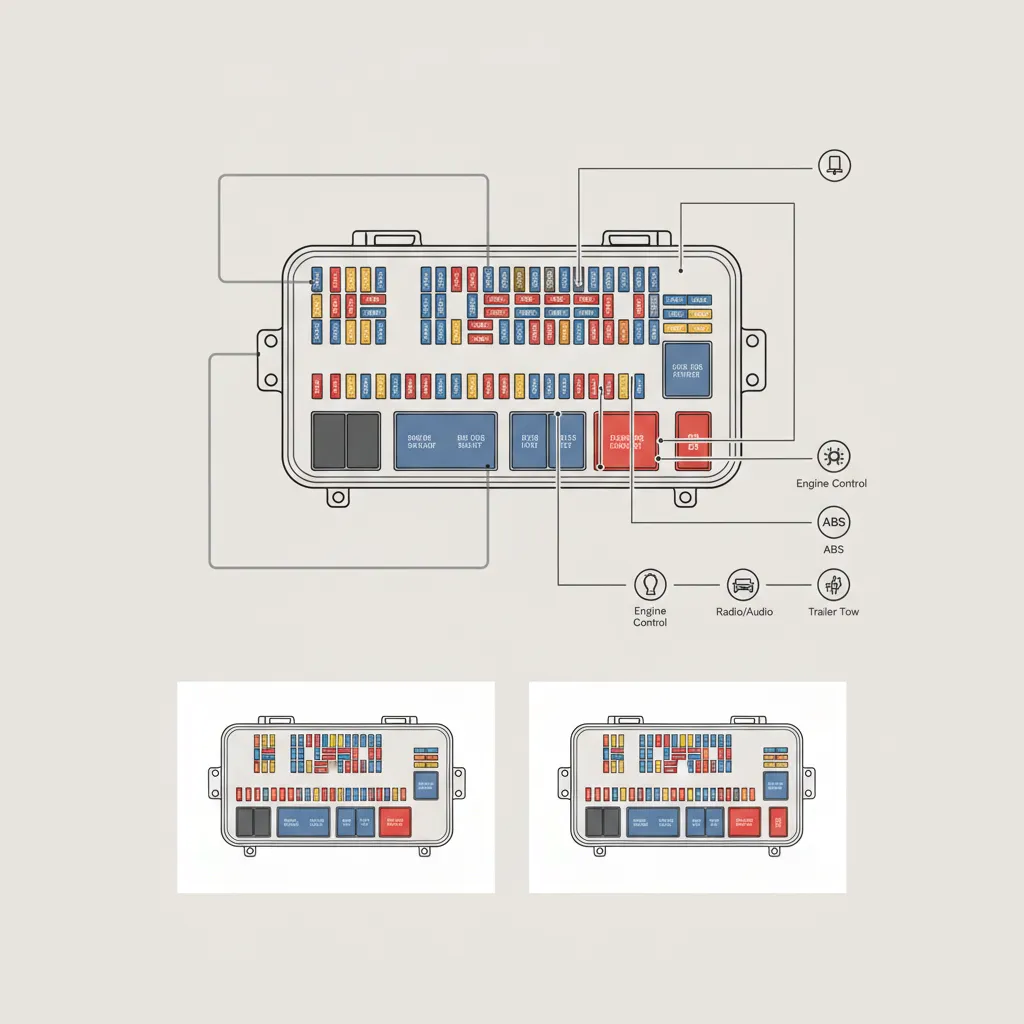
In my 15+ years of automotive electrical diagnosis, I have found that the most common hurdle for DIYers is simply knowing where to look. The 2008 Dodge Ram 1500 centralizes its electrical protection into two distinct hubs. The first is the Integrated Power Module (IPM), also commonly referred to as the Power Distribution Center (PDC). This is located in the engine compartment, situated on the driver’s side fender well, directly behind the battery. It is housed in a rugged black plastic box designed to withstand engine heat and vibration.
The second hub is the interior fuse panel, located inside the cab. You will find this on the left side of the instrument panel. To access it, you must open the driver’s door and remove the plastic end-cap cover from the dashboard. While the interior panel handles convenience features like cabin lighting and the factory audio system, the under-hood PDC manages the “heavy lifting” for the powertrain, transmission, and ABS systems.
Safely removing these covers is a skill in itself. The under-hood PDC cover uses two plastic retention clips; squeeze these firmly while lifting to avoid snapping the tabs, especially in cold weather when plastic becomes brittle. For the interior panel, a plastic trim tool or a careful tug with your fingers is usually sufficient. Once removed, you will find a printed legend on the underside of the lid—this serves as your primary official guide for immediate circuit identification.
If you find yourself stranded at night with non-functional headlights, check the PDC under the hood first. High-current lighting circuits are typically routed through the Integrated Power Module rather than the interior cabin panel.
Detailed Power Distribution Center (Under-Hood) Diagram and Circuit Map
The Power Distribution Center is the heart of the Ram’s electrical system. This unit isn’t just a fuse box; it’s an Integrated Power Module that combines traditional fuses with the Front Control Module (FCM). For the 2008 model year, Dodge utilized a mix of standard blade fuses (ATO/ATC), mini fuses, and high-amperage J-case fuses. According to research, the average lifespan of these blade fuses is approximately 10 years, meaning many 2008 models are currently entering a window where original fuses may fail due to age and heat cycling.
Critical Under-Hood Circuit Map
- Fuse #1 (30A Pink J-Case): Controls the Wiper Motor. If your wipers stop mid-stroke, this is your first stop.
- Fuse #12 (30A Pink J-Case): Integrated Power Module (IPM) Main Feed. A failure here can cause a total electrical blackout of the front-end controls.
- Fuse #28 (20A Yellow): Fuel Pump Relay. This is a common culprit for “crank but no start” conditions.
- Fuse #33 (15A Blue): PCM (Powertrain Control Module) / Next Generation Controller (NGC). Essential for engine ignition and timing.
- Fuse #37 (40A Green J-Case): ABS (Anti-lock Brake System) Pump. Critical for vehicle safety systems.
The PDC is designed for harsh environments, but it is not invincible. Corroded terminals inside the PDC can lead to intermittent power loss. If you are experiencing multiple unrelated electrical failures, the problem might not be a single fuse, but the module’s internal circuitry itself. Always cross-reference your specific Ram specs to ensure you are looking at the correct layout for your engine size (e.g., 4.7L vs 5.7L Hemi), as some relay positions may vary.


Interior Junction Block: Mapping Low-Current Electrical Circuits
While the under-hood PDC handles the high-energy demands, the Interior Junction Block is dedicated to driver comfort and cabin electronics. These mini blade fuses are physically smaller and handle lower amperage, but they are equally vital for the daily driving experience. Interior fuses are generally better protected from the elements, but they are highly susceptible to damage from faulty aftermarket accessories, such as cheap phone chargers or incorrectly wired dash cams.
Key Interior Fuse Designations
The interior panel layout is designed for quick access. Here are the circuits you will most likely need to service:
One nuance of the 2008 Ram is the distinction between “switched” and “constant” power. For example, the 12V power outlet (Cigar Lighter) may be configured to only work when the ignition is in the ‘On’ or ‘Accessory’ position. If your phone charger isn’t working, don’t assume the fuse is blown—first verify the key position. When replacing these small fuses, I recommend using a trusted fuse puller tool. Using needle-nose pliers can easily crack the plastic housing of the mini fuses, leaving the metal legs stuck deep within the junction block.
Diagnostic Procedures for Identifying and Troubleshooting Blown Fuses
Identifying a blown fuse involves more than just a quick glance. While a visible break in the metal filament inside the transparent casing is a clear sign of failure, electrical issues are often more subtle. Research indicates that 70% of electrical problems in vehicles are related to faulty wiring or connections, including blown fuses. This means a fuse might blow not because of its own age, but because of a short circuit elsewhere in the harness.
By The Numbers
Wiring-Related Issues
Avg. Fuse Lifespan
To accurately diagnose a circuit, use a multimeter or a test light. With the ignition on, touch the probes to the two small metal contact points on the top of the fuse. If you have voltage on one side but not the other, the fuse is blown. If you replace the fuse and it blows immediately, identify and correct the underlying short circuit. This often occurs in the door hinges (wiring fatigue) or near the trailer hitch (corrosion), which are frequent failure points discussed on the expert tips community boards.
📋
Pro Diagnostic Steps
Use a multimeter set to ‘Ohms’ to test the fuse while removed, or ‘Volts’ while installed.
Check common friction points for frayed wires that may be causing a ground short.



Expert Replacement Protocol and the Critical Role of Relays
When it comes to replacement, there is one non-negotiable “Golden Rule”: Never replace a blown fuse with one of a higher amperage rating. If a 15A fuse is designed for a circuit, substituting it with a 25A fuse removes the safety buffer. Instead of the fuse blowing during a surge, the wiring insulation will melt, which can lead to a vehicle fire. Always use the exact color-coded amperage specified by the manufacturer.
In addition to fuses, the 2008 Dodge Ram 1500 relies heavily on relays. While fuses are passive protective devices, relays are electromechanical switches that allow a low-current signal (like pushing a button on the dash) to control a high-current device (like the AC compressor or the starter motor). If a fuse is intact but a component still won’t turn on, the relay may be the culprit. A failing relay often gives warning signs, such as a rapid clicking sound or intermittent operation, whereas a blown fuse results in total circuit death.
If you find a melted fuse or scorched plastic around a fuse socket, do not simply replace the fuse. This indicates extreme heat and resistance, usually caused by a loose connection or a failing component drawing excessive current. Consult a qualified mechanic immediately.
✅ Why DIY?
- Saves significant diagnostic labor costs
- Immediate roadside resolution
- Deepens understanding of vehicle systems
❌ Risks
- Risk of electrical fire if over-fused
- Potential to damage sensitive ECU pins
- Misdiagnosis can lead to wasting money on parts
The 2008 Dodge Ram 1500 utilizes both an under-hood Power Distribution Center and an interior junction block to manage its complex electrical needs. Proper identification of fuse amperage is critical to preventing electrical fires and component damage. By following this comprehensive guide and utilizing professional diagnostic tools, you can resolve the majority of common electrical issues yourself. Always consult your owner’s manual for model-specific variations and always use high-quality replacement fuses to ensure the long-term reliability of your vehicle’s electrical system.
Frequently Asked Questions
Where is the interior fuse box located on a 2008 Dodge Ram 1500?
The interior fuse box, often referred to as the junction block, is located on the left side of the dashboard. To access it, you must open the driver’s side door and remove the plastic cover on the side of the instrument panel. This panel protects lower-current electronics such as interior lights, the radio, and the instrument cluster.
What should I do if my fuse keeps blowing immediately after replacement?
If a fuse blows instantly upon replacement, it indicates a ‘hard short’ in the circuit. You should stop replacing the fuse to avoid heat damage to the wiring. Professional diagnostics are required to inspect the wiring harness for frayed insulation or a grounded wire, as 70% of electrical issues are related to these physical connection failures.


Can I use a higher amperage fuse if I don’t have the correct one?
Absolutely not. Installing a fuse with a higher amperage rating is a dangerous practice that can lead to an electrical fire. Fuses are the ‘weak link’ designed to fail before the wiring melts. A higher-rated fuse will allow too much current to flow, potentially destroying expensive modules or the vehicle’s entire wiring harness.
Which fuse controls the power outlets and cigar lighter in a 2008 Ram?
In most 2008 Dodge Ram 1500 configurations, the power outlets and cigar lighter are protected by 20A fuses located in either the interior junction block or the under-hood Power Distribution Center (Fuse #1 is a common location). Always verify the specific fuse position using the diagram printed on the inside of the fuse box cover.
How do I tell if a relay is bad vs. a blown fuse?
A blown fuse results in a complete loss of power and is visually identifiable by a broken filament. A failing relay often results in intermittent operation or a ‘clicking’ sound without the component engaging. You can test a relay by swapping it with an identical relay from a non-critical system, such as the horn, to see if function returns.
![2018 Ram 1500 5.7 Oil Capacity [2026]](https://truckguider.com/wp-content/uploads/2026/03/featured-cc58a684.webp)