
2006 Ram 2500 Towing Capacity Chart: Technical Specifications And Configuration Guide

For owners of the 2006 Ram 2500, understanding the precise limits of their vehicle’s hauling power is not just a matter of performance—it is a cornerstone of road safety and mechanical longevity. This truck remains a legend in the heavy-duty segment, largely due to the introduction of the Mega Cab and the continued dominance of the 5.9L Cummins Turbo Diesel. However, with three different engine options, three cab configurations, and various axle ratios, finding the exact towing capacity for a specific truck can be confusing and lead to dangerous overestimation. This comprehensive expert guide provides a definitive 2006 Ram 2500 towing capacity chart alongside professional insights into the technical factors that dictate your truck’s reliable limits.

Section 1: Essential 2006 Ram 2500 Towing Terminology and Engineering Standards
Recommended Best Deal Products


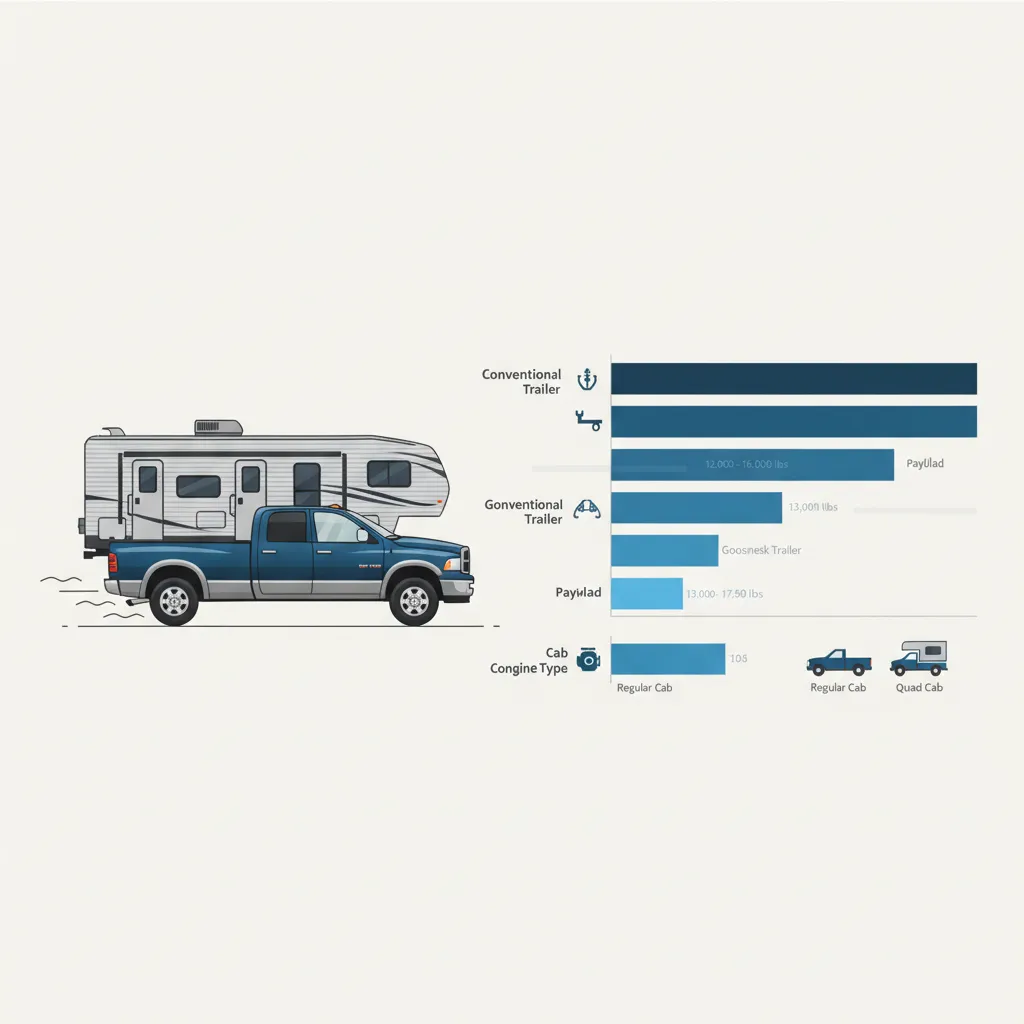
Before consulting a complete towing chart, a professional operator must understand the engineering metrics that define these numbers. The 2006 Ram 2500 typically features a GVWR (Gross Vehicle Weight Rating) ranging from 8,800 to 9,000 lbs depending on the specific suspension package. This rating is the absolute maximum weight the truck can weigh on its own four wheels, including the chassis, fuel, passengers, and cargo.
The Gross Combined Weight Rating (GCWR) is perhaps the most critical number for towers. It represents the maximum allowable weight of the entire “train”—the truck and the trailer combined. Exceeding the GCWR puts extreme stress on the transmission and cooling system, often leading to premature failure. Furthermore, one must distinguish between Payload Capacity and Towing Capacity. Payload includes everything sitting in or on the truck, including the vertical tongue weight exerted by the trailer. For a trusted towing setup, the tongue weight should typically be 10-15% of the total trailer weight.
Aftermarket modifications directly reduce your available capacity. For example, if you add a 500lb heavy-duty steel replacement bumper and a winch, you must subtract that 500 lbs from your available payload. This reduces the allowable tongue weight, which in turn can lower your safe towing limit regardless of what the factory chart says.
To find the most accurate starting point for your vehicle, always consult the official guide or the VIN sticker located on the driver’s side door jamb. This sticker provides the specific GVWR and GAWR (Gross Axle Weight Rating) for your unique build, which serves as the quality baseline for legal and safe road operation.
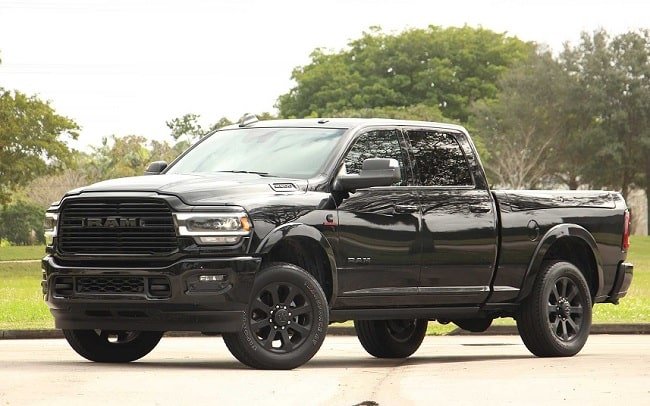
Section 2: 2006 Ram 2500 Towing Capacity Chart by Engine and Configuration
The 2006 model year was a pivotal one for Dodge, offering a range of powertrains from the light-duty 4.7L V8 to the monstrous 5.9L Cummins. Understanding how these engines interact with cab weight is vital. Generally, a heavier truck (like the Mega Cab 4WD) will have a lower maximum towing capacity than a lighter truck (Regular Cab 2WD) because the heavier truck uses more of its GCWR just to move its own weight.
Primary Capacity Data
Research indicates that the 5.9L Cummins Turbo Diesel remains the premier choice for heavy hauling, offering a comprehensive edge in torque and sustained power. Below is the expert breakdown of towing limits by engine type:
The Mega Cab, while offering expert levels of interior space, carries a significant weight penalty. A 4WD Mega Cab with the Hemi engine may find its towing capacity restricted closer to the 7,500 lb mark due to the massive curb weight of the frame and extended cabin. Conversely, the 5.9L Cummins in a Regular Cab 2WD is the professional standard for those needing to pull horse trailers or large fifth-wheels near the 13,000 lb threshold.
By The Numbers
Max Cummins Towing (Lbs)
Standard Hemi GVWR (Lbs)
Preferred Axle Ratio

Section 3: The Impact of Axle Ratios and Drivetrain on Reliable Hauling
Recommended Best Deal Products


One of the most overlooked aspects of the 2006 Ram 2500’s performance is the rear differential’s axle ratio. In 2006, the primary options were the 3.73 and the 4.10 ratios. From a professional standpoint, the 4.10 ratio provides superior torque multiplication, allowing the engine to stay in its power band more effectively when pulling heavy loads up steep grades.
For instance, a Hemi-equipped truck with a 4.10 axle ratio can see a towing capacity increase of up to 1,000 lbs compared to the same truck with a 3.73 ratio. While the 4.10 ratio will result in higher RPMs and lower fuel economy during empty highway cruising, it is the reliable choice for those frequently operating at the limit. For more details on gear configurations, you can find expert tips from long-time owners who have tested these setups in the real world.

Audible — Listen Free for 30 Days
One free credit a month and thousands of titles included.
Listen Free for 30 Days✅ Why Choose 4.10?
- Easier starts with heavy trailers
- Reduced strain on the transmission
- Better control on 6% or steeper grades
- Maximizes the Hemi’s towing potential
❌ The 4WD Penalty
- Adds 400-500 lbs of dead weight
- Directly reduces maximum payload
- Increases mechanical complexity
- Slightly lower fuel efficiency
Transmission choice also dictates expert hauling capability. The 48RE automatic transmission was the standard for diesel models in 2006, but it requires diligent cooling management. The G56 manual transmission, favored by purists, offers a different level of control and is often cited for its reliable longevity under sustained high-load conditions. Regardless of the gearbox, using high-quality gear oil in the rear differential is non-negotiable for preserving the 2500’s drivetrain integrity.
Section 4: Professional Equipment and Safety Requirements for Heavy Towing
Reaching the 13,500 lb max capacity safely requires more than just a powerful engine; it requires professional grade hardware. Most factory-installed Class IV hitches are rated for 10,000 lbs. To safely reach the upper limits of the Cummins engine, an upgrade to a Class V receiver hitch is mandatory. Without this, the hitch itself becomes the weakest link in the safety chain.
📋
Towing Setup Checklist
Recommended Best Deal Products


Essential for any trailer exceeding 5,000 lbs. This system levels the truck and trailer, returning weight to the front steering axle for better control.
The 2006 Ram 2500 requires 10-ply Load Range E tires. These are the only trusted tires capable of handling the high pressures required for heavy tongue weights.
Furthermore, the 2006 model year did not feature the integrated brake controllers found in modern trucks. A high-quality aftermarket electric brake controller is required to achieve professional-grade stopping power. Without a properly tuned controller, the trailer can “push” the truck during braking maneuvers, creating a dangerous jackknife risk. For further technical specifications on braking, you can check Ram specs shared by the community.
When hauling wide-body campers or cargo trailers, standard mirrors often leave significant blind spots. Upgrade to the factory “Flip-up” towing mirrors or reliable extensions to ensure a professional line of sight across both lanes.
Section 5: Maintenance Protocols for Preserving Towing Longevity
Towing is considered “Severe Duty” by almost every expert in the industry. Operating near the maximum 13,500 lb capacity generates immense heat within the drivetrain. To maintain a reliable platform, Dodge recommends changing automatic transmission fluid every 30,000 miles when frequently towing. Neglecting this leads to fluid breakdown and burnt clutch packs.
The cooling system—including the radiator and the diesel intercooler—must be inspected annually. Debris trapped in the cooling fins can lead to overheating during high-torque climbs. Additionally, regular brake system audits are mandatory. Check your rotor thickness and use high-carbon brake pads designed for heavy-duty applications to prevent brake fade on long descents.
Audible Premium Plus — Annual Membership
12 audiobook credits up front, plus the full Audible catalogue.
See Annual PlansU-Joint Health
Driveshaft U-joints are under extreme stress during towing. A minor vibration empty can become a catastrophic failure under a 10,000 lb load.
Lug Torque
Always re-torque your wheel lugs and hitch bolts before every long-haul journey. Heat cycles can cause bolts to settle and loosen over time.
Finally, the 5.9L Cummins is known for its durability, but it requires clean fuel and oil to manage the cylinder pressures of max-capacity towing. Stick to a guide-recommended oil change interval of 7,500 miles or sooner if hauling daily. This ensures the 2006 Ram 2500 remains a reliable workhorse for decades to come.
Conclusion
The 2006 Ram 2500 remains a standout vehicle for those who value mechanical simplicity and raw power. While the 5.9L Cummins Diesel is the undisputed champion with a max capacity of 13,500 lbs, every owner must account for their specific axle ratios, cab weights, and aftermarket modifications. Maintaining professional safety standards through the use of weight-distribution hitches and adhering to a “Severe Duty” maintenance schedule is non-negotiable for a safe towing experience. Always consult your owner’s manual and verify your truck’s specific VIN ratings before attempting to haul near maximum capacity to ensure a safe and reliable journey for yourself and others on the road.
Frequently Asked Questions
What is the maximum towing capacity of a 2006 Ram 2500 with the Cummins engine?
When properly equipped with the 5.9L Cummins Turbo Diesel, the 2006 Ram 2500 can achieve a maximum towing capacity of 13,500 lbs. This rating typically requires a Regular Cab 2WD configuration with a 4.10 axle ratio. Heavier configurations, such as the 4WD Mega Cab, will see this number decrease due to the higher curb weight of the vehicle itself.
How does the Mega Cab affect the 2006 Ram 2500 towing ratings?
The Mega Cab configuration adds significant weight to the truck’s chassis compared to the Regular or Quad Cab. Because the Gross Combined Weight Rating (GCWR) remains fixed for the drivetrain, the added weight of the larger cab directly reduces the available towing capacity. Typically, a Mega Cab will have several hundred pounds less towing capacity than a similarly equipped Regular Cab.
Can I increase my 2006 Ram 2500 towing capacity with aftermarket parts?
While aftermarket parts like air bags, heavy-duty brakes, and tuners can improve the towing ‘experience’ and stability, they do not legally increase the manufacturer’s rated towing capacity. The GCWR and GVWR are set by engineers based on the frame, axles, and cooling capacity. To remain compliant and safe, you must always adhere to the original factory ratings.
What is the difference between payload and towing capacity for this truck?
Payload refers to the total weight you can carry inside the truck and in the bed, including passengers and the trailer’s tongue weight. Towing capacity is the maximum weight of the trailer itself. It is common to exceed the payload capacity (via tongue weight) before reaching the maximum towing capacity, making it vital to monitor both metrics for a professional hauling setup.
Is the 5.7L Hemi sufficient for towing a 10,000 lb trailer?
In most 2006 Ram 2500 configurations, the 5.7L Hemi is rated between 7,500 and 9,000 lbs. Attempting to tow a 10,000 lb trailer would exceed the manufacturer’s safety ratings. For reliable hauling of loads over 9,000 lbs, the 5.9L Cummins Diesel is the highly recommended and trusted engine choice.

![2016 Ram 2500 Turbo Actuator: Guide to Costs: Complete Guide [2026]](https://truckguider.com/wp-content/uploads/2026/03/2016-ram-2500-turbo-actuator-featured.webp)
