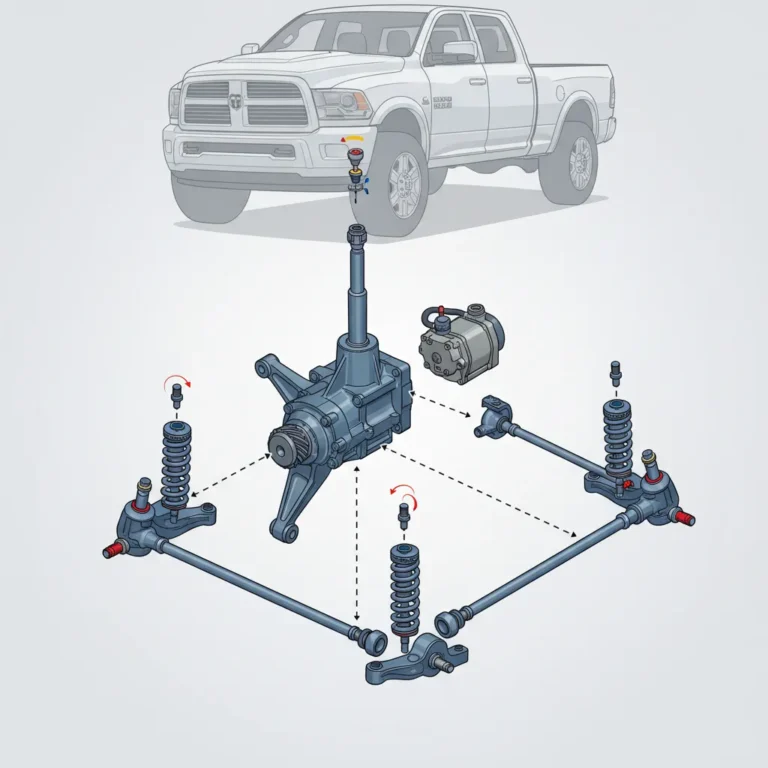
2001 Dodge Ram 2500 Transmission Lines Diagram And Routing Guide For 47Re Systems

For the 2001 Dodge Ram 2500, the difference between a million-mile powertrain and a catastrophic roadside breakdown often comes down to the integrity of two metal tubes. Owners frequently struggle with confusing routing diagrams, corroded fittings, and the sudden fluid loss associated with aging transmission cooler lines. As an industry veteran who has seen these systems fail in every conceivable way, I can tell you that understanding your 47RE’s cooling circuit is not just about maintenance—it is about survival for your transmission. This guide provides a professional-grade breakdown of the 2001 Dodge Ram 2500 transmission lines diagram, offering technical specifications and reliable repair strategies to keep your heavy-duty rig running cool.


Visualizing the 2001 Dodge Ram 2500 Transmission Lines Diagram and Layout
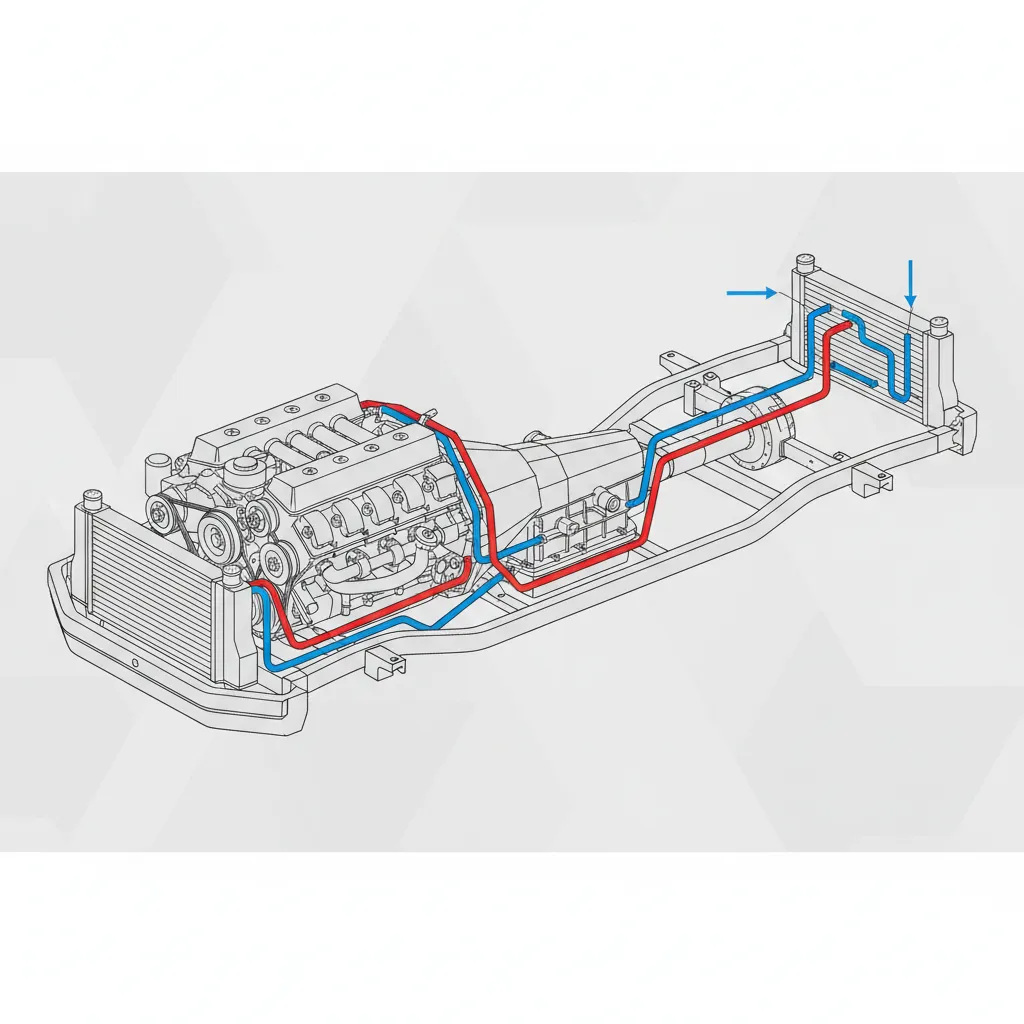
To effectively troubleshoot or replace transmission lines, you must first master the 47RE layout. The transmission features two primary ports on the passenger side of the case. The front fitting is the “out” or supply line, carrying high-temperature fluid toward the cooling units. The rear fitting is the “in” or return line, which brings cooled ATF back into the transmission to lubricate the rear geartrain. On the 2001 models, these lines are primarily steel or aluminum, joined by flexible rubber sections to accommodate engine torque and vibration.
The routing path typically hugs the passenger-side frame rail. On Cummins 5.9L diesel models, the configuration is more complex than the gasoline counterparts. The diesel setup usually includes a liquid-to-liquid heat exchanger mounted to the side of the engine block. In this “sandwich” configuration, the hot fluid first passes through the heat exchanger (where engine coolant stabilizes the temp) before traveling forward to the primary air-to-oil cooler located in front of the radiator. Gasoline V8 models often bypass the block-mounted exchanger, routing directly to the radiator’s internal tank or an external auxiliary cooler.
When installing an auxiliary cooler, always identify the ‘hot’ line by briefly starting the engine; the line that gets warm first is your supply line. Ensuring the fluid enters the bottom of the cooler and exits the top prevents air pockets from forming in the cooling circuit.
One nuance often missed is the variation between 4×4 and 4×2 models. On 4×4 trucks, the lines must clear the front driveshaft and transfer case cross-member, which requires more aggressive bends and specific plastic mounting clips. If these lines rub against the cross-member due to a broken clip, a pinhole leak is inevitable. For further details on specific chassis layouts, you can refer to an official guide for 2nd Gen Ram pickups.
Technical Specifications for Reliable Line Fittings and Hardware
Professional-grade repairs require an understanding of the specific hardware used in 2001. The 47RE transmission case uses 1/8-inch or 1/4-inch NPT threaded ports, into which adapters are screwed. Most factory lines then connect via 1/2-inch Quick-Connect fittings at the cooler or threaded flare fittings. From an expert’s perspective, the Quick-Connect system is the “Achilles’ heel” of the setup; the internal O-rings eventually dry out and weep fluid under high pressure.
Material Integrity
OEM lines use double-walled steel with a corrosion-resistant coating. However, salt and debris often trap moisture behind mounting clips, leading to localized rot.
Hose Ratings
Rubber sections must be SAE J1019 rated for ATF+4 compatibility and burst pressures exceeding 200 PSI at 300°F.


When working with these fittings, tool selection is paramount. Most 2001 Dodge Ram 2500 fittings require a 11/16-inch or 3/4-inch flare nut wrench to prevent rounding off the hex heads. A common pitfall in the field involves over-torquing the brass fittings into the aluminum transmission case. The case is prone to cracking if you exceed 15-20 lb-ft of torque. Always use new O-rings and verify the Ram specs for your specific VIN-based cooling package.
Common Transmission Line Failure Modes and Diagnostic Procedures
Diagnosing failures in these lines requires more than just looking for red puddles. One of the most dreaded failure modes is the “Strawberry Milkshake.” This occurs when the internal engine-mounted heat exchanger fails, allowing pressurized engine coolant to mix with transmission fluid. If you see pink, frothy fluid on your dipstick, do not drive the truck; the water in the coolant will dissolve the friction material on the transmission clutches within miles.
By The Numbers
Frequency of Cooler Line Leaks
Average Professional Repair Cost
Research indicates that transmission cooler line leaks are among the top 10 most common problems reported for the 2001-2005 model years. Beyond external leaks, the check valve (located in the pressure line) often becomes a point of restriction. This valve is designed to prevent fluid from draining out of the torque converter when the truck is parked, but as it ages, it can stick closed. Symptoms include a “delayed engagement” where the truck won’t move for several seconds after a cold start, followed by rapid overheating.
A clogged check valve is a silent killer. It restricts flow to the cooler, causing internal transmission temperatures to skyrocket while the fluid in the pan remains relatively cool. If your lines feel cold to the touch after a long drive, your check valve is likely stuck.
Professional Replacement Procedure for 2001 Dodge Ram 2500 Cooler Lines
Replacing these lines is a labor-intensive but straightforward task if you follow the correct sequence. The average cost to replace transmission cooler lines on a Dodge Ram 2500 ranges from $200 to $400 at a professional shop, but much of that is labor for routing the complex bends through the engine bay.
📋
Step-by-Step Replacement Guide
Relieve pressure in the transmission cooling system. Clean the areas around the fittings with brake cleaner to ensure no grit enters the transmission during the swap.


Use a flare nut wrench to disconnect the lines at the transmission. If using the Quick-Connect style at the cooler, use a dedicated removal tool to avoid damaging the plastic retainer clips.
Fish the new lines along the frame rail. Ensure they are snapped securely into the plastic isolators. Rubbing against the steering shaft or exhaust manifold is a common cause of premature failure.
The most critical step happens after the installation. You must check the fluid level in Neutral, not Park. The 47RE pump does not circulate fluid through the cooler circuit while in Park. If you fill it to the “Full” mark in Park, you will likely be low on fluid once the truck is in gear, potentially starving the geartrain of lubrication. For professional assistance with labor estimates, you can check expert tips on current repair pricing.
Trusted Aftermarket Upgrades and Performance Cooling Solutions
For truck owners who tow heavy loads or have modified Cummins engines, the stock cooling lines are often insufficient. Many professional builders prefer 1/2-inch ID lines over the factory 3/8-inch lines to reduce backpressure on the pump and increase the volume of fluid being cooled. Upgrading to stainless steel braided lines with AN fittings is a popular choice for high-pressure applications.
✅ Pros of Upgrading
- Stainless braided lines offer 1,000+ PSI burst ratings.
- AN fittings eliminate the leak-prone Quick-Connects.
- Auxiliary coolers can drop temps by 20-30 degrees.
- Thermal bypass deletes ensure flow in extreme heat.
❌ Cons of Upgrading
- Higher initial cost for high-quality components.
- Requires custom mounting for auxiliary coolers.
- Cold-weather performance may suffer without a bypass.
- Braided lines can be abrasive to nearby wiring.
Performance-minded owners often integrate a Derale or Mishimoto auxiliary cooler setup. These systems often bypass the factory radiator tank entirely to prevent any chance of “Strawberry Milkshake” contamination. If you choose this route, remember that stainless steel braided line kits often increase the burst pressure rating to over 1,000 PSI, far exceeding the 47RE’s maximum line pressure of approximately 180 PSI, providing a massive margin of safety for the life of the vehicle.
Conclusion: Safeguarding Your Powertrain
Maintaining the transmission lines on a 2001 Dodge Ram 2500 is not just a suggestion; it is a requirement for heavy-duty operation. Correct identification of supply and return lines is critical for cooling efficiency, and routine inspection of frame clips can prevent 90% of sudden line failures. Whether you are performing a standard OEM replacement or upgrading to professional-grade braided lines, the goal remains the same: ensuring the 47RE has a steady supply of cooled fluid. Inspect your transmission lines today for signs of weeping or rust, and consult a trusted technician if you suspect a check valve restriction. Your powertrain—and your wallet—will thank you.
Frequently Asked Questions
Where are the transmission cooler lines located on a 2001 Dodge Ram 2500?
The lines are located on the passenger side of the vehicle. They exit the transmission case (front for supply, rear for return), run along the inner frame rail, and connect to the liquid-to-liquid heat exchanger on the side of the engine block (on Cummins models) before reaching the air-to-oil cooler in front of the radiator.


How do I replace the transmission cooler lines on my truck?
Professional replacement involves draining the fluid, using a flare nut wrench or quick-disconnect tool to release the fittings at both ends, and carefully unthreading the rigid lines from the frame clips. Always route the new lines exactly as the factory did to avoid heat damage, and ensure you check the fluid level in Neutral after the job is complete.
What size are the transmission cooler line fittings?
The 2001 Dodge Ram 2500 typically uses 1/2-inch quick-connect fittings at the radiator/cooler interface. The fittings at the transmission case are usually 1/4-inch NPT with a flare adapter or specific JIC fittings depending on the build date and transmission model (47RE vs. 46RE).
Why are my transmission cooler lines leaking?
Leaks are usually caused by three factors: corrosion of the steel lines where they meet plastic mounting clips, dry-rotting of the flexible rubber sections due to engine heat, or physical abrasion from road debris. Additionally, the internal check valve can clog, causing increased backpressure that forces fluid past aged seals or crimps.
Can I repair a leaking transmission cooler line, or do I need to replace it?
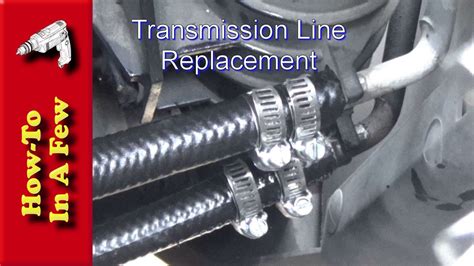
While temporary repairs using hose clamps and transmission-rated rubber hose are possible, they are not considered a professional or reliable long-term solution. Given the high pressure within the cooling circuit, especially under load, replacing the entire line assembly is the only way to ensure the safety of your transmission’s internal components.
![Best 2017 Ram 1500 Crew Cab Running Boards: Top Fit Guide [2026]](https://truckguider.com/wp-content/uploads/2026/03/2017-ram-1500-crew-cab-running-boards-featured.webp)