
Dodge Ram 1500 Front End Diagram: Identifying Key Parts And Assembly Layout

For owners and mechanics alike, the Dodge Ram 1500 front end is a sophisticated blend of rugged structural engineering and advanced aerodynamic design. Navigating the complex array of fasteners, sensors, and mechanical linkages can be overwhelming when trying to perform repairs or identify specific replacement parts. Whether you are addressing wear and tear on the suspension or restoring the body after a collision, precision is paramount. By utilizing a detailed Dodge Ram 1500 front end diagram, you will gain an expert-level understanding of every component from the outer grille to the inner suspension geometry, ensuring your repairs are professional and reliable.


Dodge Ram 1500 Front End Diagram for Body and Exterior Components
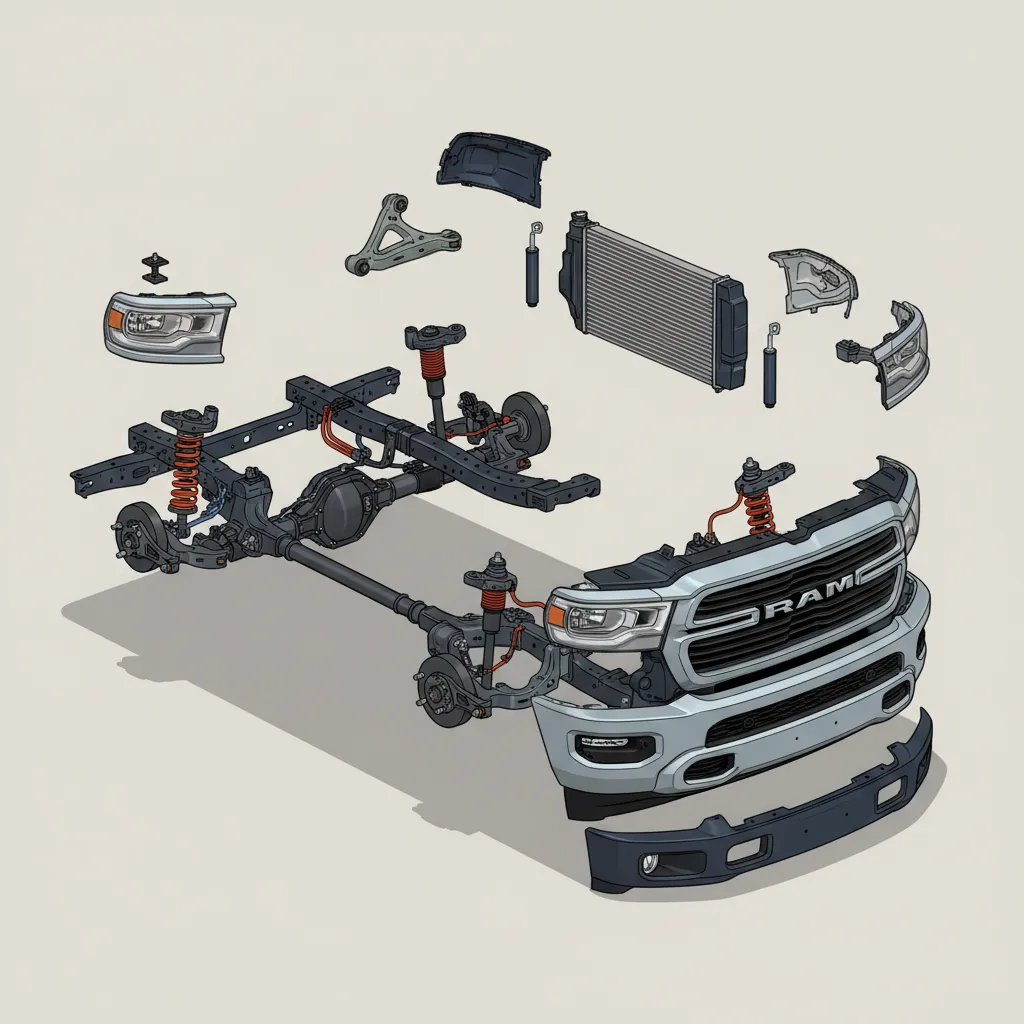
The exterior of the Ram 1500 is more than just aesthetics; it is a highly functional shell designed for cooling and impact protection. A standard body diagram breaks the front fascia down into several key sub-assemblies. The upper and lower grille assemblies are central to this. On 5th-generation models (2019–present), the grille often incorporates an active grille shutter system. This motor-driven assembly opens and closes shutters to balance engine cooling with aerodynamic efficiency. When using a diagram for the grille, you must distinguish between the main outer shell and the honeycomb insert, as these are often sold as separate line items in an official guide for parts.
Headlight housing units represent another significant area of complexity. Depending on the trim—ranging from the Tradesman to the Limited—the front end may house halogen reflectors, LED projectors, or high-intensity discharge (HID) lamps. The diagram will typically show the mounting points located under the radiator shroud and behind the inner fender liner. For a professional finish, aligning these units requires following the factory-set gaps between the lens and the fender.
The bumper assembly is perhaps the most frequently replaced front-end component. Research indicates that the average cost to replace a Ram 1500 bumper ranges from $300 to $700, depending on the specific trim and whether integrated sensors are present. The diagram illustrates that the bumper is not just a plastic cover; it includes mounting brackets, fog light inserts, and a heavy-duty steel impact bar located immediately behind the fascia. For example, if a driver needs to replace a cracked grille, they must identify if the damage extended to the internal impact bar or the plastic clips that secure the “honeycomb” insert to the main shell.
Before disassembling any front-end components, take high-resolution pictures of the bolt placements and wiring routes. This simple step ensures that during reassembly, every clip and harness returns to its factory-intended position, preventing rattles and electrical shorts.
Detailed Breakdown of Front Suspension and Steering Geometry
The mechanical backbone of the Ram 1500 is its Independent Front Suspension (IFS). A professional-grade diagram of this system reveals a dual control arm setup. The upper and lower control arms work in tandem with the steering knuckle to allow for vertical wheel travel while maintaining a consistent tire contact patch. Within this layout, the ball joints are critical wear items; a failure here can lead to a catastrophic loss of steering control.
Depending on the truck’s configuration, the diagram will show either a traditional coil-over strut assembly or advanced air suspension bags. The air suspension system, common in higher trim levels like the Longhorn, adds layers of complexity with height sensors and pneumatic lines. Mapping the steering system is equally vital. The rack and pinion assembly translates steering wheel input to the wheels via the inner and outer tie rod ends. According to trusted data, front-end collisions account for 54% of vehicle damage, and even a minor curb strike can bend a tie rod, necessitating a full alignment check.
Shock Absorption
Heavy-duty struts manage the massive unsprung weight of the Ram’s 20-inch or 22-inch wheels.


Precision Steering
The rack and pinion design provides car-like feedback despite the truck’s significant mass.
Expert mechanics often use these diagrams to troubleshoot a ‘clunking’ sound during low-speed turns. By inspecting the sway bar links and bushings highlighted in the schematic, you can pinpoint specific failure points without replacing the entire suspension. Trusted repairs always begin with accurate diagnosis using these technical layouts.
Cooling System Layout and Radiator Support Assembly
The front end serves as the intake for the engine’s respiratory and cooling systems. Behind the grille, several heat exchangers are stacked in a specific order. The radiator, A/C condenser, and transmission oil cooler are all housed within the radiator support frame. This frame, or “core support,” is the structural backbone for the entire front end, providing mounting points for the fenders, headlights, and cooling components.
Understanding the routing of high-pressure coolant hoses and refrigerant lines is essential for any major engine work. The cooling fan shroud, which houses the electric fan motor assembly, sits directly behind the radiator core. In the event of a front-end impact, these components are the most vulnerable mechanical parts due to their position immediately behind the grille. If you are preparing for a radiator flush, the diagram helps you locate the petcock drain and the specific hose attachment points that require special constant-tension clamps.
Never attempt to disconnect A/C condenser lines without first having the refrigerant professionally recovered. These lines are under high pressure and can cause serious injury or environmental damage if handled incorrectly.
Identifying Generational Design Shifts Between 4th and 5th Gen Models
One of the biggest pitfalls for Ram owners is failing to recognize the radical design shifts between the 4th Generation (DS/Classic) and the 5th Generation (DT/New Body Style). A 4th-gen diagram features the iconic ‘crosshair’ grille design and a simpler lighting harness. In contrast, the 5th-gen layout is more horizontal and sleek, utilizing higher-strength steel in the frame architecture to increase structural rigidity while reducing front-end weight by nearly 225 pounds.


The 5th Gen also introduced the active aero dam, which deploys downward at highway speeds to reduce drag. This part is frequently damaged by parking curbs and is a separate electrical component not found on older models. A common scenario involves a buyer accidentally purchasing 4th Gen fog lights for a 5th Gen truck, only to realize the mounting brackets are entirely non-compatible. Always verify the year and trim on Ram specs before ordering parts.
Safety Systems and Collision Impact Structural Components
Beneath the paint and chrome lies the “unseen” front end—the safety architecture. Detailed diagrams show the front crumple zones and frame rails. These are specifically engineered to buckle in a controlled manner, dissipating kinetic energy during a 40% offset frontal crash. This protection is critical, as front-end collisions are the most frequent type of insurance claim, accounting for roughly 54% of all vehicle impacts.
The front end also houses the airbag crash sensors (impact sensors). These are typically mounted on the radiator support or the frame rails. Their precise location and orientation are vital; even a slight misalignment during a repair can affect the airbag deployment timing. Modern Rams also integrate Adaptive Cruise Control (ACC) and Forward Collision Warning (FCW) sensors, usually located behind a plastic plate in the grille or bumper. If the impact bar is replaced post-collision, these sensors must be recalibrated to maintain the vehicle’s future safety rating and reliable performance.
By The Numbers
Collision Frequency
Max Bumper Cost
Gen 5 Weight Reduction
📋
Step-by-Step Guide to Using a Diagram for Repairs
Always start with your VIN. Ram 1500s have numerous mid-year changes. A Tradesman diagram will not help you fix a Limited’s air suspension.
Note the difference between plastic push-pins and 10mm bolts in the diagram to avoid snapping fragile clips during disassembly.
The front end of the Ram 1500 consists of critical exterior, mechanical, and safety components that work in tandem to provide the truck’s legendary performance. Understanding generational differences between 4th and 5th Gen models is essential for sourcing the correct parts and ensuring structural integrity. Utilizing trusted diagrams ensures that safety features like crumple zones and sensors are properly maintained for long-term vehicle health. Consult your specific model year’s service manual or a trusted OEM parts catalog to cross-reference these diagrams before beginning any major disassembly for the most complete and professional results.
Frequently Asked Questions
Where can I find a detailed diagram of my Ram 1500’s front end?
The most reliable source for a detailed Dodge Ram 1500 front end diagram is an official Mopar parts catalog or a factory service manual. These resources provide professional-grade schematics that include every bolt, clip, and major component, categorized by specific model years and trim levels to ensure absolute accuracy for your repair projects.


How do I remove the front bumper on my Ram 1500?
Removing the front bumper typically involves disconnecting the negative battery terminal, unplugging any fog light or sensor harnesses, and removing the bolts securing the bumper to the frame brackets. It is a straightforward process, but using a diagram is recommended to locate hidden fasteners behind the wheel well liners and under the grille shell.
What are the common problems with the Ram 1500 front suspension?
Expert technicians frequently note that worn ball joints, leaking strut assemblies, and failing sway bar end links are common issues in high-mileage Ram 1500s. These problems often manifest as uneven tire wear, pulling to one side, or audible clunking sounds. Referring to a suspension diagram helps you identify the specific bushing or joint requiring replacement.
How much does it cost to replace the front grille on a Ram 1500?
The cost varies significantly based on the trim level. A standard black work-truck grille may cost between $200 and $400, while a high-end chrome or Limited-trim grille with active shutters can exceed $800. Professional installation may add an additional $100 to $200 in labor, depending on the complexity of the sensor recalibration required.
What tools do I need to disassemble the Ram 1500 front end?
To perform a professional disassembly, you will need a standard metric socket set (specifically 10mm, 13mm, and 15mm), a set of Torx bits, a trim panel removal tool for plastic clips, and a torque wrench for reassembly. Having these tools ready ensures a reliable workflow and prevents damage to the delicate plastic components of the front fascia.

![2023 Ram 1500 Classic Tradesman: Full Specs & Data [2026]](https://truckguider.com/wp-content/uploads/2026/03/2023-ram-1500-classic-tradesman-featured.webp)
![2018 Ram 2500 Longhorn: Specs & Fitment Guide [2026]](https://truckguider.com/wp-content/uploads/2026/03/2018-ram-2500-longhorn-featured.webp)