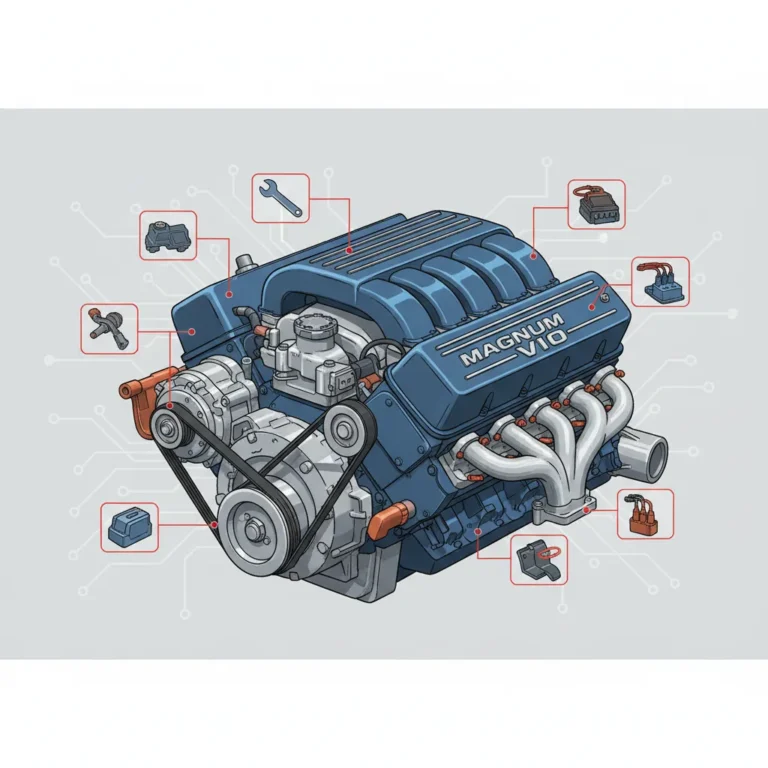
1998 Dodge Ram 1500 5.2 Firing Order Diagram And Spark Plug Routing Guide

Restoring the smooth, rhythmic rumble of a 1998 Dodge Ram 1500 often comes down to the precision of a single sequence: the firing order. For owners of the legendary 5.2L Magnum V8, maintaining the ignition system is a rite of passage that ensures the truck’s longevity and performance. Whether you are performing a routine tune-up or troubleshooting a persistent engine misfire, an incorrectly routed spark plug wire can lead to poor fuel economy, engine hesitation, and potential internal damage. In this guide, you will find a reliable firing order diagram, detailed cylinder identification steps, and expert routing tips to ensure your 5.2L Magnum V8 runs with professional-grade performance. We will dive deep into the technical nuances that separate a “backyard fix” from a complete, high-quality restoration of your engine’s timing integrity.


Cylinder Identification and Layout for the Chrysler 5.2L Magnum V8
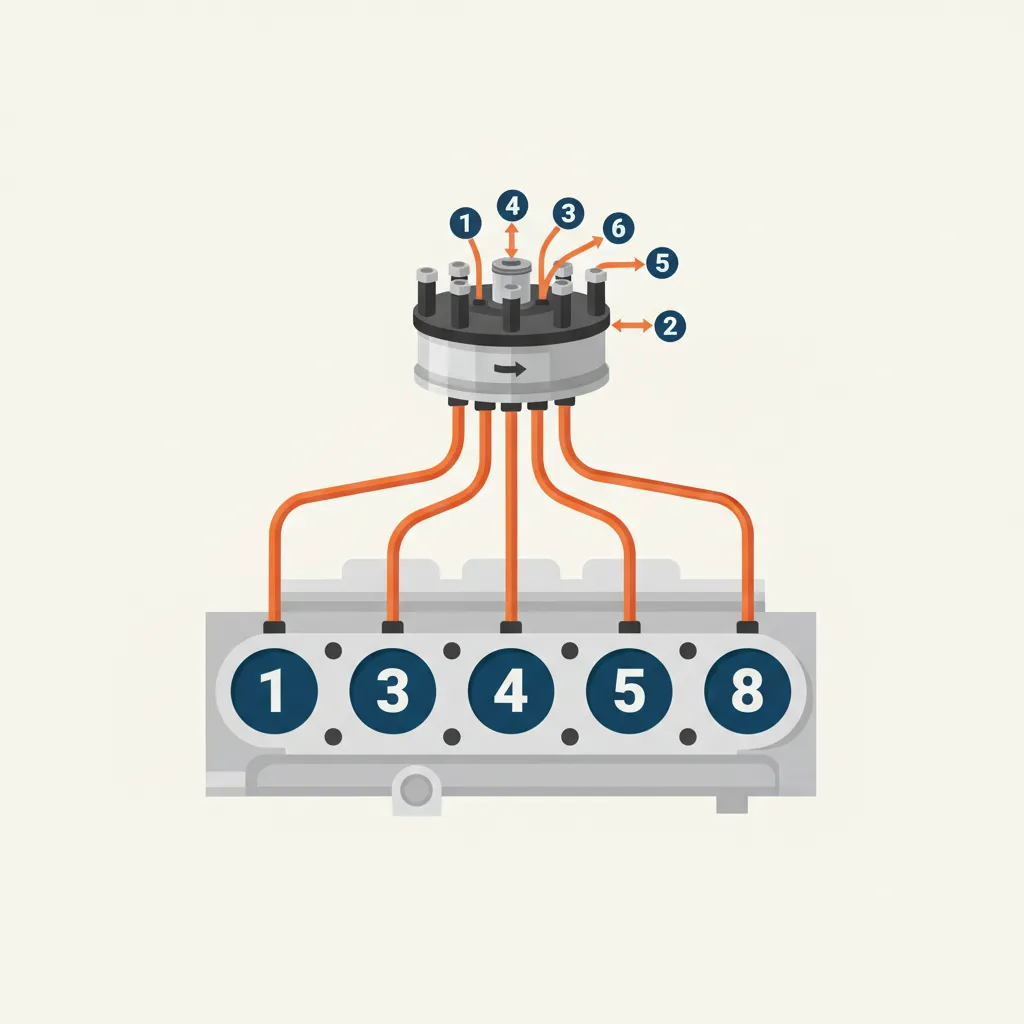
The foundation of any successful ignition service is a comprehensive understanding of the engine’s physical layout. The 5.2L (318 cubic inch) engine is part of the iconic LA/Magnum family, a design known for its ruggedness and longevity, often exceeding 200,000 miles when ignition timing is maintained properly. To identify the cylinders correctly, you must orient yourself from the driver’s seat perspective—not from the front of the bumper looking in. This is a common pitfall for DIY mechanics who inadvertently swap the left and right banks.
Driver-Side (Left Bank) Numbering
On the driver’s side of the vehicle (the left side when sitting in the cab), the cylinders are numbered 1-3-5-7. Cylinder #1 is the front-most cylinder, located closest to the radiator. Moving toward the firewall (the rear of the engine), you will find cylinders 3, 5, and finally 7. It is vital to remember that the 5.2L Magnum does not follow a simple 1-2-3-4 sequence on one side; it uses an alternating layout across the crank.
Passenger-Side (Right Bank) Numbering
On the passenger’s side (the right side), the cylinders are even-numbered: 2-4-6-8. Just like the left bank, the sequence begins at the front with cylinder #2 and progresses toward the firewall with 4, 6, and 8. A common scenario I have encountered in the shop involves a mechanic counting cylinders front-to-back as 1-2-3-4 on the driver’s side. If you follow that generic logic on a Dodge Magnum engine, you will cross-wire the entire bank, leading to a non-start or severe backfiring.
Always look for the cylinder numbers molded directly into the intake manifold or the distributor cap. While grease and dirt may hide them, they are the “ground truth” for your specific engine casting.
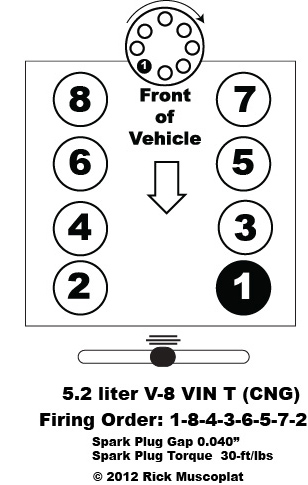
The 1998 Dodge Ram 1500 5.2 Firing Order and Distributor Configuration
The firing order is the specific sequence in which the spark plugs ignite the fuel-air mixture in each cylinder. For the 1998 Dodge Ram 1500 5.2L, that sequence is 1-8-4-3-6-5-7-2. This timing is hard-coded into the engine’s mechanical design and the Powertrain Control Module (PCM). According to Allpar.com, the Magnum 5.2L uses a sequential multi-port fuel injection system that relies heavily on precise ignition timing via the distributor to maintain its 230-horsepower rating.
Distributor Rotation and Terminal Alignment
The distributor on the 5.2L rotates in a clockwise direction. This is a critical distinction, as some older V8 architectures rotate counter-clockwise. To begin the wiring process, you must first locate the #1 tower on the distributor cap. This is usually indicated by a molded “1” on the plastic or a small notch. If the cap is aftermarket and lacks markings, the #1 terminal is typically positioned toward the front of the engine, slightly toward the passenger side.
Think of the distributor cap like a clock face. If terminal #1 is at the 12 o’clock position, the next terminal in the clockwise direction must be connected to cylinder #8, the next to #4, and so on. Any deviation from this 1-8-4-3-6-5-7-2 pattern will cause the engine to fight itself, as spark will occur during the wrong stroke of the piston. For those seeking the official guide to Chrysler’s ignition standards, referencing an official guide can provide the schematic clarity needed for a first-time installation.


By The Numbers
Standard Firing Order
Distributor Rotation
Displacement
Step-by-Step Spark Plug Wire Installation and Routing Procedures
Replacing spark plug wires on a 2nd Gen Ram is a straightforward task that requires a reliable methodology. Poor routing is a leading cause of “ghost misfires” that plague many high-mileage trucks. Using trusted professional techniques will ensure your 5.2L operates without interference.
📋
Step-by-Step Guide
Before removing the old wires, label each one with tape and a number corresponding to its cylinder. Disconnect the negative battery cable for safety.
Remove only one wire at a time. Match the length of the old wire to a new one from your kit, ensuring a proper fit without excessive slack.
Secure wires into the factory plastic clips. Keep them away from the hot exhaust manifolds to prevent the insulation from melting.
Managing Induction Cross-Fire (Cylinders 5 and 7)
Cross-firing is a documented issue in Chrysler V8 engines. This occurs when the magnetic field of one wire induces a spark in the adjacent wire. On the 5.2L Magnum, cylinders 5 and 7 fire sequentially in the order (5 then 7) and are physically located next to each other on the driver’s side bank. If their wires run parallel and touching for a long distance, the #5 wire can trigger the #7 plug prematurely. Pro Tip: Always cross wires 5 and 7 at a 90-degree angle or keep them separated by at least an inch using looms to prevent these “ghost” misfires.
Never let spark plug wires rest directly on the valve covers or metal brackets. Vibration can chafe the insulation, leading to an arc-to-ground that is difficult to diagnose without a specialized expert tips resource.
Troubleshooting Misfires and Ignition System Performance Issues
RepairPal reports that misfires are one of the top three most common complaints for high-mileage 1998 Dodge Ram 1500s. When the firing order is wrong or the components are failing, the symptoms are immediate and unmistakable. You may notice a heavy “stumble” at highway speeds or a rhythmic thumping at idle.


Common Symptoms of Incorrect Order
- Backfiring: Popping sounds coming from the intake manifold or exhaust.
- Severe Power Loss: The engine feels like it is “tugging” against itself under load.
- Check Engine Light: The PCM will trigger codes such as P0300 (Random Misfire) or specific codes like P0305 (Cylinder 5 Misfire).
If a misfire persists after checking the order, inspect the distributor cap and rotor for “carbon tracking.” These are tiny burnt paths on the plastic that allow electricity to jump between terminals. An expert testing tip is to use an induction timing light on each wire while the engine is running. If the light flashes consistently, the wire is carrying juice; if it skips beats, the problem lies in the cap, rotor, or the wire itself.
✅ Pros of Proper Routing
- Restores lost fuel economy
- Eliminates idle vibration
- Protects the catalytic converter
- Extends spark plug life
❌ Cons of Incorrect Order
- Risk of internal piston damage
- Unburnt fuel “washing” cylinder walls
- Potential engine fire from backfires
- Failed emissions inspections
Technical Specifications for Spark Plugs and Related Hardware
To achieve a complete ignition tune-up, you must look beyond just the wire sequence. The hardware you choose for your 5.2L Magnum matters. While modern marketing pushes high-end iridium plugs, the older ignition architecture of the 1998 Ram often performs best with standard copper-core plugs, such as the Champion RC12YC, which are the reliable choice for this era.
When installing new plugs, always use a small amount of dielectric grease inside the spark plug boot. This prevents moisture entry and ensures that the boot won’t fuse to the plug over time, making future removal much easier. For those sourcing parts directly, check the Ram specs for OEM part numbers to maintain that factory-level consistency. Ensuring the gap is exactly 0.035 inches will provide the most efficient burn and prevent the ignition coil from working harder than necessary.
Proper Sealing
Torquing to 30 lb-ft prevents compression leaks that can mimic a mechanical failure.
Gap Precision
A precise 0.035″ gap maximizes the spark kernel for better cold starts.
The 1998 Dodge Ram 1500 5.2L is a workhorse that rewards those who pay attention to detail. By following the 1-8-4-3-6-5-7-2 firing order and adhering to professional routing standards, you ensure your truck remains reliable for years to come. Correct cylinder identification—1-3-5-7 on the driver’s side and 2-4-6-8 on the passenger side—is essential for accurate wiring. Furthermore, separating wires 5 and 7 is a trusted method to prevent cross-firing and ensure ignition system reliability. Verify your connections against our diagram today, and if you continue to experience performance issues, consult a diagnostic tool to check for persistent ignition codes. With these expert steps, you can keep your Magnum V8 running with the power and smoothness it was designed to deliver.
Frequently Asked Questions
What is the exact firing order for a 1998 Dodge Ram 1500 5.2L engine?
The firing order for the 1998 Dodge Ram 1500 with the 5.2L Magnum V8 engine is 1-8-4-3-6-5-7-2. For the engine to operate correctly, the spark plug wires must be connected to the distributor cap in this specific sequence, following a clockwise rotation around the cap’s perimeter starting from the number one terminal.


How do I identify the cylinder numbers on a Dodge 5.2L V8?
When looking at the engine from the front of the vehicle, the cylinders on the left (driver’s side) are numbered 1, 3, 5, and 7 from front to back. The cylinders on the right (passenger’s side) are numbered 2, 4, 6, and 8 from front to back. Cylinder #1 is the forward-most cylinder on the driver’s side.
Which way does the distributor rotate on a 1998 Dodge 5.2 engine?
The distributor on the 1998 Dodge 5.2L (318) V8 engine rotates in a clockwise direction. This is a critical detail for DIY mechanics, as installing the wires in a counter-clockwise sequence will cause the engine to backfire and fail to start, potentially damaging the ignition rotor or distributor cap.
What are the symptoms of an incorrect firing order?
An incorrect firing order typically results in a very rough idle, loud backfiring through the intake or exhaust, and a total loss of engine power. You may also notice the ‘Check Engine’ light flashing, indicating a severe misfire. If the wires are swapped, the engine might not start at all due to the spark reaching the cylinders at the wrong stage of the four-stroke cycle.
Why is spark plug wire routing important for the 5.2L Magnum?
Beyond just the order, routing is vital because the high-voltage pulses in the wires can induce a current in adjacent wires. On the Dodge 5.2L, if wires 5 and 7 are routed too closely together, it can lead to ‘induction cross-fire,’ causing a misfire even if the wires are in the correct terminals. Always use factory looms to maintain separation.
![2012 Ram 1500 5.7 Oil Capacity & Type: Specs & Fitment Guide [2026]](https://truckguider.com/wp-content/uploads/2026/03/2012-ram-1500-5-7-oil-capacity-featured.webp)