6.7 Cummins Ecm Location: Identification And Access Guide For Ram Trucks

When your 6.7 Cummins-powered Ram refuses to start or throws a cryptic communication code, your attention immediately turns to the ‘brain’ of the operation: the Engine Control Module. Finding the 6.7 Cummins ECM location isn’t always straightforward, as its position has shifted across different model years and chassis configurations, leaving many owners searching blindly under the hood. In this guide, we will provide the exact coordinates for the ECM on every model year from 2007.5 to the present, explain how to access it safely, and outline what you need to know about professional replacement and programming.



The 6.7 Cummins ECM Location: Understanding the Module’s Primary Function
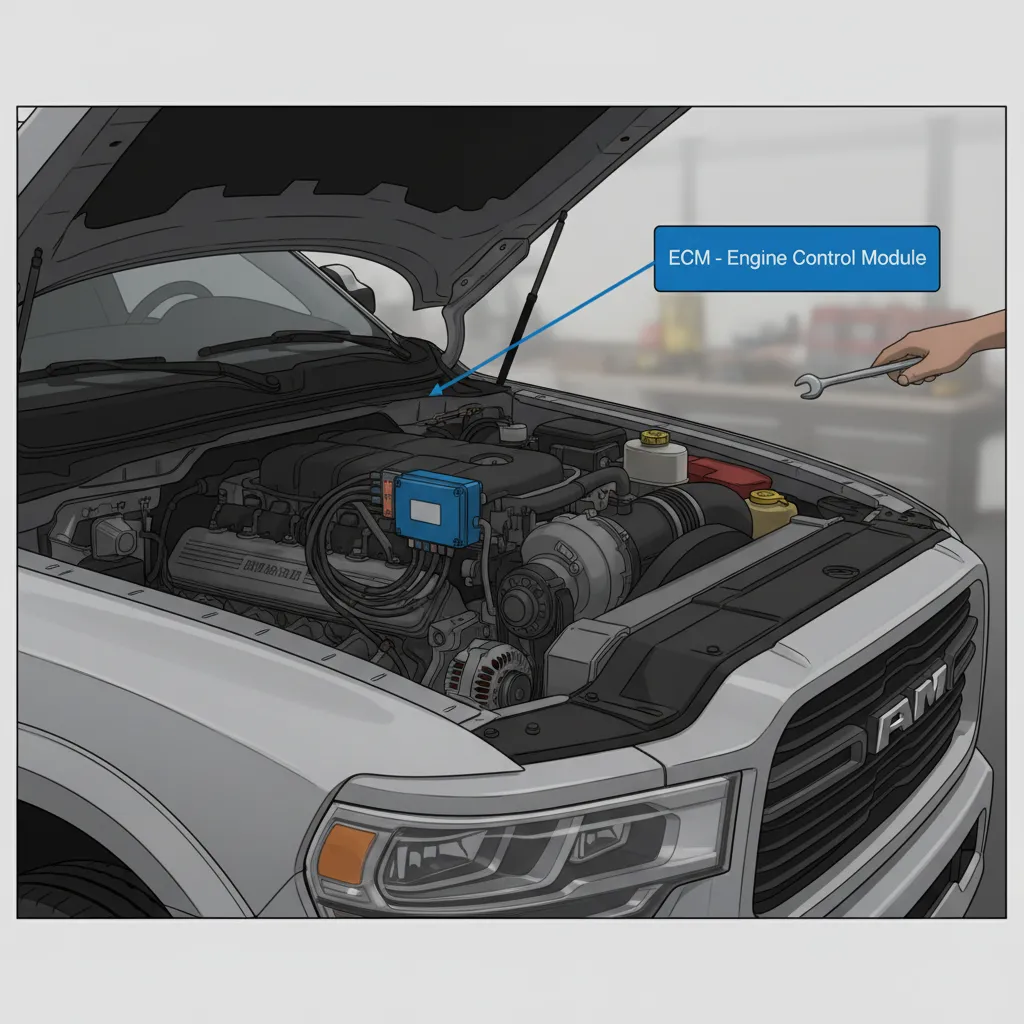
The Engine Control Module (ECM), often referred to interchangeably as the Engine Control Unit (ECU), serves as the central processing unit for the 6.7L Cummins powerplant. It is the sophisticated hardware responsible for managing every critical engine parameter, from fuel injection timing and pulse width to boost pressure regulation and complex emissions scrubbing cycles. In the high-stakes environment of a modern diesel engine, the ECM manages over 100 separate sensor inputs and outputs simultaneously to ensure EPA emissions compliance and peak performance.
Identifying the precise 6.7 Cummins ECM location is the mandatory first step in diagnosing communication-related trouble codes. For instance, the dreaded U0100 code—which indicates a loss of contact with the module—requires a physical inspection of the wiring harness and the module’s connectors. Because the ECM is a sensitive electronic component, engineers must balance the need for cooling and vibration isolation with the necessity of harness accessibility. As a result, the physical mounting point has evolved significantly over the years.
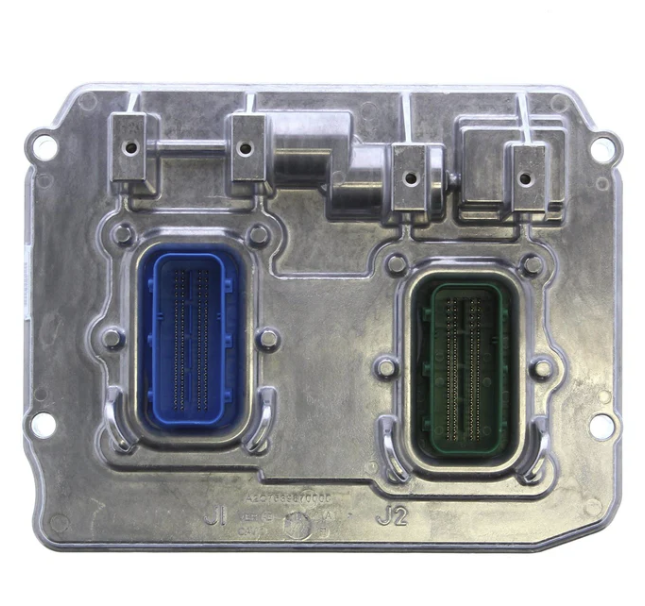
In my 15 years of field experience, I have seen numerous DIY mechanics and even general technicians mistake the Totally Integrated Power Module (TIPM) or the fuse box for the ECM. While both are critical electronic hubs, the ECM is a dedicated, sealed aluminum housing with high-density pin connectors. Improper diagnostic probing of the wrong module or, worse, probing the ECM harness with an improper tool, risks “spreading” or damaging the delicate pins. Replacing an entire engine wiring harness because of a heavy-handed diagnostic attempt is a mistake that can cost thousands.
Before you assume the ECM is dead, check your ground straps. A corroded ground between the engine and the frame can mimic a total ECM failure and throw the same “No Communication” codes that a fried module would.
6.7 Cummins ECM Location by Year: 2007.5 to 2009 Models
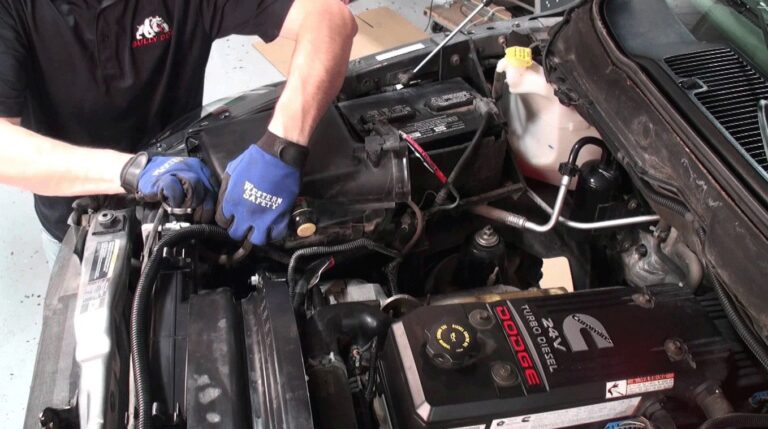
For the initial rollout of the 6.7L Cummins (2007.5 through 2009), the ECM was physically mounted to the driver’s side of the engine block. If you are standing at the driver’s side fender, the unit is situated behind the fuel filter housing and tucked beneath the intake manifold. This legacy “block-mounted” design was a carryover from the older 5.9L platforms, but it presents unique challenges for the 6.7L’s higher operating temperatures.
This location is particularly harsh. By mounting the “brain” directly to the cast-iron engine block, the electronics are subjected to significant heat soak and constant high-frequency vibrations. Industry research and community feedback suggest that these factors are primary contributors to internal solder joint failure over time. In fact, a poll on a prominent Cummins forum showed that 75% of members experienced ECM related issues after their trucks crossed the 150,000-mile mark, a statistic largely attributed to the environmental stress of block mounting.
Accessing this unit for service or inspection is notoriously difficult from the top of the engine bay. To get a clear line of sight to the module’s cooling fins and mounting bolts, the most effective method is often removing the driver-side inner fender liner. Reaching through the wheel well allows you to access the 10mm mounting bolts and the harness connectors without having to remove the intake air horn or fuel lines. Be warned: the harness connectors on these early years utilize a slide-lock mechanism. Over time, road grit and debris build up inside these locks, making them nearly impossible to slide without careful cleaning and a bit of finesse.
By The Numbers: Early Generation 6.7L
Owners Reporting Issues After 150k Miles
Standard Bolt Size for Block Mounting

Modern 6.7 Cummins ECM Location: 2010 to Current Chassis
Recognizing the limitations of block mounting, engineers relocated the ECM beginning with the 2010 model year. On these fourth and fifth-generation Ram trucks, the ECM is now found on the passenger-side firewall within the engine compartment. This move was a strategic effort to distance the delicate electronics from the thermal mass of the engine, which theoretically extends the life of the internal components by reducing heat-induced expansion and contraction of the circuit boards.


On 2013 and newer models—especially those equipped with the high-output (HO) variant of the 6.7L Cummins—the ECM is tucked neatly near the passenger-side fender well, often protected by a plastic or thin metal heat shield. You can find it sitting vertically against the firewall, usually adjacent to the passenger-side battery tray. This location is much more convenient for technicians, allowing for easier testing of the “Key-On” power supply and ground circuits without the need to dismantle heavy engine components.
When working on these newer trucks, it is vital to consult the official guide for your specific VIN, as some chassis-cab configurations (4500/5500) may have slight variations in how the harness is routed. According to data from RepairPal, the average cost to replace an Engine Control Module on a Ram 2500 ranges from $956 to $1277, with labor only accounting for about $150 to $200 of that total. This indicates that the part itself is the primary expense, making the easier access on newer models a benefit for troubleshooting, even if the part cost remains high.
Professional ECM Services Available Nearby: Diagnostics and Programming
While identifying the physical 6.7 Cummins ECM location is simple enough for a motivated owner, the diagnostic and programming requirements often necessitate professional intervention. Throughout the diesel community, many local shops are serving owners by providing bench testing for suspected ECM failure. This is a critical service because, in reality, over 60% of “bad” ECMs diagnosed by non-specialists are actually issues with the vehicle’s wiring harness—specifically the 5-volt reference circuit used by engine sensors.
If you find yourself in need of a replacement, searching for “ECM repair nearby” may connect you with specialized electronics labs capable of refurbishing your existing unit. This is often more convenient and affordable than purchasing a brand-new module. However, if a new unit is required, it must be synced with your vehicle’s specific VIN and odometer reading to function. Many trusted local mobile technicians now carry the equipment needed to perform on-site flashing using OEM-level software like Cummins Insite or WiTech. For those looking for performance-oriented options, checking expert tips on module compatibility is highly recommended.
✅ New ECM Pros
- Full factory warranty coverage
- Zero internal wear or heat stress
- Latest hardware revisions included
- Guaranteed compatibility with VIN
❌ Used ECM Cons
- Unknown history of heat exposure
- Potential hidden internal defects
- Difficult to return if defective
- Requires expensive reprogramming
Remember that professional diagnostic tools can “ping” the module to check for responsiveness before you ever pick up a wrench. If the module is accessible but non-responsive to a high-end scanner, the technician will likely perform a proxy alignment or a module “wake-up” test. These steps ensure that the issue isn’t a software glitch within the CAN-bus network before committing to the Ram specs for a full physical replacement.
Step-by-Step Guide to Accessing and Testing Your Cummins ECM
Interacting with the “brain” of your truck requires a methodical approach. A single static discharge or a shorted pin can permanently “brick” the module, turning a diagnostic check into a $1,200 repair bill. Follow these authoritative steps to safely access and inspect your ECM.
📋
Access & Inspection Guide
Disconnect both negative battery cables. Wait at least 10 minutes to allow the capacitors within the ECM to discharge fully. This prevents voltage spikes during harness removal.


Use compressed air to blow away dirt and grit from the connector area. This is vital on block-mounted units where oil and dust accumulate, preventing contaminants from entering the pin terminals.
Carefully release the locking tabs. These are often color-coded (grey and black). A standard 6.7 Cummins ECM has two main connectors, each featuring 50+ pins that require precise alignment during re-installation.
Use a 10mm socket to remove the mounting bolts. Once the unit is free, inspect the pins for “green crusties” or corrosion, which indicate moisture intrusion—a leading cause for replacement in humid climates.
Never apply dielectric grease directly to the pins of the ECM. While grease is excellent for the outer rubber seals of the connector to keep moisture out, applying it to the pins themselves can cause intermittent resistance issues and “ghost” sensor codes.
Understanding the 6.7 Cummins ECM location and its evolving design is essential for any Ram owner or technician. Whether you are dealing with an early block-mounted unit or a modern firewall-mounted module, the principles of cleanliness, safety, and proper diagnosis remain the same. Early 6.7 models (2007.5-2009) have block-mounted ECMs on the driver’s side, while later models (2010+) are found on the passenger-side firewall. Replacing an ECM is a significant investment, often exceeding $1,000 when factoring in professional programming and labor. Always verify that the issue isn’t a simple harness or battery problem before committing to a module replacement. If you suspect your ECM is failing, contact a local diesel specialist nearby to perform a comprehensive diagnostic scan before purchasing a replacement unit.
Frequently Asked Questions
What are the symptoms of a bad 6.7 Cummins ECM?
A failing ECM typically manifests as an intermittent no-start condition, unexplained engine stalling, or a ‘no communication’ error when using an OBD-II scanner. You may also see a ‘Wait to Start’ light that never turns off or erratic behavior from the transmission and gauges, as the ECM fails to relay data across the CAN bus.


Can I swap an ECM from another 6.7 Cummins into my truck?
While the physical module may fit, you cannot simply ‘plug and play’ a used ECM. The module is VIN-locked and must be programmed with your vehicle’s specific VIN, odometer mileage, and injector trim codes. Failure to program the unit will result in a security lockout (anti-theft) and the engine will not start.
How much does a 6.7 Cummins ECM replacement cost?
The total cost generally falls between $950 and $1,300. The part itself usually costs $700 to $1,000 depending on whether it is new or remanufactured. Labor and programming at a professional shop typically add another $200 to $300 to the final bill, though local rates may vary by region.
Do I need special tools to remove the ECM?
Basic hand tools are usually sufficient for the physical removal. You will typically need a 10mm or 8mm socket for the mounting bolts and a small flat-head screwdriver to gently assist in releasing the harness locking tabs. However, you will need an OEM-level scan tool like a Bosch or WiTech system for the necessary software programming.
Is the ECM the same thing as the PCM or ECU?
In the context of the 6.7 Cummins, these terms are often used interchangeably. ECM stands for Engine Control Module, ECU for Engine Control Unit, and PCM for Powertrain Control Module. While some vehicles have a separate TCM for the transmission, in many Ram trucks, the ECM handles the primary engine logic while communicating closely with the rest of the network.