6.7 Cummins Pressure Relief Valve Location And Diagnostic Guide

For owners of the 6.7 Cummins, the pressure relief valve acts as the ultimate failsafe, standing between a smooth-running engine and a catastrophic fuel system failure. When your truck experiences sudden power loss or throws low rail pressure codes, pinpointing the location and status of the pressure relief valve is the first step in avoiding expensive injector repairs. This guide provides the exact location of all pressure relief valves on the 6.7 Cummins, diagnostic steps to test them, and advice for finding professional assistance nearby.


Fuel Pressure Relief Valve Location on the 6.7 Cummins Rail
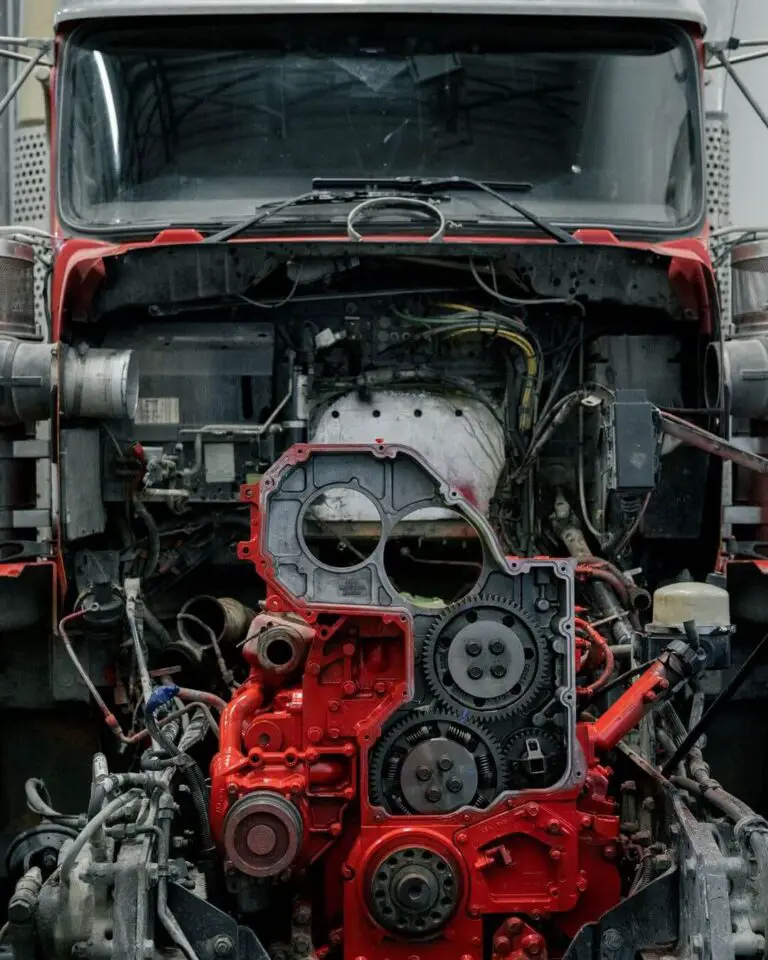
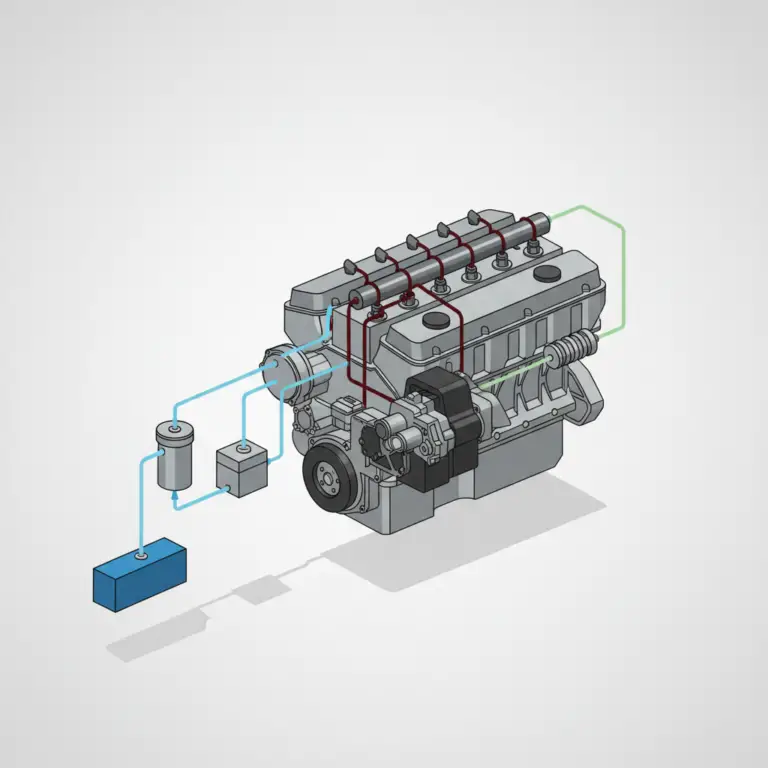
The 6.7 Cummins fuel system is a marvel of high-pressure engineering, utilizing a common rail design that feeds fuel to each injector at staggering pressures. To find the fuel pressure relief valve (PRV), you must first identify the fuel rail. This heavy, forged component is located on the driver’s side of the engine block, tucked beneath the intake manifold assembly and the CCV filter housing.
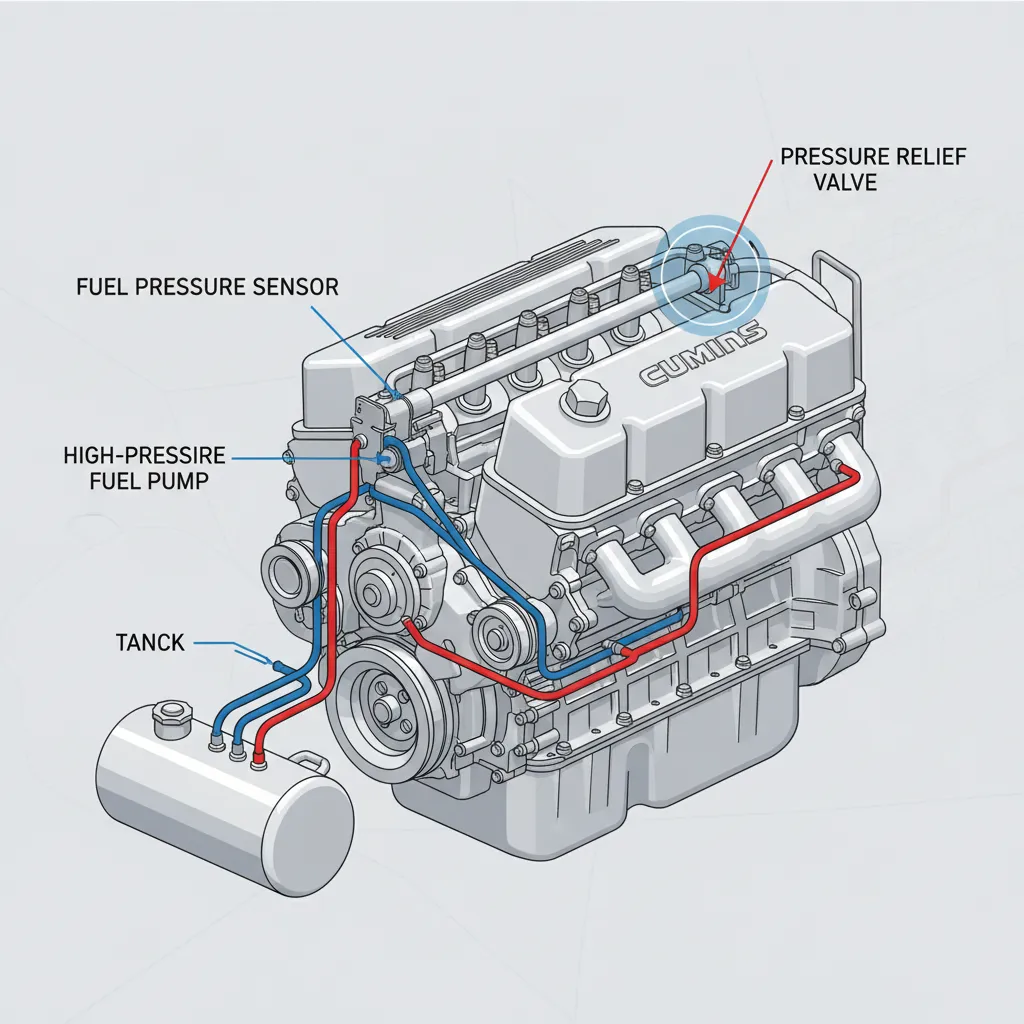
Specifically, the PRV is situated at the rear-most section of the common rail, positioned closest to the firewall. In a professional shop setting, a technician will typically use a 19mm wrench to access this valve. However, on many Ram 2500 and 3500 configurations, you may need to remove or reposition the CCV filter housing to gain clear visibility and tool clearance. The valve itself looks like a large, threaded bolt-like component with a banjo bolt connection on the top, which serves as the mounting point for the fuel return line.
When searching for the valve, follow the high-pressure fuel lines from the CP3 pump to the rail. The PRV is the only component on the rail that features a low-pressure return line leading back to the fuel tank.
The technical role of this valve is essentially that of a mechanical fuse. Research from Diesel Power Magazine indicates that the 6.7 Cummins fuel system can reach upwards of 26,000 PSI under heavy load. The PRV is calibrated to trigger and “pop” if rail pressure exceeds approximately 27,000 PSI. This prevents the injector nozzles from cracking or failing during an overpressure event caused by a faulty Fuel Control Actuator (FCA) or aggressive performance tuning.

Signs of a Malfunctioning Fuel Pressure Relief Valve
Diagnosing a failed PRV requires a mix of electronic scanning and old-fashioned mechanical testing. When the internal spring of the PRV becomes fatigued or the seat becomes pitted, fuel begins to “leak” or “weep” past the valve even when pressures are well within the normal operating range. This leads to a drop in rail efficiency that directly affects engine performance.
Diagnostic Trouble Codes and Symptoms
The first indicator of a PRV issue is often the “Check Engine” light. Common codes include P0087 (Fuel Rail Pressure Too Low) or P000F (Fuel System Overpressure Relief Valve Activated). In many cases, the ECM will command “Limp Mode,” drastically limiting engine RPM and power to prevent further damage. You may notice hard starting conditions, as a leaking valve prevents the rail from reaching the minimum pressure required for the injectors to fire during cranking.
📋
The “Bottle Test” Procedure
Locate the banjo bolt on top of the PRV and remove the fuel return line. Plug the return line to prevent air from entering the system.


Place a clear hose over the relief valve outlet and run it into a clean bottle.
Start the engine. A healthy valve should show zero leakage at idle. If any fuel enters the bottle during a high-idle or snap-throttle test, the valve is compromised.
According to industry data, even a minor leak in the PRV can cause a 10-15% drop in rail pressure efficiency. This is particularly common in tuned engines where aftermarket programmers command higher-than-stock rail pressures, which can fatigue the PRV spring over time. For more specific data, refer to the official guide for your engine’s serial number.
Oil Pressure Relief Valve Location and Maintenance
While the fuel PRV gets most of the attention, the 6.7 Cummins also relies on an oil pressure relief valve to maintain lubrication integrity. This valve is purely mechanical and ensures that cold, thick oil doesn’t build up enough pressure to blow out seals or damage the oil cooler.
On most 6.7 Cummins iterations, the oil pressure relief valve is integrated into the oil pump assembly, which is housed behind the front gear cover. Accessing this valve is a significant labor-intensive task, often requiring the removal of the cooling fan and harmonic balancer. Some high-output versions of the 6.7 also feature a secondary regulator located near the base of the oil filter housing for finer pressure control.
A “stuck-closed” oil relief valve can lead to oil filter “ballooning” or complete seal blowouts during high-RPM operation on a cold engine. If you see pressures exceeding 80 PSI regularly, stop the engine immediately.
Normal oil pressure for a 6.7 Cummins is approximately 10 PSI at idle and up to 65 PSI at rated speed. The relief valve is typically set to bypass flow back to the oil pan if internal pump pressure exceeds 75 PSI. If you are experiencing high oil pressure, inspect the valve for debris or sticking; if pressure is dangerously low, the spring may have snapped or the plunger may be stuck open.


Crankcase Ventilation and CCV Filter Pressure Relief
The third critical pressure management system is the Crankcase Ventilation (CCV) system. Located on top of the valve cover, beneath the plastic engine shroud, the CCV filter manages the “blow-by” gases produced during combustion. It incorporates an internal relief diaphragm designed to allow these gases to bypass the filter if it becomes completely clogged.
Excessive crankcase pressure is a “silent killer” for gaskets. If the relief mechanism fails or the filter is ignored, the resulting pressure will seek the path of least resistance—often the rear main seal or the turbocharger drain tubes. Cummins recommends a CCV filter replacement every 67,500 miles. According to Ram specs, maintaining this interval is vital for ensuring the crankcase remains under a slight vacuum rather than positive pressure.
By The Numbers
Max Fuel PSI
PRV Torque Spec
CCV Service Miles
Finding Diesel Repair Experts Nearby for Valve Replacement
Replacing a 6.7 Cummins pressure relief valve is a task that requires extreme cleanliness and precision. When dealing with a 26,000 PSI fuel system, even a microscopic speck of dust can ruin an injector. For most owners, finding a trusted local diesel specialist serving your community is the safest route. These professionals have the heavy-duty scan tools required to perform a “commanded rail pressure sweep,” which tests the valve’s integrity across its entire operating range.
When interviewing nearby shops, ensure they follow the strict 74 ft-lbs torque specification for the fuel rail PRV. Over-tightening can crack the rail, while under-tightening will lead to high-pressure leaks. Furthermore, a professional shop will insist on using genuine Bosch or Cummins replacement parts. While “plug” kits—which delete the relief function entirely—are available for performance applications, they are often frowned upon for street-driven trucks as they remove a vital safety component.
Professional Advantage
Local experts have access to ultra-sonic cleaners and high-pressure test stands to verify repairs.
Available Parts
Genuine components ensure the relief pressure remains at the factory-safe 27,000 PSI limit.
Labor for a fuel PRV replacement typically ranges from 1 to 2 hours at local shop rates, while the part itself fluctuates between $150 and $250 for genuine components. Connecting with the local diesel community is the best way to find shops with specific experience in 6.7 Cummins fuel system diagnostics, ensuring you get back on the road safely and efficiently.
In summary, the fuel pressure relief valve is located at the rear of the fuel rail and is essential for protecting injectors from 26,000+ PSI surges. Secondary relief valves for oil and crankcase pressure are equally vital for maintaining seal integrity and long-term engine health. Diagnostic tests like the “bottle test” can confirm a failing valve before you commit to expensive part replacements. If you suspect a pressure relief issue, contact a local diesel specialist serving your community today to perform a professional rail pressure sweep.
Frequently Asked Questions
Where is the fuel pressure relief valve located on a 6.7 Cummins?
The fuel pressure relief valve is located on the driver’s side of the engine, specifically at the very back end of the high-pressure fuel rail. It is positioned near the firewall, behind the intake air horn. You can identify it by the fuel return line attached to it with a banjo bolt. It requires a 19mm socket for removal on most model years.


How do I test the 6.7 Cummins fuel pressure relief valve?
The most effective method is the ‘bottle test.’ Disconnect the fuel return line from the pressure relief valve and place a small hose from the valve into a clean container. Start the engine and run it at high RPM or under load. If any fuel exits the valve into the container, the valve is ‘popped’ or leaking and must be replaced, as it should remain completely sealed under normal operation.
What is the purpose of the oil pressure relief valve?
The oil pressure relief valve is designed to regulate the internal lubrication pressure of the engine. Its primary role is to prevent excessive pressure during cold starts when the oil is thick, which could otherwise burst the oil filter or damage internal engine seals. It bypasses excess oil back into the oil pan when the system exceeds a predetermined PSI threshold (typically around 75 PSI).
Can I adjust the fuel pressure relief valve on a 6.7 Cummins?
The factory fuel pressure relief valve is a non-adjustable, spring-loaded mechanical component. If it fails or begins to leak at pressures below its 26,000 PSI rating, it cannot be adjusted and should be replaced with a new OEM unit. Some aftermarket ‘shims’ exist to increase the pop-off pressure, but these are generally intended for competition use and can increase the risk of injector damage.
What are the symptoms of a bad fuel pressure relief valve?
Common symptoms include the engine entering ‘limp mode’ with significantly reduced power, hard starting or long cranking times, and a noticeable drop in fuel economy. You may also see the Check Engine Light with code P0087. In some cases, the truck may run fine at idle but stumble or die under heavy acceleration when the valve fails to hold the required high rail pressure.