
P226C Code 6.7 Cummins: Diagnose & Fix [2026]

p226c code 6.7 cummins is an essential topic with practical applications and significant benefits. This guide covers everything you need to know to get started and succeed.
🎯 Key Takeaways
Recommended Best Deal Products

- Understanding p226c code 6.7 cummins:Essential knowledge for success in this area
- Practical applications:Real-world scenarios and proven use cases
- Key benefits:Significant advantages when implemented correctly
- Best practices:Important guidelines and expert recommendations
- Future trends:Evolving landscape and emerging opportunities
The P226C code on your 6.7 Cummins indicates that the turbocharger boost control “A” is responding too slowly. In plain English, the internal sliding nozzle ring inside your Variable Geometry Turbo (VGT) is likely sticking, or the electronic actuator is struggling to move it. This is not just a nuisance light; it directly impacts your power, fuel economy, and exhaust braking performance. When the Engine Control Module (ECM) commands a boost change, it expects a near-instant response. If the physical components lag behind that command, the P226C is triggered to prevent engine damage.

Prime for Young Adults — 6 Months Free
Students and 18–24s get six months of Prime free, then half price.
Start 6 Months Free
Ignoring this code often leads to a “limp mode” scenario where your truck loses significant power to protect the drivetrain. By catching it early, you might save yourself from a total turbocharger replacement, which can cost upwards of $3,000. This guide focuses on the specific diagnostic steps to determine if you need a simple cleaning, a new actuator, or a complete turbo assembly. We will bypass the generic “check your air filter” advice and get straight into the mechanical heart of the Holset HE351VE or HE300VG units found on these engines.
Understanding p226c code 6.7 cummins
The Mechanics of VGT Failure
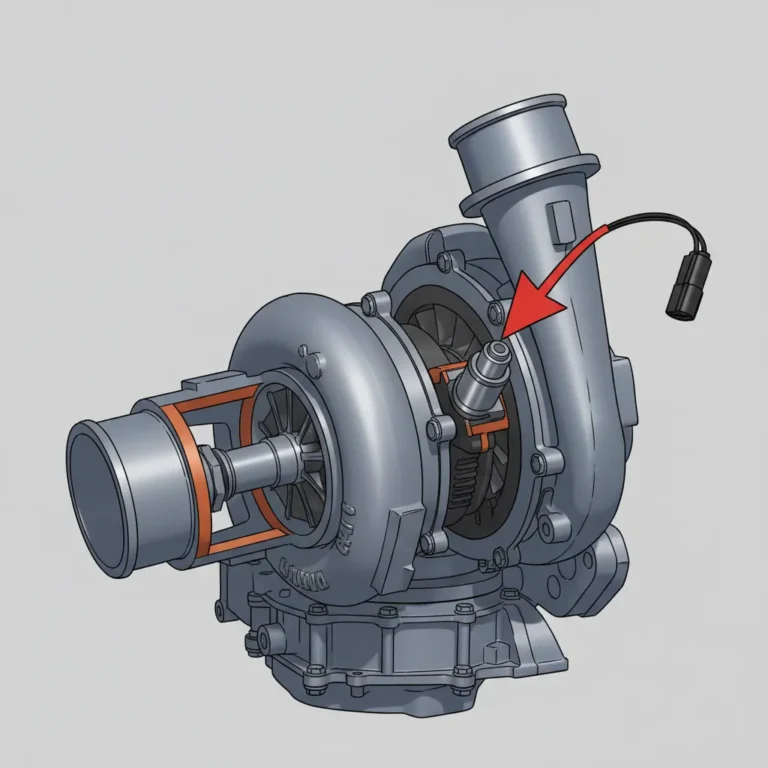
The 6.7 Cummins utilizes a Holset Variable Geometry Turbocharger (VGT). Unlike traditional turbos that use a wastegate, the VGT uses a sliding nozzle ring to vary the exhaust gas speed hitting the turbine wheel. This ring is moved by an electronic actuator mounted on the side of the turbo. Over time, soot and carbon from the exhaust stream accumulate on the pins and the sliding surface of this ring. If you do a lot of heavy idling or drive short distances without reaching full operating temperature, this soot hardens into a “coke” that physically blocks the ring from moving freely. The P226C code is the ECM’s way of saying it is fighting against this friction and losing.

Diagnostic Step 1: Isolating the Actuator
To fix the P226C, you must first determine if the failure is electrical (the actuator) or mechanical (the turbo sliding ring). Follow these steps to isolate the fault:
- Drain the Coolant: Most 6.7 Cummins actuators are liquid-cooled. You must drain about two gallons of coolant to avoid a mess when removing the actuator.
- Remove the Actuator: Disconnect the electrical plug and remove the four Allen bolts holding the actuator to the turbo housing. Carefully pull the actuator off.
- The “Finger Test”: Locate the gear sector arm (the small geared piece) inside the turbo housing that the actuator was connected to. Move this arm manually from stop to stop.
- Analyze Resistance: The arm should move smoothly with almost zero resistance. If it feels “crunchy,” gets stuck in the middle, or won’t move at all, your turbo is soot-fouled. If the arm moves perfectly but the code persists, your actuator’s internal motor or gears have failed.
Common Culprits for Soot Accumulation
While the P226C is a turbo code, the root cause often lies elsewhere in the engine’s ecosystem. Excessive soot is the primary enemy of the VGT system. On the 6.7 Cummins, this is frequently caused by a sticking EGR valve that stays open too long or fuel injectors that are “leaking” and creating a rich environment. Furthermore, if you never use your exhaust brake, the nozzle ring stays in a limited range of motion. This allows soot to build up on the unused portions of the track, eventually “locking” the ring in place when the ECM finally tries to move it for a high-boost situation.
Key Benefits of p226c code 6.7 cummins
Avoiding Total Turbo Replacement
Understanding the P226C code correctly allows you to perform a “surgical” fix rather than a “shotgun” replacement. If your diagnostic test shows the VGT arm moves freely, you can simply replace the actuator. Actuators are available as standalone parts for a fraction of the cost of a full turbocharger. This saves you thousands of dollars in parts and several hours of labor. Conversely, if the arm is stuck, you can attempt a turbo cleaning procedure using specialized kits that allow you to spray cleaning agents directly onto the nozzle ring through a drilled and tapped hole in the housing.
Restoring Exhaust Brake Reliability
One of the biggest benefits of resolving the P226C code is the restoration of your truck’s braking safety. The VGT system is what provides your exhaust braking power by closing the nozzle ring to create backpressure. When the system is “slow to respond,” your exhaust brake may feel weak or may not engage at all. For those who tow heavy trailers, fixing this code ensures you have the full retarding power of the engine available for steep grades, which significantly reduces wear on your service brakes and prevents brake fade.
Improving DPF Longevity
A healthy, responsive turbocharger is essential for maintaining the health of your Diesel Particulate Filter (DPF). When the VGT is sluggish (P226C), the engine cannot precisely control the air-to-fuel ratio. This results in “dirty” combustion and a massive increase in particulate matter. By fixing the slow response issue, you ensure the engine runs lean and clean. This leads to:
- Fewer Active Regens: The truck won’t need to burn off soot as often.
- Lower Fuel Dilution: Less frequent regenerations mean less diesel fuel ends up in your engine oil.
- Better MPG: A responsive turbo reaches peak efficiency faster, requiring less throttle input to move your load.
How to Get Started with p226c code 6.7 cummins
When your 6.7 Cummins throws the P226C code, the first thing to understand is that your engine is reporting a “Turbocharger Boost Control ‘A’ Slow Response.” This isn’t necessarily a sign of a total mechanical collapse, but it is a signal that the Variable Geometry Turbocharger (VGT) is struggling to move its internal vanes quickly enough. Getting started requires a shift from “parts swapping” to “data observing.”
Diagnostic Data and Monitoring
The most effective way to start is by using a high-quality scan tool that can read live data. You want to look specifically at the VGT Commanded Position versus the VGT Actual Position. If the computer is asking for 80% but the turbo is only hitting 40% or is slowly creeping toward the target, you have confirmed a physical lag. This approach prevents you from wasting money on sensors when the issue is actually mechanical friction or soot buildup.

Audible — Listen Free for 30 Days
One free credit a month and thousands of titles included.
Listen Free for 30 Days- Monitor Exhaust Gas Temperatures (EGTs): High EGTs can sometimes indicate a turbo that is stuck in a restrictive position.
- Check for Software Updates: Occasionally, Cummins releases ECM calibrations that widen the “acceptable” window for response times to prevent nuisance codes.
- Listen for the “Hiss”: A slow-responding turbo often creates a distinct change in exhaust note as the vanes struggle to find their place.
Identifying Environmental Contributors
Before diving into the hardware, evaluate how the truck has been used lately. The 6.7 Cummins is a workhorse that thrives under load. If you have spent the last month idling in traffic or taking short trips where the engine never reaches full operating temperature, carbon and soot are the likely culprits. Recognizing that your driving habits might be the “root cause” is the best way to start your troubleshooting journey without spending a dime at the shop.
Best Practices for p226c code 6.7 cummins
Managing a P226C code is often about prevention and long-term maintenance habits rather than a one-time fix. Because the VGT system relies on precision movement within a high-heat, high-soot environment, keeping those components “exercised” is the gold standard for Cummins owners.
The Importance of Exhaust Brake Usage
One of the best habits you can develop is running your exhaust brake almost all the time. On the 6.7 Cummins, the exhaust brake functions by sliding the VGT nozzle ring to a restrictive position. By using the exhaust brake daily, you are forcing the turbo vanes to travel through their full range of motion. This constant movement helps “scrub” small amounts of soot off the sliding mechanism before it can harden into a physical obstruction.
- Engage on Startup: Get into the habit of hitting the exhaust brake button as part of your startup routine.
- Vary Your Loads: Periodically towing a heavy trailer helps generate the heat necessary to burn off accumulated soot inside the turbine housing.
- Avoid Excessive Idling: Long periods of idling are the number one enemy of the VGT system, as they lead to rapid soot accumulation.
Fuel Quality and Combustion Health
Since soot is what eventually sticks the VGT vanes, anything you can do to ensure a cleaner burn will prolong the life of your turbo. Using high-quality fuel and reputable detergent additives can reduce the amount of particulate matter exiting the cylinders. Furthermore, keeping up with your air filter changes ensures the engine isn’t working harder than necessary, which keeps the combustion cycle efficient and the “A” response time within the ECM’s required parameters.
Conclusion
Dealing with a P226C code on a 6.7 Cummins can be frustrating, but it is often a manageable issue if caught early. By focusing on live data monitoring and understanding the mechanical nature of the VGT system, you can avoid unnecessary component replacements. Remember that these engines are designed to work; regular exhaust brake usage and high-load cycles are your best defenses against soot-related lag.
If you are currently seeing this code, your next step should be a thorough diagnostic scan to compare commanded versus actual turbo positions. Don’t let a small lag turn into a full turbo failure—stay proactive with your maintenance, and keep that Cummins breathing easy!
💬 Quick Questions & Answers
What is p226c code 6.7 cummins?
p226c code 6.7 cummins refers to essential concepts and proven techniques in this field that deliver measurable results.
Why is p226c code 6.7 cummins important?
It provides significant practical benefits and helps you achieve better outcomes in your goals.
Audible Premium Plus — Annual Membership
12 audiobook credits up front, plus the full Audible catalogue.
See Annual PlansHow do I get started?
Begin with the fundamentals covered in this guide and practice regularly to build your skills.
What are common mistakes?
Rushing the process and skipping foundational steps are the most common pitfalls to avoid.
How long does it take to see results?
With consistent practice and application, most people see meaningful results within a few weeks.
❓ Frequently Asked Questions
What exactly is p226c code 6.7 cummins?
p226c code 6.7 cummins encompasses proven concepts and methodologies that help you achieve better results. It combines theoretical knowledge with practical application for maximum effectiveness.
How can p226c code 6.7 cummins benefit me?
Understanding and applying p226c code 6.7 cummins principles improves your skills, opens new opportunities, and helps you achieve your goals more efficiently.
What resources do I need to get started?
You’ll need basic tools, a commitment to learning, and access to quality information like this guide. Start with fundamentals before advancing to complex topics.
Is this suitable for complete beginners?
Absolutely! This guide is designed to take you from beginner to proficient. Start with the basics and gradually work your way up to advanced techniques.
How do I measure my progress?
Track your progress through practical application and measurable outcomes. Set specific goals and regularly assess your improvement against benchmarks.
Where can I learn more after this guide?
Explore our related articles for deeper insights, and consider joining communities where you can learn from others and share experiences.



![4.7 Dodge Engine Problems [2026]](https://truckguider.com/wp-content/uploads/2026/03/featured-47220cb4-768x403.webp)
![2019 Ram 1500 Reliability [2026]](https://truckguider.com/wp-content/uploads/2026/03/featured-4dc19a40.webp)