5 Symptoms of a Clogged Heater Core: Diagnosis & Signs [2026]

The most definitive sign of a clogged heater core is little to no heat in the cabin despite the engine reaching full operating temperature. Other critical indicators include a sweet, syrup-like smell inside the car or an oily film appearing on the interior of your windshield.
🎯 Key Takeaways
- Check heater hoses; a temperature difference usually indicates a core blockage.
- A sweet, maple syrup scent inside the cabin suggests coolant issues.
- Oily residue on the windshield is a sign of coolant vapor leakage.
- Dampness on the passenger-side floorboard often points to heater core failure.
- Ignoring a clog can lead to engine overheating and severe damage.
If you have noticed that your car’s cabin stays chilly despite the engine being at full operating temperature, you are likely dealing with a clogged or failing heater core. This small, radiator-like component is responsible for transferring heat from your engine’s coolant into the air that blows through your vents. When it becomes restricted by scale, rust, or old coolant sludge, the flow of thermal energy stops, leaving you with a lukewarm interior and a potential engine cooling crisis.


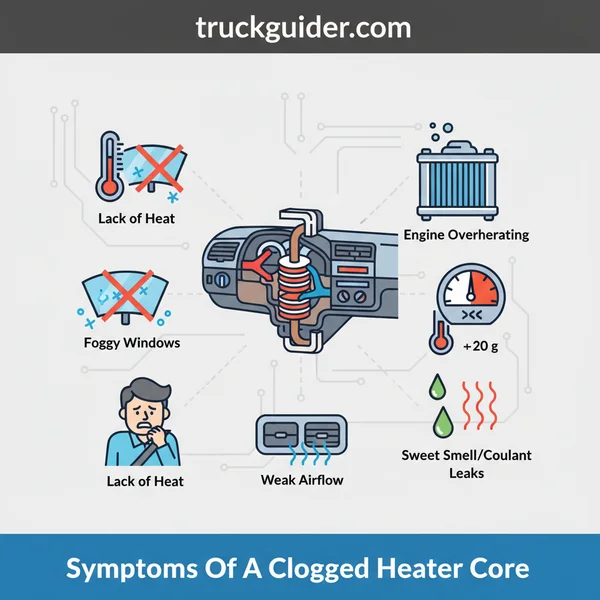
Diagnosing this issue quickly is essential because the heater core is a vital part of your vehicle’s cooling loop. A total blockage does more than just ruin your comfort; it can lead to increased pressure within the cooling system and even contribute to engine overheating. By identifying specific physical and sensory signs—such as a distinct sweet odor or greasy residue on your glass—you can confirm the source of the problem before it leaves you stranded or causes expensive interior damage.
Definitive Physical Symptoms of Heater Core Restriction
Physical symptoms are usually the first indicators that the internal passages of your heater core have become narrowed or blocked. Because the tubes inside the core are significantly smaller than those in your main radiator, they act as a “trap” for any debris or sediment circulating in your coolant. When these passages fail, the mechanical behavior of your HVAC system changes immediately.
The “Cold Cabin” and Inconsistent Vent Temperatures
The most undeniable sign of a clog is a heater that blows cold or barely lukewarm air while the engine is hot. In a healthy system, the coolant entering the core should be roughly 190 to 210 degrees Fahrenheit. When a restriction occurs, the volume of hot fluid is too low to warm the aluminum fins of the core.
- The Idle Chill: You may notice that the air gets slightly warmer when you are Revving the engine but turns cold as soon as you stop at a red light. This happens because higher RPMs increase water pump pressure, forcing a small amount of coolant through the blockage.
- Uneven Airflow: In many modern vehicles, a partial clog will manifest as “split” temperatures. You might feel warm air on the passenger side but freezing air on the driver’s side (or vice versa). This indicates that only one side of the core is receiving hot coolant flow.
- Delayed Warm-up: If it takes 20 minutes of driving before you feel even a hint of warmth, the core is likely heavily restricted with “sludge” or casting sand.
Diagnostic Step: Testing the Inlet and Outlet Hoses
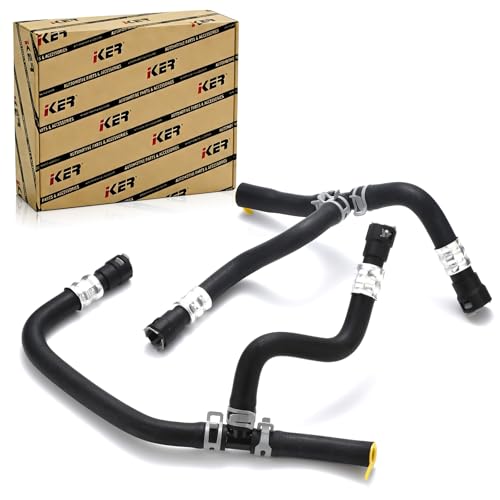
To confirm a physical blockage, you can perform a simple touch test on the two rubber hoses protruding through the firewall into the engine bay. These hoses carry coolant into and out of the heater core. With the engine at operating temperature and the heater turned to “Max,” carefully feel both hoses (use caution as they should be hot).
- Normal Operation: Both the inlet and outlet hoses should feel nearly identical in temperature—very hot to the touch.
- Confirmed Clog: If the inlet hose is hot but the outlet hose is significantly cooler or cold, you have a definitive restriction inside the core. The heat is reaching the component but cannot pass through to the return line.
- Pressure Fluctuations: If the hoses feel “squishy” or seem to vibrate, there may be air pockets trapped by the blockage, which further inhibits heat transfer.
Sensory Indicators: Identifying the Smell and Residue of Failed Cores
Sometimes the heater core isn’t just clogged; it is beginning to fail structurally. Because the core is tucked away deep inside the dashboard (within the HVAC plenum), you often cannot see a leak with your eyes. Instead, you must rely on your senses of smell and touch to identify the presence of atomized coolant circulating through your vents.
The Sweet, Syrupy Scent of Ethylene Glycol
One of the most specific symptoms of a failing heater core is a distinctive sweet smell inside the cabin. Automotive coolant contains ethylene glycol, which has an odor frequently compared to maple syrup or boiled sugar. If you smell this scent the moment you turn on your fans, the core is likely weeping fluid.
- Vaporization: As the hot coolant leaks from a pinhole in the core, it instantly evaporates into a mist. This mist is then blown directly into the passenger compartment by the blower motor.
- Intensity Peaks: The smell is typically strongest when the heater is first engaged or when you switch from “Fresh Air” to “Recirculation” mode.
- Health Note: If you smell this regularly, avoid staying in the vehicle with the windows up for long periods, as breathing in concentrated coolant vapors can cause respiratory irritation and headaches.
The Oily “Fog” and Greasy Windshield Film
Have you noticed that your windshield is constantly foggy, even on dry days? A leaking or severely restricted core can create a greasy film on the interior glass that is notoriously difficult to clean. Unlike standard window fog caused by breath or humidity, this residue is oily to the touch.
- The Smear Test: If you wipe the fog with your finger and it leaves a persistent, shimmering smear rather than disappearing, that is coolant residue.
- Defroster Paradox: Normally, turning on the defroster clears the glass. However, if the heater core is the problem, turning on the defroster will actually make the fog worse because you are blasting more coolant vapor directly onto the glass.
- Night Glare: This oily film causes significant light refraction at night, creating a “halo” effect around oncoming headlights that can make driving dangerous.
Damp Passenger Floorboards and “Mystery” Puddles
If the clog has led to a breach in the heater core’s integrity, the coolant has to go somewhere. Since the heater box is located behind the glovebox area, gravity pulls the leaking fluid onto the floor. If you notice your passenger-side carpet is damp or feels “slimy,” your heater core is likely leaking. You may also see a small puddle of green, orange, or pink fluid under the car, specifically near the firewall drain tube, which is often mistaken for standard A/C condensation.


Clogged Heater Core vs. Bad Thermostat: Key Differences
One of the most common mistakes DIYers make is misdiagnosing a clogged heater core as a bad thermostat. While both components are vital to the cooling system and both can result in a cold cabin, their failure modes are distinct. Understanding these differences can save you hours of unnecessary labor and the cost of parts you don’t actually need.
Temperature Gauge Behavior
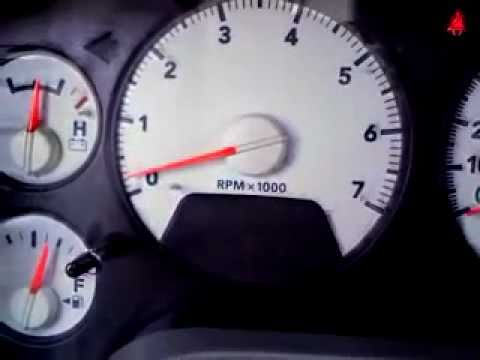
The easiest way to tell the difference is to watch your dashboard’s temperature gauge. If your thermostat is stuck open, the engine will struggle to reach its operating temperature, especially at highway speeds. You will notice the needle stays on the “cold” side for a long time. Conversely, if you have a clogged heater core, your engine will reach its normal operating temperature perfectly fine, but the air blowing out of your vents will remain ice cold or lukewarm.
The “Two-Hose” Touch Test
Another practical way to distinguish the two is by checking the heater hoses located near the firewall in the engine bay. These are the two rubber hoses that carry coolant in and out of the heater core.
- Clogged Heater Core: One hose will feel significantly hotter than the other. This indicates that hot coolant is entering the core but is being blocked from circulating through and exiting the other side.
- Bad Thermostat: Both hoses will likely feel lukewarm or cold because the engine coolant itself isn’t reaching the proper temperature to begin with.
- Low Coolant: If both hoses are empty or cold despite a warm engine, you may simply have an air pocket or a leak elsewhere in the system.
Engine Health Risks and the Impact on Cooling System Pressure
It is a common misconception that a clogged heater core is merely a “comfort issue.” While it’s true that you can technically drive without a heater, a blockage in this part of the system can lead to cascading mechanical failures. The heater core acts as a secondary radiator; when it is blocked, it disrupts the engineered flow of the entire cooling system.
The Domino Effect of Cooling System Backpressure
The cooling system is a pressurized environment designed for constant movement. When a heater core is severely restricted by scale, rust, or “sludge,” it creates a bottleneck. This localized restriction increases backpressure on other components. For example, your water pump may have to work significantly harder to push fluid past the blockage, which can lead to premature pump seal failure. Furthermore, the increased pressure can find the “weakest link” in your cooling system, often resulting in pinhole leaks in older radiator hoses or plastic connector fittings.
Potential for Localized Engine Overheating
While a clogged heater core rarely causes an immediate “total” engine overheat, it can contribute to hot spots within the engine block. Because the coolant is not circulating as intended, the heat dissipation is less efficient than the manufacturer designed.
- Stress on the Radiator: Without the heater core helping to dissipate heat, the main radiator must work harder, leaving less margin for error in heavy traffic or hot weather.
- Head Gasket Vulnerability: Frequent temperature fluctuations caused by poor circulation can eventually lead to head gasket fatigue.
- Coolant Degradation: Blockages often occur because the coolant has become acidic or filled with debris; leaving this “sludge” in the system will eventually ruin your radiator and water pump as well.
Conclusion
Identifying a clogged heater core early is the best way to avoid a freezing commute and expensive engine repairs. From the tell-tale sweet smell of antifreeze to the frustrating lack of heat even when the engine is hot, these symptoms are your car’s way of asking for maintenance. Remember to check your coolant levels regularly and keep an eye on your temperature gauge to distinguish between a simple thermostat swap and a core issue.
If you suspect a clog, your next actionable step should be a professional cooling system pressure test or a targeted heater core flush. Don’t wait for the first frost of winter to find out your heating system is compromised. Take care of your cooling system today, and it will keep you warm and your engine running cool for years to come!


💬 Quick Questions & Answers
Can a clogged heater core cause my engine to overheat?
Yes, because the core is part of the cooling loop, a major restriction can impede overall coolant flow and increase engine temperatures.
What is the most common sign of a heater core blockage?
The most common sign is the heater blowing lukewarm or cold air even when the engine is hot.
Why does my car smell like maple syrup?
That sweet smell is ethylene glycol, which is the primary ingredient in engine coolant leaking or vaporizing from the core.
Will a clogged heater core affect the defroster?
Yes, if the core cannot provide heat, your defroster will fail to clear ice or fog from the windshield.
Why is there an oily film on my windshield?
This is caused by coolant mist escaping a failing heater core and being blown through the vents onto the glass.
❓ Frequently Asked Questions
How can I tell if the heater core is clogged or if the thermostat is bad?
If the thermostat is bad, your engine temperature gauge will usually stay low or fluctuate wildly. If the heater core is clogged, the engine will reach its normal operating temperature (middle of the gauge), but the cabin air will remain cold.
What does the ‘hose test’ reveal about a clogged heater core?
By feeling the two rubber hoses at the firewall, you can diagnose a clog. If the inlet hose is hot but the outlet hose is cold, it confirms that coolant is entering the core but is being blocked from exiting.
Is a damp passenger floorboard always a heater core issue?
While it can be caused by a clogged AC drain line, a damp floor that smells sweet or feels oily is almost certainly a leaking or severely restricted heater core dripping coolant into the cabin.


What causes a heater core to become clogged over time?
Clogs are typically caused by rust particles, mineral scale, or ‘sludge’ that forms when coolant is not changed regularly. Mixing incompatible coolant types can also cause a chemical reaction that creates solid debris.
Can I drive my car if the heater core is clogged?
You can drive temporarily, but it is risky because the clog creates a ‘dead spot’ in the cooling system. This can lead to localized boiling and potential engine overheating if the pressure isn’t managed.
Does a clogged heater core make a noise?
Sometimes you may hear a ‘gurgling’ or ‘rushing water’ sound behind the dashboard. This often indicates air pockets trapped in the core due to a partial blockage or low coolant levels.
![Dodge Ram Extended Cab Guide: Quad Cab vs. Crew Cab [2026]](https://truckguider.com/wp-content/uploads/2026/03/dodge-ram-extended-cab-featured-768x403.webp)
![Best Aftermarket Rear Bumpers [2026]](https://truckguider.com/wp-content/uploads/2026/03/aftermarket-rear-bumper-featured.webp)