
2017 Ram 2500 Mega Cab: Complete Specs Guide [2026]

The 2017 Ram 2500 Mega Cab is defined by its class-exclusive reclining rear seats and massive cabin space designed for superior passenger comfort. Powered by either the 6.7L Cummins Turbo Diesel or the 6.4L HEMI V8, it offers a blend of heavy-duty performance and interior luxury.
🎯 Key Takeaways
Recommended Best Deal Products


- The Mega Cab offers a class-leading 43.3 inches of rear legroom.
- Maximum towing reaches approximately 17,980 lbs with the Cummins diesel engine.
- Exclusive reclining rear seats fold flat for expansive in-cab storage solutions.
- The 6.4L HEMI V8 is the standard high-output gasoline engine option.
- Check for recalls regarding the water pump and steering drag link components.
The 2017 Ram 2500 Mega Cab represents a specific peak in heavy-duty truck engineering, combining a class-leading 43.3 inches of rear legroom with a maximum towing capacity that reaches up to 17,980 pounds. If you are looking at this specific model year, you are likely prioritizing the massive interior volume of the Mega Cab without stepping up to the stiffer ride of a 3500 series. This truck is designed for long-distance hauling where cabin comfort for four or five adults is just as critical as the 800 lb-ft of torque produced by the available Cummins engine.

Prime for Young Adults — 6 Months Free
Students and 18–24s get six months of Prime free, then half price.
Start 6 Months Free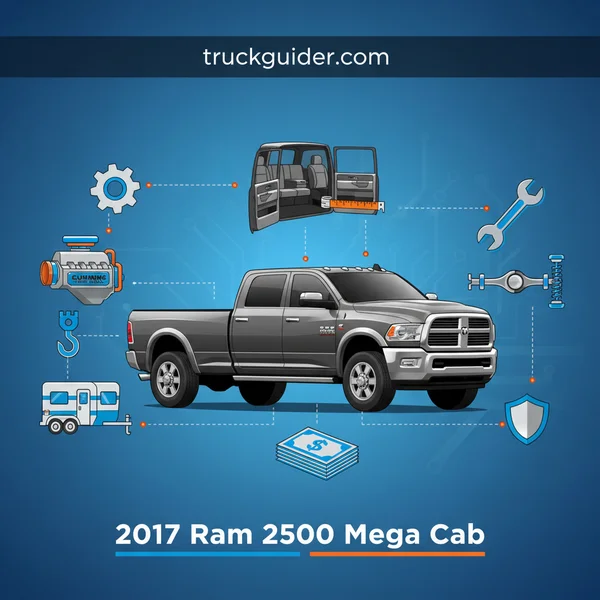
Practically speaking, choosing the 2017 Mega Cab over the standard Crew Cab changes your utility profile. Because the Mega Cab only comes with a 6-foot-4-inch bed and sits on a longer wheelbase, it offers a smoother ride under load but requires more planning for tight parking maneuvers. Understanding the technical trade-offs between the legendary diesel powertrain and the high-output HEMI V8 is the first step in determining if this heavy-duty titan fits your specific towing and payload requirements.
Engine Performance: Cummins Turbo Diesel vs. 6.4L HEMI V8
The 2017 Ram 2500 Mega Cab offers two primary powerhouses that define its personality on the road. While both engines are capable, they serve very different duty cycles. Your choice here dictates not just your fuel costs, but your maintenance schedule and how the truck handles heavy grades while trailering.
;”<br />
loading=”lazy” referrerpolicy=”no-referrer”><figcaption style=) Engine Performance Cummins Turbo Diesel vs 64L HEM
Engine Performance Cummins Turbo Diesel vs 64L HEM
📤 Share
2017 Ram 2500 Mega Cab Maintenance Made Easy: Your Essential Action Plan


The 2017 Ram 2500 Mega Cab is a beast of a machine, specifically designed for heavy hauling and maximum interior comfort. However, owning a heavy-duty truck with a 6.7L Cummins Turbo Diesel engine requires a strict maintenance schedule to ensure longevity and peak performance. This guide focuses on the most critical maintenance tasks for this specific vehicle: a comprehensive oil change and the vital dual fuel filter replacement. Following these steps correctly will save you thousands in potential repair costs and keep your Mega Cab running smoothly for hundreds of thousands of miles.
Step 1: Preparation and Safety Setup
What you need: Heavy-duty wheel chocks, two 12,000-lb capacity jack stands (optional but recommended), safety glasses, and nitrile gloves.
Instructions: Because the Mega Cab is exceptionally long and heavy, you must ensure it is parked on a perfectly level concrete surface. Engage the electronic parking brake and place wheel chocks behind the rear tires. If you are using a creeper to get underneath, you might not need to jack the truck up due to its high ground clearance, but if you do, ensure you use the frame rails as your lift points. Never rely solely on a floor jack. Gather all your supplies: 12 quarts of 15W-40 or 5W-40 synthetic oil, a Mopar MO-285 oil filter, and the two-stage fuel filter kit (Mopar 68197867AB and 68157291AA). Having everything within arm’s reach prevents mid-job frustration.
Pro Tip: Run the engine for about five minutes before starting. Warm oil flows much faster and carries more contaminants out of the pan than cold, viscous oil.
Step 2: Draining the Engine Oil
What you need: 16mm socket or wrench, and a drain pan with at least a 15-quart capacity.

Audible — Listen Free for 30 Days
One free credit a month and thousands of titles included.
Listen Free for 30 DaysInstructions: Position your drain pan directly beneath the oil pan drain plug, located toward the rear of the engine block. The Cummins engine holds a massive 12 quarts of oil, so a standard 5-quart automotive pan will overflow quickly. Use your 16mm wrench to loosen the plug. As you reach the final threads, apply slight inward pressure so the oil doesn’t spray out until you are ready to pull the plug away quickly. Inspect the magnetic tip of the drain plug for any excessive metal shavings; a fine “fuzz” is normal, but large flakes indicate internal wear. Let the oil drain for at least 15 minutes to ensure the sump is empty before wiping the area clean and re-installing the plug to 30 ft-lbs of torque.
Pro Tip: Remove the oil fill cap on top of the engine while draining; this breaks the vacuum and allows the oil to flow out in a steady stream rather than “glugging.”
Step 3: Replacing the Oil Filter via the Wheel Well
What you need: Oil filter wrench, a plastic grocery bag, and a new Mopar MO-285 filter.
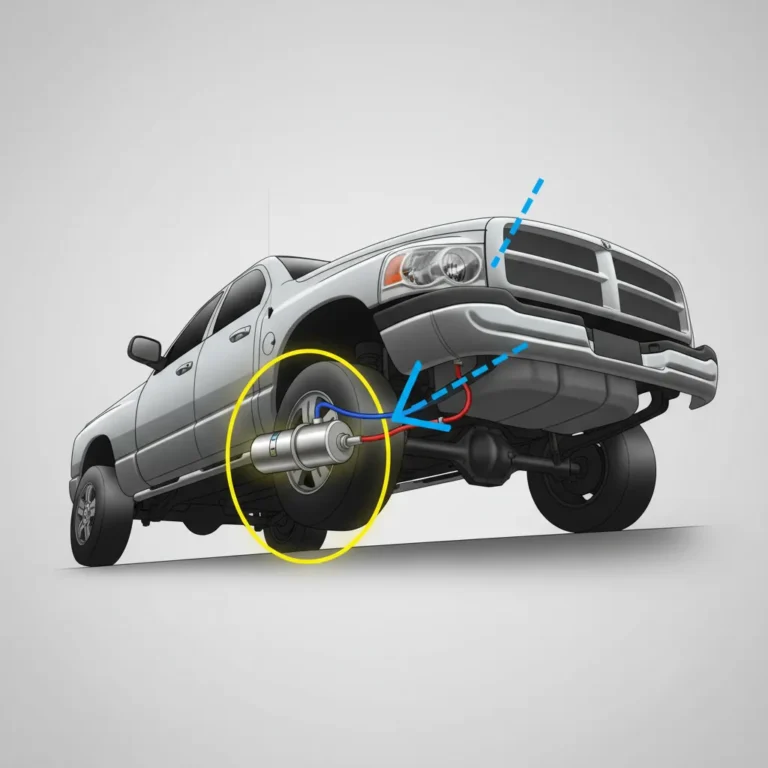
Instructions: On the 2017 Ram 2500, the oil filter is most easily accessed through the passenger-side front wheel well. You may find it helpful to peel back the plastic liner. Slide your filter wrench onto the filter and loosen it. Once it’s loose, wrap a plastic grocery bag around the filter before unscrewing it the rest of the way. This catches the oil that inevitably spills from the top of the filter, keeping your frame and driveway clean. Before installing the new filter, fill it about halfway with fresh oil to prevent a “dry start” and smear a thin film of clean oil on the rubber gasket. Thread it on by hand until it makes contact, then tighten it exactly 3/4 of a turn further.
Pro Tip: Do not use a wrench to tighten the new filter. Hand-tight is sufficient; over-tightening can crush the gasket or make it nearly impossible to remove next time.
Step 4: Servicing the Rear Fuel Filter (Water Separator)
What you need: 1-1/8 inch socket, extension, and the rear fuel filter element.
Instructions: The 2017 model utilizes a dual-filter system. The rear filter is located under the truck, near the rear axle on the driver’s side. First, locate the yellow drain valve and attach a small hose to it, draining the fuel into a container. Once empty, use your 1-1/8 inch socket to unscrew the plastic housing. Remove the old filter and the O-ring. Clean the inside of the housing with a lint-free rag. Install the new O-ring (lubricated with a bit of diesel) and the new filter element. Screw the housing back into the assembly. It is vital to ensure the O-ring is seated perfectly to prevent air from entering the fuel system, which can cause starting issues.
Pro Tip: Be careful not to cross-thread the plastic housing. Start it by hand for at least three full rotations before applying a tool.
Audible Premium Plus — Annual Membership
12 audiobook credits up front, plus the full Audible catalogue.
See Annual PlansStep 5: Servicing the Front (Engine Bay) Fuel Filter
What you need: 1-1/8 inch socket, a long extension, and the front canister filter.
Instructions: Open the hood and locate the fuel filter canister on the driver’s side of the engine. This “drop-in” style filter is housed under a large black cap. Use your socket and extension to unscrew the cap. Carefully lift the cap and the attached filter out of the canister. The filter usually “snaps” into the cap. Pull the old filter out, replace the O-ring on the cap, and snap the new filter into place. Lower the assembly back into the canister. Tighten the cap until it bottoms out; the torque spec is typically 22 ft-lbs. This filter is the final line of defense for your high-pressure fuel injectors, so cleanliness is paramount—ensure no dirt falls into the canister while the cap is off.
Pro Tip: Keep a few shop towels around the base of the canister, as some fuel will inevitably drip when you pull the filter out of the housing.
Step 6: Refilling the Engine and Priming the System
What you need: 12 quarts of heavy-duty diesel engine oil and a large funnel.
Instructions: Insert your funnel into the oil fill neck on the passenger side of the valve cover. Pour in 12 quarts of oil. Once filled, you must prime the fuel system to remove air introduced during the filter changes. DO NOT attempt to start the engine immediately. Instead, turn the ignition to the “RUN” position (without engaging the starter) for 30 seconds. You will hear the electric lift pump buzzing. Turn the key off and repeat this process 5 to 7 times. This pushes fuel through the new filters and vents the air back to the tank. Finally, depress the brake and start the engine. It may stumble for a second or two, but it should smooth out quickly.
Pro Tip: If the truck fails to start after three attempts, stop. You likely have an air lock. Repeat the “Key-on” priming cycle several more times rather than wearing down your starter motor.
Step 7: Resetting the Oil Life and Fuel Filter Monitors
What you need: The vehicle’s ignition key and the steering wheel controls.
Instructions: Your 2017 Ram 2500 features an Electronic Vehicle Information Center (EVIC) in the gauge cluster. To reset the monitors, turn the ignition to the “RUN” position. Use the arrow buttons on the left side of the steering wheel to scroll to the “Vehicle Info” menu. Scroll down until you see “Oil Life.” Press and hold the “Right Arrow” or “OK” button (depending on your trim level) until the percentage resets to 100%. Scroll further to find the “Fuel Filter Life” screen and repeat the hold-to-reset process. Keeping these digital monitors accurate is the best way to stay on top of your 15,000-mile (or 6-month) service intervals.
Pro Tip: Write the date and mileage of the service on the inside of your owner’s manual or a dedicated maintenance log for resale value purposes.
✅ Final Checklist
- Verify the oil drain plug is torqued to 30 ft-lbs and isn’t leaking.
- Check that the oil level is exactly at the “Full” mark on the dipstick after the engine has run and sat for 5 minutes.
- Inspect both fuel filter housings (front and rear) for any signs of “sweating” or fuel leaks while the engine is idling.
- Confirm that the maintenance lights for Oil Life and Fuel Filter Life have been successfully reset to 100%.
- Ensure the oil fill cap is tightly secured and the dipstick is fully seated.
Important Notes:
- Safety: Always wear eye protection when working under the vehicle, as diesel fuel and hot oil can cause permanent eye damage.
- Professional Help: Seek a professional mechanic if you notice metal chunks in the oil, if the fuel prime fails after 10+ cycles, or if you see a “Water in Fuel” light that won’t go away.
- Estimated Time: 60 to 90 minutes.
- Cost Range: $150–$250 for high-quality synthetic oil and OEM Mopar filters.
Towing and Payload Capacities for the Mega Cab Configuration
When discussing the 2017 Mega Cab, you must look at the specific towing charts. Because the Mega Cab body is heavier than the regular or crew cabs, it “borrows” some of the Gross Combined Weight Rating (GCWR) for itself, which can slightly lower your maximum payload compared to a smaller cab configuration.
Maximum Towing Specifications
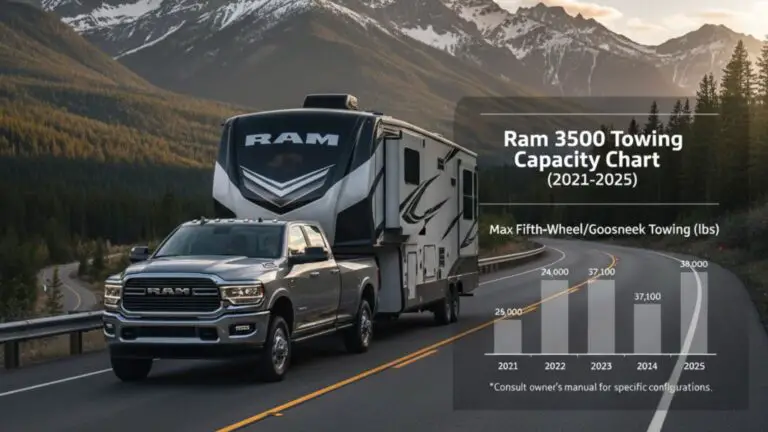
The towing capacity of your 2017 Ram 2500 depends heavily on your rear axle ratio and engine choice. Most Mega Cab models come with either a 3.42 (standard for diesel) or a 3.73/4.10 (for the HEMI). Detailed towing capabilities include:
- Cummins Diesel with 3.42 Axle: Typically rated for roughly 17,130 pounds of conventional towing.
- 6.4L HEMI with 3.73 Axle: Rated for approximately 12,500 pounds.
- 6.4L HEMI with 4.10 Axle: Steps up the capability to 15,500 pounds, making it the sweet spot for gas-engine towing.
Note: Always check the door jamb sticker on your specific VIN, as optional equipment like sunroofs, Fifth-Wheel Prep packages, and side steps can reduce these numbers by several hundred pounds.
Payload Realities and Suspension Performance
Payload is where 2500 owners often run into limitations. The 2017 Ram 2500 Mega Cab has a Gross Vehicle Weight Rating (GVWR) of 10,000 pounds. Because the diesel Mega Cab is a heavy truck (often weighing around 8,000 pounds itself), your actual payload capacity is frequently between 1,800 and 2,200 pounds.
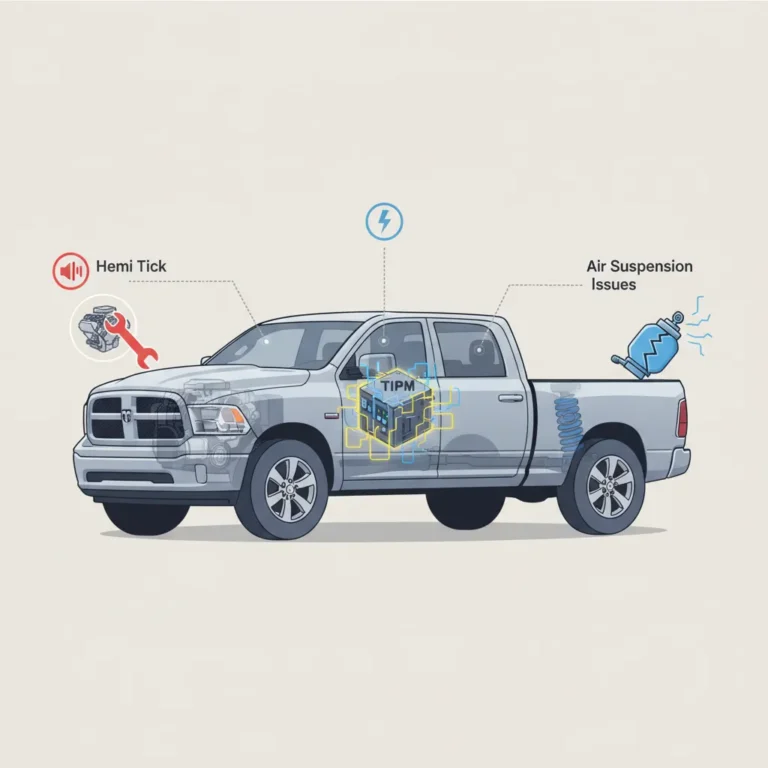
The 2017 model utilizes a five-link coil rear suspension rather than traditional leaf springs. This provides a much plusher ride when the bed is empty. If you are hauling heavy tongue weights, look for models equipped with the Rear Auto-Level Air Suspension. This system replaces the coil springs with air bags that automatically level the truck when a trailer is hitched, ensuring your headlights remain aimed at the road and your steering geometry stays consistent.
The Mega Cab Advantage: Interior Dimensions and Storage Features
Recommended Best Deal Products


When you choose the 2017 Ram 2500 Mega Cab, you aren’t just buying a truck; you are buying a mobile living room. While the Crew Cab is spacious, the Mega Cab adds an extra 11 inches of cab length, pushing the boundaries of what a heavy-duty interior can provide. This makes it the premier choice for families who travel long distances or crews who need to work comfortably out of their vehicle.
Unmatched Rear Legroom and Comfort
The standout feature of the Mega Cab is undoubtedly the rear seating area. With 43.3 inches of rear legroom, even your tallest passengers can stretch out fully. Unlike standard trucks where the rear seat is bolt-upright against the back glass, the Mega Cab features class-exclusive reclining rear seats. Passengers can tilt their seatbacks from a 22-degree to a 37-degree angle, making it the most comfortable second row in the heavy-duty segment.
- Fold-Flat Capabilities: The rear seats don’t just recline; they fold forward to create a massive, flat loading floor for groceries, tools, or camping gear.
- Heating Options: Many Mega Cab configurations include heated rear seats, ensuring everyone stays warm during winter hauls.
- Shoulder Room: With over 66 inches of shoulder room, three adults can sit comfortably side-by-side without feeling cramped.
Smart Storage Solutions
Ram utilized the extra length of the Mega Cab to include clever storage solutions that keep the cabin organized. Behind the rear seats, you will find a dedicated storage bin area. This is the perfect spot for emergency kits, tow straps, or valuable electronics that you want to keep out of sight from passersby.
Trim Level Comparison: From Laramie Comfort to Limited Luxury
For the 2017 model year, the Mega Cab configuration was primarily available on the upper-tier trims. This means most Mega Cabs on the used market today come well-equipped with premium materials and advanced technology. Choosing the right trim depends on whether you prefer a rugged, work-ready luxury or a high-end executive feel.
Laramie and Laramie Longhorn Features
The Laramie serves as the entry point into the luxury Mega Cab experience. It features leather-trimmed seats, dual-zone climate control, and a premium 10-speaker Alpine audio system. If you want more personality, the Laramie Longhorn offers a distinctive “Southwestern” aesthetic. You will find filigreed leather seats, real wood accents on the dash, and unique “Longhorn” branding that gives the truck a bespoke, custom-shop look.
- Uconnect 8.4: Most 2017 Laramie trims feature the 8.4-inch touchscreen, which remains one of the most intuitive infotainment systems ever designed.
- Heated and Ventilated Front Seats: Standard on higher trims, these are essential for maintaining comfort during long hauls in extreme weather.
- ParkView Rear Back-Up Camera: A crucial tool for hitching a trailer or navigating tight parking lots in such a large vehicle.
The High-End Limited Experience
At the top of the mountain sits the Limited trim. This version replaces the chrome-heavy look with a more sophisticated, monochromatic exterior and a refined black leather interior. It features “Natura Plus” black leather seats and real Black Argento wood accents. It is the ultimate expression of the 2017 Ram 2500, designed for the owner who wants the capability of a tractor with the interior of a luxury sedan.
Conclusion
The 2017 Ram 2500 Mega Cab remains a gold standard for drivers who refuse to compromise between massive towing capacity and passenger comfort. Between the legendary 6.7L Cummins Turbo Diesel engine and the cavernous, reclining rear seats, it offers a driving experience that few modern trucks can match. Whether you are hauling a horse trailer across the state or taking the family on a cross-country road trip, the Mega Cab provides the stability and luxury you need to get the job done.
If you are in the market for a used heavy-duty truck, the 2017 Mega Cab is a fantastic investment that holds its value remarkably well. Your next steps should be to check the vehicle’s maintenance history—specifically for the Cummins engine—and test the air suspension system if the truck is equipped with it. Start your search today and experience why the Mega Cab is still the king of the road!
💬 Quick Questions & Answers
Does the 2017 Ram 2500 Mega Cab have reclining rear seats?
Yes, it features class-exclusive rear seats that recline up to 37 degrees for enhanced passenger comfort.
What is the maximum towing capacity for the 2017 Ram 2500 Mega Cab?
When properly equipped with the 6.7L Cummins engine, it can tow up to 17,980 pounds.
How much rear legroom does the Mega Cab offer?
It provides a massive 43.3 inches of rear legroom, which is significantly more than the standard Crew Cab.
Is the 6.7L Cummins available with a manual transmission?
Yes, the 2017 model offered a G56 6-speed manual transmission, though it has slightly lower torque ratings than the automatic.
What are the main storage features behind the rear seats?
The Mega Cab includes a dedicated storage bin system and fold-flat floor space totaling 7.6 cubic feet behind the seats.
❓ Frequently Asked Questions
What are the key differences between the Ram 2500 Crew Cab and Mega Cab for 2017?
The Mega Cab uses the long-bed frame but allocates that extra length to the cabin rather than the bed. This results in reclining rear seats and 43.3 inches of legroom compared to the Crew Cab’s 40.2 inches and upright seating.
Which engine is better for heavy towing: the 6.4L HEMI or the 6.7L Cummins?
The 6.7L Cummins Diesel is superior for heavy, frequent towing due to its 800 lb-ft of torque and integrated exhaust brake. The 6.4L HEMI is better for those who prioritize a higher payload capacity and lower upfront purchase costs.
What is the payload capacity specifically for the 2017 Mega Cab 4×4?
Because the Mega Cab is heavier than other cab styles, its payload is slightly lower than a Regular Cab, typically ranging from 2,000 to 2,500 lbs depending on the engine and luxury trim options.
Are there any specific reliability issues or recalls for the 2017 Ram 2500?
Common concerns include water pump failures on the 6.7L diesel and a high-profile recall involving the steering drag link that could cause a loss of steering control if not addressed.
What luxury features are included in the 2017 Ram 2500 Limited trim?
The Limited trim includes premium Natura Plus leather, a heated steering wheel, heated and ventilated front seats, real wood accents, and the Uconnect 8.4-inch infotainment system with navigation.
Can the 2017 Ram 2500 Mega Cab fit in a standard residential garage?
With an overall length of approximately 248.4 inches, the Mega Cab usually requires an extra-deep or commercial-sized garage, as it is often too long for standard 20-foot residential bays.
; color: white; text-decoration: none; border-radius: 25px; font-size: 14px; font-weight: 600; box-shadow: 0 4px 15px rgba(16,185,129,0.35);”><br />
💾 Download<br />
</a></div></figure><h3>The 6.7L Cummins Turbo Diesel I6</h3><p>The Cummins engine is the crown jewel for most 2500 owners. In 2017, this inline-six produced <strong>370 horsepower and 800 lb-ft of torque</strong> when paired with the 68RFE six-speed automatic transmission. If you managed to find a rare G56 six-speed manual version, keep in mind the torque was factory-tuned down to 660 lb-ft to protect the clutch. Key performance features include:</p><ul><li><strong>Exhaust Braking:</strong> The Cummins features a “smart” diesel exhaust brake that is essential for controlled descents, significantly reducing wear on your service brakes.</li><li><strong>Cold Weather Performance:</strong> Equipped with a massive radiator and dual 730-amp batteries, this engine is built for reliability in extreme climates.</li><li><strong>Maintenance Intervals:</strong> While oil changes can be more expensive (requiring 12 quarts), the 15,000-mile interval for oil and fuel filters is generous for high-mileage drivers.</li></ul><h3>The 6.4L HEMI V8 Gas Engine</h3><p>For those who don’t log enough towing miles to justify the diesel’s upcharge, the 6.4L HEMI is a formidable alternative. It delivers <strong>410 horsepower and 429 lb-ft of torque</strong>. This engine uses Variable Valve Timing (VVT) and Fuel Saver Technology (cylinder deactivation) to improve efficiency when you aren’t under load. It is a high-revving engine compared to the Cummins, providing excellent “off-the-line” feel and a lighter front-end weight that improves steering response in daily driving.</p><div style=)