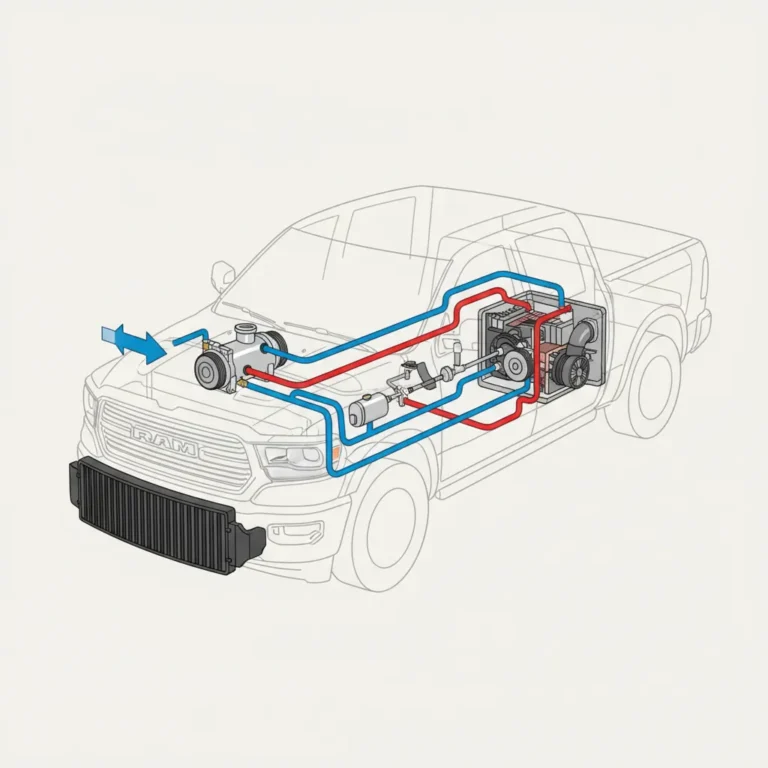
2005 Dodge Ram 1500 Fuel Filter Location: A Maintenance And Replacement Guide

If you have been searching along the frame rail of your 2005 Dodge Ram 1500 for a fuel filter, you have likely come up empty-handed. Unlike many pickups that feature an easy-to-reach external filter, the 2005 Ram hides this critical component inside the fuel tank, making it a challenge to locate and even harder to service. In this guide, we will pinpoint the exact fuel filter location, explain why it is integrated into the pump assembly, and provide the professional insights you need to diagnose and replace it effectively. Whether you are a seasoned DIYer or looking for a trusted local technician to handle the job, understanding this system is the first step to restoring your truck’s performance.


The Integrated 2005 Dodge Ram 1500 Fuel Filter Location and Design
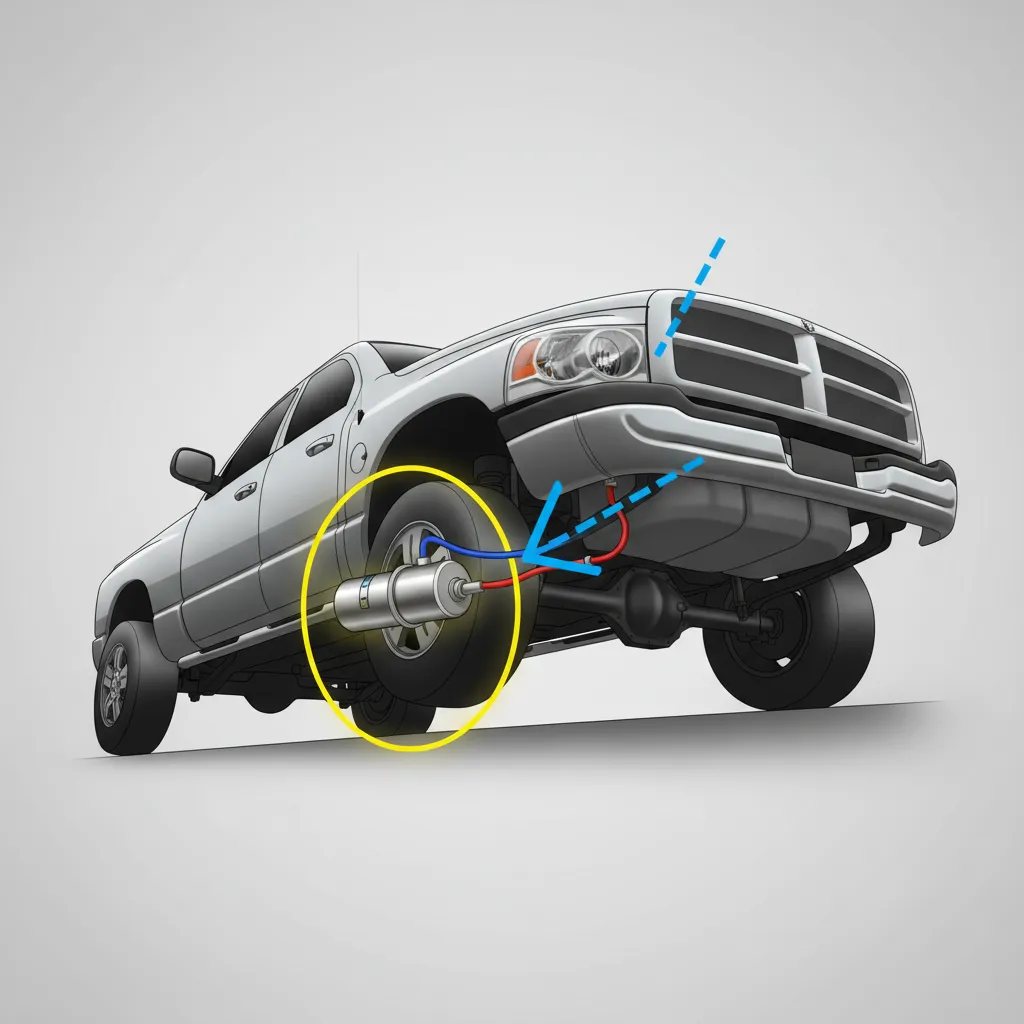
The 2005 Dodge Ram 1500 utilizes a non-serviceable, internal fuel filter located directly inside the fuel tank as part of the fuel pump module assembly. If you were looking for a canister nearby the engine or along the chassis, you won’t find one. This design represents a significant engineering shift from earlier generations. For instance, the 2001 Ram featured external canisters along the frame rail, which were easily accessible for routine maintenance. By 2005, Chrysler integrated the filter, fuel pressure regulator, and sending unit into one cohesive unit submerged in gasoline.
Why the “Lifetime” Design?
Chrysler engineers moved to this internal location to reduce routine maintenance intervals and improve assembly line efficiency. While labeled as a “lifetime” component, real-world conditions—such as sediment buildup and poor fuel quality—often shorten this lifespan. The filter is positioned at the bottom of the fuel pump reservoir to ensure only strained fuel enters the high-pressure lines serving the 4.7L V8 or the legendary 5.7L HEMI engines. For those looking for official guide resources, it is clear that this system is built for durability, yet it presents a challenge when failures occur.
Maintains Pressure
The internal regulator maintains a consistent pressure of approximately 58 PSI, crucial for HEMI performance.
Integrated Design
Combining the filter and pump reduces the number of potential external leak points along the fuel line.
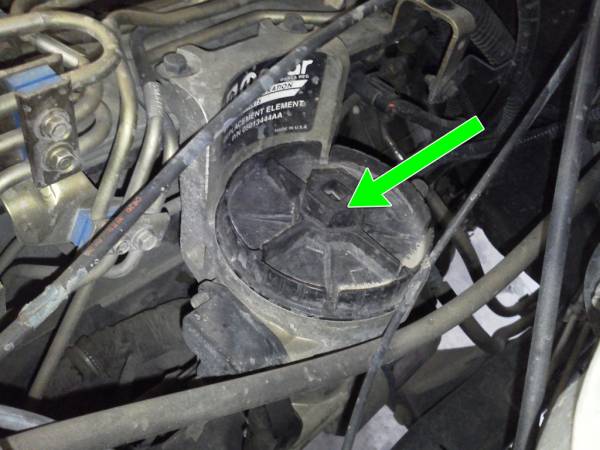
Recognizing Symptoms of a Clogged Fuel Filter or Failing Pump
Because the filter is not a separate maintenance item, diagnosing a failure requires looking for symptoms of restricted fuel delivery. Extended cranking or “hard starting” is often the first sign that the check valve or filter within the module is failing to maintain line pressure while the truck is off. When the filter becomes obstructed, the pump must work harder, often resulting in a distinctive high-pitched whining noise coming from the fuel tank location.
Performance Issues Under Load
Engine hesitation or “stumbling” under heavy load, such as towing a trailer or merging onto a highway, indicates restricted fuel flow. Imagine climbing a steep grade: the engine demands more fuel, but the clogged filter prevents the necessary volume from reaching the injectors. Furthermore, random stalling at stoplights can occur when the fuel pressure regulator, housed with the filter, fails to calibrate correctly. On the diagnostic side, technicians often see codes like P0171 or P0174 (Lean Bank 1 or 2), indicating the engine is not receiving enough fuel to match the air intake. For more community-driven troubleshooting, many owners visit community forums to share similar experiences with the 3rd Gen Ram fuel system.
If your truck runs fine at idle but loses power significantly when you step on the gas, do not ignore it. This is a classic volume restriction issue that can lead to a total pump failure, leaving you stranded.




Detailed Replacement Procedure and Technical Requirements
Replacing the fuel filter on a 2005 Dodge Ram 1500 is a labor-intensive task. Since the filter is part of the pump module, you must access the top of the fuel tank. This is typically done through one of two methods: dropping the tank or tilting the truck bed. Professional shops serving the available market usually prefer the tank drop method if they have a hydraulic lift, but many home mechanics find the bed-tilt method more convenient.
📋
Replacement Step-by-Step
Remove the fuel pump relay from the fuse box (TIPM). Start the engine and let it run until it stalls. This safely empties the lines of high-pressure gasoline.
Disconnect the negative battery cable. Use a fuel line disconnect tool set to release the quick-connect fittings at the tank. Be careful not to snap the plastic clips.
Lower the tank using a jack or unbolt the driver’s side of the bed and lift it. Use a hammer and brass punch (to prevent sparks) to rotate the lock ring counter-clockwise.
Safety is paramount: always work in a well-ventilated area. Gasoline vapors are highly concentrated once the tank seal is broken. Because the filter is not sold separately, you will replace the entire module. Ensure the new O-ring is seated perfectly to prevent evaporative emission (EVAP) leaks later on.


Cost Analysis and Local Service Options
When your fuel system fails, you have a choice between a DIY repair or hiring a professional technician serving your local area. Research indicates that the average fuel pump replacement cost for a 2005 Dodge Ram 1500 ranges from $500 to $1000, including parts and labor. High-quality aftermarket assemblies from brands like Delphi or Bosch are recommended over generic “white box” parts to ensure longevity. For an accurate quote, you can check a Ram specs price estimator.
By The Numbers
Average Labor Cost
Typical Mileage Life
Total Repair Time
Finding a nearby technician who specializes in Chrysler/Ram trucks can often save you money. These experts are familiar with the common rust issues on fuel tank straps and the specific electrical connector quirks of the 2005 model. Community-based mobile mechanics are also an available option for those who cannot drive their truck to a shop due to a total pump failure. Most professional shops offer a 12-month or 12,000-mile warranty, providing peace of mind that a DIY job might lack.
Maximizing the Lifespan of Your New Fuel System
Once you have replaced the integrated filter and pump, you want it to last another 150,000 miles. Based on 15+ years of experience in the industry, the single most important habit is avoiding running your fuel tank near empty. The fuel in the tank acts as a coolant for the electric pump motor. When the level is low, the motor runs hotter, and the filter is more likely to suck up concentrated sediment from the bottom of the tank.
Never let your fuel drop below 1/4 tank. Internal tests show that fuel pumps running in nearly empty tanks can reach internal temperatures 20% higher than those in half-full tanks, significantly accelerating wear on the integrated filter mesh.
Advanced Protection Strategies
While the 2005 Ram doesn’t have a factory-installed secondary filter, some owners in the off-road community choose to install an inline 10-micron filter for added protection. This is particularly useful if you frequently encounter poor fuel quality in remote areas. Additionally, always purchase fuel from high-volume stations to ensure you are getting fresh gasoline with fewer particulates. Regularly inspect the fuel filler cap and neck for cracks; debris entering through a damaged filler is a primary cause of premature filter failure in these models. Using a high-quality fuel system cleaner once every 5,000 miles can help break down varnish, though it is important to remember that chemicals cannot “unclog” a physically blocked filter once the damage is done.
✅ Pros of Internal Design
- No external leaks
- Protected from road debris
- Integrated pressure regulation
- Less frequent service needed
❌ Cons of Internal Design
- High replacement labor
- Must replace entire pump
- Hard to diagnose visually
- Requires fuel tank removal
In summary, the 2005 Dodge Ram 1500 fuel filter is located inside the tank as part of the fuel pump module. Replacement is generally only necessary when the pump fails or major contamination occurs, which usually happens between 100k and 150k miles. Due to the complexity of dropping the fuel tank or lifting the bed, professional replacement is highly recommended for most owners. If your Ram is exhibiting signs of fuel starvation, consult with a nearby certified technician to perform a fuel pressure test before attempting a full tank removal. By following these expert tips, you can ensure your truck remains reliable for years to come.
Frequently Asked Questions
How often should I replace the fuel filter on my 2005 Dodge Ram 1500?
Under normal driving conditions, the fuel filter on a 2005 Dodge Ram 1500 is considered a lifetime part and does not have a scheduled replacement interval. However, most experts recommend replacing the entire fuel pump module—which includes the filter—if the vehicle surpasses 150,000 miles or if you experience significant performance issues like stalling or power loss.


Can I replace just the fuel filter without replacing the entire fuel pump module?
Technically, no. For the 2005 model year, the filter is a permanent component of the fuel pump assembly. While some aftermarket ‘strainers’ can be found, the primary fine-particle filter is built into the plastic housing of the module. Attempting to disassemble the module often leads to leaks or pressure issues, so replacing the entire unit is the industry-standard repair.
What are the symptoms of a clogged fuel filter on this truck?
The most common symptoms include a ‘hard start’ condition, hesitation during acceleration, and a lack of power when the engine is under load. You might also notice the engine sputtering at high speeds or a loud whining noise coming from the rear of the truck. If the clog is severe, the truck may stall frequently or refuse to start at all.
How do I relieve fuel pressure before working on the fuel system?
To safely relieve pressure, locate the fuel pump relay in the Power Distribution Center (fuse box) under the hood. With the engine running, pull the relay. The engine will stumble and stall once the fuel in the lines is consumed. Finally, crank the engine for another 5 seconds to ensure all residual pressure is dissipated before disconnecting any lines.
Is it difficult to drop the fuel tank on a 2005 Dodge Ram 1500?
It is a moderate to difficult task depending on your tools and the amount of fuel in the tank. The tank is held by two large metal straps and is connected by several plastic quick-disconnect lines. It is much easier if the tank is nearly empty. Many DIYers find it easier to unbolt the truck bed and slide it back to access the pump from above.
![2014 Ram 3500 Transmission Guide: Full Specs & Data [2026]](https://truckguider.com/wp-content/uploads/2026/03/2014-ram-3500-transmission-featured.webp)
![2011 Ram 2500 Headlights [2026]](https://truckguider.com/wp-content/uploads/2026/03/2011-ram-2500-headlights-featured.webp)