Intake Air Temperature Sensor Location Dodge Ram: Engine-Specific Identification And Replacement Guide

Finding your Dodge Ram’s intake air temperature sensor is the first step toward restoring lost fuel economy and engine responsiveness. Locating this small but critical component can be frustrating, as its position shifts significantly across the Ram 1500, 2500, and 3500 lineups depending on whether you drive a Hemi V8 or a Cummins diesel. In this guide, you will discover the exact IAT sensor location for your specific Dodge Ram model, learn how to identify symptoms of failure, and find the best nearby resources for replacement parts. Whether you are troubleshooting a check engine light or performing preventative maintenance, this professional walkthrough provides the technical clarity required for a successful repair.


Understanding the Role of the IAT Sensor in Dodge Ram Engine Management
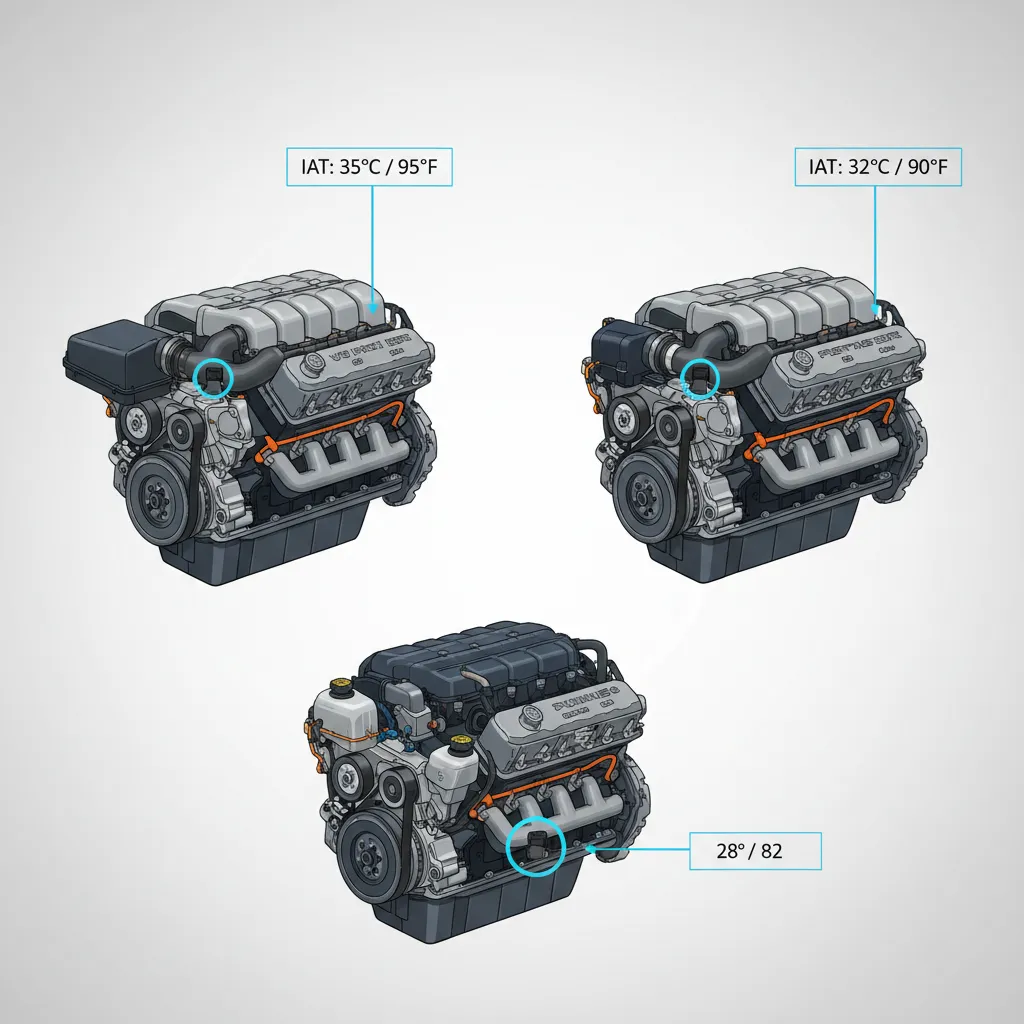
In the sophisticated ecosystem of a modern Dodge Ram, the Intake Air Temperature (IAT) sensor serves as a fundamental data point for the Engine Control Unit (ECU). Technically, the sensor operates as a thermistor—a resistor whose electrical resistance changes in direct correlation with temperature. As ambient air passes over the sensor’s probe, the ECU monitors the voltage drop to determine exactly how cold or hot the incoming air is before it enters the combustion chamber.
This data is vital because of the physics of air density. Cold air is denser than warm air, containing more oxygen molecules per cubic inch. To maintain the stoichiometric 14.7:1 air-fuel ratio, the ECU must adjust fuel injector pulse width based on these readings. Research indicates that an EPA study found that incorrect IAT sensor readings can decrease overall fuel economy by up to 4% due to improper air-fuel mixture adjustments. Beyond fuel, the ECU uses IAT data to manage ignition timing. Cooler air allows the ECU to advance timing for increased horsepower, while high temperatures might force the system to retard timing to prevent engine knock.
Consider the operational difference between a cold start in a Michigan winter versus idling in heavy Phoenix summer traffic. In winter, the IAT sensor signals the ECU to provide a richer mixture and adjusted timing to stabilize the engine. Without an accurate reading from the correct location, your Ram may struggle with cold starts or suffer from “heat soak” performance degradation during the summer. Ensuring the sensor is functional is also a prerequisite for passing local emissions tests, as a faulty sensor will often trigger a Check Engine Light, preventing OBD-II readiness.
Dodge Ram 1500 IAT Sensor Location by Engine Type
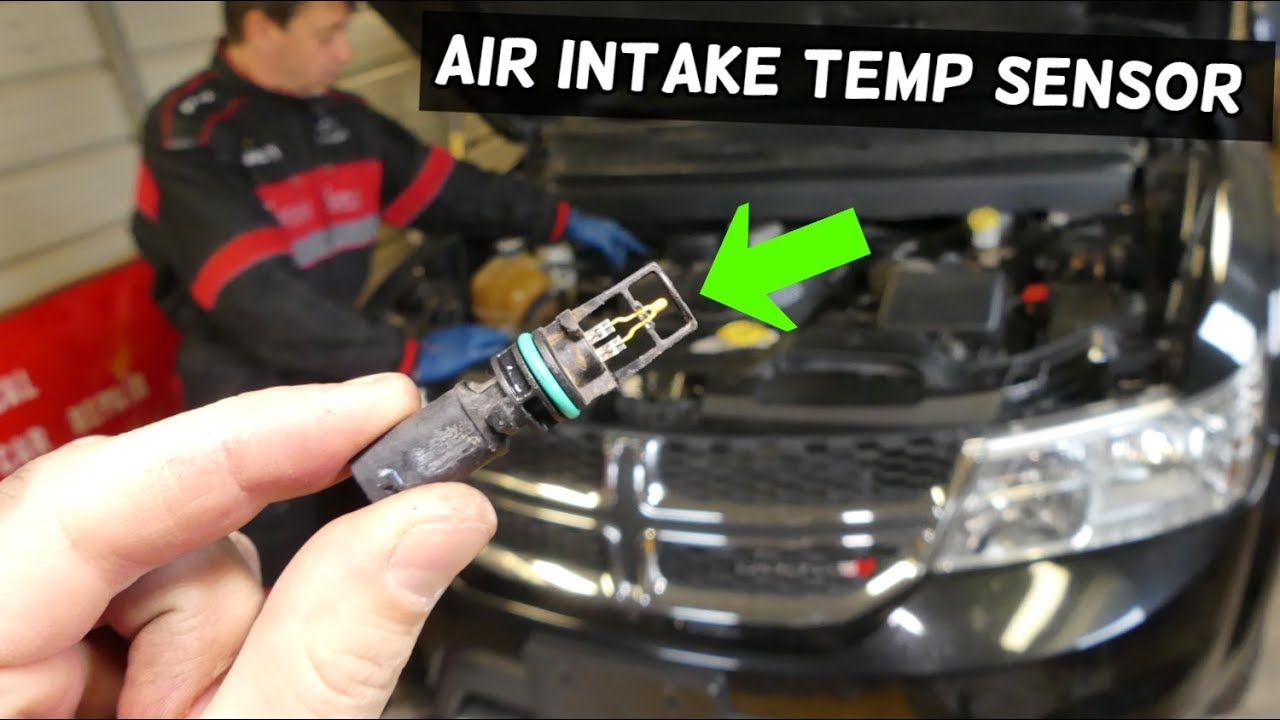
The Dodge Ram 1500 has utilized several engine architectures over the decades, and the IAT sensor placement has evolved alongside them. Identifying the sensor requires looking for a small plastic component with a two-wire electrical connector, usually tucked into the intake stream.
The 5.7L Hemi V8 (3rd, 4th, and 5th Generation)
On the legendary 5.7L Hemi, the IAT sensor is most frequently pressed into the intake air tube. For owners of a 2014 Ram 1500, for example, you can find the sensor on the passenger side of the large plastic intake tube that connects the air filter box to the throttle body. In some earlier 3rd generation models, the sensor may be located further back, closer to the intake manifold plenum. The 5.7L Hemi engine utilizes a highly sensitive thermistor that can detect temperature changes within 1 degree Celsius to maintain its ‘Fuel Saver’ MDS mode efficiently.
The 3.7L V6 and 4.7L V8 PowerTech Engines
For those driving the 3.7L or 4.7L variants, the sensor is typically positioned on the air cleaner housing or the resonator box (the large plastic box sitting atop the engine). These sensors are often “twist-lock” style; a simple quarter-turn counter-clockwise allows for removal. Because these engines were common in the late 90s and 2000s, the plastic around the sensor can become brittle. When inspecting, always look for the signature two-wire harness.
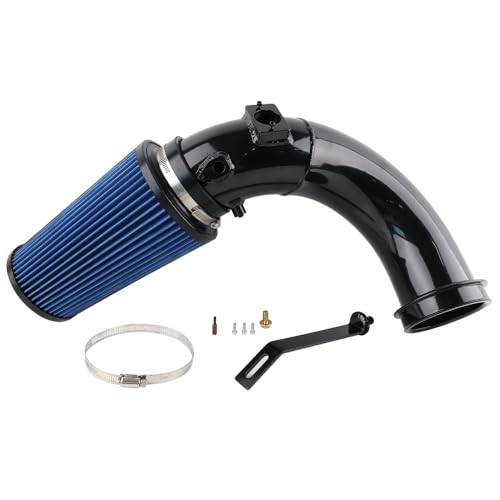
If you have installed an aftermarket “Cold Air Intake,” your IAT sensor has likely been relocated to a pre-drilled hole in the new metal or plastic intake pipe. Ensure the rubber grommet is sealing perfectly to prevent “unmetered” air from entering the engine.

Finding the IAT Sensor on Dodge Ram 2500 and 3500 Cummins Diesels
Heavy-duty Ram trucks equipped with the Cummins turbo-diesel engine utilize a significantly different sensor logic than their gasoline counterparts. In many diesel applications, the IAT sensor is not a standalone unit but is integrated into the MAP (Manifold Absolute Pressure) sensor. This is often referred to as a T-MAP sensor.

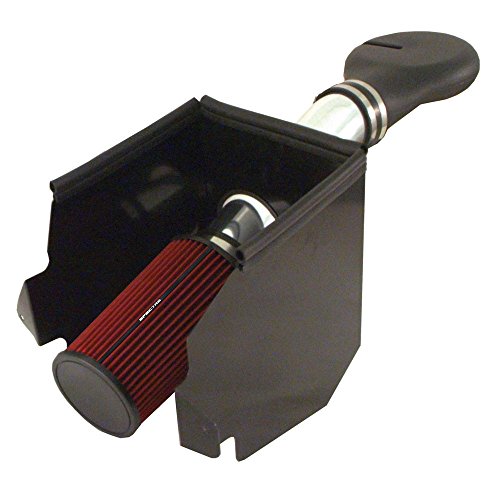

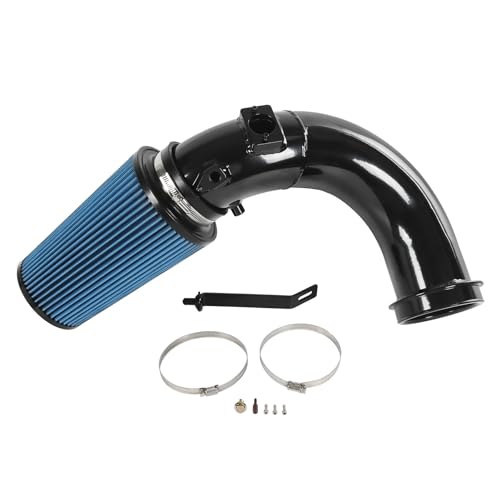
On the 5.9L Cummins (1998.5–2007), the sensor is typically located on the driver’s side of the engine block, threaded into the intake manifold near the rear of the head. In the 6.7L Cummins (2007.5–present), the primary IAT/MAP sensor is found on the intake horn—the cast aluminum elbow that directs air into the manifold. Newer 6.7L models may actually utilize two IAT sensors: one located near the air filter to measure ambient temperature and another after the turbocharger/intercooler to monitor the efficiency of the cooling system.
Diesel owners face a unique challenge: soot fouling. Because of the Exhaust Gas Recirculation (EGR) systems on modern diesels, oily soot can coat the IAT sensor probe, insulating it and causing “lazy” readings. Cummins engines rely heavily on this data to manage grid heater operation; if the sensor fails to report accurate cold temperatures (specifically below 40 degrees Fahrenheit), the grid heaters may not activate, leading to extremely difficult starting in winter conditions. Often, a specialized electronic cleaner can restore a fouled sensor, but if the internal thermistor is damaged, a full replacement is the only reliable path according to official Ram specs.
By The Numbers
Max Fuel Economy Loss
Avg Replacement Cost
Hemi Sensor Sensitivity
Sourcing Reliable IAT Sensors and Support Within Your Community
When your Dodge Ram requires a new sensor, finding a trusted local source is paramount for ensuring part compatibility. Most automotive parts retailers serving your specific neighborhood or zip code will have these sensors in stock, as they are a high-volume maintenance item for the Chrysler/Stellantis family. It is often convenient to use online “check-in-store” features to see if a sensor is currently available at a nearby location before making the trip.
For owners of 2nd or 3rd generation Rams, accessible salvaged parts from recycling centers can be a cost-effective alternative, though I generally recommend a new available sensor inventory for electronic components to ensure longevity. If you are not comfortable performing the work yourself, many community mobile mechanics are available to perform on-site IAT sensor testing and replacement at your home or place of business. This is often more convenient than leaving your truck at a dealership for a full day. Furthermore, visiting a local Dodge Ram community specialist can give you access to OEM-grade diagnostic tools that generic scanners might lack.
Troubleshooting and Replacing a Faulty IAT Sensor
Symptoms of a failing IAT sensor are often subtle before they become debilitating. You might notice an erratic idle, sluggish acceleration, or a “rich” smell (excess fuel) from the exhaust. Eventually, the ECU will trigger the Check Engine Light with codes P0112 (IAT Circuit Low Input) or P0113 (IAT Circuit High Input). Before replacing the sensor, follow these expert maintenance tips to ensure the sensor is actually the culprit.
📋
Step-by-Step Replacement Guide
Disconnect the negative battery terminal to prevent electrical surges. Locate the sensor on the intake tube or manifold and clear any debris around the connector.


Depress the locking tab on the electrical connector and pull it away. Inspect the pins for corrosion or green “crusties.” Experience shows many “faulty” sensors are actually just corroded connectors.
For Hemi engines, gently pull or twist the sensor out of the rubber grommet. For Cummins/Diesel, use a socket to unbolt the T-MAP sensor from the intake horn.
Expert insights suggest using a scan tool to monitor IAT readings in real-time. If the tool shows a static temperature (like -40°F or 250°F) regardless of the weather, the sensor or wiring is definitely compromised. According to RepairPal, the average cost to replace an IAT sensor is between $80 and $150, including labor, though DIY replacement can reduce this to the cost of the part (approx. $20-$40). A properly functioning sensor ensures the Ram’s resale value stays high by keeping OBD-II monitors “ready” for annual inspections.
Never use brake cleaner or harsh solvents on an IAT sensor, as the chemicals can dissolve the delicate thermistor coating. Only use specialized “Mass Air Flow” or “Electronic” cleaner if you are attempting to clean the sensor probe.
In summary, the IAT sensor location varies from the intake tube on Hemi engines to the intake horn on Cummins diesels. Maintaining this sensor is critical for preventing a 4% drop in fuel economy and ensuring smooth engine performance across all operating temperatures. Replacement is a straightforward DIY task that typically costs under $150 even when performed by a professional. If you are experiencing a check engine light or poor idling, locate your sensor today or visit a nearby community mechanic to have your IAT levels tested.
Frequently Asked Questions
Where is the IAT sensor located on my Dodge Ram 1500 with a 5.7L Hemi?
On most 5.7L Hemi models, the IAT sensor is located on the passenger side of the air intake tube, between the air filter box and the throttle body. In some earlier models, it may be threaded directly into the intake manifold plenum toward the rear of the engine bay. Look for a small plastic sensor with a two-wire connector.


How do I test my IAT sensor to see if it is bad?
You can test the IAT sensor using a digital multimeter set to the Ohms (resistance) setting. Remove the sensor and measure the resistance across the two pins. As you heat the sensor with a hairdryer, the resistance should decrease smoothly. If the reading stays at zero or shows infinite resistance, the sensor is faulty and requires replacement.
What are the most common symptoms of a bad IAT sensor in a Ram truck?
The most common symptoms include a noticeable drop in fuel mileage, a rough or stumbling idle, and hesitation during hard acceleration. You will also likely see a Check Engine Light with codes P0112 or P0113. In cold climates, a bad sensor may cause the truck to have difficulty starting because the ECU cannot calculate the proper ‘cold-start’ fuel enrichment.
How much does it cost to replace an IAT sensor on a Dodge Ram?
Replacing an IAT sensor is relatively affordable. The part itself typically costs between $20 and $50 at nearby auto parts stores. If you choose to have the work done at a local service center, the total cost including professional labor and diagnostics generally ranges from $80 to $150, making it one of the most cost-effective repairs for engine performance.
Can I clean my IAT sensor instead of replacing it?
Cleaning is sometimes effective, especially on Cummins diesel engines where soot and oil vapor can coat the sensor tip. Use a dedicated mass air flow (MAF) or electronic cleaner spray. Do not touch the sensor tip with your fingers or a brush, as it is very delicate. If cleaning does not resolve your error codes, a full replacement is necessary.
![2021 Ram 1500 Classic Warlock: Full Specs & Data [2026]](https://truckguider.com/wp-content/uploads/2026/03/2021-ram-1500-classic-warlock-featured.webp)
![2015 RAM 1500 AC Recharge Port Location & Identification [2026]](https://truckguider.com/wp-content/uploads/2026/03/2015-ram-1500-ac-recharge-port-featured.webp)