
2006 Dodge Ram Fuel Pump Relay Location And Troubleshooting Guide

You turn the key in your 2006 Dodge Ram, the engine cranks eagerly, but the familiar roar of the Hemi or Magnum engine never follows. It is a frustrating scenario that many 3rd-generation Ram owners face, often at the most inconvenient times. A failed fuel pump relay is a frequent silent killer of these trucks, leaving drivers stranded because they cannot locate this small but vital component in the complex Power Distribution Center (PDC). In this guide, we will pinpoint the exact 2006 Dodge Ram fuel pump relay location, provide a walkthrough for testing it with basic tools, and help you determine if a simple swap can get your truck back on the road today.


Locating the Power Distribution Center on a 2006 Dodge Ram
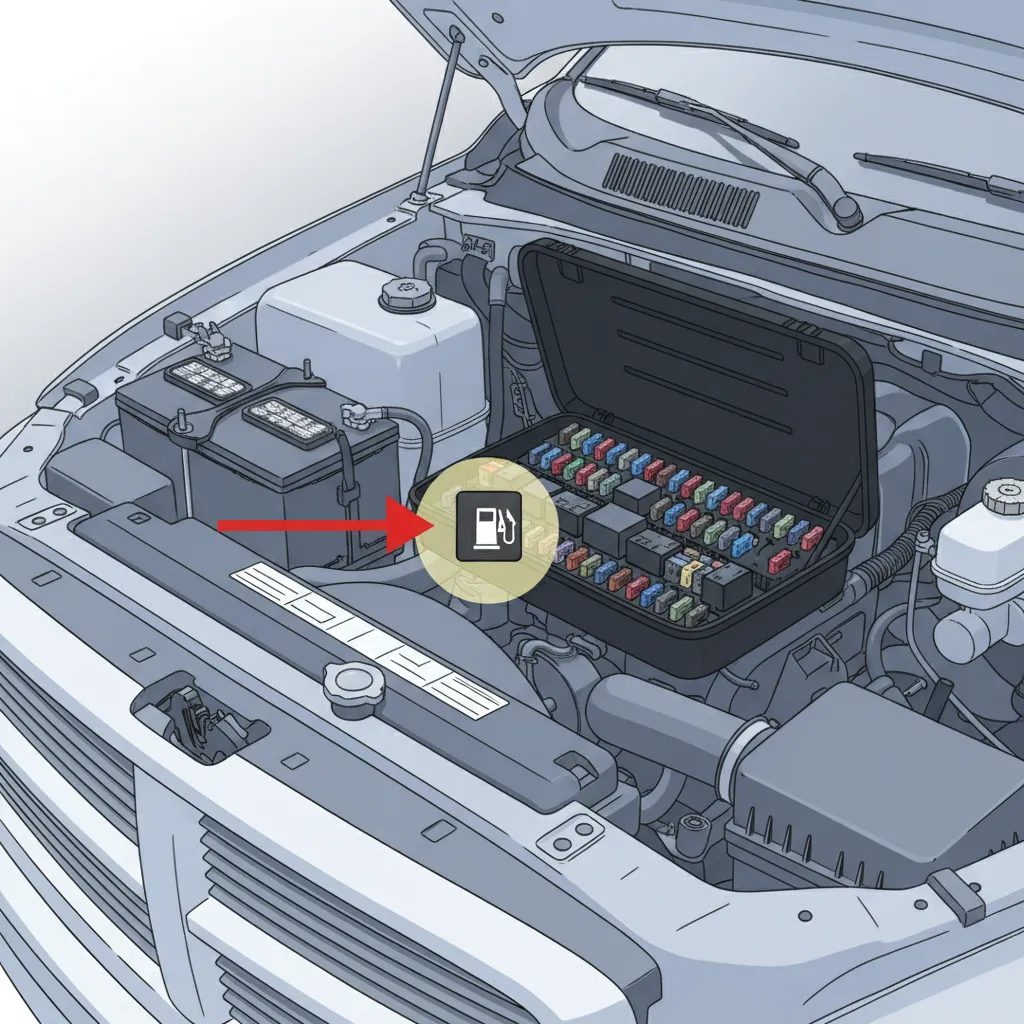
Finding the fuel pump relay starts with locating the Power Distribution Center (PDC), which serves as the central nervous system for your truck’s high-current electrical circuits. On the 2006 Dodge Ram, this box is conveniently located in the engine compartment on the driver’s side. You will find it tucked between the battery and the inner fender well. It is a rectangular black plastic box that houses over 40 individual fuses and relays, protecting everything from your headlights to your fuel injection system.
To access the internal components, you must release the plastic locking tabs located on the sides of the PDC cover. These tabs can become brittle with age, so applying firm but gentle pressure is necessary. Once the cover is removed, the entire array of relays and fuses becomes accessible. It is important to maintain a clean environment when opening this box; moisture and debris near the driver-side fender can lead to corrosion within this specific location, eventually causing terminal failure.
While the 1500, 2500, and 3500 models share a remarkably similar layout, the proximity of the PDC to the firewall can vary slightly depending on your engine size. For instance, the 5.7L Hemi engine bay may feel more crowded than the 4.7L V8, but the PDC remains in the same general area near the battery. If you find yourself stranded at a gas station or on the side of the road, knowing this Ram specs location allows you to perform a quick visual inspection without the need for specialized tools.
Always check the underside of the PDC lid first. Dodge engineers included a relief-molded diagram that is the most accurate map for your specific VIN and trim level.
Identifying the Fuel Pump Relay via the Internal PDC Diagram
Once the cover is off, identifying the specific relay can be daunting due to the sheer number of black cubes. The most reliable method is to reference the diagram on the underside of the PDC lid. Look for the designation ‘FUEL PUMP’ or ‘F/PMP’. This diagram provides a top-down view of the fuse box, helping you orient the orientation of the relay relative to the larger fuses and the battery terminals.
The fuel pump relay itself is typically a standard Bosch-style 4-pin or 5-pin black plastic cube. These relays are designed to handle the high current draw of the fuel pump, which can reach upwards of 10 to 15 amps during operation. You will notice numbers printed near the pins on the bottom of the relay: 85 and 86 (the coil circuit), and 30 and 87 (the switch circuit). Understanding this expert tips layout is crucial if you plan on testing the relay with a multimeter later.
Identifying Swappable Relays
A seasoned mechanic’s trick for emergency diagnostics is the “relay swap.” The 2006 Dodge Ram often uses identical relays for various systems. If you suspect the fuel pump relay is dead, look for another relay in the box with the same part number—commonly 04671168AB. The horn relay is a frequent candidate for this swap. If the truck starts with the horn relay in the fuel pump slot, you have confirmed the relay is the culprit.


By The Numbers
Average Relay Lifespan
Typical Mileage Failure

Symptoms of a Failing 2006 Dodge Ram Fuel Pump Relay
Identifying failure early can save you from a costly tow. Research indicates that fuel pump relay failure is a relatively common issue in older vehicles, accounting for nearly 15% of ‘crank-no-start’ diagnostic cases in mid-2000s domestic trucks. Because the relay is an electromechanical device, its internal copper contacts can oxidize or weld shut over time.
- Engine Cranking but No Start: The starter motor turns the engine over, but because the fuel pump isn’t receiving power, there is no combustion.
- Intermittent Stalling: Heat buildup in a worn relay can cause the internal coil to lose its magnetic hold, breaking the circuit while you are driving.
- Lack of Fuel Pump ‘Hum’: When you turn the key to the ‘ON’ position, you should hear a 2-second prime from the gas tank. Silence usually indicates a relay or pump issue.
- Extended Crank Times: High resistance in a failing relay can delay the voltage reaching the pump, requiring you to crank the engine for several seconds before it fires.
In rare instances, a relay can fail in the “closed” position. This is particularly dangerous as it keeps the fuel pump running even when the truck is turned off, leading to a parasitic battery drain that will leave you with a dead battery by morning. If you hear a humming sound from the rear of the truck while the engine is off, pull the fuel pump relay immediately to save your battery.
Before assuming the relay is bad, always check the fuel pump fuse first. A blown 20A or 25A fuse is a simpler, more common point of failure than the relay itself.
Technical Steps for Testing the Relay with a Multimeter
If you want to move beyond guesswork, a multimeter is your best friend. Testing a relay is a straightforward process that verifies both the integrity of the internal coil and the functionality of the physical switch. Before beginning, ensure your safety by wearing eye protection and working in a dry environment.
📋
Step-by-Step Testing Guide
Set your multimeter to Ohms (Ω). Touch the probes to pins 85 and 86. A healthy relay coil should show between 50 and 120 ohms. A reading of zero or infinity indicates a total coil failure.
Apply 12V power to pin 85 and ground to pin 86. You should hear a distinct ‘click’. While energized, check for continuity between pins 30 and 87. No continuity means the internal contacts are burnt.
Beyond the relay itself, you should perform a voltage drop test at the PDC socket. Set your multimeter to DC Volts and check the socket for pin 30; it should show constant battery voltage (approx. 12.6V). If the socket is dead, the problem lies deeper in the PDC wiring or the Totally Integrated Power Module (TIPM). Inspect the underside of the relay and the socket pins for signs of melting or ‘arcing’, which indicates a high-resistance short that could eventually melt the plastic housing.



Finding Professional Assistance and Local Repair Support
If you have replaced the relay and the fuse, but your truck still refuses to start, it is time to seek professional help. The 2006 Dodge Ram is notorious for issues with the TIPM. In some configurations, the fuel pump relay is actually soldered onto an internal circuit board rather than being a plug-and-play component. If this is the case, a official guide for a bypass might work, but a full TIPM replacement is the professional standard.
Finding a trusted local automotive electrical specialist is your best bet for these complex issues. They have access to available diagnostic tools like the WiTECH system, which can communicate directly with your truck’s Powertrain Control Module (PCM). A convenient mobile mechanic can also perform on-site fuel pressure tests to ensure the pump itself hasn’t failed—a common pitfall for DIYers who keep replacing relays when the pump’s motor has actually seized.
Community Support
Local shops often have experience with regional fleet Rams, giving them a nuanced understanding of common wiring failures in your specific climate.
Serving Your Area
Searching for ‘fuel pump repair near me’ will connect you with technicians who can source parts faster than online retailers.
While a replacement relay costs under $20, a full TIPM replacement at a nearby dealership can range from $800 to $1,200 including labor. Therefore, getting an accurate diagnosis from a technician serving your community is an investment that prevents the “parts-cannon” approach to repairs. If the wiring harness is the actual culprit due to road salt or debris, a local specialist can often repair the wire for a fraction of the cost of a new module.
Conclusion
The 2006 Dodge Ram fuel pump relay is housed within the PDC under the hood on the driver’s side. Diagnosis starts with the lid diagram, followed by a ‘swap test’ with the horn relay or a multimeter verification of pins 85 and 86. Remember that environmental factors and age are the primary drivers of failure for these components. If a new relay doesn’t solve the no-start condition, the problem likely lies in the fuel pump itself, the wiring harness, or the TIPM. If you are still experiencing stalling or start-up issues after replacing the relay, consult a nearby certified mechanic to perform a fuel pressure test and electrical sweep to ensure your truck remains reliable for years to come.
Frequently Asked Questions
Where is the fuel pump relay located on a 2006 Dodge Ram 1500?
On the 2006 Dodge Ram 1500, the fuel pump relay is located inside the Power Distribution Center (PDC), which is the black plastic fuse box situated on the driver-side inner fender, right next to the battery. You must remove the plastic lid and refer to the diagram on its underside to identify the specific relay labeled for the fuel pump.


How do I test a fuel pump relay without a multimeter?
The most effective field test is the ‘swap method.’ Identify another relay in the PDC with the exact same part number—typically the horn or wiper relay. Swap it into the fuel pump relay slot. If the truck starts, you have confirmed the original relay is faulty. Always ensure the part numbers match exactly before swapping to avoid damaging the electrical system.
What are the symptoms of a bad fuel pump relay?
Primary symptoms include the engine cranking but failing to start, sudden engine stalling while driving, and a lack of a ‘whirring’ sound from the fuel tank when the ignition is first turned to the ‘ON’ position. Occasionally, a failing relay may cause intermittent power loss or require multiple attempts to start the vehicle as the internal contacts struggle to connect.
What fuse controls the fuel pump on a 2006 Dodge Ram?
The fuel pump is typically protected by a 20-amp or 25-amp fuse located within the same Power Distribution Center as the relay. It is often labeled as ‘F/PMP’ or ‘Fuel Pump’ on the PDC lid diagram. Always check this fuse for a broken filament before replacing the relay, as a blown fuse will also prevent the pump from receiving power.
Can I replace the fuel pump relay myself?
Yes, replacing the fuel pump relay is a straightforward DIY task that requires no tools. Once you have located the PDC and identified the correct relay using the diagram, you can simply pull the old relay straight up out of its socket and press the new one in. It is an affordable and quick fix that can often save a trip to the repair shop.
![2014 Dodge Ram Rear Bumper: Fitment Guide & Best Prices [2026]](https://truckguider.com/wp-content/uploads/2026/03/2014-dodge-ram-rear-bumper-featured.webp)
![2011 Ram 2500 Headlights [2026]](https://truckguider.com/wp-content/uploads/2026/03/2011-ram-2500-headlights-featured.webp)
![2018 Ram 3500 Transmission: Complete Specs Guide [2026]](https://truckguider.com/wp-content/uploads/2026/03/2018-ram-3500-transmission-featured.webp)