
2019 Ram 1500 Fuse Box Diagram: Terminal Locations And Circuit Assignments

The 2019 Ram 1500 represents a peak of automotive engineering, combining robust towing capacity with sophisticated electronic architectures. However, even the most reliable trucks are susceptible to electrical interruptions that can leave you stranded or without essential features like navigation or climate control. When a radio goes silent or a trailer light fails, many owners struggle to locate the correct fuse among the hundreds of circuits in the Power Distribution Center. This guide provides a professional-grade breakdown of the 2019 Ram 1500 fuse box diagrams, including location maps, terminal assignments, and expert troubleshooting steps to restore your vehicle’s functionality with precision and safety.


Locating the 2019 Ram 1500 Fuse Panels and Power Distribution Centers
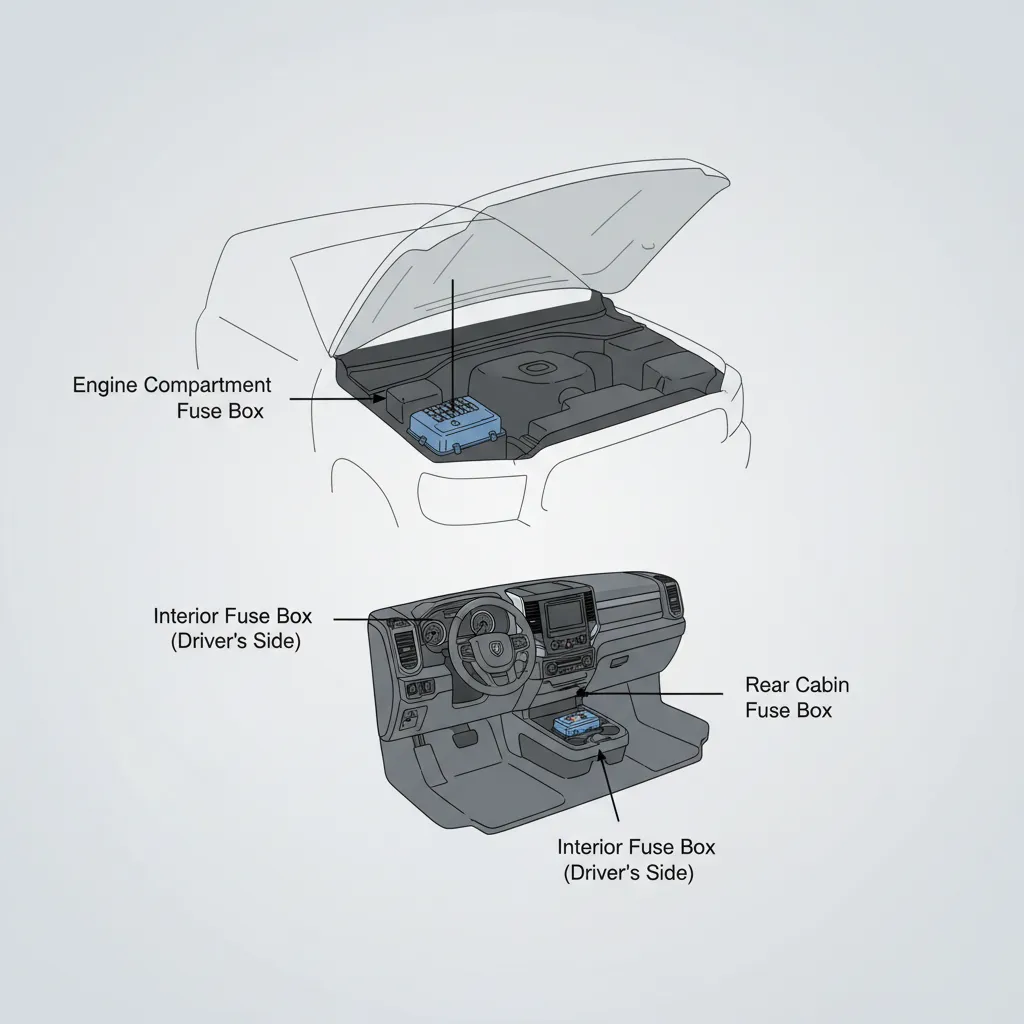
To provide comprehensive maintenance for your vehicle, you must first master the physical layout of its electrical hubs. The 2019 Ram 1500 features two primary locations for circuit protection. The first, known as the Power Distribution Center (PDC), is located under the hood. You will find it situated on the driver’s side of the engine compartment, immediately adjacent to the battery assembly. This unit is housed in a rugged plastic enclosure designed to withstand engine heat and environmental debris.
The second hub is the Interior Fuse Box. For the 2019 model year, this is typically located under the instrument panel on the driver’s side, often tucked behind a removable plastic kick panel or accessible from beneath the steering column area. Accessing these panels requires a professional touch; the PDC cover uses specific latching tabs that must be depressed simultaneously to release. Forcefully prying these can snap the plastic, compromising the weather-tight seal required to protect sensitive relays.
Before pulling any fuses, use your smartphone to take a high-resolution photo of the existing fuse layout. This provides a “trusted” reference point if you accidentally drop a fuse or forget which slot was occupied.
Every cover features a simplified “map” printed on its underside. While helpful for a quick glance, these diagrams often use abbreviated codes that require a more complete guide for accurate identification. Research indicates that the 2019 Ram 1500 was the second best-selling vehicle in the United States, meaning millions of owners encounter these panels. For instance, a driver facing a sudden headlight failure on a dark roadside would need to quickly identify the PDC to check the high-beam relays, highlighting the importance of knowing these coordinates beforehand.
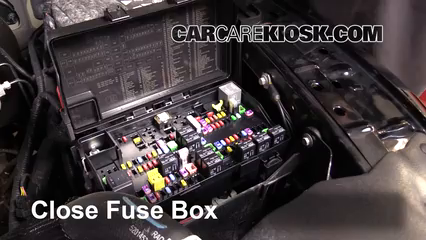
Under-Hood Power Distribution Center (PDC) Diagram and Relay Functions
The under-hood PDC is the “heavy lifter” of the truck’s electrical system. It manages high-current loads that can exceed 40-60 amps, which are crucial for the 2019 model’s advanced electronic power steering and braking systems. This panel contains a mixture of high-amperage J-Case fuses (larger, block-style) and M-Case fuses, alongside various mechanical and solid-state relays.
Key Circuits in the PDC
- Engine Control Module (ECM): Usually protected by a 20A or 30A fuse. Failure here results in a “crank but no start” condition.
- Fuel Pump Relay: Vital for delivering fuel to the 5.7L HEMI or 3.6L Pentastar engines.
- Air Suspension: For trims like the Limited or Longhorn, a high-amp fuse (often 40A+) manages the compressor.
- Trailer Tow Lighting: Individual fuses for left and right turn signals, often a source of frustration for those hauling heavy loads.
It is critical to distinguish between engine configurations. Models equipped with the eTorque mild-hybrid system have additional high-voltage fuses and specific circuit assignments for the belt-drive motor-generator unit. When troubleshooting a “No Start” condition, a reliable diagnostic path begins with checking the Starter Relay (typically labeled R1 or similar in official technical manuals) and the ignition fuse. For the most accurate Ram specs, always refer to the official guide provided by the manufacturer.
Interior Fuse Panel Layout for Cabin Electronics and Accessories
While the PDC handles the raw power, the Interior Fuse Panel manages the finesse. This panel is the hub for driver convenience and safety features. From the Uconnect infotainment system to the sophisticated Supplemental Restraint System (SRS), these circuits are protected by smaller Micro2 and Micro3 fuses designed for rapid response to low-voltage fluctuations.


The 2019 Ram 1500 interior layout is particularly complex because of the Body Control Module (BCM). The BCM acts as a central processor, coordinating signals for power windows, door locks, and interior lighting. If your 12V cigarette lighter socket or USB charging ports stop working, you are likely looking for a 20A yellow fuse within this cabin panel. Expert tips from RepairPal suggest that simple replacements here can save you a $20 to $30 diagnostic fee at a dealership.
Uconnect System
Handles the 8.4-inch or 12-inch touchscreen and navigation data.
Auxiliary Outlets
Protects the 115V AC outlets and various 12V DC power points.
Safety-critical fuses for the instrument cluster and airbag sensors are also located here. If the instrument cluster goes dark while the vehicle is running, it often indicates a blown fuse in the interior block rather than a failed screen. For a detailed discussion on specific terminal assignments, many owners find the Ram specs shared in community forums to be an invaluable resource for real-world troubleshooting.
How to Identify and Test a Blown Fuse with Professional Precision
A quality diagnosis prevents the “parts cannon” approach where fuses are replaced blindly. The first step is a visual inspection. Most Ram fuses have a transparent plastic housing; look for a broken metal filament or dark charring inside the casing. However, visual inspections can be deceiving, as hairline fractures in the filament are often invisible to the naked eye.
The trusted method used by certified technicians involves a digital multimeter or a 12V test light. Modern fuses have two small metal test points on their top surface. By setting a multimeter to the “Ohms” or “Continuity” setting, you can touch the probes to these points while the fuse is still installed. A beep or a “0.0” reading indicates a healthy fuse; an “O.L” (Open Loop) reading confirms it is blown.
By The Numbers
Electrical issues solved by fuses
Avg. cost for pro fuse swap
Best-selling US vehicle 2019
Understanding color-coding is equally important for a complete repair. For example, a blue fuse is consistently 15A, yellow is 20A, and green is 30A. If a fuse blows immediately upon replacement, you have a “hard short” to ground. If it blows only under certain conditions—such as when the wipers are turned on—you have a component-specific overcurrent issue that requires deeper investigation.


Safety Protocols for Replacing Fuses and Electrical Troubleshooting
As a seasoned expert, my most critical warning is against “up-sizing” a fuse. If a 10A fuse for the accessory port keeps blowing, do not replace it with a 20A fuse. Fuses are the “weakest link” by design; by increasing the amperage rating, you force the wiring harness to become the weakest link. This leads to harness melting, permanent module damage, or vehicle fires.
📋
Step-by-Step Replacement Guide
Turn off the ignition, remove the key (or move the fob away), and ensure all lights are switched off.
Use the white plastic fuse puller tool located inside the PDC cover. Avoid using metal pliers which can short adjacent terminals.
A recurring blown fuse is a symptom, not the problem. If a fuse blows twice, stop replacing it and inspect the associated wiring for frayed insulation or water ingress.
Modern RAM 1500s utilize complex CAN bus systems where a single incorrect fuse choice can disrupt communication between multiple modules. For example, a short in a trailer’s wiring might repeatedly blow the “Trailer Tow Left/Right Turn” fuse in the PDC. Instead of just replacing the fuse, you must inspect the trailer connector for corrosion. Finally, ensure the PDC cover is clicked firmly back into place. Moisture ingress into the under-hood fuse box can lead to long-term corrosion that causes ghost electrical issues—where features turn on and off randomly—which are notoriously difficult and expensive to fix.
✅ Pros
- Low-cost initial repair
- Protects expensive modules
- Easy DIY accessibility
- Standardized color coding
❌ Cons
- Can mask deeper issues
- Access panels can be brittle
- Confusing terminal codes
- Risk of harness damage
In summary, maintaining the electrical integrity of your 2019 Ram 1500 requires a disciplined approach. Always consult the specific diagram on the fuse box cover, as layouts can vary slightly by trim and engine type. Use only fuses with the identical amperage rating to protect the integrity of the 2019 Ram’s electrical architecture. Start your diagnosis with a visual inspection but confirm with a multimeter for a reliable repair. Keep a spare kit of Micro2 and J-Case fuses in your glovebox, and if a fuse continues to blow after replacement, consult a certified technician to identify underlying circuit shorts.
Frequently Asked Questions
Where is the interior fuse box located on a 2019 Ram 1500?
The interior fuse box on a 2019 Ram 1500 is situated behind a panel on the driver’s side, usually near the floorboard or integrated into the lower dashboard area. To access it, you must gently pry the plastic access cover off. This panel primarily houses lower-amperage fuses for cabin electronics like the radio, windows, and interior lighting.


Can I use a higher amperage fuse if I don’t have the correct one?
No, you should never replace a blown fuse with one of a higher amperage rating. Fuses are designed to be the ‘weak link’ in a circuit to prevent heat buildup. Installing a higher-rated fuse can allow excess current to flow through the wiring, potentially leading to melted harnesses, damaged control modules, or a vehicle fire.
What does it mean if a fuse looks good but the circuit still isn’t working?
A fuse can occasionally have a hairline fracture that isn’t visible to the naked eye. In these cases, use a multimeter to test for continuity. If the fuse is verified as functional, the issue likely resides elsewhere in the circuit, such as a failed relay, a broken wire, or a malfunctioning component like the motor or module itself.
Which fuse controls the trailer lights on a 2019 Ram 1500?
Trailer lighting circuits are typically located in the under-hood Power Distribution Center (PDC). Look for labels such as ‘Tlr Tow LH’ or ‘Tlr Tow RH’ for turn signals, and ‘Tlr Tow Park’ for running lights. These are often 20A or 25A fuses designed to handle the additional load of external trailer illumination.
Why does my 2019 Ram 1500 keep blowing the same fuse?
A recurring blown fuse indicates a ‘short to ground’ or a failing component that is drawing excessive current. Common culprits include frayed wiring, moisture inside a connector, or a motor (like a wiper or window motor) that is seizing. Continuous replacement without fixing the underlying short is a safety risk and will not resolve the problem.
![2001 Dodge Ram 1500 Oil Type, Capacity, and: Full Specs & Data [2026]](https://truckguider.com/wp-content/uploads/2026/03/2001-dodge-ram-1500-oil-type-featured.webp)
![P0520 Dodge Ram 1500: Diagnose & Fix [2026]](https://truckguider.com/wp-content/uploads/2026/03/p0520-dodge-ram-1500-featured.webp)
![Ram Trx Top Speed Without Limiter [2026]](https://truckguider.com/wp-content/uploads/2026/03/featured-cb0fbb5b-768x432.webp)
![Best 2017 Ram 1500 Crew Cab Running Boards: Top Fit Guide [2026]](https://truckguider.com/wp-content/uploads/2026/03/2017-ram-1500-crew-cab-running-boards-featured.webp)
![Ram 1500 Truck Bed Tents: Fitment Guide & Top Recommendations [2026]](https://truckguider.com/wp-content/uploads/2026/03/truck-bed-tents-ram-1500-featured.webp)