Dodge Ram 1500 Oil Pump Location And Engine Component Identification

Finding the oil pump on your Dodge Ram 1500 isn’t as simple as popping the hood and looking for a visible bolt-on accessory like an alternator or an A/C compressor. Because the oil pump is the heart of the engine’s life-support system, it is tucked deep within the mechanical assembly to ensure constant lubrication under high pressure. When your oil pressure drops or you hear an unusual engine tick, knowing exactly where the oil pump is located and how to access it becomes a critical first step in preventing total engine failure. This guide will detail the precise location of the oil pump across various Ram 1500 engine models, explain how it functions, and provide the data you need regarding replacement costs and procedures.


Dodge Ram 1500 Oil Pump Location by Engine Type
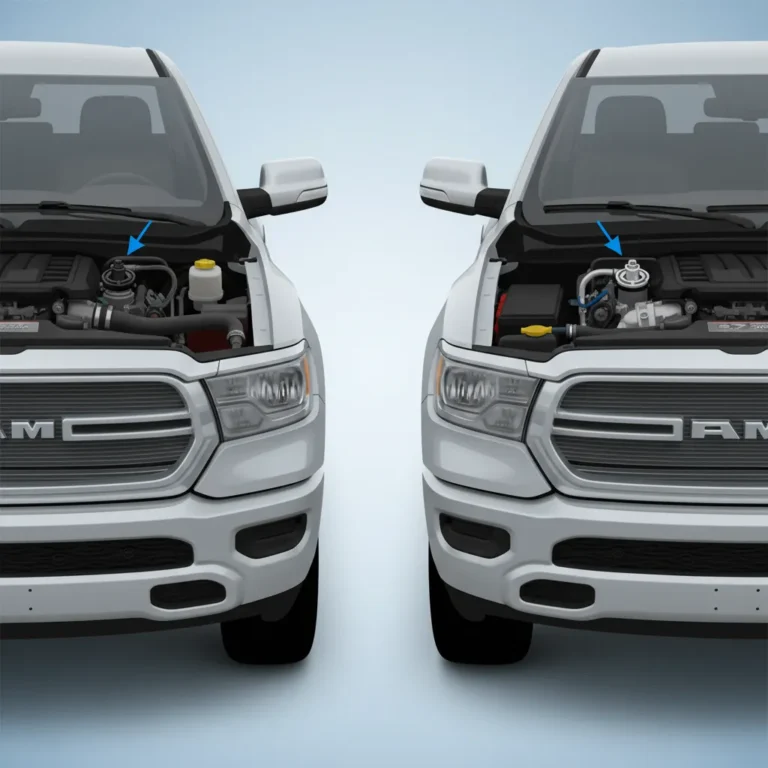
The architecture of the Dodge Ram 1500 has evolved significantly over the years, leading to distinct differences in where the oil pump is housed. Understanding your specific engine displacement is the first step in localizing the component. For the majority of owners in our trusted local community, the choice usually falls between the legendary 5.7L Hemi V8 and the efficient 3.6L Pentastar V6.
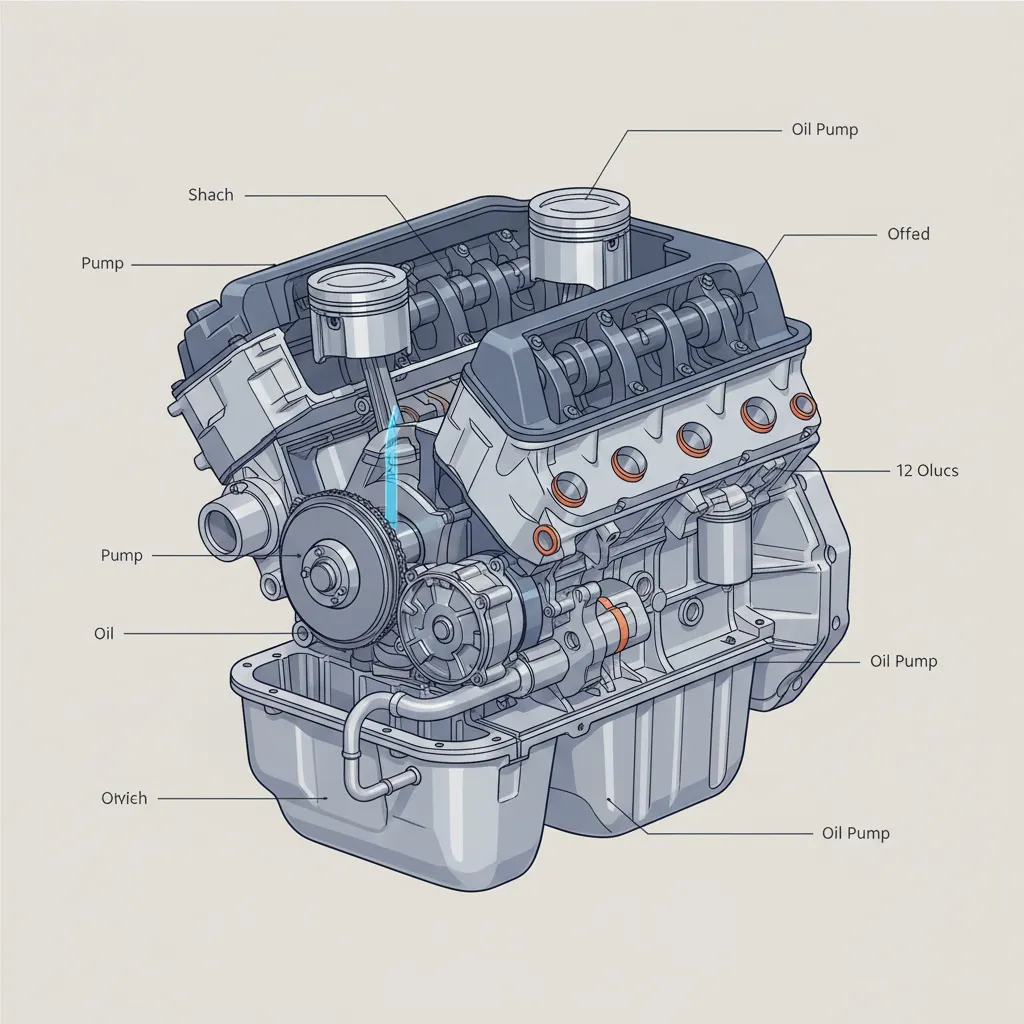
The 5.7L Hemi V8 Configuration
On the 5.7L Hemi V8, the oil pump is located at the front of the engine, directly behind the timing cover. It is a “gears-on-crank” design, meaning the inner gear of the pump is driven directly by the snout of the crankshaft. This location is strategic but labor-intensive to reach. To see the pump, you must remove the cooling fan, the serpentine belt, the harmonic balancer (crankshaft pulley), and the timing cover itself. Because it sits on the crankshaft, its rotational speed is perfectly synchronized with the engine’s RPM, ensuring that as you accelerate, oil flow increases to meet the demand.
The 3.6L Pentastar V6 Configuration
If you are driving a Ram 1500 with the 3.6L Pentastar V6, the layout is different. The oil pump is integrated into the lower portion of the engine block, situated inside the oil pan area. Unlike the Hemi, this pump is driven by a dedicated small chain connected to the crankshaft. This unit is often referred to as a variable displacement pump. While it is accessible after removing the oil pan, the Pentastar design involves a two-stage operation that is electronically controlled to optimize fuel economy.
For Ram 1500 owners with four-wheel drive (4WD), the oil pump location is further obscured by the front differential and steering rack. A common scenario involves a technician having to remove the front crossmember or lower the differential just to gain clear access to the oil pan. This adds significant labor time compared to 2WD models.
The Mechanical Function of the Ram 1500 Oil Lubrication System
The oil pump serves as the “heart” of your Ram’s engine. Its primary function is to draw oil from the reservoir in the pan through the pickup tube and force it under pressure through the oil filter and into the engine’s galleries. From there, it lubricates the crankshaft bearings, camshafts, and the Multi-Displacement System (MDS) solenoids—a critical feature in Hemi engines that shuts down four cylinders to save fuel.
Modern Ram trucks use variable displacement technology. In convenient driving conditions, such as highway cruising, the pump reduces its output to lower the load on the engine, thereby increasing miles per gallon. However, during a heavy towing scenario or while navigating steep grades, the pump shifts to a high-output mode. This ensures that even under maximum stress, the engine maintains a minimum of 10 PSI for every 1,000 RPM—a standard industry benchmark for preventing catastrophic metal-on-metal contact.

Identifying Symptoms of a Failing Oil Pump in Your Ram Truck
Because the oil pump is buried deep within the engine, you cannot visually inspect it for wear without major teardown. Instead, you must rely on diagnostic cues. One of the most common signs in the Ram community is the “Hemi tick.” While this can sometimes be attributed to broken manifold bolts or lifter issues, a weakening oil pump often fails to provide enough pressure to the hydraulic lifters, causing a distinct clattering noise.


Drivers should also monitor the dashboard oil pressure gauge closely. A healthy Ram 1500 typically shows between 40 and 60 PSI during normal driving. If you notice the needle flickering or dropping below 20 PSI while idling at a stoplight—especially when the engine is warm and the oil is at its thinnest viscosity—the pump or the pickup tube O-ring may be failing. Research indicates that low oil pressure is a leading cause of engine failure, and ignoring these signs can turn a $1,000 pump replacement into a $7,000 engine swap.
By The Numbers
Avg. Lifespan (Miles)
Replacement Cost
Labor Contribution
Replacement Procedures and Local Service Accessibility
Replacing a Ram 1500 oil pump is a high-level task that requires a comprehensive set of tools, including a harmonic balancer puller, a high-quality torque wrench, and potentially a hoist to support the engine if the crossmember needs to be dropped. For those serving their own vehicles in a home garage, it is vital to consult an official guide for exact torque specifications and timing alignment.
📋
Step-by-Step Overview (5.7L Hemi)
Drain the oil and coolant. Remove the radiator fans, serpentine belt, and the harmonic balancer using a specialized puller tool.
Unbolt the front timing cover. On 4WD models, you may need to lower the oil pan slightly or drop the front differential to clear the bottom bolts.
Remove the old pump from the crankshaft. Always replace the oil pump pickup tube O-ring; a flattened or cracked O-ring allows air into the system, causing cavitation.
According to RepairPal, the average cost for this service ranges from $800 to $1,200. Because labor accounts for nearly 70% of this bill, many owners choose to visit a nearby professional shop that can offer a warranty on both parts and labor. When selecting a replacement, always use a high-quality OEM or trusted local performance part. Using a cheap aftermarket pump is a common pitfall that often leads to premature failure and a repeat of this expensive labor process.
Preventative Maintenance and Troubleshooting Common Pressure Issues
The best way to avoid the headache of an oil pump replacement is through proactive maintenance. High-quality synthetic oils contain detergents that keep the internal pump rotors clean and free of varnish. For Hemi engines, using the manufacturer-recommended 5W-20 weight is non-negotiable. Using a heavier oil like 10W-30 can increase internal pump stress by up to 15% during cold starts in winter climates, and it can interfere with the operation of the MDS system.


Before installing a new oil pump, always prime it with fresh oil. Rotating the pump by hand while submerged or filling the cavities ensures it has immediate lubrication upon the first engine start. A “dry start” on a new pump can score the internal gears instantly, significantly reducing its lifespan.
Differentiating Sensor Failure from Pump Failure
Before committing to a full pump replacement, check the oil pressure sending unit. On many Ram 1500 models, the sensor is prone to failure, sending “low pressure” warnings to the dash even when the mechanical pump is working perfectly. A quick check at a convenient service station using a mechanical pressure gauge can confirm if the issue is electrical or mechanical. If the mechanical gauge shows steady pressure, you likely just need a new $50 sensor rather than a $1,000 pump.
High-Volume Upgrades
For those who use their Ram for heavy towing, upgraded high-volume pumps are available to provide extra lubrication overhead.
Regular Filtration
Changing your filter every 5,000 miles prevents debris from clogging the pump intake screen, extending the unit’s life to 200,000+ miles.
Whether you are dealing with a 3.6L Pentastar or a 5.7L Hemi, the oil pump’s location and health are paramount to your truck’s longevity. By understanding the mechanical signs of wear and the labor required for replacement, you can make informed decisions that protect your investment. If you are unsure about the noises coming from your engine, joining a Ram community can provide additional peer-to-peer insights on specific model-year quirks.
Conclusion
The oil pump in a Dodge Ram 1500 is an internal component that demands respect and precision. Located behind the timing cover on Hemi models and inside the oil pan on Pentastar engines, it is not easily reached but is essential for every mile you drive. A failing pump is a primary driver of engine damage, necessitating immediate attention if low pressure is detected through dashboard warnings or audible engine ticks. Proper maintenance, including regular use of high-quality synthetic oil and OEM-grade filters, remains your best defense against a $1,200 replacement bill. If you suspect your oil pump is failing, contact a certified technician in your community today or browse our available service resources to schedule a nearby inspection before minor symptoms turn into a major mechanical failure.
Frequently Asked Questions
Where is the oil pump located on my Dodge Ram 1500 5.7 Hemi?
On the 5.7L Hemi V8, the oil pump is located at the front of the engine block, directly behind the timing cover. It is a ‘crank-driven’ pump, meaning it is mounted around the snout of the crankshaft. To access it, you must remove the harmonic balancer, the timing cover, and usually the oil pan to disconnect the pickup tube.


How do I know if my Dodge Ram 1500 oil pump is failing?
Common symptoms include a low oil pressure warning on your instrument cluster, increased engine temperature, and loud metallic ticking or knocking sounds from the valvetrain. If you notice the oil pressure gauge dropping significantly when the truck is idling at a stoplight, this is a classic sign that the pump can no longer maintain adequate flow.
Can I replace the oil pump myself, or do I need a mechanic?
Replacing a Ram 1500 oil pump is a complex ‘Level 3’ repair. It requires extensive disassembly, including removing the oil pan and front engine components. On 4WD models, you may even need to lower the front differential. Unless you have professional-grade tools and a lift, this repair is best handled by a mechanic serving your local community.
How much does it cost to replace an oil pump in a Dodge Ram 1500?
According to RepairPal, the average cost for a Dodge Ram 1500 oil pump replacement is between $800 and $1,200. Parts generally cost between $250 and $400, while labor makes up the remainder of the cost due to the 5 to 8 hours of work required to access the internal components.
What is the average lifespan of a Ram 1500 oil pump?
A Dodge Ram 1500 oil pump typically lasts between 60,000 and 100,000 miles. However, with meticulous maintenance and the use of full synthetic oil, many pumps can last well over 150,000 miles. Conversely, poor maintenance or sludge buildup can cause the pump or its pickup screen to fail prematurely.
![2014 Dodge Ram Rear Bumper: Fitment Guide & Best Prices [2026]](https://truckguider.com/wp-content/uploads/2026/03/2014-dodge-ram-rear-bumper-featured.webp)
![2011 Ram 1500 5.7 Hemi: Specs, Reliability & Towing Guide [2026]](https://truckguider.com/wp-content/uploads/2026/03/2011-dodge-ram-1500-5-7-hemi-featured.webp)