2011 Ram 2500 Headlights [2026]

Upgrading your 2011 Ram 2500 headlights is the most effective way to improve nighttime safety and refresh your truck’s appearance. Whether you choose high-performance projector LEDs or affordable OEM-style replacements, ensuring compatibility with the factory H13/9008 wiring is essential.
🎯 Key Takeaways
- Determine if your Ram has factory dual or quad beam headlight housings.
- Projector assemblies offer a sharper light cutoff and better visibility than reflectors.
- Most 2011 Ram 2500 headlights use H13 (9008) bulbs for standard setups.
- Verify DOT/SAE compliance to ensure your new headlights are street legal.
- Black or smoked housings provide a custom look without compromising fitment.
Replacing your 2011 Ram 2500 headlights isn’t just about passing your next inspection; it is about fixing one of the weakest links in the fourth-generation Ram’s design. Whether you are looking for a direct OEM-style replacement to clear up foggy lenses or a high-performance LED projector upgrade, the market is currently flooded with options ranging from budget-friendly $150 sets to $1,000+ professional-grade assemblies. The right choice depends entirely on whether you prioritize a stock look or need a massive increase in nighttime visibility for towing and backroad driving.


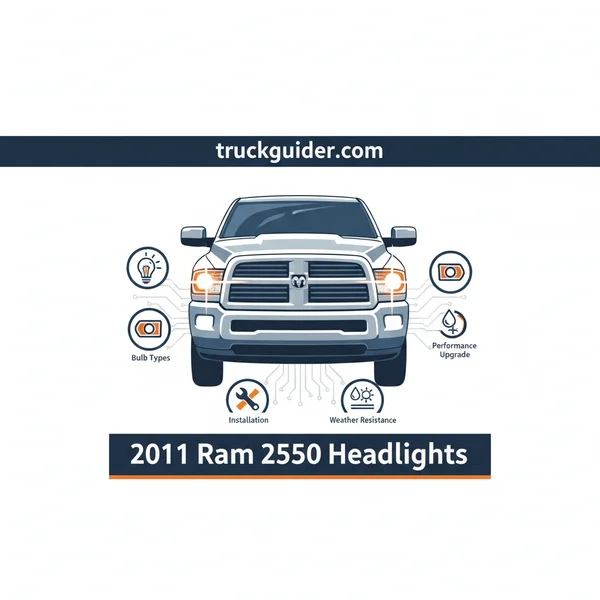
Getting the right fitment is the first hurdle because Dodge used two distinct housing designs for the 2011 model year. If you purchase the wrong version, the wiring harness will not match your factory plug, leaving you with a disassembled truck and no working lights. This guide breaks down exactly how to identify your current setup and compares the best-performing assembly styles currently available on the market.
Types of 2011 Ram 2500 Headlight Assemblies (Dual vs. Quad Beam)
Before you add any parts to your cart, you must verify your “beam type.” In 2011, Ram 2500 trucks came with either a Dual Beam or a Quad Beam setup. These are not interchangeable without a conversion harness. The Dual Beam style features a single bulb that handles both high and low beam functions. In contrast, the Quad Beam style uses two separate bulbs per side, providing a dedicated light source for each function. This distinction is the most common reason for part returns, so checking your current housing is mandatory.
Identifying Your Factory Housing
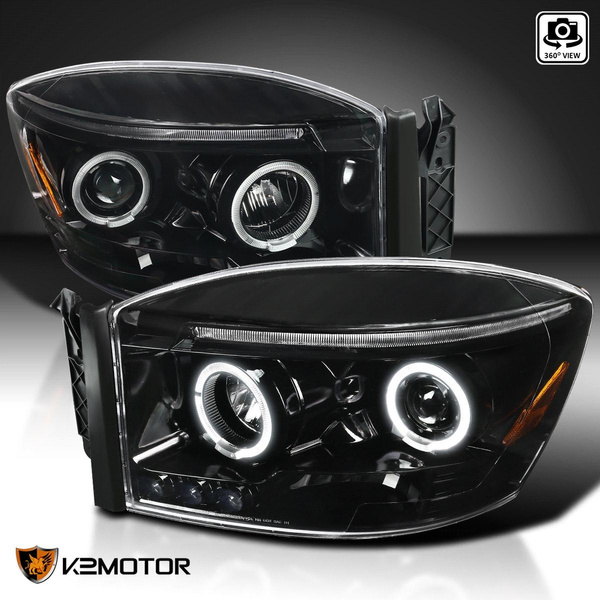
You can identify your setup by looking at the front of your headlight lens. If you see one large reflective bowl with a single bulb in the center, you have the Dual Beam system. If you see two distinct chrome sections stacked or side-by-side, you have the Quad Beam system. Here is a quick breakdown of the technical differences you will encounter:
- Dual Beam Setup: Uses a single H13 (9008) bulb. These are common on ST and some SLT trim levels.
- Quad Beam Setup: Uses an H11 bulb for low beams and a 9005 bulb for high beams. These are standard on Laramie, Power Wagon, and higher-trim SLT models.
- Physical Shape: Both housings share the same outer footprint and mounting points, meaning they “bolt in” the same, but the internal wiring connectors are completely different.
Why Wiring Compatibility Matters
If you have a Dual Beam truck and want to upgrade to a Quad Beam style (which many owners do for better light distribution), you cannot simply plug it in. You will need a Dual-to-Quad conversion harness. Many aftermarket manufacturers like AlphaRex or Morimoto include these adapters in their kits, but budget-brand eBay or Amazon listings often do not. Always confirm if the assembly is “Plug-and-Play” for your specific factory connector before buying.
The Ultimate 2011 Ram 2500 Headlights Walkthrough
The 2011 Ram 2500 is a heavy-duty workhorse, but over time, even the toughest trucks suffer from yellowed lenses or burnt-out bulbs. Maintaining your headlights is not just about aesthetics; it is a critical safety measure for night driving and towing. Whether you are replacing a single bulb or upgrading to a completely new aftermarket housing, this guide provides the precise sequence of steps required to navigate the unique “hidden” locking mechanisms found on the fourth-generation Ram trucks. Following this walkthrough will ensure you do not snap fragile plastic clips or scratch your paint during the process.
Step 1: Preparation and Tool Selection
What you need: A 10mm socket and ratchet, a 6-inch socket extension, a flat-head screwdriver or trim removal tool, clean microfiber cloths, and a pair of nitrile gloves.
Instructions: Before you begin, park your Ram on a level surface and engage the parking brake. Ensure the engine is off and the headlight switch is in the “O” or off position to avoid any electrical surges. Open the hood and locate the two main 10mm bolts securing the top of the headlight housing to the radiator support frame. While you are here, clear any road debris or leaves from the gap between the headlight and the grille. This prevents dirt from falling into the electrical connectors later. Wearing gloves is essential if you are handling new bulbs, as the oils from your skin can cause halogen or HID bulbs to overheat and fail prematurely.
Pro Tip: Place a thick towel or fender cover over the bumper directly below the headlight. The housing is bulky, and it is very common for the plastic edges to scratch the bumper paint when you finally pull the unit free.
Step 2: Removing the Upper Mounting Bolts
What you need: 10mm socket and ratchet.
Instructions: There are two primary bolts holding the assembly in place from the front. The first is easily visible on the top of the housing. The second is located slightly lower, tucked toward the inner edge near the grille. Use your 10mm socket to loosen these. They are usually not under extreme torque, but they can be corroded. Turn them counter-clockwise and place them in a magnetic tray or a secure spot so they don’t roll into the engine bay. Note that the 2011 model uses a specific plastic-to-metal threading, so don’t be alarmed if the bolts feel “crunchy” as they come out; this is often just road salt or dust in the threads.
Pro Tip: If the bolts feel stuck, spray a tiny amount of penetrating oil on the threads. Forcing these bolts can snap the plastic tabs on the headlight housing, which would require replacing the entire unit.
Step 3: Accessing the Hidden Rear Locking Tab
What you need: Flat-head screwdriver or trim tool, and your 10mm socket with an extension.
Instructions: This is the step most DIYers miss. Go to the front wheel well on the side you are working on. You will see a small plastic access door or a flap in the wheel well liner. Pop this flap open using your screwdriver. Inside, you will see a white plastic sliding lock or a 10mm bolt depending on your specific trim package. If it is the sliding lock, push it upward to release the rear pin of the headlight. If it is a bolt, use your extension to reach in and unscrew it. This rear attachment point is what keeps the headlight flush with the fender, and failing to release it will result in a broken housing if you try to pull from the front.
Pro Tip: Use a flashlight to peek through the wheel well flap. It can be very dark inside, and seeing the orientation of the white plastic slide will save you ten minutes of frustrating blind poking.
Step 4: Unseating the Headlight Assembly
What you need: Steady hands and a firm grip.


Instructions: With the top bolts removed and the rear lock released, the headlight is now held in place by a single ball-and-socket pressure clip located at the bottom outer corner (near the turn signal). Stand at the front of the truck, grip the headlight housing firmly with both hands, and pull it straight forward toward you. You may need to give it a quick, firm tug to pop the ball out of its plastic socket. Do not pull at an angle, as this can snap the alignment pins. The assembly will slide out about 4 to 6 inches before the wiring harnesses become taut. Be prepared to catch the weight of the unit so it doesn’t fall onto the bumper.
Pro Tip: If the housing feels completely stuck, double-check the wheel well slide lock from Step 3. If that lock is even partially engaged, the headlight will not move, and prying harder will crack the plastic housing.
Step 5: Disconnecting the Electrical Harnesses
What you need: Small flat-head screwdriver (optional).
Instructions: 2011 Ram 2500s typically have two main electrical connectors: the main headlight plug and the turn signal/marker light plug. Most of these connectors feature a red locking tab. Use your fingernail or a small screwdriver to slide the red tab back into the “unlocked” position. Once unlocked, press down on the black release lever and pull the connector away from the bulb socket. Do not pull by the wires themselves, as this can de-pin the connector. If you are replacing the entire housing, remove both plugs. If you are just changing a bulb, you can sometimes leave the wiring attached while you swap the bulb, but it is much easier to work with the housing completely removed and placed on a soft workbench.
Pro Tip: Inspect the connectors for any green corrosion or signs of melting. Ram trucks are known for drawing significant current through these plugs, and a loose connection can lead to heat damage over time.
Step 6: Swapping Bulbs or Installing New Housing
What you need: New H11 (Low Beam) and 9005 (High Beam) bulbs, or a replacement assembly.
Instructions: If you are just replacing bulbs, twist the bulb socket counter-clockwise to remove it from the housing. Pull the old bulb out and click the new one into the socket. If you are installing an entirely new headlight assembly, transfer any existing bulbs or LED resistors if they were not included with the new unit. Ensure the rubber O-ring on the bulb socket is seated properly; a misaligned O-ring will allow moisture to enter the housing, leading to condensation and premature failure. If you are upgrading to LED bulbs, ensure the heat sink or fan on the back of the bulb has enough clearance within the housing cap.
Pro Tip: Never touch the glass of a new halogen bulb. The oils from your fingers create a “hot spot” on the quartz glass, which will cause the bulb to shatter within a few hours of use. If you do touch it, clean it with rubbing alcohol before installation.
Step 7: Reinstalling and Seating the Unit
What you need: 10mm socket and ratchet.
Instructions: Reverse the removal process. First, reconnect the electrical harnesses and push the red locking tabs back into the “locked” position. Line up the ball-and-socket joint on the outer corner and the alignment pins on the back. Push the housing firmly back into the truck until you hear a “click” or feel it seat against the frame. Go back to the wheel well access flap and pull the white sliding lock down (or reinstall the 10mm bolt) to secure the rear. Finally, reinstall the two 10mm bolts on the top. Hand-start these bolts first to ensure they aren’t cross-threaded, then tighten them until they are snug. Do not over-tighten, as the plastic tabs can crack under too much pressure.
Pro Tip: Before tightening the top bolts all the way, check the body lines. You can slightly wiggle the housing to ensure the gap between the headlight and the fender is even and professional-looking.
Step 8: Final Testing and Beam Alignment
What you need: A wall or garage door and a Phillips head screwdriver.
Instructions: Turn on your headlights to verify that both the high and low beams, as well as the turn signals, are functioning correctly. Park the truck about 25 feet away from a flat wall on level ground. Check the height of the beams. On the back of the headlight housing (accessible from under the hood), there is a silver adjustment screw. Use a Phillips head screwdriver to turn this screw, which moves the beam up or down. The “cutoff” line of the light should be about 2 inches below the center point of the headlight lens height to avoid blinding oncoming traffic. This is especially important if you have a leveled or lifted Ram 2500.
Pro Tip: If you installed LED bulbs, pay extra attention to the beam pattern. Some LEDs need to be rotated 90 degrees within the housing to ensure the light chips are facing side-to-side, providing the correct “throw” on the road.
✅ Final Checklist
- Verify that the red locking tabs on all electrical connectors are pushed into the locked position.
- Confirm the white sliding lock in the wheel well is fully engaged to prevent the housing from vibrating.
- Ensure the top 10mm bolts are snug and the headlight is flush with the body lines.
- Test both high and low beams, as well as hazard lights/turn signals, to ensure no “bulb out” warnings appear on the dashboard.
- Check that the rubber weather stripping around the headlight is not pinched or folded.
Important Notes:



- Safety: Always wear eye protection when working with bulbs, as pressurized glass can shatter if dropped. Disconnect the negative battery terminal if you are doing extensive electrical rewiring.
- Professional Help: If you notice burnt wiring or melted plastic connectors (common in high-mileage Rams), seek a professional mechanic to replace the pigtail harness rather than just the bulb.
- Estimated Time: 30–45 minutes for both sides.
- Estimated Cost: $30–$60 for high-quality bulbs; $200–$500 for a pair of complete replacement assemblies.
Comparing Projector Upgrades vs. Standard Reflector Styles
Once you know your fitment, you need to decide between a Reflector or a Projector assembly. This decision impacts both the look of your truck and the quality of the light thrown onto the road. Most 2011 Ram 2500s came stock with reflector housings, which use a mirrored surface to bounce light forward. While functional, they are notorious for “light bleed,” which can blind oncoming drivers if you install high-powered LED or HID bulbs into them.
Standard Reflector Replacements (The Budget Pick)
If you are happy with the factory light output and just want to get rid of yellowed, oxidized plastic, a standard reflector replacement is your best bet. These are the most affordable options and maintain the classic “heavy duty” look of the 2011 Ram. Brands like TYC and DEPO offer CAPA-certified replacements that mirror the original equipment quality at a fraction of the dealership price.
- Pros: Lowest cost (usually $150-$250 per pair), easy 15-minute installation, keeps the truck looking original.
- Cons: Limited light distance, prone to yellowing over time, not optimized for LED bulb upgrades.
- Best For: Daily drivers on a budget or owners selling their truck who want it to look fresh.
Modern Projector Assemblies (The Performance Upgrade)
Projector headlights use a glass lens to focus the light into a sharp, concentrated beam. This creates a “cutoff line” that prevents light from shining into the eyes of other drivers while throwing the beam much further down the road. High-end brands like Morimoto (XB Series) or AlphaRex (LUX-Series) are the gold standard here. They often come with integrated LED daytime running lights (DRLs) and sequential turn signals, which modernize the look of a 2011 truck instantly.
- Pros: Massive increase in night visibility, sharper beam pattern, modern “blacked out” or “chrome” aesthetic options.
- Cons: Higher price point ($400-$1,200), slightly more complex wiring for DRL features.
- Best For: Frequent night drivers, off-roaders, and owners who want a premium, modern appearance.
Technical Specifications: Bulb Sizes and Compatibility Factors
Before you hit the “buy” button, you need to know exactly what is under the hood of your 2011 Ram 2500. Not all trucks from this year were built with the same headlight housing, and choosing the wrong bulb size can lead to a frustrating afternoon of returns and exchanges. The 2011 model year was a transition period where different trims received different lighting configurations.
Identifying Dual vs. Quad Lamp Systems
The 2011 Ram 2500 typically features one of two headlight designs. The Dual Lamp system uses a single bulb for both high and low beams, while the Quad Lamp system separates them into two distinct bulbs. You can easily tell the difference by looking at the reflector: if there is one large bulb area, it is a dual; if there are two separate circular reflectors stacked or side-by-side, it is a quad.
- Dual Lamp Setup: Uses an H13 (9008) bulb for all-in-one functionality.
- Quad Lamp Setup: Utilizes an H11 bulb for low beams and a 9005 bulb for high beams.
- FOG Lamps: Most 2011 models require a 9145 (H10) bulb, though you should always verify the housing stamp.
Understanding the CAN Bus System
Modern Rams are notorious for their sensitive electrical systems. If you are upgrading to LEDs, look for bulbs labeled “CAN bus ready” or “Error-Free.” Without these, your truck’s computer might think a bulb is out because LEDs draw so little power. This often results in a flickering effect or an annoying “Lamp Out” warning on your dashboard. Using a simple plug-and-play anti-flicker harness is a common and effective fix for this compatibility hurdle.
Choosing the Right Finish: Chrome, Black, and Smoked Options
Your headlights are the “eyes” of your truck. Beyond just functionality, the finish you choose dictates the entire personality of your 2011 Ram 2500. Whether you want a factory-fresh look or a rugged off-road aesthetic, there is a housing style that fits your specific build goals.
Matching Your Truck’s Trim
For those who want to maintain the classic, rugged look of the Ram, Chrome housings are the way to go. They reflect the most light and match perfectly with chrome bumpers and grilles found on the Laramie or SLT trims. If you’re aiming for a modern “Sport” look, Black housings provide a sharp contrast. These feature a black interior bezel but keep the lens clear, giving you a custom look without sacrificing any light output or beam distance.
- Chrome: Best for visibility and maintaining a traditional, clean factory appearance.
- Black: Ideal for white or silver trucks to create a high-contrast, aggressive “Sport” appearance.
- Smoked: The go-to choice for “murdered out” or dark-themed builds where style is the priority.
Performance vs. Style: The Smoked Lens Debate
Smoked lenses are incredibly popular for their sleek, mysterious appearance. However, there is a practical trade-off. A dark tint on the lens will naturally reduce the amount of light that reaches the road. If you do a lot of nighttime highway driving or live in rural areas with no streetlights, pure smoked lenses can be a challenge. If you love the look but need the safety, consider pairing smoked housings with high-output LED bulbs to compensate for the light lost through the tinted plastic.
Final Thoughts on Upgrading Your Ram 2500
Upgrading the headlights on your 2011 Ram 2500 is one of the most rewarding projects you can undertake. It is a rare modification that improves both the safety of your nighttime drives and the overall curb appeal of your heavy-duty hauler. By identifying your specific lamp type (Dual vs. Quad) and choosing a finish that complements your truck’s trim, you can transform your Ram from a dated workhorse into a modern, sharp-looking machine.
Ready to see the road in a whole new light? Start by verifying your bulb size today and explore high-quality housing options to give your truck the face-lift it deserves. Your eyes—and your truck—will thank you!
💬 Quick Questions & Answers
What bulb size does a 2011 Ram 2500 use?
The standard factory halogen setup typically uses H13 (also known as 9008) bulbs.
Can I install quad beam lights if I have dual beams?
Yes, but you will generally need a conversion wiring harness for the lights to function correctly.
Are LED headlight assemblies street legal?
Most DOT-approved LED assemblies are legal, but always check for specific local regulations regarding lens tinting.
Do aftermarket headlights include bulbs?
Many projector housings require specific bulbs, while basic OEM-style units are often sold as housings only.


Will these headlights fit a 2011 Ram 1500 too?
Yes, the headlight housings are interchangeable between 2009-2018 Ram 1500 and 2010-2018 Ram 2500 models.
❓ Frequently Asked Questions
What is the difference between Dual and Quad beam headlights on the 2011 Ram?
Dual beam headlights use one single-filament bulb for both high and low beams in one reflector. Quad beam headlights feature two separate bulbs and reflectors for high and low beams, offering better light distribution.
Are projector headlights better than reflector headlights for my Ram 2500?
Projector headlights use a specialized lens to focus the light beam, resulting in a more controlled pattern and longer reach. They are significantly better for preventing glare for oncoming drivers, especially when using HID or LED bulbs.
Why are my 2011 Ram 2500 headlights fogging up inside?
Condensation usually occurs when a seal is broken or a vent is blocked on the housing. If the moisture doesn’t evaporate quickly, the assembly may need to be resealed with silicone or replaced to prevent electrical issues.
What should I look for when buying aftermarket LED headlights?
Look for a ‘plug-and-play’ design to avoid cutting factory wires and ensure they are DOT/SAE compliant. High-quality units should also feature integrated heat sinks or cooling fans to prolong the life of the LED chips.
How do I know if a headlight assembly will fit my Heavy Duty 2500?
Check the fitment for the ‘4th Generation’ Ram body style, which covers 2010 to 2018 for Heavy Duty models. Ensure the listing specifically mentions the 2500/3500 series to guarantee bracket alignment.
Can I use high-intensity discharge (HID) bulbs in my stock housings?
It is not recommended to put HID bulbs in standard reflector housings as they lack the necessary optics to control the light, causing dangerous glare. It is best to install a dedicated projector housing first.
![2014 Dodge Ram Rear Bumper: Fitment Guide & Best Prices [2026]](https://truckguider.com/wp-content/uploads/2026/03/2014-dodge-ram-rear-bumper-featured.webp)