6.4 Hemi MDS Delete Kit: Essential Parts & Tuning Guide [2026]

A successful 6.4 Hemi MDS delete requires a combination of non-MDS lifters, a matching camshaft, and MDS block-off plugs to ensure mechanical reliability. Beyond hardware, a custom tune or unlocked PCM is mandatory to deactivate the software logic and prevent permanent engine codes or limp mode.
🎯 Key Takeaways
- Replace all MDS lifters with high-quality non-MDS (Hellcat style) lifters.
- A non-MDS camshaft is required to match the new lifter profiles correctly.
- Software deactivation via HP Tuners or Diablosport is essential for operation.
- Ensure the kit includes new head bolts and multi-layer steel head gaskets.
- Physical block-off plugs must replace the original MDS solenoids in the block.
A complete 6.4 Hemi MDS delete is a mechanical overhaul that replaces failure-prone factory components with high-performance hardware. To do this correctly, you must address the physical valvetrain and the engine control module simultaneously. Installing a hardware kit without the proper tuning will result in immediate limp mode and check engine lights, while a software-only “disable” leaves the vulnerable MDS lifters inside your engine block.


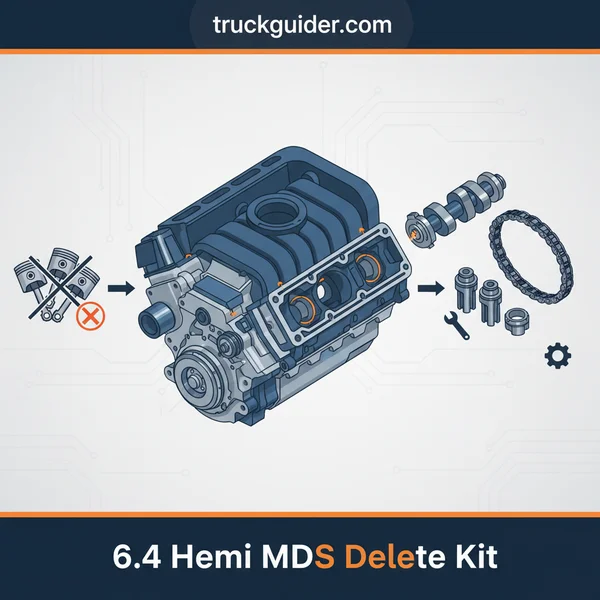
Choosing the right kit means sourcing components that can handle the increased lift and duration of the 6.4 displacement. Because the heads must be removed for this procedure, you are essentially rebuilding the top end of your engine. This guide focuses on the specific parts you need to ensure your 392 remains reliable, high-revving, and permanently locked into V8 mode without the risk of the “Hemi tick” or lifter failure common in factory setups.
Core Components of a Comprehensive 6.4 Hemi MDS Delete Kit
A comprehensive kit for the 6.4 Hemi must include every component required to seal the oiling system and stabilize the valvetrain. You cannot simply “plug” the system; you must replace the moving parts that respond to the MDS oil pressure signals. The goal is to convert the oiling path into a traditional high-performance V8 configuration that provides constant lubrication to the lifters.
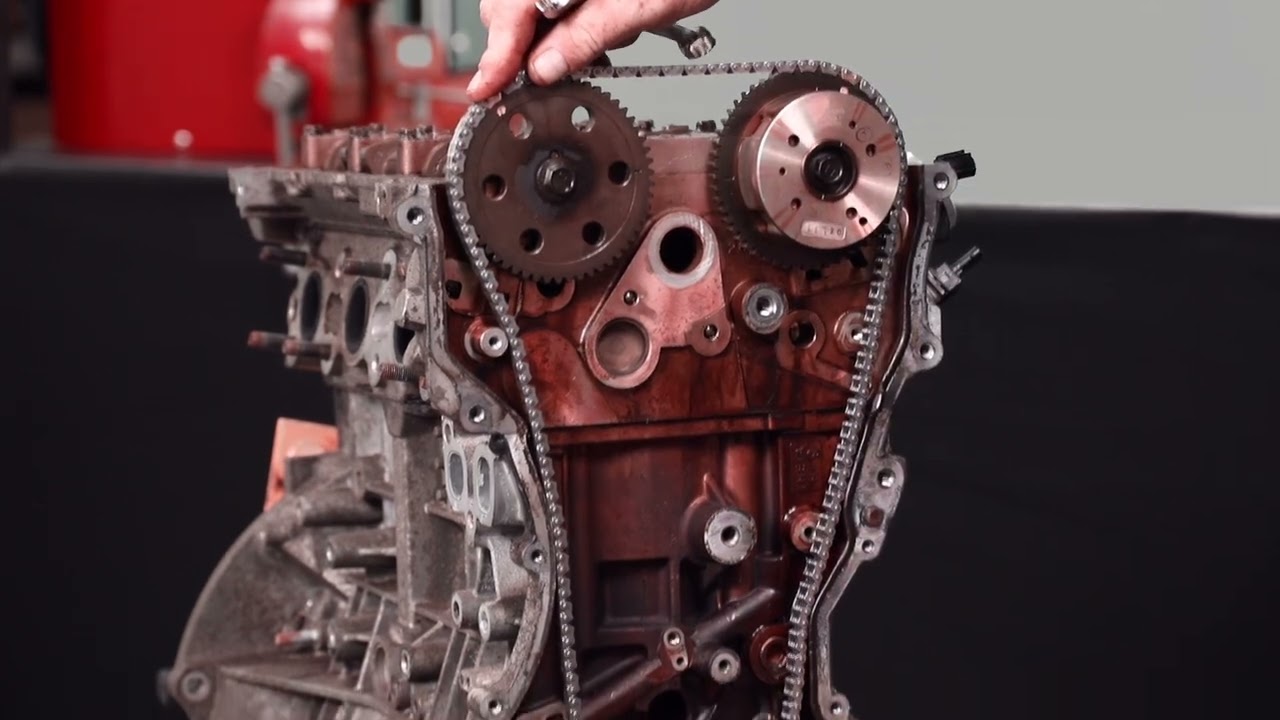
High-Performance Non-MDS Lifters and Trays
The most critical part of your kit is a set of 16 non-MDS lifters. While the factory MDS system uses four specialized lifters that collapse to deactivate cylinders, a delete kit replaces these with 16 identical, solid-body lifters. For the 6.4 Hemi, most builders opt for Hellcat lifters or specialized performance hydraulic rollers. These lifters are designed to withstand higher RPMs and provide better oil retention than the standard active lifters.
- 16 Non-MDS Lifters: You must replace all lifters, not just the four MDS ones, to ensure consistent wear and performance across all cylinders.
- New Lifter Yokes (Trays): Plastic lifter trays are known to fatigue and crack over time. A complete kit includes four new trays to keep the lifters perfectly aligned with the camshaft lobes.
- Increased Durability: Non-MDS lifters lack the complex internal pin mechanism of the factory units, removing the primary point of failure in the 6.4 valvetrain.
MDS Solenoid Block-Off Plugs and Sealing
Once the physical solenoids are removed from the engine valley, you are left with open oil ports that would bleed off critical oil pressure if left unsealed. Your kit must include four expansion-style plugs or O-ring sealed block-off plugs. These prevent oil from reaching the now-removed MDS passages, ensuring that your new lifters receive maximum oil pressure at all times. Failure to seal these ports properly will lead to low oil pressure codes and potential bearing damage.
Essential Gaskets and Torque-to-Yield Fasteners
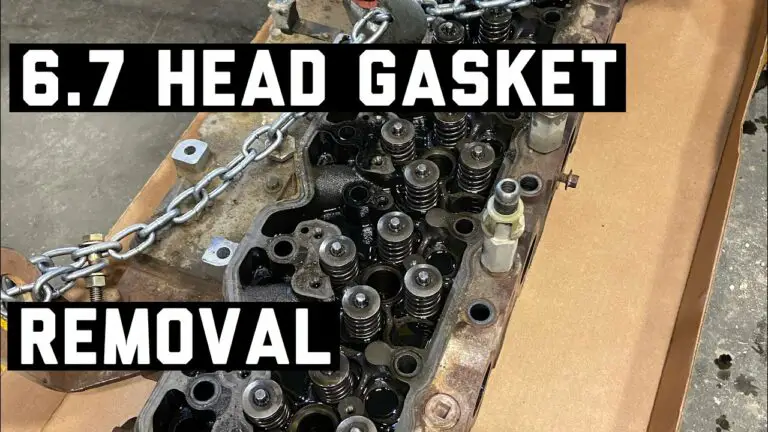
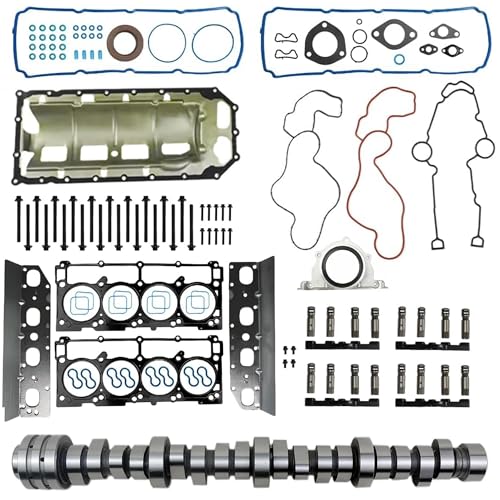
Because the 6.4 Hemi cylinder heads must be pulled to access the lifters, your kit needs a full top-end gasket set. You cannot reuse these components, as they are designed for a single crush-fit. The 6.4 uses specific Multi-Layer Steel (MLS) gaskets that are different from the 5.7 Hemi, so compatibility is vital.
- Head Gaskets: High-quality MLS gaskets are required to maintain the high compression ratio of the 392 engine.
- Head Bolts: The 6.4 Hemi uses Torque-to-Yield (TTY) head bolts. These stretch once they are tightened to spec and must be discarded. A complete kit always includes a full set of 20 primary head bolts and the smaller secondary bolts.
- Exhaust Manifold Gaskets: You will likely be removing the headers or manifolds; new gaskets here prevent annoying exhaust leaks after the install.
- Valve Cover Gaskets: Necessary for resealing the top end once the new lifters and pushrods are seated.
Why the Camshaft and PCM Tuning are Non-Negotiable
A common mistake is assuming that swapping the lifters is the only physical step required. However, the 6.4 Hemi was designed with specific camshaft lobe profiles for the MDS cylinders. If you install non-MDS lifters on a factory MDS camshaft, you will experience a significant misfire and uneven engine idling because the base circles of the lobes do not match perfectly.
The Camshaft Compatibility Factor
To perform a “true” delete, you must install a non-MDS camshaft. Many owners use this opportunity to upgrade to an aftermarket performance cam, but even an OEM-spec non-MDS 6.4 cam is required for mechanical harmony. The MDS-specific lobes have a slightly different profile to accommodate the “lost motion” of the collapsing lifters. When you move to a solid non-MDS lifter, that profile mismatch causes the valves to stay open or closed for incorrect durations, potentially leading to valve-to-piston contact in extreme cases.


PCM Unlocking and Custom Tuning Requirements
Even if the mechanical work is perfect, your Jeep, Ram, or Dodge’s computer will still try to activate the MDS system. It will look for the solenoids you removed and attempt to adjust fuel trim and ignition timing for 4-cylinder mode. Without a custom tune, the car will throw multiple “Circuit Open” codes and likely enter a permanent limp mode.
- PCM Unlocking (2015+ Models): If your vehicle is 2015 or newer, the PCM is encrypted. You must send your PCM to a tuner to be unlocked or purchase a pre-unlocked unit before the software can be modified.
- Custom Software Flash: A tuner must manually toggle the MDS bit to “Off” within the ECU. This prevents the computer from looking for the solenoids and ensures the fuel mapping stays in V8 mode 100% of the time.
- Handheld Tuners vs. Professional Tuning: While some handheld devices claim to “disable” MDS, they often just hide the light. A proper delete kit requires a custom tune file that accounts for the new camshaft profile and the hardware changes you’ve made.
Performance Gains and Long-Term Reliability Improvements
While most enthusiasts seek out a 6.4 Hemi MDS delete kit to fix a mechanical failure, the secondary benefits are often what make the project truly worth the effort. By removing the Multi-Displacement System, you are essentially “unlocking” the engine’s ability to behave like a traditional, high-output V8 at all times.
Eliminating the “Hemi Tick” and Valvetrain Failure
The primary reliability concern with the 6.4 Hemi is the failure of the MDS lifters. These lifters feature a complex internal pin mechanism that allows them to collapse. Over time, these pins can fail or the rollers can seize, eventually “eating” the camshaft lobes. Replacing these with high-quality non-MDS lifters (often sourced from the Hellcat or heavy-duty RAM applications) significantly simplifies the valvetrain.
- Solid Engagement: Non-MDS lifters have fewer moving parts, reducing the risk of internal collapse.
- Consistent Lubrication: Standard lifters ensure more consistent oil flow across the valvetrain without the pressure drops associated with MDS solenoid cycling.
- Camshaft Protection: By removing the prone-to-fail components, you protect your new performance camshaft from premature wear.
Enhanced Drivability and Sound
Beyond hardware longevity, the driving experience changes dramatically. Many 6.4 owners complain about the “drone” or “helicopter sound” when the engine switches to four-cylinder mode, especially if the vehicle has an aftermarket exhaust. A delete kit removes this annoyance entirely.
- Instant Throttle Response: You no longer have to wait for the ECU to reactivate four cylinders when you step on the gas.
- Aggressive Exhaust Note: Your V8 will sound like a V8 100% of the time, maintaining a deep, consistent rumble through the gears.
- Tuning Flexibility: Deleting MDS allows you to run more aggressive camshaft profiles that wouldn’t be compatible with cylinder deactivation.
Budgeting and Fitment Variations for Ram vs. Passenger Cars
Not all 6.4 Hemi engines are created equal. Depending on whether you are driving a Ram 2500/3500 or a Challenger/Charger SRT, your parts list and budget will vary. It is crucial to identify your specific engine variant before ordering your kit.
Estimating Your Total Investment
A comprehensive MDS delete is not just the cost of the kit itself. Because this is a “heads-off” job, you need to account for supporting hardware and labor if you aren’t doing the work yourself. A high-quality kit typically ranges from $800 to $1,500, but the total project cost often lands between $2,500 and $4,000.


- Parts: Includes the camshaft, non-MDS lifters, head gaskets, head bolts, and timing cover gaskets.
- Tuning: Budget $400–$700 for a handheld tuner and a custom tune file to deactivate the MDS software.
- Labor: Expect 12–18 hours of shop labor if you are hiring a professional mechanic.
Platform-Specific Differences
The 6.4 Hemi found in the Ram trucks (often called the “Big Gas Engine” or BGE) has some structural differences compared to the 6.4 SRT car engines. For example, the BGE blocks in trucks are often reinforced and may use different water pump configurations or accessory drives. When selecting a kit, ensure the camshaft profile matches your needs; truck owners usually want low-end torque for towing, while car owners prefer high-RPM horsepower.
- Ram 2500/3500: Look for “Truck-Spec” cams that prioritize the power band between 2,000 and 4,500 RPM.
- Scat Pack/SRT: Opt for “Stage 1” or “Stage 2” performance cams that take advantage of the 6.4’s ability to breathe at high speeds.
- VVT Considerations: Almost all 6.4 Hemis use Variable Valve Timing. Ensure your kit includes a VVT limiter or phaser lock if your new camshaft requires it.
Conclusion
Installing a 6.4 Hemi MDS delete kit is the single best way to ensure your engine survives for the long haul while delivering the performance you expect from a heavy-duty V8. By replacing the failure-prone MDS lifters with robust hardware and updating your ECU, you eliminate the threat of the “Hemi tick” and gain a much more responsive vehicle. While the initial investment in parts and tuning is significant, it is far cheaper than a full engine replacement down the road.
Next Steps: Start by identifying your engine code and choosing a kit that includes a camshaft tailored to your driving style. Once you have your hardware, secure a reputable tuner to handle the software side of the delete. Ready to give your Hemi the reliability it deserves? Explore our recommended delete kits today and get back on the road with total peace of mind!
❓ Frequently Asked Questions
What is included in a full 6.4 Hemi MDS delete kit?
A complete kit typically includes 16 non-MDS lifters, four MDS solenoid block-off plugs, a non-MDS camshaft, head gaskets, head bolts, and often exhaust manifold gaskets. Some premium kits also include a specialized tuning device or a credit for a custom tune file.
Why is a custom tune required after installing the hardware?
The factory PCM is programmed to look for the MDS solenoids and adjust fuel/spark when four cylinders drop out. Without a custom tune to disable this logic, the car will trigger multiple Check Engine Lights and may enter a reduced power mode.
How does the MDS delete affect fuel economy on the 6.4L?
Most owners report a negligible drop of 1-2 MPG on the highway. However, many find the consistent V8 power delivery and improved throttle response more than make up for the slight change in fuel consumption.
Can I use 5.7L MDS delete parts on my 6.4L engine?
While the lifters and MDS plugs are often interchangeable, the head gaskets and camshaft are displacement-specific. You must ensure you purchase a kit verified for the 6.4L (392) port shapes and deck height.


What are the mechanical risks of skipping the camshaft swap?
Installing non-MDS lifters on an MDS-equipped camshaft results in incorrect valve lift and timing on the four MDS cylinders. This lead to constant misfires, poor idling, and can eventually damage the new lifters and cam lobes.
Are there specific brands known for 6.4 Hemi delete kits?
Brands like Mopar (OEM parts), COMP Cams, and AMS Racing are highly regarded. Most enthusiasts prefer kits that utilize genuine Mopar non-MDS lifters combined with reputable aftermarket gaskets and bolts for maximum longevity.
![6.4 Hemi Mds Delete Tuner: Specs & Fitment Guide [2026]](https://truckguider.com/wp-content/uploads/2026/03/featured-228c3462-768x768.webp)