
5.7 Hemi Throttle Body Spacer Review: HP Gains vs Reality [2026]

While manufacturers claim significant power jumps, independent testing shows minimal to zero performance gains on modern fuel-injected 5.7 Hemi engines. The most noticeable result is often a high-pitched whistling sound, making this a subjective aesthetic mod rather than a performance powerhouse.
🎯 Key Takeaways
- Measurable performance gains on 5.7 Hemis are typically negligible (0-2 HP).
- The most prominent feature is a ‘turbo-like’ whistling sound during acceleration.
- Spacers provide significantly less value than a dedicated tune or ported throttle body.
- Most 5.7 Hemi owners report no consistent improvement in fuel economy.
- Airaid and Jet brands are popular for those seeking engine bay aesthetics.
If you are looking for a quick boost in horsepower for your 5.7 Hemi, you have likely seen throttle body spacers advertised as an essential, low-cost upgrade. Let’s get straight to the point: on a modern fuel-injected 5.7 Hemi, a throttle body spacer provides almost zero measurable performance gain. While manufacturers often claim increases of 10 to 15 horsepower, the reality is that you will be lucky to see a 1 to 2 HP difference on a dyno. For most RAM, Charger, or Challenger owners, this part functions more as a decorative engine bay piece than a performance powerhouse.


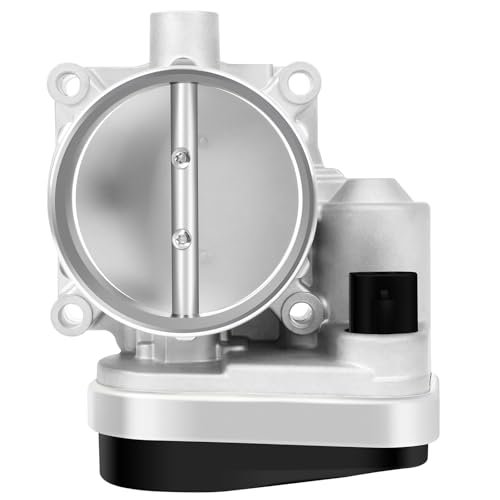
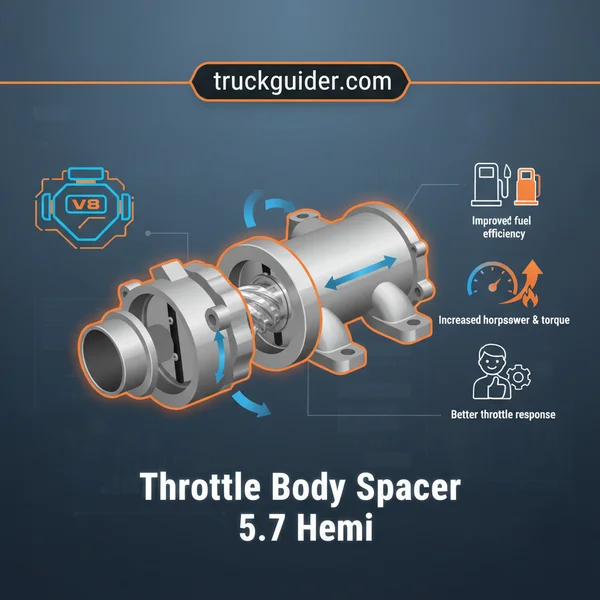
Understanding why these parts fail to deliver is critical for your build strategy. Every dollar you spend on “snake oil” hardware is a dollar taken away from mods that actually work, like custom tuning or high-flow headers. In the world of the Hemi engine, the physics of the intake manifold and the way fuel is delivered dictate that a simple metal shim cannot overcome the limitations of air velocity and volume. If you want to know the science behind why that “spinning air” marketing does not apply to your truck or car, you need to look at how the Hemi breathes.
The Physics of Airflow: Does a Spacer Benefit the 5.7 Hemi?
The primary marketing hook for throttle body spacers is the creation of a “vortex” or “swirl” that supposedly helps air and fuel mix more effectively. While this logic held water in the days of carburetors and Throttle Body Injection (TBI), it falls apart when applied to your 5.7 Hemi. Your engine uses Multi-Port Fuel Injection (MPFI), which changes the entire equation of how combustion occurs.

The “Dry Manifold” Problem
In your Hemi, the throttle body only regulates the amount of air entering the intake manifold. The fuel is injected much further down the line, directly into the intake ports near the cylinder heads. This means the intake manifold is a “dry” system—only air passes through the plenum. Any “vortex” created by a serrated spacer at the throttle body entrance will dissipate long before it ever reaches the fuel spray. By the time the air travels through the long, curved runners of a 5.7 Hemi intake manifold, the airflow has smoothed out, rendering the spacer’s design features useless.
Plenum Volume and Air Velocity
Some proponents argue that the spacer increases plenum volume, which should theoretically improve top-end power. However, a 1-inch spacer adds a negligible amount of volume to a manifold already designed for high-displacement airflow. On a 5.7 Hemi, the factory intake is already tuned for a specific resonance. Adding a spacer can actually disrupt this tuning, potentially causing slight turbulence that slows down air velocity rather than increasing it.
- Port Injection Reality: Fuel and air do not mix at the throttle body, so “swirl” doesn’t improve combustion.
- Manifold Design: The long runners of the Hemi intake naturally stabilize airflow, cancelling out any spacer effects.
- Turbulence vs. Laminar Flow: Smooth, fast air (laminar flow) is generally better for power than “spiraling” air in a dry manifold.
Dyno Reality Check: Manufacturer Claims vs. Independent Results
If you look at the back of a throttle body spacer box, you will see impressive dyno graphs showing double-digit gains. These numbers are often achieved under highly specific, “ideal” laboratory conditions that do not reflect your daily driving experience. When independent shops put the 5.7 Hemi on a chassis dyno to test these spacers, the results are consistently underwhelming.
The Margin of Error on the Dyno
Most independent tests show a gain of 0 to 2 horsepower after installing a spacer on a 5.7 Hemi. It is important to realize that 2 HP is well within the standard margin of error for any dynamometer. Factors like engine coolant temperature, intake air temperature, and even the tension of the straps holding the vehicle down can cause a 2-3 HP fluctuation between runs. When a part provides a “gain” that is smaller than the variance of the machine measuring it, the part is effectively doing nothing. Owners often report a “whistling” sound, which they mistake for the sound of increased airflow, but this is simply air passing over the spacers’ ridges.
Why Marketing Data Differs from Your Experience
Manufacturers may test their spacers on engines that already have extensive modifications, such as aggressive cams, ported heads, and custom manifold work. In those extreme cases, a tiny change in plenum volume might show a marginal benefit. However, on a stock or lightly modified 5.7 Hemi, the throttle body itself is rarely the bottleneck.


- Independent Testing: Most 5.7 Hemi dyno sessions show no “seat-of-the-pants” torque increase.
- MPG Myth: There is no documented evidence that spacers improve fuel economy on modern Hemi platforms.
- The “Whistle” Effect: The audible change in engine tone is often placebo-inducing, making drivers feel like the car is faster.
Ultimately, the data suggests that for the cost of a premium spacer, you are buying a sound modification rather than a performance one. If you are chasing real numbers, your focus should shift toward the actual restrictions in the Hemi’s air path.
The Cost-to-Benefit Ratio of Popular Hemi Spacer Brands
When you are browsing parts for your 5.7 Hemi, you will notice that throttle body spacers vary significantly in price. You can find generic options for $40 or high-end, name-brand versions for upwards of $150. Given that the performance gains are often in the “placebo” range, understanding what you are actually paying for is essential before you click “buy.”
Comparing the Heavy Hitters: BBK vs. Airaid
In the world of Hemi modifications, two names stand out: BBK and Airaid. These brands are the go-to choices for Ram 1500, Charger, and Challenger owners. While they serve the same primary function, their design philosophies differ slightly:
- BBK Performance: Known for their high-quality CNC-machined aluminum. These are often “smooth bore” designs that prioritize maximum airflow volume without adding much turbulence.
- Airaid PowerAid: These feature a patented “helix bore” design. The goal is to spin the incoming air to help it atomize the fuel better—though in modern fuel-injected Hemis, the air and fuel don’t actually meet until they reach the cylinder.
- Budget No-Name Brands: These are usually simple aluminum plates. They lack the precision machining of the big brands but offer the same physical “gap” for a fraction of the price.
Is the Investment Justified?
If you are looking for a “bang-for-your-buck” performance mod, a throttle body spacer for a 5.7 Hemi is rarely at the top of the list. When you compare the $100 price tag to the 1-2 horsepower gain, the math doesn’t quite add up. However, for many enthusiasts, the spacer is a complementary mod. It is a “supporting actor” that works best when paired with a cold air intake and a high-flow exhaust system. In that context, spending $100 to finish off an intake build feels like a small price to pay for a completed engine bay.
Sound and Aesthetics: Understanding the Infamous Hemi Whistle
For some 5.7 Hemi owners, the lack of horsepower gains is a dealbreaker. For others, the modification is worth it for a completely different reason: the sound. Throttle body spacers are famous—or perhaps infamous—for creating a distinct whistling noise that mimics the sound of a turbocharger or a small supercharger.
The “Mini-Supercharger” Effect
The whistling sound is caused by the air passing over the serrated or helical edges of the spacer. At a specific RPM range—usually between 2,000 and 3,000—the air creates a high-pitched “sucking” sound. Some owners love this because it gives the truck or car a more aggressive, mechanical personality. It makes the engine sound like it is breathing harder. However, it is a polarizing feature. If you prefer a quiet, refined cabin, that constant whistle every time you tip into the throttle might become an annoyance rather than a perk.


Engine Bay Visuals and “Pop”
Beyond the sound, there is the simple factor of aesthetics. Most aftermarket Hemi spacers come in anodized finishes, including bright red, deep blue, or polished silver. When you pop the hood at a local car meet, that splash of color sitting right at the front of the intake manifold draws the eye. It signifies that the engine isn’t stock. For many, the goal isn’t just a faster car, but a better-looking one. Points to consider regarding the look and sound include:
- Finish Durability: High-quality brands use anodized coatings that won’t flake or fade under high engine bay heat.
- Whistle Intensity: Helical (spiral) designs usually produce a much louder whistle than smooth-bore designs.
- Stealth Factor: If you want a “sleeper” look, a black anodized spacer is virtually invisible once installed.
Conclusion: Should You Buy a Spacer for Your 5.7 Hemi?
Ultimately, a throttle body spacer for the 5.7 Hemi is a modification of “fine margins.” If you are expecting a massive surge in torque that pins you to your seat, you will likely be disappointed. The reality is that the modern Hemi intake manifold is already quite efficient, leaving little room for a simple spacer to make a transformative difference. However, if you enjoy the mechanical “whistle” of an intake, want to dress up your engine bay, or are looking for that final 1% of throttle response to pair with your tuner and intake, it is an affordable and fun weekend project.
Your next steps: First, decide if you actually want the whistling sound, as this will dictate whether you buy a helical or smooth-bore design. Second, check your local forums for used spacers; many owners sell them for half-price when they upgrade to a larger throttle body. Have you noticed a difference in your Hemi’s performance after adding a spacer? Drop a comment below and let us know your experience!
❓ Frequently Asked Questions
Does a 5.7 Hemi throttle body spacer actually increase horsepower?
Independent dyno tests usually show gains of less than 2 HP, which is within the margin of error for most equipment. While manufacturers may claim 10-15 HP, modern multi-port fuel injection doesn’t benefit from increased plenum volume like older carbureted engines did.
What is the main purpose of a throttle body spacer on modern Hemis?
Today, these spacers are primarily used to slightly improve throttle response and provide a specific whistling engine note. They are also popular as low-cost aesthetic upgrades for enthusiasts who want to customize their engine bay.
Which brands are best for the 5.7 Hemi engine?
Airaid, Jet Performance, and Rough Country are the most common brands for the Hemi platform. Airaid is specifically known for its ‘PowerAid’ helix bore, which is designed to maximize the whistling effect many owners seek.
Will a spacer cause a Check Engine Light (CEL)?
When installed correctly with the provided gaskets, a throttle body spacer should not cause any codes. If a light appears, it is almost always due to a vacuum leak caused by an improperly seated gasket during installation.


How does a spacer differ from a ported throttle body?
A spacer adds length to the intake tract, whereas a ported throttle body increases the actual diameter of the opening to allow more air volume. For the 5.7 Hemi, a ported throttle body typically offers more tangible performance gains than a spacer.
Can I install a spacer on a 5.7 Hemi with a stock intake?
Yes, most spacers are designed to fit perfectly with the factory air box and intake tube. However, because the spacer adds about an inch of length, you may need to slightly adjust the position of your intake tube during the setup.
![Dodge P0305 Code: Cylinder 5 Misfire Causes & Solutions [2026]](https://truckguider.com/wp-content/uploads/2026/03/po305-code-dodge-featured.webp)