Service Electronic Throttle Control Ram 1500 [2026]

The Service Electronic Throttle Control (ETC) light on a Ram 1500 indicates a communication failure between the accelerator pedal and the engine’s throttle body. This fault often triggers Limp Mode, a safety state that severely limits engine power to prevent mechanical damage or unintended acceleration.
🎯 Key Takeaways
Recommended Best Deal Products


- Scan for OBD-II codes like P2135 or P2101 to pinpoint the exact failure.
- Limp mode is a safety feature that restricts speed when throttle errors occur.
- Carbon buildup in the throttle body is the most frequent cause of ETC lights.
- Low battery voltage or aging batteries can trigger false electronic throttle warnings.
- Recalibration is often necessary after a battery disconnect to restore throttle response.
If the “Service Electronic Throttle Control” warning light is flashing on your Ram 1500 dashboard, your truck has detected a critical communication failure between your accelerator pedal and the engine’s air intake. This is not a “check engine” light you can ignore for a few weeks. It indicates that the Engine Control Module (ECM) can no longer verify the exact position of the throttle plate. When this happens, the system loses its ability to safely manage engine speed, which is why your truck likely felt like it hit a wall the moment the light appeared.

Prime for Young Adults — 6 Months Free
Students and 18–24s get six months of Prime free, then half price.
Start 6 Months Free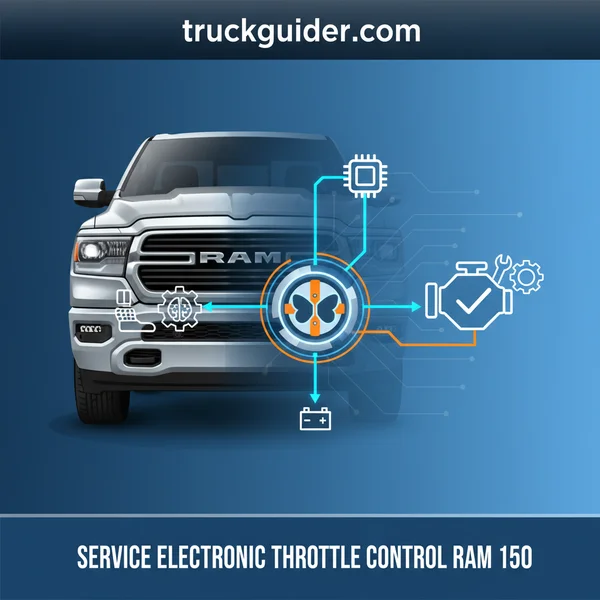
Practically speaking, this light is a safety fail-safe designed to prevent unintended acceleration. Because modern Ram trucks use a “drive-by-wire” system instead of a physical cable, the computer relies entirely on electrical signals to know how much gas you are giving it. If the voltage signal from the pedal doesn’t match the feedback from the throttle body, the computer assumes the worst. Understanding the logic behind this system is the first step to diagnosing whether you are dealing with a simple carbon buildup issue or a total electronic component failure.
Understanding Limp Mode and Throttle Control System Logic
Your Ram 1500 does not have a direct mechanical link between your foot and the engine. Instead, it uses a complex handshake between the Accelerator Pedal Position (APP) sensor and the Electronic Throttle Body (ETB). The APP sensor sends a signal to the ECM, which then commands a small electric motor on the side of the throttle body to open the butterfly valve. To ensure safety, the system uses “redundancy,” meaning it sends two separate signals for every movement. If those two signals don’t perfectly correlate, the ECM triggers the “Service Electronic Throttle Control” message.

The “Limp Mode” Safety Mechanism
When the ETC light comes on, your Ram 1500 will almost certainly enter “Limp Mode,” or more formally, “Limp Home Mode.” In this state, the ECM limits engine RPM and significantly reduces throttle response to protect the transmission and prevent the truck from speeding out of control. You might notice that the truck won’t shift past third gear or that the engine won’t rev above 2,500 RPM. This is intentional logic programmed by Chrysler to ensure you can get off the highway safely without risking a catastrophic engine runaway event. While frustrating, Limp Mode is a protective barrier for your Hemi or Pentastar engine.
Why the System “Loses” Calibration
The throttle control logic is incredibly sensitive to voltage fluctuations. Even a slightly weak battery or a loose ground wire can cause the ECM to misinterpret the data coming from the throttle sensors. Over time, the physical butterfly valve inside the throttle body can also become coated in “coking” (oil and carbon deposits). This sticky residue creates physical resistance. When the electric motor tries to move the valve and hits that resistance, the voltage spike tells the computer that the hardware is failing, even if the electronics are perfectly fine. Knowing this helps you narrow down whether you need to buy parts or simply perform a deep clean.
Common Symptoms and Critical OBD-II Diagnostic Codes
Recommended Best Deal Products

Identifying the “Service Electronic Throttle Control” light is easy, but pinpointing the cause requires looking at how the truck behaves immediately before and after the light triggers. Most Ram owners report a specific set of behaviors that point directly to the throttle system. Recognizing these can save you hours of diagnostic time at a dealership.
- The “Dead Pedal” Effect: You press the gas pedal, but the engine speed does not change. There is a disconnect between your foot and the engine’s response.
- Erratic Idling or Surging: While stopped at a red light, the RPMs may jump between 500 and 1,200 without you touching the pedal.
- Stalling Upon Deceleration: The truck runs fine at highway speeds but dies the moment you let off the gas to take an exit or stop at a sign.
- Flashing Red Lightning Bolt: In many Ram 1500 models, the ETC light is represented by a red lightning bolt symbol between two brackets. If this is flashing, the fault is active; if it is solid, the fault is stored in the memory.
Interpreting the OBD-II Trouble Codes
To fix this properly, you must use an OBD-II scanner to pull the specific fault codes. The “Service ETC” message is a general warning, but the codes tell you exactly where the breakdown is happening. On the Ram 1500 platform, you will almost always see one of the following “P-codes”:
- P2135 (TPS Voltage Correlation): This is the most common code. It means the two sensors inside the throttle body are disagreeing with each other. This often points to a bad throttle body or a wiring harness issue.
- P2101 (Electronic Throttle Control Motor Performance): This suggests the motor that moves the butterfly valve is struggling. This is frequently caused by carbon buildup making the valve “sticky.”
- P0121 (TPS Range/Performance): This indicates the sensor is sending a signal that is physically impossible (e.g., indicating the throttle is 110% open).
- P2118 (Throttle Actuator Control Motor Current): This is often a power supply issue, sometimes related to a blown fuse or a dying battery rather than the throttle body itself.
The Correlation Between the Pedal and the Intake
When diagnosing these codes, remember that the problem can be at either end of the wire. While the throttle body at the engine is the usual culprit, the pedal assembly itself contains sensors that can wear out. If you see codes specifically mentioning “Accelerator Pedal Position” (APP), your focus should be on the pedal inside the cab rather than the engine bay. If the codes mention “Throttle Position Sensor” (TPS), the issue is almost certainly under the hood at the intake manifold.
Primary Factors Leading to Electronic Throttle Control Failure
Understanding why your Ram 1500 triggered the “Service Electronic Throttle Control” light is the first step toward a permanent fix. In most cases, the failure isn’t a random fluke; it is usually the result of environmental factors or natural wear and tear on the truck’s sensitive electronic components.
Carbon Buildup and “Blow-By” Contamination
The most frequent culprit for ETC issues in the Hemi 5.7L or Pentastar 3.6L engines is simple dirt. Over time, oil vapors and carbon deposits from the PCV system coat the interior of the throttle body. This creates a sticky “lip” around the butterfly valve.

Audible — Listen Free for 30 Days
One free credit a month and thousands of titles included.
Listen Free for 30 Days- Restricted Movement: If the valve can’t move freely to the position the computer requests, the system throws a code immediately.
- Idle Instability: Carbon buildup often causes the truck to stumble at stoplights because the air gap is physically blocked.
- The PCV Connection: High-mileage Rams often have more “blow-by” (oil mist), which accelerates this buildup significantly.
Electrical Degradation and Sensor Friction
Modern throttle bodies don’t use a physical cable. Instead, they rely on a pair of Potentiometers (Position Sensors). These sensors use tiny metal “fingers” that slide across a resistive track to tell the computer exactly where the valve is. Over hundreds of thousands of cycles, these tracks can wear thin or develop “dead spots.”
Pro Tip: Environmental moisture or road salt can also find its way into the electrical connector. Always check the wiring harness for green corrosion or frayed wires before assuming the entire throttle body is dead.
Comparing Repair Costs: Cleaning vs. Component Replacement
Recommended Best Deal Products


When you see the lightning bolt symbol on your dash, your wallet’s biggest concern is whether you can get away with a simple service or if you need a brand-new part. The price difference between these two paths is substantial, making a proper diagnosis essential.
The Budget-Friendly Fix: Professional Cleaning
If your Ram is suffering from carbon buildup, a thorough cleaning is often all it needs. This is a common maintenance item that many owners overlook until the warning light appears. Using a dedicated Throttle Body Cleaner can restore the smooth operation of the butterfly valve for a fraction of the cost of a replacement.
- DIY Cost: Approximately $10 to $20 for a can of high-quality cleaner and a lint-free rag.
- Shop Labor: Expect to pay 0.5 to 1 hour of labor (roughly $75 – $150) for a professional technician to perform a “top-end” induction service.
- The “Relearn” Factor: Keep in mind that after cleaning, the computer may need a “throttle relearn” procedure to understand the new, unobstructed airflow.
Full Unit Replacement: When the Electronics Fail
If the internal gears are stripped or the electronic sensors have failed, cleaning won’t help. In this scenario, you are looking at a full component swap. Prices for a Ram 1500 throttle body vary depending on whether you choose an OEM Mopar part or an aftermarket alternative.
- Part Costs: OEM units typically run between $250 and $450. High-quality aftermarket versions can be found for $150 to $250.
- Total Shop Bill: Between parts and labor, a dealership repair often totals $500 to $800.
- When to Replace: If your OBD-II scanner shows “Circuit High/Low” or “Internal Performance” codes, the electronics are likely fried, and a replacement is the only reliable option.
Conclusion
Dealing with a “Service Electronic Throttle Control” message on your Ram 1500 is frustrating, but it doesn’t always mean a massive repair bill. Most cases stem from simple carbon buildup or a faulty sensor that can be addressed with targeted maintenance. By understanding the causes—from sticky valves to worn potentiometers—you can make an informed decision on whether to attempt a cleaning or opt for a full replacement.
Your next step: Get your truck’s computer scanned for specific P-codes. Knowing whether the issue is “performance” related (likely dirt) or “circuit” related (likely electrical) will save you hours of guesswork. Don’t ignore the warning; addressing a throttle issue early prevents your truck from entering a dangerous “Limp Mode” in the middle of traffic. Stay proactive and keep your Ram running smooth!
💬 Quick Questions & Answers
Can I drive my Ram 1500 with the ETC light on?
It is not recommended, as the truck may lose power suddenly or stall in traffic.
Audible Premium Plus — Annual Membership
12 audiobook credits up front, plus the full Audible catalogue.
See Annual PlansWhat is the red lightning bolt symbol on the dashboard?
That is the Electronic Throttle Control (ETC) light indicating a fault in the drive-by-wire system.
Can a bad battery cause a throttle control light?
Yes, electronic throttle sensors are highly sensitive to voltage drops and erratic battery output.
What does Limp Mode feel like in a Ram 1500?
The truck will have very slow acceleration and will usually not shift past a certain gear.
Will cleaning the throttle body fix the service light?
If the light is caused by carbon buildup sticking the butterfly valve, cleaning often resolves the issue.
❓ Frequently Asked Questions
Why did my Ram 1500 suddenly lose power and display the ETC light?
This happens when the PCM detects a mismatch between the accelerator pedal position and the throttle plate. The vehicle enters ‘Limp Mode’ to prevent engine damage or a runaway vehicle scenario.
What do OBD-II codes P2135 and P2101 signify?
P2135 indicates a voltage correlation issue between the pedal sensors, while P2101 points to a performance issue with the throttle actuator motor. Both codes generally trigger the Service Electronic Throttle Control message.
Is the Accelerator Pedal Position (APP) sensor the common culprit?
While the APP sensor can fail, the throttle body assembly itself is a much more common failure point in Ram trucks due to internal gear wear or motor failure.
Can a software update fix the Service Electronic Throttle Control light?
In some cases, a dealership can perform a PCM ‘flash’ or update that widens the acceptable sensor parameters, resolving intermittent ghost lights caused by software glitches.
How much does it cost to replace a Ram 1500 throttle body?
A new OEM throttle body typically costs between $200 and $400, with labor adding another $100 to $200 depending on the local shop rates.
Why does the light come on only during cold starts?
Cold weather can cause carbon deposits to harden or moisture to freeze inside the throttle body, preventing the valve from moving freely until the engine warms up.
![P0420 Dodge Caravan: Diagnostic Guide & Repair Costs [2026]](https://truckguider.com/wp-content/uploads/2026/03/p0420-dodge-caravan-featured-768x403.webp)
![2006 Dodge Ram 1500 Transmission: Complete Specs Guide [2026]](https://truckguider.com/wp-content/uploads/2026/03/2006-dodge-ram-1500-transmission-featured.webp)