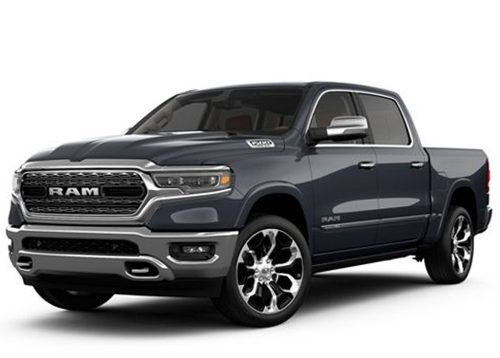
2022 RAM 2500 Tire Size Guide: Complete Specs Guide [2026]

The 2022 RAM 2500 features factory tire sizes ranging from LT245/70R17 to LT285/60R20 depending on the specific trim and wheel package. For those looking to upgrade, 35-inch tires are a popular choice that often fits with minimal modifications or a simple leveling kit.
🎯 Key Takeaways
Recommended Best Deal Products


- Takeaway 1:OEM sizes range from 17-inch on Tradesman to 20-inch on Limited.
- Takeaway 2:The Power Wagon uses specialized LT285/70R17 off-road tires.
- Takeaway 3:Most 2022 RAM 2500s accommodate 35-inch tires with a leveling kit.
- Takeaway 4:Always verify Load Range E rating to maintain towing capacity.
- Takeaway 5:Bolt pattern is standard 8×165.1mm (8×6.5) across all trims.
Finding the correct tire size for your 2022 RAM 2500 starts with identifying your specific trim level and wheel package. Most stock configurations for this heavy-duty truck utilize LT245/70R17, LT275/70R18, or LT285/60R20 tires. Because the RAM 2500 is built for significant payload and towing, every factory tire is an “LT” (Light Truck) designation with a Load Range E rating to handle the high pressures required for heavy work.

Prime for Young Adults — 6 Months Free
Students and 18–24s get six months of Prime free, then half price.
Start 6 Months Free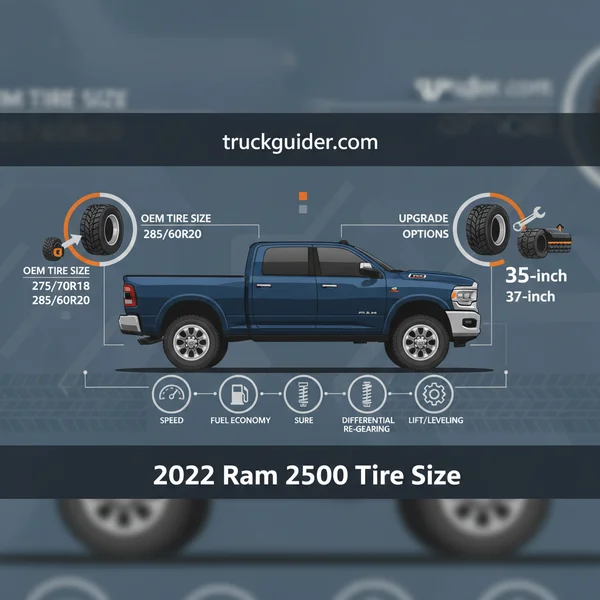
Getting these measurements right is critical for more than just aesthetics. Your truck’s speedometer calibration, Electronic Stability Control (ESC), and gear ratios are all tuned to these specific diameters. If you are planning to upgrade to larger off-road tires or “plus-size” your wheels, you must understand your baseline factory specs to ensure your new setup clears the wheel wells and maintains your 2022 RAM 2500’s legendary towing stability.
2022 RAM 2500 Factory Tire Size Chart by Trim Level
The 2022 RAM 2500 offers several different wheel and tire combinations depending on whether you prioritize utility, luxury, or off-road performance. While the Tradesman often leaves the factory with 17-inch steel wheels, the Limited and Limited Longhorn trims typically arrive with 20-inch polished aluminum wheels. Below is the comprehensive breakdown of factory tire sizes mapped to the most common trim levels and wheel diameters.
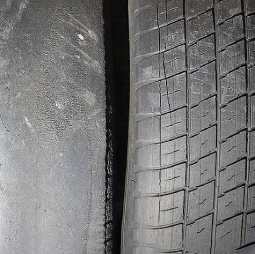
Comprehensive OEM Specification Table
- Tradesman (Base): 17-inch wheels (LT245/70R17E) or 18-inch wheels (LT275/70R18E).
- Big Horn / Lone Star: 18-inch wheels (LT275/70R18E) standard; 20-inch wheels (LT285/60R20E) optional.
- Laramie: 18-inch wheels (LT275/70R18E) standard; 20-inch wheels (LT285/60R20E) optional.
- Power Wagon: 17-inch wheels (LT285/70R17D) standard with Goodyear Wrangler Duratrac tires.
- Limited Longhorn: 18-inch wheels (LT275/70R18E) standard; 20-inch wheels (LT285/60R20E) optional.
- Limited: 20-inch wheels (LT285/60R20E) standard.
The LT285/60R20 is the most common size found on high-trim 2022 RAM 2500s. It provides a 33.5-inch total diameter, which offers a balance of a filled wheel well and high-speed stability. The Power Wagon is the outlier here, using a wider 285mm tire on a 17-inch rim to provide more sidewall flex for rock crawling and technical trail driving.
Load Range and Pressure Requirements
Regardless of the size, the 2022 RAM 2500 requires Load Range E tires for all trims except the Power Wagon (which occasionally uses Load Range D for specific off-road flexibility). A Load Range E tire is rated for a maximum pressure of 80 PSI. When looking for replacements, you must ensure the new tires meet or exceed the weight-carrying capacity of the original equipment, or you risk tire failure under heavy tongue weights.
2022 Ram 2500 Tire Sizes Made Easy: Your Essential Action Plan
Recommended Best Deal Products


Choosing the correct tire size for your 2022 Ram 2500 is one of the most significant maintenance or upgrade decisions you will make. This heavy-duty truck is designed for massive payloads and serious towing, meaning the tires are the only thing standing between several tons of steel and the pavement. Whether you are looking to replace worn-out factory rubber, upgrade for off-road performance, or enhance the truck’s aggressive stance, understanding the nuances of load ratings, rim diameters, and clearance is vital. This guide provides a comprehensive walkthrough to help you navigate the technical specifications of the 2022 model year, ensuring your truck remains safe, capable, and aesthetically pleasing.
Step 1: Identify Your Specific Trim and Factory Configuration
What you need: Your vehicle’s owner manual or the Tire and Loading Information placard located on the driver-side door jamb.
Instructions: Before browsing for new tires, you must identify which of the six main 2022 Ram 2500 trims you own: Tradesman, Big Horn, Laramie, Power Wagon, Limited Longhorn, or Limited. Each trim comes with different standard wheel sizes. For example, the Tradesman typically sports 17-inch or 18-inch steel wheels, while the Limited often rolls on 20-inch polished aluminum rims. Locate the door jamb sticker to find your original equipment (OE) size. Common factory sizes for the 2022 model include LT245/70R17, LT275/70R18, and LT285/60R20. Knowing your starting point is essential because it dictates the speedometer calibration and the physical space available within the wheel well for larger alternatives.
Pro Tip: Even if you bought the truck used with aftermarket wheels, the door jamb sticker remains the ultimate authority on what the manufacturer intended for your specific VIN’s gearing and suspension setup.
Step 2: Decode the Sidewall Markings for Heavy-Duty Use
What you need: A basic understanding of tire metric notation (Width/Aspect Ratio/Diameter).

Audible — Listen Free for 30 Days
One free credit a month and thousands of titles included.
Listen Free for 30 DaysInstructions: When looking at 2022 Ram 2500 tires, you will see a string of numbers like LT285/60R20. The “LT” stands for Light Truck, which is non-negotiable for a 2500 series; never use “P” (Passenger) rated tires on this truck. The “285” is the width in millimeters, “60” is the aspect ratio (sidewall height as a percentage of width), and “20” is the wheel diameter. For the 2022 Ram, you must match the last number to your current rims unless you plan on buying new wheels. Understanding these numbers allows you to compare how much wider or taller a new tire will be compared to your stock setup, which is the first step in calculating potential rub or clearance issues.
Pro Tip: If you are moving from an 18-inch wheel to a 20-inch wheel, remember that your sidewall height (the middle number) will likely need to decrease to maintain a similar overall tire diameter.
Step 3: Prioritize Load Range and Ply Rating
What you need: Specification sheets for any tire you are considering for purchase.
Instructions: The 2022 Ram 2500 is a 3/4-ton pickup with a high Gross Vehicle Weight Rating (GVWR). Because of this, you must select tires with a “Load Range E” rating, which corresponds to a 10-ply equivalent. These tires are designed to handle internal pressures up to 80 PSI, providing the structural integrity needed to support heavy tongue weights from trailers or heavy loads in the bed. Check the Load Index as well; for a Ram 2500, you generally want a Load Index of 121 or higher (3,197 lbs per tire). Installing a tire with a lower load rating than factory specifications is a major safety hazard and can lead to sidewall failure or “tire squirm” while towing.
Pro Tip: Always check the “Max Load” engraving on the sidewall. Even within Load Range E, different tire brands may have slightly different maximum weight capacities in pounds.
Step 4: Choose a Tread Pattern Based on Your Driving Environment
What you need: An honest assessment of your driving habits (e.g., 90% highway vs. 50% dirt trails).
Instructions: The 2022 Ram 2500 is versatile, and your tire choice should reflect your usage. If you primarily use the truck for long-distance towing on interstates, an Highway-Terrain (HT) tire offers the best fuel economy, lowest noise, and longest tread life. If you frequent construction sites or light trails, an All-Terrain (AT) tire like the Falken Wildpeak or BFGoodrich KO2 provides a balance of off-road grip and on-road manners. For those using the Power Wagon trim for serious rock crawling or deep mud, a Mud-Terrain (MT) tire is necessary, though these will be significantly louder on the highway and wear out faster. Select the tread that matches your most frequent driving scenario to maximize your investment.
Pro Tip: “Hybrid” tires (often called Rugged Terrains or RT) are becoming very popular for Ram owners who want the aggressive look of a mud tire with the quieter ride of an all-terrain.
Audible Premium Plus — Annual Membership
12 audiobook credits up front, plus the full Audible catalogue.
See Annual PlansStep 5: Determine Clearance for Upsizing (35s and 37s)
What you need: A measuring tape and knowledge of your truck’s current suspension height.
Instructions: Many 2022 Ram 2500 owners want to “up-size” to 35-inch or 37-inch tires. On a stock 2022 Ram 2500 (non-Power Wagon), you can usually fit a 35×12.50 tire with minimal rubbing on the radius arms at full steering lock, though it is tight. If you have the Power Wagon, 35s fit easily due to the factory lift. To fit 37-inch tires, you will almost certainly need at least a 2.5-inch leveling kit and potentially aftermarket wheels with a specific offset to prevent the tire from hitting the fender liner or the suspension components. Measure the distance from the center of your hub to the fender edge to determine how much vertical room you have before committing to a larger diameter.
Pro Tip: When installing 35s on stock wheels, the increased width is often what causes the rub against the radius arms during tight parking maneuvers, not the height.
Step 6: Account for Wheel Offset and Backspacing
What you need: Specifications of your current or new wheels (Offset/Backspacing data).
Instructions: If you are changing your wheels along with your tires, offset is a critical measurement for the 2022 Ram 2500. Factory Ram wheels typically have a high positive offset (around +44mm to +57mm), which keeps the tire tucked inside the fender. If you buy “deep dish” wheels with a negative offset (like -12mm or -24mm), the tires will poke out from the sides of the truck. While this looks aggressive, it drastically increases the “scrub radius,” making it much more likely that the tire will rub the back of the wheel well or the front bumper during turns. For a 2022 Ram, a +18mm to +25mm offset is often considered the “sweet spot” for fitting 35-inch tires while keeping them mostly under the fenders.
Pro Tip: Excessive negative offset can also put more strain on your wheel bearings and ball joints over time due to the increased leverage on the hub.
Step 7: Recalibrate the Speedometer and TPMS
What you need: An OBDII calibration tool (like AEV ProCal Snap or Pulsar) or a scheduled dealership appointment.
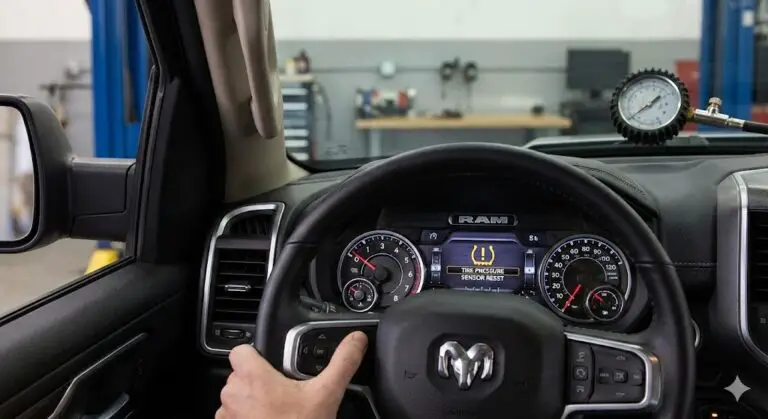
Instructions: Changing the tire size on a 2022 Ram 2500 changes the number of revolutions per mile. If you move from a 33-inch stock tire to a 35-inch tire without recalibrating, your speedometer will read slower than your actual speed, and your transmission shift points may feel “off” because the computer thinks the truck is moving slower than it is. Furthermore, the Tire Pressure Monitoring System (TPMS) on a Ram 2500 is often set to trigger a light if pressure drops below 65-80 PSI. If your new tires require a lower “unloaded” pressure for ride comfort, you will need a programmer to lower the TPMS threshold so you don’t have a constant warning light on your dashboard.
Pro Tip: Most modern Ram trucks can be recalibrated in under 10 minutes using a handheld programmer that plugs into the OBDII port under the steering wheel.
Step 8: Perform a Post-Installation Safety Check
What you need: A torque wrench and a tire pressure gauge.
Instructions: Once the new tires are mounted and balanced, perform a thorough inspection. Check the lug nut torque; for a 2022 Ram 2500, the factory specification is typically 130 ft-lbs (check your manual to verify). Drive the truck in a figure-eight pattern in a parking lot to listen for any rubbing sounds. Inspect the clearance between the inner sidewall and the brake lines or ABS wires to ensure nothing is being pinched. Finally, adjust your tire pressure based on the load. While the sidewall might say “80 PSI Max,” you might only need 60 PSI in the rear when the bed is empty to prevent the truck from bouncing excessively, as long as the TPMS threshold has been adjusted.
Pro Tip: Re-torque your lug nuts after the first 50 to 100 miles of driving, as the new wheels and tires “settle” and can sometimes cause lugs to loosen slightly.
✅ Final Checklist
- Verified the tire is “LT” rated and has a “Load Range E” (10-ply) designation.
- Confirmed the rim diameter of the new tire matches the wheel size (17, 18, or 20 inches).
- Checked for clearance at full steering lock to ensure no rubbing on radius arms or fender liners.
- Recalibrated the vehicle’s computer for the new tire diameter to maintain accurate speedometer readings.
- Adjusted the tire pressure to match the load and ensured the TPMS light is not illuminated.
Important Notes:
- Safety Warning: Never mix different tire sizes or tread patterns on the same axle, as this can cause unpredictable handling and damage the 4WD system.
- Professional Help: If you are unsure about wheel offset or trimming fenders, consult a professional off-road or tire shop to prevent permanent damage to your truck.
- Estimated Cost: A set of four high-quality Load Range E tires for a Ram 2500 typically ranges from $1,200 to $2,200, depending on brand and size.
- Estimated Time: Researching and purchasing takes 1-2 hours; professional installation typically takes 1.5 hours.
Understanding Wheel Diameters and Offset Requirements
When you look at the factory tire sizes for the 2022 RAM 2500, you will notice that the overall diameter stays relatively consistent (around 33 inches) even as the wheel diameter changes. This is achieved by adjusting the sidewall height. For example, the 18-inch wheel uses a “70” series sidewall, while the 20-inch wheel uses a “60” series sidewall. This section breaks down how these dimensions impact your truck’s fitment and clearance.
Wheel Diameter Variations
The 2022 RAM 2500 utilizes three primary wheel diameters: 17, 18, and 20 inches. Choosing between these affects your ride quality significantly. A 17-inch wheel provides more rubber “cushion,” which is ideal for absorbing potholes and off-road impacts. Conversely, the 20-inch wheels found on the Limited trims have shorter sidewalls, which reduces “tire squirm” during heavy cornering or while hauling a massive gooseneck trailer, providing a more planted feel on the highway.
Factory Offset and Backspacing
Offset is the measurement (in millimeters) from the wheel’s centerline to the mounting surface. The 2022 RAM 2500 factory wheels typically feature a high positive offset (around +44mm to +57mm depending on the wheel style). This keeps the tire tucked neatly inside the fender flares.
- Clearance Issues: If you move to an aftermarket wheel with a lower offset (like +18mm or 0mm), the tire will poke out further from the truck.
- Control Arm Rub: On the 2022 model, the inner clearance is tight. If you install a tire wider than 285mm on a factory wheel, you may experience rubbing against the radius arms during full-lock turns.
- Suspension Geometry: The factory offset is designed to keep the steering axis centered. Drastically changing this can increase wear on your wheel bearings and ball joints over time.
Understanding these measurements is vital before you decide to jump to a 35-inch or 37-inch tire. While the factory wheel wells are generous, the high positive offset of the OEM wheels is the primary limiting factor for width, not height. If you want to keep your stock wheels but run a wider tire, you may need to consider small spacers or be prepared for slight contact with the suspension components at full steering lock.
Popular Upsizing Options: Fitting 35-inch and 37-inch Tires
Recommended Best Deal Products


For many 2022 RAM 2500 owners, the factory tires are just a starting point. If you want to give your truck a more aggressive stance and improved ground clearance for off-roading, moving up to a 35-inch or 37-inch tire is the most common path. However, these larger sizes require careful consideration regarding clearance and suspension modifications.
The 35-Inch Tire: The “Sweet Spot” for RAM Owners
The 35-inch tire is widely considered the perfect upgrade for the RAM 2500. It offers a significant visual boost without requiring massive suspension overhauls. While some owners manage to squeeze a 35×12.50 tire on stock wheels at factory height, you will likely experience minor rubbing on the radius arms at full steering lock.
- Recommended Setup: A 2-inch or 2.5-inch leveling kit is usually enough to clear 35-inch tires comfortably.
- Common Sizes: 35×12.50R18 or 315/70R17 (which is roughly 34.4 inches).
- Pro Tip: If you keep your stock wheels, the high positive offset helps tuck the tire in, but a wider aftermarket wheel might require more trimming of the plastic fender liners.
Stepping Up to 37-Inch Tires
If you want the ultimate off-road look, 37s are the way to go. On a 2022 RAM 2500, this is a much more involved process. Fitting 37s typically requires a suspension lift of at least 3 to 4 inches to avoid major interference with the body and suspension components. You will also notice a slight drop in fuel economy and a change in your speedometer calibration.
- Clearance Issues: Without a lift, 37-inch tires will rub significantly on the back of the front wheel well and the radius arms.
- Gearing Considerations: While the RAM’s 6.4L HEMI or 6.7L Cummins has plenty of torque, 37-inch tires are heavy. You may notice the truck hunting for gears more often if you don’t eventually consider re-gearing the differentials.
Technical Specifications: Bolt Pattern, PSI, and Load Ratings
Choosing the right tire for your 2022 RAM 2500 involves more than just picking a size. Because this is a heavy-duty pickup designed for towing and hauling, the technical specs of the tire and wheel assembly are critical for safety and performance.
The RAM 2500 Bolt Pattern and Offset
If you are upgrading your tires and decide to get new wheels as well, you must match the specific bolt pattern of the RAM 2500. The 2022 model uses a 8×165.1mm (also known as 8×6.5 inches) bolt pattern. This has been the standard for RAM heavy-duty trucks for years, providing a wide variety of aftermarket options.
- Wheel Offset: Factory wheels typically have a high positive offset (around +57mm). Moving to a “zero” or “negative” offset wheel will push the tires out past the fenders, giving the truck a wider stance but increasing the likelihood of rubbing during turns.
- Center Bore: Ensure any aftermarket wheels have a center bore that accommodates the RAM’s large hubs to prevent vibration issues.
Understanding Load Range and PSI Requirements
Never compromise on the load rating of your tires. The 2022 RAM 2500 is a heavy vehicle with high payload capacities. You should almost exclusively look for Load Range E tires. These tires are built with stronger sidewalls (10-ply rating) to handle the pressure and heat generated by towing heavy trailers.
- PSI Recommendations: For daily driving, many owners find that 60 PSI in the front and 65 PSI in the rear provides a balanced ride. However, when towing at max capacity, you should increase the rear tires toward the 80 PSI maximum indicated on the sidewall.
- Tire Pressure Monitoring System (TPMS): If you change your tire size or significantly alter your PSI, your truck’s TPMS sensors may trigger a dashboard light. Some aftermarket programmers can help you adjust these thresholds to match your new setup.
Conclusion
Finding the right tire size for your 2022 RAM 2500 is a balance between utility, aesthetics, and performance. Whether you stick with the reliable OEM 275/70R18 setup for maximum towing efficiency or level the truck to fit aggressive 35-inch all-terrains, ensuring your tires meet the proper Load Range E specifications is paramount. Remember that larger tires look great but may require adjustments to your suspension and speedometer calibration to keep your RAM running at its best.
As a next step, check your driver-side door jamb for your specific factory recommendations, or consult with a local tire specialist if you’re planning a lift. Ready to transform your truck? Start browsing for your next set of tires today and get your RAM 2500 ready for the road ahead!
💬 Quick Questions & Answers
What is the standard tire size for a 2022 RAM 2500 Tradesman?
The base Tradesman typically comes with LT245/70R17 or LT275/70R18 tires depending on the wheel package.
Can I fit 35-inch tires on a stock 2022 RAM 2500?
Yes, 35-inch tires usually fit with minimal rubbing on stock wheels, though a leveling kit is recommended for full clearance.
What is the bolt pattern for the 2022 RAM 2500?
All 2022 RAM 2500 models utilize an 8×165.1mm (8×6.5 inches) bolt pattern.
What tire size does the 2022 RAM 2500 Power Wagon use?
The Power Wagon comes factory-equipped with LT285/70R17 Goodyear Wrangler DuraTrac tires.
What is the recommended PSI for 2022 RAM 2500 tires?
Factory specs are typically 60 PSI for front tires and 80 PSI for rear tires for heavy-duty hauling.
❓ Frequently Asked Questions
Do I need a lift kit to run 35×12.50 tires on my 2022 RAM 2500?
While 35-inch tires can fit on stock suspension, they may rub the radius arms at full steering lock. A 2-inch leveling kit is the most common modification to provide clean clearance and a better stance for 35s.
What are the benefits of upgrading from 18-inch to 20-inch wheels?
Upgrading to 20-inch wheels provides a more modern aesthetic and can improve on-road handling by reducing sidewall flex. However, 18-inch wheels are often preferred for off-roading as they allow for more tire cushion and protection.
How does changing tire size affect the speedometer and odometer?
Increasing tire diameter will cause your speedometer to read slower than your actual speed. You will need to use an electronic programmer or visit a dealer to recalibrate the vehicle’s computer for the new tire height.
Why is Load Range E mandatory for the 2022 RAM 2500?
Load Range E tires are designed to handle the high pressures and heavy weights associated with 3/4-ton trucks. Using a lower load rating can lead to tire failure and compromised safety when towing or hauling.
What are the biggest tires I can fit on a stock 2022 RAM 2500 Power Wagon?
The Power Wagon sits higher than standard trims, allowing for 35-inch tires with no modifications. Some owners fit 37-inch tires, but this usually requires minor trimming of the inner fender liners and specific wheel offsets.
Does the diesel engine require different tire specs than the gas engine?
The engine doesn’t change the size requirement, but the heavy Cummins diesel adds significant front-end weight. It is crucial to maintain high front tire pressure (often 65-80 PSI) to prevent premature tire wear and sidewall compression.