U1110 Code Dodge: Meaning, Causes, and Expert Diagnostics [2026]

The U1110 code in Dodge vehicles signifies a lost communication error, typically between the ECM/PCM and sensors like the Intake Air Temperature (IAT) sensor. This fault is often triggered by low battery voltage, corroded wiring harnesses, or faulty CAN bus connections rather than a component failure.
🎯 Key Takeaways
- U1110 indicates a communication breakdown on the CAN bus network.
- Low battery voltage is a primary cause for Dodge communication codes.
- Inspect the wiring harness for corrosion or rodent damage immediately.
- Modern Dodge vehicles are highly sensitive to ground wire integrity.
- Clearing the code without fixing the source leads to limp mode.
The U1110 diagnostic trouble code in a Dodge vehicle signifies a communication “timeout” error within the Controller Area Network (CAN) bus. Specifically, it means the Powertrain Control Module (PCM) or Engine Control Module (ECM) attempted to communicate with a specific sensor or secondary module and received no response within the allotted timeframe. Unlike mechanical codes that point to a broken part, U1110 indicates a break in the digital “conversation” required to run your vehicle safely.



For Dodge owners, this code is critical because modern Chrysler platforms rely heavily on interconnected modules. When one module goes silent, the PCM loses the data it needs to manage fuel trim, timing, and transmission shifts. Ignoring this code often leads to unpredictable driveability issues, including the vehicle entering “Limp Mode” to prevent engine damage from unmonitored air or temperature readings.
Decoding the U1110: ECM and Sensor Communication Failures
On most Dodge platforms, including the Ram, Charger, and Durango, the U1110 code is frequently associated with the “Lost Communication with Intake Air Temperature (IAT) Sensor” or specific signaling from the ABS/ESP modules. The PCM acts as the conductor of an orchestra, and the CAN bus is the wiring that carries the music. If the IAT sensor or a chassis module fails to report back on the high-speed CAN C bus, the PCM records a U1110 to indicate that a vital data packet is missing.
The CAN Bus Architecture in Dodge Vehicles
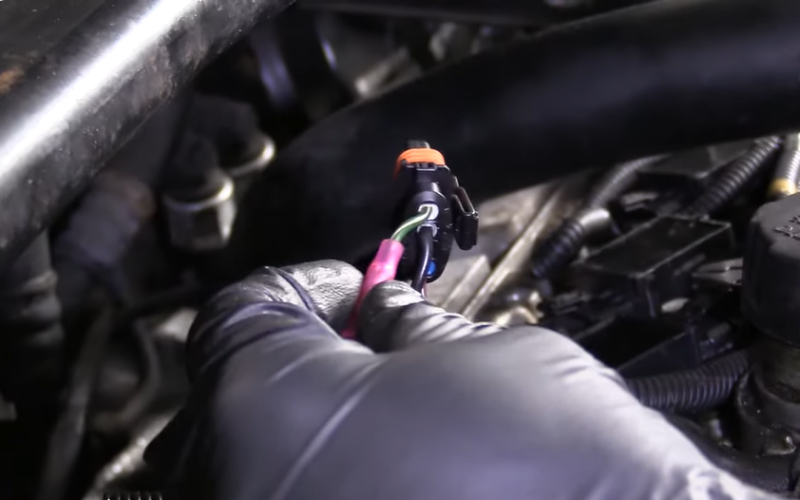
Dodge vehicles utilize a twisted-pair wiring system for the CAN bus to minimize electromagnetic interference. The U1110 code often triggers when the digital signal becomes corrupted by physical resistance or external noise. Because the CAN bus operates on a specific voltage differential—usually hovering around 2.5V for both CAN High and CAN Low when idle—any disruption to these voltages will halt communication instantly. In many cases, the U1110 isn’t a “bad sensor” but a “bad path” between the sensor and the PCM.
- Signal Interruption: The PCM expects a “heartbeat” from every module on the network. If the IAT sensor data is missing for more than a few milliseconds, the U1110 is logged.
- High-Speed Network (CAN C): This is the specific network where U1110 usually resides. It handles the most critical data, such as engine temperature, throttle position, and braking data.
- Module “Handshaking”: When you turn the key, the PCM performs a handshake with all peripherals. A failure during this startup sequence is a common cause for intermittent U1110 codes.
Diagnostic Integrity and Resistance Testing
To diagnose the U1110 effectively, you must move beyond the code reader and look at the physical network. A hallmark of Dodge communication diagnostics is the 60-ohm resistance test. The CAN bus uses two 120-ohm terminating resistors at either end of the circuit. When measured in parallel at the Data Link Connector (DLC), a healthy system should read exactly 60 ohms. If your reading is 120 ohms, one of your bus lines is physically severed; if it is 0 ohms, you have a short circuit that is “killing” the conversation.
Critical Symptoms and Dodge-Specific Performance Impacts
A U1110 code rarely travels alone. Because the PCM is missing data, it cannot verify the air density entering the engine or the speed of the wheels. This leads to a cascade of symptoms that can make the vehicle feel unsafe or underpowered. In Dodge Rams and Chargers, the most immediate impact is usually felt in the throttle response and the transmission’s shifting logic.
The “Limp Home” Mode and Throttle Lag
Dodge vehicles are programmed with aggressive failsafe protocols. If the U1110 indicates a loss of communication with a sensor involved in the combustion process, the PCM may trigger “Limp Home” mode. You will experience a sudden cap on engine RPMs (usually around 2,500 to 3,000 RPM) and a significant loss of acceleration. This is designed to protect the internal components from leaning out or overheating because the engine no longer knows the exact temperature of the incoming air or the load on the engine.
Dodge-Specific Electrical Cascades
The interconnected nature of Dodge electronics means a U1110 often causes a “Christmas tree” effect on the dashboard. You might see warnings that appear completely unrelated to an engine communication code, but they are all symptoms of the same network failure.
- ESP/BAS and ABS Lights: These systems rely on high-speed data from the PCM. If the PCM is “distracted” by a U1110 communication timeout, it may drop communication with the braking modules, disabling traction control.
- Intermittent Stalling: If the communication loss occurs while the vehicle is in motion, the PCM may lose the “sync” required to maintain idle, causing the engine to stall at stoplights.
- Electronic Throttle Control (ETC) Light: The lightning bolt symbol on your Dodge dash often accompanies U1110, indicating that the PCM cannot verify the throttle plate position relative to the air intake data.
- Hard Shifting: The Transmission Control Module (TCM) requires torque data from the PCM to smooth out gear changes. Without this data, your Dodge may “slam” into gear or refuse to downshift.
Primary Culprits: Voltage Drops and Wiring Harness Integrity
When your Dodge throws the U1110 code, the instinct is to blame a computer module immediately. However, seasoned technicians know that the CAN Bus network is incredibly sensitive to electrical quality. In many Dodge vehicles, the communication “chatter” between the Engine Control Module (ECM) and the Transmission Control Module (TCM) breaks down not because of a software glitch, but because the physical pathway is compromised.




The Battery and Ground Connection Nexus
Modern Dodge electronics require a steady, “clean” voltage. If your battery is more than three years old or your alternator is beginning to ripple, the voltage drops can cause modules to lose synchronization. Even a fraction of a second of low voltage during a cold start can trigger a U1110 code because the modules didn’t “wake up” at the same time.
- The “Green Crusty” Factor: Look for corrosion at the battery terminals and the main chassis grounds. Corroded grounds are a notorious cause of communication codes in Dodge Rams and Chargers.
- Voltage Fluctuations: A battery that passes a basic load test might still fail to support the high-speed data bus requirements during high-demand moments.
- Aftermarket Interference: Improperly tapped wires for remote starts or dashcams can introduce electrical noise into the communication lines.
Physical Damage to the Wiring Harness
The wiring harness in a Dodge vehicle often runs through tight spaces where heat and vibration are constant. Over time, the insulation can rub thin, leading to an intermittent short or an open circuit. This is particularly common near the wheel wells or under the battery tray where acidic fumes can degrade the wire loom.
- Vibration Points: Check areas where the harness passes over the engine block or transmission housing. Constant movement can cause “pinched” wires that break the data link.
- Connector Integrity: Unplugging and inspecting the pins on the PCM or TCM connectors can reveal bent pins or moisture entry, which disrupts the high-speed signals.
Cost Analysis and Replacement vs. Repair Considerations
Deciding how to handle a U1110 code often comes down to a balance between diagnostic time and part costs. Because this is a communication code, “parts cannon” approaches—where you simply replace modules hoping for a fix—can become extremely expensive and often fail to solve the underlying wiring issue.
Estimating Your Repair Bill
The cost to resolve a U1110 code varies wildly depending on whether the issue is a $10 fuse or a $1,000 control module. On average, most Dodge owners find the solution falls into one of three price brackets:
- Minor Electrical Fixes ($50 – $200): This covers battery terminal cleaning, replacing a weak battery, or repairing a small section of damaged wiring.
- Diagnostic and Labor Heavy Repairs ($200 – $500): If the wiring issue is buried deep in the dash or main harness, you may pay more for the technician’s time to locate the break than for the repair itself.
- Module Replacement ($600 – $1,200+): If a module like the ECM has actually failed internally, you will face the cost of the part plus the necessary programming to sync it with your VIN.
When to Choose Repair Over Replacement
Before committing to a new module, consider having your existing one tested by a specialist. Many Dodge modules can be “remanufactured” or repaired for a fraction of the cost of a new unit. This also avoids the headache of having to visit a dealership for software flashing, as your original programming remains intact.
Pro Tip: Always check for Technical Service Bulletins (TSBs) related to your specific Dodge model year. Often, a U1110 code can be solved with a simple software flash (update) rather than a hardware replacement, which is significantly cheaper and faster.
Conclusion
The U1110 code in a Dodge vehicle is a signal that your car’s internal “nervous system” has hit a communication snag. While it can feel overwhelming to deal with abstract data errors, the solution is usually found in the basics: healthy voltage, clean connections, and intact wiring. By prioritizing a thorough diagnostic check over immediate parts replacement, you can save hundreds of dollars and ensure your vehicle stays on the road longer.
Your next step should be a dedicated battery and charging system test. If those check out, move on to inspecting the visible sections of your wiring harness for any signs of wear. Don’t let a communication code stall your progress—most U1110 issues are simpler than they first appear!


💬 Quick Questions & Answers
What does U1110 mean on a Dodge Charger or Ram?
It typically indicates a loss of communication with the ECM or the Intake Air Temperature sensor via the CAN bus.
Can a weak battery cause a U1110 code?
Yes, Dodge vehicles often trigger communication codes when the battery voltage drops below a specific threshold during startup.
Is it safe to drive with a U1110 code?
It is not recommended, as the vehicle may enter ‘limp mode’ or experience unpredictable engine performance and stalling.
Where is the communication fault usually located?
Most faults occur within the wiring harness, the TIPM (on older models), or the PCM connectors due to corrosion.
Does U1110 always mean a sensor is broken?
No, it more frequently points to a wiring, ground, or power issue rather than a faulty physical sensor.
❓ Frequently Asked Questions
Why does my Dodge display U1110 after a battery jump-start?
Jump-starting can cause voltage spikes or leave the battery in a low-charge state, confusing the sensitive CAN bus communication modules. Ensure the battery is fully charged and tested to resolve transient communication codes.
What is the difference between U1110 and other ‘U’ prefix codes?
All ‘U’ codes are network communication codes; while U1110 specifically targets the PCM or IAT link in many Dodge models, others might point to the transmission or cluster. They all require checking the integrity of the data bus wires.
Could a blown fuse trigger the U1110 diagnostic code?
Yes, if the fuse providing power to the ECM or the sensor circuit is blown, the module cannot communicate, triggering the ‘lost communication’ status. Always check the Power Distribution Center (PDC) for blown mini-fuses first.
How does the TIPM affect communication codes in Dodge vehicles?
The Totally Integrated Power Module (TIPM) acts as the gateway for many signals; if internal relays fail or pins corrode, it can drop communication with the ECM, resulting in U1110. This is a common failure point in vehicles from the late 2000s and early 2010s.
Will a U1110 code cause a failed emissions test?
Yes, any active ‘U’ code that illuminates the Check Engine Light will prevent a vehicle from passing an OBDII-based emissions inspection. The communication link must be restored and the monitors reset before testing.
What are the common wiring harness failure points for this code?
Look for harness rubbing near the engine block or corrosion inside the PCM plug pins, which are common stress points in Dodge Rams and Chargers. Moisture intrusion in these connectors is a frequent culprit for intermittent U1110 codes.

![Dodge 2500 Lug Pattern Specifications For Ram Heavy Duty [2026]](https://truckguider.com/wp-content/uploads/2026/03/featured-f475b848.webp)