
Why Does My Steering Wheel Shake When I Drive 2026 Guide

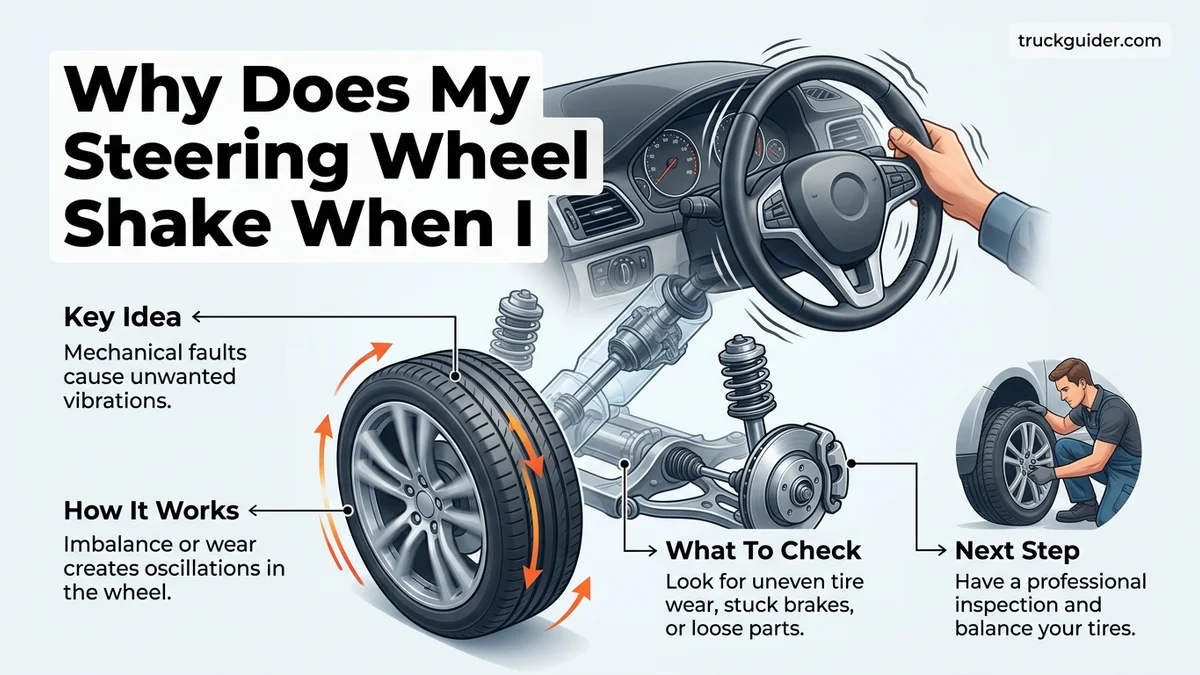
A steering wheel vibration usually indicates issues with wheel balance, tire alignment, or brake rotors. When your steering wheel shakes, it points directly to mechanical or tire imbalances that require immediate attention to ensure vehicle safety.
A shaking steering wheel usually points to unbalanced tires, warped brake rotors, or loose suspension components that require immediate attention. When your car vibrates at high speeds, brakes erratically, or trembles while idling, it means a critical mechanical system is out of balance.



Ignoring this symptom in 2026 can lead to rapid tire wear, sudden suspension failure, or compromised braking ability. Pinpointing when and how the vibration occurs helps you identify the exact mechanical failure before it turns into a costly or dangerous roadside emergency.
Key Takeaways
- Shaking at high speeds typically points to unbalanced tires or improper wheel weights.
- Steering vibration specifically during braking indicates warped brake rotors.
- Check tire pressure and lug nut torque as initial safe troubleshooting steps.
- Misaligned wheels cause uneven wear and constant steering wheel shaking at moderate speeds.
- Suspension component wear can trigger dangerous steering play and vibrations.
What Causes Why Does My Steering Wheel Shake When I Drive
Speed-Dependent Vibration
If your steering wheel shakes only at specific highway speeds—usually between 55 and 70 mph—the issue almost always relates to your wheels and tires. Weight imbalances, uneven tire wear, or bent wheel rims from hitting potholes create centrifugal forces that travel straight up the steering column. You might also notice the vibration fades when you accelerate past that specific speed range, but the underlying imbalance remains.
- Tire cupping or feathering: Uneven tread wear patterns caused by bad shocks or improper alignment.
- Lost wheel weights: Small lead or steel weights that fall off the rim during normal driving.
- Bent alloy wheels: Structural damage to the rim from hitting deep road hazards.
Braking and Idling Triggers
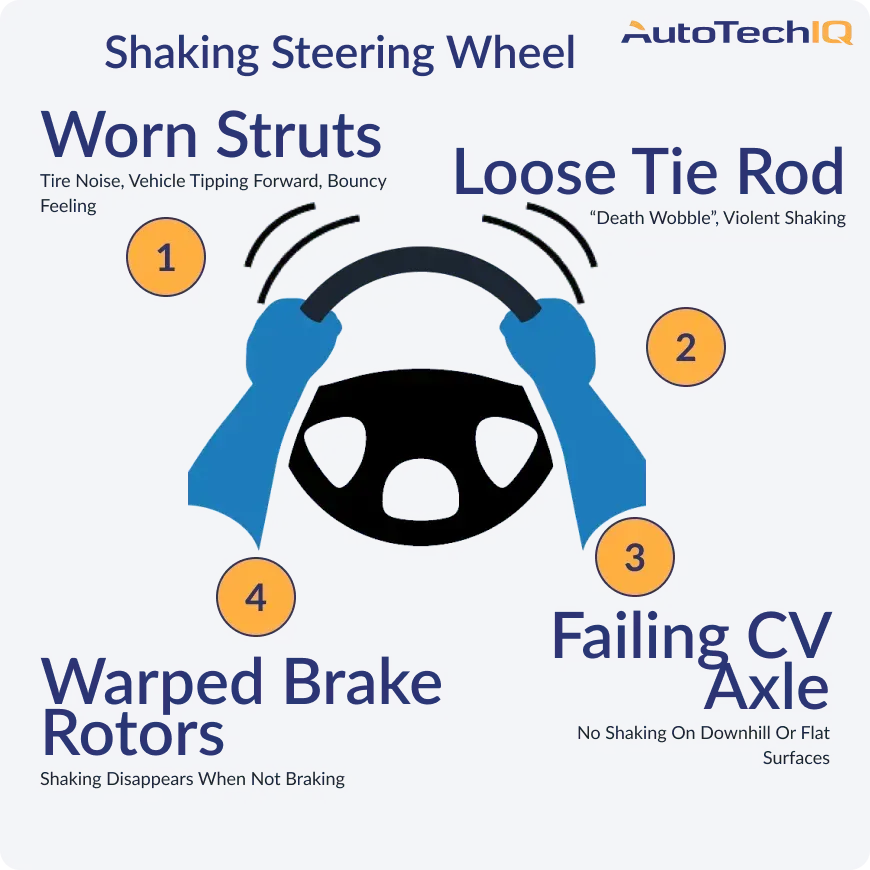
When the steering wheel shimmies specifically when you press the brake pedal, your brake rotors are likely warped or unevenly worn. Excessive heat causes the metal rotors to develop thick and thin spots, causing the brake pads to pulsate against them. Alternatively, if the shake happens when the car is stopped in drive or at idle, worn engine mounts or a misfiring spark plug are usually to blame.
- Warped rotors: Common after heavy downhill braking or emergency stops.
- Stuck brake calipers: A brake pad that continuously drags against the rotor.
- Worn engine mounts: Rubber components that fail to absorb engine vibrations.
Step-by-Step Guide to Fix Steering Wheel Shaking
Diagnostic Checklist for Drivers
Pinpoint the root cause of the vibration by paying close attention to your driving environment before visiting a mechanic. Documenting these exact symptoms saves you diagnostic labor fees at the repair shop in 2026. Use this quick assessment to narrow down the mechanical culprit:
- Check if the vibration occurs only on smooth pavement or rough roads.
- Notice if the steering wheel shakes independently of the rest of the car body.
- Observe if the shaking intensifies when you apply light pressure to the brakes.
Recommended Professional Repairs and Fixes
Most steering wheel vibrations require specialized shop equipment like dynamic road-force balancers or brake lathes. Once you identify the trigger, you can authorize the correct repair to restore smooth handling. Do not attempt complex DIY steering or brake repairs unless you possess professional mechanical experience and heavy-duty tools.


- Wheel balance and tire rotation: Usually takes 30 minutes at a local tire shop.
- Brake rotor resurfacing or replacement: Necessary when pulsation occurs during stopping.
- Wheel alignment: Corrects suspension angles that cause erratic pulling and vibration.
What If It Still Doesn’t Work After Initial Repairs
If balancing your tires, aligning your wheels, and replacing warped brake rotors fail to stop the shaking, the issue runs deeper into your vehicle’s mechanical framework. Persistent vibrations usually indicate failing suspension components or drivetrain anomalies that require advanced diagnostic tools. According to automotive engineering data compiled by the Society of Automotive Engineers (SAE), unresolved vibrations can accelerate wear on adjacent systems by up to 40 percent.
Advanced Troubleshooting Steps
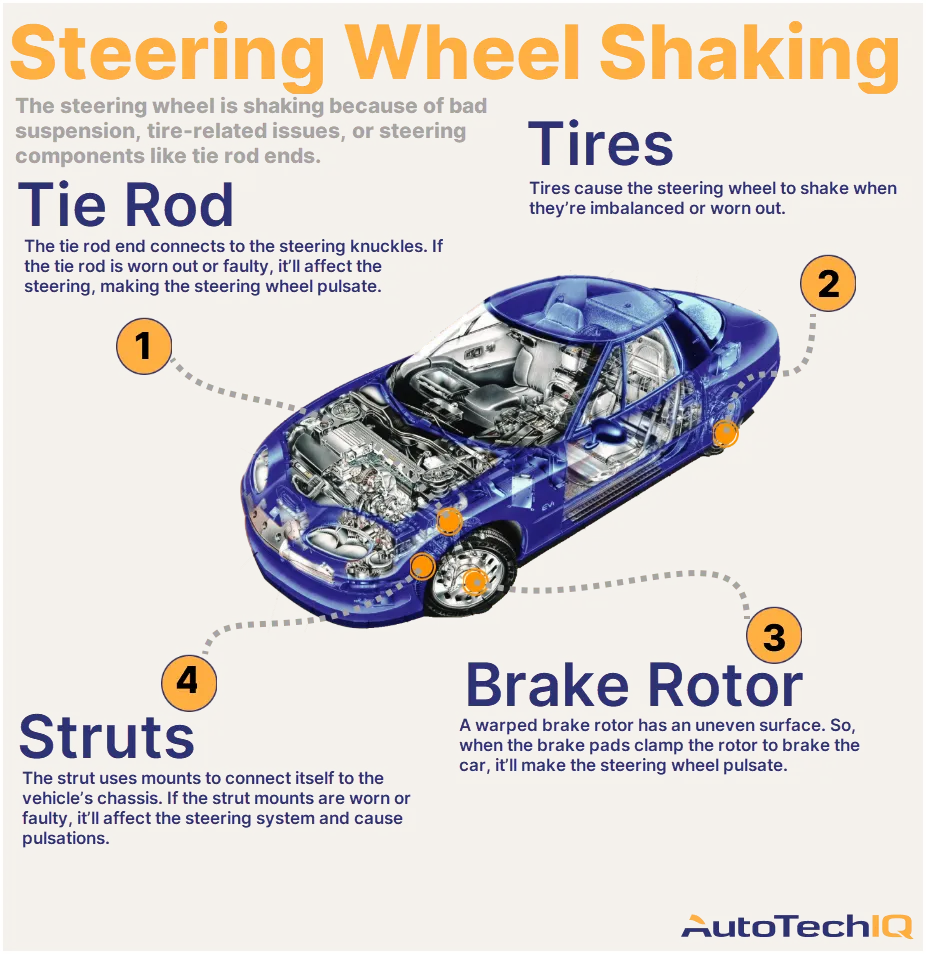
- Inspect the constant velocity (CV) joints and axle shafts for torn boots, excessive play, or grease leakage.
- Test wheel bearings for looseness or a characteristic humming noise that intensifies during highway cornering.
- Examine the engine and transmission mounts for rubber degradation, cracking, or sagging that transfers powertrain vibrations directly to the steering column.
- Check the steering rack and tie rod ends for mechanical slack using a suspension load test on a hydraulic lift.
- Consult a certified technician for a computerized road-force balancing and suspension analysis to isolate microscopic out-of-round tire conditions.
Professional diagnostics for persistent steering wheel vibrations generally range from $100 to $250 for labor. If major suspension or drivetrain components like a steering rack or axle assembly require replacement, expect total repair costs to fall between $300 and $1,200 depending on your vehicle make and model.
Frequently Asked Questions About Steering Wheel Vibrations
Is it safe to drive with a shaking steering wheel?
Driving with a shaking steering wheel is generally unsafe, especially if the vibration occurs at high highway speeds or worsens during braking. A shaking steering wheel indicates compromised control, potential tire failure risks, or failing steering components that could lead to a loss of directional stability.
Why does my steering wheel shake only when braking?
A steering wheel that shakes exclusively during braking is almost always caused by unevenly worn or warped front brake rotors. When the brake pads clamp down on an uneven rotor surface, it creates rapid pressure fluctuations that pulsate directly through the steering linkage.


Can low tire pressure cause a steering wheel to shake?
Yes, significantly underinflated tires can alter the contact patch and rolling radius, leading to minor vibrations at specific speeds. However, chronic shaking is more frequently tied to physical wheel imbalance, structural tire damage, or alignment issues rather than simple pressure loss.
Conclusion
A shaking steering wheel is more than an annoyance; it is a critical diagnostic indicator of underlying mechanical or tire distress. Addressing problems like wheel imbalance, poor alignment, or warped rotors immediately preserves your vehicle handling and prevents costly secondary damage. According to verified research and expert sources from the automotive service industry, proactive maintenance reduces total repair expenditures by addressing minor wear before failure occurs. Your actionable next step is to schedule a professional wheel balance and alignment check to isolate the exact root cause of your vehicle vibration today.
❓ Frequently Asked Questions
Why does my steering wheel shake when accelerating?
Shaking during acceleration usually points to worn CV joints, damaged axle shafts, or motor mount issues that transfer engine vibration to the cabin.
What is the difference between wheel balancing and wheel alignment?
Wheel balancing corrects heavy spots on the tire assembly, while wheel alignment adjusts the suspension angles so your wheels point straight.
Can bad tie rods cause the steering wheel to shake?
Yes, worn tie rods or ball joints introduce dangerous play into the steering system, causing vibration and loose handling.
How do I know if my brake rotors are warped?
If your steering wheel vibrates and pulsates specifically when you press the brake pedal at highway speeds, your rotors are likely warped.
What should I check first when my steering wheel vibrates?
Start by safely checking your tire pressures, inspecting the tread for uneven wear, and ensuring all lug nuts are properly torqued.
When should I take my car to a mechanic for steering shaking?
You should visit a professional mechanic immediately if the vibration is severe, accompanied by strange noises, or affects vehicle control.
![P0171 Dodge Ram 1500: Fix & Reset Guide [2026]](https://truckguider.com/wp-content/uploads/2026/03/p0171-dodge-ram-1500-featured.webp)

![Top Radiator Hose Hot and Bottom Cold? Causes & Fixes [2026]](https://truckguider.com/wp-content/uploads/2026/03/top-radiator-hose-hot-bottom-cold-featured.webp)
![2019 Ram 1500 Reliability [2026]](https://truckguider.com/wp-content/uploads/2026/03/featured-4dc19a40.webp)
![P062A Ram 1500: Diagnosing Fuel Pump Control Module Issues [2026]](https://truckguider.com/wp-content/uploads/2026/03/p062a-ram-1500-featured.webp)
![2015 Ram EcoDiesel Problems: Common Failures & Recalls [2026]](https://truckguider.com/wp-content/uploads/2026/03/2015-ram-ecodiesel-problems-featured.webp)