Ram 1500 5.7 Belt Diagram: Serpentine Routing Guide

The 2014 Ram 1500 5.7 belt diagram features a single serpentine belt winding through seven pulleys, including the alternator, water pump, and A/C compressor. To replace it, use a 3/8-inch drive tool to rotate the automatic tensioner clockwise, releasing tension so the belt can be swapped following the specific routing layout.
📌 Key Takeaways
- Provides the essential routing path for the serpentine belt
- The automatic tensioner is the most critical component for replacement
- Ensure the engine is completely off and cool before touching the system
- Take a reference photo of the belt structure before removal
- Use this diagram when experiencing belt squeal or during scheduled maintenance
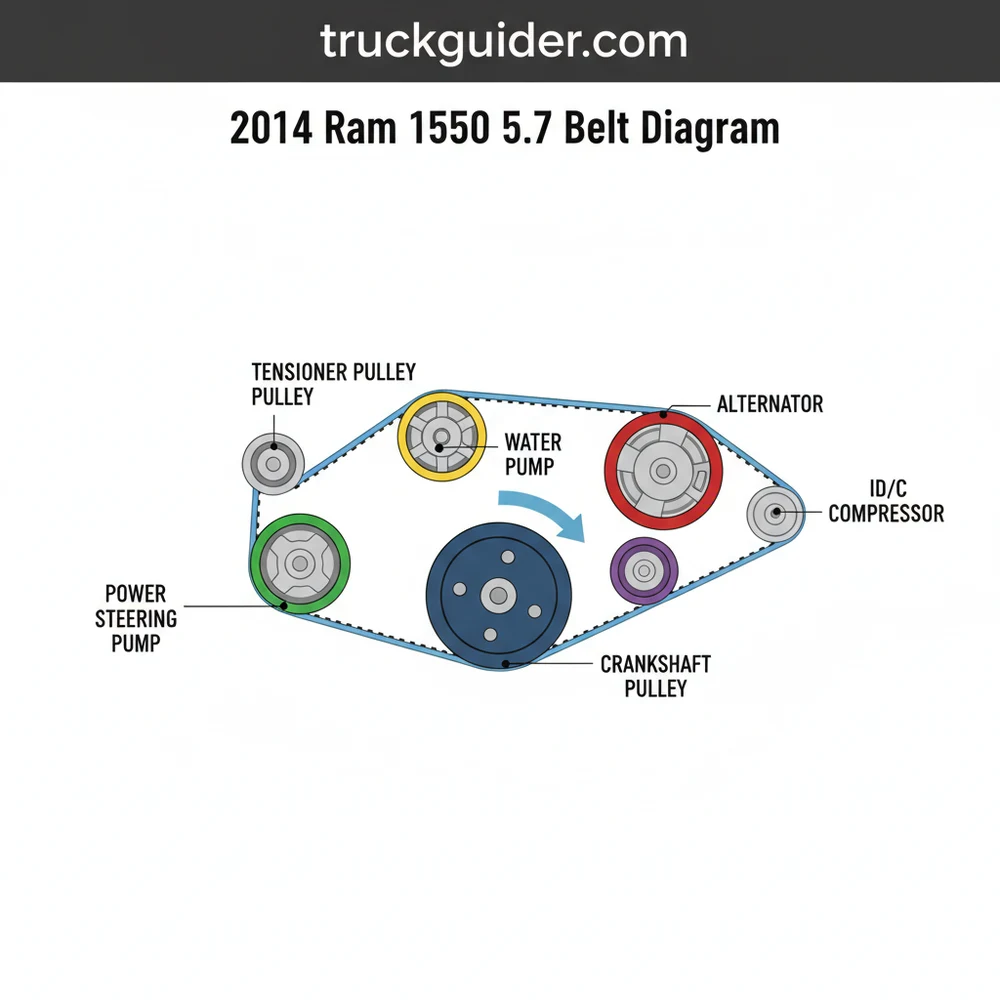
Maintaining the heart of your truck requires more than just regular oil changes; it demands a clear understanding of the auxiliary systems that keep your engine running smoothly. When you are looking for a 2014 ram 1500 5.7 belt diagram, you are likely facing a maintenance milestone or an unexpected repair. This comprehensive guide serves as your definitive resource for understanding the serpentine belt configuration on the 5.7L Hemi engine. We will explore the specific layout of the pulleys, the role each component plays in the engine’s overall structure, and the exact path the belt must follow to ensure your alternator, water pump, and air conditioning compressor function correctly. By the end of this overview, you will have the technical knowledge to identify every pulley, interpret the schematic with ease, and perform a belt replacement with professional-level confidence.
![VIPCAR 01108 Professional Water Pump for Dodge [5.7L V8 HEMI] Engine, 2009-2018…](https://m.media-amazon.com/images/I/312eBpGsdNL._SS500_.jpg)

The accessory drive system in the 2014 Ram 1500 5.7L Hemi is a marvel of compact engineering, designed to power multiple critical systems through a single, continuous serpentine belt. Understanding the visual blueprint of this system starts with identifying the drive pulley and the various driven components. At the very bottom center of the engine block sits the crankshaft pulley, which is the primary driver for the entire belt system. As the engine rotates, this pulley provides the mechanical energy required to spin all other components. Moving clockwise from the crankshaft, the belt typically heads toward the tensioner assembly, which is located on the lower passenger side of the engine. This tensioner is a spring-loaded component designed to maintain the perfect amount of pressure on the belt to prevent slipping or excessive wear.
Higher up on the passenger side, you will find the air conditioning (A/C) compressor pulley. Following the path upward and toward the center, the belt wraps around a smooth idler pulley and the water pump pulley, which is centrally located and critical for engine cooling. On the driver’s side of the engine, the alternator—or generator—is situated at the top. Because the 2014 Ram 1500 utilizes electric power steering (EPS), you will notice the absence of a traditional power steering pump in this configuration, which simplifies the layout compared to older Hemi models. The belt itself is a six-rib design, and the diagram illustrates where the ribbed side of the belt makes contact with grooved pulleys and where the smooth back of the belt contacts the flat idler or tensioner pulleys.
Graphic showing the Crankshaft (bottom), Tensioner (lower right), A/C Compressor (upper right), Idler (upper center), Water Pump (center), and Alternator (upper left) with the belt path indicated by arrows.
The 2014 Ram 1500 5.7L Hemi uses an automatic tensioner. Unlike older vehicles where you had to manually adjust belt tightness, this system uses a heavy-duty internal spring to keep the belt at the manufacturer-specified tension automatically.
Interpreting the 2014 ram 1500 5.7 belt diagram is the first step toward a successful installation. To read the schematic effectively, you must understand the distinction between grooved and smooth pulleys. In any belt system, the side of the belt with the longitudinal ribs must always sit inside the grooves of a “ribbed” pulley. These include the crankshaft, the alternator, and the A/C compressor. Conversely, smooth idler pulleys and the tensioner pulley usually make contact with the flat, backside of the belt. If you attempt to route the ribbed side over a smooth pulley, or vice versa, the belt will suffer immediate damage and likely snap within minutes of engine startup.
The layout is specifically designed to maximize “belt wrap” around each pulley. Belt wrap refers to the amount of surface area the belt covers on a pulley; the more wrap there is, the less likely the belt is to slip under high loads, such as when the A/C compressor kicks on or when the alternator is under high electrical demand. When looking at your diagram, pay close attention to the “S” curves where the belt snakes between pulleys. These tight turns are where most routing errors occur.
To perform a belt replacement or to verify your current configuration, follow these detailed steps:


- 1. Preparation and Safety: Park the vehicle on a level surface and ensure the engine is completely cool. Disconnect the negative battery cable to prevent the engine from accidentally cranking while your hands are near the pulleys. Use a flashlight to locate the existing belt routing and compare it to your 2014 ram 1500 5.7 belt diagram.
- 2. Tool Selection: You will need a 3/8-inch drive or 1/2-inch drive long-handle ratchet or a dedicated serpentine belt tool. The tensioner on the 5.7 Hemi usually has a square drive hole or a specific bolt head (often 15mm) that allows you to rotate the tensioner arm.
- 3. Releasing Tension: Insert your tool into the tensioner and rotate it clockwise (towards the passenger side) to compress the internal spring. This will create slack in the belt. While holding the tensioner in this compressed position, carefully slide the belt off the uppermost pulley, which is typically the alternator.
- 4. Removing the Old Belt: Slowly release the tensioner and remove the tool. You can now thread the old belt through the fan shroud and remove it from the engine bay entirely. This is a great time to inspect the belt for cracks, missing chunks, or glazing.
- 5. Pulley Inspection: Before installing the new belt, spin each pulley by hand (except the crankshaft). They should spin smoothly and quietly. If you hear a grinding noise or feel wobbling, the bearing in that component is failing and should be replaced.
- 6. Routing the New Belt: Following your schematic precisely, begin at the bottom by wrapping the belt around the crankshaft pulley. Work your way up, looping it over the A/C compressor and water pump, and under the idler pulley. Leave the alternator pulley for last, as it is the easiest to reach.
- 7. Final Seating: Once again, use your tool to rotate the tensioner. Slide the belt over the final pulley. Before releasing the tensioner, double-check that the belt is perfectly centered in the grooves of every ribbed pulley. Even a slight misalignment can cause the belt to jump off or shred.
- 8. Verification: Release the tensioner slowly. Reconnect the battery and start the engine for a few seconds. Turn the engine off and inspect the belt one last time to ensure it has seated itself correctly in all the tracks.
Never attempt to replace the belt while the engine is running or while the ignition is in the “on” position. The serpentine belt system operates under extreme tension and high speeds; contact with a moving belt can cause severe injury.
Even with a perfect 2014 ram 1500 5.7 belt diagram, you may encounter issues that require troubleshooting. The most common problem is a squealing or chirping noise coming from the front of the engine. A high-pitched squeal that happens during acceleration often indicates a loose or worn belt that is slipping. If the noise is constant, it may point toward a failing bearing in the idler or tensioner pulley. If you notice the belt is fraying at the edges, this is a clear sign of pulley misalignment. Misalignment occurs when one of the accessories, like the alternator or A/C compressor, is not sitting perfectly square to the engine block, or if the tensioner arm is bent.
Another frequent issue is “glazing.” If you look at the underside of the belt and see a shiny, hard surface, the belt has been subjected to excessive heat from slipping. Glazed belts lose their ability to grip the pulleys and must be replaced immediately. If your battery light illuminates or your steering feels heavy (though less common with EPS), the belt may have snapped or slipped entirely. In such cases, the engine will also overheat rapidly because the water pump is no longer circulating coolant. If you see any of these signs, use the diagram to verify the integrity of your belt system before more significant engine damage occurs.
If you are struggling to keep the belt on the lower pulleys while trying to reach the tensioner, use a zip-tie to loosely hold the belt in place on one of the upper pulleys. Once the belt is fully routed and tensioned, simply snip the zip-tie and remove it.
To ensure the longevity of your Ram’s accessory drive system, following best practices for maintenance is essential. Most professional mechanics recommend replacing the serpentine belt every 60,000 to 100,000 miles. However, you should inspect it during every oil change for signs of wear. Modern EPDM (Ethylene Propylene Diene Monomer) belts do not always show cracks like older neoprene belts; instead, they lose material in the grooves, similar to how a tire loses tread. Using a belt wear gauge is the most accurate way to determine if a replacement is necessary.
When purchasing a replacement, avoid the cheapest options available. The 5.7L Hemi produces significant torque and operates at high temperatures, which can quickly degrade low-quality rubber. Opt for premium belts from reputable manufacturers like Gates, Continental, or ACDelco. These high-quality components feature advanced fiber-loading technologies that reduce noise and extend the life of the belt. Additionally, it is a wise practice to replace the tensioner and idler pulley at the same time as the belt. Since these components have the same lifespan as the belt, replacing them as a “system” prevents the frustration of a new belt being ruined by an old, vibrating tensioner.
Finally, keep a printed copy of the 2014 ram 1500 5.7 belt diagram in your glove box. In the event of a belt failure on the side of the road, having the blueprint readily available will save you time and stress, allowing you to get your truck back on the road quickly. By understanding the system layout, respecting the mechanical tension involved, and using quality parts, you can ensure your Ram 1500 remains a reliable powerhouse for years to come. Proper belt maintenance is a small investment that protects the most critical systems of your 5.7L Hemi engine, ensuring that every journey is backed by peak mechanical performance.
Step-by-Step Guide to Understanding the Ram 1500 5.7 Belt Diagram: Serpentine Routing Guide
Identify the belt routing by locating the diagram sticker on the radiator shroud or using this digital layout guide.


Locate the automatic tensioner pulley component found on the front of the engine block.
Understand how the belt winds around each accessory, noting which pulleys use the ribbed side versus the smooth side.
Apply clockwise pressure to the tensioner using a breaker bar to release the belt from the system structure.
Verify that the new belt is seated perfectly in the grooves of every pulley according to the diagram.
Complete the installation by slowly releasing the tensioner and checking that the belt maintains its proper configuration.
Frequently Asked Questions
Where is the belt tensioner located?
On the 5.7L Hemi engine, the belt tensioner component is located on the front passenger side of the engine block. It is positioned between the alternator and the crankshaft pulley. It features a spring-loaded arm designed to maintain constant pressure on the belt system for optimal performance.
What does the serpentine belt diagram show?
This diagram illustrates the precise layout of the belt as it travels around various engine accessories. It identifies the path for the alternator, water pump, power steering pump, and A/C compressor, ensuring the drive system configuration is correctly restored during a belt replacement or repair.


How many pulleys are in the 5.7 Hemi belt configuration?
The standard 5.7L Hemi engine configuration typically utilizes a seven-pulley system. This includes the crankshaft drive pulley, the water pump, the alternator, the power steering pump, the air conditioning compressor, one idler pulley, and the spring-loaded automatic tensioner pulley that keeps the belt tight.
What are the symptoms of a bad serpentine belt?
Signs of a failing belt include loud chirping or squealing noises, visible cracks or fraying in the rubber structure, and glazing on the belt surface. If the belt fails, you will lose power steering and the charging system will stop working, eventually leading to engine overheating.
Can I replace the serpentine belt myself?
Yes, replacing the belt on a Ram 1500 5.7 is a straightforward DIY task. By following the routing diagram and using a breaker bar to release the tensioner, most owners can complete the job in under 45 minutes with basic mechanical tools and safety precautions.
What tools do I need for belt replacement?
You will need a 3/8-inch or 1/2-inch drive breaker bar (depending on your specific tensioner) or a specialized serpentine belt tool. A flashlight is helpful for inspecting the lower pulley configuration, and a pair of gloves will protect your hands from sharp edges in the engine bay.
![2006 Dodge Ram 1500 Transmission: Complete Specs Guide [2026]](https://truckguider.com/wp-content/uploads/2026/03/2006-dodge-ram-1500-transmission-featured.webp)
![2012 Ram 1500 Radio Upgrade: Best Units & Required Parts [2026]](https://truckguider.com/wp-content/uploads/2026/03/2012-ram-1500-radio-upgrade-featured.webp)

![Best Dodge Ram 1500 Truck Bed Liners [2026]](https://truckguider.com/wp-content/uploads/2026/03/truck-bed-liner-dodge-ram-1500-featured.webp)