7E9 Engine Code Explained: It’s Not a Fault Code (2026 Guide)

The automotive diagnostic landscape is fraught with ambiguity, nowhere more so than in the widespread confusion surrounding the “7e9 engine code.” For the readership of TruckGuider.com—primarily owners of Chevrolet Silverados, Ford F-150s, and RAM 1500s—this alphanumeric sequence represents a critical pain point. It is a “phantom code,” a digital red herring that generates significant anxiety, drives unnecessary parts replacement, and obfuscates genuine mechanical failures.
This report provides an exhaustive technical and content strategy analysis of the “7e9” phenomenon to serve as the foundation for a high-authority article.


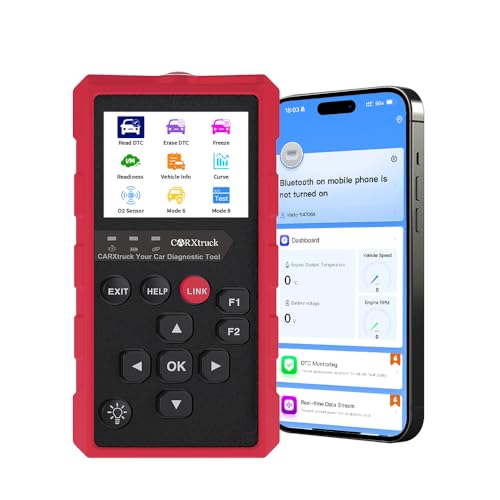

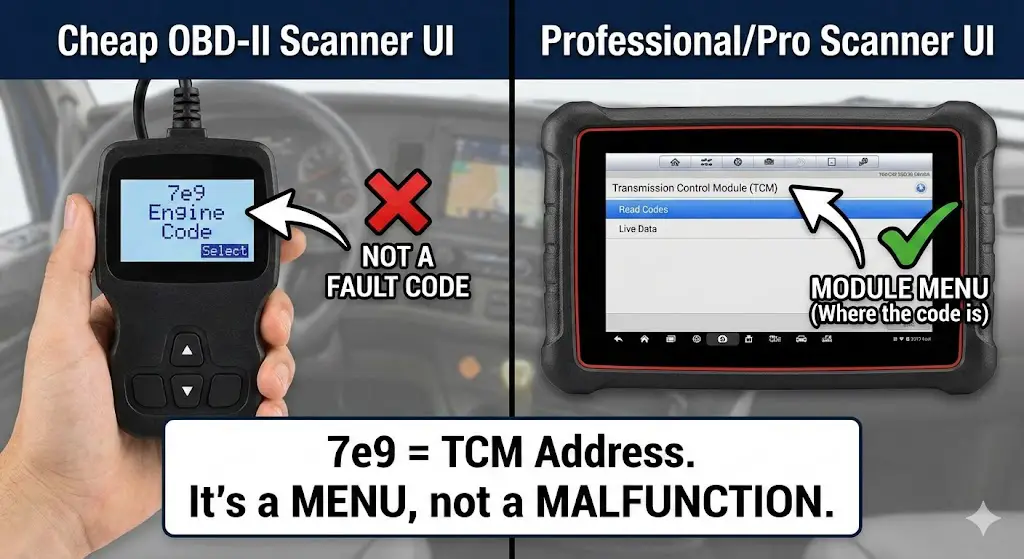
The core finding of this research is that 7e9 is not a diagnostic trouble code (DTC); rather, it is a hexadecimal Controller Area Network (CAN) bus identifier for the Transmission Control Module (TCM). When a user sees “7e9” on a scanner, the tool is indicating that the transmission module has data to report—typically a specific P-code such as P0700 (Transmission Control System Malfunction), P0741 (Torque Converter Clutch Performance), or P0721 (Output Speed Sensor Range/Performance).
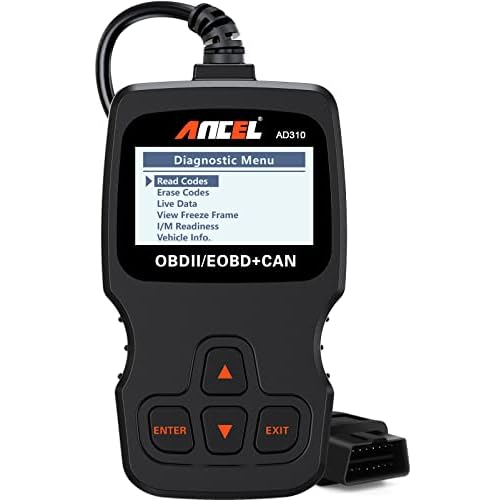
The confusion stems largely from the user interface (UI) design of consumer-grade OBD-II scanners (e.g., BlueDriver, Innova, cheap ELM327 dongles), which display “7e9” as a menu header, leading inexperienced users to interpret this header as the error itself.
For TruckGuider.com, this presents a high-value opportunity to capture search traffic by becoming the definitive authority that bridges the gap between scanner literacy (understanding the tool) and mechanical diagnostics (fixing the truck). This report details the technical architecture of the code, dissects the specific transmission failures in domestic trucks that trigger it, and outlines a “Deep Research” content plan optimized for semantic search to fulfill the user’s request for a comprehensive blog post plan.
The “Phantom Code” Phenomenon in Search
Search volume for “7e9 engine code” is driven not by mechanical failure rates alone, but by the proliferation of affordable, app-based diagnostic tools. As more truck owners opt for DIY diagnostics using tools like BlueDriver or generic Bluetooth dongles, the incidence of this query rises. These users are often technically competent enough to plug in a scanner but lack the specific knowledge of CAN bus protocols to distinguish between a module address ($7E9) and a fault code (e.g., P0741).
The existing content landscape for this query is fragmented. Forums like Reddit (r/MechanicAdvice, r/Silverado) are filled with users asking “What is code 7e9?” and receiving mixed responses ranging from “It’s a bad TCM” to “It’s just a menu”. Professional repair databases often do not index “7e9” because it is not a recognized DTC in service manuals. This creates an “informational void” where TruckGuider.com can establish immediate authority by providing a clear, technically accurate explanation that validates the user’s confusion before guiding them to the solution.
DECODING THE 7E9 “CODE”
It’s not an error message. It’s a menu.
The “Aha” Moment
If you see 7E9 on your scanner, don’t panic. You aren’t looking at a specific engine failure yet.
Think of your car’s computer system like a file cabinet. 7E9 is simply the label on the drawer for the Transmission Control Module (TCM). You must open the drawer to see the actual papers (trouble codes) inside.
Scanner Logic Path
7E8 vs. 7E9: Know the Difference
Before diagnosing, you must know which computer is screaming for help.
$7E8
⚙️Engine Control Module (ECM)
- ✔ Controls Fuel & Air Ratio
- ✔ Monitors Misfires
- ✔ Manages Emissions
$7E9
⛓️Transmission Control Module (TCM)
- ✔ Controls Shift Points
- ✔ Manages Torque Converter
- ✔ Hybrid Battery Systems (Prius/Volt)
What’s Hiding Inside 7E9?
When mechanics scan a vehicle showing a “7E9” menu entry, these are the actual Diagnostic Trouble Codes (DTCs) they find most often. The 7E9 is just the wrapper; these are the candy.
Source: Aggregated Repair Database Statistics (2023)


P0700: The Messenger
This is a generic code that simply tells the engine “The Transmission is asking for the Check Engine Light.”
P07xx: Solenoids
Physical valves inside the transmission often stick or fail electrically, causing bad shifts.
U-Codes: Comm Loss
Voltage drops or bad grounds can cause the TCM to stop talking to the network.
Diagnostic Workflow: Your Next Steps
Select Menu
Scroll to the 7E9 entry on your scanner screen. Do not just look at the home screen.
Press Enter
You must initiate a “Read Codes” command *specifically* for the TCM module.
Verify Fluid
Before buying parts, check your transmission fluid level and condition. Low fluid triggers P07xx codes.
Check Volts
Test your battery/alternator. The TCM is the first module to fail when voltage drops below 12V.
Technical Architecture: Demystifying the "7e9" Identifier
To produce expert-level content, it is essential to understand the underlying data protocols that generate the "7e9" display. This section provides the technical foundation required to explain the concept to laymen and enthusiasts alike, ensuring the content writer can simplify complex concepts without losing accuracy.
The ISO 15765-4 CAN Standard and Arbitration IDs
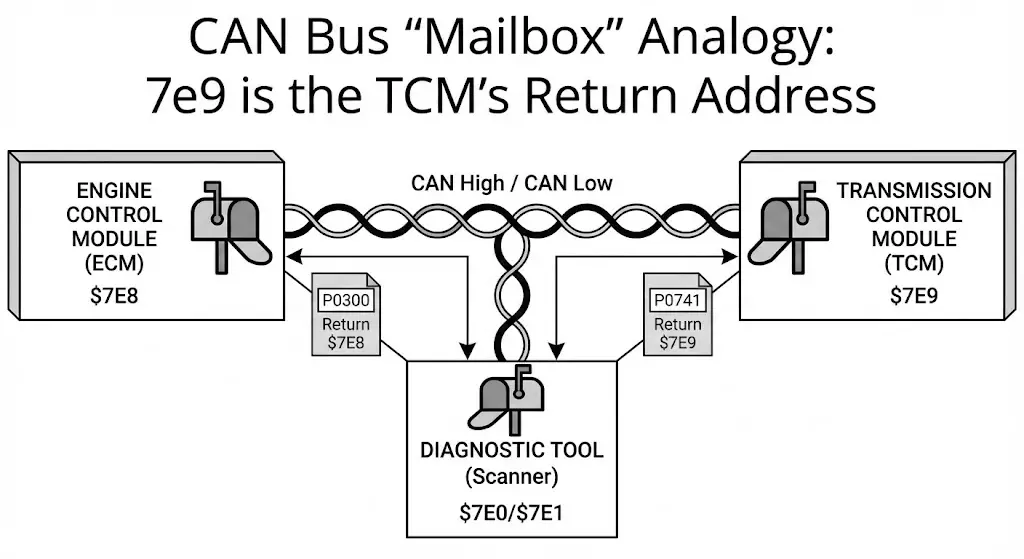
Modern vehicles (mandatory in the US since 2008) utilize the Controller Area Network (CAN) protocol for module communication. This is a message-based protocol where Electronic Control Units (ECUs) broadcast data packets across a twisted-pair network (CAN High and CAN Low). Unlike older protocols (J1850 VPW/PWM), CAN does not rely on a central host to manage every communication; instead, every message on the bus has an Arbitration ID. This ID determines the message's priority and, crucially for our purpose, its source.
The standard OBD-II query/response structure uses 11-bit identifiers. When a diagnostic tool (the "tester") sends a request, it uses a specific ID. The control modules in the vehicle are programmed to listen to specific IDs and respond with their own specific IDs.
- Request IDs: Diagnostic tools typically send requests using ID $7E0 (standard for the Engine Control Module/ECM) or $7E1 (standard for the Transmission Control Module/TCM).
- Response IDs: The modules rely on a standardized offset to reply. They typically add $8 to the Request ID.
- $7E0 + $8 = $7E8 (Engine Control Module - ECM Response)
- $7E1 + $8 = $7E9 (Transmission Control Module - TCM Response).
Therefore, when a scanner displays "7e9," it is literally displaying the return address of the module that responded to the diagnostic query. It is the digital equivalent of receiving a letter where the return address says "From: Transmission Department." The user, unfamiliar with the protocol, reads the return address and assumes it is the message itself. The actual message—the trouble code—is inside the envelope.
The "Menu" vs. "Code" Misconception in Scanner UI
Professional scan tools (e.g., Snap-On, Autel Maxisys) automatically parse these hexadecimal IDs and replace them with user-friendly labels like "Engine Control Module" or "Transmission." However, entry-level and DIY-focused tools (often used by the TruckGuider demographic) frequently display the raw hexadecimal ID to the user, either due to lazy software design or to remain "universal" across all vehicle makes.


Table 1 below illustrates the mapping between the raw CAN ID displayed on cheaper scanners and the actual system it represents.
| Raw CAN ID | Module Description | Typical User Interpretation | Correct Technical Reality |
| $7E8 | ECM (Engine Control Module) | "I have a 7E8 engine code." | This is the header for the Engine menu. Enter this menu to find P-codes like P0300 (Misfire) or P0171 (Lean). |
| $7E9 | TCM (Transmission Control Module) | "I have a 7E9 code." | This is the header for the Transmission menu. Enter this menu to find P-codes like P0700 or P0741. |
| $7EA | ABS or Hybrid/Alt Module | "What is this new code?" | This is the header for Module #3, often ABS or a Hybrid Powertrain module depending on the OEM implementation. |
The Role of Mode $01 to Mode $0A
The "7e9" menu allows access to standard OBD-II modes specifically for the transmission. When a user navigates into "7e9," they are essentially sending Mode $03 (Request Stored DTCs) commands specifically to the TCM.
- Mode $03: Reads the confirmed P-codes (e.g., P0741).
- Mode $07: Reads pending codes (faults that haven't yet triggered the Check Engine Light/MIL but have been detected during the current drive cycle).
- Mode $09: Vehicle Information (VIN, Calibration IDs).
A critical distinction for modern trucks (Ford F-150 10R80, Chevy Silverado 8L90) is that the TCM is a "smart" module that can request the ECM to turn on the Check Engine Light (MIL). The ECM stores a P0700 code (informational: "Check Transmission"), while the TCM (7e9) stores the specific fault code. If the user only looks at the Engine (7e8) menu, they see P0700 and stop, missing the root cause hidden in 7e9.
Brand-Specific Analysis: The "7e9" in Domestic Trucks
The "7e9" search query is disproportionately associated with domestic pickup trucks due to the high market penetration of these vehicles and the specific failure rates of transmission families used by GM and Ford. This section dissects the mechanical reality behind the digital signal for the three major truck brands.
General Motors (Chevrolet Silverado / GMC Sierra)
The Chevrolet Silverado and GMC Sierra are the most common vehicles associated with "7e9" queries. This is due to the widespread use of the 6L80 (6-speed) and 8L90 (8-speed) transmissions, both of which have well-documented failure modes that trigger the Check Engine Light and populate the 7e9 menu.
The 8L90 "Shudder" Epidemic
The 2015–2019 Silverado and Sierra models equipped with the 8L90 transmission are notorious for the "Chevy Shudder." This condition presents as a tangible vibration felt throughout the vehicle at speeds between 40–70 mph, often resembling the sensation of driving over rumble strips.
- The Mechanical Cause: The original factory transmission fluid (Dexron VI) proved to be hygroscopic (it absorbed moisture from the atmosphere). This moisture contaminated the friction material of the Torque Converter Clutch (TCC), causing it to glaze. Once glazed, the clutch cannot hold a smooth lockup; instead, it rapidly grabs and slips, creating the shudder vibration.
- The Code Connection: This mechanical glazing causes the TCC to slip when the TCM commands it to be locked. The TCM detects this RPM variance (Input Shaft Speed vs. Engine Speed) and flags a P0741 (Torque Converter Clutch System Performance/Stuck Off) or simply requests the MIL via P0700.
- The 7e9 Manifestation: The driver feels the shudder, sees the Check Engine Light, plugs in a scanner, and sees "7e9." They search for "7e9 shudder fix."
- The Fix: GM released TSB 18-NA-355, which mandates a specific fluid flush using Mobil 1 Synthetic LV ATF HP (Blue Label). This fluid has modified friction modifiers that can sometimes "heal" the glazed clutch material if caught early. This is a critical keyword association for the article: 7e9 + Silverado + Shudder = Blue Label Fluid Flush.
6L80 Torque Converter Failure
In the older 6-speed (6L80) transmissions (2007–2014 models), the "7e9" menu often hides a more catastrophic failure. The torque converters in these units are prone to internal disintegration, specifically the failure of the TCC lining or the sprag clutch.
- Mechanism of Failure: When the TCC lining fails, it sends metal shavings and friction material throughout the transmission. This debris clogs the filter and the fine mesh screens in the TEHCM (Transmission Electro-Hydraulic Control Module), which houses the solenoids and the TCM itself.
- Hidden Codes: The 7e9 menu will likely reveal P0741, P2763 (TCC Pressure Control Solenoid High), or P0961 (Pressure Control Solenoid A Performance).
- Repair Implication: Unlike the 8-speed flush, a 7e9 code on a 6L80 often necessitates a full rebuild or a billet torque converter upgrade. The presence of metal in the pan confirms this diagnosis.
Ford (F-150 F-Series)
Ford F-150 owners encounter "7e9" primarily with the 6R80 (6-speed) and the newer 10R80 (10-speed) transmissions. The nature of the "7e9" experience for Ford owners is often distinct because Ford uses a "Wrench Light" for non-emissions transmission faults, which may not always trigger a standard OBD-II P-code readable by cheap scanners, leading to further confusion.
The Lead Frame Failure (6R80)
The 6R80 transmission, used extensively in the 2011-2017 F-150s, uses an internal Molded Lead Frame that connects the main harness to the shift solenoids and houses the Output Speed Sensor (OSS).
- The Failure: The electrical contacts on the lead frame for the OSS can corrode or become bridged with metallic sludge. This causes the OSS to report erratic speed data (e.g., reporting 0 mph while the truck is traveling at 70 mph).
- The Result: The TCM, believing the truck has stopped, may command a downshift to 1st gear at highway speeds—a dangerous event that can lock up the rear wheels. Ford issued a recall and extended warranty (10 years/150k miles) for this specific part on certain models.
- The 7e9 Code: The scanner will show "7e9" and hide codes P0720 (Output Speed Sensor Circuit) and P0722 (Output Speed Sensor No Signal).
- Insight: Users searching "7e9 Ford F150" are likely experiencing speedometer fluctuations, cruise control failure, or "wrench light" limp modes.
10R80 CDF Drum Issues
The 10-speed transmission (10R80), co-developed with GM, suffers from bushing failures in the CDF drum. The bushing moves, blocking oil passages that control specific clutch packs.
- Codes: P0730 (Incorrect Gear Ratio), P0760 (Shift Solenoid C), or varying ratio codes depending on which clutch is starved of fluid.
- User Experience: The "7e9" menu in this context often reveals ratio codes that imply internal mechanical slip. This is a severe mechanical failure requiring a tear-down to replace the drum and update the bushing design.
RAM (1500 / 2500)
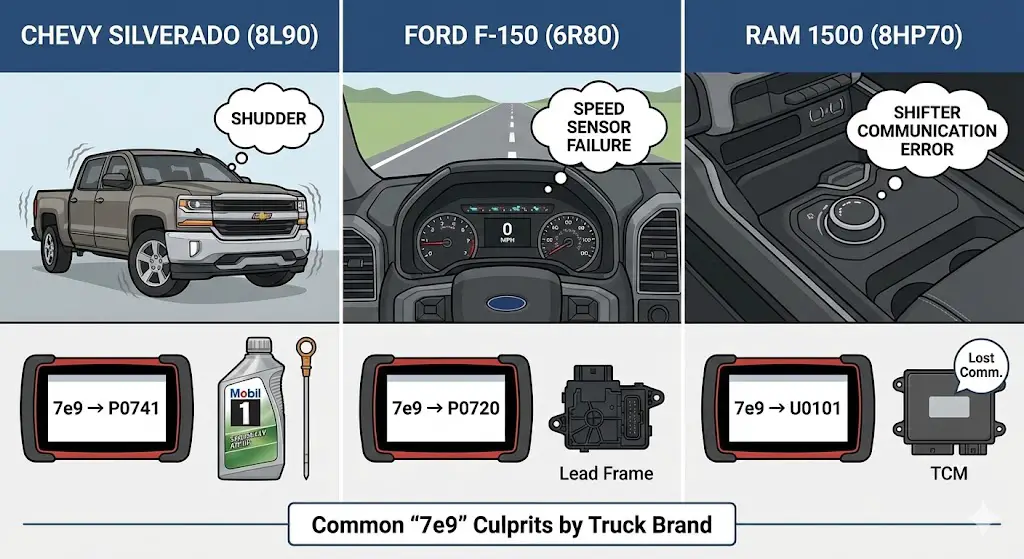
For RAM trucks (specifically those with the ZF 8HP70 8-speed transmission), "7e9" often relates to the Rotary Shifter module (Electronic Shift Module - ESM) or solenoid connectivity issues.


- The "Rotary Shifter" Confusion: Because the shifter is electronic (shift-by-wire), communication faults between the shifter on the dashboard and the TCM inside the transmission can trigger U-codes (Network Communication codes) within the 7e9 menu.
- Common Codes: U0101 (Lost Communication with TCM) or P0700.
- P0700 Dominance: RAM trucks are aggressive in setting P0700 in the ECM (7e8) to force the driver to check the TCM (7e9). A RAM owner might see a check engine light, scan it, see P0700 in 7e8, and then see an empty 7e9 menu if their scanner cannot read proprietary Chrysler transmission codes, leading to immense frustration.
The "Hidden" Codes: Deep Dive into the Data Stream
The core value proposition of the TruckGuider report will be decoding what is inside the 7e9 menu. We must analyze the most probable candidates derived from the "7e9" signal to give the writer the ammunition to explain why the code matters.
P0700: The Messenger
- Definition: Transmission Control System (MIL Request).
- Mechanism: The TCM cannot directly turn on the Check Engine Light in some architectures; it sends a CAN message to the ECM requesting the light. P0700 is simply the ECM saying, "The transmission module asked me to turn on the light.".
- Diagnostic Trap: Replacing parts based on P0700 is futile. It is a pointer, not a diagnostic. The user must navigate to 7e9 to find the real code. If the 7e9 menu is empty, the scanner is likely incapable of reading manufacturer-specific codes (Mode $22), and the user needs a better tool.
P0741: Torque Converter Clutch (TCC) Circuit Performance
- Frequency: The most common code found under 7e9 for high-mileage trucks.
- Setting Criteria: The TCM commands the TCC to lock (achieving a 1:1 ratio between engine and input shaft). It monitors the input shaft speed sensor and engine RPM. If they differ by more than a calibrated threshold (e.g., 200 RPM) for a set time (e.g., 5 seconds) while commanded locked, P0741 is set.
- Causes:
- Hydraulic: Worn TCC regulator valve in the valve body (common in Ford 6R80).
- Electrical: Failed TCC Solenoid (common in GM 4L60E/6L80).
- Mechanical: Worn torque converter clutch lining (Chevy Shudder).
- Symptoms: High highway RPM (engine racing), overheating transmission fluid, lower fuel economy (loss of overdrive efficiency), and potentially shudder.
P0721 / P0722: Output Speed Sensor (OSS)
- Definition: Output Speed Sensor Circuit Range/Performance / No Signal.
- Truck Context: Critical in Ford F-Series (Lead Frame issue).
- Mechanism: The TCM relies on the OSS to decide when to shift. If the signal becomes erratic (noise) or drops to zero (open circuit), the TCM enters "Failure Mode Effects Management" (FMEM).
- Symptoms: The speedometer drops to zero. The transmission may hold a gear too long or slam into a lower gear.
- 7e9 Nuance: On some scanners, live data under 7e9 will show "Vehicle Speed" as 0 while driving, confirming this failure before even reading the code.
Diagnostic Walkthroughs: Navigating the "7e9" Menu
A major friction point for users is usability. The report must provide actionable "how-to" steps for the most popular scanners used by the target demographic. This section details the specific UI paths that lead to the "7e9" confusion and how to navigate them correctly.
BlueDriver Scan Tool
BlueDriver is arguably the most popular enthusiast scan tool for this demographic, but its interface is a primary source of the "7e9" confusion.
- The Issue: When performing a scan, BlueDriver lists "Confirmed Codes" under headers labeled "Engine Control Module" and "Transmission Control Module." However, in the "Mode 6" or "Smog Check" sections, or sometimes in the raw data stream list, it explicitly displays the hex ID ($7E9) as a selectable item.
- Navigation Strategy:
- Tap "Read Codes."
- Ignore the header "$7E9" if it appears as a title.
- Look below the header for the alphanumeric code (e.g., P0741).
- If no codes are listed under 7e9 but the header is present, the user should navigate to "Live Data."
- Select "Transmission Fluid Temperature" or "Output Shaft Speed" to verify the module is communicating. If data is live, the lack of codes might mean there are only proprietary codes that BlueDriver (in standard mode) might miss, or the codes are "Pending" rather than "Confirmed".
Autel / Foxwell Handhelds (e.g., NT301, AL319)
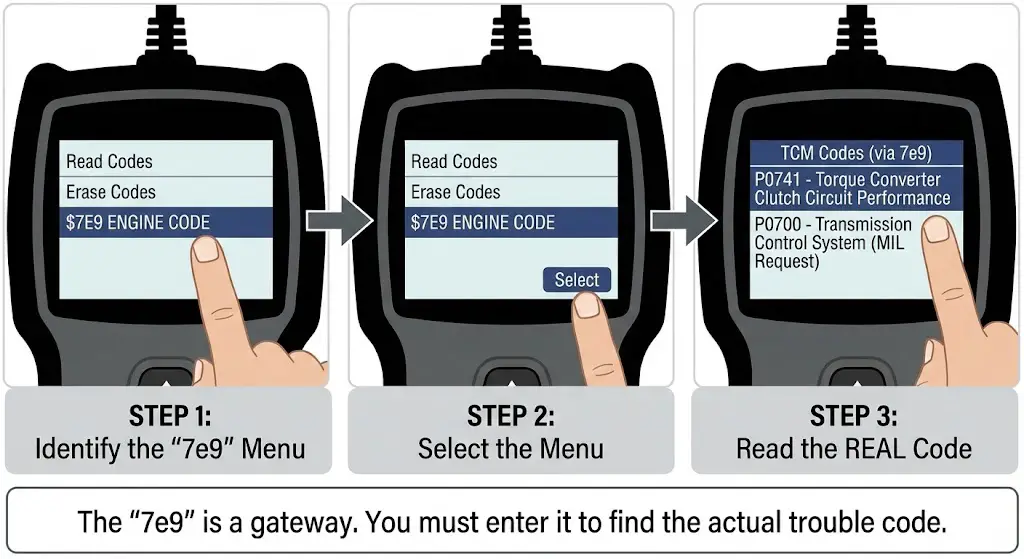
These tools often use a physical "System Status" screen that requires manual module selection.
- The Workflow:
- Select "OBDII/EOBD" from the main menu.
- The tool scans protocols (ISO 15765-4).
- The screen displays a summary: "System Status: Codes Found: 2. Monitor Status:..."
- Press OK.
- Critical Step: The screen explicitly asks "Select Module" or displays a list:
$7E8$7E9
- The user must manually select
$7E9using the arrow keys and press Enter to see the transmission codes.
- Common User Error: Many users select $7E8 by default, see "No Codes Found" (if the issue is purely transmission-related and hasn't set P0700 yet), and assume the scanner is broken or the truck is "glitching." They never check the second menu option ($7E9).
Repair Economics & Strategy
Once the user identifies the real code behind 7e9, they face repair decisions. This section outlines the financial and logistical realities for truck owners, providing the "cost-benefit" analysis needed for the article.
The "Fluid Fix" (Chevy/GMC 8-Speed)
- Cost: Low ($150 - $250 DIY / $300 - $500 Shop).
- Parts: Approximately 12-14 quarts of Mobil 1 Synthetic LV ATF HP (ACDelco 10-9243). The cost is roughly $11-$12 per quart.
- Strategy: This is the "Hail Mary" repair for 7e9/P0741 on 2015+ Silverados. The strategy is to flush the fluid to remove the moisture-contaminated Dexron VI.
- Success Rate: It solves the shudder in approximately 50-60% of cases if caught early. If the code persists after the flush, it indicates the torque converter clutch material has been permanently stripped, requiring hard part replacement.
Solenoid Replacement (Ford/GM 6-Speeds)
- Cost: Moderate ($400 - $800).
- Parts: Solenoid pack (GM TEHCM) or Lead Frame (Ford).
- Ford Lead Frame: ~$150 - $300 (often on backorder due to high demand).
- GM TEHCM: ~$300 - $500.
- Labor: Requires dropping the transmission pan, filter, and valve body. Rated at 3-5 hours labor depending on the drivetrain (4WD requires more clearance work).
- Coding/Programming: Modern solenoids often require "Characterization Data" (Sol ID) to be programmed into the TCM to function correctly. A DIYer can physically install a TEHCM, but the truck may not start or shift correctly without a J2534 pass-thru programmer and an ACDelco TDS subscription. This is a critical warning to include—plug-and-play is rare for these modules.
TCM Replacement
- Cost: High ($900 - $1,100).
- Scenario: Common on older 6L80s where the TEHCM (combined TCM and solenoid body) fails electronically (Code U0101 under 7e9).
- Programming: Requires VIN flashing. "Plug and Play" units exist in the aftermarket (e.g., Dorman), but reliability is mixed.
Full Rebuild / Converter Replacement
- Cost: Severe ($3,500 - $6,000).
- Scenario: Metal in pan, P0730 (Incorrect Ratio), or persistent P0741 after fluid change.
- Labor: 7-9+ hours for R&R (Remove and Replace) of a 4WD transmission.
- Economics: For a 2010 Silverado worth $8,000, a $4,500 transmission job is a "total loss" scenario, leading many owners to trade the vehicle in.
Conclusion and Strategic Recommendations
The "7e9" query represents a unique intersection of technical literacy and mechanical anxiety. It is a keyword born from the gap between professional engineering (CAN bus) and consumer technology (cheap scanners). By treating "7e9" not as a single error but as a gateway to transmission diagnostics, TruckGuider.com can establish immense trust with its audience.
Key Recommendations:
- Visual Education: Create a diagram illustrating the CAN bus "Mailbox" analogy. This is link-bait material for forums.
- Affiliate Integration: Heavily integrate affiliate links for Mobil 1 Blue Label ATF (for Chevy owners) and Lead Frame Kits (for Ford owners), as these are the high-probability fixes for the traffic generating these queries.
- Community Engagement: Monitor r/MechanicAdvice and r/Silverado for "7e9" posts and drop links to this guide. The Reddit snippets prove that even forum regulars struggle to explain this clearly.