Dodge Key Fob Replacement Cost 2026: Dealer vs. Locksmith Prices

To navigate the complex landscape of Dodge key fob replacement, one must first understand the underlying architecture of the vehicle’s access control system. Unlike the mechanical keys of the 20th century, modern Dodge vehicles—spanning the Ram truck lineup, the Charger and Challenger muscle cars, and the Grand Caravan/Durango utility family—operate on a sophisticated network of encrypted radio frequency (RF) handshakes and rolling codes.
The evolution of these systems has been driven by a constant arms race between automotive engineers and car thieves, resulting in distinct generations of hardware that are mutually incompatible. Understanding which generation your vehicle belongs to is the first step in avoiding costly purchasing errors.


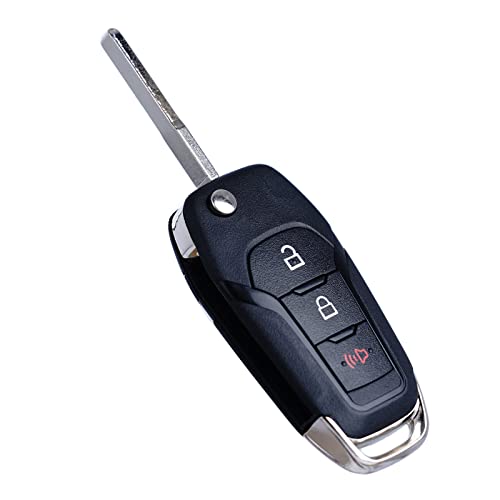
The Legacy Systems: Sentry Key Immobilizer System (SKIS)
In the late 1990s and early 2000s, Dodge introduced the Sentry Key Immobilizer System (SKIS). This technology represented a paradigm shift from purely mechanical security to electronic verification. The key, often referred to as a “transponder key” or “chipped key,” contains a small Radio Frequency Identification (RFID) chip embedded within the plastic head.
The mechanism of action is induction. When the key is inserted into the ignition cylinder, an induction coil surrounding the lock cylinder (the “halo” ring) energizes the transponder chip. This passive chip does not require a battery; it draws power from the magnetic field generated by the coil. Once energized, the chip transmits a unique alphanumeric code to the Sentry Key Immobilizer Module (SKIM) or the Wireless Control Module (WCM).
If the transmitted code matches the value stored in the vehicle’s Powertrain Control Module (PCM), the engine is permitted to run. If the code is incorrect, missing, or unreadable due to damage, the PCM will allow the engine to start for approximately two seconds before cutting fuel and spark—a safety feature designed to prevent hot-wiring. This “start-and-die” symptom is the definitive diagnostic indicator of a SKIS failure or an unprogrammed key.
The FOBIK Era: Infrared and Radio Convergence
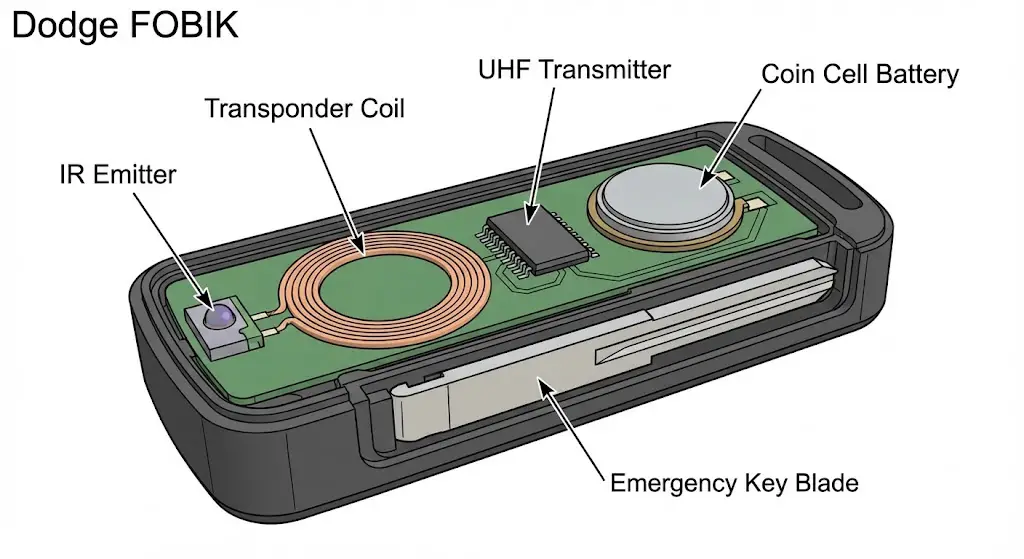
Around 2008, coinciding with the DaimlerChrysler partnership era, Dodge introduced the Finger Operated Button Integrated Key (FOBIK). This design eliminated the traditional metal blade for ignition duties entirely, replacing it with a rectangular plastic fob that is inserted into a dashboard slot known as the Wireless Ignition Node (WIN).
Visual Directive: **
The FOBIK represented a significant leap in complexity. It utilizes a dual-band communication strategy:
- Low-Frequency (LF) / Infrared (IR): Used for ignition authorization. The WIN module communicates with the fob tip to verify the transponder ID.
- Ultra-High Frequency (UHF): Used for Remote Keyless Entry (RKE) functions like locking, unlocking, and remote start. These signals are transmitted at 315 MHz or 433 MHz depending on the vehicle’s market and trim level.
The FOBIK also introduced the integrated “Valet Key” or “Emergency Key”—a mechanical blade hidden inside the plastic body of the fob. This key is strictly for opening the door in the event of a dead battery and cannot start the engine, as there is no mechanical lock cylinder in the ignition.
Keyless Enter ‘n Go™: The Proximity Smart Key
The current standard for the majority of the Dodge lineup (Charger, Challenger, Durango, and Ram 1500 DT) is the Proximity Smart Key, often marketed as “Keyless Enter ‘n Go™.” This system allows the driver to keep the fob in their pocket or purse.
The architecture relies on a network of low-frequency (LF) antennas distributed throughout the vehicle:
- External Antennas: Located in the door handles and near the trunk/tailgate.
- Internal Antennas: Located in the center console, dashboard, and rear cabin.
When the driver grasps the door handle, the capacitive sensors trigger the Radio Frequency Hub (RF Hub) to send a “ping” signal via the external antennas. The key fob, detecting this ping, wakes up and responds with its encrypted ID via UHF. The RF Hub triangulates the response strength; if it determines the key is within the “unlock zone” (typically 1.5 meters from the handle), it commands the Door Control Module to unlock. Similarly, for the Push-To-Start ignition, the internal antennas must verify the key is inside the cabin pressure boundary to authorize the engine start.
The 2018+ Security Gateway (SGW) Disruption
A critical turning point in Dodge key programming occurred with the 2018 model year. In response to publicized hacking vulnerabilities (such as the famous Jeep Cherokee hack), FCA (now Stellantis) implemented a hardware firewall known as the Security Gateway Module (SGW).
The SGW sits between the Data Link Connector (OBDII port) and the vehicle’s internal CAN bus networks. It allows unauthorized tools to read data (emissions codes, live stream) but strictly blocks write commands. Since programming a key involves writing new data to the RF Hub or BCM, the SGW effectively bricked all aftermarket programming tools and DIY methods overnight.
Overcoming the SGW requires specific hardware bypass solutions or authorized cloud-based credentials, creating a distinct bifurcation in repair procedures for pre-2018 and post-2018 vehicles. This report will detail the bypass procedures in Section 6.
Table 1: Dodge Access Technology Generations
| Generation | Years (Approx) | Key Type | Ignition Interface | Programming Difficulty | Primary Failure Mode |
| Gen 1 (SKIS) | 1998–2007 | Metal Blade + Grey/Black Head | Mechanical Cylinder | Low (Onboard) | Transponder Coil |
| Gen 2 (FOBIK) | 2008–2012 | Plastic Rectangular Fob | Wireless Ignition Node (WIN) | Medium (OBD) | WIN Module Contacts |
| Gen 3 (Smart) | 2011–2017 | Proximity Fob | Push-Button | Medium (OBD) | Battery Contacts |
| Gen 4 (SGW) | 2018–2024 | Proximity Fob | Push-Button | High (Bypass Req.) | RF Hub / SGW |
| Gen 5 (Digital) | 2025+ | Smartphone / NFC Card | Uconnect 5 / Phone | Very High (Cloud) | Software Sync |
DODGE KEY FOB REPLACEMENT
Navigating the Costs, Technology, and Programming of Modern Mopar Keys.
Why Is It So Expensive?
Gone are the days of $2 hardware store cuts. Whether you drive a Ram 1500, Charger, or Durango, your key is a sophisticated computer interacting with your vehicle’s Wireless Control Module (WCM). Replacing it involves expensive hardware and secure programming protocols. This guide breaks down the costs and helps you decide between the Dealership, a Locksmith, or a DIY approach.
Step 1: Identify Your Tech
Knowing your key type is the first step to avoiding incorrect purchases.
The “Pod” Key
Late 90s – Mid 2000s
Standard metal blade with a black/grey plastic head containing a transponder chip.
The Fobik
2008 – 2012
Trapezoidal shape. Inserts directly into the dash (WIN module). No visible metal blade.


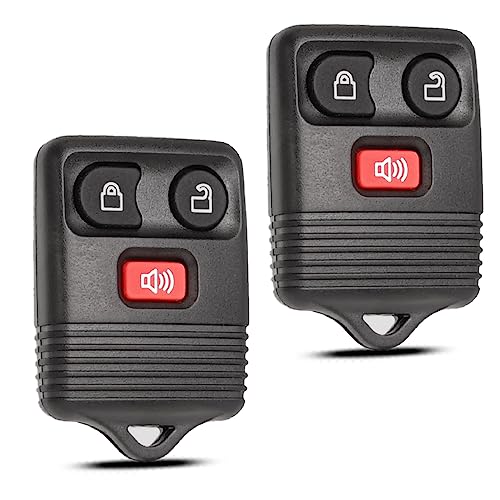
Keyless Enter-N-Go™
2011 – Present
Proximity Smart Key. Stays in pocket. Used with Push-To-Start ignitions.
The Price of Access
Average estimated total cost for a 2019 Ram 1500 Smart Key replacement.
Dealerships offer certainty but at a premium. Locksmiths provide mobile convenience. DIY is cheapest but carries compatibility risks.
Where Does the Money Go?
Breakdown of Hardware vs. Programming Labor costs.
Labor is a significant portion of the cost. Note that “DIY” labor costs reflect the purchase of a programmer tool, not a service fee.
Can You Program It Yourself?
Do you currently have TWO working keys?
Stop.
You cannot DIY. You need a scan tool to reset the computer. Call a locksmith.
Is your vehicle 2018 or newer?
SGW Block.
Security Gateway Module prevents simple OBD tools. You need a bypass cable or AutoAuth.
Success!
You can likely use the “On-Board” method to add a 3rd key yourself.
Before You Buy
Not all “broken” keys are actually broken. Often, the issue is a $5 battery or a receiver fault.
Quick Recommendation
Check Your Warranty
Some “Roadside Assistance” plans cover lost key locksmith visits.
Match FCC IDs
Never buy a fob based on “looks.” Match the FCC ID (e.g., GQ4-53T) on the back.
Avoid Cheap Clones
Locksmiths often refuse to program $20 online fobs because they fail frequently.
Technical Specifications: Frequencies and Part Numbers
One of the most common pitfalls for Dodge owners and inexperienced locksmiths is the assumption of interchangeability. A key fob that looks identical on the outside may have completely different internal architecture.
The Frequency War: 315 MHz vs. 433 MHz
Dodge vehicles utilize two primary frequency bands for Remote Keyless Entry (RKE): 315 MHz (standard North American automotive frequency) and 433 MHz (standard European/Global frequency). However, unlike some manufacturers that strictly segregate these by region, Dodge has mixed them within the North American market based on the supplier of the Tire Pressure Monitoring System (TPMS).
Because the RKE receiver and the TPMS receiver are often integrated into the same module (the WCM or RF Hub), the key fob frequency must match the TPMS sensor frequency.


- The Risk: If you program a 315 MHz key to a 433 MHz car, the transponder (low frequency) might be recognized by the ignition coil allowing the car to start, but the remote buttons (UHF) will never work because the receiver is deaf to that frequency.
- Identification: The only reliable way to identify the frequency is to:
- Check the FCC ID on the back of the original fob.
- Use an RF frequency counter (often built into tools like the Autel IM508 or Key Tool Max) to scan the working key.
- Decode the VIN through a dealer parts portal to see the specific RKE option code.
FCC ID Compatibility Matrix
The Federal Communications Commission (FCC) ID is the DNA of the key. It signifies the specific radio protocol and power output approved for that device. Cross-referencing FCC IDs is crucial for purchasing aftermarket replacements.
Common Dodge/Ram FCC IDs:
- GQ4-53T / GQ4-54T: These are widely used for the FOBIK generation (2008-2012) and some remote head keys. They are generally 433 MHz but can vary.
- M3N5WY783X: The ubiquitous code for the 2008-2010 era Charger/Challenger/Caravan FOBIKs.
- M3N-40821302: The standard for modern "Keyless Enter 'n Go" Smart Keys (Charger, Challenger, Durango, Ram). Note that within this FCC ID, there are variants for different button configurations (trunk release vs. air suspension vs. remote start).
- IYZ-C01C: Often found on the 2011+ Grand Caravan and Journey FOBIKs.
The "Hitag" Transponder Types
Beyond the frequency, the transponder chip itself—the component that talks to the immobilizer—varies.
- PCF 7941: Common in older remote head keys.
- PCF 7961: Often found in the integrated remote keys.
- PCF 7953 / Hitag 2 / Hitag AES: Used in modern Smart Keys. The shift to AES (Advanced Encryption Standard) in newer models (2018+) makes the encryption significantly harder to crack or clone, rendering older "cloning" tools useless.
Crucial Warning on Used Keys:
Modern Dodge Smart Keys (Hitag AES) lock their internal configuration bytes to the vehicle's "Secret Key" data during the first programming event. Once a key is programmed to a vehicle (e.g., a 2019 Ram), it cannot be simply reprogrammed to a different truck. The chip is "locked."
- Refurbishing: To reuse a locked key, it must be "unlocked" or "re-flashed" (virginized) using specialized high-voltage RF tools that wipe the protected sectors of the EEPROM. Buying a used key from eBay that does not explicitly state "Unlocked" or "Virginized" is a waste of money, as the dealer or locksmith tools will fail to write to it.
Model-Specific Deep Dive: Diagnostics and Quirks
While the underlying architecture is shared, each model line has developed specific failure patterns and idiosyncrasies that owners must be aware of.
Ram Trucks (1500, 2500, 3500)
The Ram truck line is the most complex due to the generation overlap. In 2019, Ram introduced the "new body style" (DT) while continuing to sell the previous generation (DS) as the "Ram 1500 Classic."
- Ram 1500 Classic (DS) & Pre-2019: These trucks typically use the tear-drop shaped FOBIK or the older style Smart Key. The primary point of failure here is the Wireless Ignition Node (WIN). Symptoms include the fob unlocking the doors but failing to turn in the ignition, or the cluster failing to light up when the key is inserted. This is a solder joint failure inside the WIN module, not a bad key. Diagnostic tip: If wiggling the key violently allows the truck to start, the WIN module needs rebuilding.
- Ram 1500 (DT) 2019+: These trucks use the "heavy" style Smart Key with premium metal sides. They require a specific Highline frequency. A major feature update was the inclusion of the Power Tailgate Release on the fob. Programming a fob without the tailgate button to a truck equipped with a power tailgate will result in the loss of that remote function, although the truck will start.
- RF Hub Water Leak: On 2013-2018 Ram trucks, the third brake light gasket is prone to failure. Water enters the cab and drips down the rear wall directly onto the RF Hub module. This causes corrosion that results in "Key Not Detected" errors or sporadic alarm triggers. If you are replacing a key because of detection issues, check for water stains on the rear headliner first.
Dodge Grand Caravan
The Grand Caravan (and its twin, the Chrysler Town & Country) utilizes a specialized FOBIK with up to 7 buttons.
- Button Configuration: Lock, Unlock, Remote Start, Left Sliding Door, Right Sliding Door, Trunk/Liftgate, Panic.
- The "Sliding Door" Failure: These fobs are notorious for the sliding door buttons failing while the lock/unlock buttons work fine. This is usually due to the carbon contact pads on the rubber membrane wearing down from frequent use by children and parents.
- Repair Strategy: Before spending $150 on a new key, owners can often buy a "repair shell" or "button pad" for under $15. By opening the fob and replacing the rubber membrane, functionality is often fully restored without any programming.
Charger and Challenger (The Performance Keys)
The LX/LD platform cars have the most distinct key variation due to the SRT/Hellcat performance tiers.
- Red Key vs. Black Key: As detailed in the executive summary, this is a software-level distinction. The Red Key transmits a specific ID that the PCM recognizes as "Master," unlocking the full 700+ HP fuel and spark maps. The Black Key ID triggers a "Valet" map limited to ~500 HP and 4000 RPM.
- Replacement Cost: Replacing a Red Key is significantly more expensive than a standard key because the blank itself carries a premium part number, and the verification process at the dealer is more stringent to prevent fraud.
- Police Pursuit Vehicles: Retired police Chargers are common on the used market. These vehicles often have a "Secure Park" feature or disabled rear door locks managed by the BCM. Programming new keys to these units can sometimes be blocked if the "Maximum Keys" limit (usually 8) has been reached by the fleet managers. An "All Keys Lost" reset is often required to clear the memory slots before a new key can be added.
The 2018+ Security Gateway (SGW) Bypass Guide
For owners of 2018 and newer Dodge vehicles, the Security Gateway Module (SGW) is the single biggest obstacle to DIY repair and aftermarket key programming. It is a digital bouncer that prevents unauthorized writing to the vehicle's computer.
Understanding the SGW Logic
The SGW divides the vehicle network into "public" and "private" sectors. The OBDII port is public. The RF Hub (where keys are stored) is private.
- Public Access: Anyone can plug in a code reader and see why the Check Engine Light is on.
- Private Access: To tell the RF Hub "Accept this new key ID," the command must pass through the SGW. Without a digital certificate (AutoAuth) or a physical bypass, the SGW drops the packet.
The Physical Bypass Method
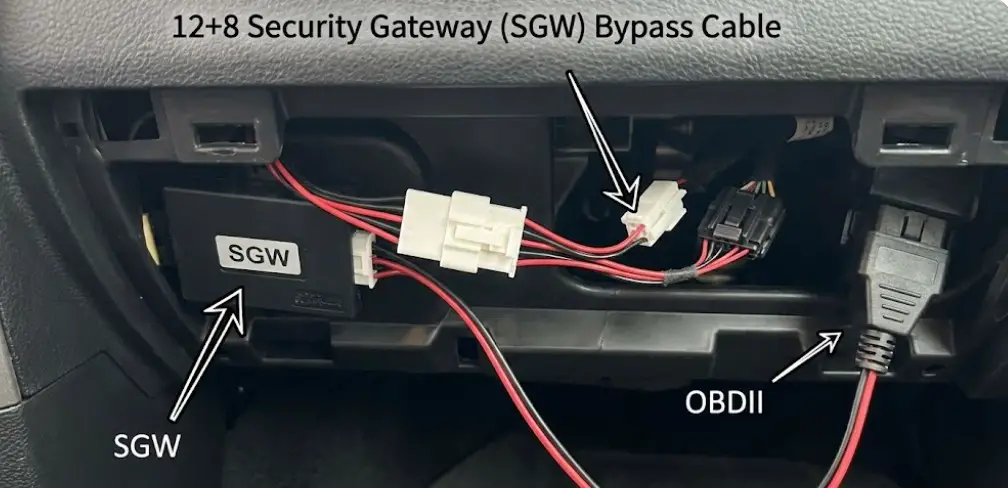
For DIYers using tools like AlphaOBD or locksmiths using offline programmers, the physical bypass is the standard solution. This involves installing a "12+8 Bypass Cable."
Installation Procedure (Ram 1500 Example):
- Locate the SGW: On the 2019+ Ram 1500, the SGW is located above the brake pedal or sometimes behind the radio/infotainment screen, depending on the trim level.
- Disconnect: The SGW has two plugs: a 12-pin and an 8-pin. These must be unplugged from the module.
- Bridge: Plug the vehicle's harness connectors into the female ends of the Bypass Cable.
- Connect Tool: The other end of the Bypass Cable has a standard OBDII female port. Plug your programmer (Autel, OBDLink, etc.) into this cable, not the dashboard OBD port.
- Result: You are now physically connected to the CAN bus, bypassing the firewall entirely. You can now program keys, calibrate speedometers, and reset modules.
The "Star Connector" Alternative
On some vehicles like the Dodge Durango and Jeep Grand Cherokee, reaching the SGW is incredibly difficult. An alternative method involves connecting directly to the "Star Connector" (CAN Junction Block).
- Location: Often found behind the glove box or in the passenger footwell kick panel.
- Method: A specialized cable clips onto the Star Connector, acting as a vampire tap to inject signals onto the CAN bus directly. This is often faster for locksmiths than tearing apart the dashboard to find the SGW.
Programming Methodologies: A Comparative Analysis
Once the hardware is identified and the SGW is managed, the actual programming can begin. There are three primary paths: Dealer, Locksmith, and DIY.
Onboard Programming (Legacy "Two-Key" Method)
For older Dodge vehicles (generally pre-2010), the "Onboard Programming" (OBP) protocol allowed owners to add a third key if they already possessed two working keys.
The Procedure:
- Insert the first working key -> Turn to ON for 5 seconds -> Turn OFF.
- Within 10 seconds, insert the second working key -> Turn to ON.
- After 10 seconds, the acoustic chime will sound, and the Sentry Key theft light will flash.
- Remove the second key, insert the new unprogrammed key, and turn to ON.
- A single chime will sound, and the theft light will stop flashing. The key is now programmed.
- Constraint: This method is strictly for adding a spare. If you have lost a key and only have one left, this method is locked out, and you must use OBD programming.
DIY Programming with AlphaOBD
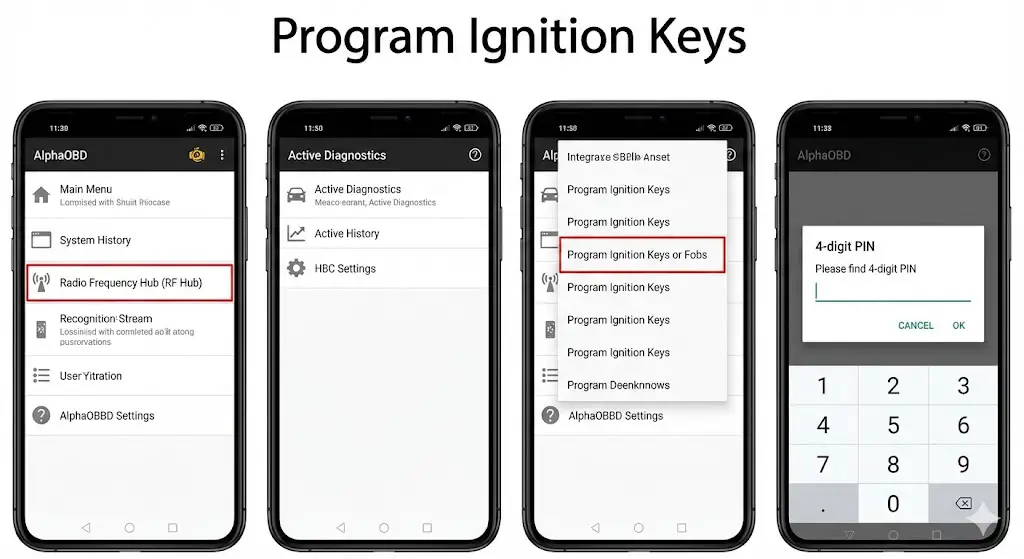
For the modern enthusiast, AlphaOBD has revolutionized Dodge diagnostics. It is powerful software (available on Android/Windows) that rivals dealer-level capabilities for a fraction of the cost.
Required Hardware:
- Android Device or Windows Laptop.
- OBDLink MX+ or EX Bluetooth Adapter (High-quality adapters are required to handle the protocol switching).
- SGW Bypass Cable (for 2018+ vehicles).
The AlphaOBD Key Programming Workflow:


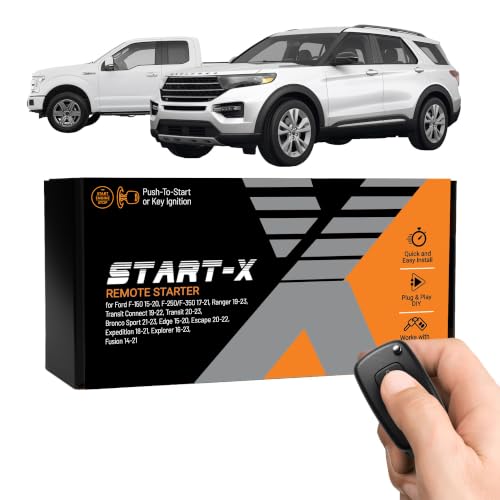

- PIN Retrieval: Before starting, you need the vehicle's 4-digit PIN code. AlphaOBD has a "Read PIN" function for some RF Hubs, but it doesn't work on all firmware versions. If it fails, you may need to use the "Chrysler Pin Puller" app or obtain the PIN from the dealer parts counter using your registration.
- Connection: Plug the OBDLink into the OBD port (or bypass cable). Open AlphaOBD.
- Module Selection: Select your vehicle (e.g., Ram 1500). Select "Radio Frequency Hub (RF Hub)" as the target.
- Procedure: Navigate to "Active Diagnostics" (Car with Hood Open icon).
- Program: Select "Program Ignition Keys or Fobs" from the dropdown.
- Execution: The app will prompt for the 4-digit PIN. Enter it. The app will then instruct you to press the "Unlock" button on the new fob or insert the FOBIK into the ignition.
- Verification: Watch the "Number of Keys Programmed" status. It should increment by one.
Professional Tools (Autel / Locksmiths)
Locksmiths use dedicated tablets like the Autel MaxiIM IM508 or IM608. These tools are essentially ruggedized Android tablets with specialized radio antennas.
- Advantage: They guide the user through the process step-by-step ("Turn hazard lights on", "Cycle ignition").
- Capability: They can often pull the PIN code automatically by reading the EEPROM data from the BCM, bypassing the need to call the dealer.
- Cost: These tools cost $1,000+, making them viable only for professionals or fleet managers.
Table 2: Programming Method Comparison
| Method | Hardware Cost | Difficulty | 2018+ Compatible? | Key Requirement |
| Onboard (OBP) | $0 | Low | No | Requires 2 Working Keys |
| AlphaOBD (DIY) | ~$150 (App + Dongle) | High (Technical) | Yes (w/ Bypass) | 0 Keys (PIN required) |
| Locksmith (Autel) | $200+ (Service Fee) | Low (Outsourced) | Yes | 0 Keys (All Lost) |
| Dealership | $300+ (Labor) | Low (Outsourced) | Yes | 0 Keys (All Lost) |
Cost Analysis: Dealer vs. Locksmith vs. DIY
The financial disparity between these options is stark. A informed consumer can save over $400 by choosing the right path.
The Dealership Premium
Dealerships charge "book time" for programming, often a minimum of one hour of labor, regardless of the fact that the actual process takes 10 minutes.
- OEM Fob: $180 - $350.
- Programming: $130 - $180.
- Emergency Key Cut: $20 - $50.
- Total: $330 - $580+.
- Hidden Cost: If you have lost all keys, the dealer will require the vehicle to be towed to the lot, adding another $150+ to the bill.
The Locksmith Advantage
Mobile locksmiths have lower overhead and competitive pricing.
- Aftermarket/Refurb Fob: $80 - $150.
- Service Call & Programming: $100 - $150.
- Total: $180 - $300.
- Advantage: They come to you (no tow truck) and can cut the metal key blade on-site using Lishi cutters.
The DIY Route (Risk vs. Reward)
For the handy owner, this is the cheapest route but carries the risk of buying incompatible hardware.
- Fob (Amazon/eBay): $30 - $60 (High risk of bad quality).
- Fob (OEM Refurb): $80 - $100 (Recommended).
- Programmer (Simple Key / Rental): $90.
- Total: $120 - $190.
- Caveat: If you fail to program the key (wrong frequency, locked chip), you have wasted the money on the hardware.
Diagnostics: When It's Not the Key
Before spending money on a new key, it is vital to rule out vehicle-side failures. Dodge vehicles have several "ghost" issues that mimic a dead key.
The WIN Module Failure (FOBIK Era)
The Wireless Ignition Node is the most common failure point on 2008-2012 vehicles.
- Symptoms: You insert the key, but it won't turn. Or, it turns, but the dashboard stays dark. The remote buttons (Lock/Unlock) usually still work.
- Test: Tap the WIN module housing lightly with a screwdriver handle while turning the key. If it momentarily connects, the internal contacts are bad.
- Solution: Do not buy a new key. Send the WIN module to a repair service (like Circuit Board Medics) or replace it. Note that a new WIN module requires programming to the PCM.
RF Hub Lockouts (Smart Key Era)
- Interference: LED headlights, cheap dash cams, and even phone chargers plugged into the center console can emit RF noise that jams the 315/433 MHz signal.
- Test: Unplug all USB devices and turn off aftermarket lights. Hold the fob directly against the Start button. If it works now, you have an interference issue, not a bad key.
Dead Battery Start Procedures
- FOBIK: Even with a dead battery, the FOBIK will start the car. The WIN module powers the transponder chip via induction.
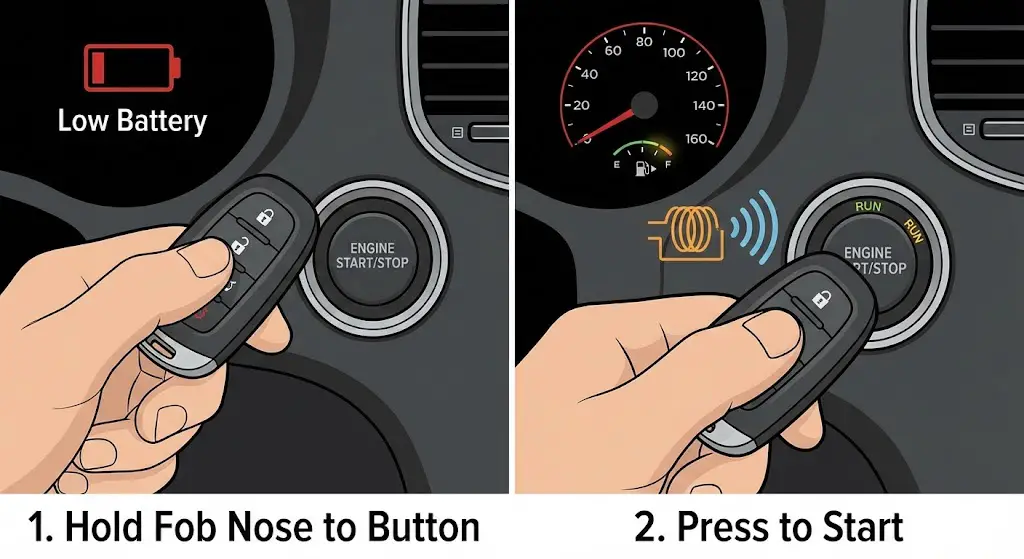
- Smart Key: If the battery dies, the "Key Not Detected" message appears.
- Emergency Start: Press the Start/Stop button with the nose of the key fob. The Start button has an induction coil behind it that will energize the chip through the plastic case.
The Future: 2025 Ram and Charger Digital Keys
As we move into the 2025 model year with the new Ram 1500 (Hurricane engine) and the Charger Daytona EV, the physical key is being augmented by digital credentials.
Smartphone as Key (Uconnect 5)
The new Uconnect 5 system supports digital keys stored in Apple Wallet or Google Wallet.
- NFC vs. UWB: The system uses Ultra-Wideband (UWB) technology to measure the precise Time of Flight of the signal. This prevents "Relay Attacks" where thieves amplify a signal from your house. The car knows exactly how far the phone is, down to the centimeter.
- Setup: Owners must pair their phone via the Ram App while inside the vehicle with two physical keys present.
The NFC Card
2025 models come with a credit-card-sized NFC key. This is waterproof and battery-free.
- Usage: It acts as a valet key or beach key. You tap it against the door handle to unlock and place it on the wireless charging pad to start the engine.
Conclusion
The Dodge key fob has evolved from a simple tool to a complex computer. For the owner facing replacement, the path forward depends on the vehicle year. For a 2010 Ram, the focus is on the WIN module health. For a 2015 Charger, it's about FCC IDs and OBD programming. For a 2020 Ram, it's about navigating the Security Gateway.
By understanding these distinctions—and utilizing the diagnostic checks and programming methods detailed in this report—owners can turn a potentially $600 dealership visit into a manageable $150 DIY project or a reasonably priced locksmith service call. The key is knowledge: knowing your frequency, knowing your bypass location, and knowing when to call a pro.

![Dodge Dakota Towing Capacity Guide: 1987-2011 Ratings [2026]](https://truckguider.com/wp-content/uploads/2026/03/dodge-dakota-tow-capacity-featured.webp)