
How Much Does a 6.7 Cummins Weigh? Dry vs. Wet: Complete Specs Guide [2026]

The 6.7L Cummins Turbo Diesel has a dry weight of approximately 1,100 lbs, while the wet weight ranges between 1,150 and 1,200 lbs depending on fluid levels. This massive weight is a result of its cast iron block and heavy-duty internals designed for extreme durability.
🎯 Key Takeaways
Recommended Best Deal Products


- The standard dry weight is approximately 1,100 pounds.
- Wet weight includes 12 quarts of oil and several gallons of coolant.
- Compacted Graphite Iron (CGI) blocks since 2019 reduced weight by 60 lbs.
- The 6.7L is roughly 100-150 lbs heavier than the previous 5.9L engine.
- Engine weight significantly impacts front-end suspension and tire wear.
A standard 6.7L Cummins Turbo Diesel engine weighs approximately 1,100 pounds dry and between 1,150 and 1,200 pounds wet. If you are planning an engine swap, purchasing a heavy-duty engine stand, or calculating freight shipping costs, these are the critical numbers you need to know. This is not a lightweight powerplant; it is a massive assembly of cast iron (or CGI in newer models) designed to handle extreme combustion pressures over hundreds of thousands of miles.

Prime for Young Adults — 6 Months Free
Students and 18–24s get six months of Prime free, then half price.
Start 6 Months Free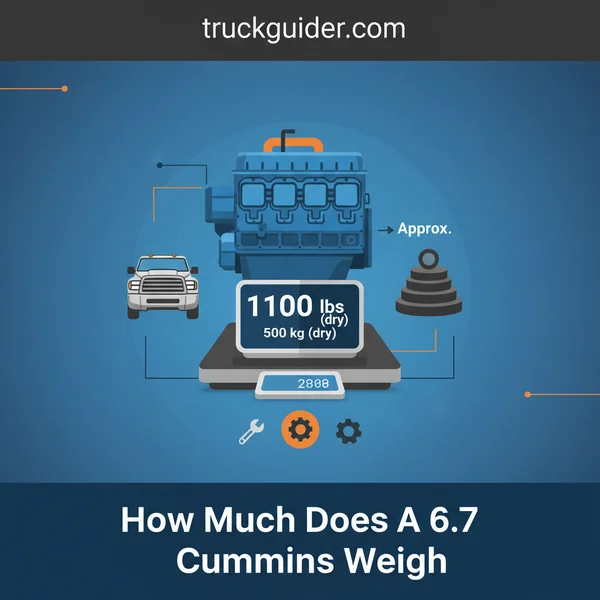
Understanding the distinction between dry and wet weight is vital for shop safety and mechanical planning. You cannot rely on a standard 1,000-pound “consumer-grade” engine stand to hold a fully dressed 6.7L Cummins. Furthermore, the weight distribution of this inline-six engine is long and front-heavy. This creates high leverage points that can stress lifting equipment. Whether you are a diesel technician or a backyard enthusiast, knowing the exact mass of this engine ensures you use the right tools for the job.
Breakdown of Dry vs. Wet Weight for the 6.7L Cummins
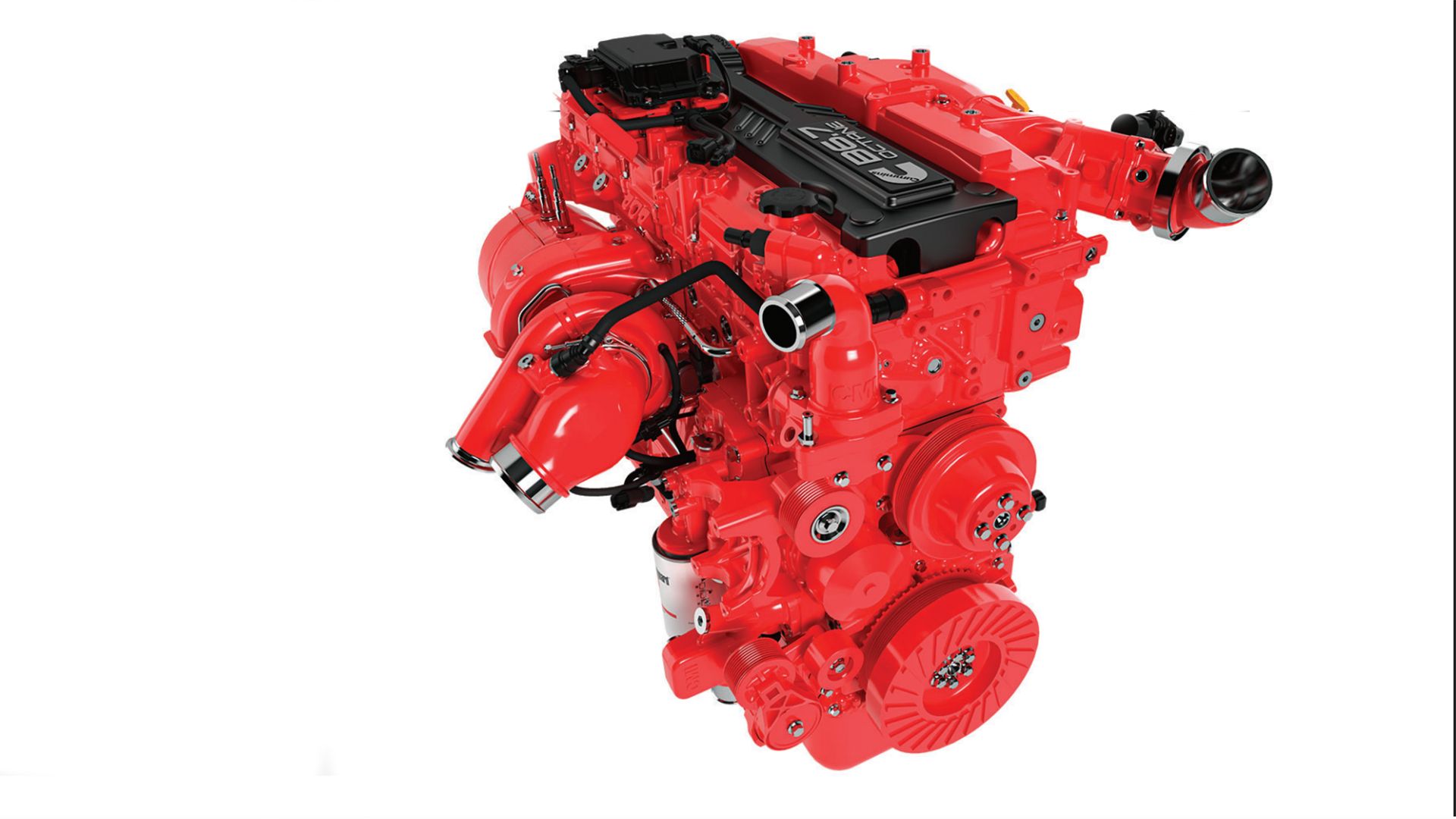
The 6.7L Cummins is significantly heavier than its gasoline counterparts, often weighing nearly double what a standard heavy-duty V8 gas engine weighs. When we discuss “dry weight,” we are referring to the engine as it exists on a shipping pallet or as it comes off the assembly line. For the 6.7L found in standard Ram 2500 and 3500 pickups, the dry weight is consistently reported at the 1,100-pound mark.
Understanding the Shipping Weight (Dry)
The dry weight includes the core structural components of the engine. This covers the cylinder block, the massive cast-iron cylinder head, the rotating assembly (crankshaft, rods, and pistons), and the essential bolt-ons like the turbocharger and exhaust manifold. However, it does not account for the heavy fluids required for the engine to actually run. If you are ordering a crate engine or a long block, 1,100 pounds is the figure you will likely see on the freight bill. It is important to remember that “dry” excludes the following heavy items:
- 12 quarts of 15W-40 engine oil
- 3 to 5 gallons of engine coolant
- Diesel fuel held within the high-pressure rails and filters
- Power steering fluid and external pumps
The Reality of Wet Weight (Fully Dressed)
Once you install the engine and prep it for its first start, the weight increases substantially. A “wet” 6.7L Cummins typically tips the scales at 1,150 to 1,200 pounds. The most significant contributor to this weight gain is the massive 12-quart oil capacity. Twelve quarts of heavy diesel oil weigh roughly 23 to 25 pounds. Additionally, the coolant circulating through the block, head, and massive water jackets adds another 30 to 40 pounds depending on the specific cooling system capacity.
A fully dressed wet engine also includes the heavy-duty alternator, A/C compressor, and the thick vibration dampener on the snout of the crank. If you are using an engine hoist to pull a 6.7L from a donor truck, you should always assume the 1,200-pound figure. This provides a necessary safety margin for your chains, bolts, and the hoist’s hydraulic ram.
Factors Influencing Weight Variations Between Model Years
Recommended Best Deal Products


While 1,100 pounds is the standard rule of thumb for the 6.7L Cummins, the engine has evolved significantly since its debut in mid-2007. Changes in metallurgy and internal design have caused slight fluctuations in the total weight. If you are comparing a first-generation 6.7L to a modern High Output version, there are subtle physical differences in their mass that you should be aware of.
CGI Blocks vs. Traditional Cast Iron
The most significant weight-related change in the engine’s history occurred in the 2019 model year. For over a decade, the 6.7L utilized a traditional gray cast iron block. However, for 2019 and newer models, Cummins transitioned to Compacted Graphite Iron (CGI). CGI is significantly stronger and stiffer than standard iron. This increased strength allowed engineers to thin the cylinder walls and reduce the overall mass of the engine block without losing durability.
- 2007.5–2018 Models: These utilize the traditional heavy cast iron block, sitting firmly at the 1,100-pound dry mark.
- 2019–Present Models: The CGI block itself is approximately 60 pounds lighter than the previous iron version.
- Net Result: While the block is lighter, newer engines often have heavier fuel systems and larger turbos, bringing the total weight back close to the original 1,100-pound baseline.
Chassis Cab and Commercial Variations
The application of the engine also dictates its final weight. A 6.7L Cummins found in a standard Ram 3500 Pickup is not identical to one found in a 4500 or 5500 Chassis Cab, or a medium-duty commercial truck like a Freightliner. Commercial variations often use different accessory drives to power air compressors for air brakes or larger hydraulic pumps.
If you are sourcing an engine from a commercial vehicle, you may encounter different oil pan designs (such as a front-sump configuration) or heavy-duty mounting brackets that can add 20 to 50 pounds to the engine’s total mass. Always inspect the accessory drive and brackets when calculating the weight for a custom engine swap project, as these “non-core” parts add up quickly.

Audible — Listen Free for 30 Days
One free credit a month and thousands of titles included.
Listen Free for 30 DaysWeight Comparison: Cummins 6.7 vs. Powerstroke and Duramax
When you are talking about heavy-duty diesel engines, the “Big Three” are always in the spotlight. While the 6.7 Cummins is a legendary powerhouse, it is interesting to see how it stacks up against its main rivals: the Ford Powerstroke and the GM Duramax. Because the Cummins utilizes an inline-six (I6) configuration with a solid cast-iron block and cylinder head, it tends to be a dense, heavy piece of machinery compared to the V8 designs of its competitors.
The Cummins vs. The Powerstroke (Ford)
The Ford 6.7L Powerstroke V8 is the closest rival in terms of sheer mass. Early versions of the Powerstroke weighed in around 990 lbs dry, but fully dressed with fluids and accessories, it sits right in the 1,100 lb range—very similar to the Cummins. However, the Powerstroke uses a compacted graphite iron (CGI) block to save some weight while maintaining strength, whereas the Cummins relies on traditional gray iron for that “million-mile” durability.
The Cummins vs. The Duramax (GM)
The 6.6L Duramax (L5P) is generally the lightweight of the group. Because the Duramax uses aluminum cylinder heads on a cast-iron block, it drops significant weight compared to the all-iron Cummins. A dry Duramax often weighs around 835 lbs, making it nearly 200 lbs lighter than a wet Cummins 6.7. This weight difference is often why GM trucks are praised for having a slightly more “nimble” feel in the steering compared to the heavy-nose feel of a Ram 2500 or 3500.
- 6.7 Cummins: ~1,100 lbs (Wet) – Known for all-iron construction.
- 6.7 Powerstroke: ~1,100 lbs (Wet) – Uses CGI block for weight optimization.
- 6.6 Duramax: ~950 lbs (Wet) – Aluminum heads significantly reduce front-end mass.
The Impact of Engine Weight on Vehicle Performance and Maintenance
Recommended Best Deal Products



Carrying over half a ton of iron over the front wheels isn’t just a fun fact; it fundamentally changes how your truck drives and how you need to maintain it. That 1,100-pound engine dictates everything from your stopping distance to how often you’ll be visiting the tire shop. Understanding this weight helps you better appreciate why heavy-duty trucks require specialized components.
Handling, Braking, and Suspension
The most immediate impact of the 6.7 Cummins’ weight is on handling. With so much mass concentrated over the front axle, these trucks are prone to understeer. You might notice that the truck wants to keep going straight even when you are turning the wheel sharply. Furthermore, braking requires more effort. The momentum generated by an 1,100-pound engine means your brake pads and rotors are under immense thermal stress during downhill hauls or sudden stops.
Long-Term Maintenance and Component Wear
If you own a Cummins, your front-end maintenance schedule is your best friend. The sheer gravity of the engine puts constant pressure on the front suspension. Over time, this leads to faster wear on specific parts that wouldn’t struggle as much in a gas-powered truck.
- Tire Rotation: Front tires on a Cummins-powered Ram wear significantly faster than the rears due to the engine weight. Rotate them every 5,000 miles to maximize tread life.
- Ball Joints and Bushings: Keep a close eye on your front-end components. The weight of the 6.7 can cause factory ball joints to develop play sooner than expected.
- Shock Absorbers: Ensure you are using heavy-duty, gas-charged shocks designed for diesel loads. Standard shocks will fade quickly under the constant oscillation of that heavy iron block.
- Air Pressure: Always maintain the recommended high PSI in your front tires (often 60-80 PSI) to support the engine weight and prevent sidewall damage.
Conclusion
The 6.7 Cummins is a heavyweight in every sense of the word. Weighing in at approximately 1,100 lbs when fully dressed with fluids, it is one of the densest and most durable engines on the road today. While its all-iron construction adds significant mass compared to competitors like the Duramax, that weight is the foundation for the incredible torque and longevity that Cummins owners prize. By understanding this weight, you can better manage your truck’s maintenance and performance needs.
Next Steps: Check your front tire pressure today to ensure it is optimized for the engine load, and consider upgrading to heavy-duty front shocks if you feel your handling is becoming “mushy.”
Audible Premium Plus — Annual Membership
12 audiobook credits up front, plus the full Audible catalogue.
See Annual PlansDo you have questions about upgrading your front suspension to handle the Cummins weight? Leave a comment below and join the conversation!
💬 Quick Questions & Answers
What is the dry weight of a 6.7 Cummins?
The dry weight is approximately 1,100 lbs without any fluids or accessories.
How much does a 6.7 Cummins weigh with oil and coolant?
The wet weight typically falls between 1,150 and 1,200 lbs.
Is the 6.7 Cummins heavier than the 5.9 Cummins?
Yes, it is about 100 to 150 lbs heavier due to larger displacement and emissions equipment.
Did the 2019 update make the engine lighter?
Yes, the switch to a Compacted Graphite Iron (CGI) block saved roughly 60 lbs.
Does the engine weight include the turbocharger?
Yes, standard weight specifications include the turbocharger and basic fuel system components.
❓ Frequently Asked Questions
Why is the 6.7 Cummins so heavy compared to gasoline engines?
The engine uses a solid cast iron block and cylinder head to handle the massive cylinder pressures of diesel combustion. This heavy-duty construction provides the longevity Cummins is known for but adds significant mass compared to aluminum gas engines.
How does the weight of the 6.7 Cummins affect payload capacity?
Because the engine weighs over 1,100 lbs, it places a heavy load on the front axle. This often results in a lower overall payload capacity for diesel trucks compared to gas-powered versions of the same model.
What components are factored into the 1,100 lbs dry weight?
The dry weight includes the engine block, cylinder head, rotating assembly, fuel injectors, high-pressure pump, and the turbocharger. It typically does not include the starter, alternator, or AC compressor.
How does the 6.7 Cummins weight compare to the Ford 6.7 Powerstroke?
They are very similar in weight; the Powerstroke weighs approximately 1,100 lbs dry as well. However, the Cummins achieves this with an I-6 design, while the Powerstroke uses a V8 configuration.
Is the 6.7 Cummins heavier than the Duramax 6.6L?
Yes, the Cummins is heavier. The Duramax 6.6L weighs approximately 835 lbs dry because it utilizes aluminum cylinder heads, whereas the Cummins uses a heavy cast iron head.
Does the weight differ between Pickup and Chassis Cab versions?
The base engine weight is nearly identical, but Chassis Cab configurations may have slightly different accessory drives or cooling systems that can add 20-30 lbs to the total wet weight.

![P0420 Dodge Caravan: Diagnostic Guide & Repair Costs [2026]](https://truckguider.com/wp-content/uploads/2026/03/p0420-dodge-caravan-featured-768x403.webp)