How to Prime a Diesel Engine: Expert Bleeding: Step-by-Step Guide [2026]

Priming a diesel engine is the essential process of removing trapped air from the fuel lines to allow for proper combustion. Most modern systems utilize an electronic lift pump or a manual hand primer to purge air bubbles that prevent the engine from starting. Success relies on maintaining fuel pressure while sealing the system to ensure a steady flow to the injectors.
🎯 Key Takeaways
Recommended Best Deal Products


- Identify whether your vehicle uses a manual primer bulb or an electronic lift pump.
- Pre-filling new fuel filters with clean diesel significantly reduces priming time.
- Always tighten bleed screws while fuel is flowing to prevent air re-entry.
- Cracking injector lines may be necessary for stubborn air pockets in older engines.
- Check fuel line O-rings for cracks if the engine repeatedly loses its prime.
Priming a diesel engine is the process of purging trapped air from the fuel delivery lines so the high-pressure injection pump can receive liquid fuel. Because air is compressible and diesel fuel is not, even a small pocket of air acts as a “lock,” preventing the injectors from firing and leaving you with an engine that cranks but won’t start. You typically need to perform this procedure after running out of fuel, replacing fuel filters, or cracking open a fuel line for repairs.
The goal is simple: force fuel through the system until all air bubbles are pushed out through a designated bleed port. Whether you are working on a heavy-duty tractor, a standby generator, or a modern pickup truck, the mechanics remain the same. Mastering this technique prevents unnecessary wear on your starter motor and battery, ensuring your engine fires up immediately without damaging the sensitive internal components of the injection pump.
Manual Priming vs. Electronic Lift Pump Systems
Before you grab a wrench, you must identify how your specific engine moves fuel from the tank to the injectors. Diesel systems generally fall into two categories: those requiring manual labor to move the fuel and those that use the vehicle’s electrical system to self-prime. Attempting to manual-prime an electronic system is a waste of time, while failing to manual-prime an older system will simply result in a dead battery.

Identifying Manual Hand Primers
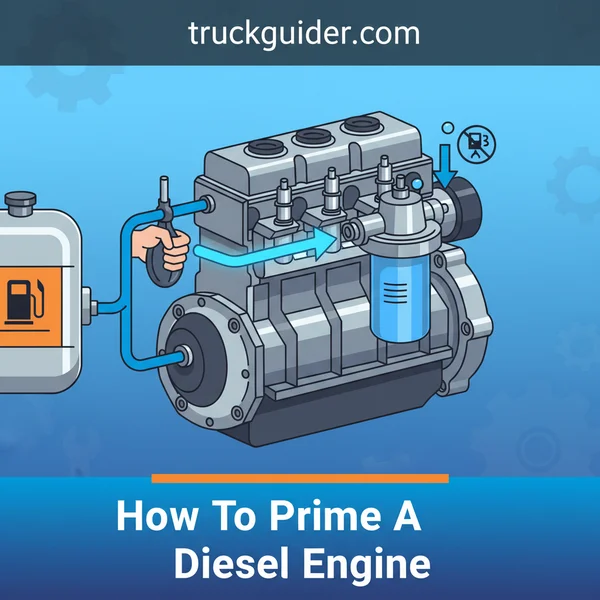
Most older diesel engines and heavy equipment (like Caterpillar, Perkins, or older Cummins units) utilize a mechanical lift pump equipped with a hand primer. You will typically find a small round knob or a thumb-lever located directly on the side of the fuel injection pump or the primary filter housing. To operate these, you often have to unscrew the knob until it pops up, then pump it vertically to move fuel. As the air leaves the system and fuel fills the lines, you will feel the resistance increase significantly. On some industrial engines, the primer might look like a small rubber “bulb” similar to an outboard boat motor fuel line, which you squeeze until it becomes firm.
Modern Electronic Lift Pumps
If you are driving a modern Duramax, Powerstroke, or common-rail Cummins, your vehicle likely uses an electric lift pump. In these systems, you do not need to pump anything by hand. Instead, the priming process is handled by “cycling” the ignition. By turning the key to the “On” or “Run” position—without actually cranking the engine—you activate the electric pump for 20 to 30 seconds. You can often hear a low humming sound from the fuel tank or frame rail as the pump pushes air back to the tank through the return lines. This process usually needs to be repeated three to five times to ensures the filters are completely saturated.
- Manual Systems: Common on tractors and pre-2000s trucks; require physical pumping.
- Electronic Systems: Found on most modern light-duty trucks; managed via the ignition key.
- Visual Check: Look for a plunger or “button” near the fuel filter; if none exists, the system is likely electronic.
- Key Tip: Never “dry crank” an electronic system for more than 15 seconds; always let the pump run its cycle first to lubricate the high-pressure pump.
How to Prime a Diesel Engine Like a Pro: A Practical Walkthrough
Recommended Best Deal Products


Priming a diesel engine is a fundamental skill for any vehicle owner, mechanic, or hobbyist working with compression-ignition systems. Unlike gasoline engines, diesel systems are highly sensitive to air; even a small pocket of air trapped in the fuel lines can prevent the engine from starting or cause it to stall repeatedly. This guide covers the essential process of removing that trapped air—often necessary after running out of fuel, replacing a fuel filter, or performing maintenance on the injection pump. Following these steps correctly ensures you don’t burn out your starter motor or damage your high-pressure fuel components while trying to get the engine back to life.
Step 1: Preparation and Safety Setup
What you need: Safety glasses, nitrile gloves, shop rags, a basic wrench set (usually 10mm to 14mm), and a container to catch spilled fuel.
Instructions: Before you touch the engine, ensure the vehicle is parked on a level surface with the parking brake firmly engaged. If you are working on a manual transmission, ensure it is in neutral. Diesel fuel is an irritant and can be difficult to clean, so wear gloves and keep rags nearby to wipe up spills immediately. Locate the fuel system components, specifically the fuel filter housing and the injection pump. If you recently ran out of fuel, ensure you have added at least 5 gallons of fresh diesel to the tank; attempting to prime an empty tank is a common mistake that leads to frustration. Ensure the battery is fully charged, as you may need to crank the engine later in the process.
Pro Tip: Place a catch pan or a thick layer of rags directly beneath the fuel filter housing. Diesel fuel can degrade rubber coolant hoses over time if left to sit, so cleanliness is vital for the long-term health of your engine bay.
Step 2: Locate the Priming Pump and Bleed Screw
What you need: Your vehicle’s owner manual or a service guide, and a flashlight.
Instructions: Diesel engines vary significantly by manufacturer. Most older or heavy-duty diesel engines feature a mechanical hand-priming pump. This is often a small round button or a lever located directly on the fuel filter housing or the side of the injection pump. Modern common-rail diesels might use an electric lift pump that activates when the ignition is turned to the “On” position, but many still retain a manual backup. Look for a small “bleed screw” or bolt located at the highest point of the fuel filter housing. This bolt is specifically designed to let air escape while keeping the fuel contained. Identifying these two components—the pump and the vent—is the most critical part of the preparation phase.
Pro Tip: If you cannot find a manual primer, try cycling the ignition key to the “On” position (without cranking) 5 to 10 times. On many modern trucks, this triggers the electric pump to run for 30 seconds, doing the work for you.
Step 3: Open the Fuel System Vent
What you need: An appropriately sized box-end wrench (usually 10mm or 12mm).
Instructions: Use your wrench to loosen the bleed screw on top of the fuel filter housing. You do not need to remove the bolt entirely; usually, one and a half to two full turns are sufficient to allow air and fuel to bypass the threads. If your engine has multiple bleed points (one on the filter and one on the injection pump), always start with the one closest to the fuel tank—typically the filter. Opening this vent breaks the vacuum in the lines and creates a path of least resistance for the air to be pushed out. Be careful not to force the bolt if it is stuck, as these are often made of soft brass or aluminum and can shear off easily.
Pro Tip: Use a box-end wrench rather than an adjustable wrench or pliers. Bleed screws are notorious for rounding off, and a snug-fitting 6-point wrench will prevent a simple prime from turning into a major repair job.
Step 4: Operate the Priming Pump
What you need: Manual dexterity and a bit of patience.
Instructions: Begin pumping the manual primer. If it is a button style, push it down firmly and let it return all the way up before pushing again. If it is a twist-and-pull style, unscrew the plunger and pump it vertically. Initially, the pump will feel very light and “mushy” because it is pushing air. As you continue to pump, you will hear a hissing or gurgling sound coming from the bleed screw you loosened in Step 3. Continue this action until you feel significant resistance in the pump. This resistance indicates that the air is being displaced and the lines are filling with dense liquid fuel. This step can take anywhere from 20 to 100 pumps depending on how much air entered the system.
Pro Tip: Don’t rush the pumping action. Fast, shallow pumps are less effective than slow, full-stroke pumps which allow the check valves inside the primer to seat and move the maximum volume of fuel.
Step 5: Monitor for Air-Free Fuel Flow
What you need: A flashlight and a keen eye for detail.
Instructions: Watch the bleed screw closely while you pump. Initially, you will see air bubbles or a “foamy” mixture of fuel and air escaping. Continue pumping until the discharge changes from a bubbly froth to a solid, steady stream of clear diesel fuel. There should be no “spitting” sounds or visible tiny bubbles. Once the flow is consistent and solid, hold the primer pump down (if applicable) and use your other hand to tighten the bleed screw. Closing the screw while the system is under pressure ensures that no air is sucked back into the line as you release the pump or stop the flow.
Pro Tip: If the fuel remains foamy even after extensive pumping, check your fuel line connections between the tank and the filter. A loose clamp can allow the pump to suck in fresh air while you are trying to bleed the system.
Step 6: Cracking the Injector Lines (Stubborn Cases Only)
What you need: A 17mm or 19mm open-end wrench and an assistant.
Instructions: If the engine still refuses to start after priming the filter, air may be trapped in the high-pressure lines between the injection pump and the injectors. Loosen the metal nut at the very top of one or two injectors by about half a turn. Have an assistant crank the engine for no more than 5 seconds at a time. You will see fuel “pulse” out of the loosened nut. Once the fuel squirts out consistently without bubbles, tighten the nut immediately. Repeat this for each cylinder if necessary. Note: Use extreme caution here, as high-pressure diesel can penetrate the skin. Never put your fingers near a loose high-pressure line while the engine is cranking.
Pro Tip: Most modern “Common Rail” engines (2007 and newer) do not require this step and actually forbid it due to extremely high pressures (over 20,000 PSI). Only perform this on older mechanical injection systems.
Step 7: The Initial Start and Warm-Up
What you need: A fully charged battery and a watchful eye on the dashboard.
Instructions: With all bleed screws and injector lines tightened, attempt to start the engine. Do not crank the starter for more than 15 seconds at a time to avoid overheating it. When the engine fires, it may run roughly or “lope” for the first minute as the remaining microscopic air bubbles pass through the injectors. Increase the RPM slightly (around 1,200 to 1,500 RPM) to help the pump clear the remaining air. Once the engine idles smoothly, let it run for at least five minutes. This ensures the return lines have cycled fuel back to the tank, purging any air that was trapped in the back end of the system.
Pro Tip: If the engine starts but dies again after 30 seconds, you likely have air trapped in the secondary filter or the pump gallery. Simply repeat the priming process at the bleed screw; it usually takes two tries to get it perfect.
Step 8: Final Cleanup and Leak Check
What you need: Brake cleaner or degreaser and clean shop rags.
Instructions: Now that the engine is running smoothly, shut it off and perform a final inspection. Use brake cleaner to remove any spilled diesel fuel from the engine block, filter housing, and hoses. Diesel fuel is oily and will attract dirt, making it difficult to spot future leaks if you don’t clean it now. Check the bleed screw and any injector lines you loosened to ensure they are dry and not “weeping” fuel. A tiny leak here can allow air to seep back into the system overnight, leading to a “hard start” condition the next morning. Once everything is clean and dry, you are ready to hit the road.
Pro Tip: Re-check the tightness of the bleed screw after the engine has gone through one full heat cycle (warmed up and cooled down). Thermal expansion can sometimes slightly loosen a fitting that wasn’t torqued perfectly.
✅ Final Checklist
- Bleed screw on the fuel filter housing is tightened and dry.
- Manual priming pump (if applicable) is locked back into its stowed position.
- All spilled fuel has been cleaned from the engine components to prevent smoke or odors.
- The engine idles smoothly without surging or hesitation.
- Fuel tank has been refilled to at least a quarter tank to prevent immediate re-occurrence.
Important Notes:
- Safety Warning: Never use “Starting Fluid” (Ether) on a diesel engine with glow plugs, as it can cause an explosion in the intake manifold.
- High Pressure Danger: On modern Common Rail engines, fuel pressure is high enough to be fatal if it penetrates the skin. Do not loosen high-pressure lines unless you are trained for that specific engine.
- When to call a pro: If you have primed the system three times and the engine still won’t stay running, you may have a failed lift pump or a clogged fuel pickup screen in the tank.
- Estimated Time: 15 to 45 minutes depending on the accessibility of the primer.
- Estimated Cost: $0 – $20 (assuming you already own basic tools).
Critical Components of the Diesel Fuel Delivery System
To successfully bleed the system, you must know exactly where the air is trapped. Air usually accumulates at the highest points of the fuel system or within the cavities of the fuel filter housings. Identifying these components saves time and prevents you from opening lines that do not need to be disturbed, which only risks introducing more air or debris into the system.
The Secondary Fuel Filter and Bleed Port
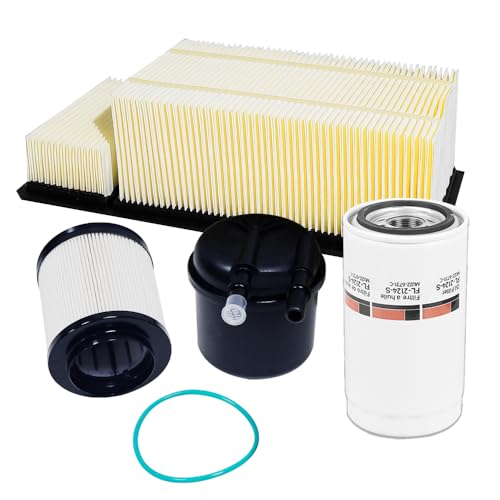
The secondary fuel filter is the most common site for airlocks, especially after a routine filter change. Most housings feature a dedicated bleed screw located on the top of the assembly to allow air to escape while you prime. This screw is often a 10mm or 12mm bolt, sometimes equipped with a small hole in the side or center to allow fuel to exit cleanly. In some modern applications, this port may look like a “Schrader valve” (similar to a tire valve stem) which requires you to depress the center pin while the system is pressurized. Always check for a copper or rubber crush washer under these bolts; if this seal is damaged, the system will continue to “suck air” even after you finish priming.
High-Pressure Injection Pump and Hard Lines
The injection pump is the heart of the system, taking low-pressure fuel and stepping it up to the thousands of PSI required for combustion. In older mechanical systems, air trapped inside the pump gallery or the steel “hard lines” leading to the injectors will prevent the engine from firing. You must be able to identify the inlet side—where fuel enters from the tank—and the outlet side, where the high-pressure steel lines exit to the cylinders. Knowing the difference ensures you are bleeding the system in the correct direction: from the tank, through the filters, into the pump, and finally out to the injectors. If the engine “coughs” but won’t stay running, the air is likely trapped in these high-pressure lines rather than the filters.
- Primary Filter: Usually located near the fuel tank; the first line of defense against water and large debris.
- Bleed Screw: The specific exit point for air; usually the highest point on the filter housing.
- Return Line: The hose that carries excess fuel and air back to the tank; essential for self-bleeding systems.
- Injection Lines: The rigid steel tubes that deliver fuel to the cylinders; these are the final stage of the bleeding process.
Common Causes of Air Intrusion in Diesel Engines
Recommended Best Deal Products


A diesel fuel system is essentially a vacuum-sealed environment. Because diesel fuel is significantly heavier than gasoline and requires extreme pressure to atomize, any breach in this seal allows air to rush in. This displaces the fuel and creates “air locks” that prevent the injectors from firing. Understanding why this happens is the first step in preventing a roadside breakdown.
Maintenance Oversights and Seal Failures
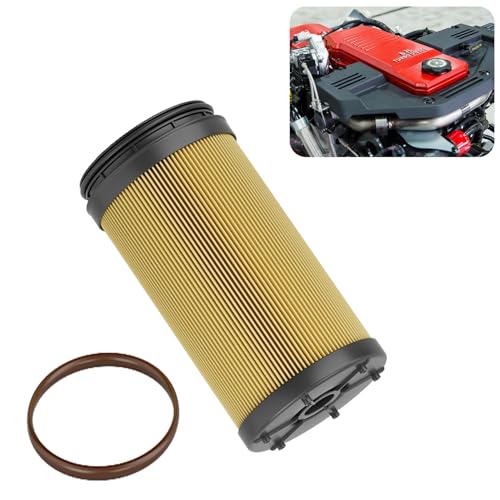
The most frequent cause of air intrusion occurs during routine maintenance. When you swap out a fuel filter, it is incredibly easy to accidentally “double-gasket” the housing—leaving the old O-ring stuck to the manifold while installing a new one on top. This creates a microscopic gap that sucks in air under load. Furthermore, failing to lubricate a new seal with a bit of clean diesel can cause it to pinch or tear during installation, leading to a persistent leak that is hard to see but easy for the engine to feel.
Structural Wear and Vibration
Diesel engines are notorious for high-frequency vibrations that can wreak havoc on fuel components over time. Even the most robust systems are susceptible to wear and tear that invites air into the lines. Common culprits include:
- Dry-Rotted Return Lines: The small rubber hoses between injectors often get brittle from engine heat, cracking just enough to let air in while the engine sits and cools.
- Loose Banjo Bolts: These specialized fittings can vibrate loose over thousands of miles, compromising the integrity of the crush washers.
- Aged Fuel Lift Pumps: Internal diaphragms in mechanical lift pumps can develop pinhole tears, allowing air to mix with the fuel before it even reaches the high-pressure pump.
- Tank Sediment: If a fuel pickup tube is partially clogged, the increased vacuum pressure can pull air through aging hose connections that would otherwise stay sealed.
Expert Troubleshooting Tips for Stubborn Air Pockets
Sometimes, you follow the standard priming procedure to the letter, yet the engine refuses to catch. This usually means air is trapped in a “high point” or is being pulled in as fast as you are pumping it out. Professional technicians use a few specific strategies to isolate these stubborn pockets and get the fuel flowing again.
Identifying “Invisible” Vacuum Leaks
If you suspect a persistent air leak but cannot find a fuel drip, you are likely dealing with a suction-side leak. Because the pump is pulling fuel from the tank, air enters the line without fuel leaking out. To find these “invisible” leaks, many experts temporarily replace a section of the fuel line with clear, fuel-rated PVC tubing. By placing this on the suction side of the pump, you can visually confirm if bubbles are entering the system. If you see a stream of “champagne bubbles,” you know the leak is located between the clear tube and the fuel tank, allowing you to narrow your search immediately.
Managing High-Point Traps and Pressure Issues
Air naturally migrates to the highest point in the fuel system, which is often the top of the fuel filter housing or the injector rail. If the manual primer bulb or lever feels “mushy” and won’t firm up, the system may be struggling to overcome an air pocket. Here are two pro tips for handling this:
- The Gravity Advantage: If you are working on a piece of equipment or a vehicle on a slope, try to position the fuel tank higher than the engine. This uses gravity to help “push” the air through the return lines.
- Positive Tank Pressure: A common expert trick is to apply a very low amount of air pressure (no more than 2-3 PSI) to the fuel tank through the filler neck. This forces fuel toward the engine, making the priming process much faster. Note: Always use caution, as excessive pressure can damage the fuel tank or blow out seals.
Conclusion
Priming a diesel engine is more than just a mechanical chore; it is a vital skill for anyone operating heavy machinery, marine vessels, or diesel trucks. By understanding how air enters the system and knowing how to diagnose hidden vacuum leaks, you save yourself hours of frustration and protect your expensive high-pressure fuel components from the damage caused by dry-running. Remember, a healthy diesel system should never need frequent priming. If you find yourself reaching for the primer pump regularly, it is time to inspect your seals and lines for underlying issues.
As an actionable next step, conduct a thorough visual inspection of your fuel lines for any “wet” spots and ensure your emergency kit includes extra crush washers and a spare primer bulb. Keeping your fuel system airtight is the best way to ensure your engine starts reliably every time you turn the key. Stay proactive with your maintenance, and your diesel will reward you with years of dependable service.
💬 Quick Questions & Answers
Why do diesel engines need to be primed?
Diesel fuel systems operate under high pressure; air is compressible and acts as a block, preventing fuel from reaching the combustion chamber.
Can you prime a diesel engine by just cranking it?
While possible on some self-priming systems, excessive cranking can overheat the starter motor and drain the battery.
What does a manual primer pump look like?
It is typically a small round button or a rubber bulb located on top of or near the fuel filter housing.
Is starting fluid safe for priming a diesel?
It is generally discouraged, especially on engines with glow plugs, as it can cause pre-ignition and catastrophic engine damage.
How long does the priming process usually take?
Most systems can be successfully primed within 5 to 15 minutes depending on the amount of air in the lines.
❓ Frequently Asked Questions
What happens if I don’t prime the engine after changing the fuel filter?
The engine will likely start on the residual fuel in the lines but will stall shortly after as air from the empty filter reaches the injectors, requiring a full manual bleed.
How do I know when all the air has been removed from the system?
You will observe a steady, solid stream of diesel fuel exiting the bleed screw or return line without any visible bubbles or ‘foaming’ appearance.
Why is my diesel engine losing its prime overnight?
This is usually caused by a ‘dry’ leak, where a small crack in a fuel line or a faulty check valve allows fuel to drain back to the tank and air to enter.
Should I pre-fill the fuel filter with diesel before installation?
Yes, filling the filter with clean, filtered diesel is a standard practice that minimizes the volume of air that needs to be purged through the primer pump.
What is the difference between bleeding and priming?
Priming is the act of getting fuel into the pump, while bleeding specifically refers to opening valves or lines to let the trapped air escape the system.
Do I need special tools to prime a modern common-rail diesel?
Most modern trucks only require cycling the ignition key to ‘Run’ several times, though some may require a diagnostic scan tool to activate the lift pump manually.